Many travelers visit Seoul and never realize how easy it is to explore the rest of South Korea.
That is a shame, because one of the biggest surprises for first-time visitors is just how fast and convenient Korea’s train system can be.
In the morning, you can be walking through Gyeongbokgung Palace in Seoul.
By lunchtime, you could be eating seafood in Busan.
By evening, you might be planning a temple walk in Gyeongju or watching the coast in Gangneung.
For many visitors, taking the KTX is the moment their Korea trip expands beyond Seoul.
KTX is fast, comfortable, punctual, and much easier than renting a car. It is also one of the best ways to connect Seoul with Busan, Gyeongju, Gangneung, Daegu, Daejeon, Jeonju, Mokpo, and other major destinations.
This Korea KTX guide explains how KTX works, where to book tickets, which station to use, when to reserve seats, what to know about luggage, whether the KORAIL Pass is worth it, and how to avoid common first-time mistakes.
If you are still planning your Korea route, read Top 10 Places to Visit in South Korea, Busan Travel Guide 2026, Gyeongju Travel Guide 2026, and Gangneung Travel Guide 2026 before booking trains.
This article may contain affiliate links, which means we may earn a small commission if you book through them, at no extra cost to you.
Table of contents
What Is KTX?
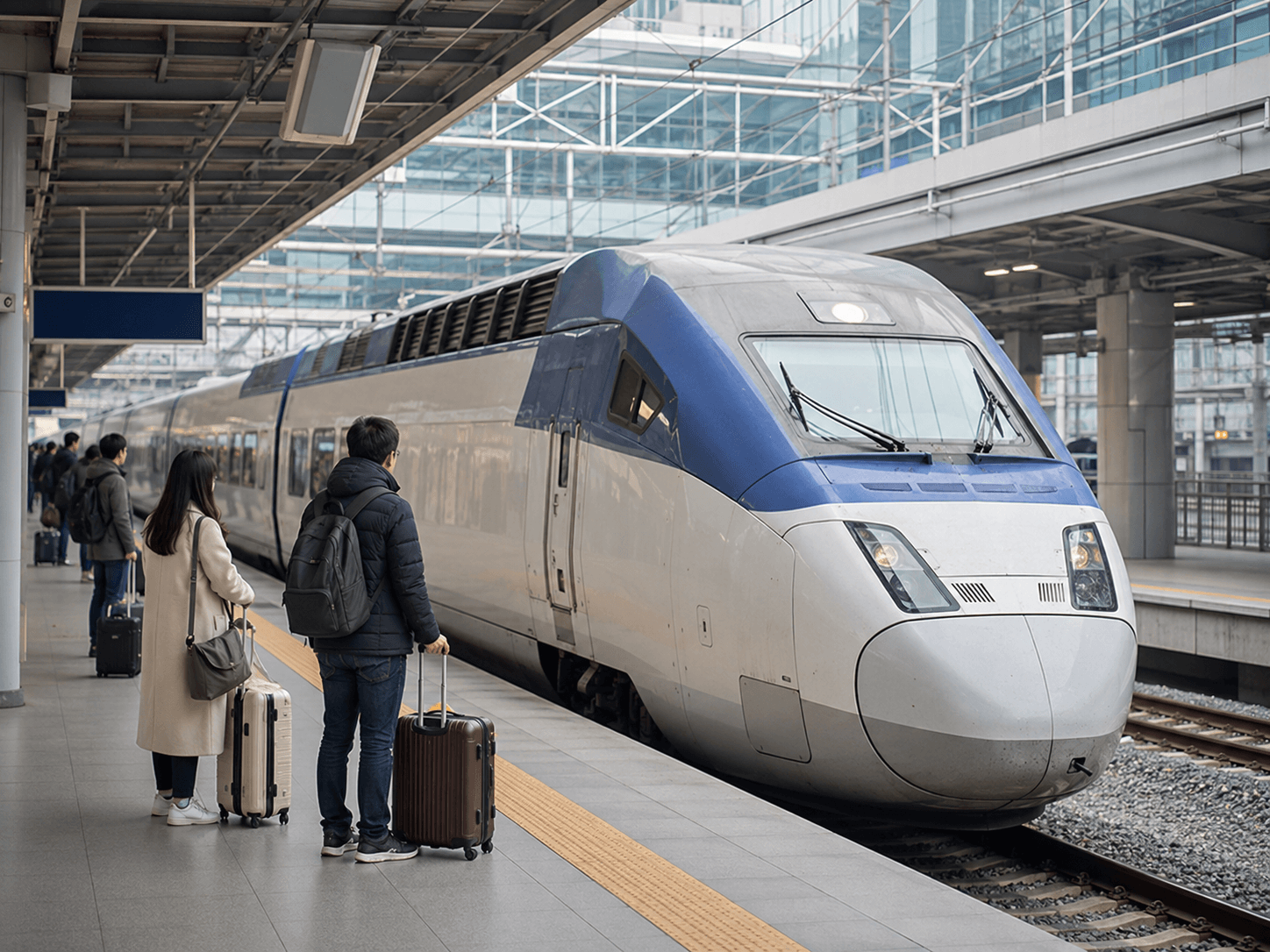
KTX stands for Korea Train Express.
It is South Korea’s high-speed rail service, operated by KORAIL. KTX connects Seoul with major cities across the country and helps travelers cover long distances much faster than buses, cars, or regular trains.
For visitors who do not plan to rent a car, KTX is one of the easiest ways to explore Korea beyond Seoul.
You can use KTX for popular routes such as:
- Seoul to Busan
- Seoul to Gyeongju
- Seoul to Daegu
- Seoul to Daejeon
- Seoul to Gangneung
- Seoul to Jeonju
- Seoul to Mokpo
- Seoul to Yeosu
KTX is especially useful if you want to visit multiple cities during one trip without spending entire days on transportation.
It is the travel version of opening a hidden map layer. Seoul is wonderful, but KTX quietly unlocks the rest of the country.
Why Travelers Love KTX
The biggest advantage of KTX is simple: it saves time.
A trip from Seoul to Busan by car can take four to five hours or more depending on traffic. By KTX, the journey is usually around two and a half hours, depending on the train and number of stops.
That difference matters.
Instead of losing most of a day to travel, you can spend the morning in Seoul and still have time to enjoy Busan in the afternoon.
KTX is popular because it is:
- Fast
- Comfortable
- Reliable
- Easy to book
- Good for multi-city trips
- More convenient than domestic flights for many routes
- Easier than carrying luggage through airports
- Useful for travelers without a rental car
There is no airport-style security process, no long check-in line, and no need to arrive two hours early.
You still need to be on time, though. KTX trains are not known for waiting politely while you buy one last iced coffee.
Quick Answer: Is KTX Worth It?
Yes, KTX is worth it for most travelers visiting more than one city in Korea.
Use KTX if you are traveling from Seoul to Busan, Gyeongju, Daegu, Daejeon, Gangneung, Jeonju, Mokpo, or Yeosu and want to save time.
KTX is especially worth it if:
- You have limited travel days
- You want to visit Busan from Seoul
- You plan a Seoul and Gyeongju itinerary
- You want a comfortable alternative to express buses
- You are traveling with luggage
- You prefer city-center train stations over airports
- You want to avoid renting a car
Express buses can still be cheaper and useful for destinations not served well by KTX. But for many first-time visitors, KTX offers the best balance of speed, comfort, and convenience.
Most Popular KTX Routes for Travelers
KTX is not only for Seoul and Busan. It connects many useful destinations for tourists.
Seoul to Busan
This is the most popular KTX route for international visitors.
Busan is Korea’s second-largest city and one of the best places to visit after Seoul. It has beaches, seafood markets, coastal temples, city views, and a completely different rhythm from the capital.
Popular Busan places include:
- Haeundae Beach
- Gwangalli Beach
- Jagalchi Market
- Gamcheon Culture Village
- Haedong Yonggungsa Temple
Many travelers combine Seoul and Busan during one trip because KTX makes the journey easy.
For planning, read Busan Travel Guide 2026, Haeundae Beach Guide 2026, Gwangalli Beach Guide 2026, Jagalchi Market Guide 2026, and Busan 3-Day Itinerary 2026.
Seoul to Gyeongju
Gyeongju is one of Korea’s best historical destinations.
The city is known for temples, royal tombs, ancient observatories, palace ruins, and peaceful historical scenery. It feels very different from Seoul and Busan, which makes it a strong addition to a first Korea itinerary.
KTX travelers usually arrive at Gyeongju Station or the KTX station serving the Gyeongju area, then continue by local bus, taxi, or rental car to major attractions.
Do not assume the KTX station is right next to every attraction. Gyeongju is spread out, and you should plan local transportation after arrival.
Read Gyeongju Travel Guide 2026, Bulguksa Temple Guide 2026, Seokguram Grotto Guide 2026, Donggung Palace and Wolji Guide 2026, and Cheomseongdae Guide 2026 before building your route.
Seoul to Gangneung
Gangneung is one of the best East Coast destinations for travelers who want beaches, coffee streets, coastal scenery, and a slower atmosphere.
KTX makes Gangneung much easier to reach from Seoul than many first-time visitors expect.
One important note: Gangneung trains often involve Cheongnyangni Station, and some services may use Seoul Station depending on the schedule. Always check the exact departure station on your ticket.
Gangneung is good for:
- East Coast beaches
- Coffee shops
- Ocean views
- Short trips from Seoul
- Slower coastal travel
Read Gangneung Travel Guide 2026 if you want to add the East Coast to your Korea itinerary.
Seoul to Jeonju
Jeonju is famous for traditional culture, hanok village streets, and food.
It is especially popular with travelers who want a cultural city that feels different from Seoul without going all the way to Busan or Jeju.
Many trains toward Jeonju depart from Yongsan Station rather than Seoul Station, so check carefully before departure.
Jeonju is a good choice for:
- Hanok Village
- Traditional Korean food
- Slower cultural travel
- Short overnight trips
Seoul to Daegu or Daejeon
Daegu and Daejeon are less common first-trip destinations, but they can be useful stops depending on your itinerary.
Daegu is often used for food, shopping, and access to nearby regional travel.
Daejeon is a major transport hub and can be useful for transfers.
For most first-time tourists, Busan, Gyeongju, and Gangneung are usually more exciting travel choices, but Daegu and Daejeon still matter in the rail network.
Which Seoul Station Should You Use?
This is one of the most common KTX mistakes.
Not all trains leave from the same station in Seoul.
The station depends on the route.
Seoul Station
Seoul Station is the main rail hub for many major KTX routes.
Many trains heading toward Busan, Daegu, Daejeon, and Gyeongju use Seoul Station.
It is also convenient if you are arriving from Incheon Airport using the Airport Railroad.
Seoul Station is commonly useful for:
- Busan
- Daegu
- Daejeon
- Gyeongju
- Many southeast-bound routes
If you are staying in Myeongdong, Hongdae, Seoul Station, or central Seoul, Seoul Station is often easy to reach.
Read How to Get from Incheon Airport to Seoul and Seoul Subway Guide 2026 if you need help reaching the station.
Yongsan Station
Yongsan Station is important for many Honam and Jeolla line routes.
It is often used for trains toward Jeonju, Gwangju-Songjeong, Mokpo, Iksan, and Yeosu-Expo.
Yongsan Station is commonly useful for:
- Jeonju
- Gwangju
- Mokpo
- Yeosu
- Iksan
If your trip includes Jeonju or the southwest region, do not automatically go to Seoul Station. Check your ticket.
Cheongnyangni Station
Cheongnyangni Station is important for routes toward eastern Korea.
It is commonly associated with trains toward Gangneung and other eastern destinations.
Cheongnyangni Station is commonly useful for:
- Gangneung
- Pyeongchang
- Jinbu
- Some eastern routes
If you are heading to Gangneung, check whether your train departs from Cheongnyangni or another station. This is a common source of confusion.
The Rule That Saves You
Do not memorize stations only by destination.
Check the exact departure station on your ticket.
KTX stations in Seoul are close enough to confuse you, but not close enough to casually fix a mistake five minutes before departure. That is where travel drama hatches.
How to Book KTX Tickets

You can book KTX tickets in several ways.
KORAIL Website
The official KORAIL website is the main booking channel.
It lets travelers search routes, check schedules, choose trains, and purchase tickets.
This is often the best place to check the most accurate schedules and fares.
KORAIL Talk App
KORAIL Talk is the official mobile app.
It can be useful for checking schedules and managing bookings, though some foreign travelers may find the website easier depending on payment, language settings, or app behavior.
Station Ticket Counters or Machines
You can also buy tickets at train stations.
This can work for flexible travelers, but it is not ideal during weekends, holidays, or busy travel seasons.
Travel Booking Platforms
Some travelers prefer booking through travel platforms because the interface may feel easier, language support may be smoother, or foreign card payment may be more convenient.
You can compare KTX train ticket options or KORAIL Pass options for foreign travelers before booking.
No matter where you book, always confirm:
- Departure station
- Arrival station
- Date
- Time
- Train type
- Seat class
- Passenger name
- Refund or change rules
A wrong station or wrong date can turn a beautiful rail journey into a small administrative goblin.
When Should You Reserve KTX Seats?
For popular routes, book in advance.
This is especially important for:
- Friday evenings
- Sunday afternoons
- Weekends
- Korean public holidays
- Chuseok
- Lunar New Year
- Cherry blossom season
- Summer vacation
- Autumn foliage season
- Major festivals
- Busan and Gyeongju peak travel periods
For normal weekdays, you may find seats closer to departure. But if your itinerary depends on a specific train, book early.
KTX is popular with both locals and tourists. Do not assume you can always buy the perfect train at the station just before departure.
For seasonal timing, read Best Time to Visit South Korea in 2026, Korea Cherry Blossom Guide 2027, and Korea Autumn Foliage Guide 2026.
KTX Seat Classes
KTX trains usually offer standard class and first class.
For most tourists, standard class is enough.
Standard class is comfortable, clean, and practical for routes like Seoul to Busan or Seoul to Gyeongju.
First class offers more space and a quieter experience, but it is usually not necessary unless you want extra comfort, are traveling with a larger budget, or are taking a longer route.
Choose standard class if:
- You want the best value
- You are taking a short or medium trip
- You are traveling on a budget
- You do not need extra space
Choose first class if:
- You want more room
- You prefer a quieter ride
- You are carrying yourself like a person who deserves extra legroom
- You found a good fare difference
For most first-time visitors, standard class works perfectly well.
Luggage on KTX
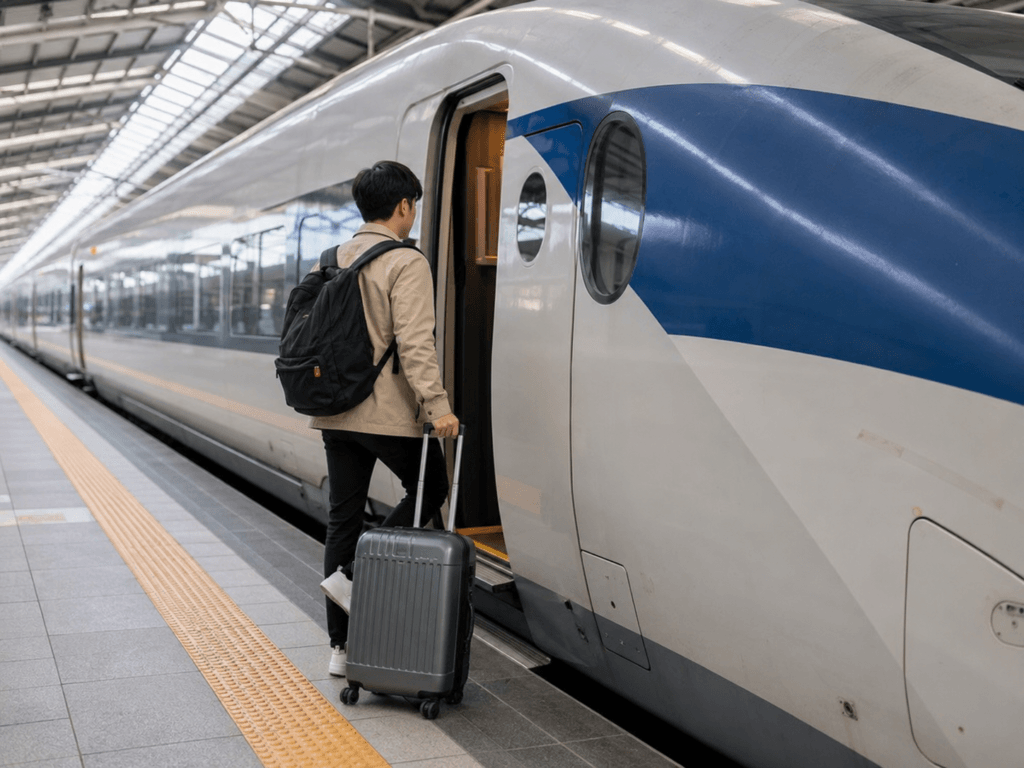
KTX is much easier than flying when it comes to luggage.
There is no airport-style security check, no baggage check-in, and no long boarding process. You bring your luggage onto the train yourself.
Most travelers can bring regular suitcases without problems, but large luggage can be awkward during busy trains.
Tips for luggage:
- Arrive early enough to board calmly
- Use luggage racks when available
- Keep small bags above your seat or near you
- Avoid blocking aisles
- Do not bring oversized luggage if you can avoid it
- Keep valuables with you
- Travel lighter if you are visiting multiple cities
If you are moving from Seoul to Busan or Gyeongju with a large suitcase, KTX is still usually easier than flying.
For packing help, read Korea Packing List 2026.
Wi-Fi and Charging on KTX
Many KTX trains offer onboard Wi-Fi and charging options, but availability and quality can vary by train type and seat.
Do not rely on train Wi-Fi for important work, video calls, or last-minute emergency booking chaos.
It is better to have your own mobile data ready through an eSIM or SIM card.
Bring:
- Fully charged phone
- Portable power bank
- Charging cable
- Travel adapter if needed
- Saved ticket or booking information
For internet and power preparation, read Korea Internet Guide 2026, Best eSIM for Korea 2026, Korea SIM Card Guide 2026, and Korea Power Adapter Guide 2026.
KTX vs Express Bus
KTX and express buses are both useful, but they serve different travel styles.
Choose KTX If
KTX is better if you value speed, comfort, and convenience.
Choose KTX if:
- You are traveling long distances
- You want to save sightseeing time
- You are going to Busan, Gyeongju, Gangneung, or Daegu
- You prefer city rail stations
- You are carrying luggage
- You want a smoother travel experience
- You have limited days in Korea
Choose Express Bus If
Express buses can be cheaper and may serve destinations that trains do not reach directly.
Choose express bus if:
- You are on a tighter budget
- Your destination is not convenient by train
- You do not mind longer travel time
- You are traveling to a smaller city
- Bus terminal location is better for your hotel
For many first-time visitors, KTX is worth the higher cost because it gives back time. And in travel, time is the sneaky currency everyone forgets to budget.
KTX vs Domestic Flight
For Seoul to Busan, travelers sometimes compare KTX with domestic flights.
Domestic flights can be cheaper in some cases, but they include extra steps:
- Getting to the airport
- Checking baggage rules
- Security screening
- Boarding time
- Possible delays
- Getting from airport to city center
KTX usually feels simpler because stations are closer to city centers and boarding is faster.
For Seoul to Busan, KTX is often the easiest overall option for tourists.
Domestic flights may make more sense for Jeju, because Jeju is an island and KTX does not go there.
For Jeju planning, read Jeju Travel Guide 2026 and Jeju 5-Day Itinerary 2026.
What Is the KORAIL Pass?
The KORAIL Pass, sometimes called KR Pass, is a rail pass for foreign visitors.
It can be useful if you plan to take several KORAIL trains during a short period. Depending on your route, it may save money compared with buying separate tickets.
It is especially worth checking if your itinerary looks like this:
- Seoul to Busan
- Busan to Gyeongju
- Gyeongju to Seoul
Or:
- Seoul to Busan
- Busan to Daegu
- Daegu to Seoul
Or:
- Seoul to Gangneung
- Gangneung to Seoul
- Seoul to another city
The pass is not always cheaper.
If you only plan to take one KTX ride, a regular ticket is usually simpler.
Before buying a pass, compare the total cost of individual tickets with the pass price.
Use a KORAIL Pass if:
- You are taking multiple long train rides
- Your trip is city-to-city focused
- You can reserve the trains you want
- You understand pass rules
- You are eligible as a foreign traveler
Use regular tickets if:
- You are taking only one or two short rides
- You want the simplest booking process
- Your travel dates are fixed
- Pass savings are small
The KORAIL Pass can be powerful, but only when your itinerary actually uses it. Otherwise, it is just an expensive rectangle of ambition.
How KTX Fits Into a Korea Itinerary
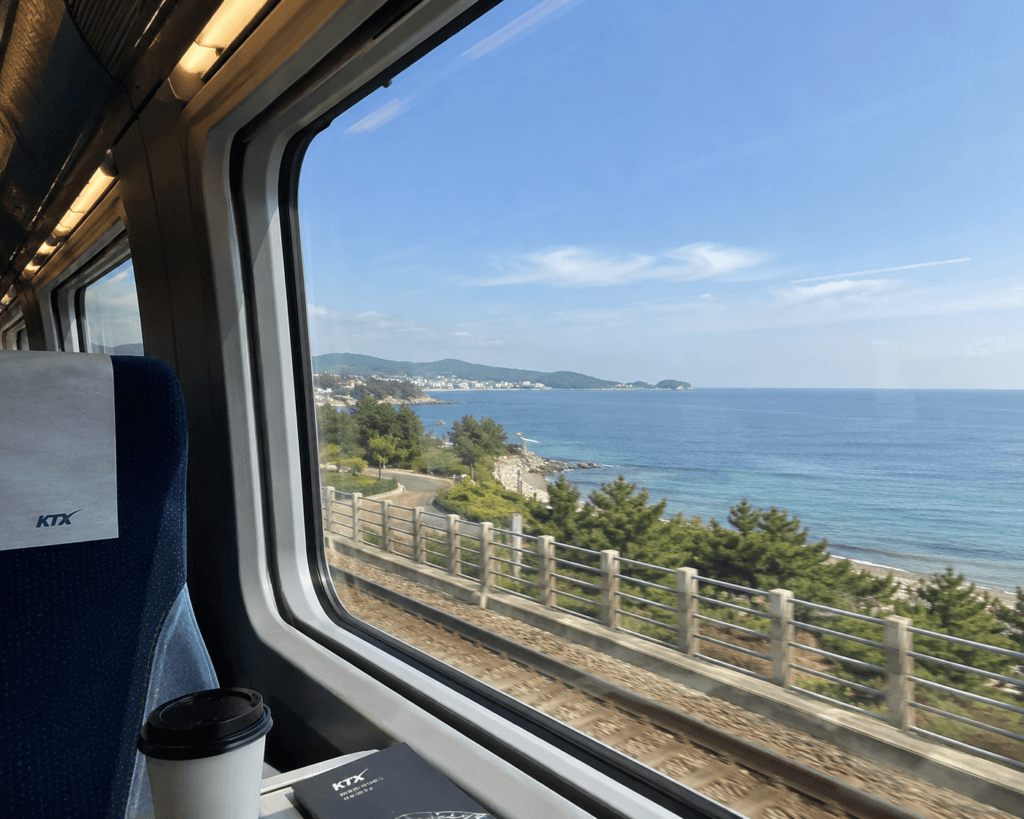
KTX is perfect for building multi-city Korea routes.
Seoul and Busan
A classic first-time route:
Seoul → Busan → Seoul
This works well for travelers with 5 to 7 days in Korea.
Read Seoul 5-Day Itinerary 2026 and Busan 3-Day Itinerary 2026 if you want to combine both cities.
Seoul, Busan, and Gyeongju
A stronger cultural route:
Seoul → Busan → Gyeongju → Seoul
This gives you modern city life, coastal energy, and ancient history in one trip.
It is one of the best Korea routes for travelers who want more than Seoul.
Seoul and Gangneung
A coastal short trip:
Seoul → Gangneung → Seoul
This is good for travelers who want East Coast scenery, coffee streets, beaches, and a slower pace.
Seoul and Jeonju
A food and culture route:
Seoul → Jeonju → Seoul
This is good for travelers interested in hanok streets, traditional food, and a shorter cultural escape.
Common Mistakes Travelers Make
The first mistake is going to the wrong station.
Seoul Station, Yongsan Station, and Cheongnyangni Station are not interchangeable. Check your ticket.
The second mistake is booking too late during weekends or holidays.
KTX is popular, and the best trains can sell out.
The third mistake is assuming every KTX station is in the city center.
Gyeongju is a good example. You still need local transportation after arriving.
The fourth mistake is arriving at the platform too late.
KTX trains usually leave on time. Be early enough to find the platform, car number, and seat without turning the station into a personal obstacle course.
The fifth mistake is not checking the final arrival station.
Some cities have multiple stations or station names that may confuse first-time visitors.
Finally, do not forget to save your ticket information. Screenshots, app tickets, email confirmations, and booking numbers can save you from a small panic cloud at the gate.
Frequently Asked Questions
Is KTX easy for foreigners to use?
Yes. KTX is generally easy for foreign travelers to use, especially if tickets are booked in advance and departure stations are checked carefully.
How early should I arrive for KTX?
Arriving 20 to 30 minutes early is usually comfortable for first-time visitors. This gives you time to find your platform, car number, and seat.
Do KTX tickets sell out?
Yes, popular trains can sell out during weekends, holidays, and peak travel seasons. Book early if your schedule is fixed.
Can I buy KTX tickets at the station?
Yes, you can buy tickets at stations, but advance booking is safer for popular routes and busy travel periods.
Is KTX better than bus?
KTX is faster and more comfortable for many long-distance routes. Buses may be cheaper and can be better for destinations not served directly by train.
Is KTX better than flying from Seoul to Busan?
For many tourists, yes. KTX is often easier because it connects major rail stations and avoids airport check-in and security time.
Can I bring luggage on KTX?
Yes. You carry luggage onto the train yourself. Use luggage racks when available and avoid blocking aisles.
Does KTX have Wi-Fi?
Many KTX trains offer Wi-Fi, but quality can vary. It is better to have your own mobile data ready.
Is the KORAIL Pass worth it?
It can be worth it if you take several long-distance train rides in a short period. If you only take one KTX trip, regular tickets are usually simpler.
Which station should I use for Gangneung?
Gangneung trains are commonly associated with Cheongnyangni Station, though some schedules may use other Seoul stations. Always check your ticket.
Recommended Travel Services
These can help with train travel and city connections:
- KTX train ticket options
- KORAIL Pass options for foreign travelers
- Korea eSIM plans for travelers
- Incheon Airport transfer to Seoul
- Seoul hotel deals near major stations
Related Guides
Continue planning your Korea transportation and multi-city trip with these guides:
- Top 10 Places to Visit in South Korea
- Busan Travel Guide 2026
- Busan 3-Day Itinerary 2026
- Gyeongju Travel Guide 2026
- Gangneung Travel Guide 2026
- How to Get from Incheon Airport to Seoul
- Korea Airport Bus Guide 2026
- Seoul Subway Guide 2026
- T-money Card Guide for Tourists in Korea
- Korea Internet Guide 2026
- Best Apps for Korea Travel 2026
- Korea Packing List 2026
Final Thoughts
For first-time visitors, KTX is one of the best ways to discover South Korea beyond Seoul.
It is fast, comfortable, reliable, and surprisingly easy to use once you understand the basics.
Whether you are heading to Busan’s beaches, Gyeongju’s historic sites, Gangneung’s coastline, or Jeonju’s hanok streets, KTX helps you spend less time in transit and more time exploring.
The key is simple: book early for popular routes, check your exact departure station, arrive with enough time, and plan local transportation after you reach your destination.
For many travelers, KTX is not just transportation.
It is the moment Korea opens wider.