Affiliate disclosure: This guide may contain affiliate links. If you book through them, we may earn a small commission at no extra cost to you. Learn more.
Seoul’s public transportation is affordable, but the small payments can add up when your day includes a palace, a market, a cafe neighborhood, and a night view on the other side of the city.
The Seoul Climate Card gives visitors unlimited rides on covered subways and buses for a fixed number of days. Tourist passes are available for one, two, three, five, or seven days.
The idea is simple. The rules are slightly less simple.
A one-day pass does not last for 24 hours, the card cannot be used to board AREX at Incheon Airport, and several transportation services around Seoul are not included. Do not confuse these tourist passes with the replacement resident-oriented monthly Climate Pass.
This guide explains how the Seoul Climate Card works for tourists in 2026, where to buy it, what it covers, and whether it offers better value than a regular T-money card.
Table of contents
October 2026 Update: Tourist Passes vs Monthly Products
For a short visit, focus on the tourist pass, not resident reimbursement products.
The former prepaid 30-day Climate Card could be recharged only through August 31, 2026. Seoul’s discontinuation notice distinguishes the continuing tourist short-term passes from the resident-oriented Climate Pass linked to K-Pass.
These tourist durations remain available, but coverage changed on October 1, 2026:
- 1-day pass
- 2-day pass
- 3-day pass
- 5-day pass
- 7-day pass
Buying a tourist short-term pass is not the same as applying for a resident reimbursement card. Follow the short-term product’s purchase and registration instructions.
This distinction matters because many online explanations mix the resident monthly card with the tourist version. They share a name, but tourists do not need the same registration process or eligibility requirements.
What Is the Seoul Climate Card?
The Climate Card is an unlimited public transportation pass operated by the Seoul Metropolitan Government.
During its validity period, the tourist version can be used repeatedly on covered Seoul subway lines and Seoul-licensed city, village, and night buses.
Unlike T-money, it is not a stored-balance card.
With T-money, money is deducted after each journey. With the Climate Card, you pay for a fixed period and then use covered transportation as often as needed until the pass expires.
That makes it useful for travelers who plan to visit several neighborhoods each day. It also removes the need to perform transport mathematics before breakfast, which is rarely anyone’s favorite holiday activity.
Seoul Climate Card Prices for Tourists
The 2026 short-term pass prices are:
| Pass | Pass price | Total for first-time buyers |
|---|---|---|
| 1 day | KRW 5,000 | KRW 8,000 |
| 2 days | KRW 8,000 | KRW 11,000 |
| 3 days | KRW 10,000 | KRW 13,000 |
| 5 days | KRW 15,000 | KRW 18,000 |
| 7 days | KRW 20,000 | KRW 23,000 |
The first-time total includes the additional KRW 3,000 cost of the physical Climate Card.
The physical card can be kept and recharged later, so you do not need to buy a new card every time the pass expires. Keep it until the end of your trip, especially if you might activate another short-term pass after a day outside Seoul.
Important: The Pass Uses Calendar Days
A one-day Climate Card is not a 24-hour pass.
Short-term passes use calendar days and begin immediately when they are charged.
If you activate a one-day pass at 8:00 p.m. on Monday, it remains valid only until the end of Monday’s covered transportation service. It does not continue until 8:00 p.m. on Tuesday.
The same rule applies to longer passes.
A three-day pass activated on Monday is valid on Monday, Tuesday, and Wednesday. It does not last for exactly 72 hours.
Short-term passes also cannot be charged in advance with a future starting date.
Should you activate it after arriving at night?
Probably not.
Travelers arriving in central Seoul during the evening may be better off using T-money or a single ticket for the journey to their hotel, then activating the Climate Card the following morning.
Using the first day for one short evening journey can quickly erase the value of the pass. The ticket may understand calendar dates, but it does not care that your jet lag has not expired yet.
Where to Buy a Climate Card
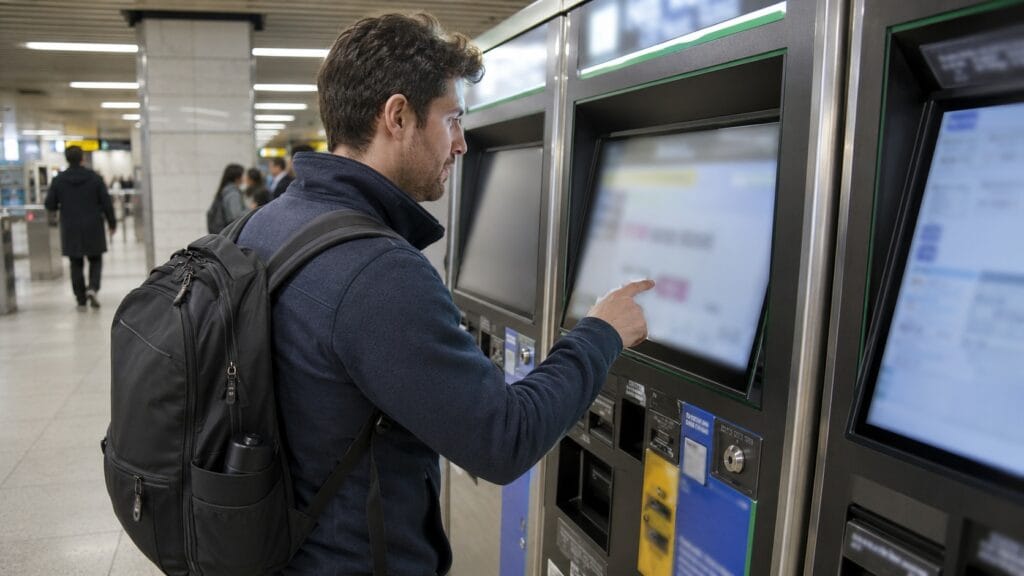
For most international tourists, a physical Climate Card is the easiest option.
Physical cards are available from supported vending machines inside many Seoul subway stations. Some convenience stores near subway stations also sell them, although availability can vary.
The newest vending machines are found across Seoul Metro Lines 1 to 8. On Line 1, participating machines are mainly located between Seoul Station and Cheongnyangni.
The usual purchase process is:
- Change the machine language to English.
- Select Climate Card.
- Buy the physical card for KRW 3,000.
- Choose a 1, 2, 3, 5, or 7-day pass.
- Pay for the card and pass.
- Begin using it immediately.
Because the pass starts on the charging date, wait until the first day you actually plan to use it.
If the machine does not display the short-term pass option, try another newer machine or ask for help at the station information desk.
Can You Pay with an International Credit Card?
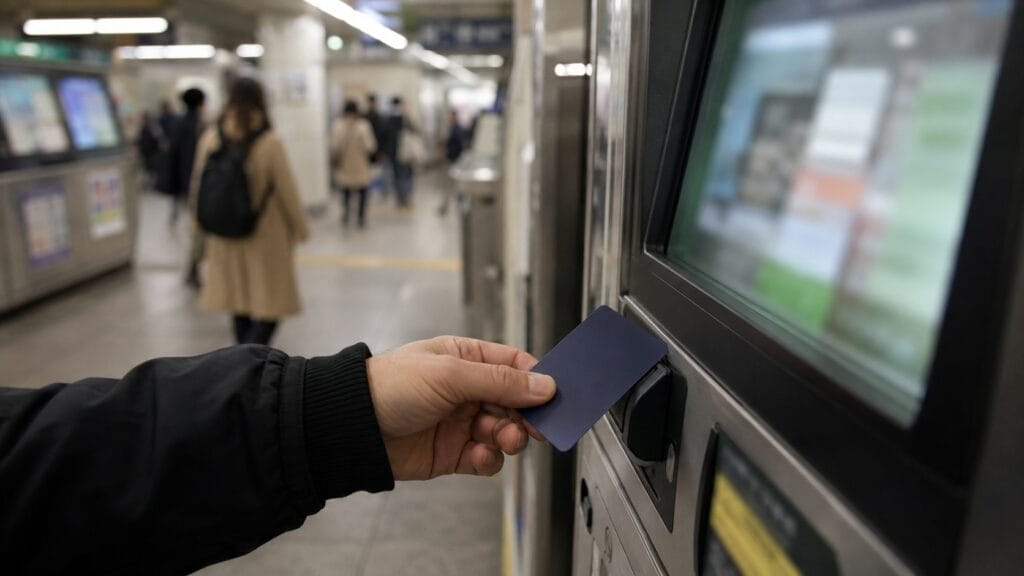
Yes.
Since March 17, 2026, international visitors have been able to purchase and recharge tourist Climate Cards with eligible overseas-issued credit and debit cards at supported vending machines.
Visa and Mastercard are accepted at compatible machines, although availability can vary by card issuer and payment network.
Seoul installed hundreds of upgraded machines across Lines 1 to 8. An international payment service fee averaging approximately 3.7% may apply.
Older travel guides often say that the Climate Card must be purchased or charged with Korean cash. That is no longer accurate at the supported machines.
It is still worth carrying a small amount of Korean cash in case a machine is temporarily unavailable or a convenience store does not accept your preferred card.
Physical Card vs Mobile Climate Card
The Climate Card is available in physical and mobile versions, but the mobile option is not equally practical for all visitors.
The mobile card requires a compatible Android device, appropriate NFC settings, and the Mobile T-money app. Registration and charging may also require payment methods that are easier for Korean residents to access.
The physical card is usually the better choice when:
- You use an iPhone
- You do not have a Korean bank account
- You do not have a Korean-issued payment card
- You are staying for only a few days
- You want to buy the pass directly at a subway station
The mobile version may work for travelers with a compatible Android phone who can complete the registration and payment process.
For most tourists, the answer is refreshingly simple: buy the physical card.
What Transportation Is Included?
From October 1, 2026, use Seoul’s current short-term coverage guidance. Older maps showing broad Gyeonggi coverage are not reliable for this tourist product.
The current scope is covered Seoul subway routes and Seoul-licensed city/town buses, including night buses. A Seoul-licensed eligible bus can operate outside Seoul; its license and service type matter, not just the street you board on. For trains, check both boarding and destination stations. The specified AREX exception permits alighting at Incheon Airport T1/T2, not boarding there.
Popular areas such as Gyeongbokgung, Myeongdong, Hongdae, Dongdaemun, Seongsu, Jamsil, and much of central Gangnam can usually be reached using covered transportation.
Use our Seoul Tourist Map 2026 to see how the main neighborhoods connect. For fares, transfers, exits, and station details, check the Seoul Subway Guide.
What Is Not Included?
The Climate Card does not cover every subway, bus, or train operating in the Seoul metropolitan area.
It cannot normally be used for:
- Shinbundang Line
- GTX services
- Airport limousine buses
- Intercity buses
- Express buses
- Buses licensed outside Seoul
- Subway journeys ending outside the covered range
- Taxis
- KTX
- Regional and intercity trains
Shinbundang Line is one of the most common sources of confusion. It serves Gangnam and several areas south of Seoul, but it is not covered by the Climate Card.
If your map app recommends Shinbundang Line, check whether there is a covered subway or bus route. The alternative may take a little longer, but it avoids an additional fare.
Are Ttareungi bikes included?
No.
The tourist short-term Climate Card does not include Seoul’s Ttareungi bike-sharing service.
Is Hangang Bus included?
No.
Hangang Bus access may appear in descriptions of some monthly Climate Card options, but it is not included in the 1, 2, 3, 5, or 7-day tourist passes.
Can You Use the Climate Card at Incheon Airport?
This is the part that catches many travelers.
Incheon Airport to Seoul
You cannot use the Climate Card to board AREX at Incheon Airport Terminal 1 or Terminal 2.
For the arrival journey into Seoul, use one of the following:
- A separate AREX ticket
- T-money
- An airport limousine bus ticket
- A taxi
- A pre-booked Incheon Airport transfer
For the all-stop AREX, check the currently covered boarding station. Do not treat the airport exception as a round-trip ticket or an AREX Express inclusion.
The Incheon Airport to Seoul Guide compares the express train, all-stop train, airport buses, taxis, and late-night options.
Seoul to Incheon Airport
The return journey works differently.
If you board AREX within the Climate Card service area, you may use the card to exit at Incheon Airport Terminal 1 or Terminal 2.
In simple terms:
Seoul to Incheon Airport: Allowed when boarding within the covered area

Incheon Airport to Seoul: Not allowed with the Climate Card
The rule has a strangely one-way personality, but remembering the direction avoids an awkward conversation at the airport gate.
Climate Card vs T-Money
The Climate Card and T-money are designed for different travel styles.
Choose the Climate Card when:
- You plan to use public transportation several times each day
- Most of your trip stays within Seoul
- You will visit multiple neighborhoods
- You prefer a fixed transportation cost
- Your routes mainly use covered subways and Seoul buses
Choose T-money when:
- You take only one or two journeys a day
- You spend much of the day walking
- You plan several trips outside Seoul
- You need Shinbundang Line or regional buses
- You want one card for the airport arrival journey
- You want to use the card in other Korean cities
- You may use taxis or convenience-store payments
T-money is a general transportation and payment card, while the Climate Card is an unlimited pass with a defined coverage area.
For purchasing, recharging, transfer discounts, and refunds, read the T-money Card Guide.
Which Option Is Cheaper?
The following calculation uses the KRW 1,550 adult subway starting fare for independent eligible journeys. Bus fares, distance supplements and discounted transfers can change the result.
Calculated minimum journeys for pass spending to be lower than paying KRW 1,550 each time:
| Pass | Already own card | Buying card too |
|---|---|---|
| 1 day | 4 | 6 |
| 2 days | 6 | 8 |
| 3 days | 7 | 9 |
| 5 days | 10 | 12 |
| 7 days | 13 | 15 |
The last column includes the KRW 3,000 physical card; both columns exclude overseas-payment fees. These are our arithmetic examples, not operator-promised savings.
They also simplify the way T-money transfers work. A subway ride followed by an eligible bus transfer may be treated as one connected journey rather than two completely separate fares.
The Climate Card becomes more valuable when you make several unrelated journeys in one day.
For example:
- Hotel to Gyeongbokgung
- Gyeongbokgung to Myeongdong
- Myeongdong to Seongsu
- Seongsu to Jamsil
- Jamsil back to the hotel
That is a busy transport day, but five separate base-fare subway journeys total KRW 7,750. A first-time one-day card purchase totals KRW 8,000 before any payment fee, so this example alone does not produce a saving. Reusing a card changes the comparison.
Traveling from the hotel to Insadong, walking for six hours, and returning to the hotel is more likely to favor T-money.
See the Seoul Transportation Budget 2026 guide for a wider comparison of subway, bus, taxi, and airport travel costs.
Is the Climate Card Worth It for Your Trip Length?
1-day pass
At the KRW 1,550 base fare, a one-day pass needs four independent journeys if you already own the card, or six if you buy the physical card too, before payment fees.
Remember that first-time buyers also pay KRW 3,000 for the physical card, so the financial saving may be small unless you use transportation frequently.
It is less useful when your day centers on one compact neighborhood or when you activate it late.
2-day pass
The two-day pass suits a short weekend covering several parts of Seoul.
For example:
Day 1: Gyeongbokgung → Insadong → Myeongdong → N Seoul Tower
Day 2: Hongdae → Seongsu → Jamsil
Count the actual independent paid journeys. Several listed stops are close enough to walk between, so the itinerary alone does not prove the pass is cheaper.
3-day pass
The three-day pass is worth comparing for an active city stay.
A typical three-day Seoul itinerary includes several separate journeys each day, and the pass costs only KRW 10,000 before the physical card fee.
Compare your route with our Seoul 3-Day Itinerary before deciding.
5-day pass
The five-day pass averages KRW 3,000 per day before a physical card purchase or payment fee. Compare that with the rides you will actually take, not the places on your wish list.
Its value decreases if several days are spent outside the coverage area. Day trips to Suwon, Nami Island, the DMZ, or other regional destinations may require separate transportation.
7-day pass
The seven-day pass can suit frequent covered travel over a full week; it is not automatically the cheapest option for every Seoul stay.
It may be less useful for travelers with multiple regional trips or several slow days spent exploring one walkable neighborhood.
The Seoul 5-Day Itinerary can help you estimate how many days will actually involve frequent public transportation.
How to Use the Climate Card
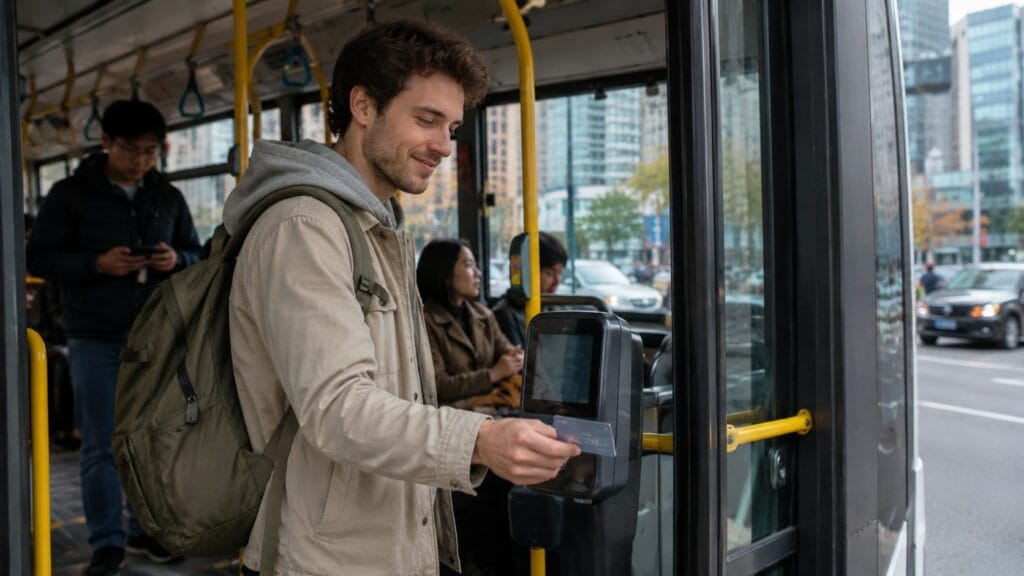
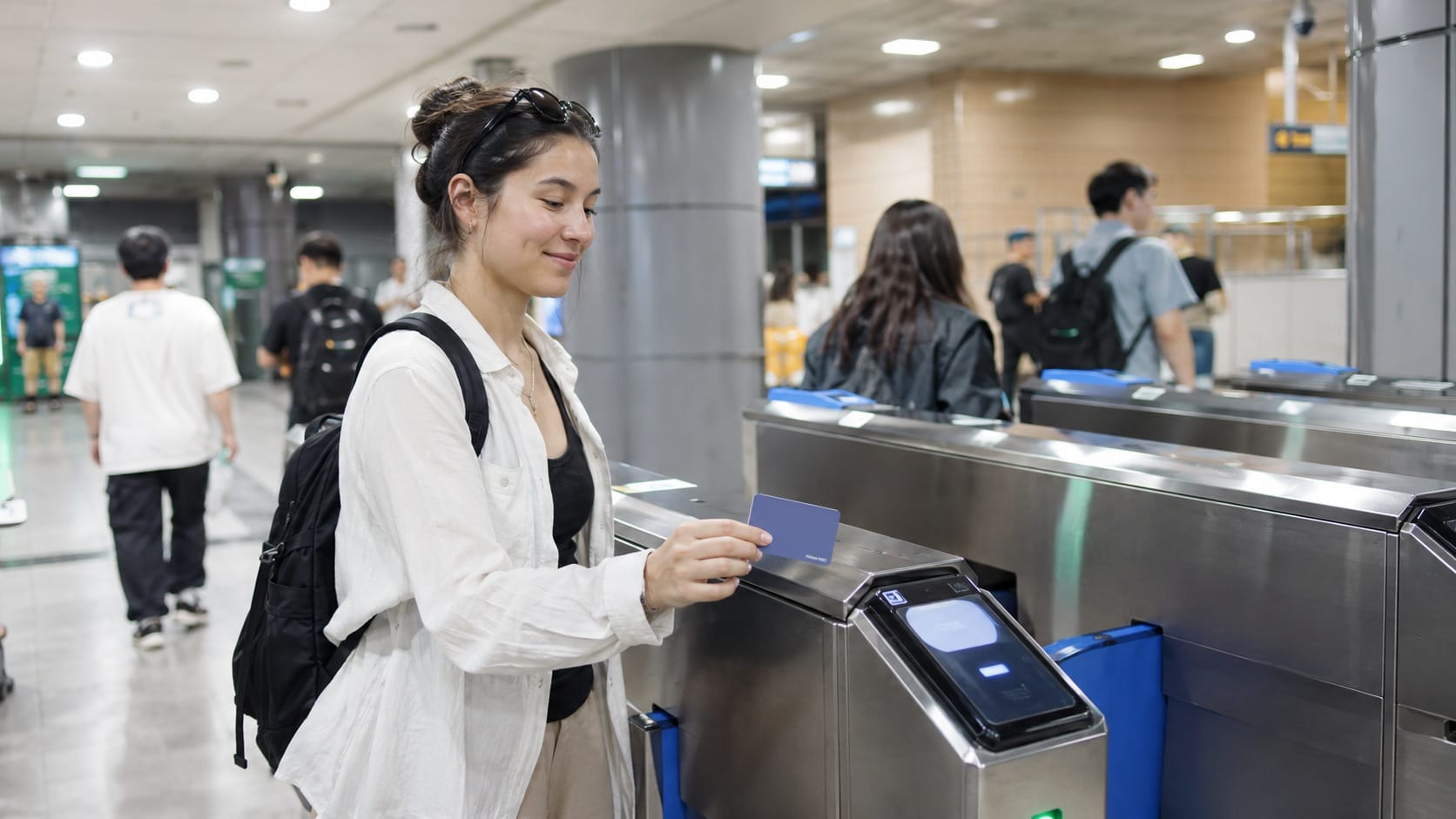
Using the card is similar to using T-money.
On the subway
Tap the card when entering the station.
Tap it again when leaving at your destination.
On the bus
Tap when boarding.
Tap again before getting off.
Tap off even with an unlimited pass. Do not apply the old monthly-card suspension rule to tourist short-term passes; Seoul’s short-term usage Q&A identifies an exception to the missed-exit-tap penalty. Ask staff if the reader shows an error.
Keep the Climate Card separate from other contactless cards when using the reader. Tapping a wallet filled with several cards can charge the wrong one or produce an error.
Common Climate Card Mistakes
1. Treating it as a 24-hour pass
The card uses calendar days.
Activate it in the morning rather than late at night whenever possible.
2. Activating it before the trip begins
A short-term pass starts on the day it is charged. You cannot select a future start date.
Wait until the first day you plan to use it.
3. Trying to use it from Incheon Airport
The card cannot be used to board AREX at Incheon Airport Terminal 1 or Terminal 2.
Use a separate ticket or T-money for the journey into Seoul.
4. Assuming all Seoul-area transport is covered
Shinbundang Line, GTX, airport buses, regional buses, and some outer subway sections are excluded.
Check the route before entering the station.
5. Forgetting the KRW 3,000 physical card cost
The printed pass price does not include the physical card.
Include both amounts when comparing the Climate Card with T-money.
6. Expecting bike or Hangang Bus access
Ttareungi and Hangang Bus are not included with the tourist short-term passes.
7. Forgetting to tap when leaving a bus
Always tap before getting off. Follow the short-term pass instructions rather than assuming every rule for the former monthly card applies.
Frequently Asked Questions
Can foreigners buy a Seoul Climate Card?
Yes. The 1, 2, 3, 5, and 7-day passes are designed for tourists and short-term visitors.
International credit and debit cards are accepted at supported vending machines.
How much does the physical card cost?
The physical Climate Card costs KRW 3,000 in addition to the chosen pass.
Can two people share one card?
No.
Each traveler needs a separate card because every passenger must tap individually when entering and leaving public transportation.
Can I buy the Climate Card at Incheon Airport?
The card is mainly sold through supported Seoul subway vending machines and selected convenience stores.
More importantly, it cannot be used to board AREX from Incheon Airport, even if you already have one.
Does the Climate Card work on airport buses?
No.
Airport limousine buses are not covered.
Does it work on Shinbundang Line?
No.
Shinbundang Line is excluded from Climate Card coverage.
Can I use it to travel to Suwon?
Not for a normal complete journey from Seoul to Suwon.
Use T-money or another valid ticket for transportation outside the covered Climate Card area.
Can I get a refund?
Request a refund before expiry. Seoul lists the calculation as the loaded amount minus transit use and a KRW 500 fee, with registration requirements for physical cards.
Visitors without a Korean bank account may need to visit Tmoney headquarters; confirm the current process before relying on it. For short trips, choosing the correct duration before activation is usually easier than relying on a refund.
Is the Climate Card better than T-money?
Neither option is always better.
Choose the Climate Card for frequent travel mainly within Seoul. Choose T-money for lighter transportation use, airport arrival, regional trips, and greater flexibility.
Final Thoughts
The Seoul Climate Card is affordable and convenient when your itinerary matches its coverage.
It is a strong option for travelers who plan to visit several neighborhoods each day and rely heavily on Seoul’s subways and buses. A longer pass can be good value when you make enough covered journeys; walking days and regional trips change the calculation.
T-money remains more flexible for airport arrivals, occasional transportation, regional travel, and routes involving excluded services such as Shinbundang Line.
The main rules are easy to remember:
- Tourist passes continue, with updated October 1 coverage.
- Short-term passes use calendar days, not 24-hour periods.
- The physical card costs an additional KRW 3,000.
- You cannot board AREX with it at Incheon Airport.
- Not every subway and bus in the metropolitan area is covered.
Choose the card that suits the trip you are actually taking, rather than the trip where you wake up early every morning, never change plans, and somehow visit five neighborhoods without stopping for coffee.
Official Sources and Review Scope
Reviewed October 6, 2026 against Seoul’s October short-term pass guidance, monthly-product discontinuation notice, March 17 overseas-payment announcement and short-term usage Q&A. Newer Korean coverage instructions take priority over older route lists remaining on the English overview. This was a document review, not a kiosk, app or refund-counter test.