Affiliate disclosure: This guide may contain affiliate links. If you book through them, we may earn a small commission at no extra cost to you. Learn more.
Seoul rarely fits into the tidy version of the city you planned before arriving.
A morning may begin inside a royal palace, continue through a quiet hanok alley, and end in a market where metal bowls clatter beside sizzling grills. By evening, you might be sitting beside the Han River while office towers flicker on across the water.
That range is what makes Seoul exciting. It also makes the city easy to overplan. The map looks compact, social media keeps suggesting one more cafe, and suddenly your schedule crosses the Han River three times before lunch.
Use these 25 Seoul experiences to decide what belongs on your trip, from palaces and markets to museums, modern neighborhoods and outdoor spaces. This is a selection guide, not a day-by-day route: the numbers help you find each entry, not decide the order to visit.
You do not need to complete all 25. A good Seoul trip is not a scavenger hunt with better skincare.
Table of contents
What Is New in Seoul in 2026?
A few changes are worth knowing before planning your days.
The most photographed residential section of Bukchon Hanok Village now has enforced tourist hours. Visitors may enter the designated Red Zone around Bukchon-ro 11-gil only from 10:00 a.m. to 5:00 p.m.
Hangang Bus services are operating across the river in 2026. The Seoul Forest pier is listed as a temporary stop through October 30, while the Seoul International Garden Show ends October 27. Check the sailing and the event separately before combining them.
Cheongwadae Sarangchae, the separate exhibition venue near the Blue House, is hosting a free K-content media-art exhibition through the end of 2026. The autumn Outdoor Library season is listed for September 4–November 1 at Seoul Plaza, Gwanghwamun Square and Cheonggyecheon; venue schedules and weather notices still matter.
The details appear in the relevant sections below, where they are much more useful than one large pile of dates at the beginning.
Best Historic Things to Do in Seoul
1. Explore Gyeongbokgung Palace
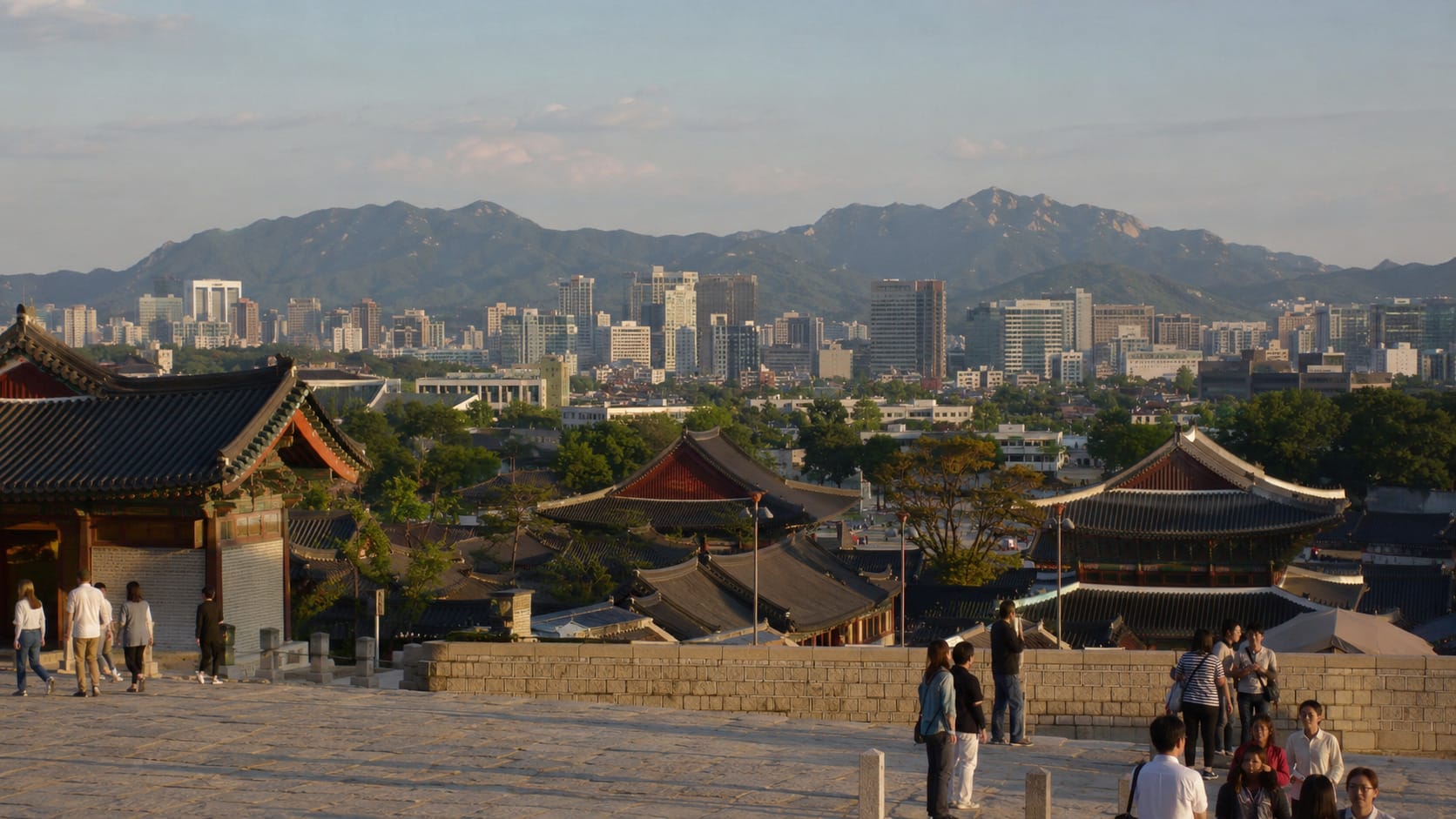
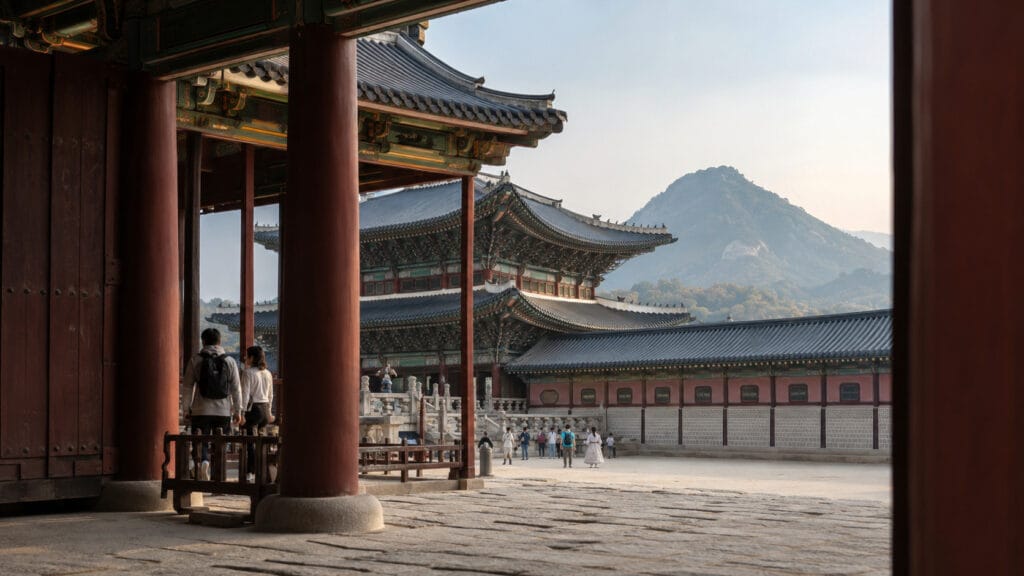
Gyeongbokgung is the natural starting point for a first visit to Seoul.
The palace stands at the northern end of Gwanghwamun Square, with Bugaksan Mountain rising behind its tiled roofs. Most visitors gather around the main gate and central courtyard, but the atmosphere changes once you walk deeper inside. The crowds thin, camera shutters become less constant, and quieter halls appear beyond the main ceremonial spaces.
Allow around two hours if you want to explore more than the entrance area.
Many visitors rent hanbok nearby. Traditional hanbok and qualifying modern versions may provide free palace admission when worn according to official guidelines.
Hanbok shops become busiest in the late morning, so reserving a Hanbok rental near Gyeongbokgung can save time on weekends and during peak seasons.
The Gyeongbokgung Palace Guide covers entrances, seasonal hours, the changing-of-the-guard ceremony, and nearby routes.
Best for: First-time visitors and Korean history
Time needed: About two hours
Combine with: Gwanghwamun Square, Seochon, Bukchon, or Cheongwadae Sarangchae on an opening day
2. Visit Changdeokgung and the Secret Garden
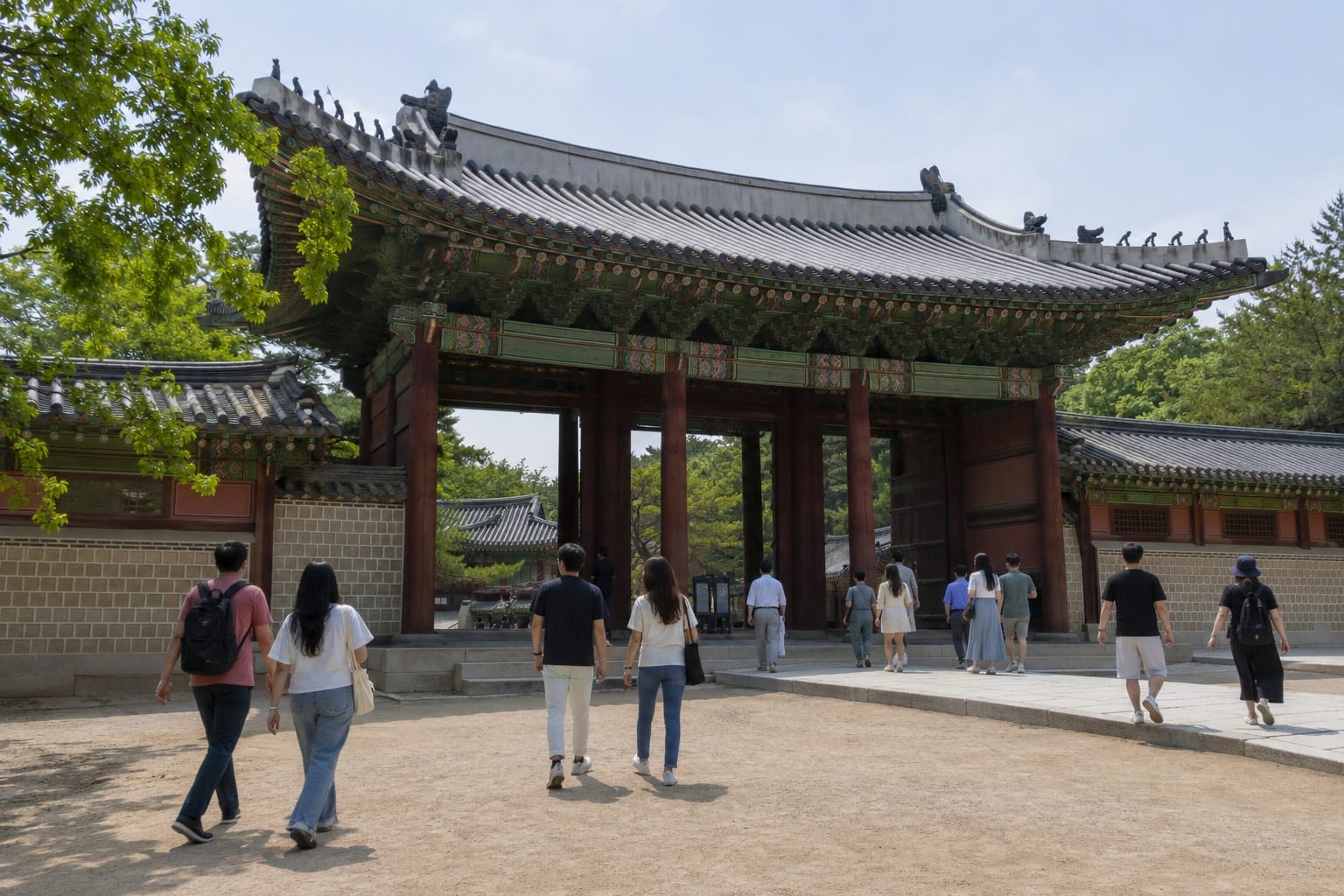
Changdeokgung feels less like a palace placed onto the city and more like one shaped around the land.
Paths bend around slopes and old trees, and the buildings appear gradually rather than all at once. This gives the palace a quieter, less formal atmosphere than Gyeongbokgung.
The Secret Garden is the main reason many travelers choose Changdeokgung, especially during spring and autumn. Access may require a separate ticket or scheduled tour, and available times vary by season and language.
Check the current schedule before visiting, particularly if the garden is the main purpose of your trip.
Changdeokgung works naturally with Bukchon, Insadong, or Ikseon-dong. Trying to visit every major palace in one day is possible, but after the third gate, even beautiful architecture can begin blending into one very elegant memory.
3. Walk Through Bukchon Hanok Village
Bukchon is beautiful, residential, and easier to visit badly than many travelers expect.
The tiled roofs and narrow alleys sit between Gyeongbokgung and Changdeokgung, but people still live behind the walls and wooden gates. The city now restricts tourist access in the designated Red Zone around Bukchon-ro 11-gil.
Visitors may enter that section only from 10:00 a.m. to 5:00 p.m. The official Red Zone notice lists a KRW 100,000 fine for visits during restricted hours. This is a defined area around Bukchon-ro 11-gil, not a blanket opening schedule for every street in Bukchon. Follow the boundary signs rather than assuming the whole neighborhood is one attraction.
Anguk Station is the easiest starting point. From there, the streets rise gradually before becoming steeper near the best-known viewpoints. The stone walls hold heat during summer, and the neighborhood feels much larger once you are walking uphill rather than viewing it on a phone screen.
Keep voices low, avoid photographing private interiors, and do not treat every doorway as a photo set.
The Bukchon Hanok Village Guide explains the restricted area, quieter routes, and respectful ways to visit.
4. Browse Crafts and Tea Shops in Insadong
Insadong gets most of its attention from the main pedestrian street, but the area becomes more interesting once the large souvenir shops give way to narrow alleys and older courtyards.
This is where you will find small galleries, ceramics, calligraphy supplies, traditional sweets, and tea houses hidden one turn away from the busiest part of the neighborhood.
Ssamziegil adds a modern shopping complex built around a sloping walkway, while Jogyesa Temple is only a short walk away.
Insadong is easy to visit after Bukchon and before Ikseon-dong. The Insadong Guide focuses on the useful side streets, tea stops, and walking routes rather than only the main shopping road.
5. Eat and Cafe-Hop in Ikseon-dong
Ikseon-dong is not a preserved residential village like Bukchon.
Its compact hanok lanes have been converted into cafes, restaurants, bakeries, boutiques, and bars. Wooden frames and tiled roofs remain, but the experience is modern, busy, and designed for dining rather than quiet architectural wandering.
Weekday mornings are calmer. By Saturday afternoon, the narrow alleys fill quickly, and moving from one cafe to another can take longer than the map suggests.
The neighborhood becomes attractive again after dark, when warm lighting appears behind the windows and the afternoon cafe crowd gives way to dinner groups.
The Ikseon-dong Guide explains the easiest entrances and how to combine the area with Jongno 3-ga and Insadong.
6. Visit Cheongwadae Sarangchae
Cheongwadae Sarangchae is a separate exhibition venue near Gyeongbokgung, not a ticket into the Blue House grounds. The names are close enough to confuse a saved itinerary; the entrances are not interchangeable.
For the Blue House itself, Visit Seoul’s official access notice still lists a temporary suspension of public tours from August 1, 2025. Do not plan on visiting the main building or gardens unless an official reopening notice confirms access for your date. Older tour descriptions are not proof that the gates are open.
Sarangchae offers a useful alternative. The official Full of Colors exhibition listing gives June 4–December 31, 2026, free admission and 9:00 a.m.–6:00 p.m. opening hours, with last entry at 5:30 p.m. and closure on Tuesdays. Check the Sarangchae website for temporary changes before setting off.
A practical route is Gyeongbokgung Palace → Cheongwadae Sarangchae → Seochon, provided both venues are open on your date. Check the palace calendar separately and skip Sarangchae on Tuesday; a neat line on the map is not an opening-hours guarantee.
Access and exhibition details checked: October 11, 2026. This check covers the Blue House notice and Sarangchae listing, not every attraction in this guide.
7. Visit Deoksugung and Walk Jeongdong-gil
Deoksugung is smaller and easier to fit into a central Seoul day than the larger palaces.
The grounds combine traditional palace buildings with stone Western-style architecture from Korea’s modern royal period. It also stays open later than many other palaces on regular operating days, which makes it useful after shopping, museums, or a late lunch.
Outside the palace, Deoksugung Stone Wall Road leads toward Jeongdong-gil. The area feels calmer than nearby City Hall, with historic schools, churches, theaters, museums, and diplomatic buildings tucked behind the main streets.
Seoul Plaza sits directly outside the palace. During the seasonal Seoul Outdoor Library program, the square fills with books, seating, and temporary cultural events. The official autumn program listing gives September 4–November 1, 2026, across Seoul Plaza, Gwanghwamun Square and Cheonggyecheon. Check the linked program website for the day and venue you want; a season running for two months does not mean every location operates every day.
Best Markets, Shopping Areas and Neighborhoods
8. Shop and Eat in Myeongdong
Myeongdong is loud, convenient, commercial, and still one of the easiest areas for a first-time visitor.
The district is packed with Korean skincare stores, fashion shops, street-food stalls, restaurants, currency exchanges, and hotels. Myeongdong Cathedral gives the area a quieter landmark above the busiest shopping lanes.
The neighborhood becomes more active from the afternoon onward. Arriving early can be useful for uncrowded photos, though it also provides a close look at delivery boxes and locked shop doors.
The Myeongdong Guide separates the main shopping streets from the food areas and explains which station works best for each side of the district.
9. Explore Namdaemun Market
Namdaemun feels like a market first and an attraction second.
Its lanes sell clothing, kitchenware, children’s products, glasses, snacks, accessories, souvenirs, and countless practical items that rarely appear in travel photographs.
Different sections follow different schedules. Some wholesalers begin early, while food alleys and visitor-oriented shops keep more conventional hours.
The market is closest to Hoehyeon Station. Sungnyemun Gate, Myeongdong, Seoul Station, and Seoullo 7017 are all nearby.
The Namdaemun Market Guide explains the main sections before you enter a market that has very little interest in straight lines.
10. Eat Your Way Through Gwangjang Market
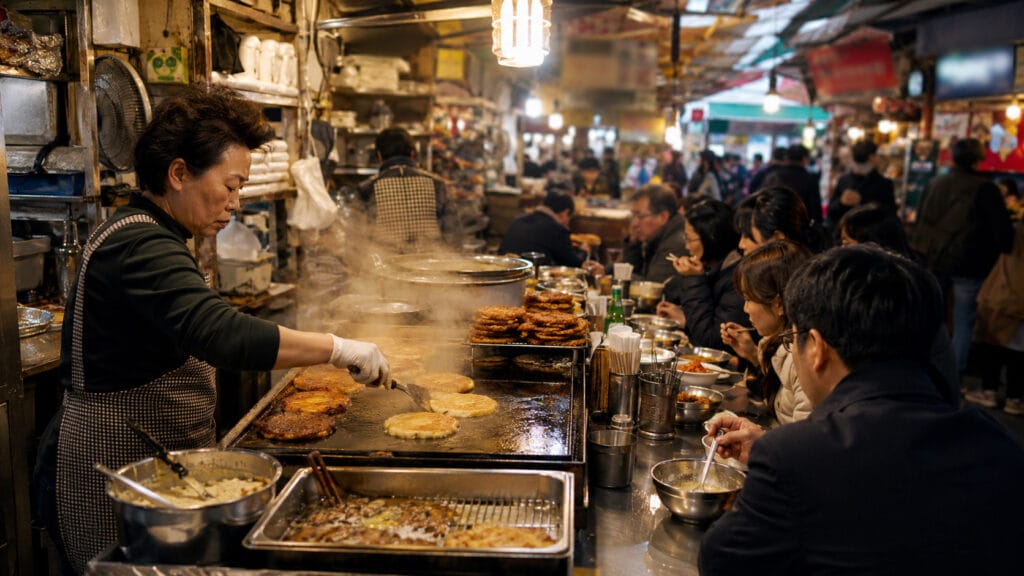
Gwangjang Market is not a quiet lunch stop.
Around mealtimes, mung bean pancakes crackle on flat grills while metal bowls, shouted orders, and stools scraping across the floor create a constant layer of noise. Customers often sit close enough to see what the next person ordered before deciding for themselves.
Popular foods include small gimbap rolls, knife-cut noodles, dumplings, raw beef, and pancakes.
The food area becomes extremely crowded during lunch, dinner, and weekends. Arriving slightly outside peak hours makes it easier to find a seat and look around without being carried along by the crowd.
Gwangjang is easy to combine with Cheonggyecheon, Euljiro, or Dongdaemun.
11. See Dongdaemun Design Plaza After Dark
Dongdaemun Design Plaza, better known as DDP, is one of Seoul’s most recognizable modern buildings.
The curved structure contains exhibition halls, shops, design spaces, event areas, and broad public plazas. The exterior is free to explore and becomes more atmospheric after sunset, when the metallic surfaces catch the surrounding lights.
Exhibitions and events change frequently, so check the schedule before visiting.
The surrounding district also includes fashion malls, wholesale shopping, food streets, old city walls, and late-night businesses. The Dongdaemun Guide explains which buildings suit ordinary shoppers and which operate mainly for wholesale buyers.
12. Explore Hongdae and Yeonnam-dong
Hongdae is larger and less orderly than its name suggests.
The wider district stretches from Hongik University Station toward Sangsu and Hapjeong. Shopping streets, performance areas, bars, restaurants, photo booths, clubs, and fashion shops are scattered across several different pockets.
Yeonnam-dong begins north of Hongik University Station along the Gyeongui Line Forest Park. It is calmer than the busiest Hongdae streets and better suited to brunch, coffee, small shops, and a slower walk.
The Hongdae Guide divides the area by atmosphere and station exit. That matters more than it sounds, because Hongik University Station has enough exits to begin your evening with an unintended neighborhood tour.
13. Find Pop-Ups and Cafes in Seongsu-dong
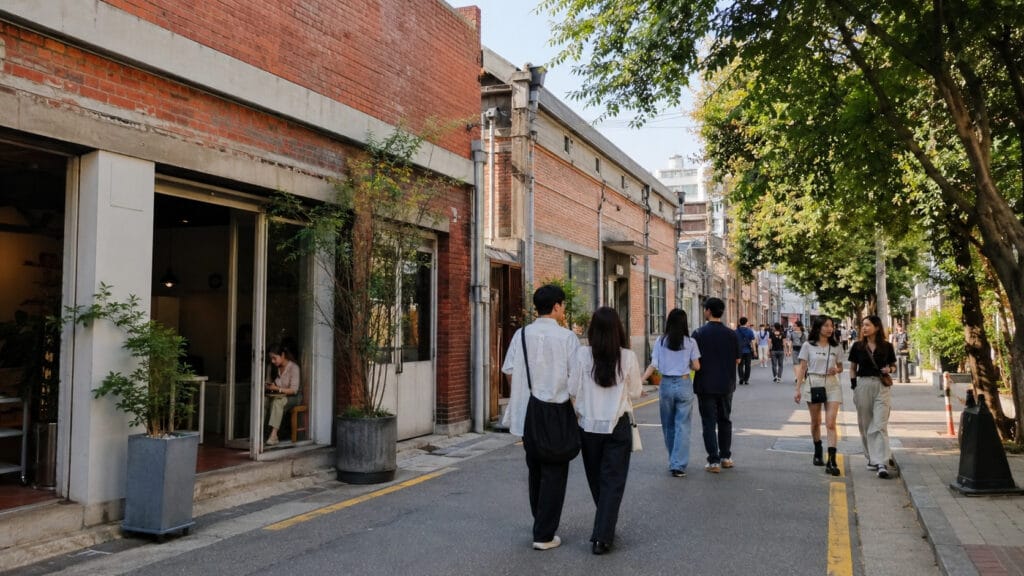
Seongsu changes quickly.
A warehouse that held a beauty pop-up last month may become a fashion showroom this week, while the cafe you saved could be on the opposite side of the neighborhood from Seoul Forest.
Seongsu Station, Ttukseom Station, and Seoul Forest Station serve different parts of the area. Check the exact address before choosing where to get off.
Pop-ups may require reservations, timed entry, or same-day registration. Always confirm the dates before traveling across Seoul for an event that ended earlier in the week.
The Seongsu-dong Guide separates the Seoul Forest side from the warehouse and pop-up districts, which can save a surprisingly long walk.
In 2026, Seoul Forest is also hosting the expanded Seoul International Garden Show through October 27.
14. Walk Through Gangnam Underground Shopping Center
Gangnam Underground Shopping Center is connected directly to Gangnam Station.
It is useful for affordable clothing, accessories, cosmetics, and shelter from rain, summer humidity, or winter wind. The shops lean toward fast-moving Korean fashion rather than luxury shopping.
The underground corridors also connect many station exits, so the shopping center doubles as both a mall and a test of directional confidence.
Gangnam Station and COEX are not the same destination. They are several subway stops apart, even though both sit inside Gangnam-gu.
Best Views, Parks and Han River Experiences
15. See Seoul from N Seoul Tower
N Seoul Tower remains one of Seoul’s classic viewpoints.
The tower sits on Namsan above Myeongdong and central Seoul. Reaching it requires a bus, cable car, or uphill walk, so it is not quite as close to Myeongdong Station as it appears on a small map.
Late afternoon works best when visibility is good. You can see the city in daylight, watch the sky change, and stay for the night view.
Check the weather before paying for the observatory. Clouds, haze, and fine dust can turn an expensive panorama into a careful study of grey.
The N Seoul Tower Guide compares the cable car, buses, walking routes, observatory, and free viewpoints around Namsan.
16. Have a Picnic at Hangang Park
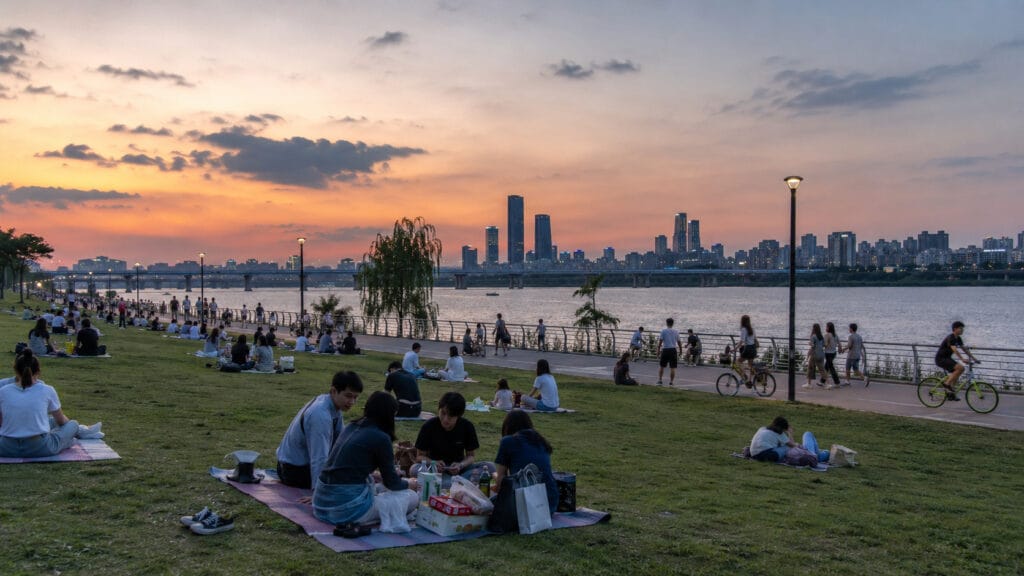
The Han River is not one park with one entrance.
Yeouido is convenient for first-time visitors and seasonal events. Banpo is known for evening views. Ttukseom connects naturally with Seongsu, Mangwon works well with Hongdae and Mangwon Market, and Jamsil fits easily into a Lotte World day.
The river feels different after sunset. Convenience-store tables fill, delivery riders gather around designated pickup areas, and the breeze becomes cooler much faster than many visitors expect.
Bring a light layer outside midsummer, especially if you plan to sit near the water after dark.
The Han River Guide compares the main parks, transport options, picnic areas, and evening activities.
17. Ride the Hangang Bus
Hangang Bus lets travelers move through Seoul while seeing the city from the river.
Seoul’s official service update records full-route operations resuming on March 1, 2026. The network connects districts including Jamsil, Ttukseom, Yeouido, Mangwon and Magok; check your particular sailing rather than assuming every boat calls at every pier.
This is not a river version of Line 2. Boats run less frequently than subway trains, and schedules can be affected by weather or operational changes.
Use Hangang Bus when the journey itself is part of the day. Seoul’s garden-show transport guide lists the temporary Seoul Forest stop for June 8–October 30, 2026, with eight daily departures in each direction toward Yeouido and Jamsil. The garden show itself ends October 27: those are different dates.
Follow the timetable link in the city guide and check service notices before heading to the pier; the published seasonal plan is not a guarantee that a boat will run in poor weather.
18. Fly Above Yeouido on SEOULDAL
SEOULDAL is a tethered helium balloon operating from Yeouido Park.
It rises vertically above the park rather than traveling across the city, providing views over Yeouido, the Han River, and nearby skyline. Allow about 15 minutes for the ride, including boarding and getting off, plus time for the safety briefing and any queue. It remains tethered throughout; this is a viewpoint, not an alternative airport transfer.
Wind and weather affect operations, so keep another activity nearby in case flights are delayed or cancelled.
The official SEOULDAL visitor page currently lists adult admission at KRW 25,000 and standard hours of noon–10:00 p.m., with the last launch at 9:30 p.m. It also lists extended Friday and Saturday hours through October. Check the operator notice linked there for that day’s opening and weather status rather than treating the standard schedule as a boarding promise. SEOULDAL works best as part of a Yeouido afternoon with The Hyundai Seoul, Yeouido Hangang Park, or an evening riverside walk.
19. Walk Through Seoul Forest
Seoul Forest works best when you do not rush it.
The park includes broad lawns, shaded paths, gardens, wooded areas, and access toward the Han River. It offers a noticeable change of pace from nearby Seongsu, even though cafes and pop-ups are only a short walk away.
The 2026 Seoul International Garden Show runs across Seoul Forest and the wider Seongsu area until October 27.
During summer, late afternoon is more comfortable than midday. Walk through the gardens first, then continue toward Seongsu for dinner.
The Seoul Forest Guide covers the main entrances, seasonal highlights, nearby stations, and walking connections.
Best Museums, Gangnam and Jamsil Attractions
20. Visit the National Museum of Korea
The National Museum of Korea is one of Seoul’s best choices for a rainy, cold, humid, or simply museum-shaped day.
Its collections cover archaeology, sculpture, painting, calligraphy, Buddhist art, royal history, and cultural objects from Korea and across Asia.
The building is large enough that trying to see everything usually turns enjoyment into endurance. Choose two or three galleries, take a break, and leave some time for the outdoor grounds or nearby Yongsan Family Park.
The museum is closest to Ichon Station and works well as a half-day visit.
21. Explore Itaewon, Hannam-dong and Leeum Museum
Itaewon is more than nightlife.
The wider Yongsan area includes international restaurants, independent shops, bars, galleries, Haebangchon, Gyeongnidan-gil, and Hannam-dong.
Leeum Museum of Art near Hangangjin Station adds a strong cultural stop, combining traditional Korean art with modern and contemporary collections.
These neighborhoods look close together on a map, but slopes and large roads make them less convenient on foot than expected. Buses or short taxi rides can save energy, especially in summer.
Choose Itaewon for food and nightlife, Hannam for galleries and polished cafes, or Haebangchon for hillside views and a more relaxed evening.
22. See Starfield Library and Bongeunsa Temple
Starfield Library is worth seeing, but it should not be the only reason you travel to COEX.
The towering shelves sit inside the mall near Samseong Station. The space is photogenic, busy, and easy to visit while shopping, eating, or attending an event at COEX.
Bongeunsa Temple stands across the main road and offers a sharp contrast to the glass towers and underground mall. As you walk uphill through the grounds, city buildings begin appearing between lanterns, halls, and trees.
The Starfield Library Guide explains the easiest entrances, quieter times, and how to combine the library with Bongeunsa.
23. Spend a Day at Lotte World
Lotte World combines a large indoor theme park with the outdoor Magic Island area.
The indoor section makes it popular during rain, winter, and summer heat. It also means weekends, holidays, and school breaks can become extremely busy.
Arrive early when major rides are the priority and plan to spend most of the day there.
Popular dates can sell through the most convenient ticket options, so check Lotte World tickets before building the rest of your Jamsil itinerary.
The Lotte World Guide covers entrances, crowd patterns, ride planning, and realistic arrival times.
24. Visit Seoul Sky and Walk Around Seokchon Lake
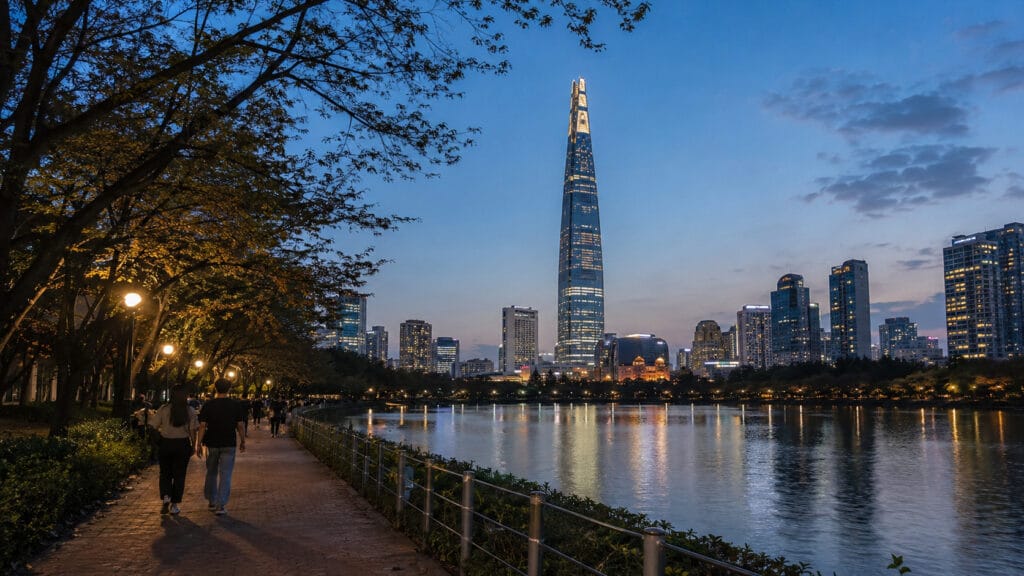
Seoul Sky occupies the upper floors of Lotte World Tower and provides one of the highest indoor views in Seoul.
Visit on a clear day and choose a time near sunset when possible. The observatory is easy to combine with Lotte World Mall, Seokchon Lake, and the cafes around Songnidan-gil.
The lake walk is free and often more enjoyable than the observatory on a hazy day. During cherry blossom season, the path becomes beautiful, crowded, and noticeably slower.
Lotte World and Seoul Sky can fit into the same day, but Jamsil will need most of that day.
Best Nature Experience in Seoul
25. Hike Bukhansan or Walk the Seoul City Wall
Seoul’s mountains are part of the city, not distant background scenery.
Bukhansan National Park offers proper hiking with granite peaks, forest paths, valleys, temples, and routes ranging from moderate walks to strenuous climbs.
Start early, carry water, wear suitable shoes, and check the weather before leaving.
Travelers who want a shorter urban hike have easier options:
- Inwangsan for palace and city views
- Naksan for a gentle Seoul City Wall walk
- Bugaksan for forest and historic wall sections
- Namsan for paved trails and central access
A mountain morning followed by a market lunch shows a very different side of Seoul from malls, observation decks, and nightlife streets.
Bonus Seoul Experiences
Not every memorable Seoul experience needs its own major sightseeing stop.
Try Korean barbecue with friends or choose a restaurant where staff can help with grilling. The Korean BBQ Guide explains ordering, side dishes, and dining etiquette.
Order Korean fried chicken beside the Han River or visit a neighborhood chicken restaurant. The Korean Fried Chicken Guide compares common styles and flavors.
Use a Korean photo booth in Hongdae, Seongsu, or Myeongdong. The Korean Photo Booth Guide explains the process for first-time visitors.
Convenience stores can also become an easy late-night meal stop. The Korean Convenience Store Food Guide includes combinations that work better than buying five random packages and hoping they form dinner.
K-pop fans should check the K-Pop Concert Guide before traveling. Tickets, fan events, performance venues, and music-show procedures usually require more planning than arriving with enthusiasm.
How Many Days Do You Need in Seoul?
Count full sightseeing days rather than nights booked. A late arrival or an early flight home may leave little time for exploring.
With three full days, keep a compact route: a palace and Jongno neighborhoods, a central Seoul day, then a market and western neighborhoods. Our 3-day itinerary below follows that approach; add Seongsu, Gangnam or Jamsil only by replacing a block, not by stacking another district onto it.
With five full days, spread the trip across more neighborhoods and leave room for a museum, a riverside break or a return visit. The 5-day itinerary below adds an eastern Seoul day and a flexible final day. A mountain hike or a theme park can replace a day if that is more your thing.
A full week gives you room for a slower version of the same trip or a dedicated hiking, theme-park or day-trip day. You still do not need to collect all 25 entries.
Use the Seoul 3-Day Itinerary or Seoul 5-Day Itinerary for complete routes. The Seoul Tourist Map 2026 helps group nearby attractions, while the Seoul Subway Guide covers fares, exits, transfers, and transport cards.
How to Choose What to Do
Start with the places you actually want to spend time, then group nearby choices. A history-focused trip and a café-focused trip do not need the same checklist.
Use these as a menu across the whole trip, not seven stops to fit into one day:
- One royal palace
- One traditional neighborhood
- One market
- One modern shopping or cafe district
- One Han River experience
- One viewpoint
- One museum, park, or hike
Choose Gyeongbokgung instead of trying to visit every palace. Pick Hongdae or Seongsu based on your interests rather than racing through both. Visit one paid observation deck unless collecting skyline views is the main purpose of the trip.
The best itinerary is not the one containing the most places. It is the one that leaves enough time to notice where you are.
Common Seoul Planning Mistakes
1. Crossing the Han River repeatedly
Group northern and southern attractions together.
A day that jumps from Gyeongbokgung to Gangnam, back to Hongdae, and then to Jamsil is less a travel plan and more a subway endurance event.
2. Ignoring Bukchon’s restricted hours
The designated Red Zone is open to tourists only from 10:00 a.m. to 5:00 p.m.
Visit during the permitted hours and remember that the area remains residential.
3. Assuming a pop-up is still open
Seongsu pop-ups change quickly.
Check dates, reservation rules, and the exact address before traveling.
4. Treating every palace schedule as identical
Palaces have different closing days, seasonal hours, tour schedules, and reservation systems.
Confirm the official information for the palace you plan to visit.
5. Booking a viewpoint without checking visibility
Cloud, haze, rain, and fine dust can make paid viewpoints less impressive.
Keep a flexible backup activity nearby.
6. Underestimating walking and subway exits
The subway may bring you close to an attraction without delivering you directly to the entrance.
Long station corridors, hills, and the wrong exit can add much more walking than expected.
Frequently Asked Questions
What are the best things to do in Seoul for first-time visitors?
Begin with Gyeongbokgung Palace, Bukchon, Insadong, a traditional market, Myeongdong, the Han River, and one viewpoint.
Add Hongdae, Seongsu, Gangnam, or Jamsil depending on your interests.
How many days should you spend in Seoul?
Three full sightseeing days can cover a focused introduction; arrival and departure days may not count as full days.
Choose five days if you want more neighborhood time and flexibility. Use the route comparison above to pick a plan rather than trying to squeeze the longer version into a short stay.
What can you do in Seoul for free?
Free options include the Han River parks, Cheonggyecheon, Seoul Forest, Seokchon Lake, Naksan City Wall, many neighborhood streets, and the exterior areas of DDP.
Some museums, exhibitions, and seasonal city programs are also free.
What is the best area to visit at night?
Hongdae is best for nightlife and youthful energy. Myeongdong works well for shopping and street food. Euljiro suits bars and restaurants.
For quieter evening views, consider the Han River, Namsan, DDP, or Seokchon Lake.
Is Seoul easy to explore without a tour?
Yes.
The subway reaches most major areas, and local map apps provide detailed public transportation and walking routes.
Tours are most useful for specialized food experiences, detailed palace interpretation, hiking logistics, or destinations outside central Seoul.
What should you do in Seoul when it rains?
Visit the National Museum of Korea, COEX, Starfield Library, Lotte World, department stores, underground shopping centers, cafes, or indoor exhibitions.
The Seoul Rainy Day Guide includes more options.
Which Seoul attractions need advance reservations?
Reservations may be useful or required for Changdeokgung’s Secret Garden, palace night openings, popular exhibitions, brand pop-ups, performances, and Lotte World tickets. Blue House grounds access is a separate question: confirm an official reopening notice before looking for a tour reservation. Visiting Cheongwadae Sarangchae does not grant entry to those grounds.
Rules change, so confirm the current information before visiting.
What is new in Seoul in 2026?
Notable 2026 experiences include expanded Hangang Bus operations, the seasonal Seoul Forest pier, the Seoul International Garden Show, Outdoor Library locations, and the K-content media-art exhibition at Cheongwadae Sarangchae.
Selected operating details checked: October 11, 2026 — Bukchon Red Zone rules, Hangang Bus service and temporary Seoul Forest pier dates, SEOULDAL visitor information, and the autumn Outdoor Library season. Recheck daily closures, sailing changes and weather-sensitive operations before travel.
Final Thoughts
Once you have a shortlist, open the matching 3-day or 5-day route above and place your favorites into nearby groups.
Keep one nearby alternative for rain or tired feet, and leave the rest of the list for another visit.
Choose a few essential attractions, add places that match your interests, and leave room for the day to change.
You may leave the hotel intending to visit a museum and return twelve hours later with skincare, market snacks, four photo strips, and no clear explanation of what happened.