Some places in Seoul feel carefully polished for visitors.
Namdaemun Market does not.
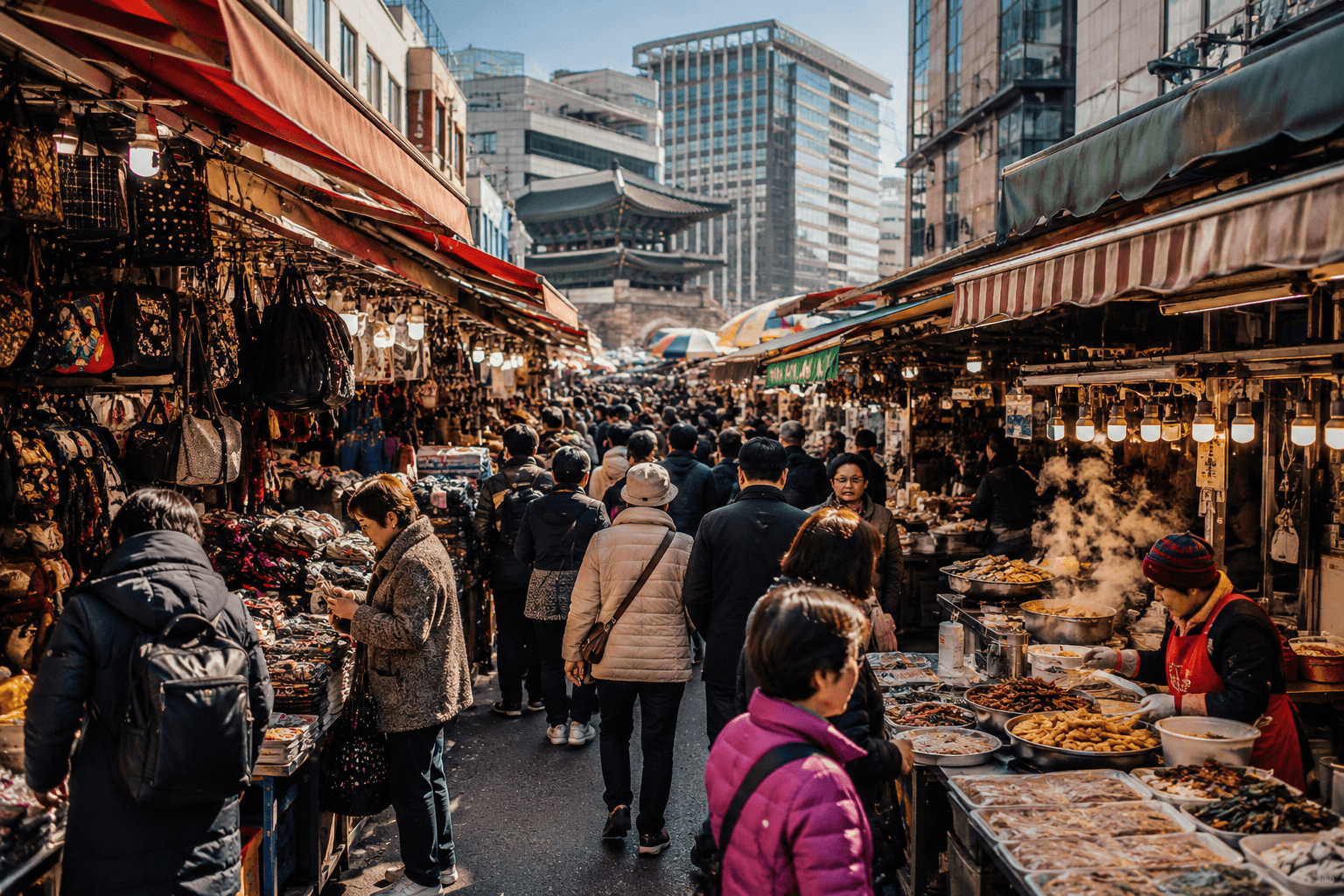
It is busy, loud, crowded, practical, delicious, confusing, and very alive. Narrow alleys run in several directions at once. Vendors call out from shopfronts. Delivery carts move through tiny gaps with terrifying confidence. Somewhere nearby, something is frying, steaming, boiling, or being wrapped in a plastic bag at impressive speed.
That is the charm of Namdaemun Market.
Located near Myeongdong, Seoul Station, and Sungnyemun Gate, Namdaemun Market is one of Korea’s largest and oldest traditional markets. It is not a quiet cultural street or a stylish shopping complex. It is a working market where locals shop for clothing, kitchenware, children’s goods, accessories, imported products, food, souvenirs, and everyday items.
For first-time visitors, Namdaemun can feel overwhelming at first. One minute you are looking at socks. The next minute you are in a food alley holding hotteok and wondering how the market changed genre so quickly.
That is exactly why it is worth visiting.
Namdaemun Market gives travelers a different side of Seoul: less curated, more local, and full of small discoveries. It may not be the neatest place on your itinerary, but it might become one of the most memorable.
Table of contents
What Is Namdaemun Market?
Namdaemun Market is a huge traditional market in central Seoul, located beside Sungnyemun Gate, also known as Namdaemun.
The market has a long history and remains one of Korea’s most important wholesale and retail shopping areas. Today, it is filled with thousands of shops and stalls selling clothing, accessories, kitchenware, souvenirs, stationery, imported goods, food, children’s clothing, bags, glasses, ginseng, and everyday products.
Unlike modern malls, Namdaemun is not arranged to make your life easy. It is arranged like a living organism that has been growing for centuries and occasionally decided that signs were optional.
That is part of the experience.
Some sections feel tourist-friendly, with souvenirs and street snacks. Other parts feel more local, with shop owners, regular customers, wholesale buyers, and restaurant alleys that have clearly been feeding people for a long time.
Namdaemun is not a place where you simply “see” the market. You enter it, get mildly turned around, smell something delicious, follow the crowd, and somehow leave with snacks, socks, and a stronger opinion about dumplings.
Is Namdaemun Market Worth Visiting in 2026?
Yes, Namdaemun Market is still worth visiting in 2026, especially if you want a more local and energetic side of Seoul.
It is not as sleek as Myeongdong, not as scenic as N Seoul Tower, and not as trendy as Seongsu-dong. But Namdaemun has something those places do not: old-market energy.
It feels practical. People are shopping with purpose. Food stalls are serving quickly. Restaurants are packed into narrow alleys. Products are stacked high, signs compete for attention, and the whole place feels like it has no interest in pretending to be calm for your travel photos.
For travelers, that can be refreshing.
Namdaemun is especially good for food, affordable shopping, souvenirs, kitchenware, and casual wandering. It is also easy to combine with Myeongdong, Sungnyemun Gate, Namsan, and N Seoul Tower.
The best way to enjoy it is to arrive hungry, bring some cash, wear comfortable shoes, and accept that you may not fully understand the layout. The market does not need to be solved. It needs to be walked.
Quick Visitor Information
| Item | Details |
|---|---|
| Name | Namdaemun Market |
| Korean Name | 남대문시장 |
| Location | Jung-gu, central Seoul |
| Nearest Subway | Hoehyeon Station, Line 4 |
| Best Exit | Hoehyeon Station Exit 5 |
| Admission | Free |
| Best Visit Length | 2 to 3 hours |
| Best Time | Late morning to afternoon for shopping, afternoon to early evening for food |
| Market Holiday | Sunday; individual restaurant exceptions may apply |
| Good For | Street food, souvenirs, market alleys, kitchenware, clothing, local restaurants |
| Nearby Stops | Myeongdong, Sungnyemun Gate, N Seoul Tower, Seoul Station |
Official visitor information lists operating hours as varying by store and Sunday as the market holiday. Some wholesale sections operate overnight, but most first-time visitors should come from late morning through the afternoon, when retail shops and food alleys are easier to enjoy. Cards are widely accepted, though a little cash is still useful at small stalls.
If you visit too late expecting a full tourist-style night market, you may find more closed shutters than snacks. Seoul has night energy, but Namdaemun is not the same kind of night food market some travelers imagine.
Why Visit Namdaemun Market?
Namdaemun Market is one of the best places in Seoul to experience traditional market culture without leaving the city center.
Visitors come here for street food, affordable shopping, souvenirs, local restaurants, market alleys, and the kind of atmosphere that cannot be recreated inside a department store.
It is especially good if you enjoy:
- Korean street food and traditional restaurant alleys
- Children’s clothing, accessories and affordable souvenirs
- Kitchenware, imported goods and everyday market shopping
- A busy, less polished side of central Seoul
- Easy walking access from Myeongdong and Sungnyemun Gate
Namdaemun is not always beautiful in the postcard sense. It is more interesting than that. It is layered, practical, noisy, and full of movement.
The first thing many visitors notice is the crowd. The second thing they notice is the smell of food. The third thing they notice is that they have somehow stopped walking and are now standing in line for something they did not plan to eat.
This is normal. The market has its methods.
Best Things to Do at Namdaemun Market
Wander Through the Market Alleys
The best thing to do at Namdaemun Market is simply wander.
The market is made of many streets, alleys, stalls, indoor shops, and specialized sections. Some areas focus on clothing. Others sell accessories, glasses, kitchenware, imported goods, flowers, stationery, children’s clothing, souvenirs, or food.
Do not expect one clean route. Namdaemun is better when you move loosely.
Start near Hoehyeon Station Exit 5 and follow the flow of people into the market. Look down the alleys before choosing where to turn. If one street feels too crowded, take a side path. If you see a long line at a food stall, consider it market research.
The fun is in the changes. One alley may feel like a souvenir street, while the next feels like lunch for office workers. A few steps later, you may be surrounded by children’s clothing, kitchen pots, or enough socks to clothe a small nation.
Namdaemun rewards curiosity more than planning.
Try Namdaemun Street Food
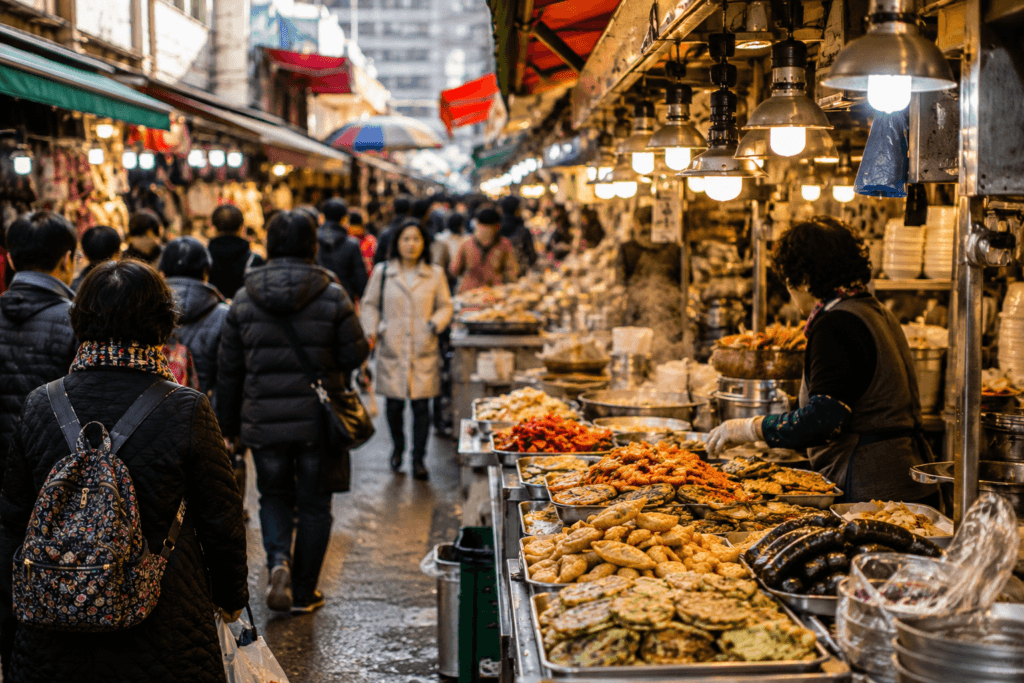
Food is one of the biggest reasons to visit Namdaemun Market.
Popular snacks include hotteok, fish cakes, dumplings, kimbap, tteokbokki, grilled snacks, and seasonal street food. The exact stalls and opening times can change, so follow the smell, the steam, and the suspiciously confident queue.
This is a good place to snack in small rounds instead of sitting down for one big meal immediately. Try one item, walk a little, then try another. It is market tapas, but with more chili paste and less ceremony.
Bring cash for smaller vendors. Cards are widely used in Seoul, but traditional markets still have moments where cash makes everything smoother.
Also, be careful with hotteok. It looks innocent. Then the filling attacks from the inside like molten lava with good intentions.
Find the Famous Vegetable Hotteok
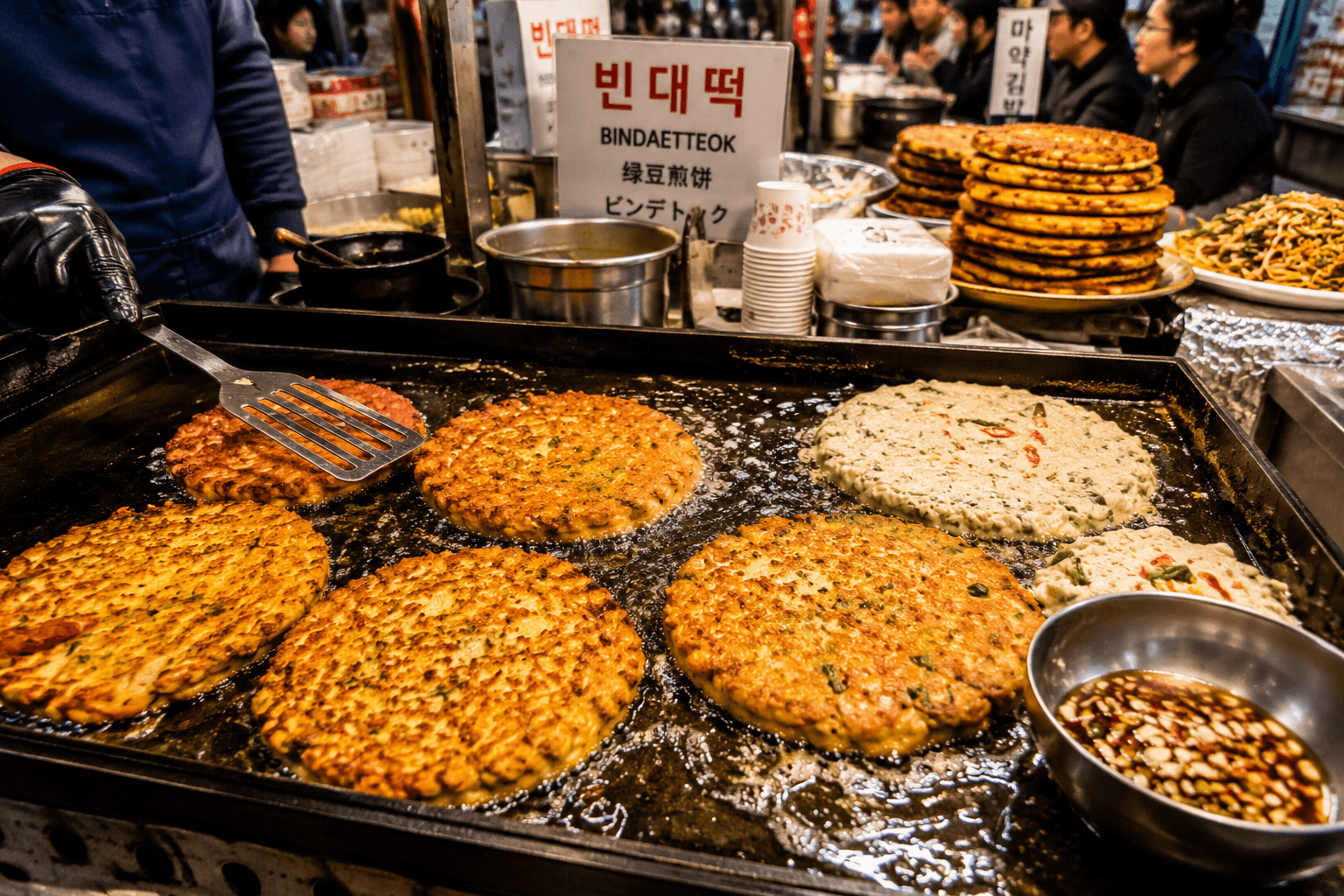
Namdaemun’s vegetable hotteok is one of the market’s best-known snacks.
Unlike the sweet cinnamon version many travelers try elsewhere in Korea, Namdaemun’s vegetable or japchae-style hotteok is savory. It usually has crispy fried dough with a filling of glass noodles, vegetables, and seasoning. The result is crunchy, chewy, oily, and extremely convincing.
Lines can be long, especially at famous stalls near the main market entrances. But the line often moves faster than it looks.
If you only try one snack at Namdaemun, this is a strong choice. It feels specific to the market, easy to eat while walking, and memorable enough to haunt you politely later.
Visit Galchi Alley
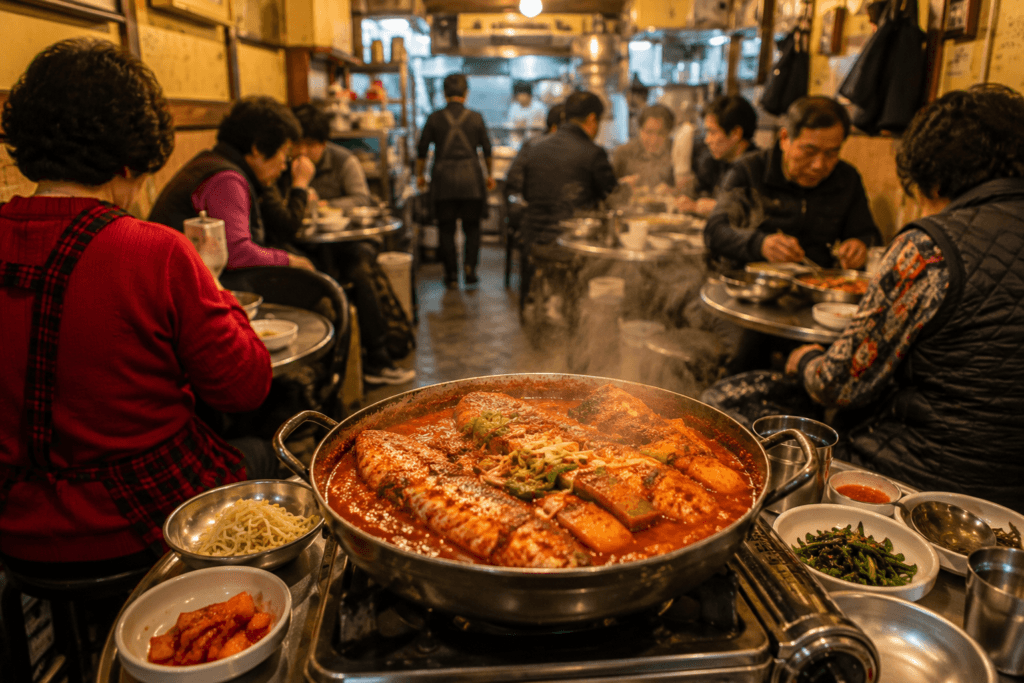
Galchi Alley is one of the best food experiences inside Namdaemun Market.
This narrow restaurant alley is famous for galchi jorim, spicy braised hairtail fish. The dish is usually served bubbling hot with red sauce, radish, rice, and side dishes. It is bold, spicy, comforting, and very different from the quick street snacks outside.
The alley has a local, old-Seoul feel. Restaurants are small, tables are close, and the smell of spicy fish stew fills the air. It is not fancy. That is the point.
For first-time visitors, Galchi Alley can feel slightly intimidating because it is narrow and busy. But if you want a more local meal, it is one of Namdaemun’s most memorable stops.
Do not wear your whitest shirt unless you enjoy living dangerously near red sauce.
Explore Kalguksu Alley
Kalguksu Alley, also known as Noodle Alley, is another classic Namdaemun food area.
Here, small restaurants serve knife-cut noodle soup, barley bibimbap, sujebi, cold noodles, and other comforting Korean dishes. It is especially good if you want a sit-down meal that feels local and filling.
This is the kind of place where the food arrives quickly, the portions feel generous, and the atmosphere is more functional than decorative. You are not there for mood lighting. You are there because noodles understand tired travelers.
Kalguksu Alley is a good option for lunch, especially on colder days or when you want something more substantial than snacks.
Shop for Souvenirs and Everyday Goods
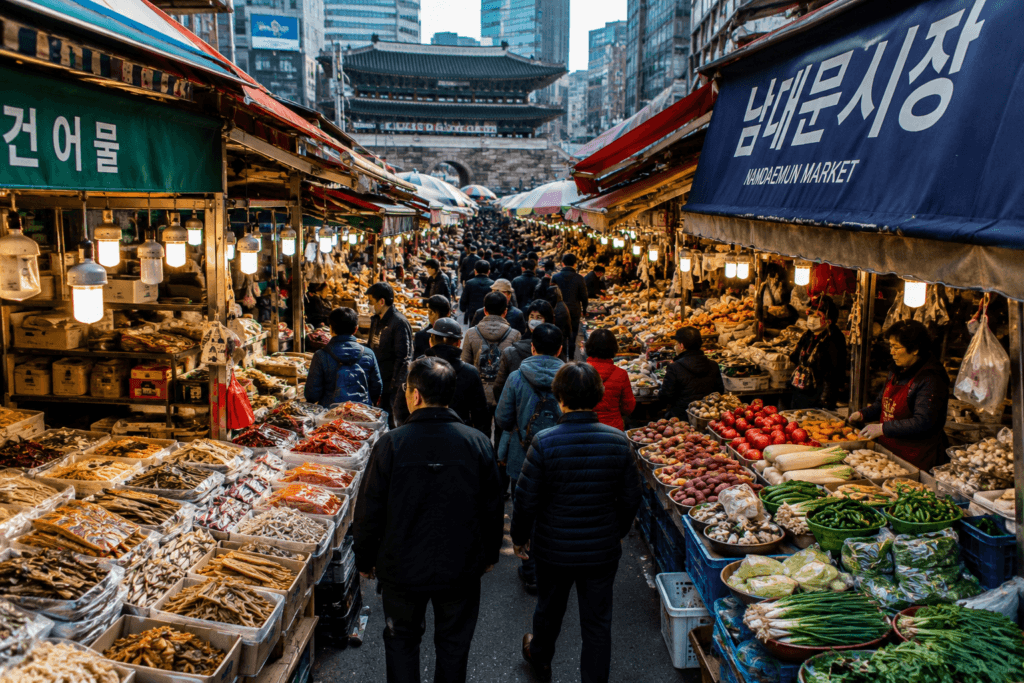
Namdaemun Market is one of Seoul’s best places for practical shopping.
You can find souvenirs, Korean snacks, bags, accessories, socks, children’s clothing, kitchenware, stationery, ginseng products, traditional-style gifts, and small household items.
Prices can be lower than in tourist-heavy shopping streets, but quality and pricing vary by shop. Browse before buying, especially for larger purchases. Some vendors may offer better prices if you buy multiple items, but bargaining is not always expected in every shop.
The best souvenir shopping here is not necessarily the most polished. It might be a useful kitchen item, a funny pair of socks, a snack pack, or a small traditional gift that somehow feels more Seoul than a perfect airport souvenir.
Namdaemun has a special talent for making visitors say, “I don’t need this,” while already reaching for their wallet.
See Sungnyemun Gate
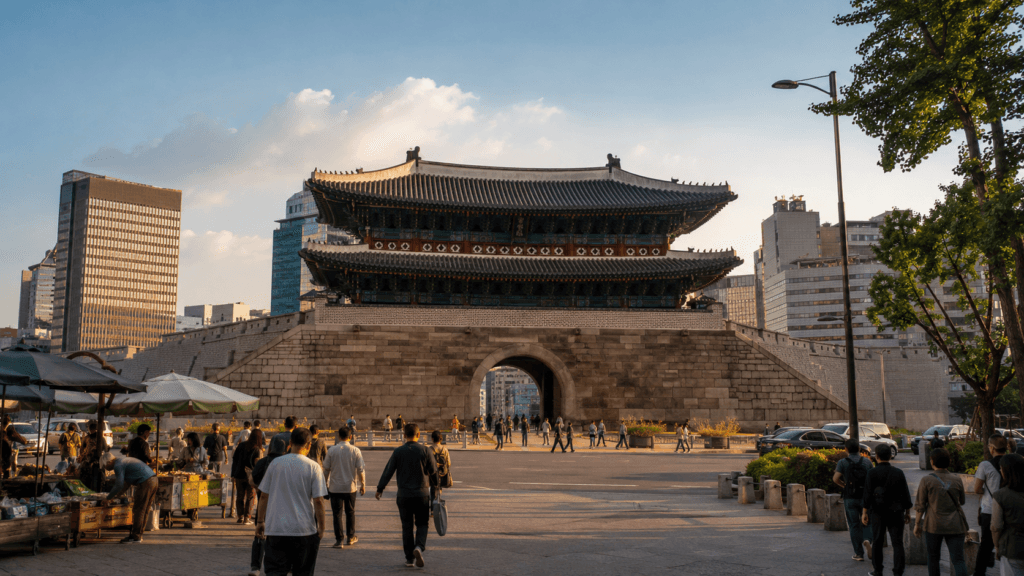
Sungnyemun Gate, also called Namdaemun, sits beside the market and is one of Seoul’s most important historic landmarks.
It creates a striking contrast with the market around it. On one side, you have a historic city gate from old Seoul. On the other, you have modern traffic, market crowds, food stalls, and shop signs.
This is one of the easiest cultural stops to combine with Namdaemun Market. Even if you only spend a few minutes there, it helps you understand why the market area has such a strong sense of history.
A good route is to visit the gate before or after exploring the market, then continue toward Myeongdong or Namsan.
Best Time to Visit Namdaemun Market
The best time to visit Namdaemun Market depends on what you want to do.
For general shopping, late morning to afternoon is best. More shops are open, the market is active, and it is easier to explore without feeling like you arrived before the market fully woke up.
For food, lunchtime through early evening is usually good. Popular stalls and restaurant alleys are livelier, and the market has more movement.
Weekdays are often better than weekends. Many shops close on Sundays, and some sections may feel quieter. If Namdaemun is a major part of your Seoul plan, avoid Sunday unless you have checked specific places in advance.
Spring and autumn are the easiest seasons for walking. Summer can be hot and humid, especially inside narrow alleys. Winter is cold, but hot snacks and noodle shops become more powerful. A steaming bowl of kalguksu in winter does not solve every problem, but it makes a convincing speech.
How to Get to Namdaemun Market
The easiest way to reach Namdaemun Market is by subway.
Take Seoul Subway Line 4 to Hoehyeon Station and use Exit 5. From there, the market is only a short walk away.
You can also walk from Myeongdong in about 10 to 15 minutes, depending on your starting point and how often you are distracted by shops. Seoul Station and City Hall are also nearby, but Hoehyeon is the most convenient subway stop for first-time visitors.
If you are new to public transportation in Korea, read How to Use the Seoul Subway Like a Local before your visit. A T-money card guide is also useful if you plan to move between markets, palaces, shopping districts, and river parks during your trip.
Namdaemun is easy to reach, but the market itself can be confusing once you arrive. Save your starting point on your map before diving into the alleys. Your future self may thank you with great sincerity.
Suggested Namdaemun Market Itineraries
Easy Half-Day Route
A simple half-day Namdaemun route starts at Hoehyeon Station.
Begin by walking through the main market alleys and browsing souvenirs, snacks, accessories, or everyday goods. Try vegetable hotteok if the line looks manageable, then continue toward Galchi Alley or Kalguksu Alley for lunch.
After eating, walk to Sungnyemun Gate for a short cultural stop. From there, continue to Myeongdong for shopping, street food, K-beauty stores, or cafes.
This route works well because it gives you traditional market energy first, then the easier shopping streets of Myeongdong afterward. It is a nice contrast: Namdaemun shakes your hand firmly, Myeongdong sells you sheet masks.
Full-Day Market, Myeongdong and Namsan Route
For a full central Seoul day, combine Namdaemun Market with Myeongdong and N Seoul Tower.
Start at Namdaemun Market in the late morning. Explore the alleys, eat lunch in Galchi Alley or Kalguksu Alley, and browse for souvenirs or snacks.
Walk toward Myeongdong in the afternoon for shopping, cafes, and K-beauty stores. About one to two hours before sunset, head toward N Seoul Tower by cable car, bus, or Namsan walking route.
Finish the day with sunset or night views from Namsan.
This is a strong first-time Seoul route because it connects market food, shopping streets, historic landmarks, and city views without needing a complicated transfer. By evening, your phone battery, camera roll, and feet will all have opinions.
Nearby Attractions
Myeongdong
Myeongdong is only a short walk from Namdaemun Market.
It is one of Seoul’s most popular shopping districts, especially for K-beauty, fashion, street food, money exchange, and hotels. Many travelers visit both Namdaemun and Myeongdong on the same day because the atmosphere is completely different.
Namdaemun feels local and practical. Myeongdong feels brighter, more polished, and more tourist-friendly.
Sungnyemun Gate
Sungnyemun Gate is the historic landmark that gives Namdaemun its name.
It is worth a short stop before or after the market, especially if you enjoy seeing how old Seoul and modern Seoul sit right next to each other. The gate looks especially striking against the surrounding roads and city buildings.
N Seoul Tower
N Seoul Tower is a natural next stop after Namdaemun Market.
From the market area, you can head toward Namsan Park or the cable car route depending on your plan. Many visitors explore Namdaemun and Myeongdong during the day, then visit N Seoul Tower around sunset.
Seoul Station and Seoullo 7017
Seoul Station is nearby, making Namdaemun convenient if you are arriving by train or staying around central Seoul.
Seoullo 7017, an elevated pedestrian walkway near Seoul Station, can also be added if you enjoy urban walking routes. It is not essential for first-time visitors, but it can be a pleasant connection if your route fits.
Han River
The Han River is not directly beside Namdaemun, but it can work as an evening plan if you want to slow down after a busy market visit.
After the noise and movement of Namdaemun, sitting by the river with snacks can feel like changing the volume setting on the whole city.
Common Mistakes to Avoid
The first mistake is visiting on Sunday without checking ahead. Many shops close on Sundays, so the market may feel quieter or less complete.
The second mistake is expecting a neat tourist market. Namdaemun is busy and sometimes confusing. That is part of the appeal.
The third mistake is arriving full. Food is one of the best reasons to visit, and the market will test your snack discipline.
The fourth mistake is relying only on cards. Many places accept cards, but cash is still helpful for small food stalls and quick purchases.
The fifth mistake is staying only on the main street. The side alleys, food alleys, and specialized shopping streets are where Namdaemun becomes more interesting.
The sixth mistake is comparing it directly with Gwangjang Market. Gwangjang Market is more famous for concentrated food stalls, while Namdaemun is a broader shopping and food market. Both are worth visiting, but they feel different.
Official Sources and Last Check
Namdaemun is a district of thousands of independent businesses, not one shop with one obedient timetable. Check a specific building or restaurant before crossing Seoul for it, and avoid making Sunday your main market day unless closed shutters are part of the photographic concept.
- Namdaemun Market Official Website — market maps, building directories and current notices
- VISITKOREA: Namdaemun Market — official store-hour variation, Sunday holiday, payment and access information
- Visit Seoul: Namdaemun Galchi-jorim Alley — official food-alley background, location and restaurant-hour guidance
Last checked: September 13, 2026. Store, wholesale building, stall and restaurant schedules can differ, especially on Sundays and public holidays.
Optional Tours and Tickets
This article may contain affiliate links, which means we may earn a small commission if you book through them, at no extra cost to you.
If you want help navigating local food alleys, consider a Seoul traditional market food tour that includes Namdaemun, Gwangjang, or nearby food areas.
If you plan to combine Namdaemun with N Seoul Tower, an N Seoul Tower ticket or sunset tour can make the day easier, especially for first-time visitors.
FAQ
Is Namdaemun Market worth visiting?
Yes. Namdaemun Market is worth visiting if you want traditional market energy, street food, local restaurants, affordable shopping, and a less polished side of central Seoul.
What is Namdaemun Market famous for?
Namdaemun Market is famous for traditional market shopping, street food, vegetable hotteok, Galchi Alley, Kalguksu Alley, souvenirs, children’s clothing, kitchenware, and everyday goods.
What is the closest subway station to Namdaemun Market?
Hoehyeon Station on Line 4 is the closest and most convenient subway station. Exit 5 is the easiest starting point for most visitors.
Is Namdaemun Market closed on Sundays?
Many shops at Namdaemun Market close on Sundays. Some restaurants or individual stores may still open, but Sunday is not the best day for a full market visit.
What time should I visit Namdaemun Market?
Late morning to afternoon is best for shopping, while lunchtime to early evening is good for food. Avoid arriving too late if you expect most tourist-friendly shops and food stalls to be open.
Is Namdaemun Market good for street food?
Yes. Namdaemun Market is good for street food, especially hotteok, dumplings, fish cakes, kimbap, tteokbokki, and other quick snacks. It is also known for restaurant alleys such as Galchi Alley and Kalguksu Alley.
What should I eat at Namdaemun Market?
Try vegetable hotteok, dumplings, kalguksu, galchi jorim, fish cakes, kimbap, and seasonal snacks. If you want a proper meal, Galchi Alley and Kalguksu Alley are strong choices.
Can I visit Namdaemun Market and Myeongdong on the same day?
Yes. Namdaemun Market and Myeongdong are within walking distance, and many travelers visit both on the same day.
Is Namdaemun Market better than Gwangjang Market?
They are different. Namdaemun is better for a mix of shopping, souvenirs, food alleys, and local market energy. Gwangjang Market is more famous for concentrated Korean food stalls and classic market dishes.
Related Guides
If you are planning a central Seoul route, these guides can help:
Myeongdong Travel Guide is the best companion guide if you want shopping, street food, K-beauty, and hotels near Namdaemun.
N Seoul Tower Guide helps you plan a sunset or night view visit after exploring the market.
Gwangjang Market Guide is useful if you want to compare Seoul’s traditional markets and focus more heavily on food.
How to Use the Seoul Subway Like a Local will help you reach Hoehyeon Station and move around central Seoul more easily.
T-money Card Guide is helpful if you plan to use buses and subway lines often.
Best Areas to Stay in Seoul for First-Time Visitors can help you decide whether Myeongdong, Jongno, Hongdae, or another area fits your travel style.
Han River Travel Guide is a good option if you want a relaxing evening after a busy market visit.
Final Thoughts
Namdaemun Market is not the calmest place in Seoul. It is not the cleanest, trendiest, or easiest to understand at first glance.
That is exactly why it is memorable.
It gives you Seoul with the volume turned up: vendors calling, carts moving, food sizzling, shoppers weaving through alleys, and visitors trying to choose between one more snack and basic self-control.
For first-time travelers, Namdaemun Market is one of the best places to experience traditional market culture in central Seoul. Come hungry, bring cash, wear comfortable shoes, and leave space in your bag.
The market has been persuading people to buy “just one more thing” for a very long time. It is alarmingly good at its job.