Some places in Seoul feel like they are standing between two different worlds.
Ikseon-dong is one of them.
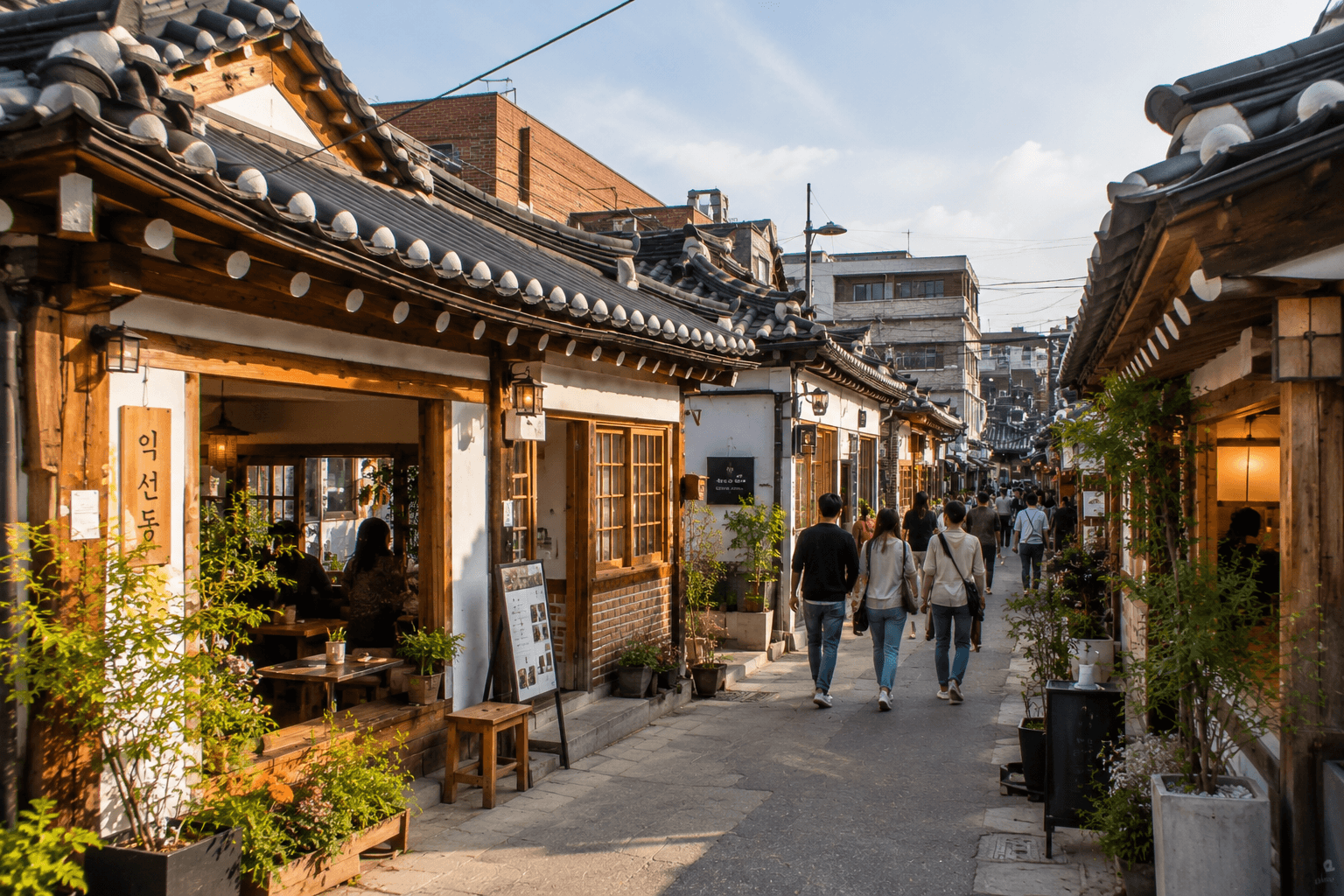
At first glance, the neighborhood looks like an old hanok village: narrow alleys, tiled rooftops, wooden doors, low buildings, and corners that seem too small for modern Seoul’s usual speed. Then you open one of those wooden doors and suddenly there is a stylish cafe, a bakery, a pasta restaurant, a cocktail bar, or a boutique shop inside.
That is the strange little magic of Ikseon-dong.
Located near Jongno 3-ga Station, Ikseon-dong is one of Seoul’s most atmospheric neighborhoods for cafe hopping, casual dining, photography, and evening walks. It is smaller than many visitors expect, but it is also denser. Every alley seems to hide another dessert shop, restaurant, courtyard, or photo spot. The neighborhood does not need a giant landmark. It operates by tiny surprises.
What makes Ikseon-dong especially fun is the contrast. The buildings feel old, but the mood inside them is modern. The streets are narrow, but the choices feel endless. You may arrive planning to “just look around” and somehow end up with coffee, dessert, dinner, and a strong emotional connection to a window seat.
Ikseon-dong is not the quietest neighborhood in Seoul anymore. It can get crowded, especially on weekends and evenings. But if you visit with a little patience and no overly strict plan, it remains one of the most enjoyable places to explore in central Seoul.
Table of contents
What Is Ikseon-dong?
Ikseon-dong is a historic hanok neighborhood in Jongno-gu, central Seoul, known today for its narrow alleys, renovated hanok buildings, cafes, restaurants, bakeries, bars, boutiques, and photo-friendly atmosphere.
Ikseon-dong preserves a dense cluster of small hanok, including 118 houses built before the 1930s according to Seoul’s Hanok Portal. Unlike Bukchon Hanok Village, which feels more residential and scenic, Ikseon-dong has become a compact food, cafe, and lifestyle district. Many old buildings now house modern businesses while keeping tiled roofs, wooden frames, courtyards, and the low-rise alley layout.
This is why Ikseon-dong feels different from other Seoul neighborhoods.
It is not as traditional as Bukchon Hanok Village, not as cultural and craft-focused as Insadong, and not as large or polished as Myeongdong. Ikseon-dong is smaller, more intimate, and more focused on atmosphere.
The best way to understand it is simple: it is a hanok alley neighborhood where Seoul’s old architecture got a second life as cafes, restaurants, and little places that make travelers say, “Wait, what’s in there?”
Usually, the answer is cake.
Is Ikseon-dong Worth Visiting in 2026?
Yes, Ikseon-dong is still worth visiting in 2026, especially if you enjoy cafes, restaurants, hanok architecture, night atmosphere, and slow wandering.
It is one of the easiest neighborhoods to add to a Seoul itinerary because it sits close to Insadong, Jongno, Changdeokgung Palace, and Bukchon. You do not need a full day here unless you want a very relaxed food-and-cafe route. Most visitors can enjoy Ikseon-dong in two to three hours.
The neighborhood is especially good for travelers who like small streets more than major landmarks. Ikseon-dong does not impress you with scale. It wins by detail: a warm cafe window, a hidden courtyard, an old roofline above a modern dessert counter, a narrow lane glowing after sunset.
That said, Ikseon-dong is popular. Weekend afternoons and evenings can be crowded, and famous cafes may have waiting lines. If you expect a secret local village, you may be disappointed. If you expect a compact, trendy hanok district with food, drinks, photos, and plenty of “should we go in?” moments, you will probably enjoy it.
Ikseon-dong is not hidden Seoul anymore. It is still charming Seoul.
Quick Visitor Information
| Item | Details |
|---|---|
| Name | Ikseon-dong |
| Korean Name | 익선동 |
| Location | Jongno-gu, Seoul |
| Nearest Subway | Jongno 3-ga Station |
| Best Exit | Exit 6 |
| Admission | Free |
| Best Visit Length | 2 to 3 hours |
| Best Time | Late morning, afternoon, or evening |
| Best For | Hanok cafes, restaurants, bakeries, bars, photos, casual walking |
| Nearby Areas | Insadong, Bukchon Hanok Village, Gyeongbokgung Palace, Changdeokgung Palace, Jongmyo Shrine |
The hanok street is free to enter and does not close like a ticketed attraction, but its businesses keep their own schedules. VISITKOREA lists operating hours as varying by shop and notes that there is no on-site parking.
Many places open from late morning or around midday, while restaurants and bars become more active in the evening. If you arrive too early, some doors may still be closed, and the neighborhood may look like it has not had coffee yet.
Why Visit Ikseon-dong?
Ikseon-dong is one of the best neighborhoods in Seoul for visitors who want a mix of traditional architecture and modern lifestyle.
People visit Ikseon-dong for:
- Compact hanok alleyways and small courtyards
- Cafes, bakeries and desserts inside renovated buildings
- Restaurants, cocktail bars and a warm evening atmosphere
- Photo spots and independent shops
- Easy walking connections from Insadong and Jongno
The biggest reason to visit is atmosphere. Ikseon-dong is not a place where you need to chase a long list of attractions. The neighborhood itself is the attraction.
The alleys are narrow, the buildings are close together, and many businesses are tucked behind modest entrances. This makes wandering feel rewarding. A plain-looking doorway may lead to a beautiful courtyard cafe. A small corner may hide a restaurant that looks tiny from outside and surprisingly spacious once you enter.
It is also a good neighborhood for travelers who want a softer evening plan. Compared with Hongdae nightlife or Myeongdong shopping streets, Ikseon-dong feels cozier and more romantic. It is not sleepy, but it glows rather than shouts.
Best Things to Do in Ikseon-dong
Explore the Hanok Alleys
The best thing to do in Ikseon-dong is simply walk through the alleys.
The neighborhood is small, but it feels like a tiny maze. Traditional rooftops, wooden doors, low walls, small signs, plants, lanterns, and hidden entrances create a sense of discovery. You do not need a strict route. In fact, a strict route slightly misunderstands the neighborhood.
Ikseon-dong is better when you wander.
Some lanes are busy with cafe lines and restaurant entrances. Others are quieter and better for photos. The famous spots are nice, but the smaller corners often feel more natural. This is where Ikseon-dong becomes charming: not in one big view, but in little scenes that last for two seconds before someone walks into your frame holding a pastry.
The alleys can be narrow, so move gently and avoid blocking paths for photos. Ikseon-dong is busy enough without turning one corner into a personal photo studio.
Go Cafe Hopping
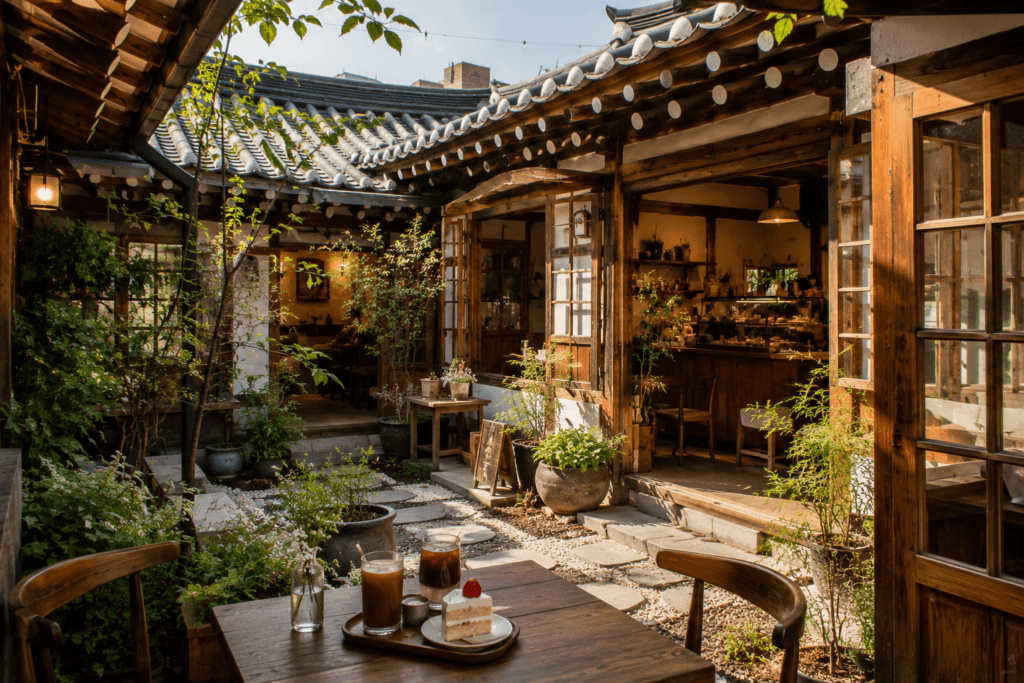
Cafe hopping is one of Ikseon-dong’s main pleasures.
Many cafes are set inside renovated hanok buildings, which gives them a very different atmosphere from standard coffee shops. You may find low wooden beams, tiled roofs, courtyards, glass ceilings, traditional details, soft lighting, and desserts that look like they arrived with a stylist.
Some cafes focus on coffee. Others are more about tea, pastries, Korean-style desserts, or photogenic interiors. The fun is choosing based on mood.
If you are visiting on a weekend, famous cafes can have long waits. Do not let one crowded place define your visit. Ikseon-dong has many cafes, and the less famous one around the corner may be calmer, friendlier, and easier on your patience.
A good rule: choose one “famous” cafe if you really want it, then let the second stop be spontaneous. Your afternoon will feel less like a cafe competition and more like a pleasant accident.
Try Restaurants in Renovated Hanok
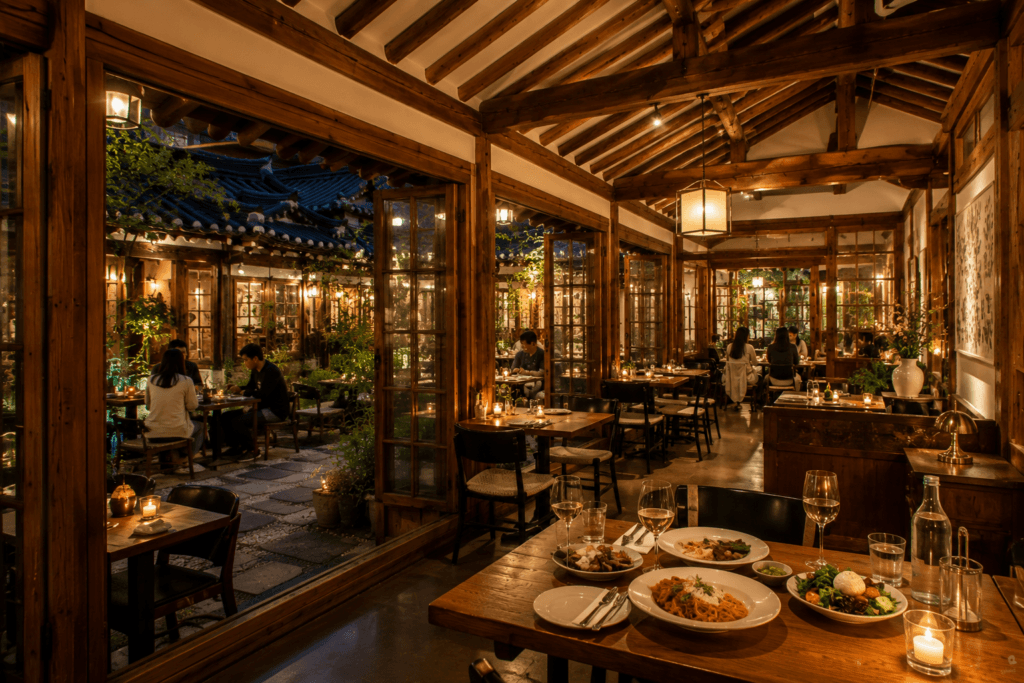
Ikseon-dong is also a strong dining neighborhood.
You can find Korean restaurants, fusion food, pasta, steak, brunch, noodles, pubs, wine bars, dessert shops, and small restaurants tucked inside hanok spaces. Some places feel traditional from outside but modern inside, which is exactly the neighborhood’s personality.
Dinner is especially popular. As the lights turn on, the alleys feel warmer and more atmospheric. Restaurants begin filling up, couples and friend groups arrive, and the whole neighborhood becomes a soft little food labyrinth.
Reservations are helpful for popular places, especially on weekends. If you do not have one, arrive earlier or stay flexible. Ikseon-dong has options, but the prettiest restaurant at peak dinner time may not welcome your spontaneous hunger with open arms.
Visit in the Evening
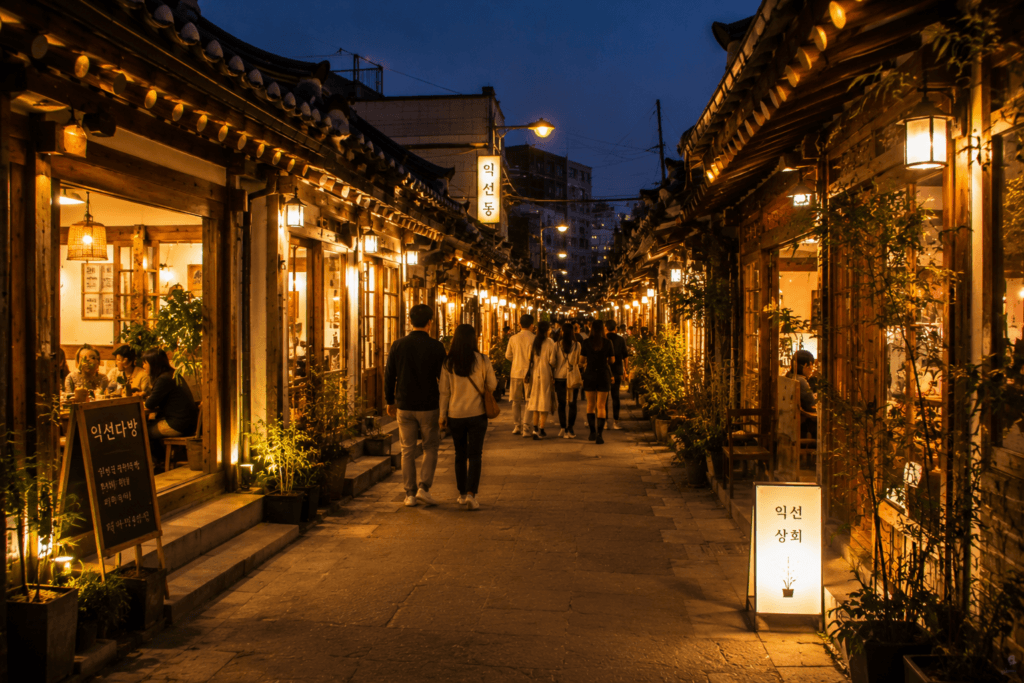
Evening is one of the best times to experience Ikseon-dong.
During the day, you can appreciate the hanok architecture and take clearer photos. But after sunset, the neighborhood changes. Warm lights glow from cafes and restaurants. Courtyards feel cozier. Windows become brighter. The narrow alleys start to feel less like a sightseeing route and more like a small movie set where everyone is deciding what to eat.
This is when Ikseon-dong becomes especially romantic.
It is a good choice for a relaxed date night, a slow dinner, or a final stop after visiting Insadong. The neighborhood is not wild nightlife. It is more like Seoul whispering, “One more dessert?”
This whisper should not always be trusted, but it is usually delicious.
Find Small Shops and Boutiques
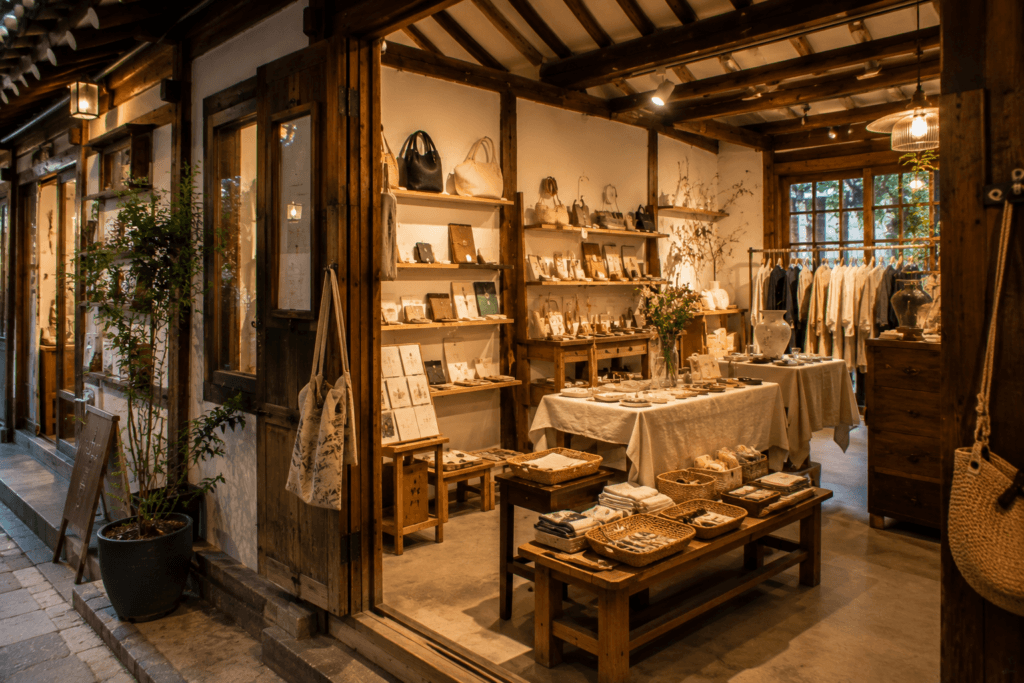
Ikseon-dong has several small shops and boutiques selling accessories, lifestyle items, stationery, gifts, small fashion pieces, and design goods.
Shopping here is not as broad as Myeongdong or as trend-driven as Seongsu-dong, but it fits the neighborhood well. The shops are smaller and more atmospheric. You may not come here with a shopping list, but you may leave with something tiny, pretty, and difficult to justify logically.
That is a valid category of travel souvenir.
If you want more traditional crafts and tea-related souvenirs, combine Ikseon-dong with Insadong. If you want bigger K-beauty shopping, continue to Myeongdong. If you want modern concept stores and brand pop-ups, Seongsu-dong is better.
Ikseon-dong is more about browsing than buying big.
Take Photos Without Rushing
Ikseon-dong is one of Seoul’s most photogenic neighborhoods, but it works best when you do not rush the photos.
The charm is in details: rooftops, windows, doorways, plants, lanterns, desserts, reflections, narrow paths, and warm light in the evening. Wide shots can be difficult because the alleys are tight and often crowded.
Instead of trying to capture the whole neighborhood in one photo, focus on smaller scenes. A cafe entrance. A tiled roof. A quiet corner. A dessert on a wooden table. A friend walking ahead through the alley.
Morning gives cleaner photos with fewer people. Late afternoon and evening give warmer atmosphere. Weekend evenings give strong mood, but also many accidental background characters. Seoul does not provide empty alleys on demand.
Best Time to Visit Ikseon-dong
The best time to visit Ikseon-dong depends on what you want.
For photos, late morning is usually better. The alleys are brighter, some cafes are starting to open, and the crowds are lighter than in the afternoon.
For cafes and restaurants, afternoon is easy and practical. More places are open, and you can browse without worrying too much about closed doors.
For atmosphere, evening is the best. Warm lights, dinner crowds, and glowing hanok interiors make the neighborhood feel more charming after sunset.
Weekdays are usually better than weekends if you want a more relaxed visit. On weekends, Ikseon-dong can feel crowded, especially around famous cafes and dinner spots.
Seasonally, spring and autumn are the most comfortable for walking. Summer can be hot and humid in the narrow alleys, so cafe breaks become less optional and more like survival strategy. Winter is cold, but the warm interiors and glowing lights make Ikseon-dong feel cozy.
How to Get to Ikseon-dong
The easiest way to reach Ikseon-dong is by subway.
Take Seoul Subway Line 1, Line 3, or Line 5 to Jongno 3-ga Station. Exit 6 is the most convenient exit for Ikseon-dong’s main hanok alley area.
From the station, the neighborhood is only a short walk away. Because the streets are small, it is helpful to use a map app once you exit. Ikseon-dong is not difficult to find, but it is very good at making you turn into the wrong charming alley.
If you are new to Seoul public transportation, read How to Use the Seoul Subway Like a Local before your visit. A T-money card guide is also useful if you plan to move between Ikseon-dong, Insadong, Bukchon, and other central Seoul neighborhoods.
Suggested Ikseon-dong Itineraries
Easy Half-Day Route
A simple half-day Ikseon-dong route starts at Jongno 3-ga Station.
Begin by walking through the hanok alleys and getting a feel for the neighborhood. Do not choose the first cafe immediately unless it really catches your eye. Wander a little first.
Stop at one hanok cafe for coffee, tea, or dessert. After that, browse small shops and side alleys. If you are visiting in the evening, choose a restaurant or bar for dinner.
This route works well for travelers who want a relaxed afternoon or evening without overpacking the schedule.
Full-Day Cultural Route
Ikseon-dong is easy to combine with nearby neighborhoods.
Start at Gyeongbokgung Palace in the morning, then walk or take a short transit ride toward Bukchon Hanok Village. After exploring Bukchon during the proper daytime visiting window, continue to Insadong for tea, crafts, galleries, and souvenirs.
In the late afternoon or evening, finish in Ikseon-dong for cafes, dinner, dessert, or drinks.
This route gives you a strong cultural day in central Seoul: palace, hanok village, traditional street, modern hanok cafe district. It is a very satisfying route, though your step count may begin behaving like a dramatic novel.
Nearby Attractions
Insadong
Insadong is one of the easiest areas to combine with Ikseon-dong.
Insadong is known for traditional tea houses, craft shops, galleries, souvenirs, and cultural streets. It feels more traditional and spacious than Ikseon-dong, making the two neighborhoods a good pairing.
A good route is Insadong first, then Ikseon-dong for dinner or evening cafes.
Bukchon Hanok Village
Bukchon Hanok Village offers a more residential and scenic hanok experience.
Unlike Ikseon-dong, Bukchon is still a real residential neighborhood with visitor etiquette rules and some restricted visiting hours in certain areas. Visit respectfully, keep your voice low, and avoid treating private homes like photo props.
Bukchon is better for traditional street views. Ikseon-dong is better for cafes and restaurants.
Gyeongbokgung Palace
Gyeongbokgung Palace is one of Seoul’s most important historical landmarks and works well as the first stop of a cultural day.
You can visit the palace in the morning, walk toward Bukchon and Insadong, then end in Ikseon-dong. This route is popular because it connects old Seoul and modern Seoul without requiring a long transfer.
Changdeokgung Palace
Changdeokgung Palace is also nearby and is especially famous for its Secret Garden.
If you are interested in quieter palace scenery and traditional architecture, Changdeokgung can pair nicely with Ikseon-dong. Visit the palace earlier in the day, then head to Ikseon-dong for food and cafes.
Jongmyo Shrine
Jongmyo Shrine is close to Ikseon-dong and offers a very different kind of historical atmosphere.
It is quieter, more solemn, and less commercial than the cafe streets nearby. This contrast can be interesting if you want a deeper cultural route around Jongno.
Common Mistakes to Avoid
The first mistake is expecting Ikseon-dong to be large. The neighborhood is compact, so it is better for two to three hours than a full sightseeing day by itself.
The second mistake is arriving too early. Some cafes, restaurants, and shops open later in the morning, so check hours if you have a specific place in mind.
The third mistake is visiting only one famous cafe and leaving. The neighborhood is more enjoyable when you explore the alleys and compare different moods.
The fourth mistake is going on a weekend evening without patience. Ikseon-dong is popular, and waiting lines are common at well-known cafes and restaurants.
The fifth mistake is wearing uncomfortable shoes. The alleys are narrow, sometimes uneven, and better explored slowly.
The sixth mistake is confusing Ikseon-dong with Bukchon. Both have hanok architecture, but the experience is very different. Bukchon is scenic and residential. Ikseon-dong is food, cafes, shops, and evening atmosphere.
Official Sources and Last Check
Ikseon-dong is a neighborhood, not a managed attraction with one timetable. Check a must-visit cafe or restaurant directly, and keep a second choice nearby; the alleys are charming, but they cannot negotiate your preferred table out of a Saturday queue.
- Seoul Hanok Portal: Ikseon-dong — official neighborhood history, Exit 6 access and hanok preservation information
- VISITKOREA: Ikseon-dong Hanok Street — official address, variable shop hours, admission and parking guidance
- Seoul Metropolitan Government: Ikseon-dong Hanok Street — official location and neighborhood overview
Last checked: September 11, 2026. Cafe, restaurant, bar and shop hours can change independently, and popular venues may use on-site waiting lists.
Optional Tours and Experiences
This article may contain affiliate links, which means we may earn a small commission if you book through them, at no extra cost to you.
If you want a relaxed cultural route, consider booking a Seoul hanok neighborhood walking tour that includes Ikseon-dong, Insadong, or Bukchon.
For travelers who want an easy evening plan, a Seoul food and cafe tour around Jongno can be helpful, especially if you prefer not to choose restaurants from a crowded map.
FAQ
Is Ikseon-dong worth visiting?
Yes. Ikseon-dong is worth visiting if you enjoy hanok cafes, restaurants, narrow alleys, evening atmosphere, photography, and modern Seoul neighborhoods with traditional architecture.
What is Ikseon-dong famous for?
Ikseon-dong is famous for renovated hanok cafes, restaurants, bakeries, cocktail bars, boutique shops, narrow alleys, and its mix of old Seoul architecture with modern lifestyle spaces.
How long do I need in Ikseon-dong?
Most visitors should allow 2 to 3 hours. If you plan to have dinner, cafe hop, or visit bars, you can spend a longer evening there.
What subway station is closest to Ikseon-dong?
Jongno 3-ga Station is the closest subway station. Lines 1, 3, and 5 stop there, and Exit 6 is the most convenient access point for Ikseon-dong.
Is Ikseon-dong better during the day or at night?
Daytime is better for clear photos and quieter walking. Evening is better for warm lights, restaurants, bars, and atmosphere. If you can, visit in late afternoon and stay into evening.
Is Ikseon-dong the same as Bukchon Hanok Village?
No. Bukchon is more residential and scenic, while Ikseon-dong is more commercial, with cafes, restaurants, bakeries, and bars inside renovated hanok buildings.
Can I visit Ikseon-dong and Insadong on the same day?
Yes. Ikseon-dong and Insadong are close to each other and easy to visit on the same day. Many travelers visit Insadong first, then Ikseon-dong for cafes or dinner.
Is Ikseon-dong good for families?
Yes, Ikseon-dong can be good for families during the day, especially for cafes, desserts, and short walks. Evening crowds and narrow alleys may feel less comfortable with strollers.
Related Guides
If you are planning a cultural day around Jongno, these guides can help:
Insadong Travel Guide is the best nearby guide for tea houses, crafts, galleries, and traditional souvenirs.
Bukchon Hanok Village Guide helps you compare Ikseon-dong with Seoul’s more scenic residential hanok neighborhood.
Gyeongbokgung Palace Guide is useful if you want to start the day with Seoul’s most iconic royal palace.
Myeongdong Travel Guide works well if you want shopping and street food after visiting Jongno.
Seongsu-dong Travel Guide is a good comparison if you want another trendy Seoul neighborhood with cafes, shops, and modern lifestyle spaces.
How to Use the Seoul Subway Like a Local will make getting to Jongno 3-ga Station easier.
Seoul 3-Day Itinerary and Seoul 5-Day Itinerary can help you fit Ikseon-dong into a larger first-time Seoul route.
Final Thoughts
Ikseon-dong is not a neighborhood that needs a strict itinerary.
It is better as a slow wander: one alley, one cafe, one small shop, one dinner decision that takes longer than expected because everything looks good.
That is part of the charm.
The neighborhood shows a side of Seoul that many travelers enjoy: traditional buildings adapted for modern life, old rooftops glowing above new restaurants, and narrow streets that somehow make a simple evening feel special.
Visit with time to spare. Explore beyond the first busy alley. Come hungry. Stay into the evening if you can.
Ikseon-dong is small, but it has a way of stretching time. You may only plan to stop by for a quick look. The neighborhood will calmly disagree.