Affiliate disclosure: This guide may contain affiliate links. If you book through them, we may earn a small commission at no extra cost to you. Learn more.
The best time to visit South Korea depends on what kind of trip you want.
If you want cherry blossoms, spring is hard to beat. If you want clear skies, colorful mountains, and comfortable walking weather, autumn is usually the winner. If you want beaches, festivals, and long evenings outside, summer can be fun, but it arrives with heat, humidity, and a rainy-season personality. Winter is cold, sometimes brutally so, but it has ski trips, cozy food, quiet palaces, and the kind of clear air that makes Seoul look sharp around the edges.
For most first-time visitors, the safest answer is simple: visit South Korea in April, May, October, or early November.
Those months usually offer the best balance of weather, scenery, and travel comfort. You can walk around palaces without melting, explore neighborhoods without freezing, and take day trips without checking the forecast every 12 minutes like it owes you money.
That said, there is no single “perfect” month for everyone. A traveler coming for cherry blossoms should plan differently from someone who wants Busan beaches, Jeju coastal roads, autumn foliage, ski resorts, or cheaper hotel prices. This guide breaks down Korea by season and month so you can choose the best time for your own trip, not someone else’s postcard.
If you are visiting during peak cherry blossom or autumn foliage season, booking Seoul hotel options for spring and autumn earlier can help you avoid paying “the flowers are popular” prices. Korea is beautiful in these seasons, and hotel prices know it.
Table of contents
Quick Answer: When Is the Best Time to Visit South Korea?
For most travelers, April, May, October, and early November are the best months to visit South Korea.
April is famous for cherry blossoms, palace walks, and spring festivals. May is warmer, greener, and often easier than peak blossom week. October is one of the most comfortable months of the year, with crisp air, blue skies, and autumn colors beginning to spread. Early November can still be beautiful, especially in Seoul, Gyeongju, and lower-elevation areas.
If you are visiting Korea for the first time, October may be the easiest month overall. The weather is usually comfortable, outdoor sightseeing feels pleasant, and it works well for Seoul, Busan, Gyeongju, Jeju, and day trips.
If cherry blossoms are your main goal, aim for late March to early April. Southern regions such as Jeju and Busan usually bloom earlier, while Seoul often follows around early April. Blossoms are beautiful, but they do not wait politely for your flight schedule. Peak bloom can shift depending on weather, so always check forecasts closer to your travel dates.
If you want beaches, July and August are the main beach months, especially for Busan, Jeju, and Korea’s east coast. Just know that summer in Korea is hot, humid, and often rainy. It does not simply hug you. It commits.
If you want fewer crowds and lower prices, consider March, June, late November, or early December. These months are not always the most dramatic, but they can be easier on your budget and calmer around major attractions.
Best Time to Visit Korea by Travel Style
| Travel Style | Best Months | Why It Works |
|---|---|---|
| First-time Korea trip | April, May, October | Comfortable weather and easy sightseeing |
| Cherry blossoms | Late March to early April | Best chance for spring flowers |
| Autumn foliage | Late October to early November | Colorful leaves and cool walking weather |
| Seoul city travel | April, May, October, November | Best for palaces, markets, cafes, and neighborhoods |
| Busan beaches | July to August | Warmest weather for beach trips |
| Jeju road trip | April, May, September, October | Better balance of scenery and weather |
| Budget travel | March, June, late November, early December | Lower demand than peak spring/autumn |
| Hiking | May, October, early November | Comfortable temperatures and better views |
| Ski and snow trips | January to February | Best season for winter sports |
| Food-focused travel | Any season | Korea is very committed to feeding you well |
Month-by-Month Guide to Visiting South Korea
| Month | Weather Feel | Best For | Watch Out For |
|---|---|---|---|
| January | Very cold, dry, sometimes snowy | Skiing, winter food, quiet sightseeing | Freezing wind, icy streets |
| February | Cold, slowly easing late month | Ski trips, winter festivals, fewer crowds | Seollal holiday travel rush |
| March | Cool early spring | Budget travel, early blossoms in the south | Chilly mornings and changing weather |
| April | Mild, beautiful, popular | Cherry blossoms, palaces, Seoul walks | Crowds and higher prices |
| May | Warm and green | Outdoor sightseeing, festivals, hiking | Long weekends and popular travel dates |
| June | Warm, early summer | Lower crowds before peak summer | Humidity and possible rain increase |
| July | Hot, humid, rainy | Beaches, indoor plans, summer energy | Rainy season and heavy showers |
| August | Very hot and humid | Beaches, nightlife, summer festivals | Heat, humidity, typhoon risk |
| September | Warm, early autumn | Jeju, Busan, food trips | Chuseok holiday dates in 2026 |
| October | Cool, clear, very popular | First-time trips, foliage, hiking | Peak-season hotels and crowds |
| November | Cool to cold | Late foliage, calmer city travel | Shorter days and colder evenings |
| December | Cold, festive | Winter lights, food, shopping | Freezing temperatures and dry air |
The table is useful for quick planning, but the real answer depends on your route. Seoul, Busan, Jeju, Gyeongju, and mountain areas do not always feel the same at the same time. Cherry blossoms usually start earlier in the south and arrive later in Seoul. Autumn foliage often appears first in mountain areas such as Seoraksan, then spreads later to Seoul’s parks and palace areas.
If your itinerary includes multiple regions, do not plan based only on Seoul weather. A trip that feels perfect in Busan may feel chilly in the mountains, and Jeju can have its own windy little opinions.
Spring in Korea: March to May
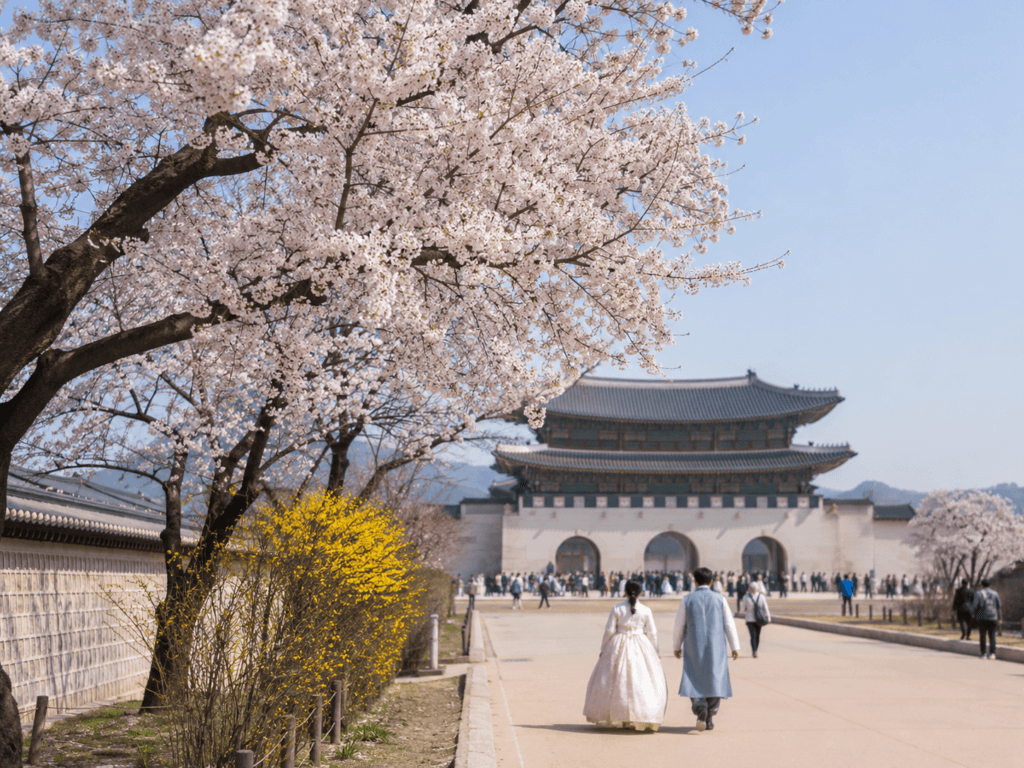
Spring is one of the most popular times to visit South Korea, and for good reason.
The cold starts to fade, trees wake up, cafes open their windows, and travelers suddenly remember that walking 20,000 steps is easier when the weather is not trying to personally defeat them. Spring is especially beautiful in Seoul, Gyeongju, Jeju, Busan, and palace areas where flowers soften the city scenery.
March is the beginning of spring, but it can still feel cold, especially in the mornings and evenings. It is a good month for travelers who want fewer crowds and lower prices, but it may not feel fully “spring-like” until later in the month. Southern regions such as Jeju and Busan usually warm up earlier than Seoul.
April is the most famous spring month because of cherry blossoms. In most years, cherry blossoms begin earlier in southern regions such as Jeju and Busan, while Seoul usually follows around early April. Exact timing changes every year depending on temperature, rain, and wind, so travelers planning a spring trip should check updated bloom forecasts close to their travel dates.
Cherry blossom season is beautiful, but it is short. Peak bloom often lasts only about a week, and strong rain can end the show quickly. If blossoms are your main reason for visiting, give yourself a few flexible days instead of betting your entire trip on one exact date. Flowers are lovely, but they are terrible at customer service.
Some of the best places to enjoy spring in Seoul include palace areas, the Han River, Namsan, Seokchon Lake, Yeouido, and traditional neighborhoods. A spring itinerary can naturally combine the Gyeongbokgung Palace Guide, Bukchon Hanok Village Guide, Han River Travel Guide, and N Seoul Tower Travel Guide.
May is one of the easiest months for first-time visitors. The weather is warmer, the trees are green, and outdoor sightseeing feels comfortable. It is less risky than peak cherry blossom week because you are not depending on one flower schedule. May is also a good month for Gyeongju, Jeju, hiking, and slower neighborhood travel in Seoul.
If you are visiting during spring and want a simple seasonal experience, a Korea cherry blossom day tour can be useful for reaching flower spots outside central Seoul without planning every transfer yourself. For independent travelers, stay flexible and choose flower areas based on updated bloom reports once you are close to your travel date.
What to Wear in Spring
Spring packing depends heavily on the month.
In March, bring a light coat, sweaters, long pants, and comfortable walking shoes. Mornings and evenings can still feel winter-like, especially if you are coming from a warmer country.
In April, layers are the safest choice. A light jacket, cardigan, or sweater is useful in the morning, but afternoons can feel mild and pleasant. If you plan to take cherry blossom photos, comfortable shoes matter more than stylish shoes. Blossoms are usually not located two steps from your hotel lobby.
In May, you can pack lighter clothes, but still bring a thin jacket for evenings. Sunscreen becomes more useful, and a compact umbrella is smart because spring rain can appear without much ceremony.
Is Spring the Best Time to Visit Korea?
Spring is one of the best times to visit Korea if you want flowers, comfortable sightseeing, and classic travel photos.
It is especially good for first-time visitors who plan to spend time in Seoul, Gyeongju, Jeonju, Busan, or Jeju. It is also a strong choice for travelers who enjoy walking through palaces, parks, cafes, markets, and old neighborhoods.
However, spring is not perfect. Cherry blossom week can be crowded, hotel prices can rise, and weather can be unpredictable. Early March may still feel cold, and late May can start to feel warm. If your main goal is stable weather rather than flowers, May or October may be easier than early April.
For most travelers, spring is worth it. Just do not build your entire trip around one tree, one forecast, or one Instagram photo. Korea has plenty to offer even if the blossoms arrive early, late, or dramatically leave the chat after a windy day.
Summer in Korea: June to August
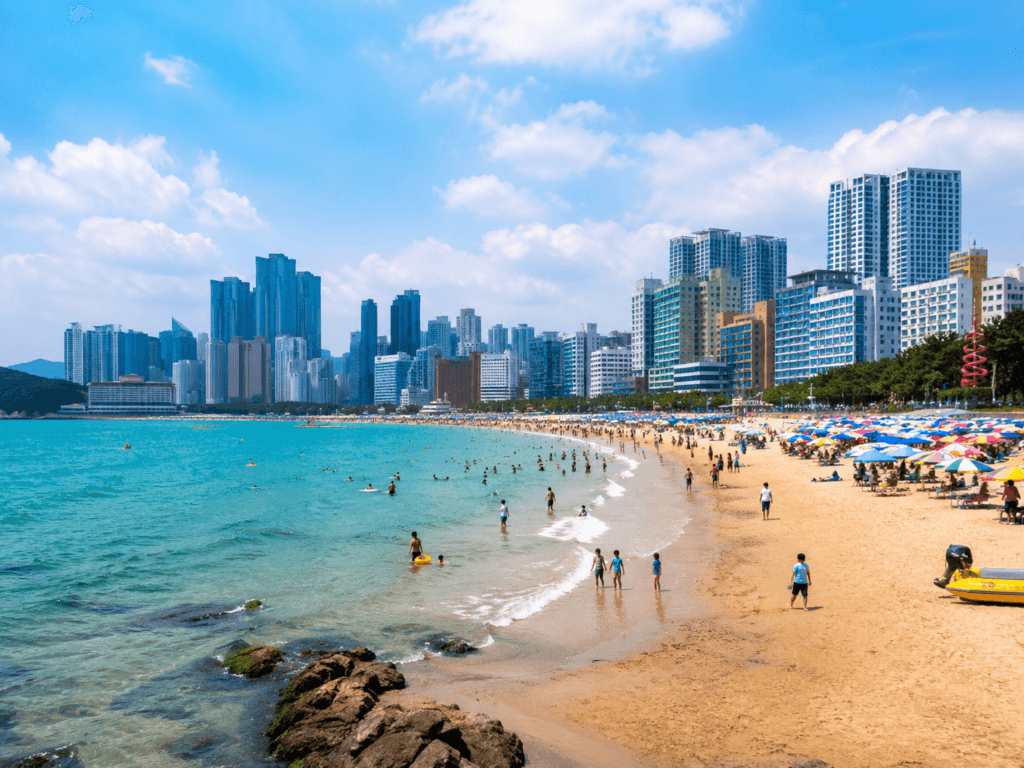
Summer in Korea is lively, colorful, and full of energy. It is also hot, humid, and occasionally dramatic about rain.
June starts warm and can be a good shoulder-season month, especially in the first half. Seoul is greener, evenings are pleasant, and tourist crowds are often more manageable than peak spring or autumn. By late June, humidity begins to rise, and the rainy season can start to affect travel plans.
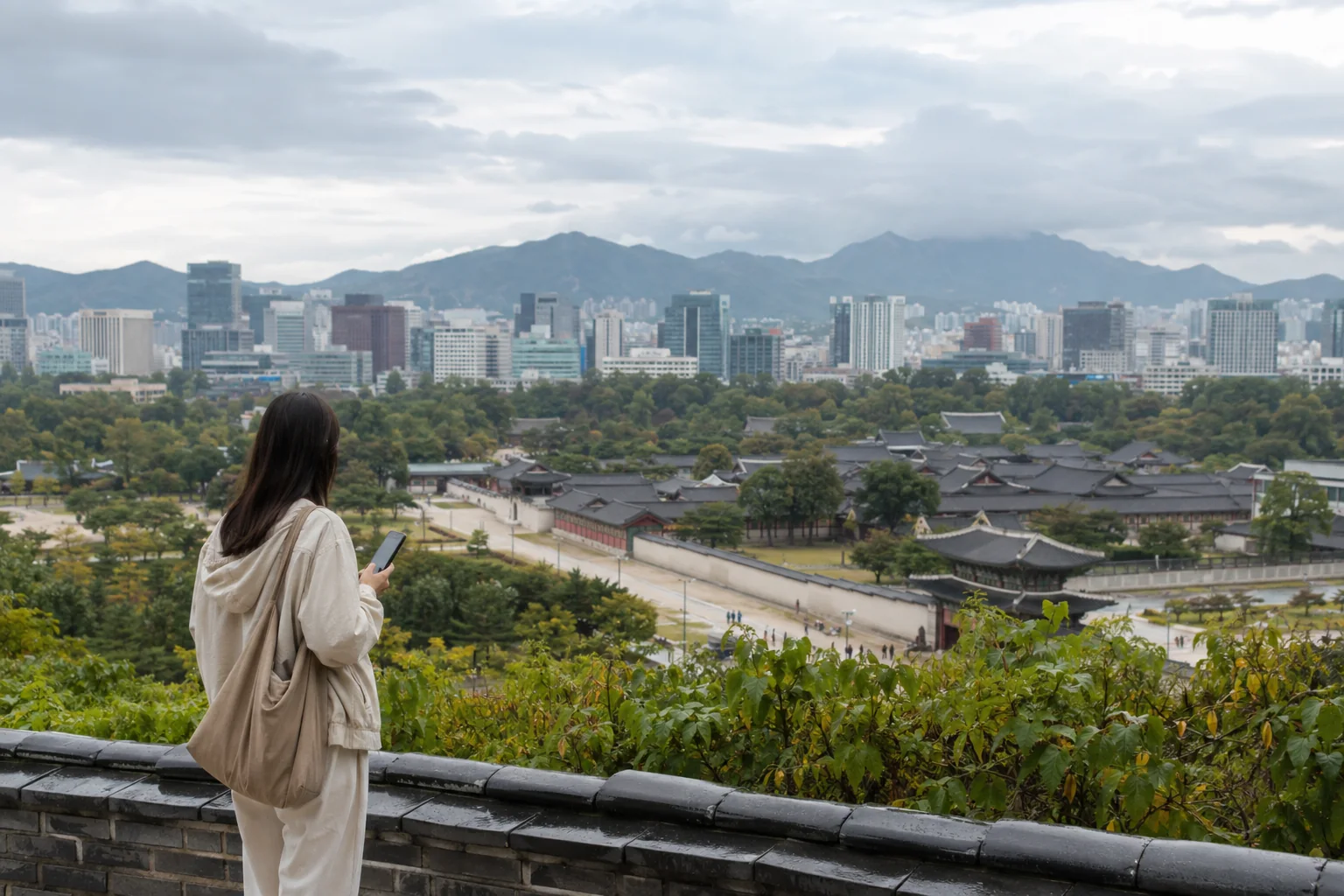
July is usually hot, humid, and rainy. This does not mean you cannot travel to Korea in July, but it does mean you should plan differently. Outdoor sightseeing is still possible, but long palace days, full-day walking routes, and mountain hikes can feel harder than they look on paper. A July itinerary works better when you mix outdoor stops with cafes, museums, shopping malls, markets, and indoor attractions.
August is usually the hottest month. Seoul can feel heavy in the afternoon, and even short walks may turn into a negotiation between your body and the nearest air-conditioned building. Korean summer does not simply arrive. It takes over the room, introduces itself loudly, and asks why you packed jeans.
That said, summer is not a bad season for every traveler. It can be great for Busan beaches, Jeju coastal drives, evening food streets, water activities, festivals, and night views. If your dream trip includes Haeundae Beach, Gwangalli Beach, Jeju’s coast, or summer nightlife, July and August can still be exciting.
For beach-focused trips, summer works especially well with the Haeundae Beach Guide, Gwangalli Beach Guide, and Jeju Travel Guide. Busan feels more naturally suited to summer than Seoul because beach days, seafood, coastal cafes, and night views match the season better.
If you are staying mostly in Seoul, summer is easier when you slow down. Visit outdoor places earlier in the morning or closer to sunset. Save indoor stops for the hottest part of the day. Myeongdong, Dongdaemun, COEX, cafes, museums, and department stores are not only backup plans. In August, they can feel like survival architecture.
In summer, having mobile data through a Korea eSIM for travelers can make the trip easier because you may check rain radar, subway routes, indoor backup stops, and last-minute schedule changes more often than expected. Summer rewards flexible travelers and gently punishes people who refuse to change plans.
What to Expect in the Rainy Season
Korea’s rainy season usually overlaps with late June and July, though exact timing changes each year. Rain may come as steady showers, sudden heavy downpours, or cloudy stretches that make your itinerary feel slightly soggy around the edges.
The good news is that rain does not ruin a Korea trip if you plan around it. Seoul has many indoor-friendly areas, including shopping streets, museums, cafes, markets, underground malls, and food neighborhoods. The bad news is that rain can make outdoor photos, hiking, beach days, and long walking routes less enjoyable.
For rainy days in Seoul, consider Myeongdong, Dongdaemun, COEX, museums, cafes in Seongsu, or a food-focused day. A rainy day is also a very good excuse to explore What to Eat in Korea. Soup, noodles, fried chicken, and hot street food suddenly become part of the weather strategy.
Pack a compact umbrella, but also consider a light rain jacket or quick-dry clothes. Heavy rain and crowded streets are not always umbrella-friendly. Extra socks are surprisingly useful after sudden rain, especially if you plan to keep walking for the rest of the day.
Is Summer a Good Time to Visit Korea?
Summer is a good time to visit Korea if you want beaches, festivals, nightlife, and a more energetic atmosphere. It is not the easiest season for first-time visitors who want to spend all day walking around palaces, markets, and neighborhoods.
Choose summer if you are comfortable with heat and humidity, or if your route focuses on Busan, Jeju, coastal areas, and indoor-friendly city travel. Avoid packing your schedule too tightly. A slower summer itinerary will feel much better than a perfect-looking plan that melts by 2:00 PM.
Autumn in Korea: September to November
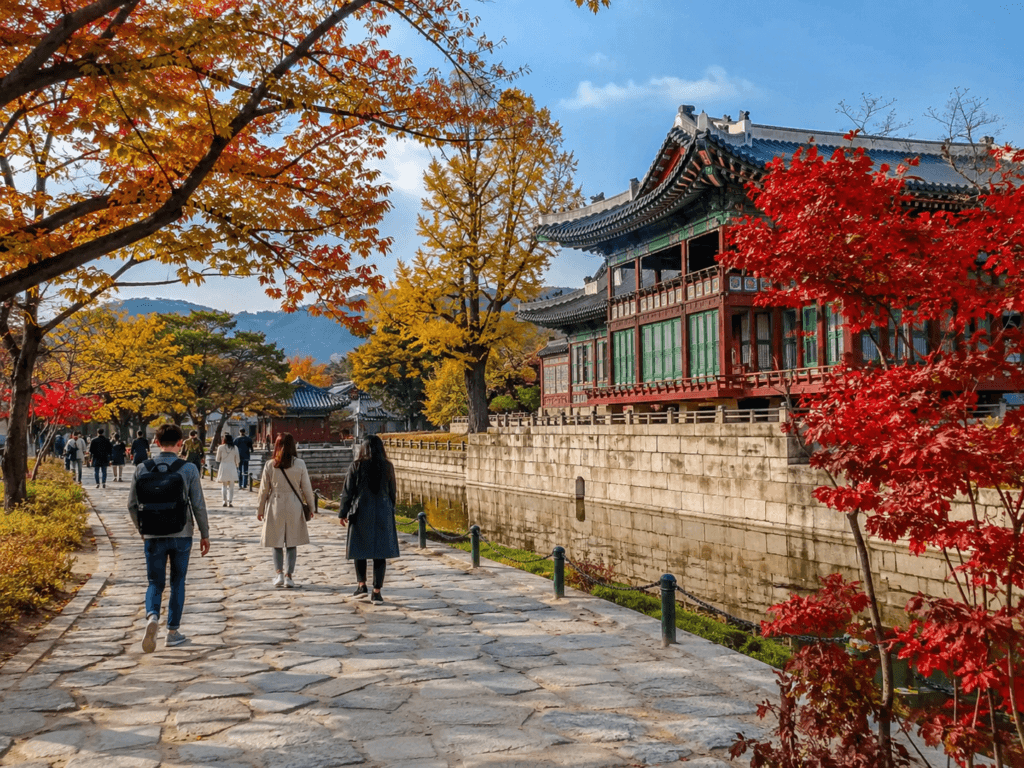
Autumn is one of the best seasons to visit South Korea.
The air becomes cooler, the skies often look clearer, and walking around cities feels easier again. After the heat and humidity of summer, autumn can feel like Korea has opened the windows and apologized for August.
September is the start of autumn, but it can still feel warm, especially in the first half of the month. It is a good time for Jeju, Busan, food trips, and city travel, but it does not always have full autumn colors yet. In 2026, travelers should pay extra attention to Chuseok, which falls in late September. Chuseok is one of Korea’s biggest holidays, and long-distance trains, buses, flights, and some restaurants can be affected.
October is often the best overall month to visit Korea. The weather is usually comfortable, outdoor sightseeing feels pleasant, and the season works well for almost every route: Seoul, Busan, Gyeongju, Jeju, national parks, and day trips. If someone asks for the safest month for a first Korea trip, October is usually the month I would place on the table first.
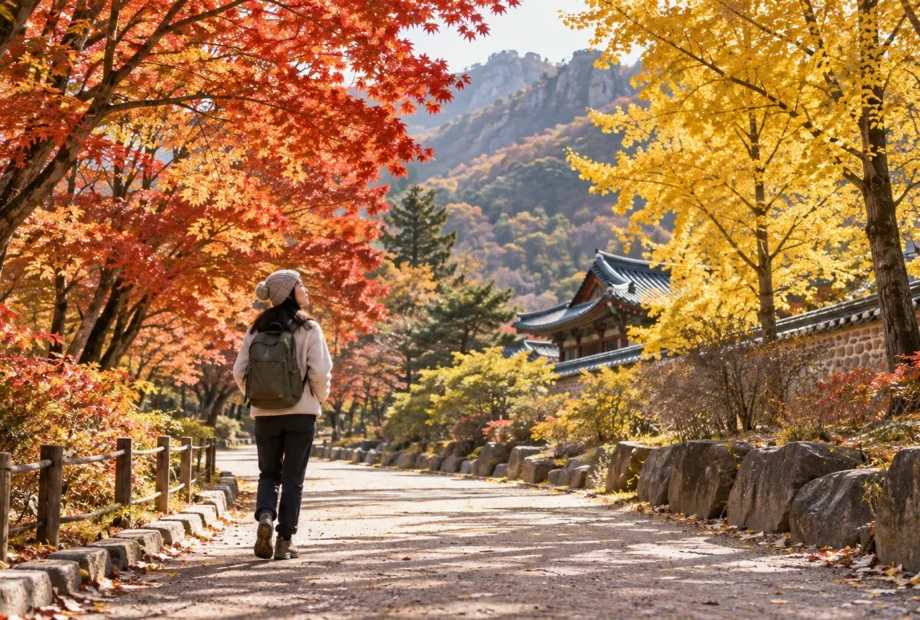
Late October to early November is usually the best window for autumn foliage, though exact timing changes every year. Mountain areas such as Seoraksan often change earlier, while Seoul’s palaces, parks, and city streets usually look better later. If autumn colors are your main goal, check foliage forecasts closer to your trip and keep your route flexible.
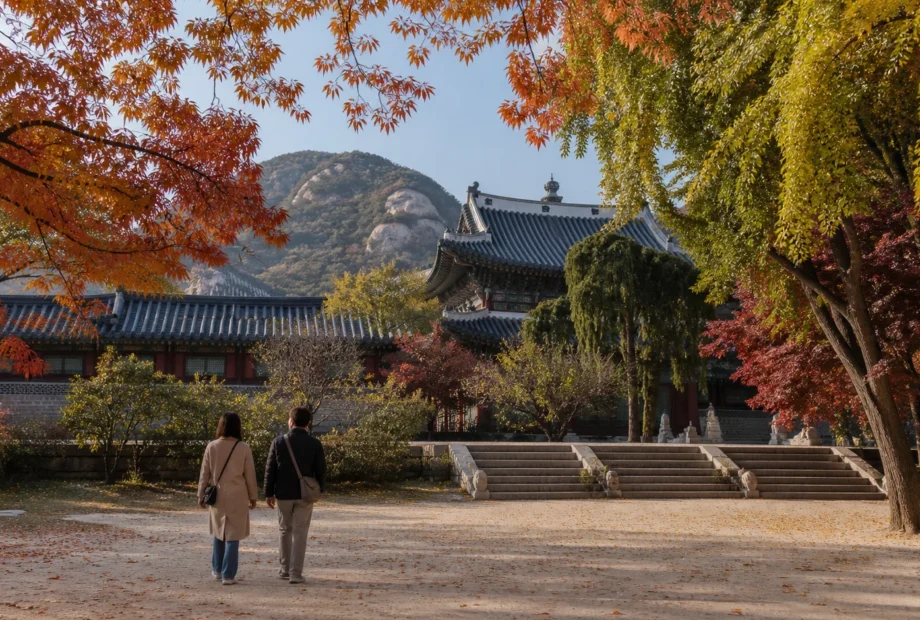
November starts beautiful in many places, especially early in the month. Seoul, Gyeongju, and palace areas can still have lovely autumn colors, but temperatures drop as the month continues. By late November, the mood shifts toward early winter. It is calmer than October, and hotel prices may be easier, but evenings can feel cold.
Autumn works naturally with cultural and scenic routes. In Seoul, it pairs well with the Gyeongbokgung Palace Guide, N Seoul Tower Travel Guide, Insadong Travel Guide, and Han River Travel Guide. Outside Seoul, it is an excellent season for the Gyeongju Travel Guide, temple visits, mountain day trips, and slower city walks.
If you want to see autumn foliage without planning every transfer yourself, a Korea fall foliage tour from Seoul can be useful, especially for mountain areas or day trips where public transportation may take longer.
Why Autumn Is So Popular
Autumn is popular because it gives travelers the thing they quietly want most: comfortable movement.
You can walk more. You can take better photos. You can sit outside with coffee without fighting humidity. Markets feel easier, palaces feel calmer, and day trips do not require the same level of weather bravery.
It is also one of the best seasons for food. BBQ, noodles, hotteok, stews, market snacks, and cafe hopping all feel right in autumn. A chilly evening after sunset can turn a simple bowl of kimchi jjigae into a small personal event.
The main downside is popularity. October and early November can be busy, especially around famous foliage spots, palaces, and major travel weekends. Hotels in Seoul and popular destinations may become more expensive. If you are visiting during peak autumn, book accommodation earlier and avoid assuming that every train seat will politely remain available for you.
Is Autumn the Best Time to Visit Korea?
For many travelers, yes. Autumn is probably the best season for a first trip to South Korea.
It has fewer timing risks than cherry blossom season, more comfortable weather than summer, and easier outdoor sightseeing than winter. If you want Seoul, Busan, Gyeongju, and maybe Jeju in one trip, October or early November is one of the strongest choices.
The only real warning is that “autumn foliage” is not the same everywhere at the same time. If you visit too early, the leaves may still be mostly green. If you visit too late, mountain areas may already be past peak. But even without perfect foliage, autumn is still a beautiful and practical season for Korea.
Winter in Korea: December to February
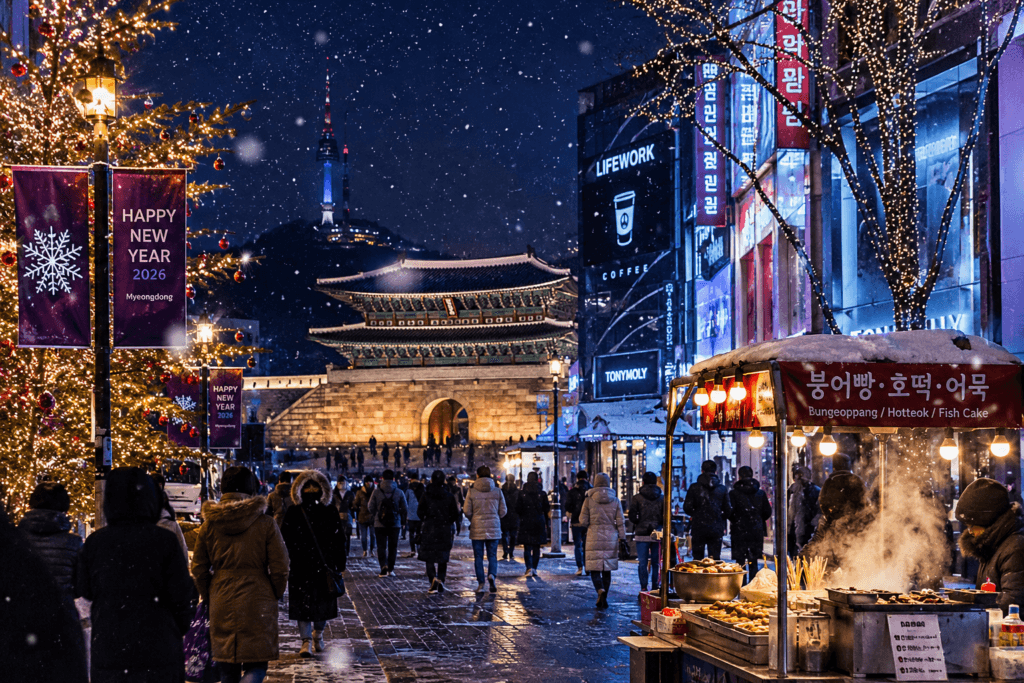
Winter in Korea is cold, dry, and sharper than many first-time visitors expect.
Seoul can be freezing, especially in January, and the wind can make temperatures feel colder than the number on your weather app. Snow is possible, though not guaranteed in Seoul. Mountain areas and ski resorts are much better for winter snow experiences.
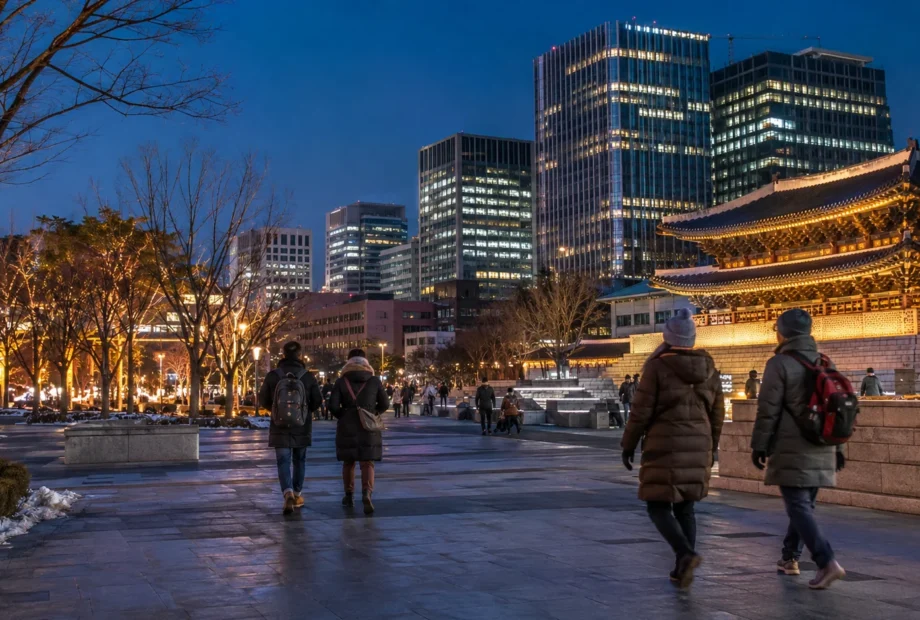
Winter is not the easiest season for casual sightseeing, but it has its own charm. Palaces can look beautiful in the cold, streets are less crowded than peak seasons, winter lights appear in shopping districts, and Korean comfort food becomes dangerously persuasive. Hot soups, grilled meat, fish cake broth, hotteok, and steaming stews all taste better when your fingers are questioning their future.
December is festive and cold. It is a good month for city lights, shopping, cafes, food, and year-end atmosphere. January is usually the coldest month and the best time for ski resorts, snow trips, and winter activities. February is still cold, but the end of the month can feel slightly closer to spring.
Winter works well for travelers who enjoy cozy city trips, photography, food, shopping, and ski day trips. It is less ideal if your dream Korea trip involves long outdoor walks, light packing, beaches, or spending all day moving between outdoor attractions.
For winter city travel, Seoul neighborhoods such as Myeongdong, Dongdaemun, Insadong, and Hongdae are still easy to enjoy because food, shopping, cafes, and subway access are close together. Winter pairs naturally with the Myeongdong Travel Guide, Dongdaemun Travel Guide, What to Eat in Korea, and Seoul Subway Guide.
If you want a snow or ski experience without staying overnight outside Seoul, a Korea ski resort day trip can be a convenient option. It is especially helpful if you do not want to figure out winter transport, equipment rental, and resort logistics on your own.
What to Wear in Winter
Pack seriously for winter, especially if you visit from late December through February.
A warm coat, sweaters, thermal layers, gloves, scarf, hat, and warm socks are useful. Comfortable winter shoes matter because streets can be icy after snow or freezing rain. If you plan to spend long hours outside, heat packs can make the day much more comfortable.
Do not trust a cute light jacket just because it looks good in photos. Winter in Korea is beautiful, but it has no interest in your cute light jacket. The wind will find out.
Indoor heating is usually strong, so layers are better than one extremely heavy outfit. You may feel freezing outside and then suddenly too warm inside a subway, cafe, or restaurant. Winter packing in Korea is basically a small clothing puzzle with snacks.
Is Winter a Good Time to Visit Korea?
Winter is a good time to visit Korea if you want lower crowds, winter food, shopping, cafes, ski trips, and a quieter version of Seoul.
It is not the best season for travelers who hate cold weather or want a first trip filled with outdoor walking. You can still have a great winter trip, but the itinerary should be realistic. Plan shorter outdoor blocks, use the subway well, take cafe breaks, and choose neighborhoods where attractions are close together.
The biggest winter advantage is atmosphere. A cold evening in Myeongdong with street food, a snowy palace morning, a warm bowl of soup after a long walk, or a ski day outside Seoul can feel very memorable. Korea in winter is not always comfortable, but it can be quietly beautiful when you plan for the cold instead of pretending it is not there.
How to Choose the Right Season for Your Korea Trip
The best month for Korea changes depending on what you want from the trip. A first-time traveler, a beach traveler, a cherry blossom hunter, and a budget traveler should not all follow the same plan.
If this is your first trip to South Korea, choose April, May, October, or early November. These months give you the easiest balance of weather, scenery, and transportation comfort. You can visit palaces, markets, cafes, neighborhoods, and day-trip destinations without fighting extreme heat or cold.
If you want cherry blossoms, plan for late March to early April. Southern regions such as Jeju and Busan usually bloom earlier, while Seoul often follows later. The tricky part is that blossoms do not last long. If your entire happiness depends on one exact date, the flowers may look at your itinerary and choose chaos.
If you want autumn foliage, aim for late October to early November. Mountain areas usually change color earlier than Seoul, so travelers who want fall leaves should check updated foliage forecasts close to the trip. Autumn is more forgiving than cherry blossom season, but timing still matters.
If you want beaches, choose July or August. Busan, Jeju, and the east coast are the strongest summer choices. Seoul can still be fun in summer, but beach destinations make better use of the heat. If you are planning a coastal trip, combine this season with the Haeundae Beach Guide, Gwangalli Beach Guide, or Jeju Travel Guide.
If you want hiking, choose May, October, or early November. These months usually offer better walking weather and clearer views. Summer hiking can be hot and rainy, while winter hiking requires proper gear and more caution.
If you want lower prices and fewer crowds, consider March, June, late November, or early December. These months are not always the most famous, but they can be easier for budget travelers. March can still be chilly, June can become humid, and late November can feel cold, but you may find calmer attractions and better accommodation options.
If you want winter sports or snow trips, choose January or February. Seoul does not guarantee deep snow, but ski resorts outside the city are active during winter. A Korea ski resort day trip can make sense if you want a snow experience without handling resort transport and rental details alone.
Dates to Watch in 2026
When planning a Korea trip in 2026, pay attention to major holidays. They can affect transportation, hotel prices, restaurant hours, and crowds.
The biggest holidays to watch are Seollal and Chuseok.
Seollal, Korean Lunar New Year, is from February 16 to 18, 2026, with Lunar New Year’s Day falling on February 17. This is one of Korea’s most important family holidays. Many people travel across the country to visit relatives, so trains, express buses, and domestic flights can sell out quickly. Some small restaurants, shops, and local businesses may close.
Chuseok, Korean Thanksgiving, is from September 24 to 26, 2026. This is another major family holiday, and it can strongly affect long-distance travel. If your Korea trip overlaps with Chuseok, do not leave train or bus reservations until the last minute. Hope is not a transport strategy.
These holidays are not “bad” times to visit Korea, but they require more planning. Palaces, museums, and major attractions may still be open, sometimes with special events, but smaller restaurants and local shops can have changed hours. If you stay mostly in Seoul, the holiday period can feel quieter in some neighborhoods. If you plan to move between cities, it can feel much more complicated.
Other 2026 dates can also affect crowds, especially long weekends, school vacation periods, and major festival weeks. Buddha’s Birthday falls in late May in 2026, and spring weekends around cherry blossom season can be very busy. Summer beach season also raises demand in Busan and Jeju.
If your dates are fixed, do not panic. Just plan smarter. Book accommodation earlier, check opening hours, reserve intercity transport when possible, and avoid building a tight schedule around holiday travel days.
What to Pack by Season
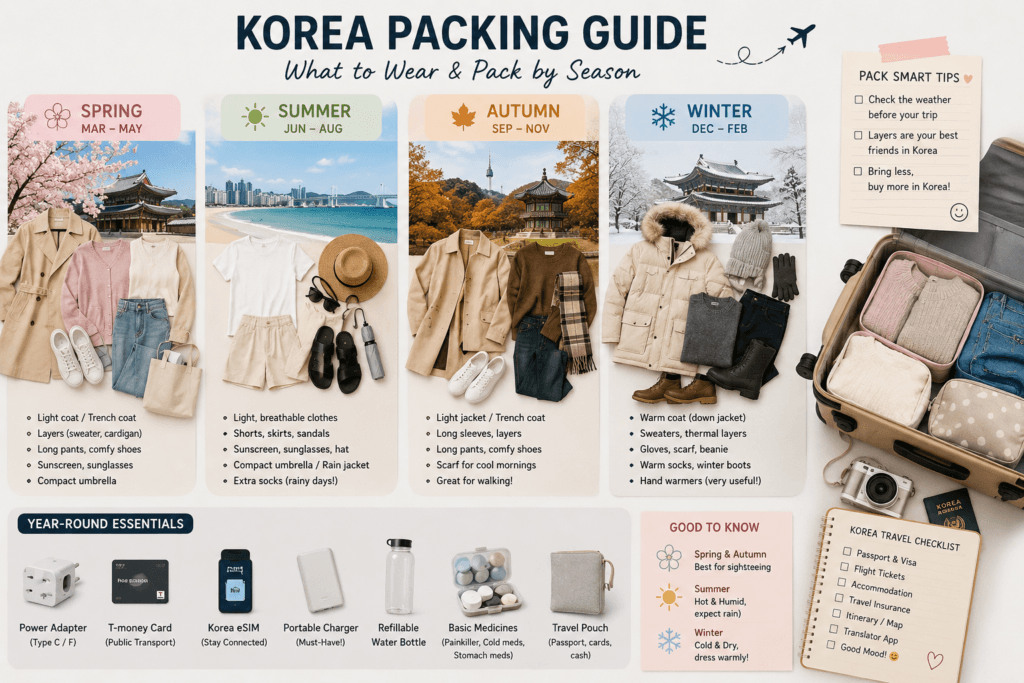
Packing for Korea is mostly about respecting the season. Korea has four clear seasons, and each one has its own little personality.
Spring Packing
For March, bring a light coat, sweaters, long pants, and comfortable shoes. Early spring can still feel cold, especially in the morning and evening.
For April, pack layers. A light jacket or cardigan is useful, but afternoons can feel mild. If you plan to visit cherry blossom spots, comfortable walking shoes matter more than fancy outfits. The flowers may be pretty, but they will not carry you back to the subway.
For May, bring lighter clothes, a thin jacket, sunscreen, and comfortable shoes. May is one of the easiest months to pack for, but evenings can still feel cool.
Summer Packing
For June to August, pack light, breathable clothes, sunscreen, sunglasses, and comfortable sandals or walking shoes. A compact umbrella or light rain jacket is useful, especially during the rainy season.
Quick-dry clothing can be helpful in July and August. So can extra socks. This sounds boring until one sudden downpour turns your shoes into small portable ponds.
If you are visiting beaches in Busan or Jeju, bring swimwear, but check beach rules and opening seasons. Some Korean beaches have official swimming periods, lifeguard areas, and seasonal facilities.
Autumn Packing
For September, pack light clothes with one extra layer for evenings. The month can still feel warm, especially early on.
For October, bring long sleeves, a light jacket, and comfortable walking shoes. This is one of the best months for outdoor travel, so expect to walk a lot.
For November, pack warmer layers, especially if you are visiting late in the month. Early November can still feel like autumn, but late November may start whispering winter threats.
Winter Packing
For December to February, bring a warm coat, sweaters, thermal layers, gloves, a scarf, a hat, and warm socks. If you plan to walk outside for long periods, heat packs are very useful.
Shoes matter in winter. Choose warm, comfortable shoes with decent grip, especially if snow or icy streets are possible. Seoul sidewalks can look innocent until they suddenly become a tiny skating rink with no music.
Indoor heating is usually strong, so layers work better than one giant coat with nothing flexible underneath. You may freeze outside and then overheat inside a cafe, subway, or restaurant five minutes later.
Common Mistakes When Choosing When to Visit Korea
One common mistake is thinking cherry blossom season lasts all month. It does not. Blossoms are short, delicate, and easily affected by rain and wind. If flowers are your main goal, check forecasts close to your trip and give yourself a few flexible days.
Another mistake is underestimating summer. Korea in July and August can be very hot and humid, especially in Seoul. A summer itinerary should include indoor breaks, slower afternoons, and backup plans for rain. Do not plan a full outdoor walking day from morning to night unless your water bottle has emotional support training.
Many travelers also underestimate winter. Seoul can be seriously cold, and the wind can feel sharper than expected. Winter is still a good travel season for food, shopping, skiing, and quieter sightseeing, but you need proper clothes.
A fourth mistake is ignoring Korean holidays. Seollal and Chuseok can affect transportation and business hours. These holidays can be culturally interesting, but they are not the easiest time to travel between cities.
Another mistake is choosing the cheapest month without thinking about comfort. Low prices are helpful, but if you hate cold weather, January may not be worth the savings. If you hate humidity, August may not be your bargain paradise.
Finally, do not plan your entire Korea trip around one famous photo spot. Weather changes, flowers shift, leaves peak at different times, and crowds appear. A good Korea itinerary should have a main plan and a backup plan. Travel confidence is nice. Flexibility is better.
FAQ
What is the best month to visit South Korea?
For most first-time visitors, October is one of the best months to visit South Korea. The weather is usually comfortable, skies are often clear, and it works well for Seoul, Busan, Gyeongju, Jeju, and day trips. April and May are also excellent, especially if you want spring scenery.
When is cherry blossom season in Korea?
Cherry blossom season in Korea usually happens from late March to early April. Southern areas such as Jeju and Busan often bloom earlier, while Seoul usually blooms later. Exact dates change every year depending on weather, so check updated forecasts close to your trip.
When is autumn foliage season in Korea?
Autumn foliage usually peaks from late October to early November, depending on the region and elevation. Mountain areas often change color earlier, while Seoul’s parks, palaces, and city streets usually look better later.
Is summer a bad time to visit Korea?
Summer is not a bad time to visit Korea, but it is not the easiest season. June to August can be hot, humid, and rainy, especially in July. Summer is better for beaches, nightlife, festivals, indoor attractions, and slower itineraries than for nonstop outdoor sightseeing.
Is winter worth visiting in Korea?
Yes, winter can be worth visiting if you enjoy cold-weather travel, skiing, winter food, shopping, cafes, and quieter sightseeing. It is not ideal if you dislike freezing temperatures or want long outdoor walking days. Pack proper winter clothes and plan indoor breaks.
What is the cheapest time to visit Korea?
March, June, late November, and early December can be more budget-friendly than peak cherry blossom and autumn foliage seasons. Prices still vary by hotel, city, weekend, and holiday period, so compare accommodation early.
When should I avoid traveling in Korea?
You do not need to completely avoid any season, but plan carefully around late June to July rainy season, August heat, Seollal, Chuseok, and peak cherry blossom weekends. These periods can still be enjoyable, but they require more flexibility.
Is Korea better in spring or autumn?
Autumn is usually easier for first-time visitors because the weather is stable and the scenery lasts longer. Spring is more romantic and famous for cherry blossoms, but flower timing can be unpredictable. If you care most about comfort, choose autumn. If you dream about blossoms, choose spring.
Final Thoughts
The best time to visit South Korea depends on what you want your trip to feel like.
For the easiest first trip, choose April, May, October, or early November. For cherry blossoms, aim for late March to early April. For autumn colors, choose late October to early November. For beaches, choose July or August. For skiing and winter food, choose January or February.
But do not chase the “perfect” season too hard. Korea is not only one week of cherry blossoms or one weekend of autumn leaves. Seoul has cafes, palaces, markets, food streets, museums, shopping areas, and neighborhoods that work in every season. Busan feels alive in summer. Gyeongju shines in spring and autumn. Jeju changes mood with the weather and somehow still finds a way to be beautiful.
The smartest approach is to choose a season that matches your travel style, then build your itinerary around that season’s strengths. In spring, enjoy flowers and palace walks. In summer, slow down and add beaches or indoor breaks. In autumn, walk as much as your shoes allow. In winter, dress warmly and let Korea feed you soup until morale improves.
There may not be one perfect time to visit South Korea, but every season has a version of the country worth seeing. Korea just asks for different shoes, different plans, and occasionally a stronger umbrella.