Affiliate disclosure: This guide may contain affiliate links. If you book through them, we may earn a small commission at no extra cost to you. Learn more.
Food is one of the easiest ways to fall in love with South Korea.
You can plan your trip around palaces, beaches, shopping streets, and mountain views, but there is a very good chance that one of your strongest memories will be a sizzling grill, a bowl of rice mixed with bright vegetables, or a piece of fried chicken that makes you quietly wonder why your hometown has been hiding the truth from you.
Korean food is no longer a secret for international travelers. Many visitors arrive already knowing kimchi, Korean BBQ, bibimbap, tteokbokki, or Korean fried chicken from dramas, YouTube videos, restaurants back home, or one very persuasive friend who keeps saying, “You have to try this in Korea.”
But eating these dishes in Korea feels different.
The flavors are sharper. The side dishes keep appearing like tiny edible surprises. The best meals often happen in simple places where nobody is trying too hard to impress you. And sometimes, the food you remember most is not the famous restaurant you planned three weeks in advance, but the hotteok you bought from a street stall because it smelled too good to ignore.
This guide is for first-time visitors who want to know what to eat in Korea without feeling lost in front of a menu. It is not a fancy food encyclopedia. It is a practical, hungry traveler’s guide to the Korean dishes that are worth planning around, where to try them, and what to know before ordering.
If it is your first night in Seoul and you feel nervous about choosing a restaurant alone, joining a Seoul food tour for first-time visitors can be a relaxed way to try several dishes without playing menu roulette. If you prefer to explore on your own, start with the foods below and you will already be in very good shape.
Table of contents
Quick Guide: What Should You Eat First in Korea?
| Food | Best For | Spice Level | Easy for First-Timers? |
|---|---|---|---|
| Korean BBQ | Dinner with friends, first big meal in Korea | Mild to medium | Very easy |
| Korean Fried Chicken | Casual dinner, late-night food, sharing | Mild to spicy | Very easy |
| Bibimbap | Balanced meal, solo travelers, lunch | Mild to medium | Very easy |
| Tteokbokki | Street food, markets, snack stops | Medium to spicy | Easy, but spicy |
| Gimbap | Quick meal, train rides, budget travel | Mild | Very easy |
| Kimchi Jjigae | Comfort food, cold days, local restaurants | Medium | Medium |
| Bulgogi | Sweet grilled beef, family-friendly meals | Mild | Very easy |
| Naengmyeon | Summer lunch, post-BBQ meal | Mild to spicy | Medium |
| Hotteok | Winter street snack, dessert lovers | Mild | Very easy |
| Samgyetang | Traditional meal, hot summer days | Mild | Easy |
Before you start, remember one thing: Korean food is not only about the main dish. Side dishes, sauces, wrapping leaves, soups, and the little metal bowl of rice all matter. A meal can look simple when it arrives, then suddenly turn into a small tabletop festival.
Also, do not worry if you do not know every rule. Most Korean restaurants are used to first-time visitors, especially in Seoul, Busan, and Jeju. Pointing at a menu, using a translation app, or copying what the table next to you is doing are all valid survival skills. Nobody is born knowing how to fold lettuce around pork belly with one hand. That is a learned art.
Before You Start Eating in Korea
Korea is a very easy country to eat well in, but a few things can make your meals smoother.
Meal times can be busy. Lunch rush usually happens around 12:00 to 1:30 PM, and dinner rush often starts around 6:00 PM. Popular restaurants may have a waiting system, and some trendy places use reservation apps instead of taking names at the door. If a restaurant is famous on social media, assume that other hungry people have also seen the same video.
For popular restaurants in Seoul, check opening hours, break times, and waiting rules before you go. Naver Map and KakaoMap are more useful in Korea than Google Maps for restaurant details, and some restaurants now appear on foreigner-friendly booking platforms. For a special meal, checking ahead is better than arriving at 7:00 PM and discovering that hope is not a reservation method.
If you have dietary restrictions, read menus carefully. Vegetarian-looking dishes are not always fully vegetarian because broths, sauces, kimchi, and seasonings may contain seafood, anchovy stock, shrimp paste, beef broth, or fish sauce. Muslim travelers can find halal-certified and Muslim-friendly options in Korea, especially in areas such as Itaewon and some major tourist districts, but it is still better to confirm before ordering.
And now, the fun part. Let’s eat.
1. Korean BBQ
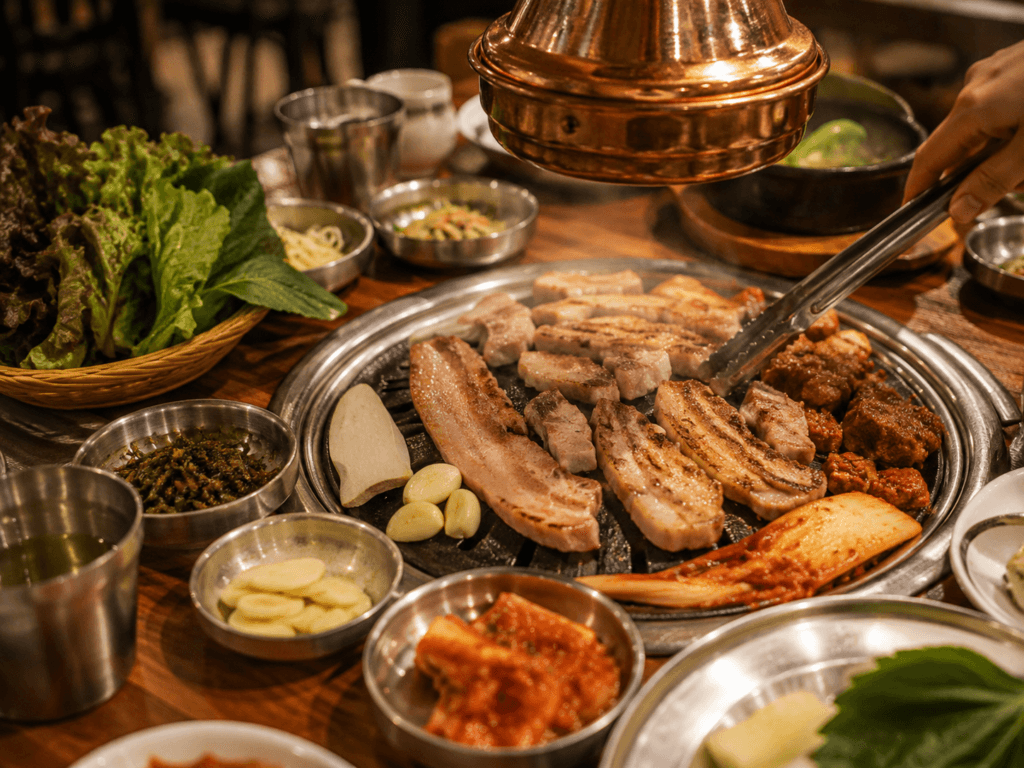
Korean BBQ is often the meal people dream about before arriving in Korea, and honestly, it deserves the attention.
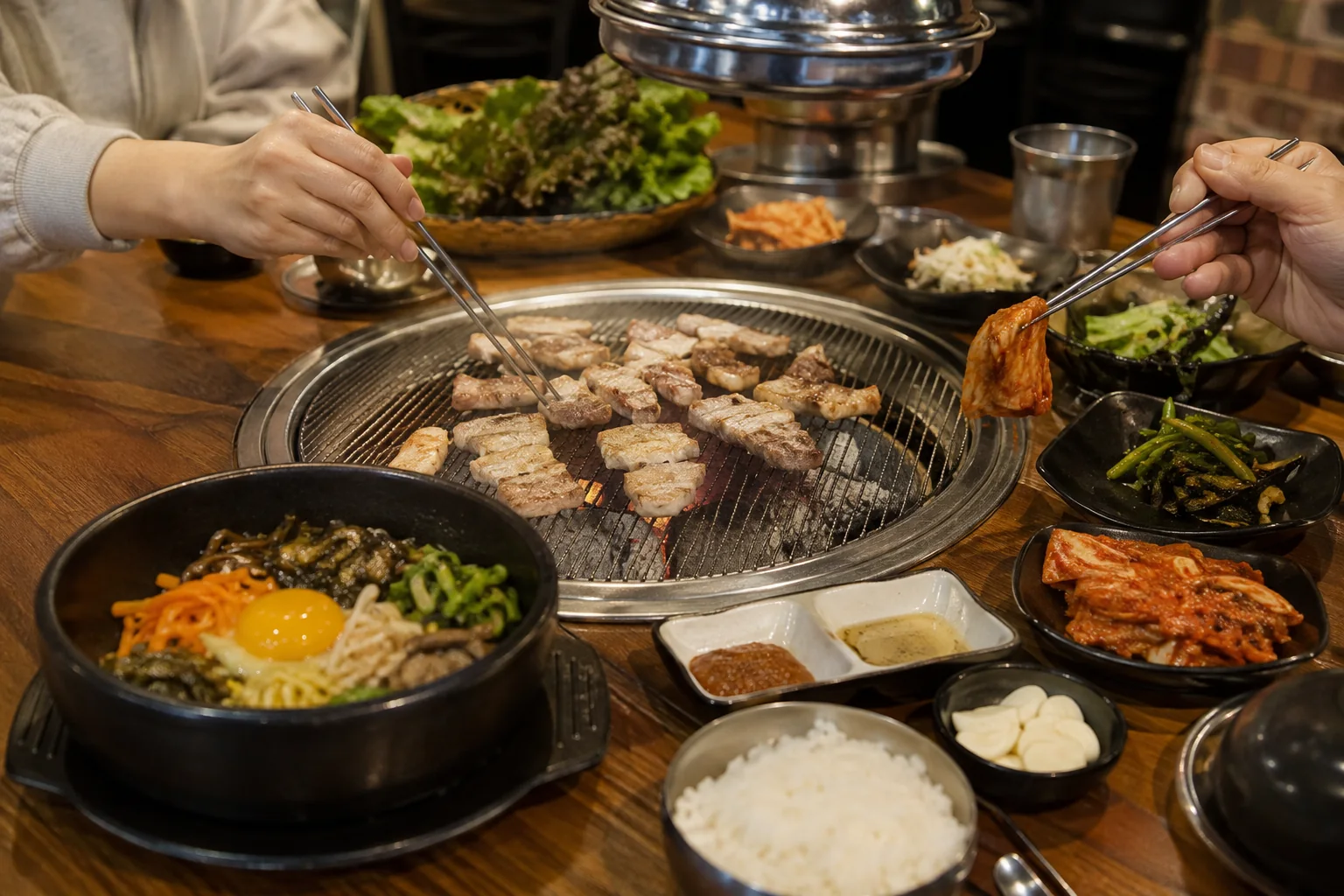
At a Korean BBQ restaurant, meat is grilled at your table, usually with lettuce wraps, garlic, ssamjang sauce, kimchi, pickled vegetables, and other side dishes. The most common choices are samgyeopsal, which is thick pork belly, and galbi, which is marinated short rib. Beef BBQ is also popular, but pork BBQ is usually easier to find, more affordable, and very satisfying for a first meal in Korea.
What makes Korean BBQ special is not only the meat. It is the rhythm of the meal. You grill, wrap, dip, eat, talk, repeat. Someone reaches for the tongs. Someone gets too confident with the garlic. Someone tries to make the perfect lettuce wrap and creates a small architectural emergency. This is all part of the experience.
For first-time visitors, samgyeopsal is the easiest place to start. It is usually not spicy, the flavor is rich but simple, and it works well with rice, kimchi, and dipping sauces. If you want something sweeter and more tender, try galbi or marinated beef cuts.
Many Korean BBQ restaurants have staff who help grill the meat, especially at busier or more tourist-friendly places. If the staff starts cooking for you, let them. They know the grill better than you do. Do not flip the meat every three seconds. The pork belly is not applying for a passport.
A good first Korean BBQ meal works especially well in areas like Hongdae, Myeongdong, Gangnam, Jongno, and Mapo. If you are still planning your Seoul food route, connect this meal with the Korean BBQ Guide, Myeongdong Travel Guide, or Hongdae Travel Guide depending on where you are staying.
For travelers who want an easier first-night experience, a Korean BBQ dining experience in Seoul can be useful, especially if you are worried about ordering, grilling, or choosing the right cuts of meat.
Start with samgyeopsal if you want the classic pork belly experience. Order galbi if you prefer marinated meat with a slightly sweet flavor. Add rice, doenjang jjigae, or cold noodles if the restaurant offers them.
Many restaurants have a minimum order, often two portions of meat, so Korean BBQ is easier with two or more people. Solo BBQ is possible in some places, but not every restaurant accepts solo diners during busy hours.
When eating, wrap a piece of meat in lettuce with a small amount of sauce, garlic, and maybe kimchi. Do not overfill the wrap unless you want to experience a very public lettuce collapse. Korean BBQ tastes best when each bite has balance, not when it becomes a vegetable suitcase.
2. Korean Fried Chicken
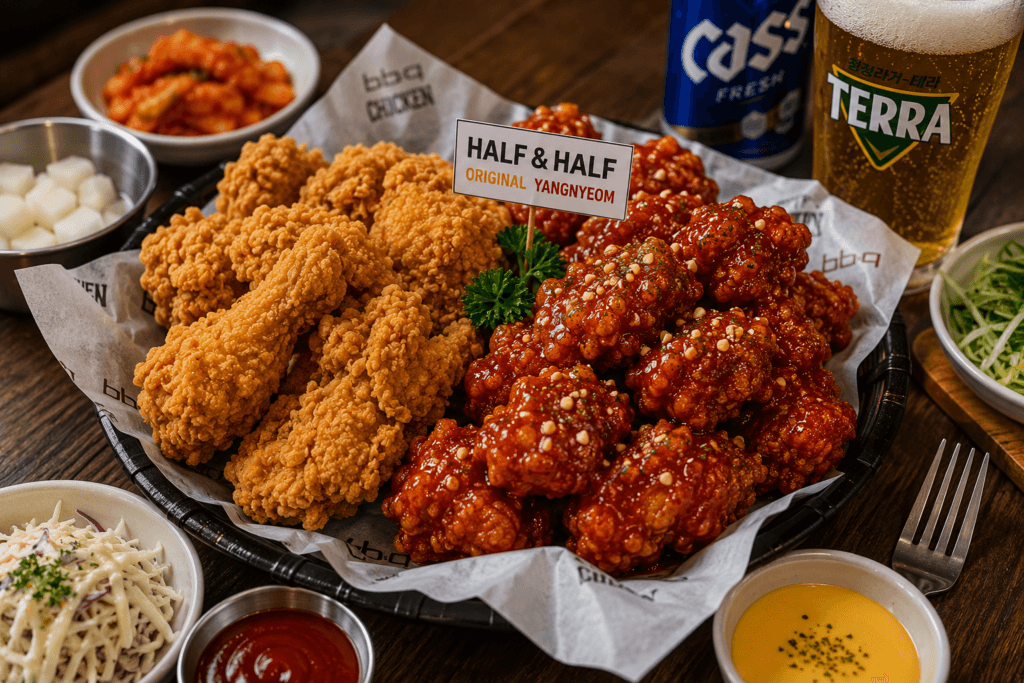
Korean fried chicken is one of the safest and most exciting foods for first-time visitors. It is familiar enough that you know what you are eating, but different enough that it still feels like a Korea trip highlight.
The coating is usually thin and crisp, the sauces are bold, and the portions are made for sharing. The classic choice is banban, which means half-and-half. You usually get half original fried chicken and half sauced chicken, often yangnyeom chicken with a sweet, spicy, sticky red sauce. Soy garlic chicken is another great option if you want something savory without too much heat.
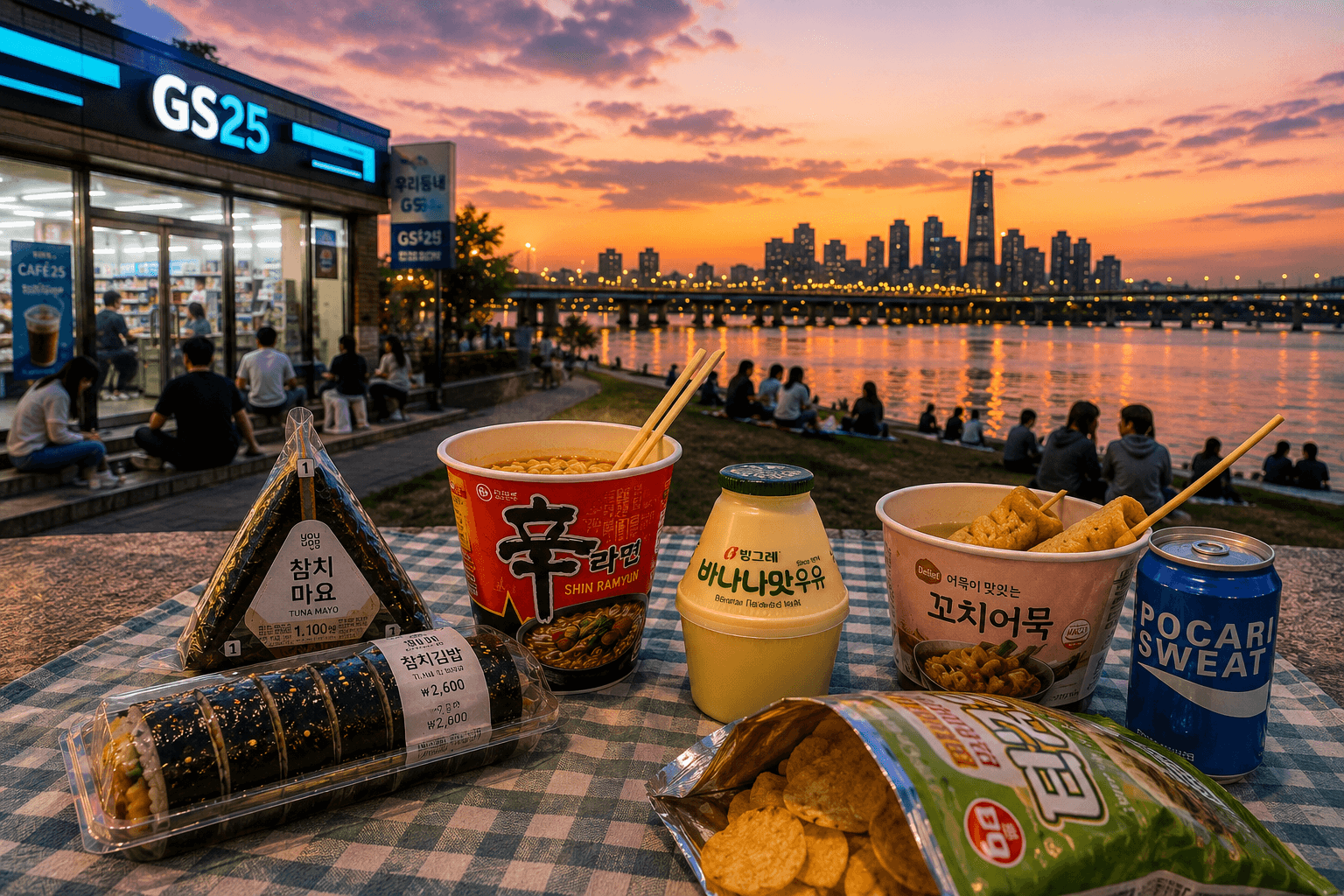
Korean fried chicken is not only dinner. It can be late-night food, picnic food near the Han River, a casual meal after shopping, or the answer to the question, “We walked 25,000 steps today, what now?” The answer is often chicken.
One of the most Korean ways to enjoy it is chimaek, which means chicken and beer. You do not have to drink beer to enjoy the meal, but the combination is famous for a reason. Crisp chicken, cold drinks, and a relaxed evening can fix a lot of travel fatigue.
If you are visiting Seoul, fried chicken is easy to find in Myeongdong, Hongdae, Gangnam, Jongno, and near major subway stations. For a more relaxed version, order chicken near the Han River and eat it outdoors when the weather is good. That simple meal can feel more memorable than a fancy dinner with a reservation and a napkin that looks nervous.
You can naturally combine Korean fried chicken with a day around the Han River Travel Guide, Myeongdong Travel Guide, or Seoul Subway Guide, since chicken shops are rarely far from where travelers already go.
For your first order, choose half original and half yangnyeom or soy garlic. If you are sensitive to spice, choose soy garlic instead of spicy sauce. Some restaurants also offer boneless chicken, which is easier for travelers who do not want to wrestle with bones while holding a paper cup of soda.
Radish cubes usually come on the side. Eat them between bites. They refresh your mouth and make you feel like you have discovered a tiny secret weapon.
Sauced chicken can be sweeter and spicier than expected, so order sauce on the side when possible if you are unsure. Also, Korean fried chicken portions can be large. One order may be enough for two people, unless both of you arrived with the emotional hunger of a long-haul flight.
3. Bibimbap
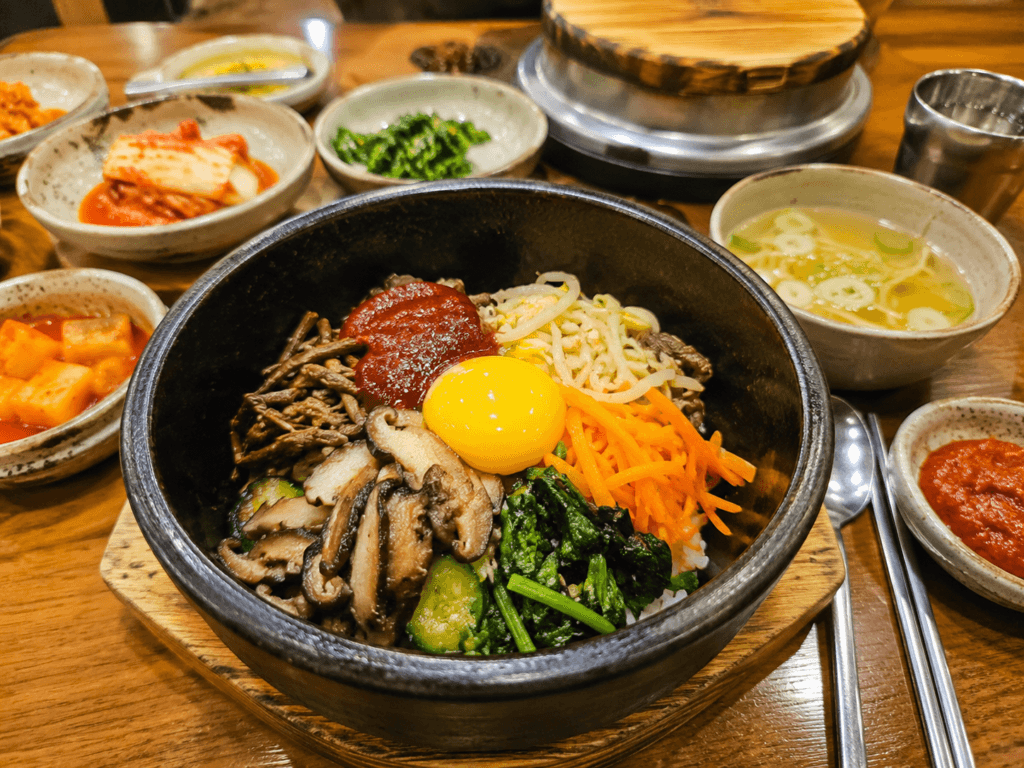
Bibimbap is one of the best Korean foods for travelers who want something colorful, filling, and easy to understand.
The name means “mixed rice,” and that is exactly what it is. A bowl of rice comes topped with vegetables, egg, meat or tofu, sesame oil, and gochujang, a red chili paste. You mix everything together before eating. It may look too pretty to disturb at first, but bibimbap is not a museum piece. Mix it well. The flavor only makes sense after everything meets in the bowl.
Bibimbap is a great choice for lunch because it feels balanced without being heavy. It is also one of the easiest Korean meals for solo travelers. You can walk into a restaurant, order one bowl, eat comfortably, and leave without needing to understand complex group dining rules.
Jeonju is the most famous city for bibimbap, but you do not need to travel there to enjoy it. You can find bibimbap all over Korea, from traditional restaurants in Insadong to casual spots in Seoul, Busan, and Jeju. It is especially useful when you want a proper meal but do not want BBQ smoke in your clothes for the rest of the day.
Bibimbap also works well as an introduction to Korean flavors. You get vegetables, rice, sauce, sesame oil, and sometimes beef in one bowl. It is not usually too spicy if you control the amount of gochujang. Add a little first, mix, taste, and then add more. This is not the moment to prove bravery to a condiment.
If you are exploring traditional neighborhoods, bibimbap fits naturally with a day around the Insadong Travel Guide, Bukchon Hanok Village Guide, or Gyeongbokgung Palace Guide. It is also a good meal before or after visiting markets because it gives you enough energy without making you want to cancel the rest of the afternoon.
Classic bibimbap usually comes with vegetables, egg, and beef. Dolsot bibimbap is served in a hot stone bowl, which makes the rice at the bottom crispy. If you like texture, choose dolsot. The crispy rice is the quiet treasure of the bowl.
Vegetarian travelers should ask carefully before ordering. Bibimbap can look vegetarian, but it may include beef, egg, or sauce ingredients that are not fully vegetarian. Some restaurants can remove meat, but not every place can adjust sauces or broths.
Do not pour all the gochujang in at once. Start small. Bibimbap is supposed to be mixed, not turned into a red weather event. Add sauce slowly until the bowl tastes right for you.
4. Tteokbokki
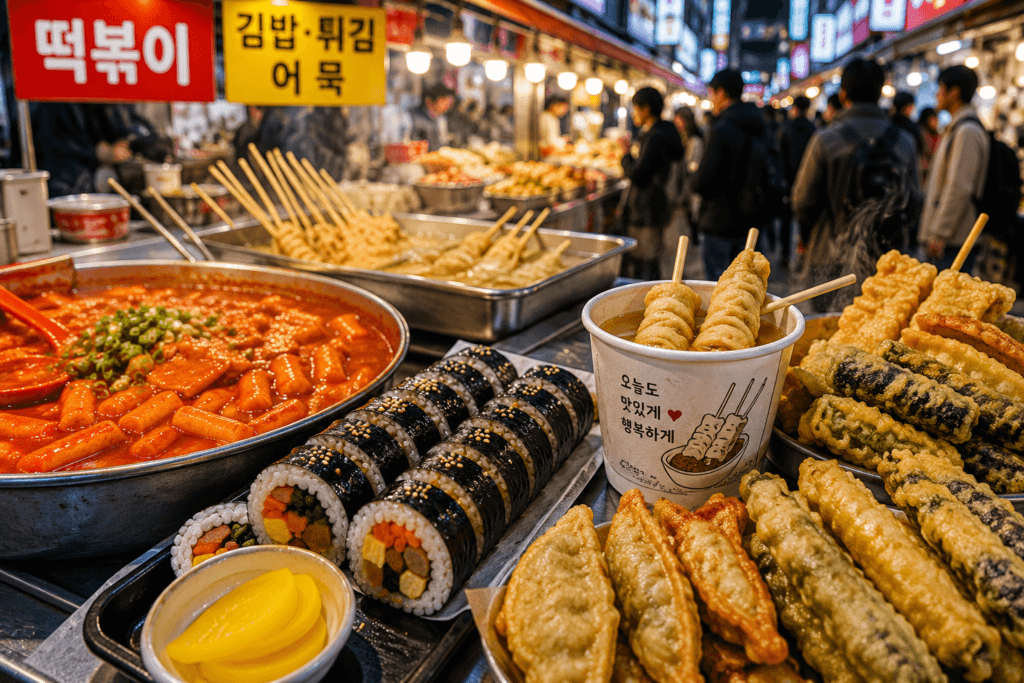
Tteokbokki is one of Korea’s most famous street foods, and it is also one of the most misunderstood.
At first glance, it looks simple: chewy rice cakes cooked in a red sauce. But that red sauce has personality. It is sweet, spicy, sticky, and warm in a way that makes you keep eating even while your mouth is quietly asking for a meeting.
Classic tteokbokki is made with garaetteok, which are cylinder-shaped rice cakes, simmered in a sauce usually made with gochujang, sugar, soy sauce, and broth. Many versions also include fish cakes, boiled eggs, cabbage, green onions, or fried dumplings on the side. In markets and street stalls, it is often served in a paper cup or small dish, perfect for a quick snack while walking around.
For first-time visitors, tteokbokki is best treated as a snack rather than a full meal. It is filling, but the flavor is bold. If you are sensitive to spice, share one portion first before ordering a mountain of rice cakes with too much confidence. Tteokbokki looks cute, but it may negotiate aggressively with your spice tolerance.
You can find tteokbokki in many busy areas of Seoul, especially around Myeongdong, Hongdae, Namdaemun, traditional markets, and near subway stations. It is also common in small bunsik restaurants, which are casual snack shops that usually sell gimbap, ramen, fish cake soup, fried snacks, and tteokbokki.
If you are building a food-focused day in Seoul, tteokbokki fits naturally into a route around the Myeongdong Travel Guide, Namdaemun Market Guide, or Seoul Subway Guide. For travelers who prefer trying several street foods with help from a guide, a Myeongdong night food tour can be a simple way to taste tteokbokki, skewers, dumplings, and other snacks without guessing from every menu sign.
Start with regular tteokbokki and add twigim, which means fried snacks. Fried dumplings, seaweed rolls, and vegetables taste great when dipped into the spicy sauce. Eomuk, Korean fish cake soup, is also a good match because the warm broth helps balance the spice.
Some restaurants sell rose tteokbokki, a creamier and milder version that became very popular in Korea. It is not traditional in the old-school market sense, but it is very beginner-friendly. If regular tteokbokki feels too spicy, rose tteokbokki can be a softer landing.
Tteokbokki gets spicier the longer you eat it. The first bite may feel fine, then five minutes later your face may start writing a travel diary of its own. Keep water nearby, but milk or a mild side dish helps more with spice than water.
5. Gimbap
Gimbap is one of the most useful foods in Korea.
It is made with rice and fillings rolled in dried seaweed, then sliced into bite-sized pieces. Common fillings include egg, carrot, spinach, pickled radish, cucumber, ham, tuna, cheese, or vegetables. It looks a little like sushi rolls, but the flavor is different because the rice is usually seasoned with sesame oil instead of vinegar.
For travelers, gimbap is a quiet hero. It is cheap, portable, filling, and easy to eat almost anywhere. You can grab it before a train ride, eat it during a busy sightseeing day, or use it as a safe meal when your brain is too tired to decode another restaurant menu.
Gimbap is also great for budget travel. A simple roll can be enough for a light meal, and many small restaurants sell several types. Tuna gimbap, cheese gimbap, vegetable gimbap, and bulgogi gimbap are common choices. Some places also sell mini gimbap, which is especially popular at markets.
This is the kind of food you appreciate more after a few days in Korea. The first time, it may seem simple. Then one day you are standing outside a train station with a coffee, a roll of gimbap, and a schedule that is already slightly falling apart, and suddenly it feels like the smartest purchase of the trip.
Gimbap is easy to connect with market days, subway rides, and day trips. It works naturally with the Seoul Subway Guide, Namdaemun Market Guide, Dongdaemun Travel Guide, or any itinerary where you do not want to spend too much time sitting in a restaurant.
For your first time, order classic gimbap or tuna gimbap. Tuna mayo gimbap is mild, filling, and very beginner-friendly. Vegetable gimbap is a lighter choice, but vegetarian travelers should still check the ingredients because some versions include egg, ham, fish cake, or meat.
If you are taking a KTX train, gimbap is one of the easiest foods to bring with you. It is not messy, it does not smell too strong, and it makes you feel unusually prepared for life.
Gimbap is best eaten fresh. It can dry out if left too long, especially in winter or in air-conditioned places. Buy it close to the time you plan to eat it. Also, do not confuse gimbap with sushi and expect soy sauce or wasabi. Gimbap has its own flavor and usually does not need dipping sauce.
6. Kimchi Jjigae
Kimchi jjigae is Korean comfort food in a bubbling pot.
It is a stew made with aged kimchi, tofu, pork or tuna, green onions, garlic, and broth. The flavor is spicy, sour, savory, and deep. It is not the prettiest dish on the table, but it has the energy of a meal that knows exactly what it is doing.
For many Koreans, kimchi jjigae is home-style food. It is the kind of dish people eat on cold days, after drinking, during a simple lunch break, or whenever they want something warm and familiar. For visitors, it is a great way to understand that Korean food is not only BBQ and street snacks. Some of the best meals in Korea come in a metal pot with steam fogging your glasses.
Kimchi jjigae is usually served with rice and side dishes. The rice matters. You take a spoonful of stew, eat it with rice, and let the spicy-sour broth do its work. Eating the stew alone can feel too strong, but with rice it becomes balanced and deeply satisfying.
This dish is easy to find in casual Korean restaurants, especially in neighborhoods where locals eat lunch. It may not be the first food you choose if you are very sensitive to spice or sour flavors, but if you like kimchi, it is absolutely worth trying.
Kimchi jjigae also fits well into colder-weather Korea trips. If you are visiting in winter, rainy spring days, or after a long walk through palaces and markets, this is the kind of meal that resets your body. It works naturally with Best Time to Visit Korea, Insadong Travel Guide, or Bukchon Hanok Village Guide because traditional sightseeing days often pair well with a warm stew lunch.
Order kimchi jjigae with rice. Some restaurants offer pork kimchi jjigae, tuna kimchi jjigae, or budae jjigae, which is a different Korean army-style stew with sausage, ham, noodles, and other ingredients.
Pork kimchi jjigae is the most classic version for many visitors. Tuna kimchi jjigae is lighter and common at casual restaurants. If you want something bigger and more filling for sharing, budae jjigae can be fun, but it is a different experience.
Kimchi jjigae is often very hot when it arrives. Let it cool for a moment before taking a big spoonful unless you want your tongue to remember Korea more vividly than planned.
This is not usually a vegetarian dish. Even if you do not see meat, the broth may contain pork, anchovy, or seafood-based ingredients. Vegetarian or vegan travelers should ask carefully or look for restaurants that clearly specialize in plant-based Korean food.
7. Bulgogi
Bulgogi is one of the easiest Korean dishes to love.
It is thinly sliced beef marinated in a sweet and savory sauce, usually made with soy sauce, sugar, garlic, sesame oil, and sometimes pear or onion for tenderness. The meat is cooked until soft and flavorful, often with onions, mushrooms, or green onions. Compared with spicy Korean dishes, bulgogi is gentle, familiar, and very first-timer-friendly.
If Korean BBQ feels a little intimidating because of the grill, smoke, and tongs, bulgogi is a calmer way to enjoy Korean meat. It is usually not spicy, and the sweet-savory flavor works well for children, picky eaters, and travelers who need a break from chili paste. Think of it as the dish that politely opens the door before the spicier foods rush in wearing red jackets.
You can find bulgogi in many Korean restaurants, from casual lunch spots to more traditional restaurants. It may be served on a hot plate, in a stew-like broth, or as part of a set meal with rice and side dishes. Some places also serve bulgogi in gimbap, burgers, sandwiches, or rice bowls.
For first-time visitors, bulgogi is a good choice when traveling with a group because almost everyone can enjoy it. It is also useful when you want Korean flavor without testing your spice tolerance again after a tteokbokki incident.
Bulgogi fits naturally into many Seoul itineraries. You can try it around the Myeongdong Travel Guide, Insadong Travel Guide, or Korean BBQ Guide. It also works well as a family-friendly meal if you are traveling with someone who keeps asking, “Is this spicy?” before every bite.
Look for beef bulgogi, bulgogi jeongol, or bulgogi set meals. Bulgogi jeongol is a hot pot-style version with broth, vegetables, mushrooms, and glass noodles. It is especially good in colder weather or when sharing with another person.
Bulgogi is usually mild, but it can be sweeter than expected. Eat it with rice and side dishes to balance the flavor. If lettuce wraps are provided, try wrapping bulgogi with rice, garlic, and a little ssamjang. It is less smoky than pork belly BBQ, but still gives you that Korean wrap experience without needing to manage a grill.
8. Naengmyeon
Naengmyeon is cold Korean noodles, and it is one of the best dishes to try if you visit Korea in summer.
The noodles are thin, chewy, and usually made with buckwheat or starch. They are served either in a chilled broth or mixed with a spicy sauce. The two main types are mul naengmyeon and bibim naengmyeon. Mul naengmyeon comes in an icy broth that tastes light, refreshing, and slightly tangy. Bibim naengmyeon is served without much broth and mixed with a spicy red sauce.
At first, cold noodles may sound strange if you are not used to them. Then Korea gives you a humid July afternoon, your shirt starts questioning its life choices, and suddenly a bowl of icy noodles makes perfect sense.
Naengmyeon is especially popular after Korean BBQ. Many BBQ restaurants serve it as a finishing dish because the cold noodles cut through the richness of grilled meat. If you eat pork belly or beef BBQ and feel full but somehow still curious, naengmyeon is the answer Korea has prepared for you.
For first-time visitors, mul naengmyeon is usually easier because it is lighter and less spicy. Bibim naengmyeon is stronger, sweeter, spicier, and more intense. Both are worth trying, but if your spice tolerance is still recovering from tteokbokki, start with the broth version.
Naengmyeon is easy to find in Seoul, especially at Korean BBQ restaurants, traditional noodle restaurants, and casual local places. It also fits well into a summer travel day around the Myeongdong Travel Guide, Hongdae Travel Guide, or Korean BBQ Guide.
Order mul naengmyeon if you want something cold, refreshing, and mild. Choose bibim naengmyeon if you want chewy noodles with a spicy sauce. Some restaurants also serve hoe naengmyeon, which includes raw marinated fish, but that may be a bigger step for first-time visitors.
Naengmyeon often comes with mustard and vinegar on the table. Add a little, taste, then adjust. Do not pour everything in at once unless you enjoy turning lunch into a chemistry experiment.
The noodles can be very long and chewy. Many restaurants provide scissors, and yes, you can use them. Cutting noodles at the table may feel unusual at first, but it is completely normal in Korea. Your dignity will survive. Your white shirt may not, if you choose bibim naengmyeon.
9. Hotteok
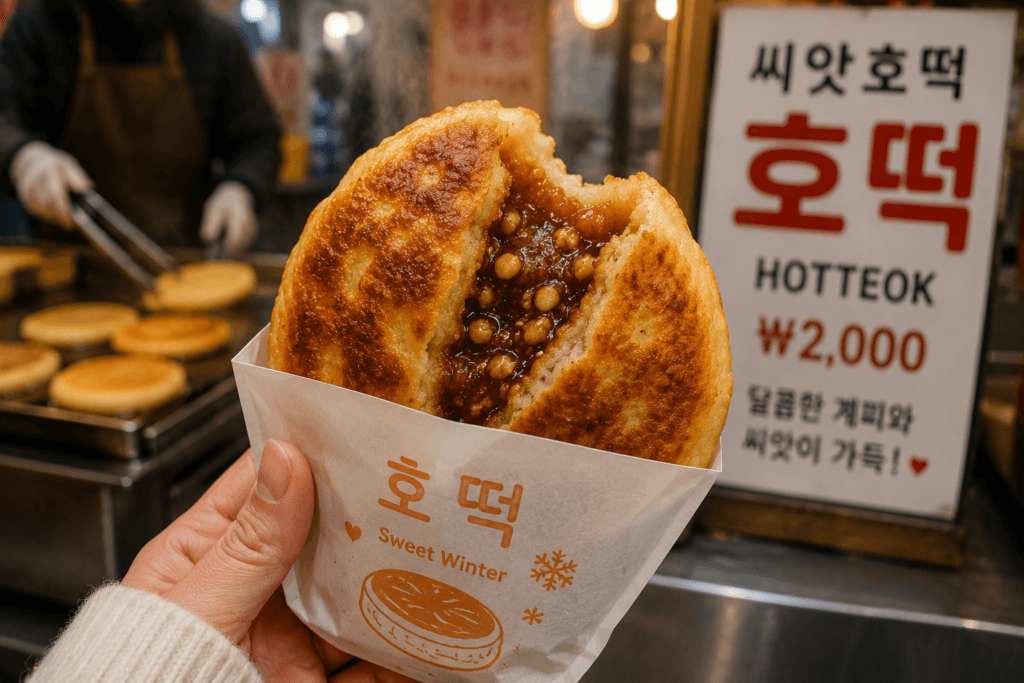
Hotteok is one of Korea’s best street snacks, especially in cold weather.
It is a sweet pancake filled with brown sugar, cinnamon, and sometimes nuts or seeds. The outside is fried until golden and slightly crisp, while the inside becomes warm, sticky, and dangerously tempting. It smells like winter decided to open a tiny bakery on the street.
Hotteok is especially popular from late autumn through winter, but you can find it in tourist areas and markets during other seasons too. It is simple, cheap, and easy to eat while walking, although “easy” depends on whether you can resist biting into molten sugar too quickly.
The most common version is the classic brown sugar hotteok. In Busan, you may see ssiat hotteok, a version filled with seeds and nuts. It is especially associated with Busan street food and is worth trying if you visit areas near BIFF Square, markets, or busy food streets.
Hotteok is a great snack for travelers who want something sweet but not fancy. No reservation, no table setting, no complicated etiquette. Just a paper cup, a hot pancake, and a quiet moment where your travel plans pause for sugar.
You can connect hotteok naturally with market-focused travel days around the Namdaemun Market Guide, Myeongdong Travel Guide, or Jagalchi Market Guide if you are visiting Busan.
Start with classic hotteok if it is your first time. If you are in Busan, try ssiat hotteok for the seed-filled version. Some places also sell modern versions with cheese, vegetables, or other fillings, but the original sweet version is still the one most travelers should try first.
Wait before taking a big bite. The outside may feel safe, but the sugar inside can be extremely hot. Hotteok does not look dramatic, but it has the power to introduce your mouth to lava in dessert form.
10. Samgyetang
Samgyetang is Korean ginseng chicken soup, and it is one of the most traditional meals on this list.
It is made with a whole young chicken stuffed with rice, garlic, jujube, and ginseng, then simmered until the meat becomes tender and the broth turns warm and comforting. The flavor is mild, clean, and nourishing rather than spicy or heavy.
What surprises many visitors is that samgyetang is especially popular in summer. In Korea, people often eat hot, nourishing food during the hottest days of the year to restore energy. It may sound strange at first. Then you try it in a quiet restaurant with a bowl of salt, pepper, kimchi, and hot broth, and suddenly the logic becomes less confusing.
Samgyetang is a good choice if you want a traditional Korean meal that is not spicy. It is also ideal for travelers who need a break from fried food, grilled meat, and red sauces. After several days of BBQ, chicken, snacks, and “just one more bite,” samgyetang feels like your body receiving a polite apology letter.
The dish is usually served as an individual portion, so it is easy for solo travelers. You season the chicken and broth yourself with salt and pepper. The flavor is intentionally mild, so do not expect the bold punch of kimchi jjigae or tteokbokki. Samgyetang is more about warmth, comfort, and balance.
You can find samgyetang restaurants in Seoul, especially around traditional neighborhoods, older local districts, and near major sightseeing areas. It pairs naturally with a slower day around the Gyeongbokgung Palace Guide, Bukchon Hanok Village Guide, or Insadong Travel Guide.
Order classic samgyetang for your first time. Some restaurants offer versions with extra ginseng, abalone, black chicken, or medicinal herbs, but the basic version is enough for most travelers.
It usually comes with kimchi, kkakdugi, and sometimes ginseng liquor in traditional restaurants. You do not need to drink the liquor if you do not want to. The soup itself is the main experience.
Use the salt and pepper on the side to season small pieces of chicken rather than dumping everything into the soup at once. The broth is supposed to be gentle. Think of it as quiet comfort food, not a flavor fireworks show.
Where to Try Korean Food in Seoul
If you only have a few days in Seoul, you do not need to chase famous restaurants for every meal. The best strategy is to match the food to the neighborhood you are already visiting.
Myeongdong is easy for street food, fried chicken, casual restaurants, and first-night meals. It is touristy, but convenient. If you are tired after arrival, convenience is not a crime. Sometimes it is dinner wearing comfortable shoes.
Namdaemun Market is good for simple local meals, noodles, dumplings, hotteok, and budget-friendly snacks. It is better during the day than late at night, and it works well before or after shopping.
Insadong and Bukchon are good for bibimbap, traditional Korean meals, tea houses, and calmer lunches. These areas are especially useful if you want a more classic Korean atmosphere without jumping straight into nightlife.
Hongdae is great for fried chicken, BBQ, casual restaurants, late-night food, and younger energy. It is fun, but choose your restaurant carefully if you want a quiet meal.
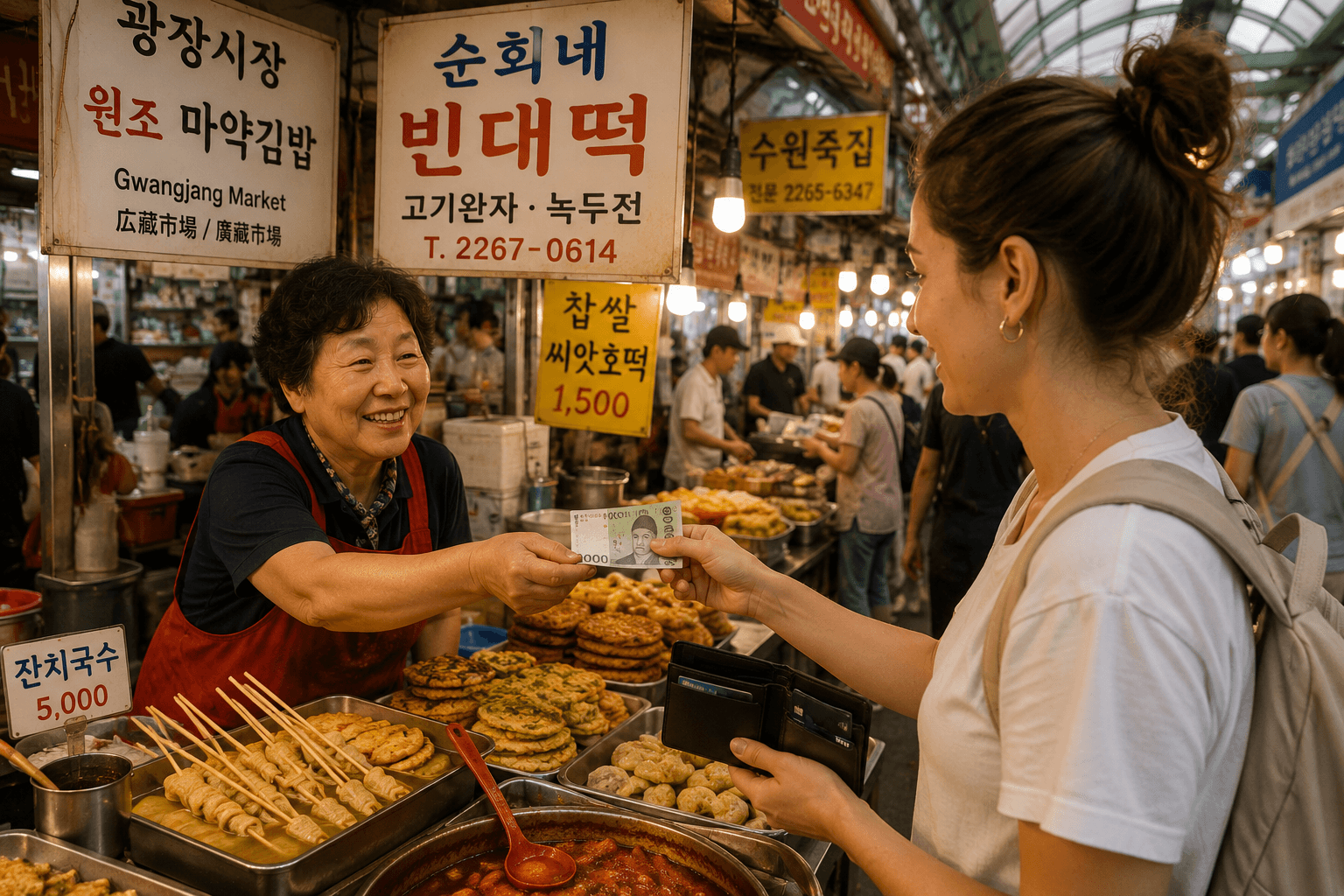
Traditional markets are good for tteokbokki, gimbap, fried snacks, noodles, pancakes, and quick bites. Go with curiosity, but check prices before sitting down. Famous markets can be exciting, crowded, and slightly chaotic in the way only good food places can be.
For travelers who want a guided first experience, a Seoul street food tour or Korean cooking class in Seoul can fit naturally into the first few days of a Korea trip, especially if you are nervous about ordering or want to understand what you are eating instead of just pointing and hoping for destiny.
Food Tips for First-Time Visitors in Korea
Eating in Korea is usually easy, but a few small things can make your food trip much smoother.
Do not judge a restaurant only by how fancy it looks. Some of the best meals in Korea happen in simple places with metal chopsticks, fast service, and zero interest in interior design awards. A busy local restaurant with a short menu can be a very good sign.
Check whether a restaurant specializes in one dish. In Korea, many excellent restaurants focus on only a few items: BBQ, noodles, soup, dumplings, fried chicken, or stew. A small menu does not mean fewer options. It often means the kitchen knows exactly what it is doing.
Be realistic about spice. Korean food is not always spicy, but when it is spicy, it does not always announce itself politely. Tteokbokki, kimchi jjigae, spicy noodles, and some stews can feel stronger than expected. Start carefully and build up. Your pride does not need to win lunch.
Use side dishes. Banchan are not decoration. They balance the meal. Pickled radish helps with fried chicken, kimchi works with BBQ, and mild vegetables can calm down spicy food. Korean meals are built like a team sport.
Plan food around neighborhoods instead of chasing one famous restaurant across the city. If you are already in Myeongdong, eat there. If you are exploring Insadong, find a traditional lunch nearby. If you are in Busan, seafood makes more sense than crossing town for a Seoul-famous chicken chain. Good travel food is not only about the dish. It is also about timing, location, and not spending half your trip underground between subway transfers.
For a simple first food plan, try this:
- First night: Korean BBQ or fried chicken
- First market visit: tteokbokki, gimbap, hotteok
- Traditional sightseeing day: bibimbap or samgyetang
- Cold or rainy day: kimchi jjigae
- Summer day: naengmyeon
- Busan day: seafood, ssiat hotteok, market snacks
- Jeju day: black pork, seafood, tangerine desserts
What If You Have Dietary Restrictions?
Korea is getting easier for travelers with dietary restrictions, but you still need to be careful.
Vegetarian travelers should know that many Korean dishes use hidden animal-based ingredients. Kimchi may contain fish sauce or shrimp paste. Soups may use anchovy, beef, pork, or seafood broth. Even dishes that look vegetable-based may include meat, egg, fish cake, or seafood seasoning.
Bibimbap, gimbap, noodles, temple food, vegetable pancakes, and tofu dishes can be good starting points, but always check ingredients if you are strict vegetarian or vegan. Temple food is one of the best options for plant-based travelers because it is usually vegetarian and often vegan-friendly.
Muslim travelers can find halal-certified and Muslim-friendly restaurants in Korea, especially in Seoul. Itaewon is one of the easiest areas to start, and some tourist-focused restaurants clearly display halal information. Still, it is better to confirm before ordering, especially with soups, meat dishes, and sauces.
If you have allergies, use a translated allergy card. Restaurant staff may not always understand allergy terms in English, especially outside major tourist areas. A clear Korean translation can save you from a very uncomfortable lunch adventure.
FAQ
What is the best Korean food for first-time visitors?
Korean BBQ, Korean fried chicken, bibimbap, and bulgogi are the easiest foods for most first-time visitors. They are flavorful, widely available, and not too difficult to order. If you want street food, start with tteokbokki, gimbap, and hotteok.
Is Korean food very spicy?
Some Korean food is spicy, but not all of it. Korean BBQ, bulgogi, gimbap, samgyetang, and many fried chicken flavors can be mild. Tteokbokki, kimchi jjigae, spicy noodles, and some stews can be much hotter. If you are unsure, start with mild dishes and add spicy foods slowly.
What should I eat on my first night in Korea?
Korean BBQ or Korean fried chicken are great first-night choices. They are easy to enjoy, widely available, and feel exciting without being too complicated. If you arrive late and feel tired, fried chicken near your hotel may be the smarter choice. Jet lag and complicated restaurant etiquette are not always best friends.
Where is the best area to try Korean street food in Seoul?
Myeongdong, Namdaemun Market, Gwangjang Market, and Hongdae are popular areas for street food and casual snacks. Myeongdong is very convenient for first-time visitors, while traditional markets are better if you want a more local and busy food atmosphere.
Is Korean food expensive?
Korean food can be very affordable if you eat at markets, casual restaurants, gimbap shops, noodle restaurants, and local lunch spots. BBQ, seafood, trendy restaurants, and famous cafes can cost more. A good Korea food trip does not need to be expensive, but it is very easy to keep adding snacks because everything looks interesting. This is not a budgeting failure. It is a snack-based research project.
Is dog meat common in Korea?
No. It is not something most travelers will encounter. South Korea has passed a law to ban the dog meat industry, with the ban on production and sales scheduled to take effect after a transition period. For regular travelers, this is not a normal part of eating in Korea.
Do I need to tip in Korean restaurants?
No. Tipping is not expected in most Korean restaurants. You usually pay the listed price, and service is included. In many casual restaurants, you pay at the counter after eating.
Can I eat alone in Korea?
Yes, but some meals are easier alone than others. Bibimbap, gimbap, noodles, soups, fried chicken portions, and casual set meals are easy for solo travelers. Korean BBQ can be harder alone because some restaurants require a minimum order or prefer groups during busy hours.
Final Thoughts
Korean food is one of the best reasons to visit South Korea.
You do not need to understand every ingredient, every sauce, or every restaurant rule before your trip. Start with the classics: Korean BBQ, fried chicken, bibimbap, tteokbokki, gimbap, kimchi jjigae, bulgogi, naengmyeon, hotteok, and samgyetang. These dishes will give you a strong first taste of Korea, from smoky grills and spicy street snacks to quiet bowls of soup that feel like a reset button.
The best approach is simple. Eat near the places you are already visiting, try a mix of restaurants and markets, and leave room in your schedule for unexpected snacks. Korea is very good at turning “I’m not that hungry” into “Maybe just one more thing.”
For your first trip, do not worry about finding the single best restaurant in the country. Find good meals that fit your day. A bowl of bibimbap after walking through Insadong, fried chicken by the Han River, hotteok on a cold evening, or BBQ after a long Seoul sightseeing day can become the kind of travel memory that stays with you longer than a perfectly planned itinerary.
And if you leave Korea with a new favorite food, that is normal. If you leave with five, that is also normal. Korea tends to do that.