January can turn your phone battery sluggish before lunch, July can make a ten-minute walk feel much longer than the map promised, and October may convince you that the entire city was designed for palace walks and riverside picnics.
Understanding Seoul weather by month makes it easier to choose travel dates, build a realistic itinerary, and pack clothing that works outside as well as inside Seoul’s heavily heated or air-conditioned buildings.
This guide covers average temperatures, rainfall, seasonal conditions, the rainy season, winter snow, spring air quality, cherry blossoms, fall foliage, and what to wear in Seoul throughout 2026.
The figures below are long-term climate averages rather than exact forecasts for your travel dates. Recent years have often been warmer than historical averages, so the forecast for your actual travel week matters more than any monthly table.
Table of contents
Seoul Weather at a Glance
Seoul has four distinct seasons, with cold, dry winters and hot, humid summers.
Spring and autumn are usually the easiest seasons for long sightseeing days, especially when your plans include palaces, traditional neighborhoods, markets, hiking, or the Han River.
| Weather question | Quick answer |
|---|---|
| Coldest month | January |
| Hottest month | August |
| Rainiest month | July |
| Driest month | January |
| Comfortable spring period | Late April through May |
| Comfortable autumn period | Late September through October |
| Rainy season | Usually late June through late July |
| Best chance of snow | January and February |
| Typical cherry blossom period | Early April |
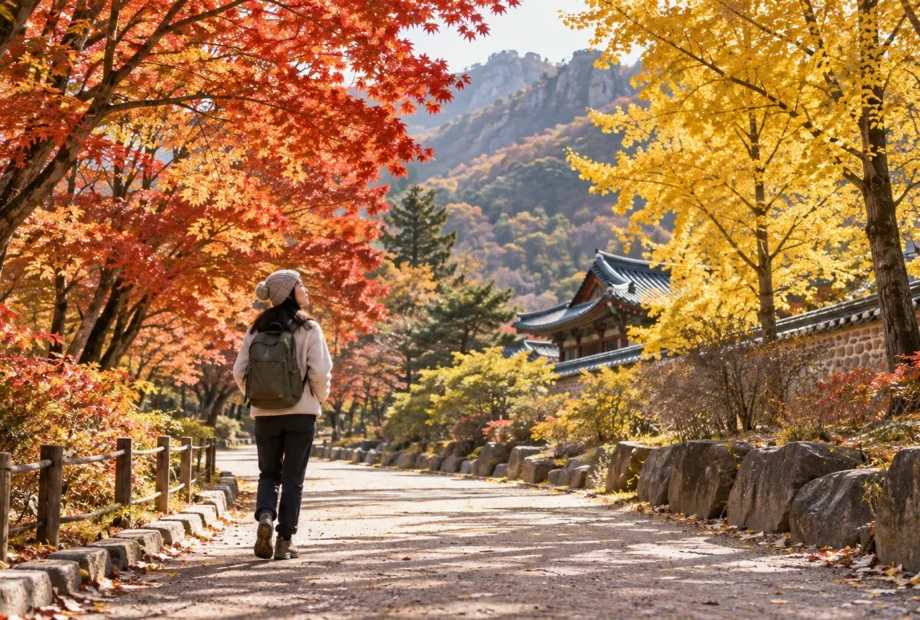
| Typical fall foliage period | Late October to early November |
October is one of the best months for mild weather, lower humidity, and outdoor sightseeing. May is another strong option, although warm spells and busy spring weekends are becoming more common.
Travelers who struggle with heat and humidity may prefer to avoid July and August. Those who dislike cold should think carefully before booking January unless winter food, indoor attractions, and smaller outdoor crowds are part of the plan.
For a broader comparison of Seoul with other parts of the country, see Best Time to Visit Korea.
Average Seoul Temperatures and Rainfall by Month
The following figures use long-term climate averages for Seoul.
| Month | Average high | Average low | Average rainfall |
|---|---|---|---|
| January | 2°C / 36°F | -6°C / 22°F | 17 mm |
| February | 5°C / 41°F | -3°C / 26°F | 28 mm |
| March | 11°C / 52°F | 2°C / 35°F | 37 mm |
| April | 18°C / 64°F | 8°C / 46°F | 73 mm |
| May | 24°C / 74°F | 14°C / 56°F | 104 mm |
| June | 28°C / 82°F | 19°C / 66°F | 130 mm |
| July | 29°C / 84°F | 22°C / 72°F | 414 mm |
| August | 30°C / 86°F | 23°C / 73°F | 348 mm |
| September | 26°C / 79°F | 18°C / 64°F | 142 mm |
| October | 20°C / 68°F | 11°C / 51°F | 52 mm |
| November | 12°C / 53°F | 4°C / 38°F | 51 mm |
| December | 4°C / 40°F | -3°C / 26°F | 23 mm |
These are average daytime highs and nighttime lows. They do not show the full range of possible temperatures.
A winter cold wave can push the temperature below -10°C, while a summer heat wave can bring afternoons close to or above 35°C. Use the table to understand the season, then check the short-term forecast before departure.
When Is the Best Time to Visit Seoul?
The most comfortable periods for general sightseeing are usually:
- Late April through May
- Late September through October
These months are generally warm or mild without the intense humidity of midsummer or the sharp cold of winter.
Best for long walking days
October is one of the easiest months for exploring Seoul on foot.
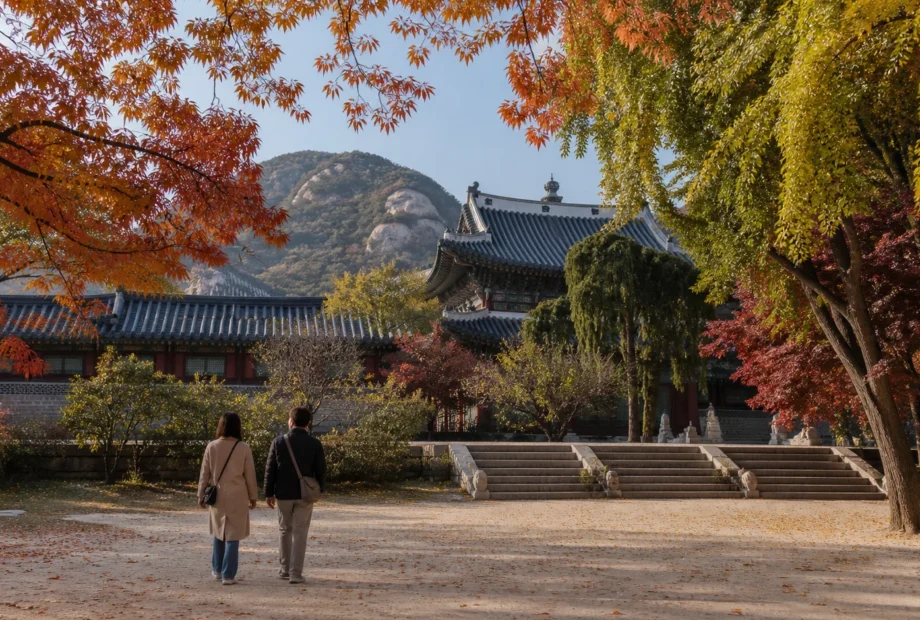
Daytime temperatures are usually comfortable for palace visits, markets, riverside parks, traditional neighborhoods, and hiking. Rainfall is much lower than in summer, and evenings are cool without normally requiring full winter clothing.
Best for spring scenery
April is the classic cherry blossom month, while May offers greener parks and more stable warmth.
Cherry blossom timing changes every year. A warm early spring can move the season forward, while colder weather may delay it. Travelers planning a flower-focused trip should check the annual forecast before booking final dates.
Best for lighter tourist crowds
March, early June, late November, and winter can be quieter than peak blossom and autumn foliage periods.
The tradeoff is less predictable weather. March may still feel wintry, early June can turn humid, and late November may require a proper winter coat.
Winter in Seoul
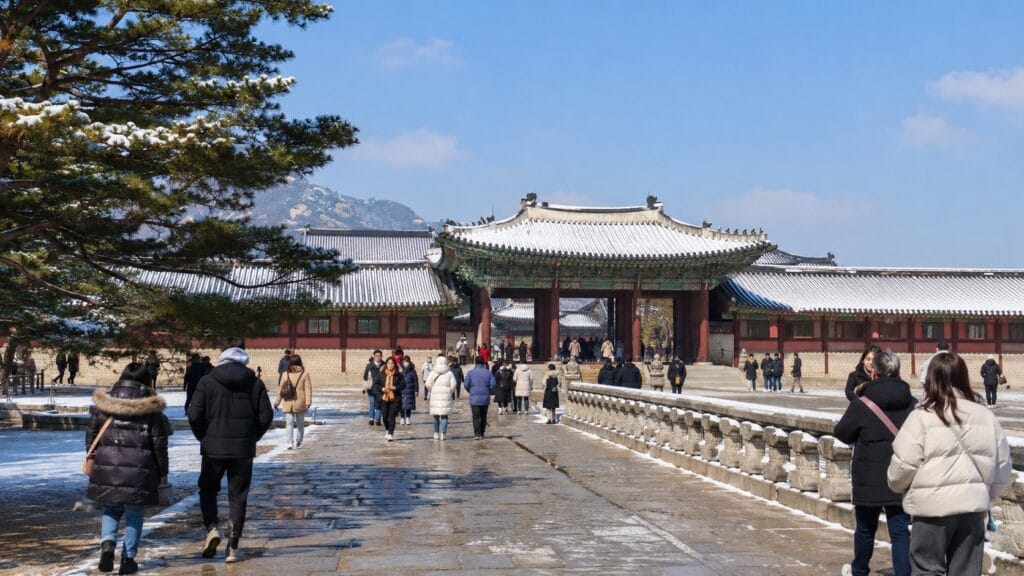
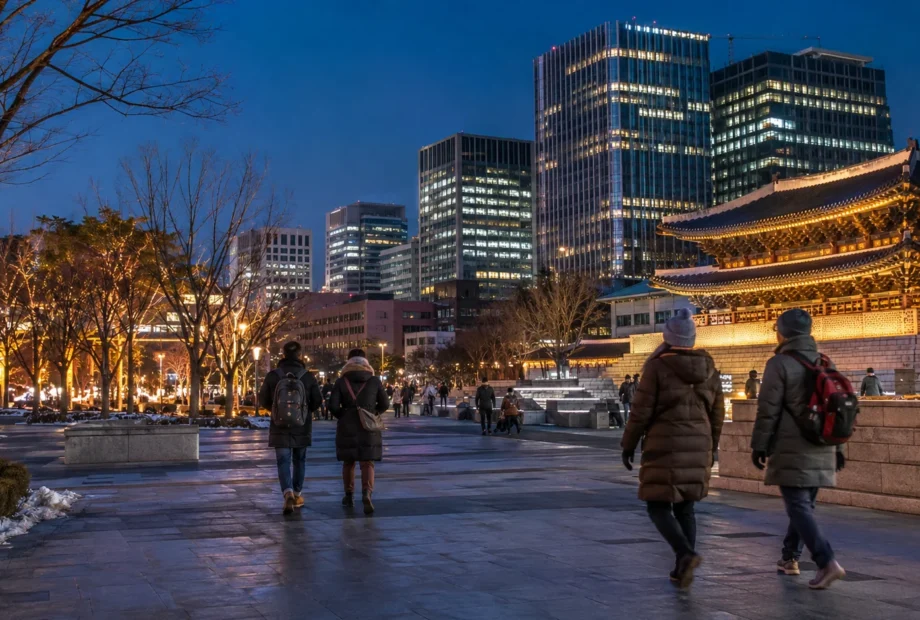
Seoul winters are cold, dry, and often sunny.
Snow is possible, but the city is not covered in deep snow throughout the season. Many winter days are simply clear, windy, and sharply cold.
Indoor spaces are usually well heated, so winter travel involves moving repeatedly between freezing streets and warm subway stations, cafes, shops, and museums.
January Weather in Seoul
Average high: 2°C / 36°F
Average low: -6°C / 22°F
Average rainfall: 17 mm
January is usually the coldest month in Seoul.
Morning and nighttime temperatures regularly fall below freezing, and some afternoons remain below 0°C during cold waves. Open spaces such as palace courtyards, Namsan, and the Han River can feel much colder because there is little protection from the wind.
Stone steps, shaded paths, and hills may remain icy after snowfall even when main roads have already cleared.
Pack a padded winter coat, thermal layers, gloves, a scarf, warm socks, and shoes with good grip. Lip balm and moisturizer are also useful in Seoul’s dry winter air.
January suits travelers who enjoy museums, markets, hot food, jjimjilbangs, and fewer outdoor crowds. Long outdoor days are possible, but regular indoor breaks make them far more pleasant.
February Weather in Seoul
Average high: 5°C / 41°F
Average low: -3°C / 26°F
Average rainfall: 28 mm
February is still winter, especially during the first half of the month.
Daytime temperatures gradually rise, but mornings and evenings remain cold. A few mild afternoons can be followed by another cold spell, so replacing a winter coat with spring clothing is risky.
Snow and ice are still possible. Pack warm layers, a winter coat, and practical shoes.
Late February brings longer daylight and slightly easier outdoor sightseeing, but Seoul has not fully moved into spring yet.
Spring in Seoul
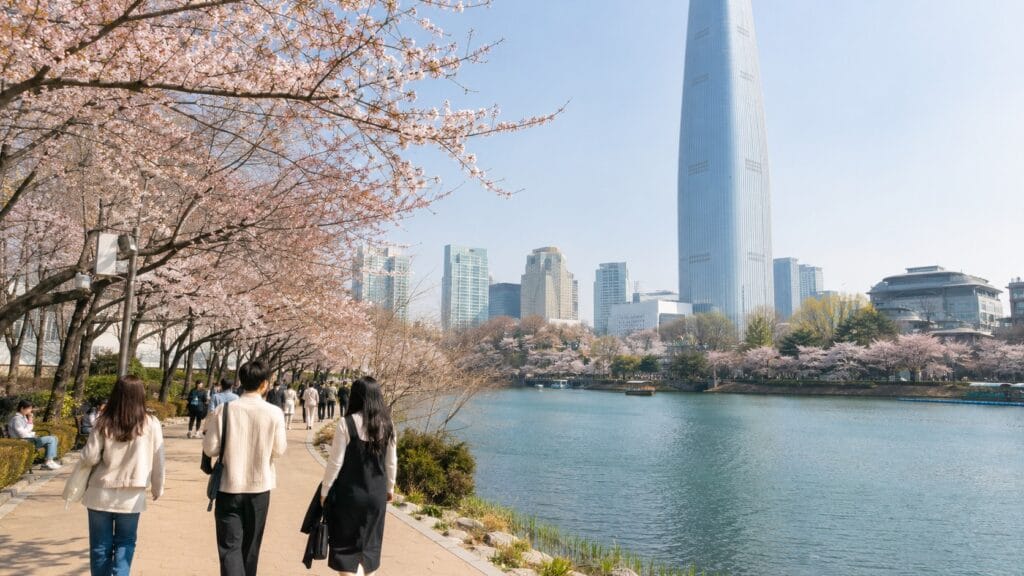
Spring begins unevenly.
March can alternate between winter jackets and mild afternoons. April brings blossoms and more reliable warmth, while May often delivers some of the best weather of the year.
Spring is also the season when yellow dust and fine-particle pollution may affect air quality.
March Weather in Seoul
Average high: 11°C / 52°F
Average low: 2°C / 35°F
Average rainfall: 37 mm
March is a transition month.
Sunny afternoons can feel pleasant, but mornings, evenings, and windy days remain cold. Temperatures can change significantly within the same week.
A medium jacket, knitwear, long trousers, and closed shoes are usually appropriate. Layers work better than one heavy item because the difference between sunshine and shade can be noticeable.
March is useful for travelers who prefer lighter crowds and do not mind mixing indoor and outdoor plans. Museums, cafes, markets, and shorter neighborhood walks are easier to manage than long picnics or flower-focused itineraries.
Air quality can vary, so check the daily fine-dust level before hiking or spending an entire day outdoors.
April Weather in Seoul
Average high: 18°C / 64°F
Average low: 8°C / 46°F
Average rainfall: 73 mm
April is one of Seoul’s most popular travel months.
Daytime temperatures are usually mild, flowers appear across parks and palace grounds, and walking becomes much more comfortable than in March.
Cherry blossoms typically bloom in early April, although peak timing can move by a week or more. Popular locations include Yeouido, Seokchon Lake, Seoul Forest, Namsan, and several royal palaces.
Peak blossom weekends can be extremely busy. Visit popular areas early in the morning or on a weekday when possible.
A light jacket or cardigan, long trousers, and comfortable walking shoes are usually enough. A light waterproof layer is useful for spring rain and cooler evenings.
April works especially well for Gyeongbokgung Palace, Bukchon, Insadong, and traditional neighborhood walks.
May Weather in Seoul
Average high: 24°C / 74°F
Average low: 14°C / 56°F
Average rainfall: 104 mm
May is one of the easiest months for Seoul travel.
Days are warm, evenings are usually comfortable, and parks become green before the heavy humidity of midsummer arrives.
It is a good month for Han River picnics, Seoul Forest, palace visits, hiking, outdoor markets, and cafe neighborhoods.
Warm years can bring summer-like afternoons in late May, so sunscreen and water are useful even when the morning feels cool.
Pack T-shirts, light trousers, comfortable shoes, and a thin evening layer. The Korea Packing List 2026 includes a fuller checklist for clothing, medications, electronics, and other travel essentials.
May is also an excellent time to use the Han River Guide for picnic areas, cycling routes, and riverside activities.
Summer in Seoul
Seoul summers are hot, humid, and rainy.
Humidity is often more tiring than the temperature alone. Clothing dries slowly, nighttime temperatures may remain high, and several outdoor attractions scheduled back to back can become exhausting.
Air conditioning is common and sometimes strong, so a thin shirt or cardigan remains useful even during the hottest weeks.
June Weather in Seoul
Average high: 28°C / 82°F
Average low: 19°C / 66°F
Average rainfall: 130 mm
Early June can be a good period for summer travel.
The weather is warm, parks are green, and the most intense humidity may not have arrived yet. By late June, conditions usually become wetter and heavier as the rainy season approaches.
Wear breathable clothing and comfortable shoes, and carry sunscreen, water, and a compact umbrella. A thin layer is useful inside aggressively air-conditioned trains, museums, and shopping centers.
June itineraries should combine outdoor sightseeing with indoor options. A morning palace visit followed by an afternoon museum, market, or shopping area is more realistic than a full day in direct sun.
July Weather in Seoul
Average high: 29°C / 84°F
Average low: 22°C / 72°F
Average rainfall: 414 mm
July is Seoul’s rainiest month.
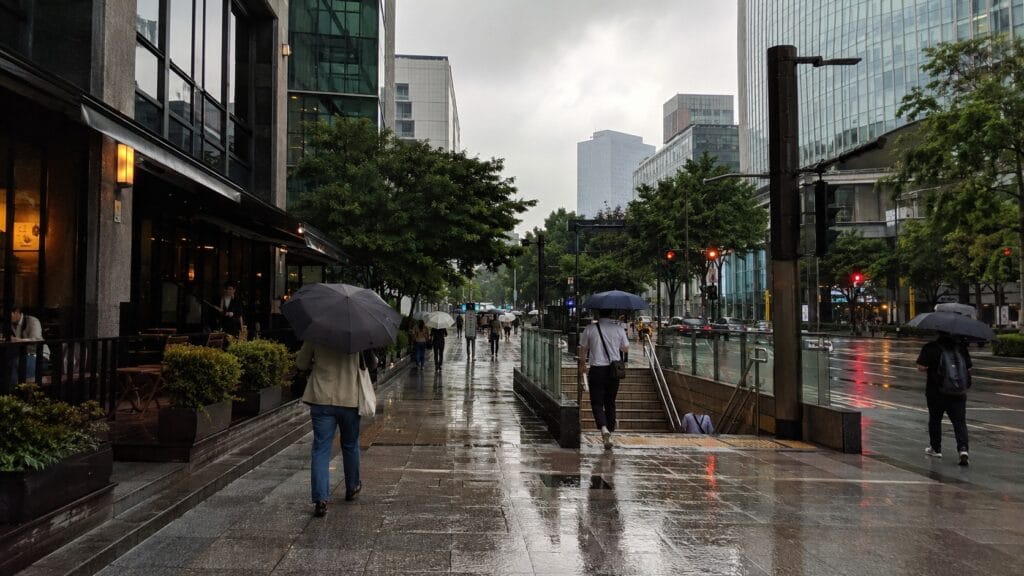
The rainy season does not mean it rains continuously every day. Some days bring short showers, while others produce intense downpours over several hours.
The main concern is how quickly a large amount of water can fall.
During heavy rain:
- Avoid low riverside paths
- Check whether stream trails are closed
- Be careful near underpasses and basement entrances
- Allow extra transport time
- Protect electronics
- Follow official weather alerts
Umbrella covers collect at shop entrances, wet shoes gather around cafe tables, and riverside paths may remain closed even after the rain temporarily stops.
Wear quick-drying clothing, practical footwear, and carry spare socks when the forecast looks especially wet. A small travel umbrella is fine for light rain, though it becomes less heroic during a serious summer downpour.
Plan at least one indoor alternative each day. The Seoul Rainy Day Guide includes museums, underground shopping, markets, cafes, and other weather-resistant options.
For a wider explanation of monsoon timing across the country, see the Korea Rainy Season Guide.
August Weather in Seoul
Average high: 30°C / 86°F
Average low: 23°C / 73°F
Average rainfall: 348 mm
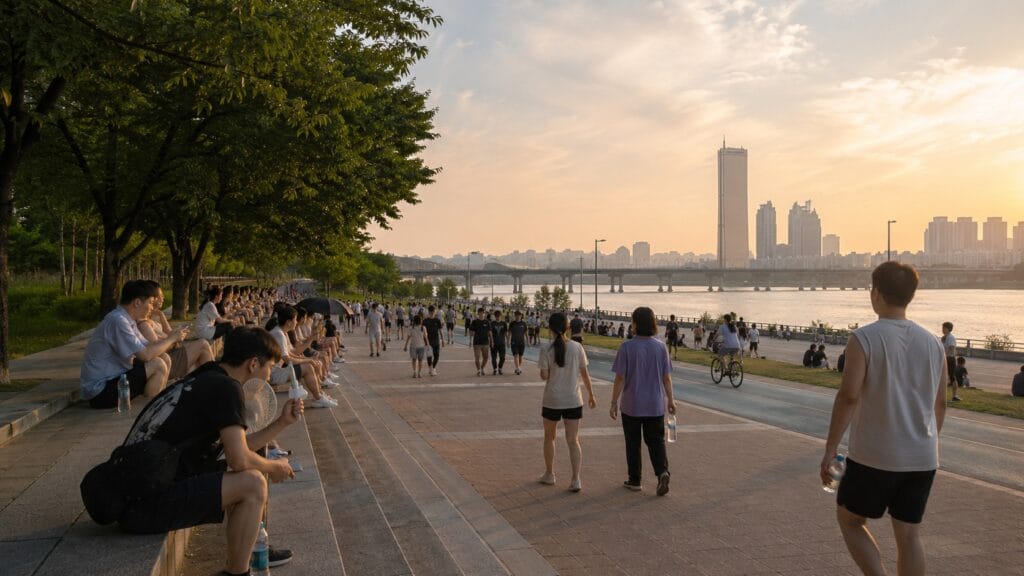
August is usually Seoul’s hottest month.
Humidity remains high, and nighttime temperatures may stay above 25°C. The temperature may fall only slightly after sunset, especially during heat waves.
The most practical approach is to divide the day:
- Outdoor sightseeing in the morning
- Indoor attractions during the hottest afternoon hours
- Markets, parks, or viewpoints after sunset
Loose, breathable clothing, sunscreen, a sun hat, and water are essential. Carry a thin layer for indoor air conditioning.
Subway platforms and stairs can feel warm and humid, while the trains themselves may feel unexpectedly cold. Summer sightseeing can quickly become an unofficial tour of Seoul’s air-conditioning systems.
Typhoons can occasionally affect Korea between summer and early autumn. Even without a direct impact on Seoul, they may cause heavy rain, wind, transport delays, or flight changes.
Autumn in Seoul
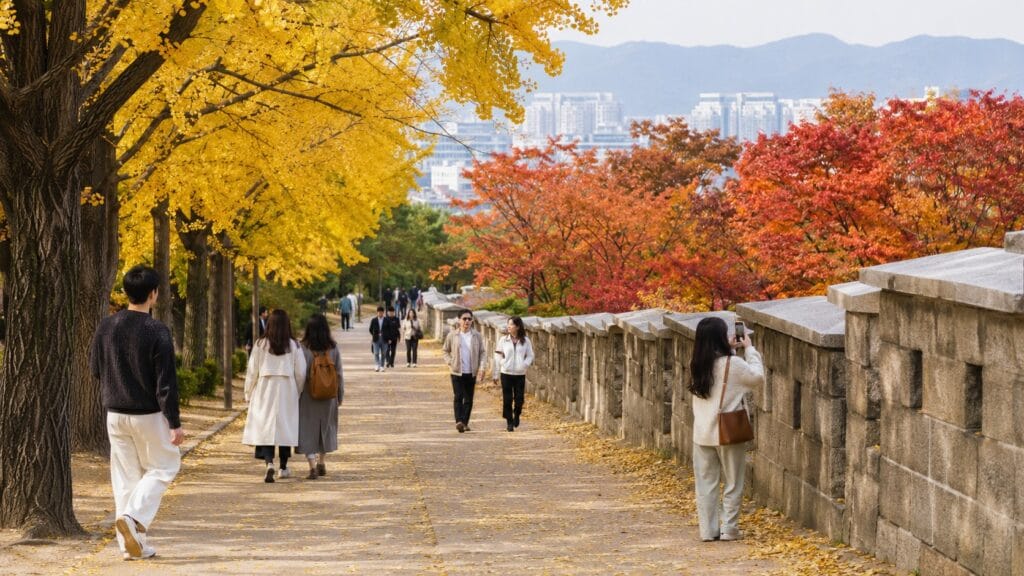
Autumn is one of Seoul’s best seasons.
Humidity gradually falls, skies often become clearer, and walking becomes easier. September can still feel like summer, October is usually mild, and November moves quickly toward winter.
September Weather in Seoul
Average high: 26°C / 79°F
Average low: 18°C / 64°F
Average rainfall: 142 mm
Early September often feels more like late summer than autumn.
Warm, humid days can continue well into the month. By late September, mornings and evenings usually become cooler, but short sleeves may still be comfortable during the afternoon.
Pack summer clothing with one light jacket or overshirt. A compact umbrella remains useful because heavy rain and typhoon-related weather are still possible.
Late September is a good period for outdoor markets, traditional neighborhoods, and Han River walks without the peak summer heat.
October Weather in Seoul
Average high: 20°C / 68°F
Average low: 11°C / 51°F
Average rainfall: 52 mm
October offers some of Seoul’s best travel weather.
Days are mild, rainfall is relatively low, and humidity is comfortable. It is an excellent month for palace visits, hiking, riverside activities, markets, and neighborhood walks.
Recommended October activities include:
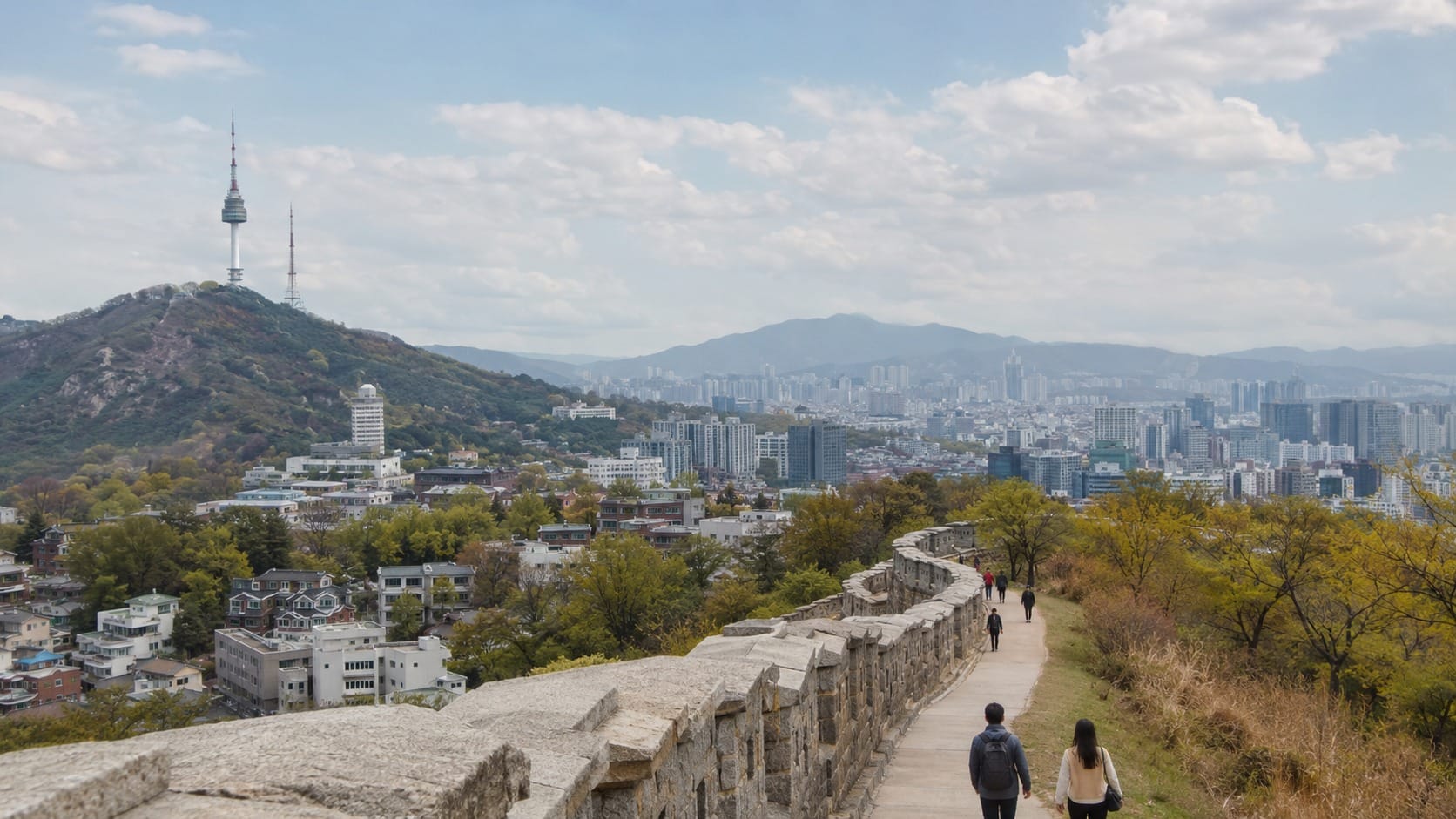
- Seoul City Wall walks
- Bukhansan hiking
- Gyeongbokgung and Changdeokgung
- Han River parks
- Bukchon and Insadong
- Namsan
- Seoul Forest
Fall foliage usually becomes more noticeable in late October and may continue into early November.
A long-sleeved shirt, knitwear, long trousers, and a medium jacket are usually suitable. Palace courtyards and riverside paths can remain comfortable through the afternoon, but the temperature drops quickly after sunset.
The 25 Best Things to Do in Seoul in 2026 includes several outdoor activities that work particularly well in October.
November Weather in Seoul
Average high: 12°C / 53°F
Average low: 4°C / 38°F
Average rainfall: 51 mm
November changes quickly.
Early November may still offer autumn foliage and mild afternoons. Late November can feel much closer to winter, with colder winds and nighttime temperatures near or below freezing.
A sweater and medium jacket may be enough early in the month. Later visitors should bring a warm coat, scarf, thicker trousers, and warm socks.
The first snow may arrive in November, but it is often brief and may not settle.
December Weather in Seoul
Average high: 4°C / 40°F
Average low: -3°C / 26°F
Average rainfall: 23 mm
December is cold, dry, and increasingly wintry.
Morning and evening temperatures frequently fall below freezing. Snow is possible, although clear and dry days are more common than continuous snowfall.
December works well for winter lights, Christmas displays, indoor markets, museums, cafes, jjimjilbangs, and hot Korean food.
Wear a winter coat or padded jacket, thermal layers, gloves, a scarf, and warm shoes.
Snow-covered Seoul is possible, but it should be treated as a bonus rather than part of the guaranteed package.
When Is the Rainy Season in Seoul?
Seoul’s rainy season usually begins in late June and continues through much of July.
The exact dates change every year. Some seasons begin earlier, end later, or include long dry breaks between periods of heavy rain.
The rainy season can bring:
- High humidity
- Cloudy skies
- Short, intense downpours
- Several consecutive wet days
- Local flooding
- Closed riverside or stream paths
- Transport delays
It does not necessarily rain all day.
A rainy-season week may contain one day of heavy rain, several cloudy periods, scattered evening showers, and a bright afternoon in between. Keep plans flexible rather than assuming an entire trip will be washed out.
Check weather alerts each morning, especially when planning riverside walks, hiking, or trips that require several outdoor transfers.
Does It Snow in Seoul?
Yes, but snowfall is irregular.
Snow is possible from December through February, with January and February usually offering the best chance.
Some winters bring several noticeable snow events. Others are mostly dry and cold with only brief flurries.
Busy roads and central sidewalks may clear quickly after snowfall, while shaded palace grounds, residential hills, parks, and mountain paths remain icy for longer.
Travelers hoping for reliable deep snow should consider adding a ski resort or mountain destination outside Seoul.
Yellow Dust and Air Quality
Spring can bring periods of yellow dust and elevated fine-particle pollution.
Air quality can also worsen during other seasons depending on wind, weather conditions, and regional pollution.
Check an air-quality app or Korean weather service each morning.
On poor-air days:
- Reduce strenuous outdoor activity
- Wear a suitable mask when needed
- Choose indoor attractions
- Keep accommodation windows closed
- Take extra care if you have asthma or respiratory problems
A poor-air day does not always require cancelling every outdoor plan, but it may be better to replace a long hike with a museum, market, or shorter neighborhood walk.
What to Wear in Seoul by Season
| Season | What to pack |
|---|---|
| Spring | Layers, light or medium jacket, long trousers, comfortable shoes |
| Summer | Breathable clothing, sunscreen, umbrella, quick-drying shoes, thin indoor layer |
| Autumn | T-shirts or knitwear, long trousers, light-to-medium jacket |
| Winter | Padded coat, thermal layers, gloves, scarf, warm shoes |
March and late November are the hardest periods to pack for because temperatures can change noticeably within the same week.
Even in summer, carry one thin layer for cold indoor spaces. In winter, choose layers that can be removed easily once you enter heated buildings.
Common Weather Mistakes
1. Treating monthly averages as exact forecasts
An average does not tell you whether your particular week will include a heat wave, cold snap, or heavy rain.
Check the forecast again within seven to ten days of departure.
2. Assuming rainy season means nonstop rain
Rain may be intermittent, but individual downpours can be intense.
Keep outdoor plans flexible instead of cancelling the entire trip in advance.
3. Underestimating summer humidity
A temperature of 29°C can feel much harder when humidity is high.
Allow more breaks and avoid scheduling every outdoor attraction one after another.
4. Packing only summer clothes for September
Early September can be hot, but cooler mornings and evenings become more common later in the month.
Bring one light outer layer.
5. Expecting snow throughout winter
Seoul winters are cold and dry, but snow cover is not constant.
6. Planning blossoms or foliage without checking yearly forecasts
Cherry blossoms and fall colors shift each year.
Confirm the seasonal forecast closer to your trip.
Frequently Asked Questions
What is the best month to visit Seoul?
October is one of the best overall months because temperatures are mild, humidity is lower, and rainfall is relatively limited.
May is another excellent choice.
What is the hottest month in Seoul?
August is usually the hottest month, with an average high around 30°C.
Heat waves may push temperatures higher.
What is the coldest month in Seoul?
January is normally the coldest month.
Nighttime temperatures regularly fall below freezing.
When is the rainy season in Seoul?
The rainy season usually begins in late June and continues through much of July.
Exact dates vary each year.
Does it rain all day during the rainy season?
Not always.
Rain may arrive as short showers, long wet periods, or intense downpours, with dry breaks in between.
When does it snow in Seoul?
Snow can fall from December to February, but January and February generally offer the best odds.
When are cherry blossoms in Seoul?
Cherry blossoms typically bloom in early April.
Peak timing changes every year depending on winter and early spring temperatures.
When can you see fall foliage in Seoul?
Late October through early November is the usual period.
Mountain areas may change color before central Seoul.
Is September hot in Seoul?
Early September can still be hot and humid.
Conditions usually become more comfortable toward the end of the month.
What should I pack for Seoul?
Pack for your exact month and include at least one adjustable layer.
The Korea Packing List 2026 provides a more complete seasonal checklist.
Final Thoughts
There is no single Seoul weather experience.
January is dry and sharp, April is brief and floral, July is humid and unpredictable, and October is mild enough for long days outside.
Spring and autumn are the easiest seasons for general sightseeing. Summer requires flexible plans, indoor breaks, and rain preparation. Winter rewards travelers who arrive properly dressed.
Use Seoul weather by month to understand the season, but check the actual forecast shortly before departure.
Seoul’s weather may change the route, the shoes, or the number of cafe stops, but it rarely needs to ruin the trip.