One traveler says you need a winter coat in March. Another says you can buy everything after arrival. Someone else carries a thick envelope of cash, while the next person pays for nearly everything by card.
The truth is less dramatic.
Korea is one of the easiest countries to visit if you forget a basic item. Convenience stores, pharmacies, supermarkets, clothing shops, and Daiso locations are easy to find in most cities.
The items that cause real problems are harder to replace: travel documents, prescription medication, a working phone, suitable shoes, and clothing that matches the season.
Most travelers do not struggle because they packed too little.
They struggle because they packed three attractive outfits, one uncomfortable pair of shoes, and a charger that does not fit the wall.
This Korea packing list covers what to bring, what to check before your flight, and what you can safely buy after arrival.
Table of contents
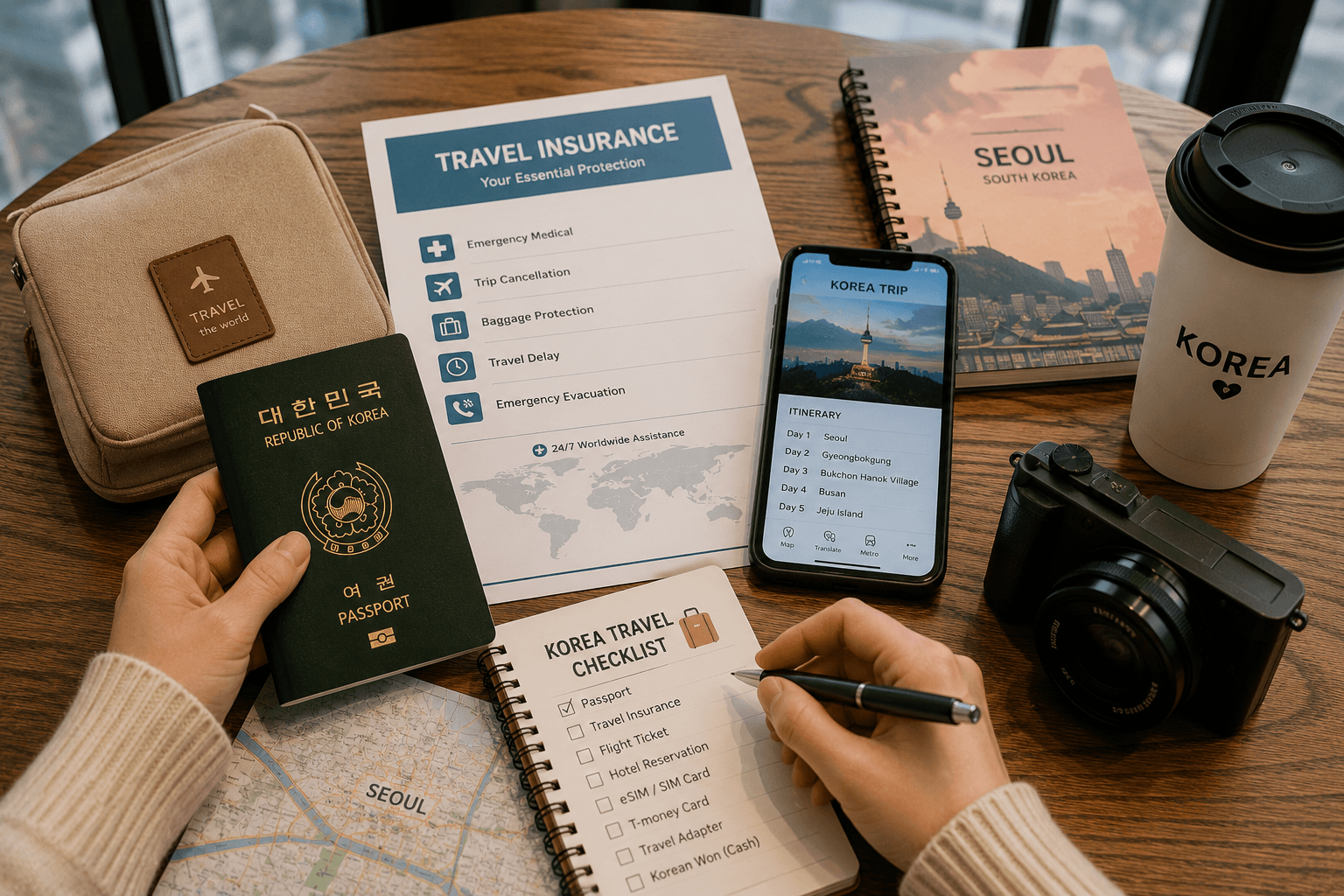
Quick Korea Packing Checklist
For most trips, start with these essentials:
Documents
- Passport
- Visa or K-ETA information, when required
- e-Arrival Card confirmation, when required
- Flight details
- Accommodation address
- Travel insurance information
- Copies of important documents
- Prescription or doctor’s letter for restricted medication
Electronics
- Smartphone
- Charging cables
- Korea-compatible power adapter
- Power bank
- Camera and charger
- Laptop or tablet, if needed
- eSIM or SIM plan
- Earphones
Clothing
- Comfortable walking shoes
- Seasonal outerwear
- Light layers
- Underwear and socks
- Sleepwear
- One neat outfit
- Rain protection when needed
Health and Personal Items
- Prescription medication
- Basic pain relief or personal medicines
- Sunscreen
- Personal hygiene products
- Glasses or contact-lens supplies
- Small first-aid items
- Reusable water bottle
Money and Transportation
- International credit or debit card
- Backup payment card
- Small amount of Korean won
- Transportation-card plan
- Wallet or secure card holder
You do not need to bring every possible travel product sold online. Korea already has shops.
Travel Documents to Prepare First
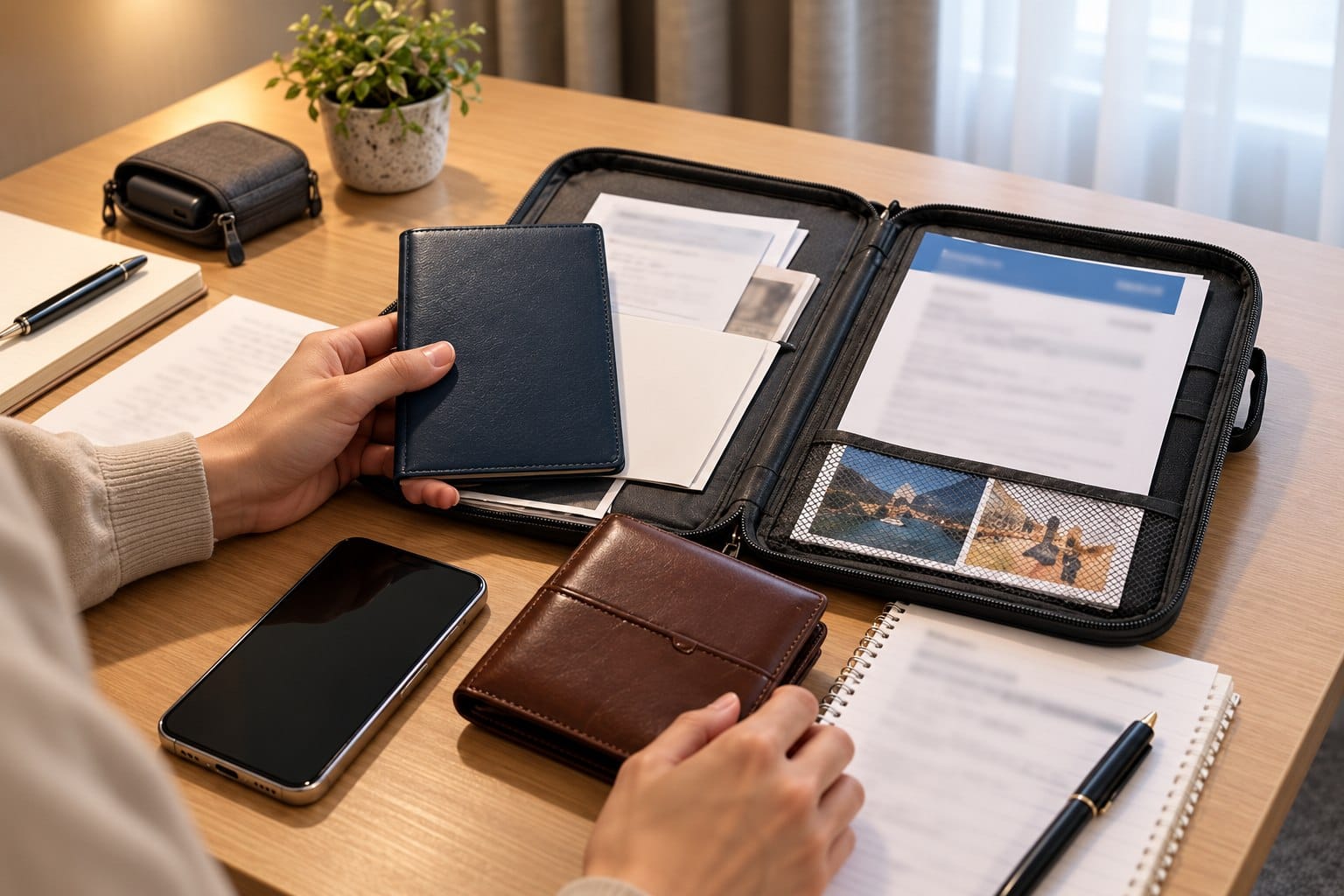
Before deciding how many sweaters to pack, make sure the documents that actually allow you to enter Korea are ready.
Bring your passport and confirm that it satisfies your airline and immigration requirements. Save your flight confirmation, accommodation address, and onward or return travel details where you can access them without internet.
Entry requirements depend on your nationality, passport, purpose of travel, and current government exemptions. Check the official visa and K-ETA requirements shortly before departure rather than relying on an old screenshot from a travel group.
Travelers who need K-ETA should apply through the official K-ETA service. An approved K-ETA is generally valid for multiple entries during its validity period, but it does not guarantee admission, and travel information may need to be updated if your accommodation or itinerary changes.
Do You Need an e-Arrival Card?
Korea’s official e-Arrival Card is free and can be submitted online within three days before arrival.
Whether you need to submit one depends on your immigration status. Travelers with a valid K-ETA do not normally need a separate arrival card, while many visa holders and other foreign visitors do. Permanent residents and some other categories are exempt.
Use the official e-Arrival Card navigator to confirm your individual requirement. Do not pay a third-party website for a form that the Korean government provides free of charge.
For a full explanation, read Korea Entry Requirements 2026.
Keep Digital and Offline Copies
Save copies of the following:
- Passport photo page
- Flight itinerary
- Hotel confirmation
- Travel insurance policy
- Emergency contacts
- Prescription information
- Important booking vouchers
Store them on your phone, in your email, and in a cloud folder. A printed copy of your first hotel address can also help if your phone has no signal after landing.
Do not keep every copy in the same bag as your passport. That defeats the plot.
Your Phone Is the Most Important Travel Tool
Your phone will probably serve as your:
- Map
- Subway planner
- Translator
- Camera
- Boarding pass
- Hotel confirmation
- Taxi-booking device
- Restaurant search tool
- Currency calculator
- Emergency contact method
Pack the charging cable you actually use, not the mysterious cable that has lived in a drawer since 2018.
A spare short cable is worth bringing because charging cables are small, inexpensive, and remarkably talented at failing during trips.
Before leaving home, download the apps you expect to use. Naver Map, KakaoMap, translation tools, airline apps, accommodation apps, and your eSIM provider are easier to set up with reliable home internet than after landing.
Read Best Korea Travel Apps before your trip.
SIM Card or eSIM
Reliable mobile data makes arrival much easier.
You can purchase a physical SIM after landing or activate an eSIM before departure. An eSIM is convenient for travelers who want internet immediately after switching off airplane mode, while physical SIM cards may work better for phones that do not support eSIM.
Before buying one, check:
- Whether your phone is unlocked
- Whether it supports eSIM
- How much data you need
- Whether voice calls are included
- When the plan activates
- Whether hotspot use is allowed
Keep your SIM removal tool somewhere accessible if you plan to change physical cards. Burying it beneath six days of clothing turns a tiny piece of metal into an archaeological project.
For options, read Best eSIM for Korea Travel.
Power Adapter and Charging Gear
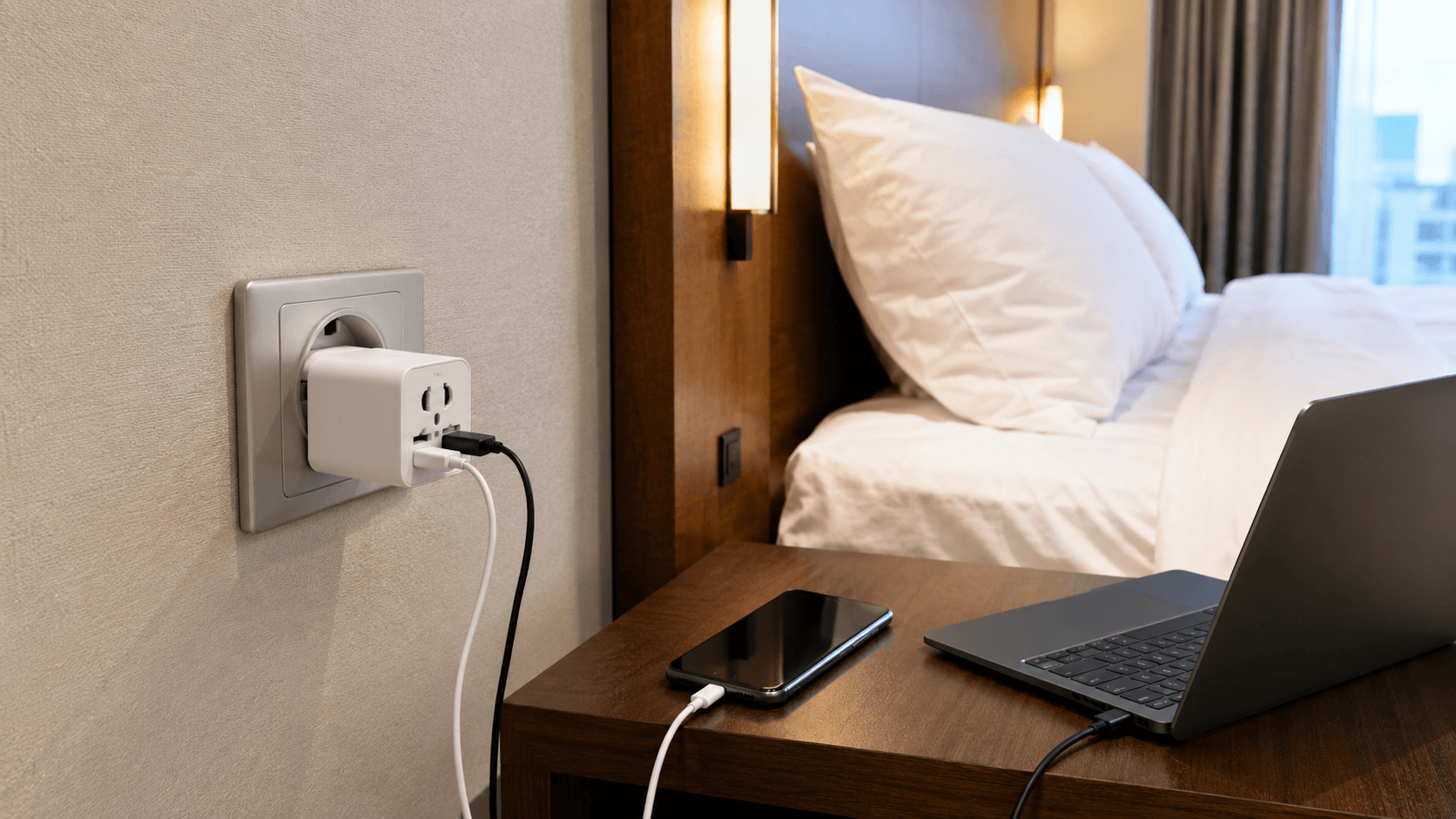
South Korea uses 220V electricity at 60Hz with round-pin Type F outlets. Slim Type C plugs often fit as well.
Travelers from the United States, Canada, Japan, the United Kingdom, Australia, and New Zealand usually need an adapter.
Most modern phone, laptop, tablet, camera, and power-bank chargers support international voltage. Look for this wording on the charger:
Input: 100–240V, 50/60Hz
If you see that range, you need only a plug adapter.
Single-voltage hair dryers, straighteners, and older appliances designed only for 110V or 120V should not be plugged directly into Korean outlets.
A useful charging setup includes:
- One Korea-compatible adapter
- One multi-port USB or USB-C charger
- Charging cables
- One power bank
- An optional spare cable
A multi-port charger is more useful than bringing several separate wall chargers. Hotel rooms have a way of placing the only convenient outlet behind furniture designed by someone who did not own a phone.
Read Korea Power Adapter Guide 2026 for voltage and plug details.
Pack Your Power Bank in Your Carry-On
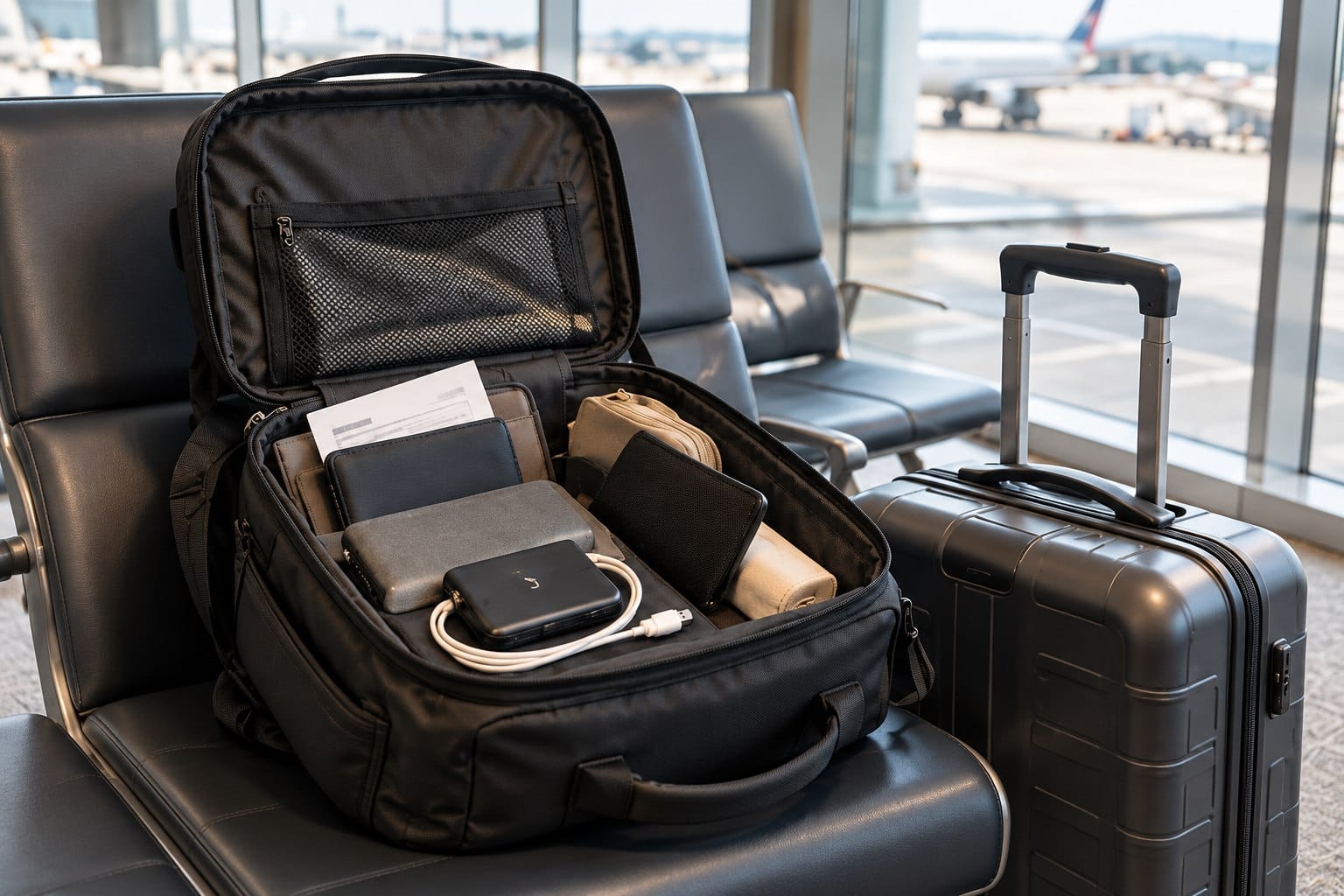
Do not place a loose power bank in checked baggage.
Lithium power banks and spare batteries must generally travel in carry-on baggage, with airline limits based on battery capacity and quantity. Batteries above 100Wh may require airline approval, while those above 160Wh are generally prohibited. Rules can vary by airline, so check before flying.
Korean aviation safety guidance has also tightened the handling of power banks on flights. Terminals should be protected from short circuits, and airlines may require the battery to remain with the passenger or in the seat pocket rather than in an overhead bin. Using a power bank to charge another device during the flight may also be prohibited.
A small plastic bag, terminal cover, or protective pouch takes almost no luggage space and prevents your power bank from becoming the most controversial item in your backpack.
Comfortable Shoes Are More Important Than Extra Outfits
Korean cities involve more walking than they appear to on a map.
Palace grounds are large. Traditional villages have slopes and uneven paths. Subway stations can have long corridors and stairways. Shopping districts somehow continue for several blocks after your feet have formally ended the day.
Bring at least one pair of shoes that you have already worn for long walks.
Do not make a brand-new pair of shoes responsible for your entire Seoul itinerary.
A practical footwear setup is:
- One comfortable pair of walking shoes
- Optional lightweight second pair
- Weather-resistant shoes in winter or rainy season
- Simple sandals or slippers for accommodation, when useful
Three large pairs of shoes consume an impressive amount of suitcase space while contributing very little diplomacy.
What to Pack for Korea by Season
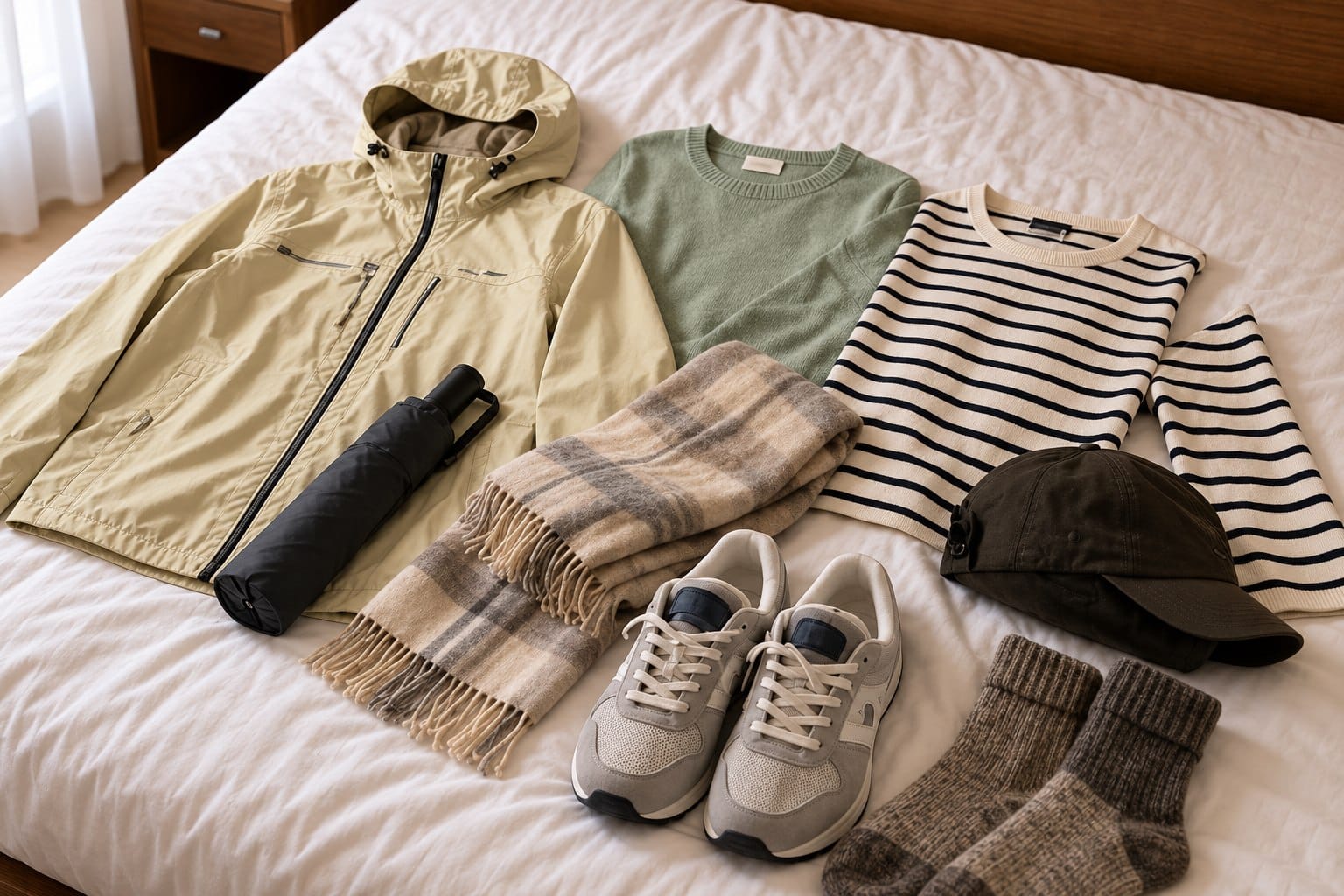
Korea has four distinct seasons. Spring and autumn are generally mild, summer is hot and humid, and winter is cold and dry. Weather varies by region, with Busan and Jeju usually milder than Seoul in winter.
Always check the forecast for the cities you are visiting a few days before departure.
Spring: March to May
Spring weather changes quickly.
March can still feel cold, especially in the morning and evening. Seoul’s average March low is around 2°C, while May becomes considerably warmer. Chilly weather can continue into mid-March even when cherry blossom photos suggest everyone is living inside a pastel postcard.
Pack:
- Light or medium jacket
- Sweater or cardigan
- Long trousers
- Layering tops
- Comfortable shoes
- Compact umbrella
- Allergy medication, if needed
For late April and May, lighter clothing is usually enough during the day, but keep one layer for evenings.
Summer: June to August
Korean summers are hot, humid, and rainy.
The rainy season often overlaps with late June and July, and typhoons can affect Korea between summer and early autumn. August is normally the hottest month.
Pack:
- Lightweight breathable clothing
- Quick-drying tops
- Comfortable shorts or light trousers
- Compact umbrella
- Light rain jacket
- Sunscreen
- Hat
- Portable fan
- Reusable water bottle
- Spare socks
Choose fabrics that dry quickly. Heavy denim can become a portable weather complaint during humid July afternoons.
Indoor air conditioning can feel strong, so a thin overshirt or cardigan is useful.
Autumn: September to November
Autumn is one of the easiest seasons to pack for, but early September and late November feel very different.
September may still be warm. October is usually comfortable for outdoor sightseeing. November can become cold, particularly at night.
Pack:
- Light layers
- Long trousers
- Thin sweater
- Light jacket
- Comfortable walking shoes
- Warmer outer layer for November
- Compact umbrella
If you are visiting for autumn foliage, expect large temperature differences between sunny afternoons and early mornings.
Winter: December to February
Winter in Seoul can be genuinely cold.
Average winter temperatures hover near freezing, and cold waves can push conditions well below zero. Seoul’s average January low is around -5.5°C, while Busan is generally milder.
Pack:
- Insulated coat
- Thermal base layers
- Sweaters
- Gloves
- Scarf
- Warm socks
- Hat or ear covering
- Comfortable winter shoes
- Lip balm
- Moisturizer
Korean buildings and public transportation are usually heated, so layers work better than wearing one enormous sweater that becomes a personal sauna indoors.
Disposable hand warmers are widely available in Korea, so you do not need to fill half your luggage with them.
Prescription Medication and Health Items
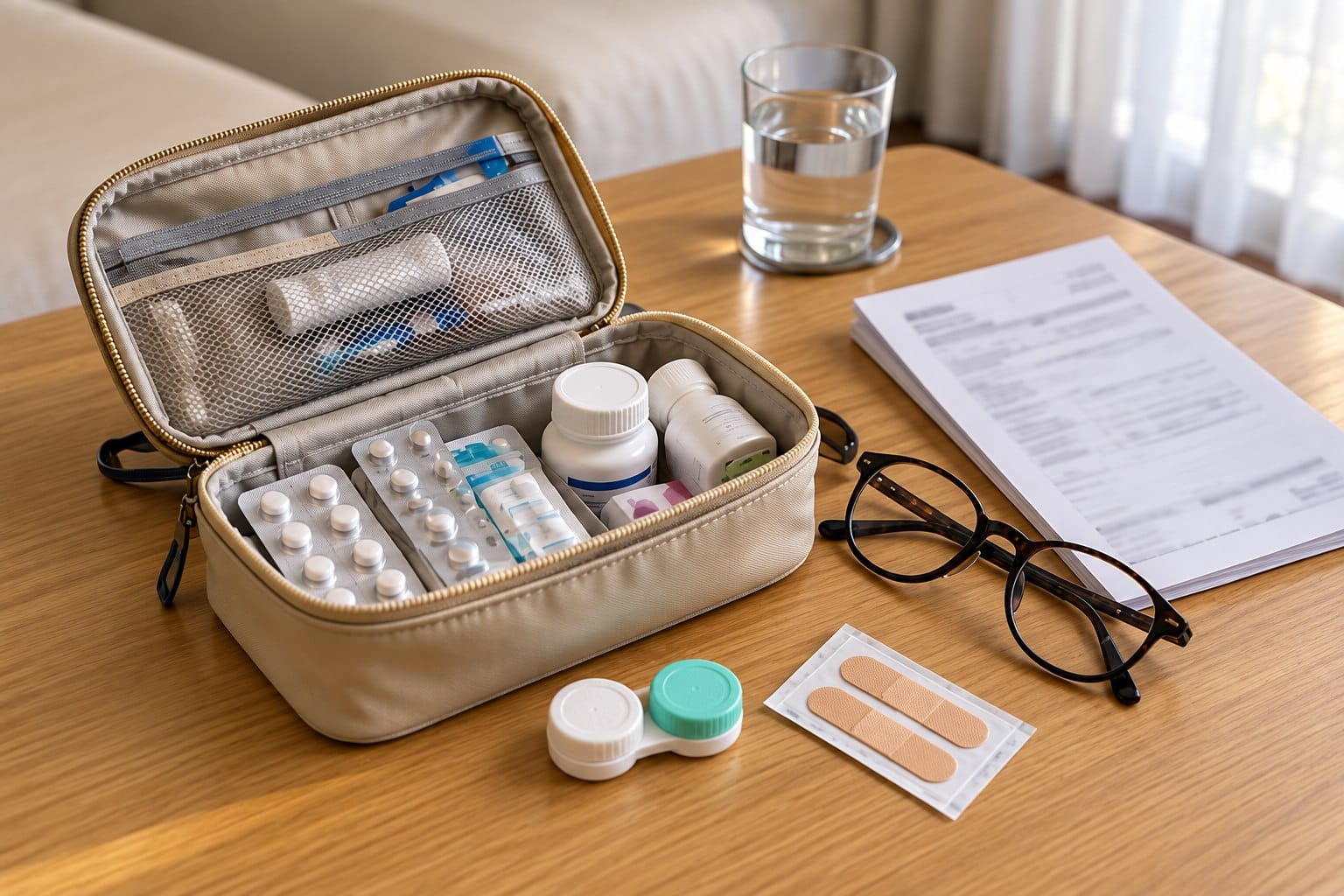
Bring enough prescription medication for the entire trip, plus a small buffer in case of delays.
Keep medication in its original packaging when possible. Carry a copy of the prescription or a doctor’s letter that includes the medication name, dosage, and medical need.
Some narcotic, psychotropic, cannabis-derived, and potentially misused medicines are restricted or require approval. Korean Customs lists narcotics, psychoactive substances, and medicines that may be abused among items requiring declaration or additional clearance.
Before traveling with controlled medication:
- Check the Korean customs and drug-import requirements.
- Contact the relevant Korean authority or embassy if uncertain.
- Ask your airline about carrying liquid or injectable medication.
- Keep essential medicine in your carry-on.
- Bring supporting documents in English when possible.
At Incheon Airport, liquid medicines over 100ml may require a doctor’s note or prescription for cabin screening.
Do not assume that a medication sold legally at home is automatically unrestricted in Korea.
Personal Health Items Worth Bringing
Consider packing:
- Prescription medicine
- Preferred pain relief
- Allergy medication
- Motion-sickness medicine
- Blister patches
- Small bandages
- Contact-lens supplies
- Spare glasses
- Personal menstrual products
- Any product or brand you rely on
Pharmacies are common, but explaining a very specific medical need across a language barrier is not the adventure most travelers are looking for.
Toiletries: Bring Less Than You Think
Basic toiletries are easy to buy in Korea.
You can find:
- Toothpaste and toothbrushes
- Shampoo and conditioner
- Body wash
- Razors
- Skincare products
- Sunscreen
- Tissues and wet wipes
- Umbrellas
- Socks
- Simple travel accessories
Convenience stores, supermarkets, beauty stores, pharmacies, and Daiso locations cover most forgotten basics.
Bring personal products when:
- You have sensitive skin
- You use a specific medical product
- You need a particular hair-care formula
- You require a size or brand that may be difficult to find
- You want to avoid shopping immediately after arrival
Hotel amenities vary. Some accommodations reduce disposable toiletries, and guesthouses may provide only basic soap and shampoo. A small reusable toiletry kit is the safer plan.
Liquids in Your Carry-On
For international flights departing Korea, liquids, gels, sprays, cosmetics, toothpaste, and similar products generally need to be in containers of 100ml or less and packed inside one transparent 1L zip bag per traveler.
The rule applies to the container size, not the amount remaining inside it. A mostly empty 200ml bottle is still a 200ml bottle.
Pack larger toiletries in checked baggage or buy them after arrival.
This also matters when taking Korean foods home. Gochujang, sauces, and some kimchi products may be treated as liquids or gels at security.
Cash, Cards, and Payment
Credit cards are widely accepted in Korea at hotels, department stores, restaurants, cafés, and general shops.
Bring:
- One primary international card
- One backup card stored separately
- A small amount of Korean won
- Some cash for markets, small shops, or transportation-card situations
You do not need to carry your entire travel budget in cash.
However, a card can be declined, an overseas transaction can trigger fraud protection, and some smaller businesses may not accept every international card. A small cash reserve prevents a very modern trip from being defeated by one uncooperative payment terminal.
Notify your bank of the trip if required and confirm that overseas transactions are enabled.
Transportation Items
Most travelers do not need to purchase a transportation card before leaving home.
You can buy a T-money or another compatible transportation card after arriving, then use it on eligible subways and buses. Korean transportation cards also provide transfer benefits and can be used for selected payments.
Prepare these instead:
- Mobile data
- Local map app
- Accommodation address
- Airport transportation plan
- Small amount of Korean won
- Comfortable bag for daily travel
Read Korea T-Money Card Guide and Incheon Airport to Seoul Guide before arrival.
Bags That Work Well in Korea
A large suitcase is fine for hotels and airport transfers, but it is not ideal for every travel style.
Consider your route.
Standard Hotel Trip
Bring:
- Rolling suitcase
- Small day bag
- Foldable shopping bag
Multi-City Train Trip
Bring:
- Medium suitcase rather than oversized luggage
- Backpack or crossbody day bag
- Packing cubes
- Luggage strap or identifying tag
Guesthouse or Hanok Stay
Smaller luggage is easier because some buildings have narrow stairs, limited elevators, or less storage space.
Your suitcase does not need to qualify as a studio apartment.
Useful Items for Daily Sightseeing
A well-packed day bag might contain:
- Phone
- Power bank
- Charging cable
- Wallet
- Passport copy
- Water bottle
- Tissues
- Hand sanitizer
- Compact umbrella
- Small medicine pouch
- Reusable shopping bag
- Seasonal layer
Carry your actual passport when required for tax refunds, identification, or specific bookings, but do not casually move it between coat pockets throughout the day.
Items You Can Buy After Arrival
These are usually easy to replace:
- Umbrella
- Basic toiletries
- Socks
- T-shirts
- Charging cable
- Simple phone accessories
- Hand warmers
- Reusable shopping bag
- Slippers
- Basic skincare
- Snacks and drinks
- Simple first-aid products
Do not spend hours hunting for the perfect emergency sewing kit before departure. Korea has needles.
Things to Leave at Home
Single-Voltage Hair Appliances
A 110V or 120V-only hair dryer can be unsafe on Korea’s 220V system. Use the hotel dryer or bring a dual-voltage appliance.
Too Many Shoes
Shoes are heavy, bulky, and rarely need backup backup shoes.
Large Amounts of Cash
Cards are widely accepted, and ATMs and exchange services are available.
Full-Size Toiletries
Buy them in Korea or pack travel sizes.
Heavy Clothing “Just in Case”
Pack for the actual season and forecast.
Fresh Food, Meat, Fruit, Seeds, and Plants
Animal, plant, agricultural, and food products may be restricted or require declaration and quarantine inspection. Check the rules before placing them in your luggage.
Expensive Items You Do Not Need
Every valuable object creates another thing to protect, charge, insure, and remember at hotel checkout.
Common Packing Mistakes
Packing for Photos Instead of Walking
A good outfit does not rescue painful shoes.
Forgetting a Power Adapter
Your charger may support Korean voltage but still not fit the outlet.
Putting a Power Bank in Checked Luggage
Keep lithium power banks in your carry-on and follow airline handling rules.
Bringing Medication Without Documentation
Check controlled-drug rules and bring prescriptions when needed.
Packing Only for Daytime Temperatures
Spring and autumn evenings can be much cooler.
Relying Completely on Airport Wi-Fi
Download your eSIM, hotel address, and transport information before flying.
Filling Every Empty Space
Leave some room for shopping, snacks, skincare, or the completely reasonable socks you will somehow buy in Seoul.
Suggested Packing List for a 7-Day Korea Trip
This is a practical starting point, not a law.
Clothing
- 5 to 7 tops
- 2 to 3 bottoms
- 1 seasonal jacket or coat
- 7 sets of underwear
- 7 pairs of socks
- Sleepwear
- One comfortable walking shoe
- One optional second shoe
- Seasonal accessories
Laundry access allows you to bring less, especially on longer trips.
Electronics
- Phone
- Adapter
- Multi-port charger
- Power bank
- Two charging cables
- Earphones
- Camera, if used
Personal Items
- Medication
- Small toiletry kit
- Sunscreen
- Glasses or contact supplies
- Small first-aid kit
- Reusable water bottle
Documents and Money
- Passport
- Entry documentation
- Insurance details
- Cards
- Korean won
- Accommodation details
- Digital backups
Adjust the list for hiking, skiing, business travel, beauty treatments, beaches, or multi-city routes.
FAQ
What should I pack for my first trip to Korea?
Bring your passport and entry documents, comfortable walking shoes, seasonal layers, medication, a phone, charging equipment, a Korea-compatible adapter, a power bank, and at least two payment methods.
Do I need cash in Korea?
Most businesses accept cards, but a small amount of Korean won is useful for markets, small shops, and unexpected payment problems.
Do I need a power adapter?
Travelers whose plugs do not use the European-style round-pin format generally need an adapter. Korea uses 220V Type F outlets.
Can I buy toiletries in Korea?
Yes. Toiletries, cosmetics, umbrellas, socks, chargers, and basic travel products are widely available.
What should I wear in Korea in March?
Pack layers, long trousers, a sweater, and a light or medium jacket. Early March can still feel cold, especially in the morning and evening.
Can I put my power bank in checked luggage?
No. Power banks and loose lithium batteries should be carried in the cabin according to airline capacity and quantity rules.
Should I bring medication documentation?
Yes, especially for prescription, injectable, narcotic, psychotropic, or controlled medication. Keep medicine in original packaging and carry a prescription or doctor’s letter.
Final Thoughts
Packing for Korea does not require preparing for every possible crisis.
Bring the items that are difficult to replace:
- Passport and entry documents
- Prescription medication
- Comfortable shoes
- Phone and charging equipment
- Suitable seasonal clothing
- Backup payment method
Everything else belongs in the “useful but replaceable” category.
Korea is highly convenient. A forgotten umbrella, cable, toothbrush, pair of socks, or basic toiletry can usually be replaced without turning the trip into an expedition.
Pack for the weather you will actually experience. Check your electronics. Protect your medication. Leave some room in your luggage.
The best Korea suitcase is not the largest one.
It is the one that contains what you need and still closes after shopping.