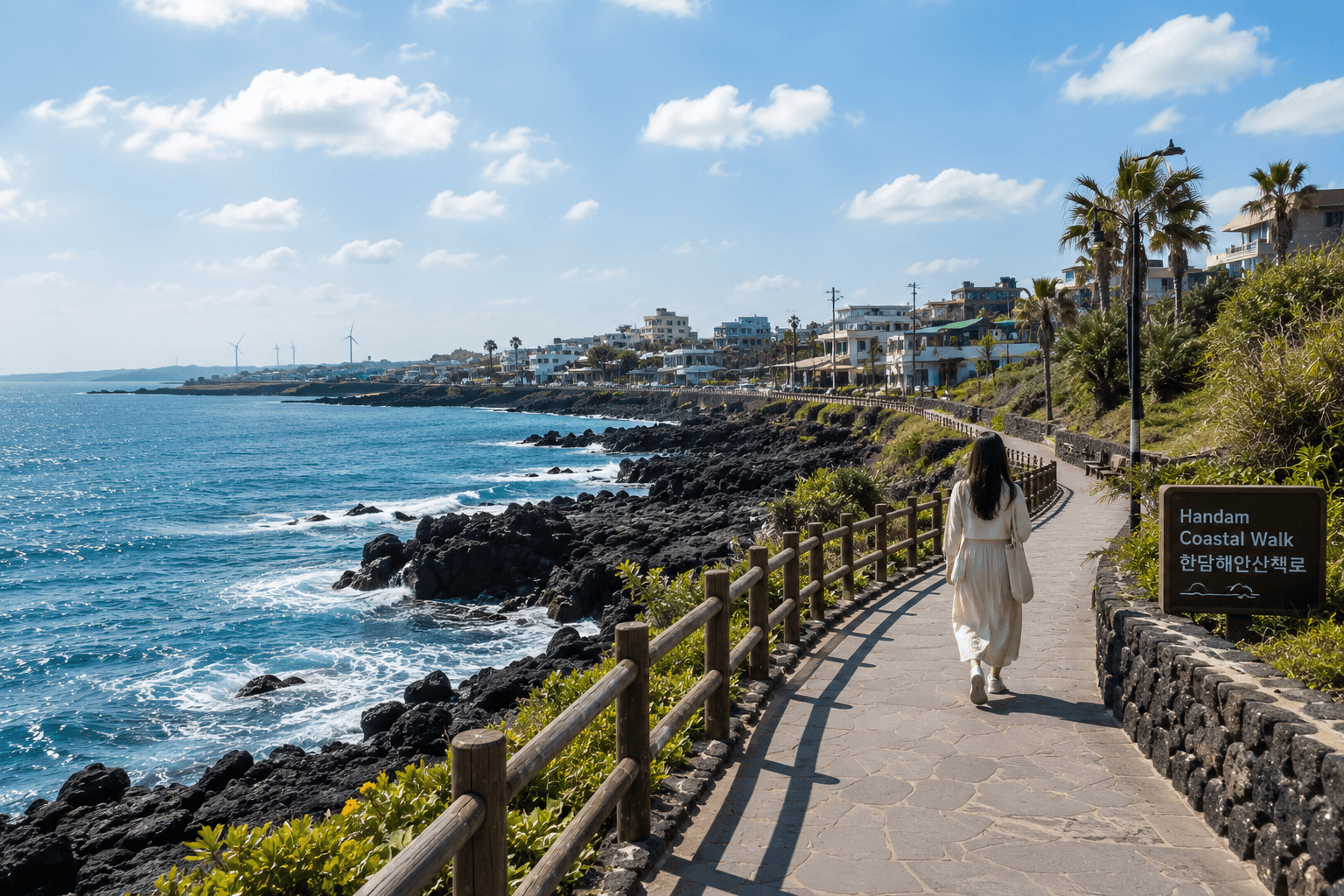
Jeju looks compact on a map. It is not. Add Hallasan, Udo, Seongsan Ilchulbong, Hyeopjae Beach, waterfalls, black pork, and one “quick” ocean-view cafe, and a relaxed island break can turn into a military operation.
The better approach is to divide the island by region and leave room for weather, traffic, and the coastal stop you were definitely not planning to make. Jeju rewards curiosity; it is less enthusiastic about overpacked schedules.
This practical Jeju travel guide covers how many days you need, where to stay, whether to rent a car, the best things to do, seasonal trade-offs, and a realistic first-time route.
If Jeju is part of a longer trip, start with our first-time South Korea destination guide to see how it fits with Seoul, Busan, and Gyeongju.
This guide prioritizes sensible regional pacing over collecting distant attractions in one day. Recheck weather, trail access, ferry operations and transport details on the official pages near the end before you travel.
This article may contain affiliate links, which means we may earn a small commission if you book through them, at no extra cost to you.
Table of contents
Jeju at a Glance
| Decision | Best first-time choice |
|---|---|
| Trip length | 4–5 days |
| Best base | Split Jeju City and Seogwipo, or choose one base for a slower trip |
| Transport | Rental car for flexibility; buses, taxis, and tours if you do not drive |
| Best seasons | Spring and autumn for mild weather; summer for beaches |
| Planning rule | Keep each day mostly to one side of the island |
Why Visit Jeju Island?
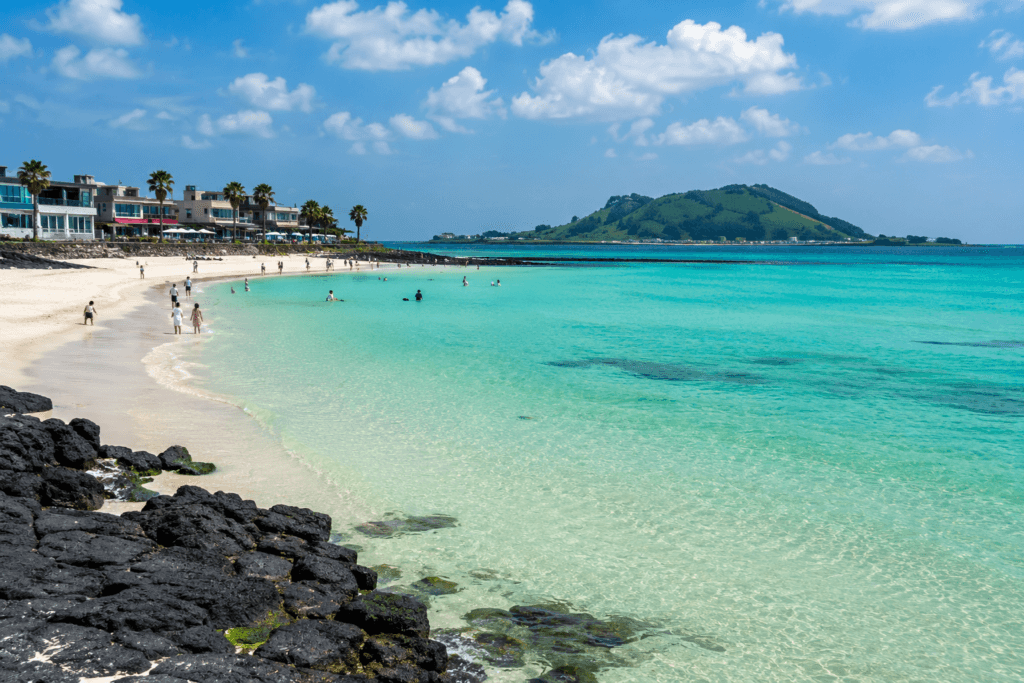
Jeju offers a completely different experience from mainland Korea.
Seoul is fast, vertical, bright, and packed with restaurants, palaces, shopping streets, subway lines, and neighborhoods that change every few stops. Busan has beaches, seafood markets, coastal temples, and big-city energy by the sea.
Jeju moves differently.
It is slower, wider, windier, and more nature-focused. The island is famous for volcanic scenery, coastal drives, UNESCO-listed landscapes, hiking trails, beaches, waterfalls, caves, cafes, seafood, tangerines, and Jeju black pork.
Visitors come to Jeju for many reasons, but the best trips usually include a mix of:
- Volcanic landscapes
- Beautiful coastal roads
- Hallasan National Park
- Seongsan Ilchulbong
- Udo Island
- Beaches such as Hyeopjae
- Ocean-view cafes in Aewol
- Waterfalls and southern Jeju scenery
- Local food, especially Jeju black pork
- A slower travel pace
Jeju is one of the easiest places to add to a South Korea itinerary if you have more than one week. It also works well as a separate island escape if you want nature after several days in Seoul.
The key is not to treat Jeju like a small city. Jeju rewards travelers who choose a few regions carefully and give them enough time.
Visitor Information
| Item | Details |
|---|---|
| Location | Off the southern coast of South Korea |
| Main Airport | Jeju International Airport |
| Recommended Stay | 4 to 5 days for first-time visitors |
| Minimum Stay | 3 days / 2 nights |
| Best For | Nature, beaches, hiking, cafes, food, road trips |
| Best Seasons | Spring and autumn |
| Currency | South Korean Won, KRW |
| Main Transport | Rental car, bus, taxi, tours |
| Language | Korean, with some English in major tourist areas |
Korean is the main language on Jeju. English is available at the airport, major hotels, famous tourist attractions, rental car counters, and some restaurants, but smaller local businesses may have limited English support.
Mobile data helps a lot. You will use maps, translation, restaurant searches, ferry updates, weather checks and navigation more than you expect. Set it up before leaving the airport; Jeju is a poor place to discover that your map works only when the cafe has Wi-Fi.
Most places accept cards, but a little cash is still useful for smaller shops, markets, parking, older restaurants and local vendors. Our Cash vs Card in Korea guide explains what to carry without turning your wallet into a currency museum.
How Many Days Do You Need in Jeju?
For most first-time visitors, 4 to 5 days is ideal.
A 3-day trip can work if you focus on one or two regions, but it often feels rushed. A 4-day trip is easier to pace when you choose priorities according to your arrival and departure times, rather than assuming four full sightseeing days. A 5-day trip is the sweet spot if you also want Hallasan, Udo Island, beach time, cafes, and slower meals.
Two days is usually too short unless you only want a quick taste of the island. You can technically visit, take photos, eat one good meal, and leave. But that is like opening a book, reading three pages, and saying you understand the plot.
A good first-time Jeju plan usually looks like this:
- 3 days: choose east plus west or Jeju City plus Seogwipo
- 4 calendar days: choose two regional priorities if arrival and departure are short
- 5 calendar days: use the detailed route, with the west coast conditional on departure time
For a complete route, use Jeju 5-Day Itinerary 2026. It is the best starting point if you want a practical day-by-day plan.
How to Get to Jeju
The easiest way to reach Jeju is by air.
Most visitors fly into Jeju International Airport from Seoul, Busan, Daegu, Cheongju, or other domestic airports. Flights from Seoul usually take about one hour, which makes Jeju easy to combine with a mainland Korea itinerary.
Jeju International Airport is one of the busiest airports in Korea, especially for domestic travel. Friday evenings, Sunday afternoons, long weekends, and holiday periods can be crowded because many Korean travelers visit Jeju for short trips.
Try to avoid peak domestic travel times if your schedule is flexible. Airport queues, rental car pickup lines, and traffic can all take longer than expected.
If you are arriving internationally, you may connect through Seoul or Busan before flying to Jeju. Leave enough time for immigration, baggage collection and a terminal or airport transfer when the domestic flight is on a separate ticket.
Getting Around Jeju: Car, Bus, Taxi, or Tour?
A rental car is the easiest option for most first-time visitors, but it is not mandatory. The right choice depends on your licence, budget, confidence behind the wheel, and tolerance for bus timetables.
Rental car
A car saves time when you want to combine beaches, cafes, trailheads and smaller coastal stops. Foreign drivers should bring their passport, valid home licence and an accepted International Driving Permit issued in their home country and valid for the rental period. Rental companies set their own age and driving-experience rules, so confirm them before paying; 21 years old and at least one year of experience are common requirements, not a promise from every counter.
At Jeju Airport, follow the rental-car signs from the arrivals level to the Rental Car House outside Gate 5, then board your company’s shuttle. The cars are collected off-site, so “pick up the rental car” deserves more time than one innocent-looking line in the itinerary.
Compare Jeju rental car options early for flower season, summer, autumn weekends, and Korean holidays. Before booking, read the official Visit Jeju rental-car guidance.
Bus, taxi, and tours
Public buses reach the main towns and many popular sights, but cross-island days can become slow. Stay in Jeju City or Seogwipo, group sights by region, and use taxis for the awkward final stretch. A guided day tour is often cheaper than repeatedly discovering that the next bus arrives after your patience leaves.
Without a car, plan one region per day: east for Seongsan and Udo, south for Seogwipo and waterfalls, or west for Hyeopjae and Aewol. Trying east and west together looks efficient only until the actual travelling begins.
Use Visit Jeju’s public-transport guide to understand the network, then check your exact stop, direction and return connection in a current route planner. Tourist circulation routes 810 and 820 serve eastern and western attraction loops via Daecheon and Donggwang transit centers; they are not a single bus around the whole island. Avoid treating an older tourism timetable as a live departure board.
Best Things to Do in Jeju
Seongsan Ilchulbong
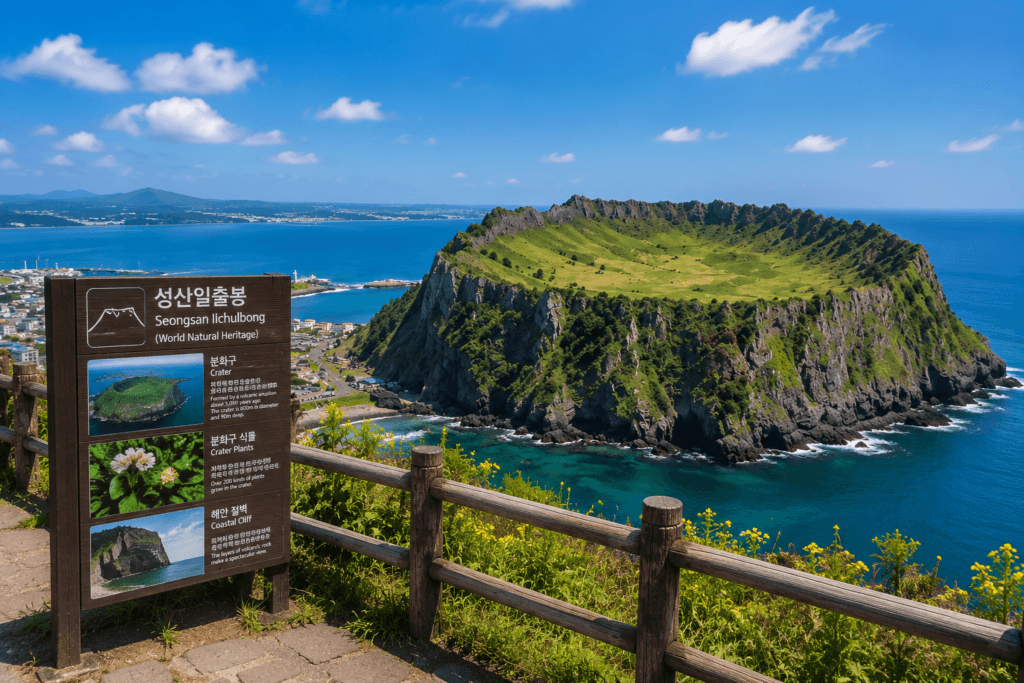
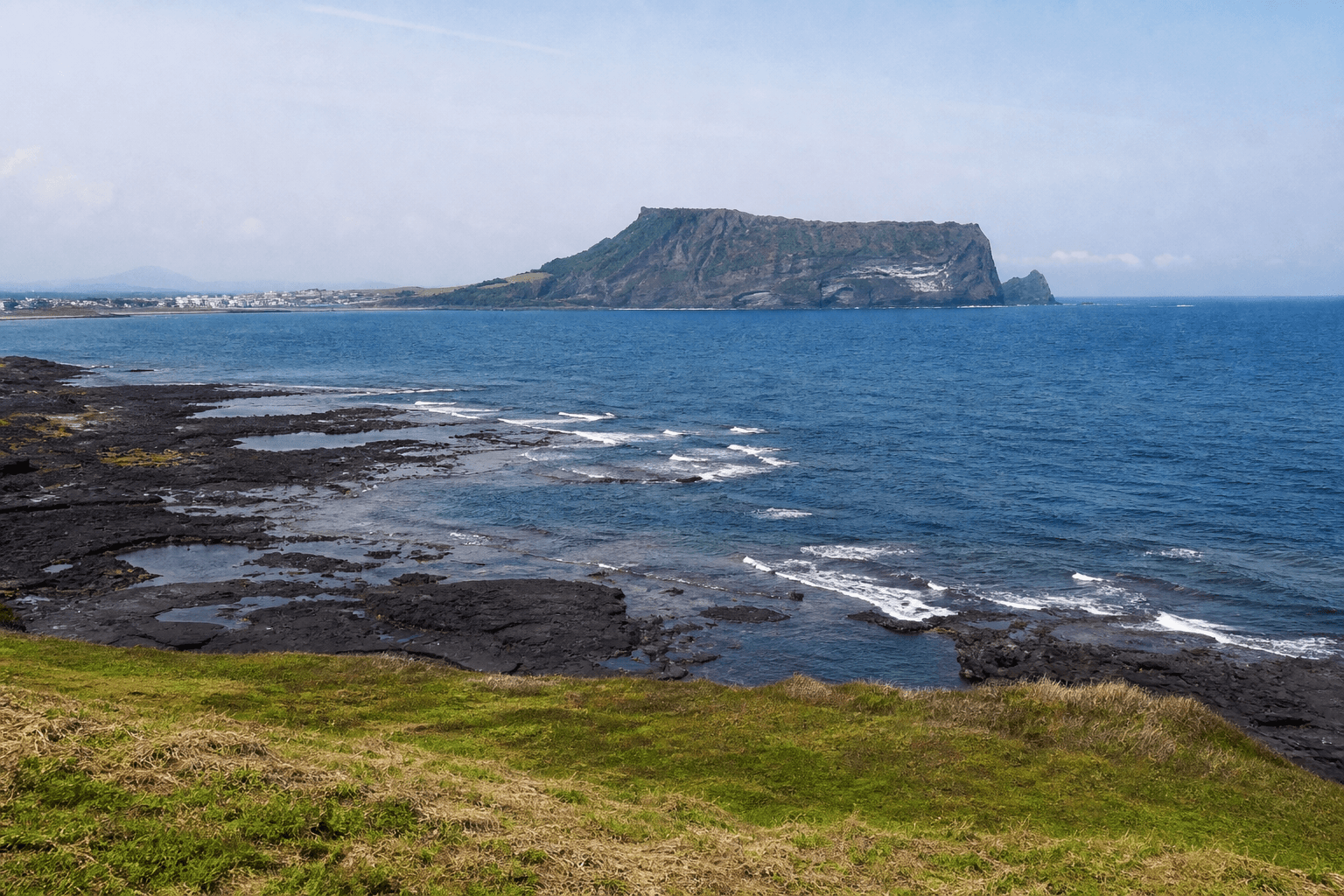
Seongsan Ilchulbong, often called Sunrise Peak, is one of Jeju’s most iconic landmarks.
This volcanic tuff cone rises near the eastern coast and is part of Jeju’s UNESCO-listed volcanic landscape. The climb is short compared with Hallasan, but the view is dramatic, especially when the weather is clear.
Many visitors come for sunrise, but daytime visits are also worthwhile. If you do not want to wake up before dawn, do not worry. The crater, sea views, and surrounding coastline are still impressive later in the day.
Arrive early if possible. Tour buses and larger crowds often appear later in the morning, especially during peak seasons.
For a deeper plan, read Seongsan Ilchulbong Guide 2026.
Udo Island
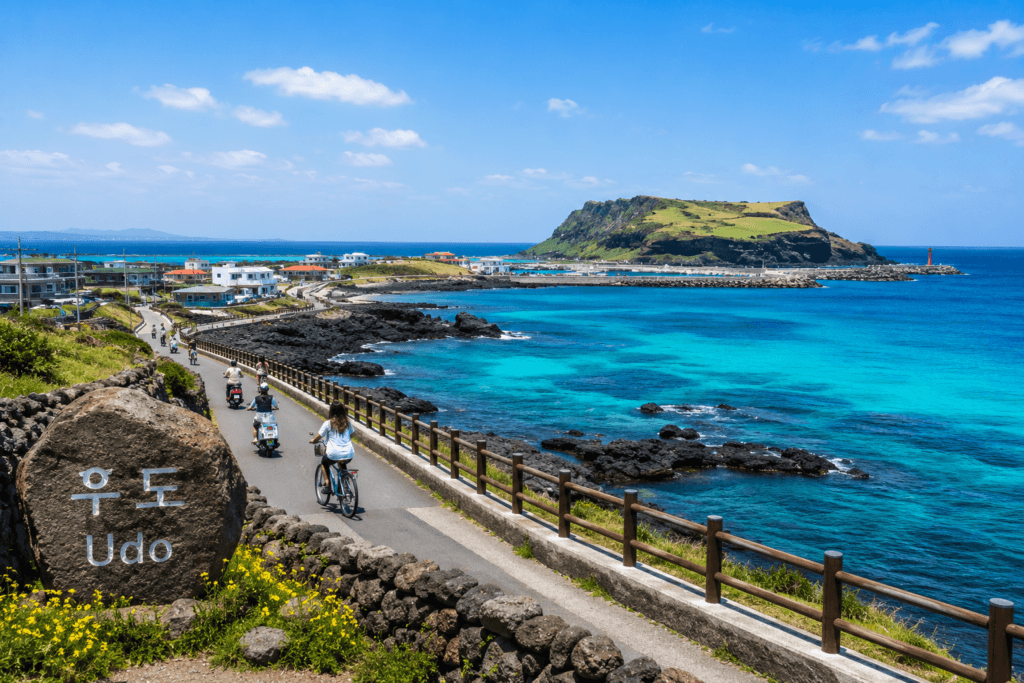
Udo Island is one of the best day trips from eastern Jeju.
Located a short ferry ride from Seongsan Port, Udo is known for turquoise water, white coral beaches, coastal roads, peanut ice cream, ocean-view cafes, and a slower island atmosphere. Many travelers add it to their itinerary because it is close to Seongsan Ilchulbong, then end up remembering Udo as one of the highlights of the trip.
The island is small enough to explore in a day, but it is better when you do not rush. Rent an electric bicycle, take the local bus, or use another local transport option and give yourself time to stop at beaches and viewpoints.
Bring your passport or another accepted ID for ferry ticketing and complete the boarding form. Visit Jeju’s Udo guide advises checking that day’s sailings because departure times and arrival ports can change. Confirm the return port and last sailing before exploring, not after the second peanut ice cream.
Do not assume your Jeju rental car can come along. General rental cars are restricted from entering Udo through July 31, 2029, with specified exceptions. Confirm eligibility, supporting documents and insurance coverage before arranging a vehicle crossing; otherwise leave the car on mainland Jeju and use island transport.
Do not schedule Udo on your final day if your flight is later that afternoon. Ferry operations can be affected by wind and sea conditions, and travel stress is not the souvenir you want.
For planning details, read Udo Island Guide 2026.
Hallasan National Park
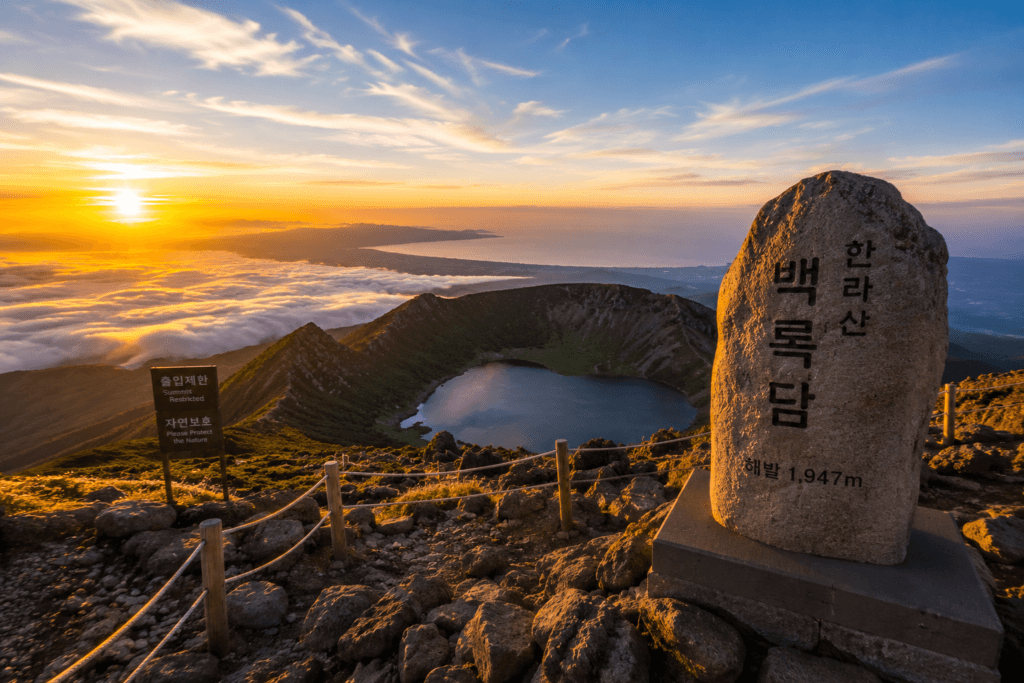
Hallasan is the highest mountain in South Korea and the natural centerpiece of Jeju.
The mountain rises from the center of the island and offers some of Korea’s most rewarding hiking experiences. Summit trails can take most of the day, while shorter trails provide easier ways to enjoy Hallasan’s forests and volcanic scenery.
Many visitors underestimate Hallasan because it is a popular tourist attraction. Popular does not mean easy. The mountain has long trails, changing weather, cooler temperatures, and descents that can make your knees send strongly worded messages.
For a summit hike, book the reserved upper section of Seongpanak or Gwaneumsa before setting your day in stone. The park’s reservation notice identifies Jindallaebat (Azalea Field)–Baengnokdam and Samgakbong–Baengnokdam as the controlled sections. Eorimok, Yeongsil, Donnaeko, Seokguram and Eoseungsaengak do not require that summit reservation; this does not make them alternative routes to the crater summit.
Each booked visitor needs their own QR code and ID, such as a passport. Keep both ready, bring food and water, and check the official trail-status system again before leaving. Seasonal entry and descent cutoffs still apply, and weather can close a trail despite a confirmed booking. The mountain has not read your itinerary.
For trail choices and hiking tips, read Hallasan National Park Guide 2026.
Hyeopjae Beach
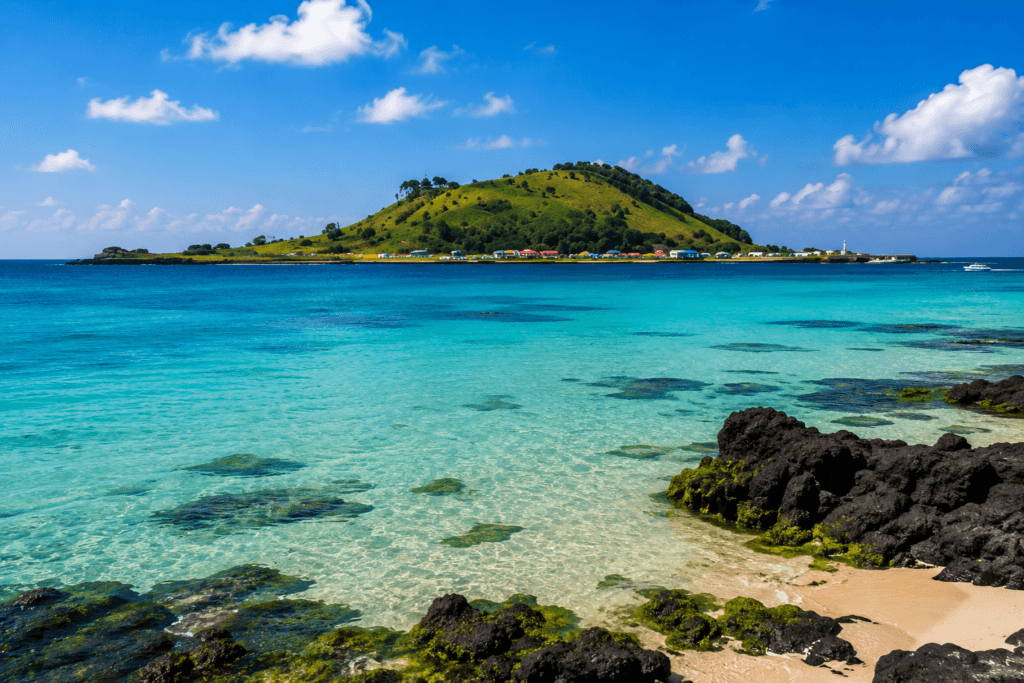
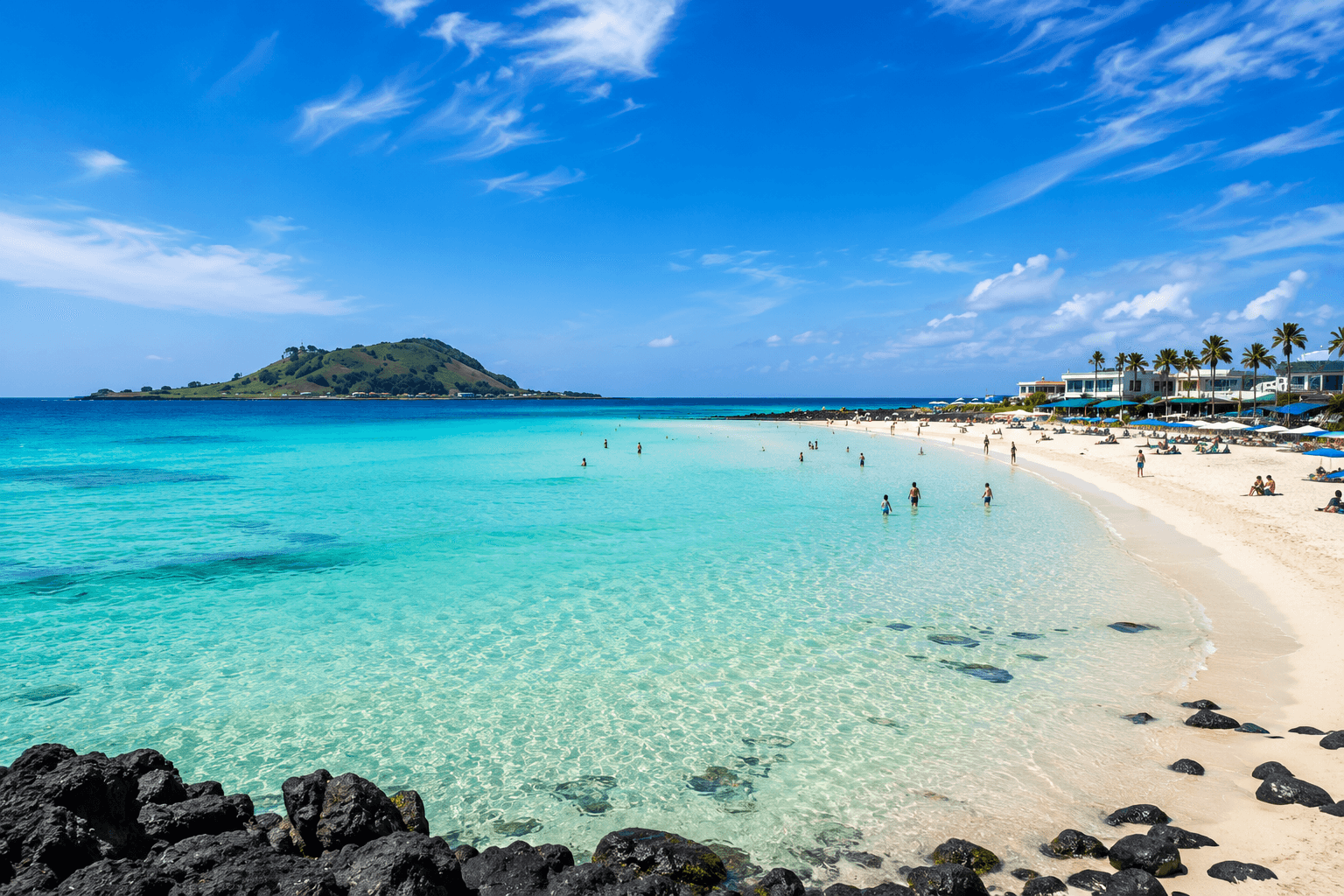
Hyeopjae Beach is often considered one of the most beautiful beaches in Jeju.
Located on the western side of the island, it is famous for clear turquoise water, pale sand, shallow shoreline, and views of Biyangdo Island. On a sunny morning, the water can look brighter than many visitors expect from Korea.
Hyeopjae is lovely for beach scenery, photos and relaxed coastal walks, and it pairs naturally with Geumneung, Hallim Park and Aewol. Swimming is a managed summer activity, not a year-round promise: Jeju’s 2026 beach season ended September 6. For an autumn visit, plan on the shoreline and views rather than lifeguarded swimming.
If your goal is beautiful photos, visit in the morning when the light often makes the water look clearer. Afternoon and sunset are also lovely, but the famous turquoise color usually shows best earlier in the day.
For a detailed beach plan, read Hyeopjae Beach Guide 2026.
Aewol
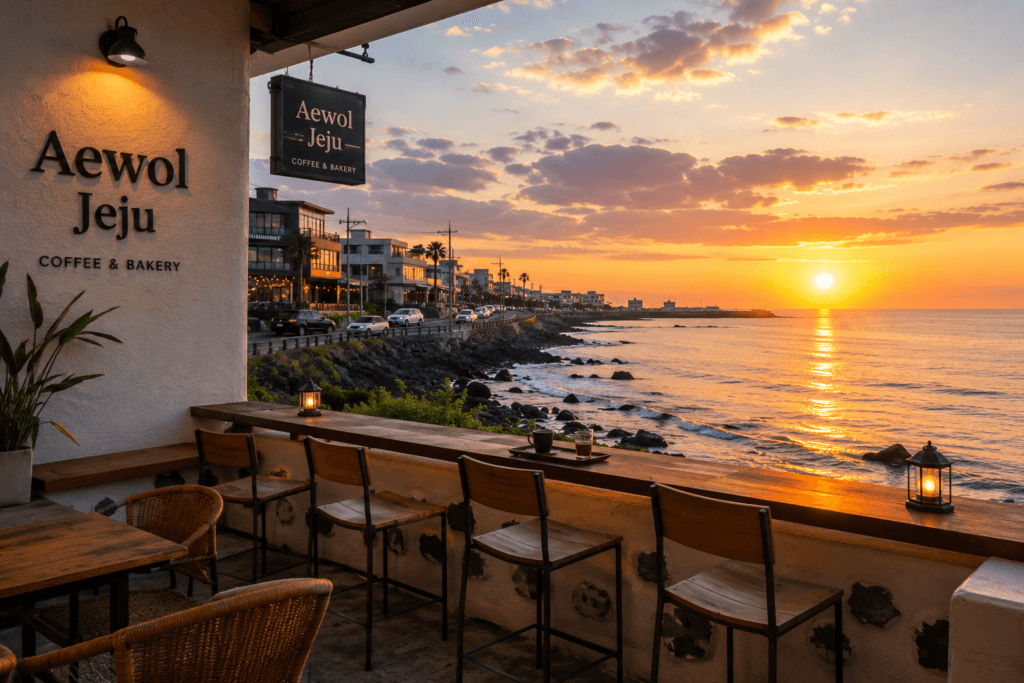
Aewol is one of Jeju’s most popular west coast areas.
It is known for ocean-view cafes, scenic coastal roads, sunset views, boutique stays, and a relaxed atmosphere. Unlike some major attractions, Aewol is not about one famous landmark. It is about the mood: a coastal walk, a cafe seat, a sunset, and the feeling that the day has slowed down properly.
The best time to visit Aewol is late afternoon into sunset. You can enjoy daylight, golden-hour views, and the evening coastal atmosphere in one visit.
Parking can be difficult on weekends, and popular cafes fill quickly. Choose one good cafe instead of trying to visit too many. Aewol is not a caffeine obstacle course.
For more details, read Aewol Travel Guide 2026 and Jeju Cafe Guide 2026.
Seogwipo and South Jeju
Seogwipo is the main city on the southern side of Jeju and a strong base for travelers who want waterfalls, coastal scenery, quieter neighborhoods, and a more relaxed atmosphere.
South Jeju is known for waterfalls, cliffs, viewpoints, local restaurants, and a different rhythm from Jeju City. Many repeat visitors prefer Seogwipo because it feels closer to the nature-focused Jeju they imagined.
If your itinerary includes waterfalls, southern coast drives, or Hallasan access, Seogwipo can be a very practical base.
Jeju Food Experiences
Jeju is one of the best places in Korea for regional food.
The most famous dish is Jeju black pork, usually grilled at the table and often served with meljeot, a salty anchovy dipping sauce. It is one of the island’s essential meals and worth trying at least once.
Seafood is also important, especially around coastal towns and markets. Depending on your route, you may find seafood noodles, grilled fish, abalone dishes, raw seafood, and simple local restaurants serving fresh island flavors.
Jeju is also known for tangerines, peanut snacks from Udo, market food, bakery cafes, and ocean-view desserts that occasionally cost more than expected but come with a view doing most of the work.
For food planning, read Jeju Black Pork Guide 2026, What to Eat in Korea, and Korean BBQ Guide 2026.
Where to Stay in Jeju
Choosing the right area is one of the biggest factors in planning a good Jeju trip. Compare airport convenience, east-coast access, southern scenery and west-coast evenings in our Jeju accommodation area guide before you book.
Jeju City
Jeju City is best for first-night arrivals, airport convenience, rental car pickup, Dongmun Market, restaurants, shopping, and early departures.
It is practical rather than scenic. If you arrive late or leave early, Jeju City makes life easier. It is also a good base if you do not want to change hotels and prefer access to more services.
The downside is that Jeju City does not feel as peaceful or nature-focused as other parts of the island.
Seogwipo
Seogwipo is best for balanced sightseeing, southern attractions, waterfalls, quieter evenings, and a more relaxed island mood.
Many repeat visitors prefer Seogwipo because it feels less urban than Jeju City and gives easier access to southern coastal scenery. It can also work well for Hallasan, depending on your chosen trail and route.
Seongsan
Seongsan is best for Seongsan Ilchulbong, Udo Island, sunrise views, and eastern Jeju attractions.
If Udo and Seongsan are major priorities, staying nearby can make your schedule easier. It is especially useful if you want an early start.
The downside is that Seongsan is less convenient for western Jeju and airport access.
Aewol and West Jeju
Aewol is best for couples, cafe lovers, sunset views, ocean-view stays, and a relaxed west coast atmosphere.
It works well for travelers who want a scenic final night or a slower coastal stay. It also pairs well with Hyeopjae, Geumneung, Hallim, and west coast drives.
Choose the base first, then compare Jeju hotel options for those dates. A cheaper room on the wrong side of the island can return the savings as extra driving, taxi fares and unusually detailed knowledge of Jeju traffic lights.
Best Time to Visit Jeju
Jeju works year-round, but the experience changes sharply with wind, rain, humidity, and mountain conditions. Check the official Jeju tourism guide and a current forecast before locking in outdoor days.
Spring
Spring is one of the most popular times to visit Jeju.
The island becomes known for cherry blossoms, canola flowers, fresh greenery, and comfortable weather. It is a great season for coastal drives, cafes, light hiking, and outdoor sightseeing.
Spring can be busy, especially during flower seasons and weekends, so book accommodation and rental cars early.
Summer
Summer brings the best chance for a managed beach swim, but do not equate the whole season with lifeguard coverage. Jeju’s designated 2026 beach operations ran June 24–September 6, generally 10:00–19:00; Hyeopjae had limited evening hours from July 15 to August 15. Confirm the next season’s dates and posted safety zones before planning a swim.
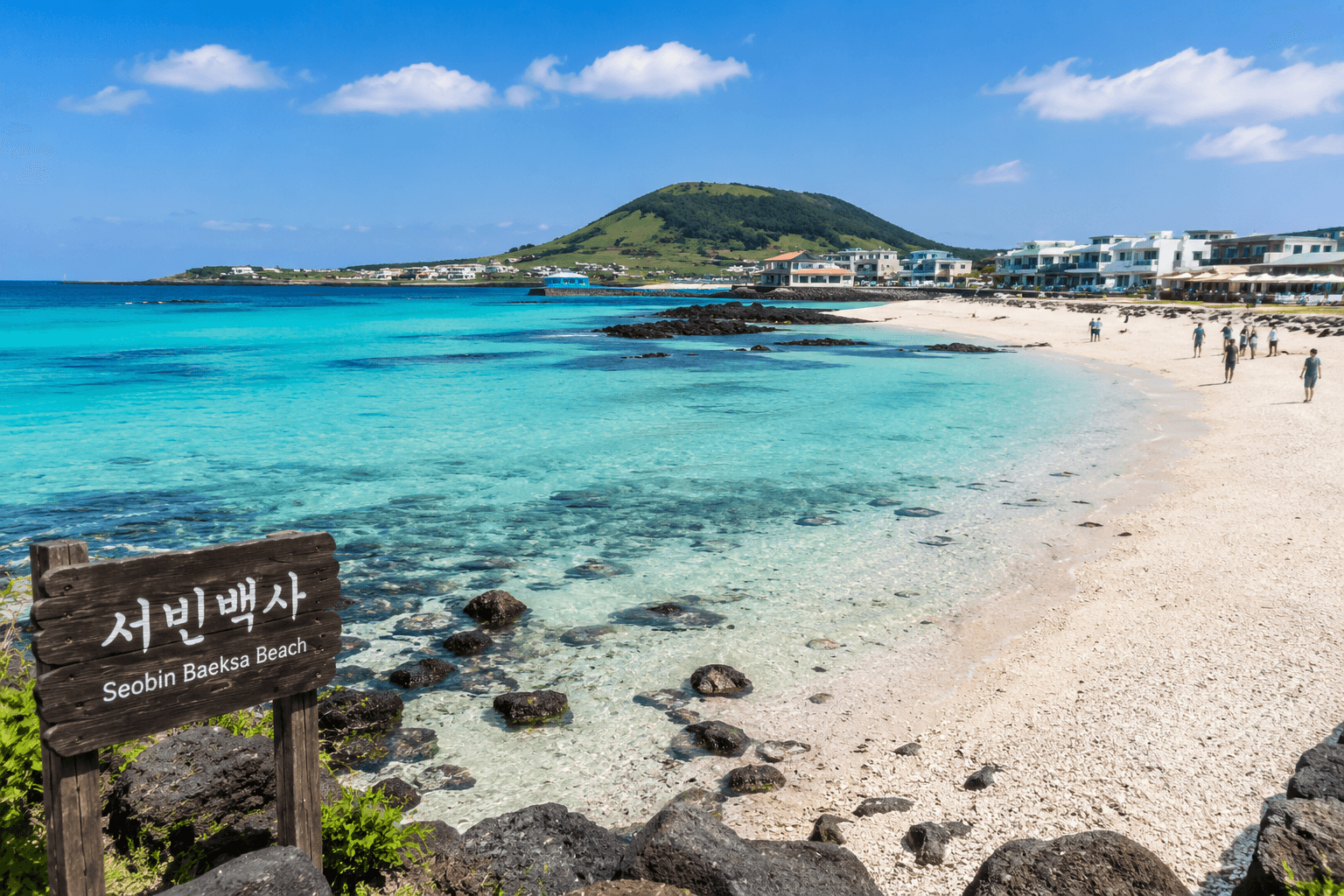
It is also hot, humid, crowded, and often more expensive. Beaches such as Hyeopjae and Hamdeok are popular, while cafes and indoor attractions can be useful during rainy or very hot days.
If you visit in summer, plan outdoor activities earlier in the day and keep flexible options for rain.
Autumn
Autumn is one of the best overall seasons for Jeju.
The weather is mild, skies are often clearer, and hiking conditions are usually better than summer. Hallasan, coastal drives, cafes, and beaches are all enjoyable without peak summer heat.
Many locals consider autumn the best season for a balanced Jeju trip.
Winter
Winter in Jeju is quieter and more peaceful.
The island can be windy and chilly, but there are fewer crowds, clearer coastal views on good days, cozy cafes, and the possibility of snow scenery on Hallasan.
Winter is not ideal for swimming, but it can be excellent for travelers who prefer quiet roads, food, cafes, photography, and a slower pace.
For seasonal planning across Korea, read Best Time to Visit South Korea in 2026.
First-Time Jeju Travel Tips
Do not try to visit the east coast and west coast in one rushed day. You will spend too much time driving and not enough time enjoying the places you came to see.
Check the weather every day. Jeju weather changes quickly, and outdoor plans such as Hallasan, Udo, beaches, and coastal viewpoints can feel completely different depending on wind, rain, fog, and sunlight.
Book rental cars early during peak seasons. Prices and availability can change quickly during spring, summer, autumn weekends, and holiday periods.
Keep your evenings realistic. Many local restaurants close earlier than visitors expect, especially outside the main city areas. Do not assume you can always find late-night food in smaller towns.
Visit popular cafes before the busiest afternoon hours if you want better seats. Aewol and other ocean-view cafe areas can become crowded after lunch.
Download useful apps before arriving. Navigation, translation, weather, transport, and payment tools can make Jeju much easier. Read Best Apps for Korea Travel 2026 before your trip.
Bring layers if you plan to visit Hallasan. The mountain can be much colder than the coast, even on the same day.
Leave space for unplanned stops. Some of the best Jeju memories come from a random viewpoint, quiet cafe, local restaurant, or coastal road that was not part of the original plan.
Choose Your Jeju Route Before Filling the Days
This overview helps you choose the trip; the day-by-day guide handles the sequence. Count usable sightseeing days, not just dates on a booking. Four calendar days with a late arrival and an early flight leave two full days, not four.
Two full sightseeing days: choose two regional priorities. Seongsan and Udo can fill an east-coast day; use the other for either Seogwipo and the south or Hyeopjae and the west. A summit hike belongs in place of one of those days, not on top of it.
Three full sightseeing days: give east, south and west a day each, or replace one region with Hallasan. Keep arrival and departure light. If the ferry day falls through, use nearby mainland stops rather than racing to the opposite coast.
Five calendar days: our Jeju 5-Day Itinerary starts with a light arrival, then separates east Jeju, the south and Hallasan. Its final west-coast day is conditional on your flight. This is the better planning companion when you need the actual daily order.
Choose your transport before your accommodation. If you do not drive, reduce the number of stops and check the return connection; a scenic address is not a substitute for a workable bus route. The Jeju accommodation area guide compares the bases and their trade-offs.
Leave one plan negotiable. Udo needs suitable sea conditions, a Hallasan plan needs the right trail access and any required reservation, and your departure needs the car-return and check-in buffer. The cafe is allowed to improvise; the flight is not.
Frequently Asked Questions
Is Jeju worth visiting?
Yes. Jeju is one of the best destinations in South Korea for nature, beaches, hiking, coastal scenery, cafes, and local food. It feels very different from Seoul or Busan.
How many days do you need in Jeju?
Four to five calendar days is a useful starting point for a first visit, but count full sightseeing days before choosing stops. A late arrival and an early departure can turn five booked dates into three usable days.
With two full days, choose two regional priorities; with three, explore east, south and west, or replace one region with a Hallasan hike.
Udo depends on ferry conditions, and a final west-coast stop depends on your flight and car-return deadline. You do not need to fit every region, a summit hike and slow cafe afternoons into the same trip. The island is not keeping score.
Do you need a car in Jeju?
A car is strongly recommended for most travelers because attractions are spread across the island. Public transportation is possible, but it takes more time and limits flexibility.
Where should I stay in Jeju?
Jeju City is best for airport convenience, Seogwipo is best for southern attractions and a relaxed mood, Seongsan is best for Udo and Sunrise Peak, and Aewol is best for cafes and sunset views.
What is Jeju famous for?
Jeju is famous for Hallasan, Seongsan Ilchulbong, Udo Island, waterfalls, beaches, volcanic landscapes, haenyeo culture, tangerines, black pork, seafood, and ocean-view cafes.
Is Jeju good without a rental car?
Yes, but you should plan carefully. Stay in Jeju City or Seogwipo, focus on one region each day, use buses or taxis, and consider tours for harder-to-reach attractions.
What is the best month to visit Jeju?
Spring and autumn are generally the best seasons for comfortable weather. Summer is best for beaches, while winter is quieter and good for cafes, food, and clear coastal views on good days.
Can I visit Jeju from Seoul?
Yes. Most travelers fly from Seoul to Jeju, and the flight takes about one hour. Jeju works well as a 3 to 5 day addition to a longer South Korea itinerary.
Official Sources and Last Check
- Visit Jeju rental-car guide — licence documents, age and experience guidance, insurance and pickup checks
- Jeju International Airport rental-car information — Rental Car House location and company shuttle pickup
- Visit Jeju traffic information — public buses and tourist shuttle information
- Hallasan National Park reservation notice — trails and summit sections that require advance booking
- Official Jeju Tourism Guidebook — island overview and regional planning reference
- Visit Jeju: 2026 beach operations — managed swimming dates, hours and safety advice
Last checked: September 17, 2026. Recheck beach operating dates, Hallasan reservations, Udo ferries, weather warnings and live bus or shuttle times for your exact travel date.
Selected logistics checked: October 11, 2026 — Hallasan reserved sections and visitor documents, Udo boarding and rental-car guidance, and the tourist-bus network. This is not confirmation of a particular sailing, available hiking slot or live bus departure. The earlier check date above still applies to the other sources.
Related Guides
Continue planning your Jeju trip with these guides:
- Jeju 5-Day Itinerary 2026
- Best Areas to Stay in Jeju 2026
- Seongsan Ilchulbong Guide 2026
- Udo Island Guide 2026
- Hallasan National Park Guide 2026
- Hyeopjae Beach Guide 2026
- Aewol Travel Guide 2026
- Jeju Cafe Guide 2026
- Jeju Black Pork Guide 2026
For a broader South Korea route, read:
- Busan Travel Guide 2026
- Gyeongju Travel Guide 2026
- Best Time to Visit South Korea in 2026
- Korea KTX Guide 2026
Final Thoughts
Jeju Island is much more than a simple beach destination.
It combines volcanic landscapes, mountain trails, coastal scenery, waterfalls, villages, cafes, and some of the best regional food in South Korea. It feels completely different from Seoul or Busan, which is exactly why many travelers love it.
The biggest mistake first-time visitors make is trying to see everything too quickly. Jeju is not built for a rushed checklist. It is better when you choose a few regions, check the weather, rent a car if possible, and leave time for unexpected stops.
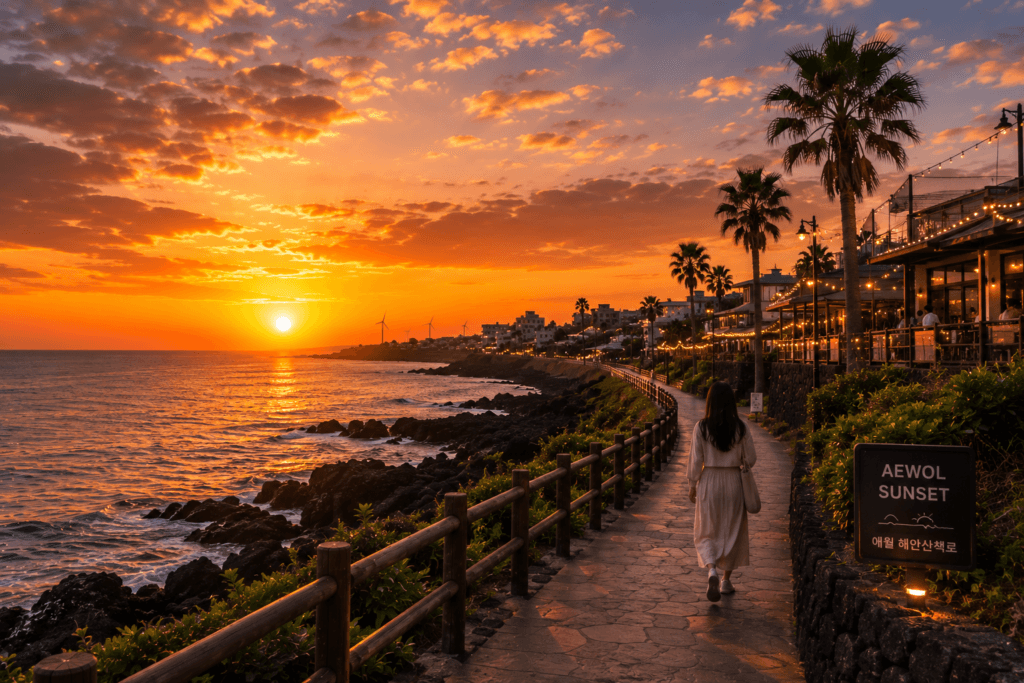
Whether you are hiking Hallasan, watching sunrise at Seongsan Ilchulbong, cycling around Udo, eating black pork, relaxing at Hyeopjae Beach, or watching sunset from an Aewol cafe, Jeju rewards travelers who give it enough time.
Plan the regions, book the time-sensitive parts, and leave one gap in the schedule. On Jeju, that gap often becomes a windy viewpoint, a tiny restaurant, or the cafe you remember longer than the attraction you hurried to reach.