Affiliate disclosure: This guide may contain affiliate links. If you book through them, we may earn a small commission at no extra cost to you. Learn more.
Hallasan rises 1,947 meters from the middle of Jeju, shaping the island’s forests, volcanic scenery and famously changeable weather. It is South Korea’s highest mountain, but you do not need to reach the summit to have a worthwhile day here.
The full Baengnokdam hike is a serious 7–10-hour outing, while Yeongsil, Eorimok and other shorter routes offer highland scenery without the summit commitment. Choose by fitness, weather and access rules—not by whichever trail photo made your knees feel briefly optimistic.
This guide explains the summit reservation system, day-of trail checks, seasonal turnaround times, route choices and what to carry. Hallasan rewards preparation and has very little interest in cute but slippery shoes.
If you are still planning your Jeju route, start with the Jeju Travel Guide 2026 or Jeju 5-Day Itinerary 2026 before choosing which Hallasan trail fits your schedule.
Table of contents
Why Visit Hallasan?
Hallasan is not just the highest mountain in Korea.
It is the heart of Jeju.
The mountain sits in the center of the island, and almost every major Jeju route bends around it in some way. Coastal beaches, waterfalls, volcanic cones, forests, and weather patterns all feel connected to Hallasan’s presence.
Visitors come to Hallasan for Baengnokdam crater lake, forest trails, volcanic scenery, seasonal flowers, autumn foliage, winter snow, and wide views across Jeju. But the real reason to visit is the feeling of moving through different layers of the island. The trail begins in forest, climbs through changing vegetation, and eventually opens into a higher mountain landscape that feels far away from Jeju’s beaches and cafes.
Hallasan is also one of the best places in Jeju to feel a genuine sense of achievement. Reaching the summit is not impossible for fit first-time visitors, but it does require effort. This is not a “quick photo stop.” This is the kind of day where your legs will have opinions.
Even if you choose a shorter trail instead of the summit route, Hallasan is still worth visiting. The lower forest trails can be peaceful, scenic, and much easier to fit into a relaxed Jeju itinerary.
Visitor Information
| Item | Practical detail |
|---|---|
| Summit routes | Seongpanak and Gwaneumsa normally reach Baengnokdam |
| Access check | On October 11, 2026, the official system displayed both summit routes as normal operation; recheck your hiking date |
| Summit reservation | Required for the controlled upper sections; carry each visitor’s QR code and valid ID |
| Full hike | About 7–10 hours; Seongpanak is 9.6 km one way |
| Shorter options | Yeongsil, Eorimok, Donnaeko, Eoseungsaengak and Seokguram do not require reservations |
| Trail opening | From 05:00, subject to weather and temporary controls |
| Supplies | No shop on Seongpanak; bring food, water and equipment before arrival |
| Day-of checks | Reservation status, trail control, weather, cutoffs and transport |
Access checked October 11, 2026: the official reservation system displayed Seongpanak and Gwaneumsa as normal operation. The earlier Gwaneumsa works notice covered August 1–September 30, 2026; it should not be treated as an ongoing October closure.
A trail-status label is not an available booking slot or a promise about tomorrow’s weather. Check the live status and your reservation before choosing either summit route.
Check the official reservation home page again on the evening before and morning of the hike. Weather or maintenance can change access faster than an old screenshot can apologize.
Which Hallasan Trail Should You Choose?
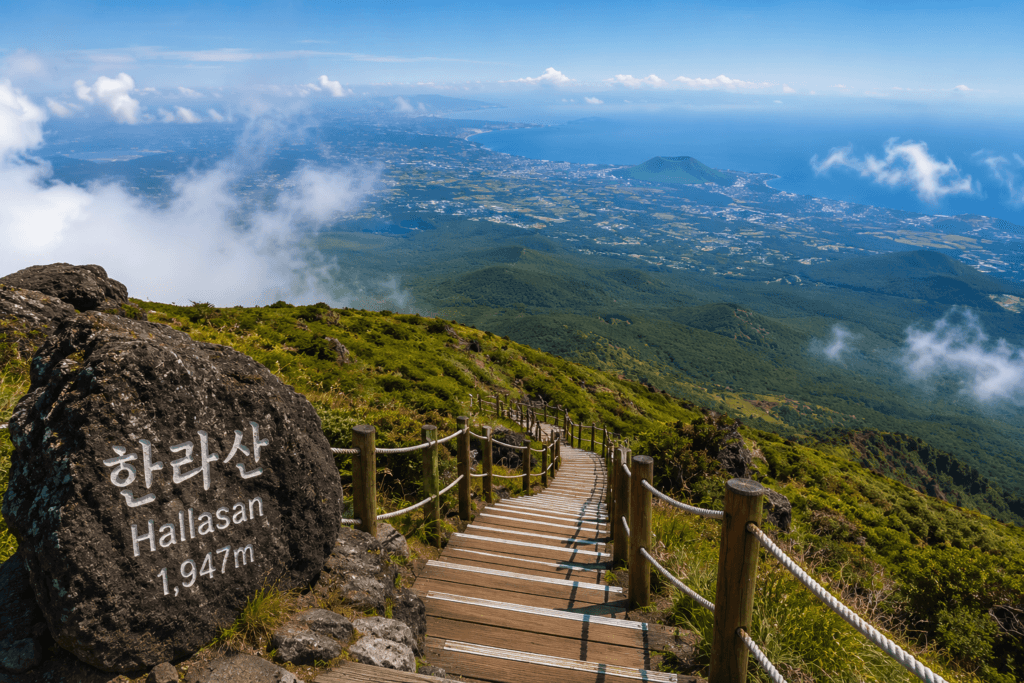
Choosing the right trail is the most important part of planning your Hallasan hike.
Some trails lead to the summit and Baengnokdam. Others offer shorter scenic walks without reaching the crater lake. For most travelers, the decision comes down to time, fitness, weather, and how much hiking you actually want to do during your Jeju trip.
If reaching Baengnokdam is your goal, the two main summit routes are Seongpanak Trail and Gwaneumsa Trail.
Seongpanak Trail
Seongpanak Trail is the most popular summit route for first-time hikers.
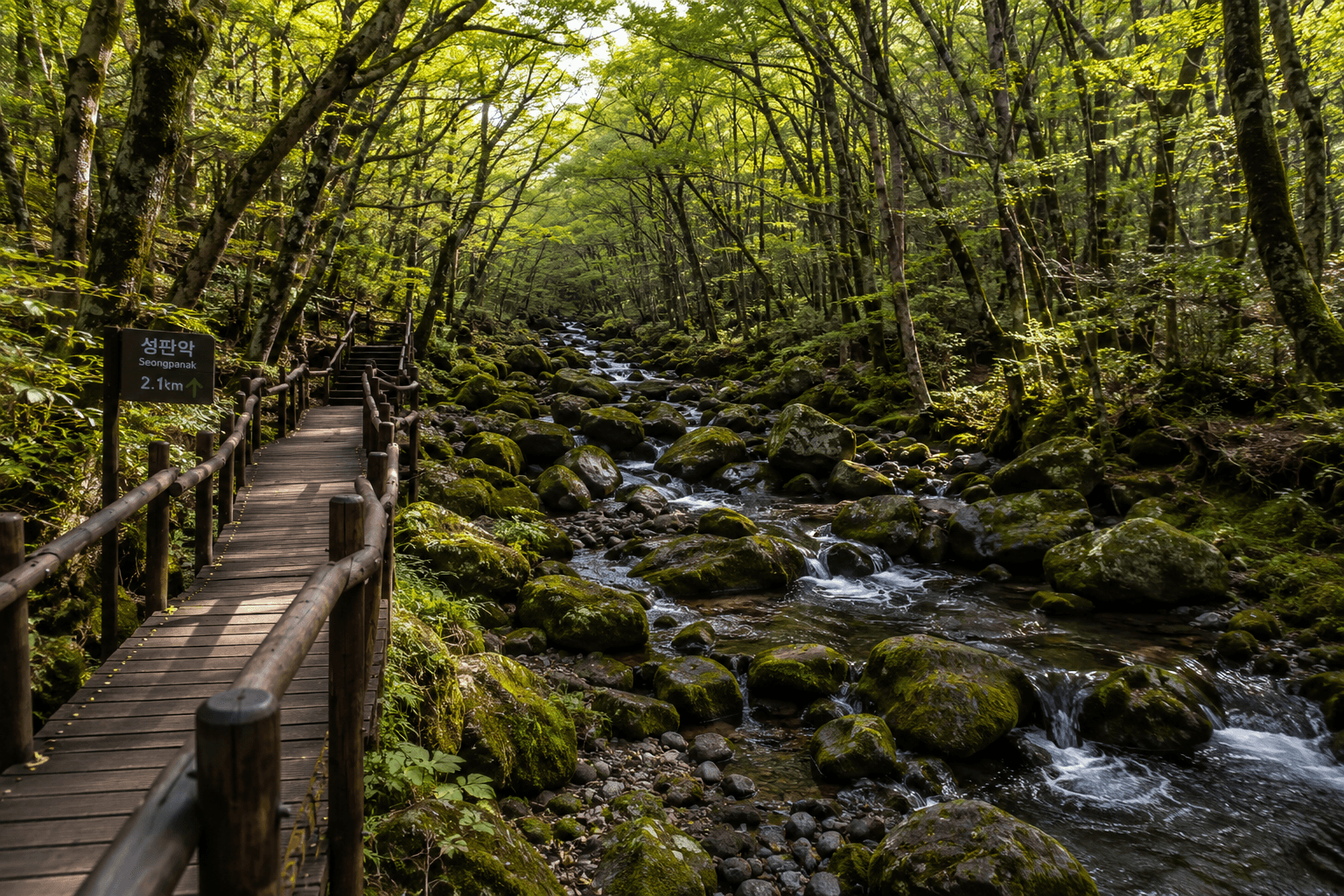
It is approximately 9.6 kilometers one way and is often considered the more gradual route to the summit. The climb is long, but the slope is generally more manageable than Gwaneumsa. Because of this, many visitors choose Seongpanak when they want the safest and most straightforward way to reach Baengnokdam.
The downside is that the views during much of the ascent are not as dramatic as Gwaneumsa. A large part of the route passes through forest, which can be peaceful but less visually exciting if you are expecting constant panoramic scenery.
Seongpanak is a good choice if this is your first Hallasan summit hike, if you prefer a gradual climb, or if your main goal is reaching the crater lake with less technical difficulty.
It is still a serious hike. “Gradual” does not mean easy. It means the mountain takes its time making you tired.
Gwaneumsa Trail
Gwaneumsa Trail is normally the more scenic and demanding summit route. Its upper section had a scheduled works closure through September 30, 2026. The official system displayed normal operation on October 11; check current controls before planning a summit ascent or descent.
It is approximately 8.7 kilometers one way and includes steeper sections, more dramatic landscapes, bridges, valleys, and wider views. Many experienced hikers prefer this route because the scenery feels more varied and impressive.
The challenge is that Gwaneumsa requires more effort, especially on the climb or descent. It can be harder on the knees, and it may feel more intense for travelers who are not used to long mountain hikes.
When the full trail is officially open, many hikers climb Seongpanak and descend through Gwaneumsa, which requires transport between different trailheads. Plan that traverse only when both upper sections are open and your reservation and return transport fit the route. If either section is controlled, choose a permitted alternative rather than improvising a descent.
Gwaneumsa is best for hikers who are confident in their fitness, want stronger scenery, and are prepared for a more physically demanding day.
Shorter Hallasan Trails
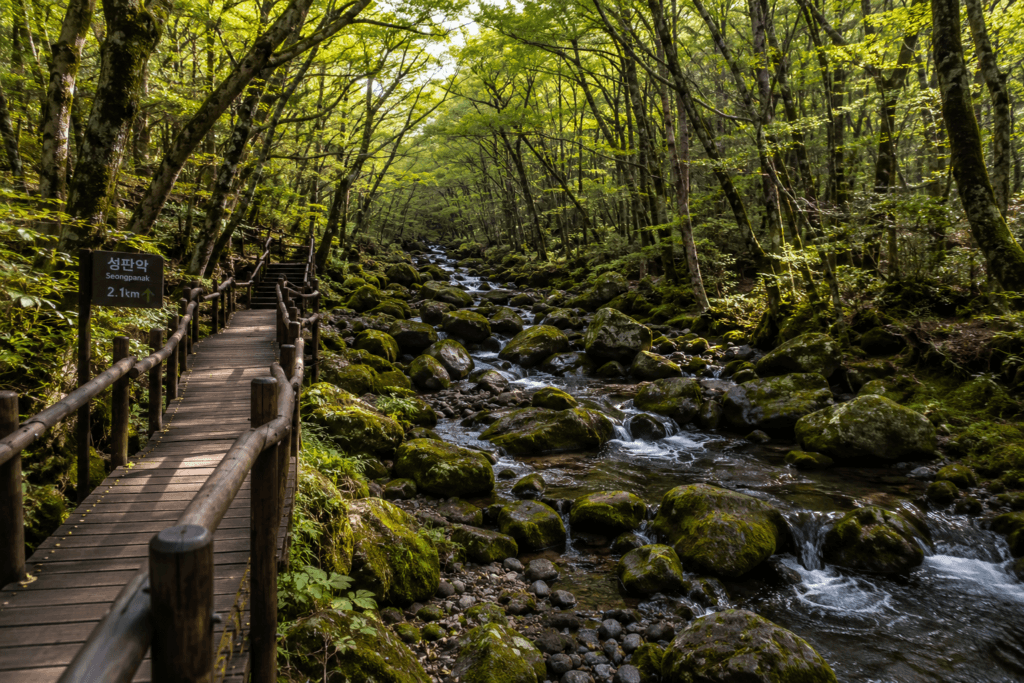
Not every traveler needs to reach the summit.
If you do not have time for a full 7 to 10 hour hike, or if the weather is not ideal, shorter Hallasan trails can still give you a beautiful mountain experience. These trails are better for casual visitors, families, travelers with limited time, or anyone who wants nature without turning the day into a survival documentary.
Yeongsil and Eorimok are the strongest highland alternatives, both reaching the Witseoreum area but not Baengnokdam. Yeongsil is 5.8 km to the South Wall junction and takes about 2.5 hours one way from the upper trail entrance; Eorimok is 6.8 km to the same junction and takes about 3 hours one way. Donnaeko, Eoseungsaengak and Seokguram offer other non-summit choices. These routes currently do not require advance reservations, but seasonal cutoff and weather controls still apply.
A shorter Hallasan walk can be a smart choice if your trip already includes Udo, Seongsan Ilchulbong, beaches, and western Jeju. Your itinerary does not need to prove anything to the mountain.
Do You Need a Reservation for Hallasan?
Yes, if you plan to enter the controlled upper summit sections: Seongpanak from Jindallaebat to Baengnokdam or, when open, Gwaneumsa from Samgakbong to Baengnokdam. Yeongsil, Eorimok, Donnaeko, Seokguram and Eoseungsaengak can currently be used without an advance reservation.
Reservations open at 09:00 on the first business day of the previous month, with up to four visitors per booking. Each person receives an individual QR code and must carry matching valid identification, such as a passport. Arrive within the time block you booked; a QR code borrowed from someone else is not a clever shortcut, just a fast route to refused entry and a penalty.
If plans change, cancel before the end of the reserved entry window. An uncancelled no-show can block future reservations. Also check the live control notice because a reservation does not override heavy rain, typhoon, strong wind, snow or maintenance restrictions.
Travelers who prefer a simpler outdoor experience can also consider a Jeju nature tour or guided hiking experience , especially if they do not want to manage transport, timing, and trail details alone.
What Is Baengnokdam?
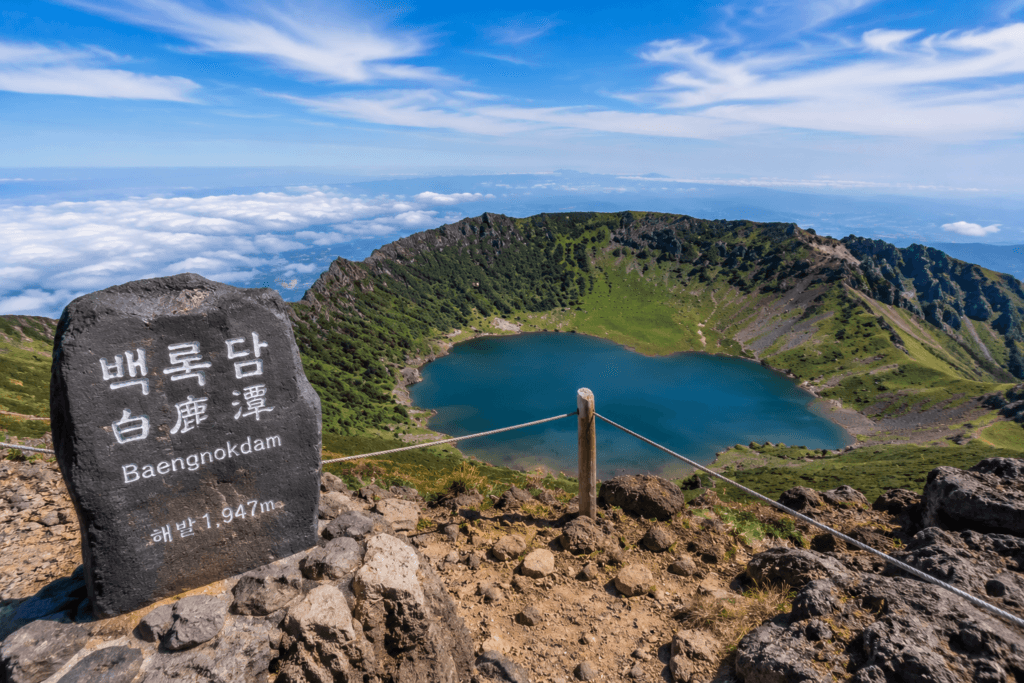
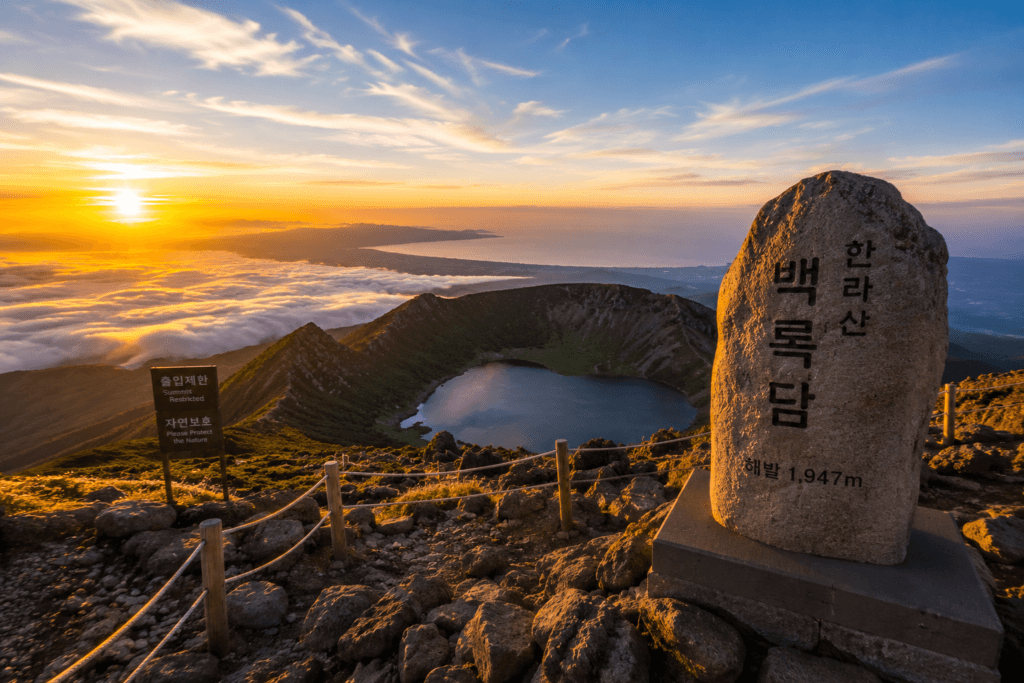
Baengnokdam is the crater lake near the summit of Hallasan.
For many hikers, reaching Baengnokdam is the main goal of the journey. It is one of Jeju’s most iconic natural sights and a powerful reminder that Hallasan is a volcanic mountain, not just a high viewpoint.
However, there is one important thing to understand: weather matters more than effort.
You can hike for hours and still find the summit covered in fog. You can also arrive on a clear day and see Baengnokdam beautifully. That uncertainty is part of the Hallasan experience, though it may not feel poetic when your legs are tired and the crater is hiding behind a cloud like it forgot its appointment.
A clear view of Baengnokdam is often more memorable than simply standing at the highest point. If your schedule is flexible, choosing the best weather day for Hallasan can completely change the experience.
Best Time to Visit Hallasan
Spring
Spring is a beautiful time to hike Hallasan because the mountain begins to feel fresh and green again after winter.
Depending on timing and elevation, visitors may see seasonal flowers, new leaves, and comfortable hiking temperatures. Spring weather can still be unpredictable, so layers are important.
Spring is a good season for travelers who want nature without summer heat or winter snow conditions.
Summer
Summer brings lush forests and longer daylight hours, but it also brings heat, humidity, rain, and stronger physical fatigue.
Hiking Hallasan in summer can be rewarding, but you need to start early, bring enough water, protect yourself from the sun, and check weather conditions carefully. Afternoon storms or fog can affect visibility, and humid weather can make the climb feel harder than expected.
If you hike in summer, do not underestimate hydration. The mountain is beautiful, but it does not hand out free energy.
Autumn
Autumn is one of the best seasons to hike Hallasan.
The weather is usually more comfortable, skies can be clearer, and fall foliage adds color to the trails. Many local hikers consider autumn the best overall season because it combines good hiking conditions with beautiful scenery.
October is especially popular for photography, though exact foliage timing can vary each year.
If your travel dates are flexible, autumn is one of the strongest choices for a Hallasan hike.
Winter
Winter Hallasan can be stunning.
Snow-covered trees, icy landscapes, and clear air can make the mountain feel completely different from the rest of Jeju. For many photographers and experienced hikers, winter is one of the most dramatic seasons.
But winter hiking requires extra preparation. Ice, strong winds, cold temperatures, slippery trails, shorter daylight, and equipment requirements can make the hike more difficult. Visitors unfamiliar with snow hiking should be careful and check official conditions before departure.
Winter Hallasan is beautiful, but it is not a casual fashion walk. The mountain will notice your shoes.
For seasonal planning across the whole country, read Best Time to Visit South Korea in 2026.
What to Bring for a Hallasan Hike
Packing correctly can make the difference between a memorable hike and a very long conversation with regret.
For a summit hike, bring sturdy hiking shoes or proper trail shoes, enough water, snacks or lunch, layers, a windproof jacket, sunscreen, a hat, gloves in colder months, a rain jacket when needed, and a portable charger.
At least 1.5 to 2 liters of water is a common starting point for many hikers, but your needs may vary depending on season, temperature, and fitness level. Food is also important because summit hikes take several hours. Bring something easy to eat, such as rice balls, sandwiches, energy bars, fruit, or simple snacks.
A portable charger is useful because photos, maps, weather checks, and communication can drain your phone quickly. Losing battery on a mountain is not the kind of minimalism anyone asked for.
Even when coastal Jeju feels warm, temperatures near the summit can be much cooler. Bring an extra layer even if the forecast looks pleasant.
For broader trip preparation, use the Korea Packing List 2026 before your visit.
Hallasan Weather Is Different from Coastal Jeju
One of the biggest mistakes first-time visitors make is checking the weather in Jeju City and assuming Hallasan will be the same.
It often is not.
You may experience sunshine at the coast, fog on the mountain, rain at higher elevations, and strong winds near the summit all on the same day. Hallasan creates its own weather patterns, and conditions can change quickly as you climb.
Before hiking, check mountain-specific forecasts and official trail notices. If your schedule is flexible, choose the clearest day for Hallasan rather than forcing the hike on a poor-weather day.
Some of the clearest views happen after rain, when dust and haze have been washed from the air. But wet trails can also be slippery, so clear skies after rain still require caution.
Weather is not a small detail on Hallasan. It is the difference between “unforgettable crater view” and “I climbed into a cloud.”
Best Photo Spots on Hallasan
The most famous photo spot is Baengnokdam crater lake near the summit.
On clear days, this is the image many hikers hope to capture: the crater, the sky, and the feeling that the climb was absolutely worth it. If visibility is good, take your time here. Summit weather can change quickly.
The summit marker is another popular photo location. During busy seasons, there may be a short queue. Be patient, take your photo, and move aside for other hikers. Everyone has earned their moment with the stone.
The forest sections are also worth photographing. Many visitors focus only on the summit, but some of Hallasan’s most beautiful scenes are found lower on the trail: quiet trees, changing leaves, misty paths, volcanic rocks, and sunlight cutting through the forest.
Autumn often creates better photos than summer because the colors add depth to the trail. Winter can be stunning if snow conditions are safe and visibility is clear.
Do not save all your photos for the summit. Hallasan is a long hike, and the trail itself is part of the story.
Where to Stay Before Hiking Hallasan
Where you stay can make your Hallasan hiking day much easier. Compare the island’s practical bases in our Jeju stay-area guide before booking around a trailhead.
Jeju City is convenient for airport access, restaurants, rental car pickup, and early departures. It is a practical base for many first-time visitors, especially if Hallasan is part of a broader Jeju route.
Seogwipo is useful for longer Jeju trips and travelers who want to combine Hallasan with southern attractions, waterfalls, coastal scenery, and a slower atmosphere.
If you plan to start very early, staying closer to your chosen trailhead can make a real difference. Waking up early for a mountain hike is already a small personal battle. Reducing the drive helps.
Travelers planning a serious hiking day can check Jeju City hotel options, Seogwipo stays, or Jeju rental car options depending on their route.
Common Mistakes First-Time Visitors Make
The most common mistake is starting too late.
Hallasan is not a hike to begin casually at noon. Summit hikes take most of the day, and trails often have entry deadlines or turnaround rules. Start early so you have enough time to climb, rest, enjoy the summit, and descend safely.
Another mistake is bringing too little water or food. The official guidance says there is no shop on Seongpanak, so buy food, water, rain protection and seasonal equipment before arriving at the trailhead.
Footwear matters. Casual fashion shoes may look fine in the hotel mirror, but Hallasan has rocks, stairs, long descents, and changing weather. Wear proper hiking shoes or sturdy trail shoes.
Many visitors underestimate the descent. Going down can be harder on the knees than climbing up, especially after several hours of hiking. Do not use all your energy on the way to the summit.
Some travelers focus only on reaching Baengnokdam and forget to enjoy the trail. The crater is the goal, but the forest, changing vegetation, and mountain atmosphere are also part of the experience.
Finally, do not try to combine a full Hallasan summit hike with a packed eastern Jeju sightseeing day. Hallasan deserves its own day. After the hike, your body may request dinner, a shower, and silence.
Suggested Hallasan Hiking Day
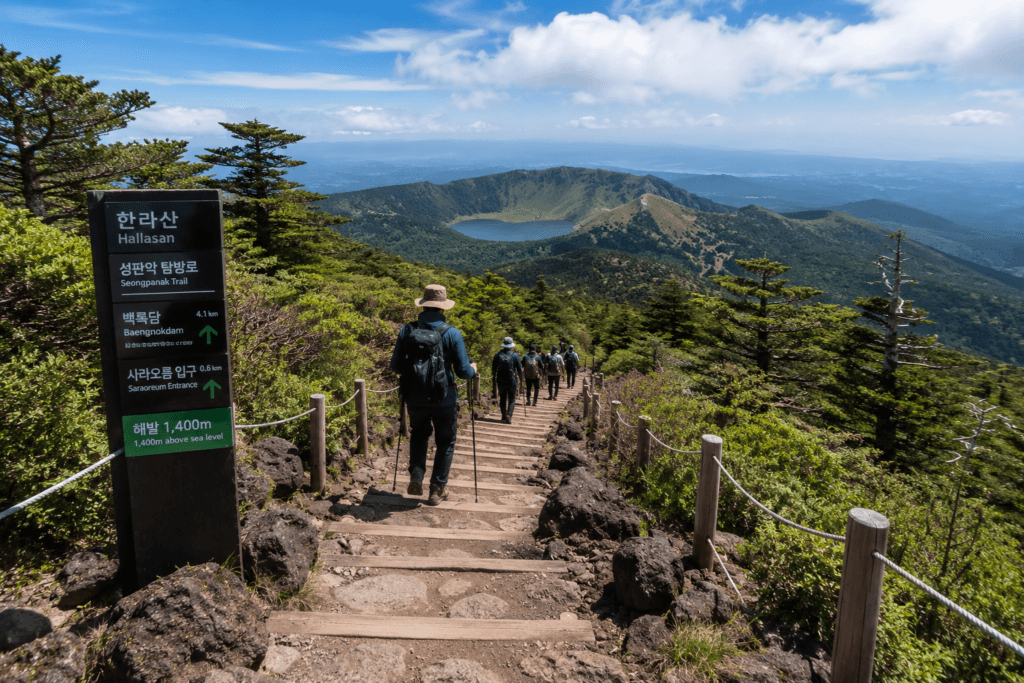
A successful Hallasan day starts early.
Eat a real breakfast and reach the trailhead early enough to enter during your reserved block. Seongpanak parking is small and can fill very early; official guidance recommends buses 281 or 181 when practical. If you drive, keep a backup parking and transport plan instead of donating your first hour to circling a full lot.
Spend the morning climbing at a steady pace. Do not race. Hallasan is long enough that pacing matters more than speed. Take breaks, drink water, and eat snacks before you feel completely drained.
Aim to reach the summit around midday if trail rules and your pace allow. Enjoy Baengnokdam if the weather is clear, take photos, eat something, and give yourself a moment to appreciate the climb.
Begin descending with plenty of time. The descent can feel long, especially if your legs are tired. Stay focused and do not rush the rocky or stair-heavy sections.
In the evening, keep the plan simple. Many hikers celebrate a successful Hallasan climb with Jeju black pork barbecue, and honestly, that tradition makes excellent emotional sense. After a mountain day, grilled pork has healing powers that science may eventually confirm.
Use the Jeju Black Pork Guide 2026 if you want to plan a recovery dinner.
A simple Hallasan day could look like this:
- Early morning: breakfast and drive to trailhead
- Morning: begin hike
- Midday: reach summit and Baengnokdam
- Afternoon: descend at a comfortable pace
- Evening: Jeju black pork or relaxed local dinner
Nearby Attractions and Itinerary Ideas
Hallasan fits best as a dedicated day within a longer Jeju itinerary.
It pairs well with slower plans before and after the hike. For example, you might explore Jeju City or Dongmun Market the day before, hike Hallasan the next day, then enjoy western Jeju beaches and cafes the day after.
Avoid placing Udo Island, Seongsan Ilchulbong, or a long coastal road trip on the same day as a full summit hike. Those are better for separate days.
For itinerary planning, continue with:
- Jeju 5-Day Itinerary 2026
- Jeju Travel Guide 2026
- Seongsan Ilchulbong Guide 2026
- Udo Island Guide 2026
- Best Time to Visit South Korea in 2026
- Jeju Black Pork Guide 2026
Frequently Asked Questions
Is Hallasan difficult to hike?
Hallasan can be moderate to difficult depending on the trail. Summit routes are long and require good pacing, proper shoes, water, food, and weather preparation. Shorter trails are easier and better for casual visitors.
How long does it take to hike Hallasan?
A summit hike usually takes about 7 to 10 hours round trip, depending on the route, pace, weather, and rest time. Shorter scenic trails may take around 2 to 5 hours.
Which Hallasan trail is best for first-time visitors?
Seongpanak Trail is often recommended for first-time summit hikers because it is more gradual. Gwaneumsa Trail is more scenic but steeper and more physically demanding.
Can beginners hike Hallasan?
Fit beginners can hike Hallasan with proper preparation, an early start, good weather, and realistic pacing. However, it is not a casual walk, and visitors should not underestimate the length or descent.
Do I need a reservation for Hallasan?
A reservation is required for the controlled upper summit sections. Book through the official system, bring each visitor’s QR code and matching ID, and check live trail status again on the day. The former Gwaneumsa works notice ran through September 30, 2026; check the current system rather than carrying that closure forward to later dates.
What is Baengnokdam?
Baengnokdam is the crater lake near the summit of Hallasan. It is one of Jeju’s most famous natural sights and a major goal for many summit hikers.
What should I wear for Hallasan?
Wear proper hiking shoes or sturdy trail shoes, comfortable layers, and weather-appropriate clothing. Bring a windproof jacket, extra layer, sunscreen, and rain protection when needed.
Is Hallasan good in winter?
Hallasan can be beautiful in winter, especially with snow, but it requires extra preparation. Trails may be icy, winds can be strong, and proper winter hiking gear may be necessary.
Official Sources and Last Check
- Hallasan Visit Reservation System — live reservation and trail-control status
- Official reservation-section guidance — QR and ID checks, booking rules, parking and supplies
- Official Seongpanak trail guide — distance, hiking time and seasonal control times
- Historical Gwaneumsa works notice — August 1 through September 30, 2026; not a current closure alert
Selected access details checked: October 11, 2026 — official summit-route status, the expired Gwaneumsa works period, and reservation-section guidance. Other route details were last checked September 15, 2026. Confirm live controls, weather, your booking and seasonal cutoffs before leaving.
Final Thoughts
Hallasan is not just the highest mountain in South Korea.
For many visitors, it becomes one of the most memorable parts of their Jeju trip. The hike is challenging, the weather can be unpredictable, and the summit is never guaranteed to show you everything you hoped for. But that is part of what makes the experience feel real.
Choose the right trail, start early, pack properly, check the weather, and give Hallasan the full day it deserves. Do not treat it as a quick attraction between cafes and beaches. This mountain has its own pace.
Baengnokdam may be the goal, but some of the best memories are made long before you reach the top: in the forest, on the stairs, during a snack break, or when the clouds suddenly move and Jeju appears below you.
Take your time, hike safely, and let Hallasan show you a different side of the island.