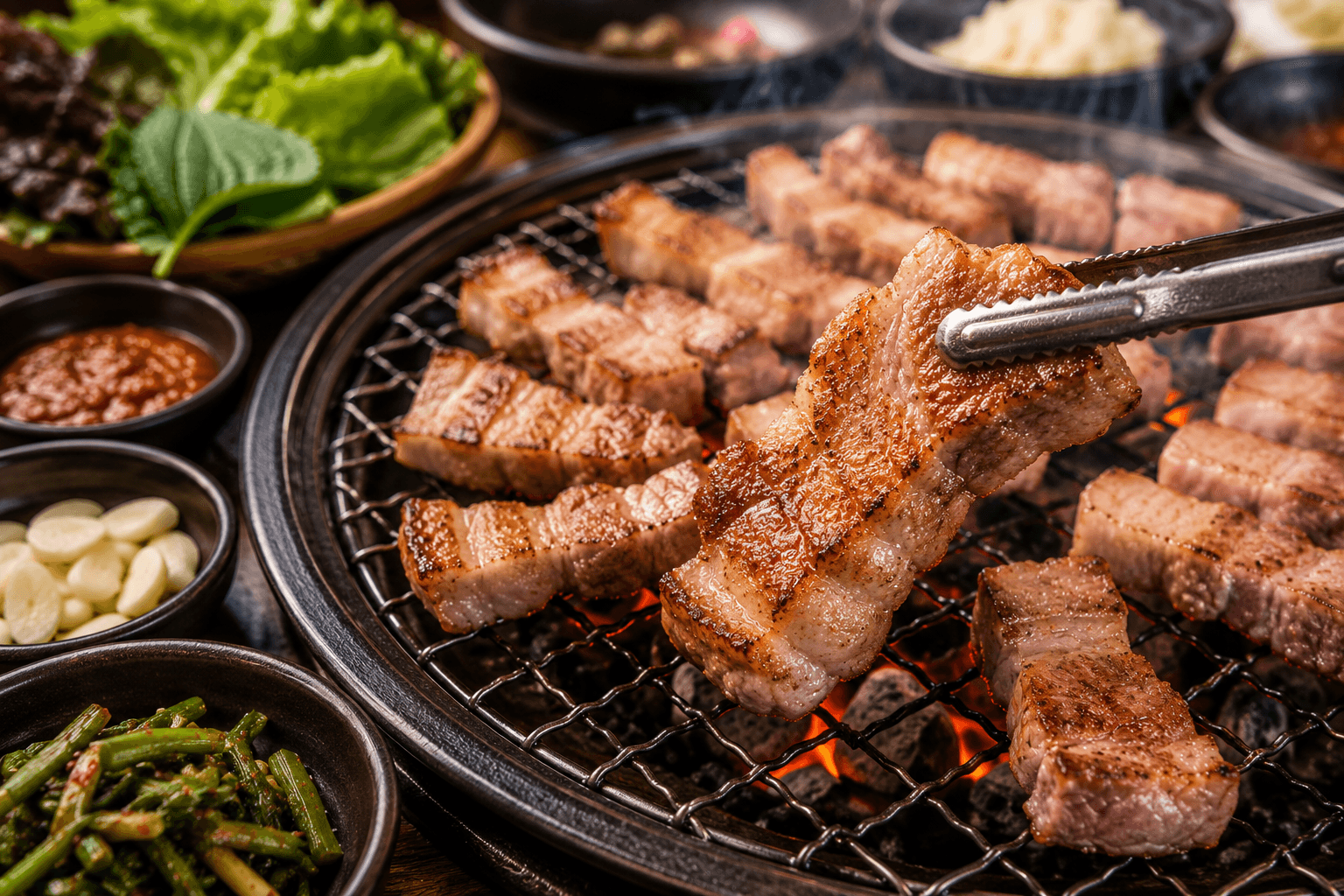
Jeju black pork is one of the island’s signature meals, but the useful question is not whether the pork is famous. It is whether the menu, portion and location make sense for your evening. A glossy sign cannot fix a two-person minimum when you are dining alone.
This guide explains what the name means, how to compare pork belly and neck meat, what meljeot tastes like, and what to check before ordering. It also gives officially listed examples around Jeju City, Aewol, Jungmun and Seongsan. They are route ideas, not a ranking and not a claim that we personally ate at every table.
For the wider route, use the Jeju travel guide, the five-day itinerary and the Jeju stay-area guide.
Table of contents
What Jeju Black Pork Actually Means
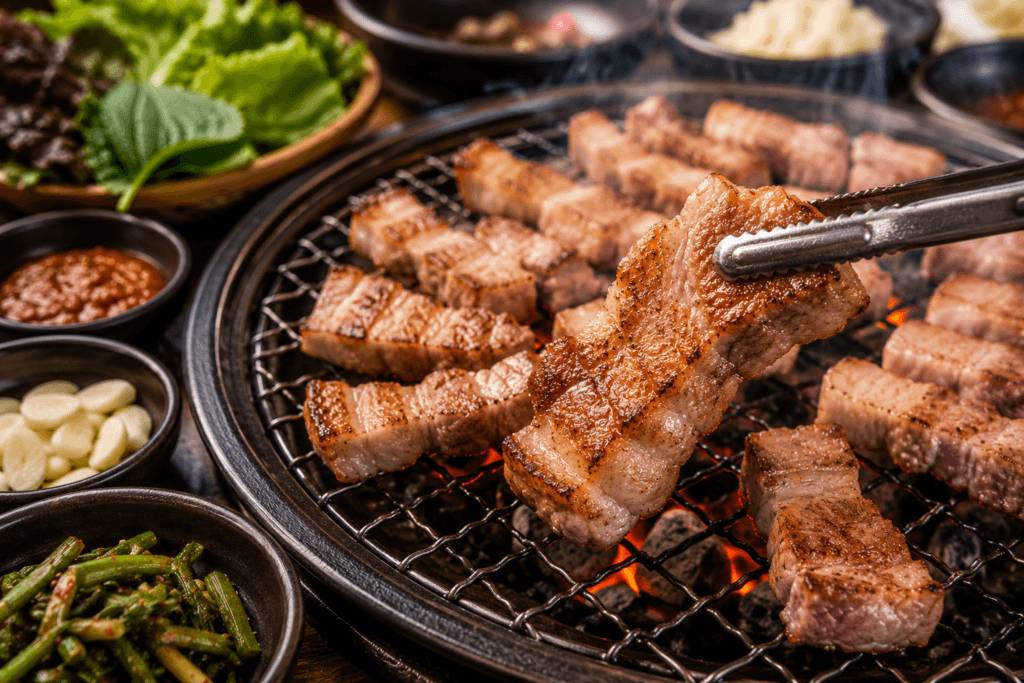
Jeju black pork, or heukdwaeji (흑돼지), refers to pork from black-haired pigs associated with Jeju. Visit Jeju describes it as a representative local food known for a hearty flavor and pleasantly chewy texture. That does not mean every black-pork plate will taste dramatically different from every other pork meal; breed, cut, aging, handling and grilling all affect the result.
Also read the menu carefully. Visit Jeju specifically warns that many restaurants sell both ordinary pork and black pork. Confirm that the set or cut you order is labelled 흑돼지, and ask if the English translation is unclear. Black skin or hair remnants along an edge may appear on some skin-on cuts, but visual inspection is not a substitute for the menu and the restaurant’s sourcing information.
Quick Order Guide
| Check | Why it matters |
|---|---|
| Black pork label | Some restaurants also sell ordinary pork; confirm which set you selected |
| Weight in grams | Compare total meat, not only the price printed in the largest type |
| Minimum order | Sets may start at two portions or a fixed total weight |
| Cut | Ogyeopsal or samgyeopsal is richer; moksal is usually leaner |
| Grilling service | Ask whether staff cook the meat or you manage the grill |
| Extras | Rice, stew, noodles, drinks and extra vegetables may be separate |
| Last order | It can be earlier than the closing time shown on a map |
Current prices vary too widely by restaurant, cut and weight for one island-wide number to be honest. Read the grams, number of diners and included items before comparing menus. A “set” can be good value or simply a confident noun.
Cuts: Pork Belly, Neck and Mixed Sets
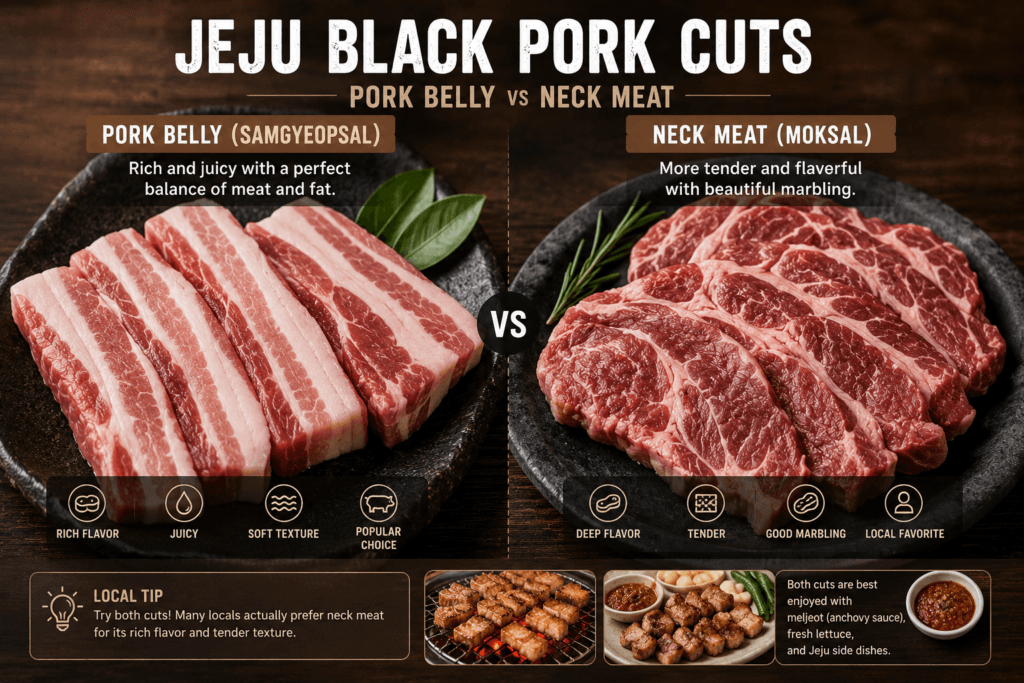
Pork belly: samgyeopsal or ogyeopsal
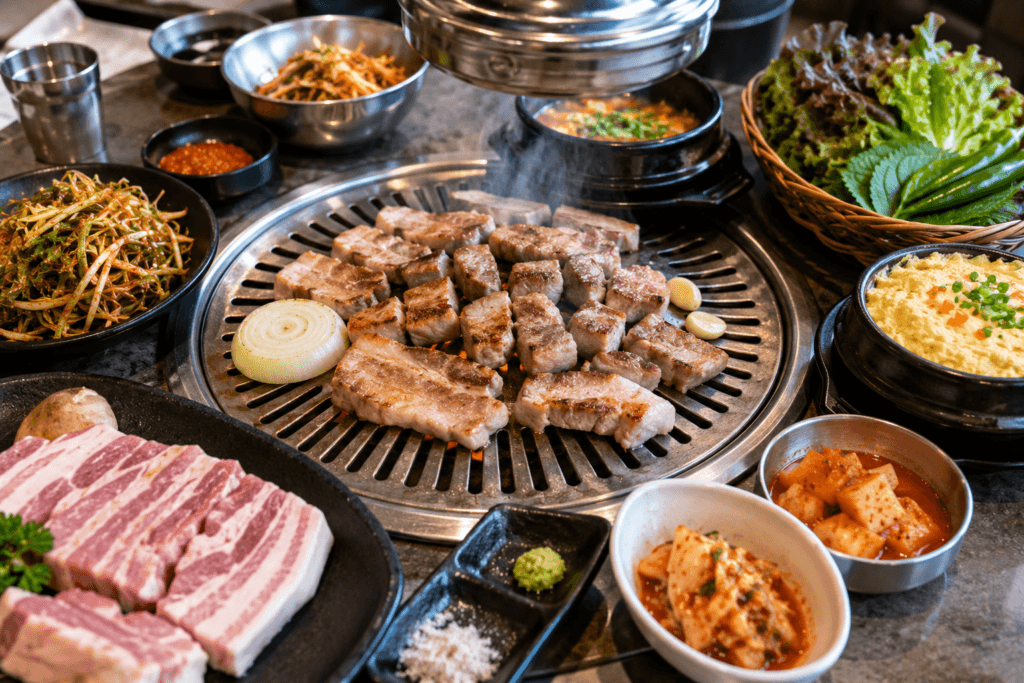
Pork belly is the richer choice. Samgyeopsal (삼겹살) is the familiar three-layer cut; ogyeopsal (오겹살) generally includes the skin layer and is common on Jeju black-pork menus. Thick pieces need time to brown and cook through. If staff are grilling, follow their timing rather than conducting an international negotiation with the tongs.
Pork neck: moksal
Moksal (목살) usually has a higher lean-to-fat balance than belly. It is useful for diners who want meatier texture without making every bite equally rich. A mixed set of belly and neck is the easiest first order when the portion works for your group.
Special cuts and geun-gogi
Some restaurants list ribs, jowl or other special cuts. Geun-gogi (근고기) describes meat sold as a substantial weight-based portion rather than one specific anatomical cut, so ask which cuts are included and the total grams. Do not assume the name itself tells you the composition.
Meljeot and the First Few Bites
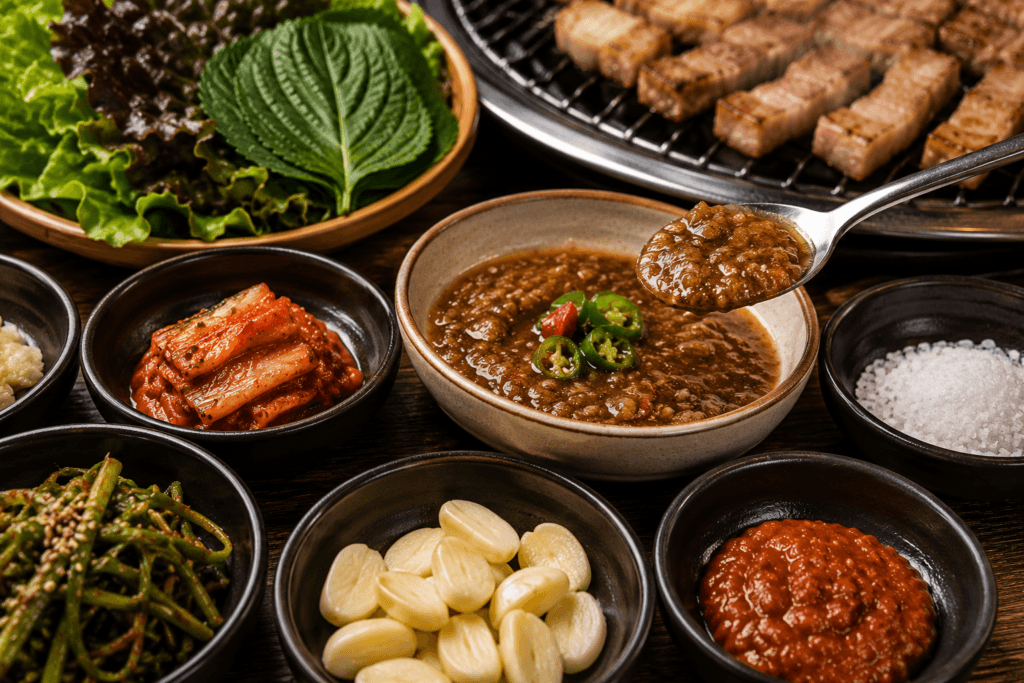
Meljeot (멜젓) is a salted and fermented anchovy sauce traditionally paired with grilled pork on Jeju. It is savory, salty and assertive. Try the first bite of meat with salt, the next with a small amount of meljeot, and then a lettuce or perilla wrap with garlic or kimchi. This lets you taste the pork before the condiments hold a committee meeting on top of it.
The sauce may be warmed at the grill, sometimes with garlic or chili. Let restaurant staff handle the setup if they are cooking for the table. Pork should be cooked thoroughly; if you are managing the grill, separate utensils for raw and cooked meat when provided.
How to Choose a Restaurant Without Chasing a Ranking
Start near the place where your day ends. Then compare the current menu, black-pork label, total weight, minimum order, recent customer photos, last order, parking or bus return, and whether the restaurant accepts solo diners. A restaurant twenty minutes from your hotel is often a better dinner than a viral address on the opposite coast.
- Two or more diners: look for a mixed belly-and-neck set with a clearly stated total weight.
- Solo diner: call or message first; ask whether one person can order and whether a minimum set applies.
- Family: check high chairs, non-spicy sides, ventilation and whether staff grill the meat.
- No car: favor a restaurant near your lodging or a reliable bus corridor; confirm the trip home before dinner.
- Late arrival: verify last order, not just closing time. A lit sign is not a promise that the grill is still taking applications.
Dining Areas and Officially Listed Examples
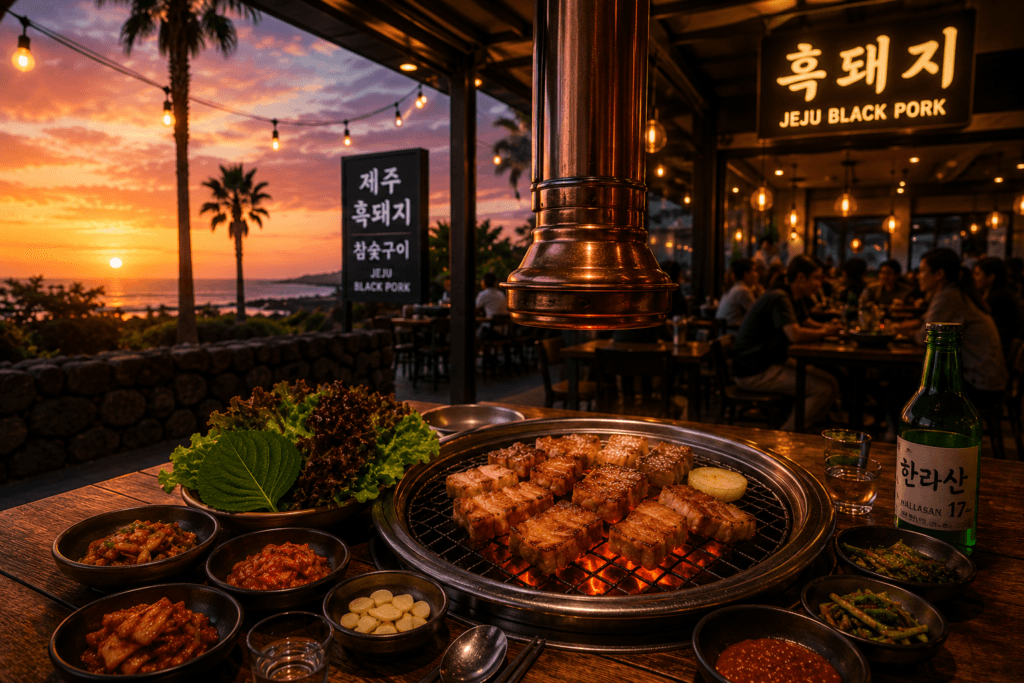
The following are examples currently listed by Visit Jeju. Listings and business details can change, so use the official page as a starting point and confirm the restaurant’s latest channel or map listing on the day. The photos in this article illustrate black-pork dining generally; they are not photographs of every named business below.
Jeju City: easiest around an airport or city stay
Old Jeju’s Black Pork Street is the obvious cluster when you want several choices close together. Visit Jeju identifies the Chilseong-ro area as a place to find established black-pork restaurants. It fits an arrival or departure night better than driving across the island solely for dinner.
Aewol: pair dinner with the west coast
Gwakji Aewol Hall Black Pork is an officially listed Aewol example near the Handam coastal route. Check its latest hours and the distance from your actual accommodation. “Aewol” covers more ground than a café-window photograph suggests; see the Aewol guide before joining the walk and dinner.
Jungmun and Seogwipo: useful after a southern route
Hayeong Black Pork Grill House is a Visit Jeju-listed example near Jungmun Tourist Complex. Consider this area when your day already includes Jungmun or the south coast, not as a mandatory pilgrimage from Jeju City.
Seongsan: finish an east-Jeju day nearby
Doldam-ae Seongsan Black Pig is an officially listed Seongsan example. It is most logical after Seongsan Ilchulbong or an Udo day. Confirm ferry timing first and dinner timing second; the last boat is less flexible than dessert.
A Sensible First Order
For two diners, start by checking whether one mixed set provides a reasonable total weight. Add rice, stew or noodles only after you understand what the set includes. Taste belly and neck with salt and meljeot before building wraps. Order more meat later if needed; an empty grill is easier to solve than an ambitious pile of cooling pork.
If you avoid seafood, ask about meljeot and other fermented fish sauces. Vegetarians should not assume side dishes or stews are meat-free. Travelers with allergies need to ask directly about marinades, sauces and shared cooking surfaces.
Common Mistakes
- Assuming every pork item on a black-pork restaurant menu is black pork.
- Comparing prices without comparing grams, cuts and minimum orders.
- Crossing the island for a famous restaurant while passing suitable options near the hotel.
- Arriving close to closing time without checking the kitchen’s last order.
- Expecting every restaurant to welcome solo diners with a single portion.
- Ordering several sides before seeing the size of the meat set.
- Treating old map hours as a guarantee rather than checking the latest business update.
Frequently Asked Questions
Is Jeju black pork worth it?
It is worth trying if you enjoy pork barbecue and want a meal tied to Jeju’s food culture. The difference is often more about texture, cut, grilling and the full table than a magical first bite. Travelers who dislike fatty meat can choose more neck meat and less belly.
How much should I order?
Use the restaurant’s total weight and minimum-order rule rather than a universal number. Appetite, bone or skin, side dishes and cuts all change what is enough. A mixed set followed by a small extra order is safer than guessing big at the start.
Can I eat black pork alone?
Sometimes, but not everywhere. Some barbecue restaurants require two portions or a fixed set. Search recent reviews for solo dining and contact the restaurant before making a special trip.
Where should I eat it?
Near the end of your day: Jeju City for airport and city nights, Aewol for a west-coast day, Jungmun or Seogwipo for the south, and Seongsan for an eastern route. Geography is an underrated seasoning.
Official Sources and Last Check
- Visit Jeju: Traditional Jeju Foods — black pork, meljeot and Black Pork Street
- Visit Jeju: Heukdwaeji Guide — cuts and the reminder to distinguish black pork from ordinary pork
- Visit Jeju: Budget-Friendly Black Pork Establishments — current examples and value-focused context
- Official Jeju Tourism Guidebook — local-food overview
Last checked: September 25, 2026. Restaurant listings do not guarantee that a business is open now. Reconfirm the menu, black-pork option, minimum order, hours, parking or return transport directly before setting out.
Related Jeju Guides