Affiliate disclosure: This guide may contain affiliate links. If you book through them, we may earn a small commission at no extra cost to you. Learn more.
Jeju looks simple on a map. Then you add Udo, Hallasan, three coastlines, black pork and one “quick” cafe, and the holiday begins to resemble a delivery route with better scenery.
Five days is a useful first-trip length because it lets you give the east, south, mountain and west their own space. The route below assumes you arrive on Day 1 and leave on Day 5, so the final day changes according to your flight rather than pretending everyone has time for sunset after returning a rental car.
Use this as a regional framework, not a minute-by-minute contract. Udo ferries and Hallasan are weather-sensitive, hotel changes consume real time, and Jeju has a talent for placing an excellent viewpoint exactly where your schedule did not leave a gap.
Before planning the details, it is helpful to read the Jeju Travel Guide 2026 first so you understand the island’s main regions and travel style.
Table of contents
Why 5 Days Is Ideal for Jeju
Five days gives you enough time to enjoy Jeju properly.
Three days can work, but it often feels rushed. You may spend more time moving between attractions than actually enjoying them. Seven days is wonderful if you want a slower island trip, but not every traveler has that much time.
Five days sits comfortably in the middle.
You can explore the east, south, and west sides of the island, visit Hallasan, enjoy Jeju’s food scene, and still have time for ocean-view cafes, beach walks, and sunset stops. More importantly, you can avoid treating Jeju like Seoul. Jeju is not a place where you hop between subway stations and squeeze five neighborhoods into one afternoon. The island has its own pace, and it is better when you stop arguing with it.
The best Jeju trips usually include a mix of planned highlights and unplanned pauses. A beautiful coastal road, a quiet cafe, or a random viewpoint can become just as memorable as the famous attractions. That is why a 5-day itinerary works so well. It gives you structure without stealing the island’s slower charm.
Do You Need a Rental Car in Jeju?
Technically, you can travel around Jeju without a rental car.
Realistically, a rental car makes the trip much easier.
Public buses exist, and they can work for simple routes, especially around Jeju City or major attractions. But Jeju was made for road trips. Many of the island’s best beaches, cafes, viewpoints, and coastal roads are easier to reach by car. A rental car also gives you the freedom to stop whenever the sea suddenly looks too good to ignore.
Travel times often look short on a map but feel longer in real life. Parking, small roads, traffic near popular attractions, and scenic detours all add time. With a car, you can adjust your route when the weather changes, when a cafe looks better than expected, or when your original plan starts acting too ambitious.
For this 5-day route, a rental car is strongly recommended. Foreign drivers should confirm the required passport, home licence, accepted International Driving Permit, age and experience rules with the company before paying. You can compare Jeju rental car options early for spring, summer, autumn weekends and Korean holidays.
If you do not drive, use the same regional order but reduce each day to one major sight plus nearby stops. Buses, taxis and day tours can cover the island; the five-day checklist cannot remain identical unless waiting at bus stops has become one of your planned attractions.
Where to Stay for a 5-Day Jeju Trip
For a 5-day trip, you have two main options: stay in one base or split your stay between two areas.
Staying in Jeju City is convenient for the airport, restaurants, Dongmun Market, rental car pickup, and shorter arrival or departure days. It is practical, especially for first-time visitors, but it is not always the most scenic base.
Staying in Seogwipo gives you easier access to southern Jeju, waterfalls, coastal scenery, and a quieter island atmosphere. Many travelers enjoy Seogwipo more than expected because it feels closer to the Jeju they imagined before arriving.
A balanced plan is to stay in Jeju City for the first one or two nights, then move to Seogwipo or western Jeju for the remaining nights. This reduces driving time and lets you experience different sides of the island. However, changing hotels too often can become annoying, especially if you are traveling with luggage or family.
For most first-time visitors, this works well:
- Nights 1 to 2: Jeju City or eastern Jeju
- Nights 3 to 4: Seogwipo, Aewol, or western Jeju
Travelers who prefer fewer hotel changes can stay in Jeju City throughout and accept longer drives. If you split the stay, moving once after Day 2 is enough. Compare the real trade-offs in our Jeju accommodation area guide before booking; a sea view loses some poetry when checkout, luggage and check-in consume half the afternoon.
Jeju 5-Day Itinerary Overview
| Day | Area | Main focus | Sleep |
|---|---|---|---|
| Day 1 | Jeju City | Arrival, rental pickup, market and dinner | Jeju City |
| Day 2 | East Jeju | Seongsan Ilchulbong and Udo, if ferries run | Jeju City or east |
| Day 3 | South Jeju | Seogwipo, one waterfall and coastal time | Seogwipo |
| Day 4 | Hallasan | Chosen trail, weather backup and recovery | Seogwipo or west |
| Day 5 | West Jeju / departure | Hyeopjae and Aewol only if flight time allows | Depart |
This route is designed to move around the island in a logical way. It avoids bouncing randomly between distant regions and gives each day a clear mood.
Day 1 is deliberately light. Day 2 depends on the sea, Day 4 depends on the mountain, and Day 5 depends on your airline. That is not a flaw in the plan; it is the part that makes the plan usable.
Keep the unbooked days flexible for weather, especially around Udo. Before moving Hallasan, check trail access and whether you can change or obtain any required reservation; a booking does not automatically follow your new itinerary. In Jeju, the forecast is not background information. It is one of the main characters.
Day 1: Arrive in Jeju and Explore Jeju City
Your first day in Jeju should be relaxed.
Most visitors arrive through Jeju International Airport, pick up a rental car, and spend the rest of the day adjusting to island pace. This is not the day to sprint across the entire island. Arrival days are better for simple food, an easy market visit, and a gentle start.
After picking up your rental car, stay around Jeju City. If you have time, you can visit Yongduam Rock, also known as Dragon Head Rock, for a quick coastal stop near the city. It is not the biggest attraction in Jeju, but it is easy to add if you want a simple first view of the ocean.
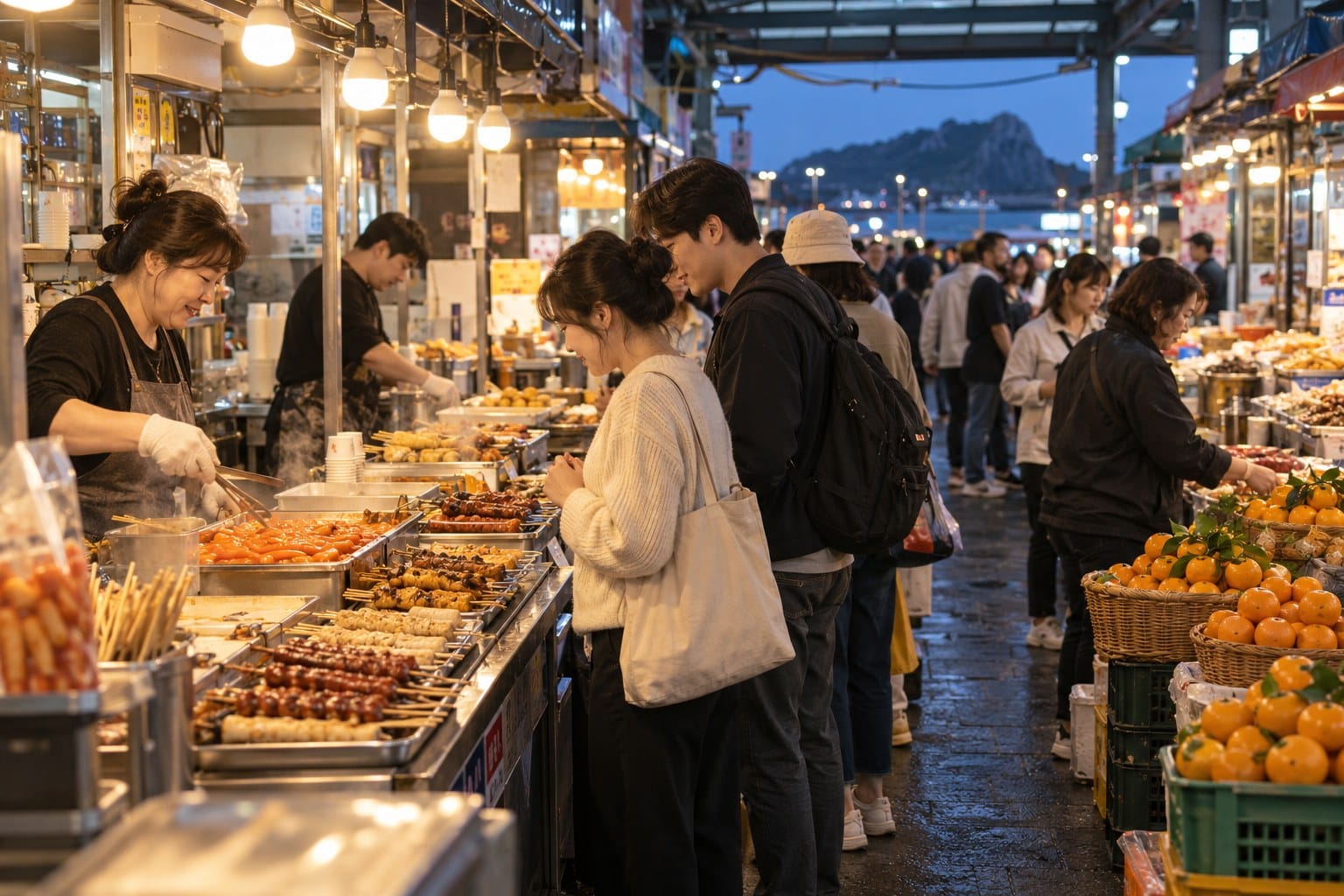
In the evening, visit Dongmun Market. This is one of the best places to get your first taste of Jeju’s food culture. The market becomes livelier after sunset, with snacks, seafood, local specialties, and a more energetic atmosphere than during the day.
For dinner, try Jeju black pork. It is one of the island’s most famous food experiences, and it makes a satisfying first-night meal. After a travel day, grilled pork, side dishes, and a simple evening plan feel much better than trying to conquer half the island before bedtime.
Use the Jeju Black Pork Guide 2026 if you want more details on what to order and how to choose a restaurant.
A simple Day 1 plan could look like this:
- Arrive at Jeju International Airport
- Pick up your rental car
- Check in at your hotel
- Visit Yongduam Rock if time allows
- Explore Dongmun Market in the evening
- Eat Jeju black pork for dinner
Day 1 is about landing well. Keep it easy, eat properly, and save your energy. Jeju has five days to charm you. It does not need to do everything on the first night.
Day 2: East Jeju Adventure
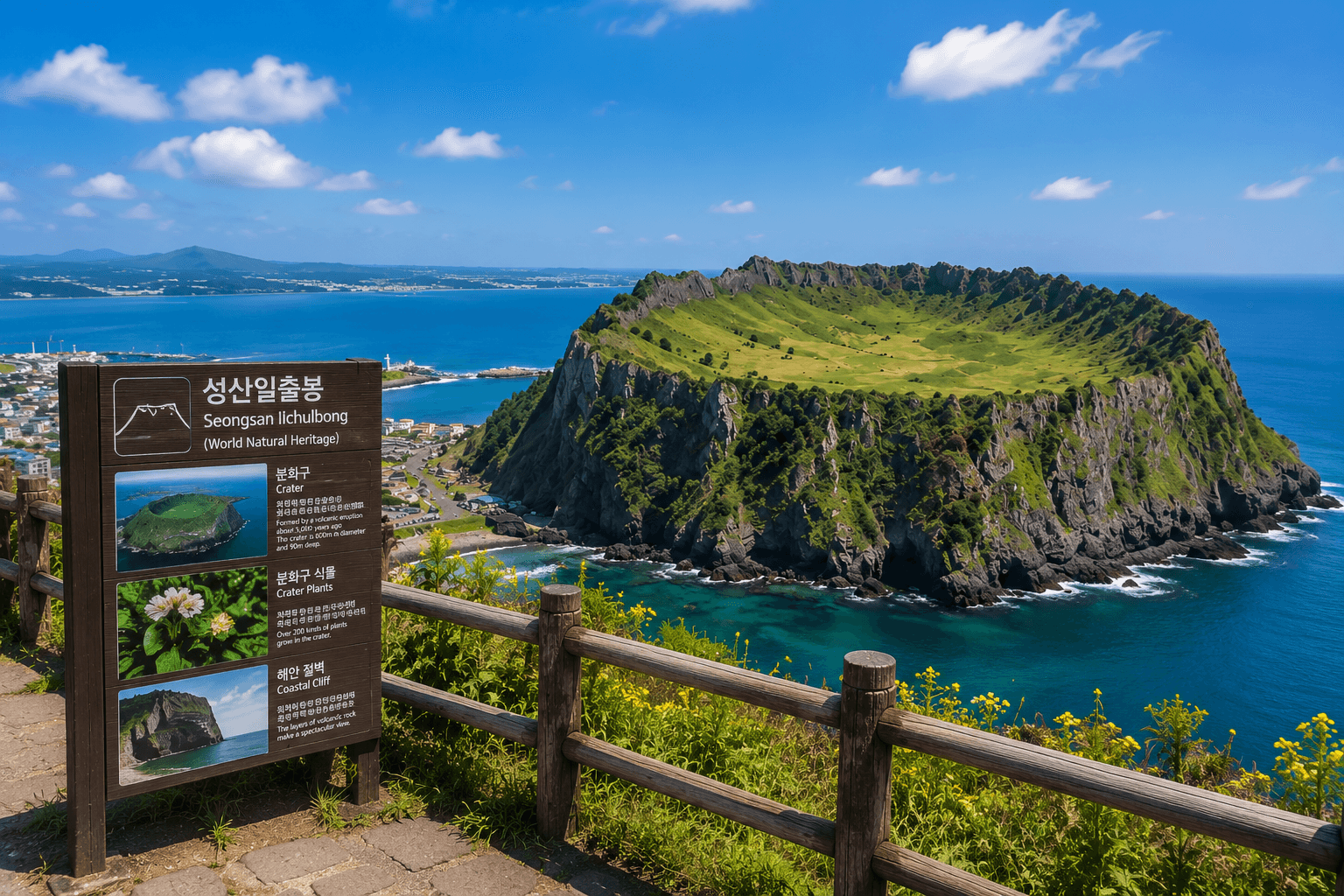
Day 2 is one of the most scenic days of this itinerary.
The eastern side of Jeju is home to Seongsan Ilchulbong, Udo Island, coastal roads, seafood restaurants, and some of the island’s most iconic views. Start early, especially if you plan to visit Udo.
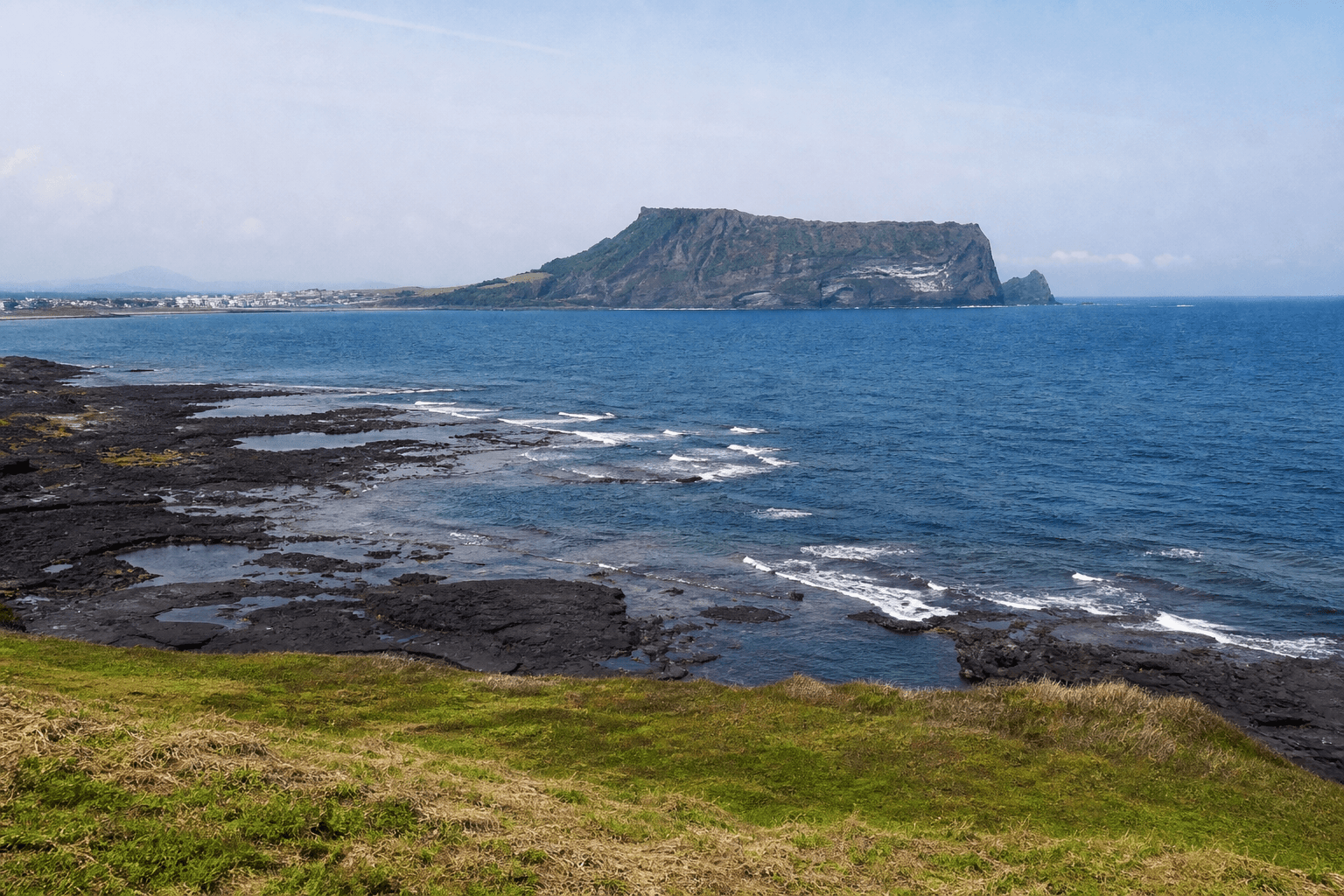
Begin with Seongsan Ilchulbong, a volcanic tuff cone rising dramatically above the sea. It is one of the most recognizable landmarks in Jeju and one of the best places to understand the island’s volcanic landscape. The climb is manageable for many visitors, but it still takes effort, so wear comfortable shoes and bring water.
After Seongsan, continue to Seongsan Port and take the ferry to Udo. The crossing is roughly 10–15 minutes, but parking, tickets, boarding and waiting make the real transfer longer. Ferry hours and the final return change with season, weather and route, so check operations on the day rather than trusting a screenshot from breakfast.
Bring a passport or another accepted ID and complete the boarding form at the terminal. Check the return port and last sailing before setting off around Udo. Visit Jeju’s current Udo guidance also explains vehicle eligibility; confirm supporting documents and rental insurance if you intend to use an exception.
Park the mainland rental car at Seongsan Port unless you qualify for a current exception: general rental cars are normally restricted on Udo, with limited exceptions such as eligible low-emission vehicles, overnight guests and travelers with mobility needs. On the island, use the loop bus, a bicycle or a legally permitted rental vehicle that matches your licence and comfort level. Udo is where the road, sea and peanut ice cream quietly team up against your schedule.
Use the Seongsan Ilchulbong Guide and Udo Island Guide to choose the climb, ferry and island transport before this day.
A simple Day 2 plan could look like this:
- Early morning: drive to Seongsan
- Morning: visit Seongsan Ilchulbong
- Late morning: ferry to Udo Island
- Lunch: seafood noodles or local restaurant on Udo
- Afternoon: Udo beaches, viewpoints, and cafe stop
- Late afternoon: return ferry to Jeju
- Evening: seafood dinner or relaxed meal near Seongsan
Do not try to add too many extra attractions to this day. Seongsan and Udo can easily fill most of the day if you give them proper time.
Day 3: Explore South Jeju
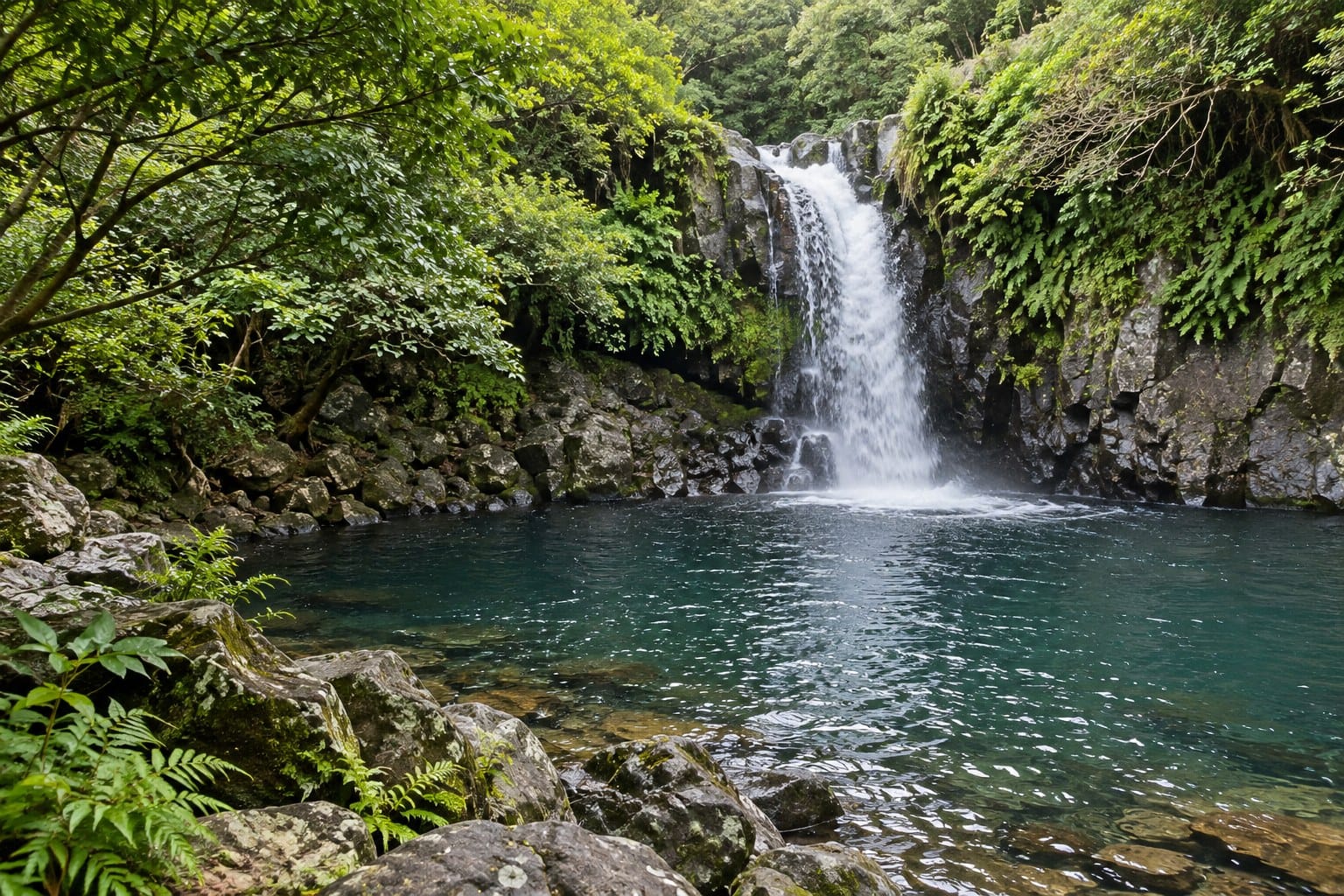
After a busy eastern Jeju day, Day 3 is a good chance to slow down.
South Jeju, especially around Seogwipo, has a different feeling from Jeju City. It is known for waterfalls, coastal cliffs, local restaurants, quiet neighborhoods, and scenic viewpoints. Many travelers discover that Seogwipo feels more like the Jeju they imagined before arriving.
Start the day with a relaxed drive toward Seogwipo. Visit one or two waterfalls rather than trying to collect all of them. Jeongbang Waterfall is famous because it falls directly near the sea, while Cheonjiyeon Waterfall is easy to visit and works well for a slower walk. Choose based on your route and energy level.
After that, enjoy a local lunch in Seogwipo. This is a good day for seafood, noodles, black pork, or a simple local restaurant. South Jeju is also a good area for cafes with coastal views or quieter interiors.
In the afternoon, walk along the coastline, visit a viewpoint, or explore a slower neighborhood. This is not the day to overpack. Day 3 works best when you leave space to wander a little.
A simple Day 3 plan could look like this:
- Morning: drive to Seogwipo
- Late morning: visit a waterfall
- Lunch: local restaurant in Seogwipo
- Afternoon: coastal walk or viewpoint
- Late afternoon: cafe break
- Evening: relaxed dinner in town
This is the day where doing less can actually make the trip better. Jeju is very good at rewarding travelers who stop trying to win the itinerary.
Day 4: Hallasan National Park
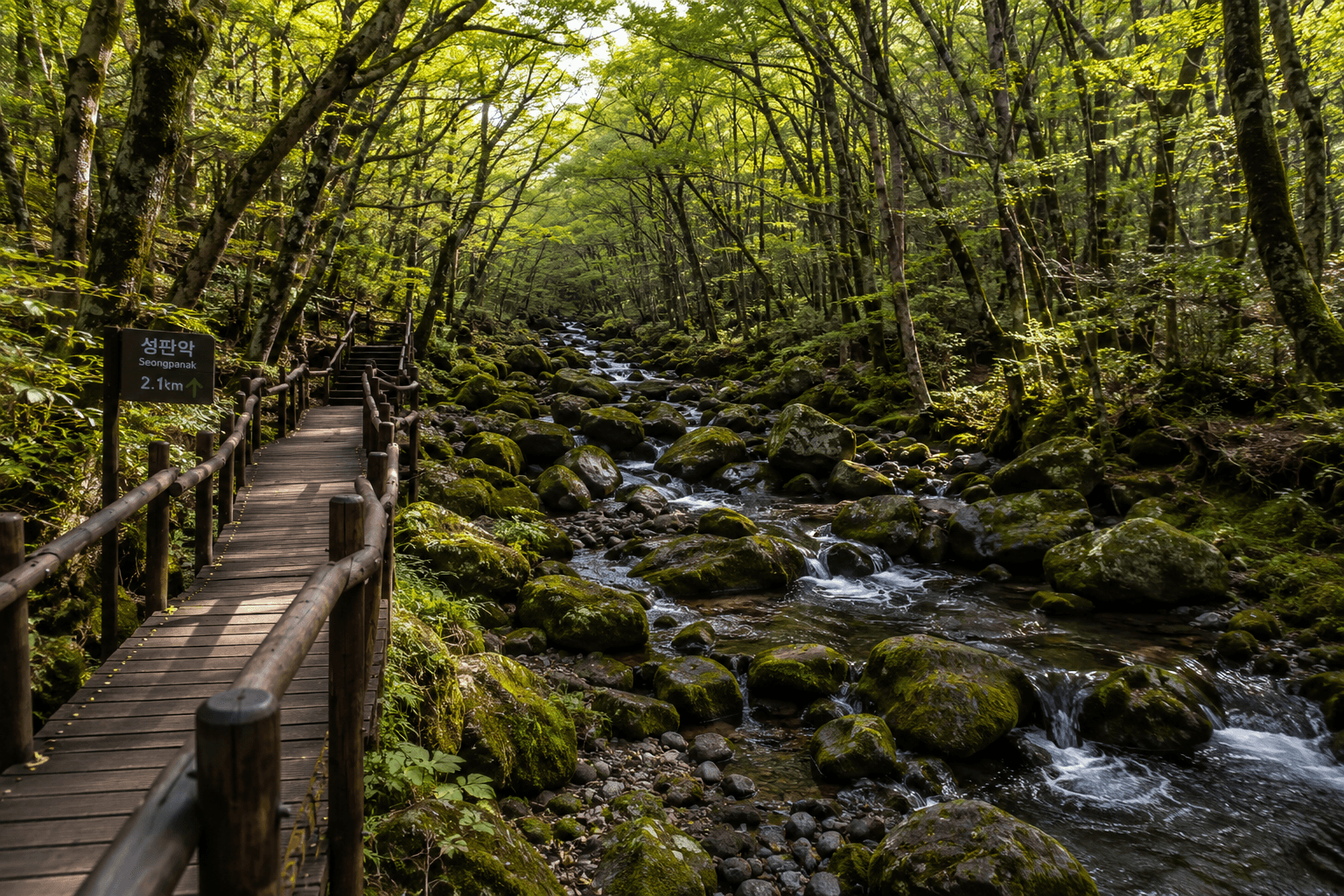
Day 4 is for Hallasan.
As South Korea’s highest mountain, Hallasan sits at the center of Jeju and gives the island its dramatic shape. Even if you do not hike to the summit, experiencing Hallasan is one of the best ways to understand Jeju’s landscape.
There are different trails depending on your fitness level, time, and weather. Some travelers choose a full summit hike, while others prefer shorter trails or scenic forest routes. A full Hallasan hike can be tiring, so choose honestly. This is not the moment to let your vacation ego write checks your knees did not approve.
Start early, eat breakfast, bring water and check the official trail status and weather before leaving. Advance reservations apply to the summit sections reached by Seongpanak and Gwaneumsa; shorter routes do not all use the same reservation rule. Choose the actual trail first, then book what that trail requires.
For a reserved summit section, each visitor needs their own QR code and matching ID, such as a passport. Check the official reservation and trail-status system before leaving; an open-route label does not guarantee a booking. Follow seasonal entry and descent cutoffs, even if the summit view is making an excellent argument for one more photo.
Do not plan a busy evening after Hallasan. Most visitors underestimate how tiring the hike can be, especially if they choose a longer trail. After hiking, keep dinner simple and satisfying. A warm meal in Seogwipo or Jeju City will feel better than trying to squeeze in another major attraction.
Use the Hallasan National Park Guide for trail choices, cutoff planning, reservations and hiking preparation.
A simple Day 4 plan could look like this:
- Early morning: breakfast and drive to trail area
- Morning to afternoon: Hallasan hike or shorter trail
- Late afternoon: return to hotel and rest
- Evening: simple local dinner
If the weather is bad, consider swapping Day 4 with another day. Hallasan is one of the most weather-sensitive parts of this itinerary. A flexible plan is much better than stubbornly hiking into a cloud and calling it scenery.
Day 5: West Jeju or a Short Departure Day
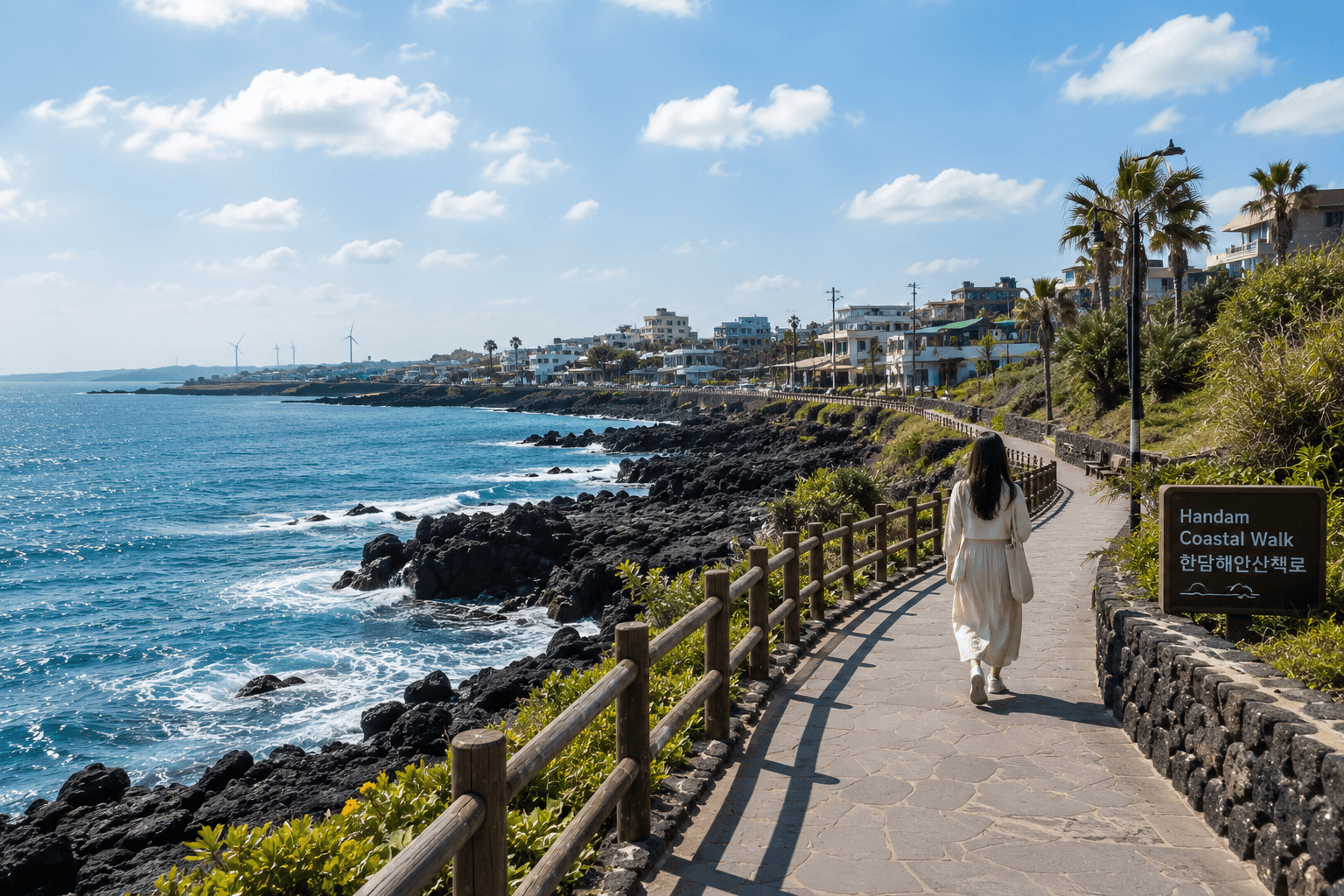
Western Jeju works well on the final day only when your flight is late enough. Build this route backward from your rental company’s return time and your airline’s check-in deadline; the airport shuttle and vehicle inspection are part of the journey, not decorative margins.
Use the version that matches your departure:
| Departure | Realistic Day 5 |
|---|---|
| Before 14:00 | Breakfast, fuel or charge, rental return and airport. Move the west coast to Day 3 and reduce the south route. |
| 14:00–18:00 | Choose Aewol or Hyeopjae, not both, then leave a generous rental-return and airport buffer. |
| After 18:00 | Hyeopjae in the morning, Aewol in the afternoon, then return the car. Sunset works only with a very late flight or an extra night. |
If you have a late flight, the west gives you beaches, cafes and coastal scenery without another demanding hike. If you leave early, a calm breakfast is a better finale than watching the departure gate close from somewhere near Hyeopjae.
Start with Hyeopjae Beach. On a clear morning, the water can look bright turquoise, with Biyangdo Island sitting just offshore. It is a strong final-day stop even after the swimming season ends. Jeju’s managed beach period finished September 6 in 2026, so treat an autumn Day 5 as a coastal walk, not a swim stop.
After Hyeopjae, walk toward nearby Geumneung Beach if you have time. It is close, often quieter, and gives you a slightly different angle of the western coastline.
For lunch, choose a local restaurant or cafe in the area. Then continue toward Aewol in the afternoon. Aewol is famous for ocean-view cafes, coastal walks, and sunset scenery. This is where you should slow down rather than rush between too many cafes.
Treat sunset in Aewol as an optional extra for an overnight stay or a flight that genuinely leaves enough time after rental return and check-in. Otherwise, enjoy the coast in daylight and leave at your planned deadline. One good cafe is enough; your boarding pass is not interested in golden-hour photography.
Use the Hyeopjae Beach Guide 2026, Aewol Travel Guide 2026, and Jeju Cafe Guide 2026 to plan this day more deeply.
A simple Day 5 plan could look like this:
- Morning: Hyeopjae Beach
- Late morning: Geumneung Beach or nearby coastal walk
- Lunch: local restaurant or cafe
- Afternoon: drive toward Aewol
- Late afternoon: ocean-view cafe or Handam Coastal Walk
- Late afternoon: leave for rental return and the airport according to your booked deadline
With a late departure, this can be the gentlest day of the trip. With an early departure, let it be short. A realistic final morning is not wasted time; it is how your Jeju story avoids ending at a rental-car counter in a panic.
Common Mistakes First-Time Visitors Make
The biggest mistake is trying to visit too many places in one day.
Jeju attractions are spread out, and travel time can quietly eat your schedule. A plan that looks efficient on a map may feel exhausting in real life. It is better to enjoy three places properly than visit six places with the emotional state of a delivery driver.
Another mistake is treating the departure day as a full sightseeing day. Roads, parking, refuelling or charging, vehicle inspection, the rental shuttle and airport check-in all consume time. Work backward from the non-negotiable deadlines before choosing the final stop.
Some travelers skip Udo because it seems like an extra step, but for many visitors, Udo becomes one of the most memorable parts of the trip. If the weather is good and your eastern Jeju day has enough space, it is worth considering.
Hallasan is another place travelers underestimate. A full hike requires energy, preparation, and recovery time. Do not place a packed evening itinerary after a mountain day unless your legs have signed a separate agreement.
Changing hotels too often can also make the trip feel messy. One or two bases are usually enough for a 5-day Jeju itinerary.
Finally, do not overplan every hour. Jeju rewards flexibility. Weather changes, coastal views surprise you, cafes look better than expected, and sometimes the best memory is the stop that was not in the plan.
Small Things That Make This Itinerary Better
Book your rental car early during popular travel seasons. Cars can become more expensive or limited during peak periods, weekends, and holidays.
Check the weather every day, especially before Hallasan, Udo, and beach days. Jeju weather can change quickly, and the same route can feel completely different depending on wind, rain, or cloud cover.
Plan west coast sunsets intentionally. Aewol and Hyeopjae are better when you are not rushing to arrive at the last minute.
Leave cafe time in your schedule. Jeju cafes are not just filler between attractions. They are part of the island experience, especially in Aewol, Hyeopjae, Seogwipo, and along coastal roads.
Do not treat Jeju like Seoul. There is no subway network carrying you effortlessly between neighborhoods. Jeju needs more space, more driving time, and more patience. The island is not slow because it is inefficient. It is slow because that is the point.
Frequently Asked Questions
Is 5 days enough for Jeju?
Yes. For most first-time visitors, five days is enough to experience Jeju’s main regions, including Jeju City, eastern Jeju, southern Jeju, Hallasan, and western Jeju. It gives a good balance between sightseeing and relaxation.
Do I need a car in Jeju?
A rental car is strongly recommended for this itinerary. Public transportation exists, but a car gives you much more flexibility for beaches, cafes, viewpoints, Hallasan, and coastal routes.
Where should I stay for 5 days in Jeju?
Jeju City and Seogwipo are the most common bases. Jeju City is convenient for the airport and first-night arrival. Seogwipo is better for southern Jeju and a quieter atmosphere. Some travelers also choose Aewol or western Jeju for scenic final nights.
What is the best Jeju itinerary for first-time visitors?
A balanced first-time Jeju itinerary should include Jeju City, Seongsan Ilchulbong, Udo Island, Seogwipo, Hallasan, Hyeopjae Beach, and Aewol. This gives you a mix of volcanic scenery, beaches, food, cafes, and coastal drives.
Which side of Jeju is best?
Each side of Jeju offers something different. East Jeju is best for Seongsan and Udo, South Jeju is good for waterfalls and coastal scenery, and West Jeju is best for beaches, cafes, and sunsets. First-time visitors should try to experience all three if they have five days.
Is Jeju worth visiting in winter?
Yes. Jeju is worth visiting in winter if you enjoy fewer crowds, clearer coastal views, quiet cafes, and a calmer atmosphere. It can be windy and chilly, so pack warm layers and check weather conditions carefully.
How much does a 5-day Jeju trip cost?
Costs depend on accommodation, rental car, food, activities, and travel style. Jeju can work for both budget and more comfortable trips, but rental cars, ocean-view stays, and popular restaurants can raise the total cost.
Should I stay in one hotel or change hotels in Jeju?
For five days, one or two bases are usually enough. Changing hotels every night can waste time and energy. A good option is to stay near Jeju City at the start, then move to Seogwipo, Aewol, or western Jeju for the later part of the trip.
Official Sources and Last Check
- Visit Jeju: Udo Island — crossing time, same-day ferry checks and current vehicle restrictions
- Hallasan National Park reservation notice — reservation rules for Seongpanak and Gwaneumsa summit sections
- Jeju International Airport rental-car information — off-site rental shuttle pickup outside Gate 5
- Visit Jeju rental-car guide — driver documents, company requirements and vehicle pickup checks
- Visit Jeju: 2026 beach operations — managed swimming dates and safety guidance
Last checked: September 17, 2026. Confirm beach operations, Udo ferries, Hallasan trail access, weather, rental return instructions and flight check-in for your exact date.
Selected preparation details checked: October 11, 2026 — Udo ticketing documents and vehicle checks, plus Hallasan QR/ID requirements. This does not confirm a particular sailing or hiking reservation; the earlier date applies to the other sources.
Related Guides
Continue planning your trip with:
- Jeju Travel Guide 2026
- Best Areas to Stay in Jeju 2026
- Seongsan Ilchulbong Guide 2026
- Udo Island Guide 2026
- Hallasan National Park Guide 2026
- Hyeopjae Beach Guide 2026
- Aewol Travel Guide 2026
- Jeju Cafe Guide 2026
- Jeju Black Pork Guide 2026
Final Thoughts
A five-day trip is one of the best ways to experience Jeju for the first time.
It gives you enough time to see volcanic landscapes, visit Udo, hike or explore Hallasan, relax on beautiful beaches, enjoy ocean-view cafes, and taste some of the island’s most famous food. More importantly, it gives you enough space to enjoy Jeju at the pace it deserves.
The travelers who enjoy Jeju the most are often not the ones who see the most attractions. They are the ones who leave time for slow drives, long lunches, unexpected viewpoints, and coffee breaks that last longer than planned.
Use this itinerary as a guide, not a contract. Follow the route, but leave room for weather, mood, and the occasional view that makes you pull over for no practical reason.
That is often where Jeju becomes memorable.