Korea’s 2026 foliage forecast is now published. The useful question is how to apply it to your actual travel dates—not how to make every tree turn red on the morning your train arrives.
This page focuses on timing: published mountain estimates, what they mean and what to check before committing to a visit. For a fuller comparison of travel effort and destinations, use our autumn destination selection guide.
Table of contents
Published 2026 Forecast
Checked October 4, 2026 against Weatheri’s forecast PDF issued September 4 and VISITKOREA’s September 8 travel notice. These are forecast dates for named mountains, not observations confirming that peak has happened. The table is a selected summary, not every mountain in the national forecast.
| Mountain | First color | Peak estimate |
|---|---|---|
| Seoraksan | Oct 3 | Oct 25 |
| Odaesan | Oct 7 | Oct 16 |
| Bukhansan | Oct 23 | Nov 4 |
| Chiaksan | Oct 10 | Oct 31 |
| Jirisan | Oct 28 | Nov 5 |
| Naejangsan | Nov 5 | Nov 11 |
| Hallasan | Oct 31 | Nov 13 |
The Naejangsan estimate above comes from the PDF table and agrees with VISITKOREA: November 11. Weatheri’s web announcement heading currently displays November 1, so we use the dated PDF rather than silently treating those two versions as identical. Recheck the original forecast for revisions before booking.
First Color Is Not Peak Color
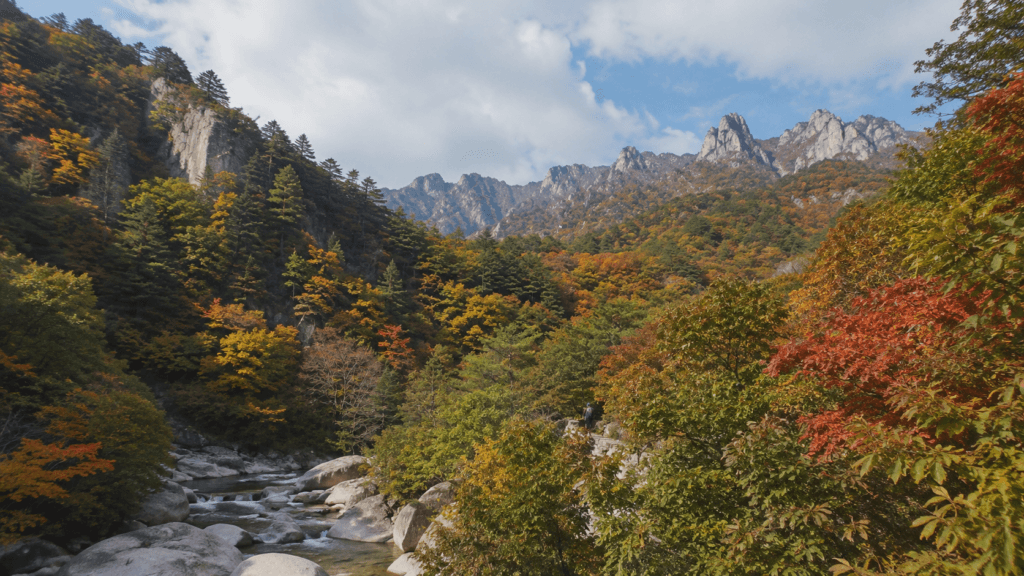
Weatheri defines first foliage as roughly 20% of the mountain showing color from the summit downward, and peak as roughly 80%. That explains why an early-October Seoraksan photograph and a late-October Seoraksan photograph can tell very different stories.
A mountain-level estimate cannot specify the state of every path, species or elevation. Bukhansan’s November 4 peak estimate is not an official November 4 appointment for all Seoul parks. Nor does Hallasan’s date predict every coastal tree on Jeju. Weather and local conditions can move what you actually see.
Match the Forecast to Your Dates
Early October
Seoraksan’s forecast puts first color near the start of October, but peak later in the month. Odaesan’s selected forecast is earlier for peak, though it is a separate destination with separate access planning. Keep expectations realistic in central Seoul and do not label this period guaranteed full color.
Mid to Late October
The published Odaesan and Seoraksan peak estimates fall within this period. Choose one mountain destination that fits the journey and weather rather than trying to complete both. If staying in Seoul, keep foliage as a bonus to your city plans and use current local images closer to the visit.
Early to Mid-November
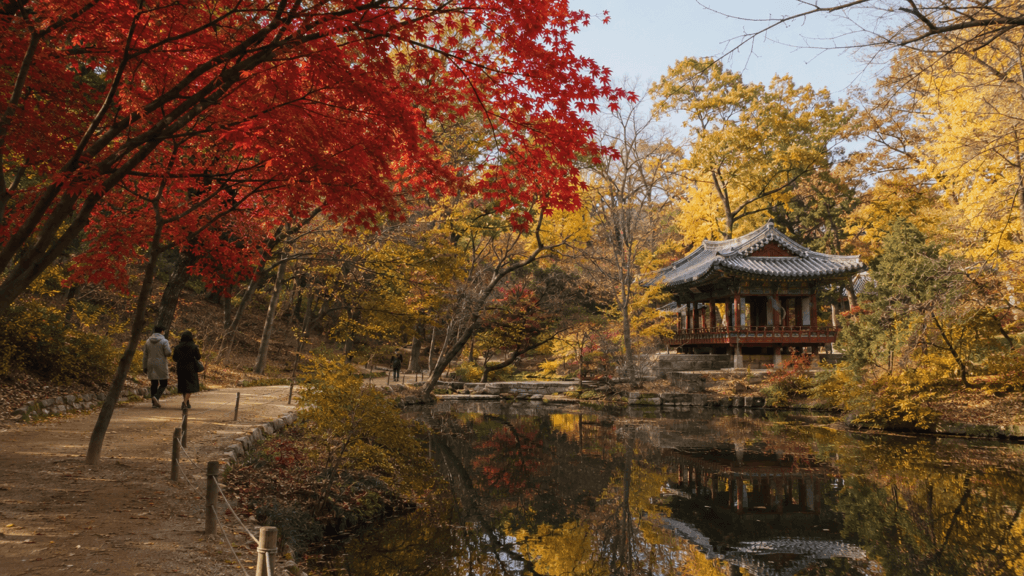
The selected forecasts place Bukhansan and several central or southern mountains in November, with Naejangsan and Hallasan later in the table. This does not guarantee that every destination stays colorful until the latest listed date. Check your exact location, not just a national calendar.
City and Garden Timing
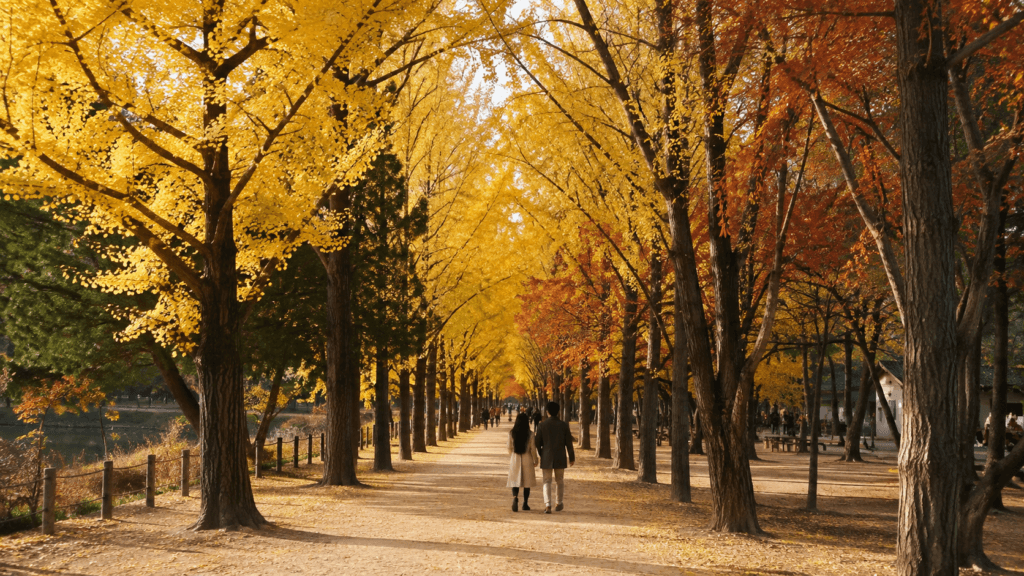
The source table does not publish exact 2026 peak dates for Nami Island, Changdeokgung’s Secret Garden or Bulguksa. Do not copy a nearby mountain’s date into a city or garden forecast. Use Nami Island’s visitor guide and Changdeokgung’s guide for access, then check current destination updates for color.
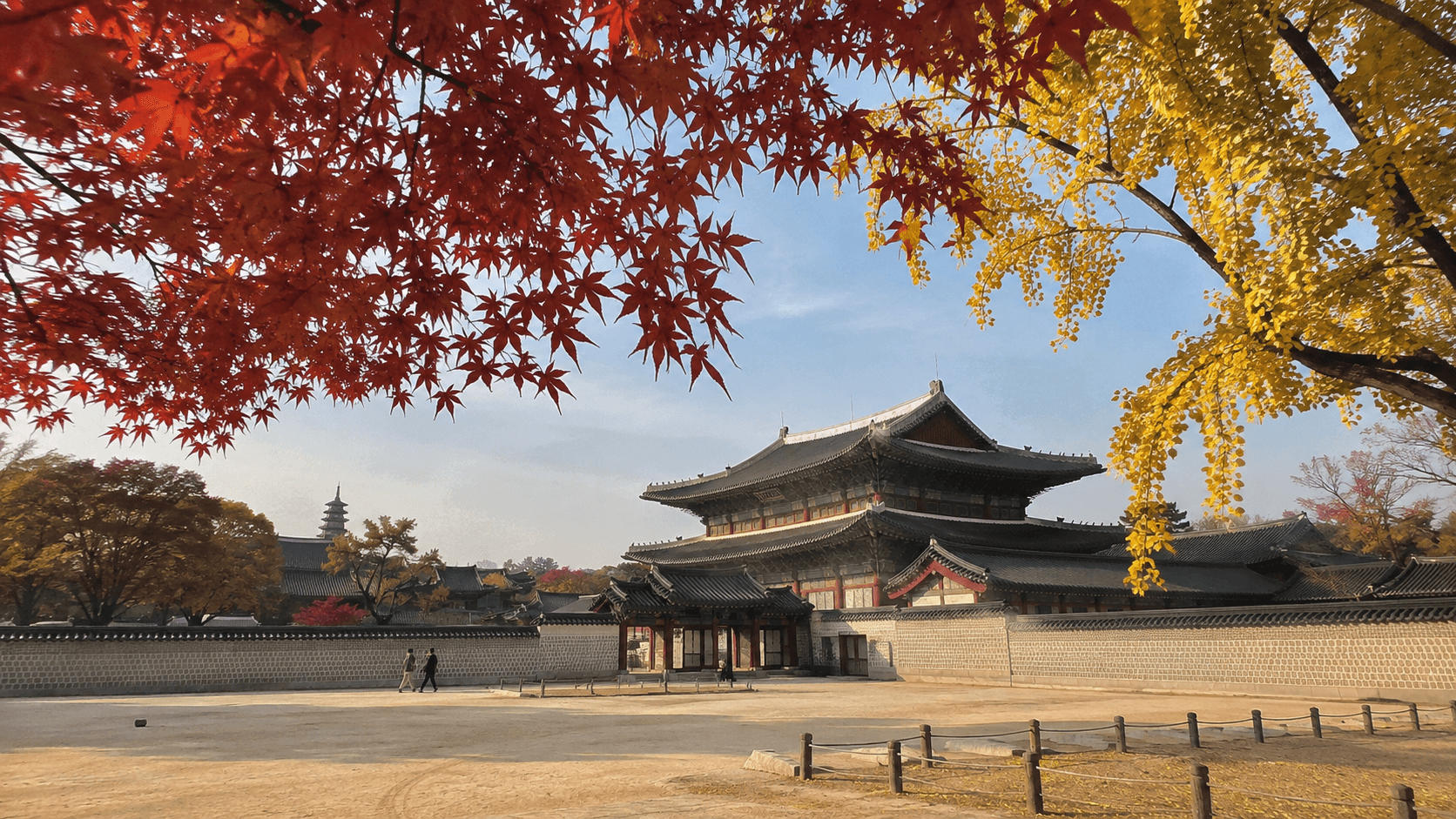
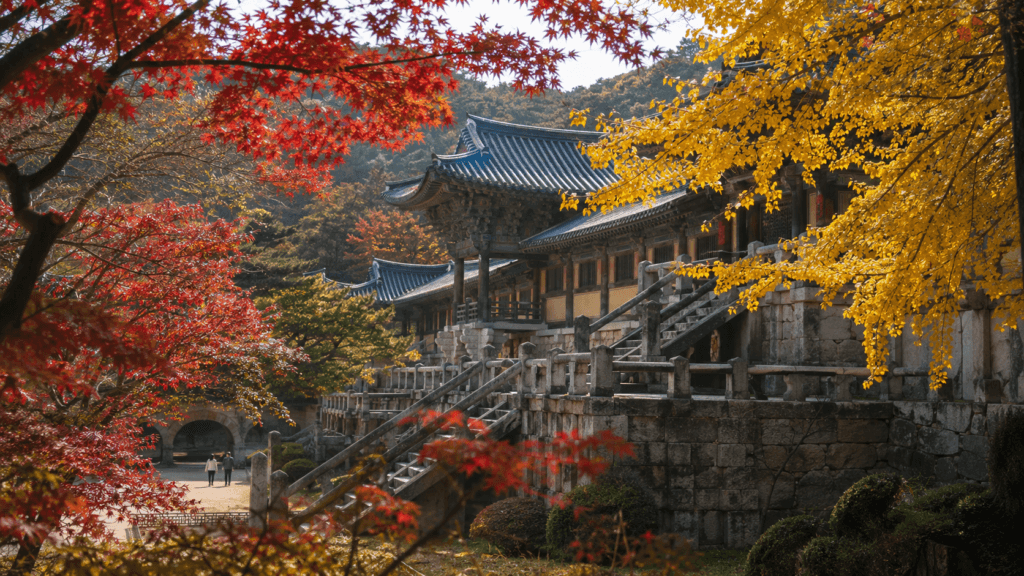
For a Gyeongju visit, Bulguksa and the central heritage area remain worthwhile without perfect foliage. The Gyeongju guide covers the route; the scene below is seasonal context, not a current-condition report.
Before You Reserve Anything
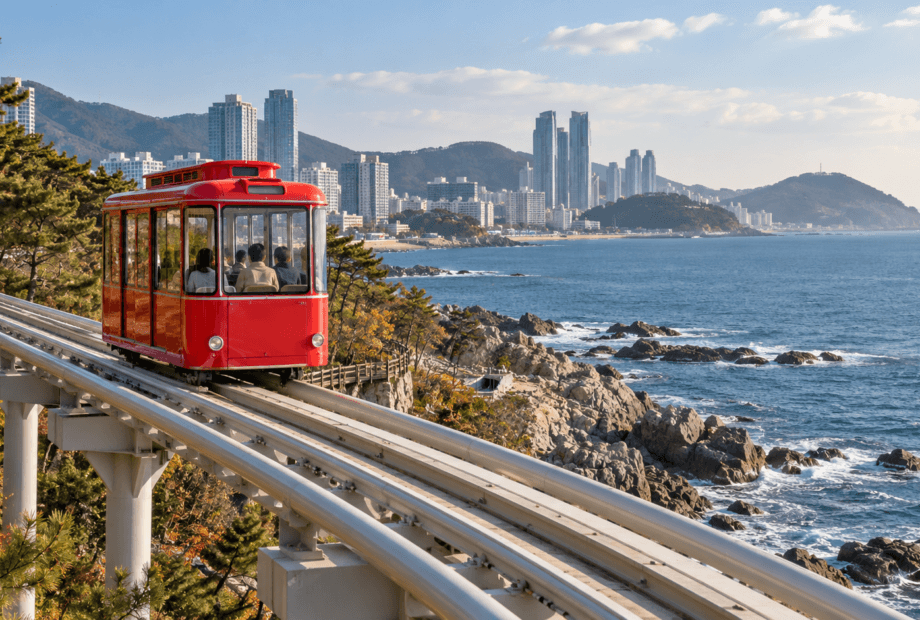
Check the destination’s own reservation requirements and visitor notices before buying transport. Hwadam’s official booking FAQ currently directs booking through NOL and requires membership; start from the garden’s own booking link rather than assuming an old checkout process still applies. Garden admission and monorail options are different products.
For Hallasan, consult the official reservation and trail system. For other national parks, check notices for your chosen trail and entrance. A foliage estimate does not confirm that the route is open, that a cable car runs or that transport will get you home afterwards.
Optional affiliate links: we may earn a small commission at no extra cost to you. You can compare a Nami Island and Garden of Morning Calm tour or a Seoraksan tour. Confirm the exact itinerary, walking expectations and cancellation terms; neither product includes a guarantee of peak leaves.
A Practical Last-Minute Check
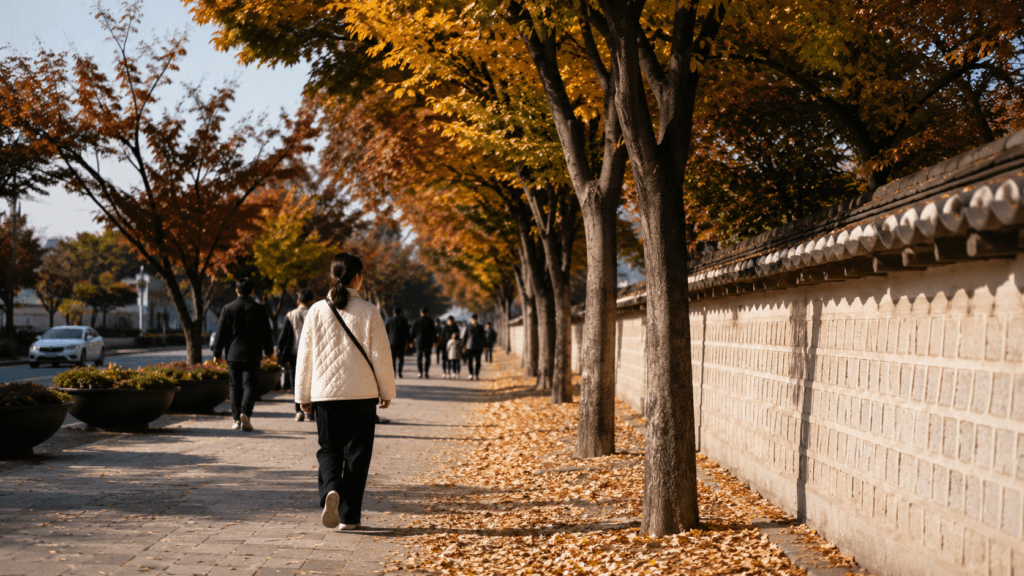
A few days before the visit, compare the forecast with dated local updates, the actual weather, access notices and your return journey. Treat an undated promotional picture differently from a recent on-site report. If conditions are poor, use a city or indoor alternative rather than chasing a prediction at any cost.
Keep one outdoor day flexible within your Seoul itinerary where possible. Use our Seoul weather guide for general packing context, but check the mountain forecast separately. A comfortable city afternoon does not tell you what a high trail will feel like.
Sources and Review Scope
Reviewed October 4, 2026. Forecast figures: Weatheri’s September 4, 2026 PDF, page 3; cross-check: VISITKOREA’s September 8, 2026 notice. Booking references: Hwadam’s official FAQ and Hallasan’s official system. These are published-source checks, not a claim that all destinations were visited or photographed this week.
Observed foliage percentages, current trail conditions, individual bus departures and attraction ticket availability were not confirmed. Forecast dates can change; current local reports and official access instructions matter more than making an itinerary match a single predicted day.