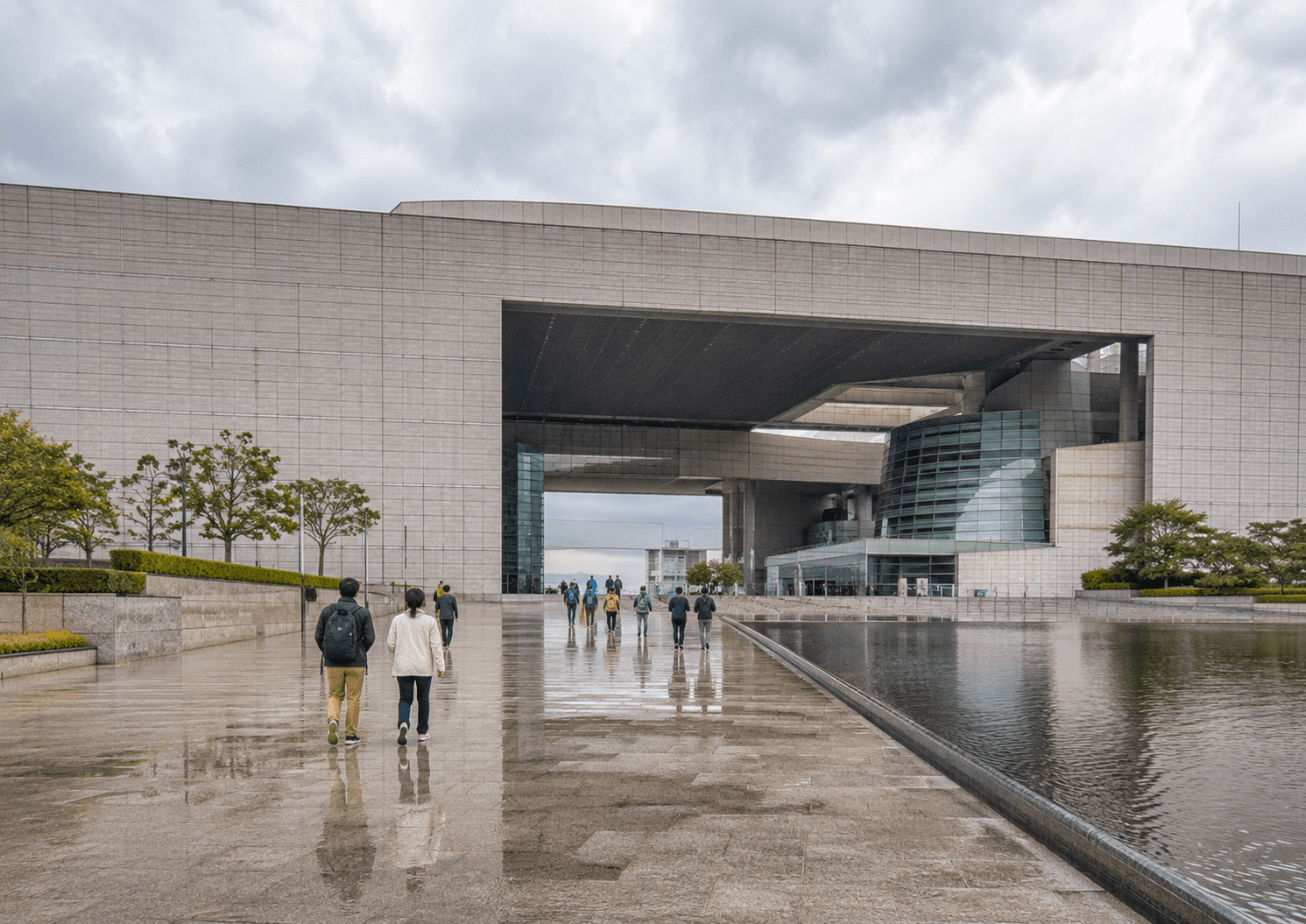
Located in Yongsan, this is Korea’s largest and most important national museum. It is spacious, well-organized and surprisingly easy to visit, even for travelers who do not usually spend their vacations reading every museum label like an academic detective.
The museum is especially useful for first-time visitors because it gives context to the rest of your Korea trip. Palaces, temples, hanok villages, ceramics, Buddhist statues, royal culture and ancient kingdoms all make more sense after spending a few hours here.
It is also one of Seoul’s best-value attractions. The permanent exhibitions are free, the building is large enough for a proper half-day visit, and the museum works beautifully on rainy days, hot summer afternoons and cold winter mornings.
This National Museum of Korea guide explains opening hours, free admission, how to get there, what to see inside, how long to spend, Children’s Museum reservation tips, rainy-day advice and common mistakes to avoid in 2026.
Table of contents
Quick Answer: Is the National Museum of Korea Worth Visiting?
Yes, the National Museum of Korea is worth visiting if you want a free, spacious and meaningful indoor stop in Seoul.
It is especially good for rainy days, families, solo travelers, museum lovers, first-time visitors and anyone who wants to understand Korean history and culture beyond food, shopping and photo spots.
The museum is not a small place you quickly “check off.” It works best when you give it at least 2 to 3 hours. If you love museums, Korean art or ancient history, you can easily spend half a day here.
The permanent exhibitions are free, while special exhibitions may require a separate ticket. Current exhibitions change throughout the year, so check the museum’s official exhibition page if a specific show matters to your visit.
The easiest subway access is Ichon Station on Line 4 or the Gyeongui-Jungang Line. From there, it is a short walk to the museum.
If you are planning a rainy-day Seoul itinerary, this museum pairs naturally with Best Indoor Things to Do in Seoul on a Rainy Day and Rainy Season Korea Guide.
Basic Information: Location, Hours and Admission
The National Museum of Korea is located in Yongsan, Seoul.
Address:
137 Seobinggo-ro, Yongsan-gu, Seoul
Nearest subway station:
Ichon Station, Line 4 or Gyeongui-Jungang Line
General opening hours are usually:
Monday, Tuesday, Thursday, Friday and Sunday:
9:30 to 17:30
Wednesday and Saturday:
9:30 to 21:00
Entry usually closes 30 minutes before closing time.
The permanent exhibitions are free. Special exhibitions may require a separate ticket, and prices can vary depending on the exhibition.
Outdoor areas and museum grounds may have different hours from the indoor exhibition halls. Closure days can also vary by year, holidays and exhibition maintenance, so always check the official website before visiting, especially if you are planning around a specific date.
The good news is that this museum is easy to recommend even if your budget is tight. Seoul has many paid attractions, but the National Museum of Korea quietly says, “Come in, learn something, keep your wallet breathing.”
How to Get to the National Museum of Korea
The easiest way to get to the National Museum of Korea is by subway.
Take Line 4 or the Gyeongui-Jungang Line to Ichon Station. Use Exit 2 and follow signs toward the museum. The walk is short and straightforward.
There is also an underground connection path from Ichon Station toward the museum, which is useful on rainy, hot or very cold days. This is one small detail that can make the visit feel much easier, especially when the weather outside is busy doing weather drama.
For most travelers, subway is simpler than taxi because the museum is located close to Ichon Station. If you are coming from Myeongdong, Seoul Station, Hongdae, Gangnam or other major areas, you may need a transfer, but the route is manageable.
Use Naver Map or Kakao Map for accurate walking directions. Google Maps can be less reliable for detailed public transportation and walking routes in Korea.
If you are new to Seoul transportation, read Seoul Subway Guide before visiting. It will make the museum route much easier, especially if this is your first time using subway transfers in Seoul.
The museum is also close enough to combine with Yongsan, Ichon, Itaewon or a Han River route if the weather is good. On rainy days, it is better to keep your plan simple and avoid adding too many outdoor transfers.
What to See Inside the National Museum of Korea
The National Museum of Korea is large, so do not try to see everything at the same speed.
A good first visit should focus on the main highlights, then add galleries based on your interests. If you try to absorb every object, every room and every historical period in one visit, your brain may quietly pack a suitcase and leave.
Here are the main areas and highlights worth knowing.
1. Ten-story Stone Pagoda from Gyeongcheonsa Temple
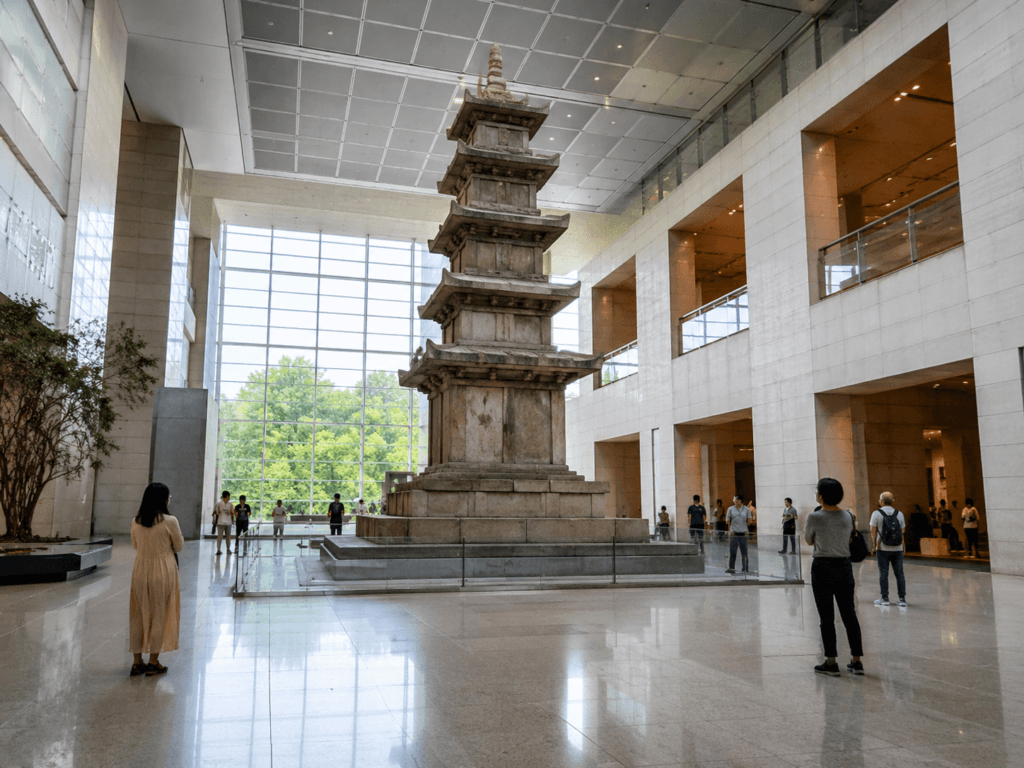
The Ten-story Stone Pagoda from Gyeongcheonsa Temple is one of the museum’s most memorable sights.
It stands inside the main hall and immediately gives the museum a sense of scale. Even if you know very little about Korean history before visiting, this is the kind of object that makes you stop for a moment.
The pagoda is also a natural photo point, but it is more than just a dramatic object in a beautiful space. It helps introduce the role of Buddhist art, stonework and religious culture in Korean history.
For first-time visitors, this is a good place to start. It gives you a strong visual anchor before moving into the galleries.
Take a few minutes here instead of rushing past it on your way to “the real museum.” This is already the real museum.
2. Room of Quiet Contemplation
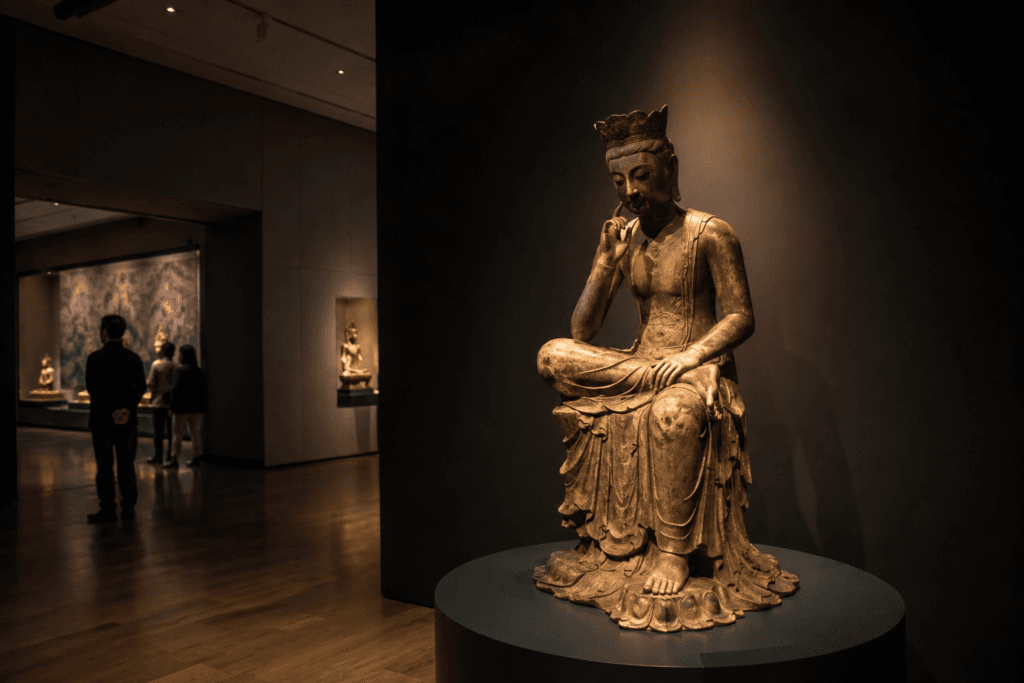
The Room of Quiet Contemplation is one of the most atmospheric spaces inside the National Museum of Korea.
It is best known for its pensive bodhisattva statues, displayed in a calm, carefully designed room that encourages visitors to slow down. This is not the kind of place that rewards a fast glance and a quick photo.
The room works best when you pause.
The lighting, spacing and quiet mood make it feel different from a typical exhibition gallery. Even travelers who are not deeply familiar with Buddhist art can appreciate the atmosphere.
This is one of the museum’s strongest examples of how presentation can change the way you experience an object. It does not shout. It waits.
If your Seoul trip has been full of crowds, subway transfers and shopping streets, this room can feel like someone turned the volume down on the city.
3. Prehistory and Ancient History Galleries
The Prehistory and Ancient History galleries are a good starting point if you want to understand Korea’s long timeline.
These galleries help visitors move from early tools and ancient societies toward Korea’s early kingdoms. For foreign travelers, this section gives helpful background before visiting places like Gyeongju, royal tombs, temples or historic sites elsewhere in the country.
You do not need to remember every dynasty or artifact. The main value is seeing how long and layered Korean history is.
This section is especially useful if you plan to visit Gyeongju later, because the tombs, temples and royal history there become easier to understand after seeing ancient Korean artifacts in context.
Give this area enough time, but do not feel guilty if you move at your own pace. Museum guilt is real, but unnecessary.
For more historic travel planning, read Gyeongju Travel Guide 2026.
4. Calligraphy, Painting and Korean Art
The museum’s Korean art galleries are ideal for travelers who enjoy slower viewing.
Calligraphy, painting and traditional art may feel less immediately dramatic than a giant stone pagoda, but they reward attention. Look at brushwork, empty space, seasonal details and the way nature appears in Korean visual culture.
Some galleries can temporarily close for exhibition changes, conservation or maintenance, so check current notices if a specific section is important to you.
For first-time visitors, it is better to choose a few works and look closely rather than trying to “complete” every room. Art is not a stamp card.
This section is also a nice contrast to Seoul’s modern shopping areas. After department stores, LED signs and beauty displays, traditional painting offers a quieter kind of beauty.
5. Ceramics, Sculpture and Crafts
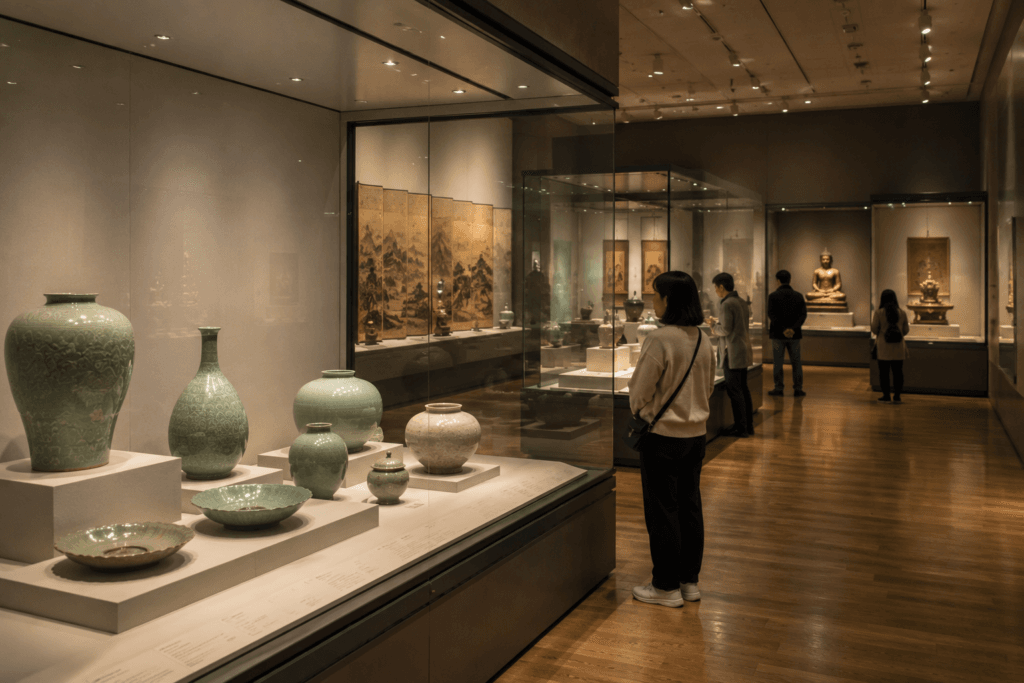
Korean ceramics are one of the museum’s major strengths.
If you have heard of celadon, white porcelain or buncheong ware but never really understood the difference, this is a good place to start. The museum helps visitors see how Korean craft traditions changed over time.
Ceramics may sound like a quiet category, but the details can be beautiful: shapes, glazes, colors, cracks, curves and subtle surfaces that do not beg for attention.
This is also a good section for travelers who enjoy design, handmade objects or cultural details. Korea’s craft history is not only about royal courts and temples. It is also about daily objects, materials and taste.
If you are visiting on a rainy day, this section is especially pleasant because it encourages slow walking. Rain outside, ceramics inside, nervous itinerary finally resting. A tiny museum miracle.
6. World Culture Galleries
The World Culture galleries add international context to the museum.
They are useful if you want to compare Korean history and art with other regions. Depending on the current layout and exhibitions, you may find objects and displays connected to different cultures across Asia and beyond.
For travelers, this section can be a good way to break up the Korean history galleries. It also helps the museum feel broader than a single national story.
If your time is limited, prioritize the Korean galleries first. But if you have 3 hours or more, the World Culture section can make your visit more rounded.
7. Current and Special Exhibitions
The National Museum of Korea regularly hosts special and thematic exhibitions.
These exhibitions change throughout the year and may have separate dates, locations, reservation rules or admission fees. Some are major paid exhibitions, while others may be smaller thematic displays inside the museum.
Because exhibition schedules change, do not build your entire visit around one show without checking the museum’s current exhibition page first.
For a general visit, the permanent exhibitions are enough. For museum lovers, special exhibitions can make the trip much more interesting.
A good approach is simple: check what is on, decide whether the special exhibition fits your interests, then plan your time. If not, the free permanent collection is still more than enough for a rewarding visit.
Children’s Museum: Important Reservation Tip
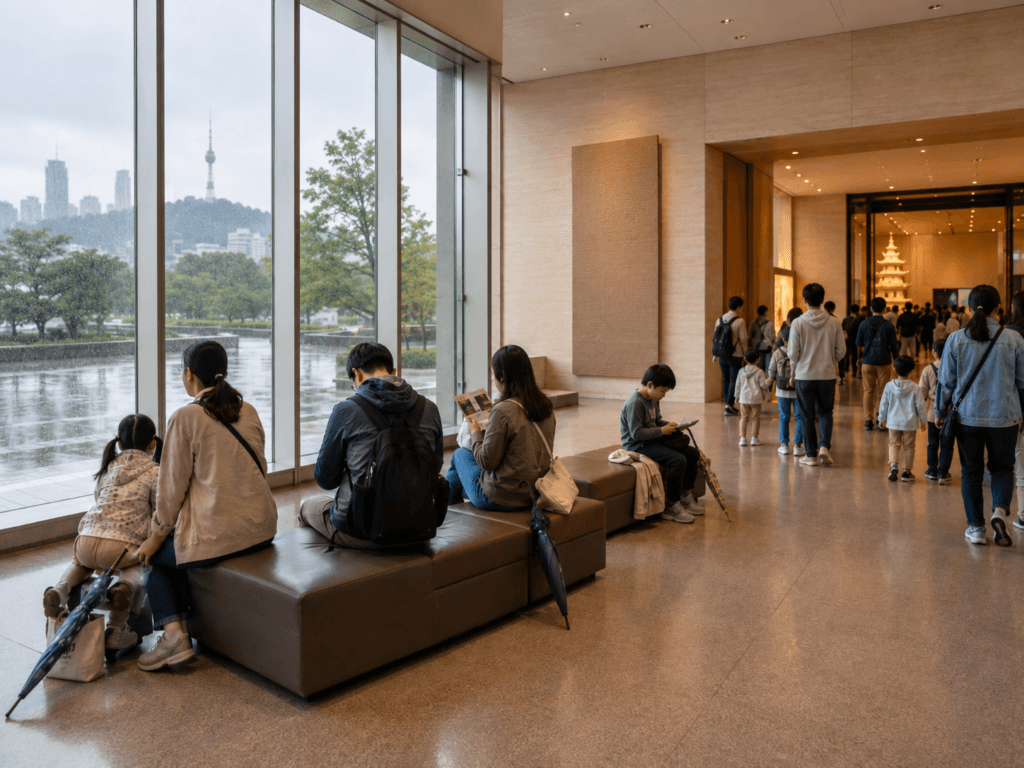
Families should pay special attention to the Children’s Museum.
The Children’s Museum is free, but it is not always a simple walk-in stop. Online reservations are required, and available slots can fill up, especially on weekends, holidays, school breaks and rainy days.
The Children’s Museum usually operates in timed sessions, so families should check the official reservation page before visiting. It may also temporarily close for maintenance, program changes or special circumstances, so always check the official notice before planning your visit.
Do not assume you can arrive anytime and enter immediately.
This is one of the most important tips for family travelers.
The main museum is easy to visit without much planning, but the Children’s Museum needs a little more preparation. If your child is excited and you discover there is no available session, the emotional weather can become more dramatic than the rain outside.
For families, the best plan is to reserve the Children’s Museum first, then build the main museum visit around that time.
Is the National Museum of Korea Good on a Rainy Day?
Yes, the National Museum of Korea is one of the best rainy-day attractions in Seoul.
It is mostly indoors, spacious, free for permanent exhibitions and easy to reach by subway. Unlike some indoor attractions that feel crowded and commercial, the museum gives you room to slow down.
This makes it especially useful during Korea’s rainy season, summer heat or winter cold. You can spend 2 to 3 hours indoors without feeling like you are only hiding from the weather.
The museum is also a good rainy-day option because it feels meaningful. A mall can save your afternoon, but a museum can make the day feel intentional.
If heavy rain changes your outdoor plans, this is a strong replacement for palace walks, Han River picnics or long neighborhood routes.
For more indoor ideas, read Best Indoor Things to Do in Seoul on a Rainy Day and Rainy Season Korea Guide.
How Long Should You Spend?
Most travelers should plan around 2 to 3 hours at the National Museum of Korea.
A quick visit can take 1.5 to 2 hours if you focus only on the main highlights, such as the main hall, Ten-story Stone Pagoda, Room of Quiet Contemplation and a few key galleries.
A normal visit takes 2 to 3 hours and gives you enough time to see the major areas without rushing.
Museum lovers can easily spend 4 hours or more, especially if there is a special exhibition they want to see.
Families visiting the Children’s Museum should consider planning a half-day, because timed sessions, breaks, snacks and children’s energy levels all need space in the schedule.
Do not plan this museum between two tight appointments unless you only want a short visit. The building is large, and it deserves more than a “we have 42 minutes before dinner” sprint.
Best Time to Visit
The best time to visit the National Museum of Korea is usually a weekday morning.
Weekday mornings tend to be calmer, especially outside school holidays and major exhibition periods. If you want a quieter experience, arrive near opening time and start with the main highlights.
Wednesday and Saturday evenings can also be useful because the museum usually has longer hours on those days. This is helpful if your daytime itinerary runs late or if you want an indoor evening plan.
Weekends can be busier, especially with families, groups and visitors attending special exhibitions. Rainy weekends may also bring more people indoors.
If you are visiting a special exhibition, check whether advance booking or ticketing is needed. Popular exhibitions can be much busier than the permanent galleries.
For seasonal planning, read Korea Weather by Month.
What to Combine Nearby
The National Museum of Korea works best as a half-day plan.
After the museum, you can continue to nearby Yongsan, Ichon, Itaewon or the Han River area depending on the weather and your energy.
On a rainy day, keep it simple. Choose the museum, then add a nearby meal or cafe rather than trying to cross Seoul again. Your umbrella has already worked enough.
If the weather improves, you can walk around the outdoor museum grounds or consider nearby riverside areas. If the rain continues, move to a cafe, restaurant or indoor shopping area.
Food after the museum is a good idea because museum visits can be quietly tiring. You may not notice it at first, but after two hours of ancient history and ceramics, your stomach may begin presenting its own exhibition.
For food planning, read What to Eat in Korea.
Common Mistakes to Avoid
Trying to See Everything
The museum is large. Trying to see every gallery in one visit can turn a good museum day into a slow intellectual fog.
Pick your priorities: main hall, Room of Quiet Contemplation, ancient history, Korean art, ceramics or special exhibitions.
You can enjoy the museum without completing it.
Forgetting That Special Exhibitions May Cost Extra
The permanent exhibitions are free, but special exhibitions may require paid tickets.
Check the current exhibition page before visiting if a special show is important to your plan.
Not Checking Children’s Museum Reservations
Families should not assume the Children’s Museum is walk-in friendly.
Online reservations are required, and timed sessions can fill. Temporary closures can also happen. Check availability and official notices before promising it to children. Tiny humans remember promises with terrifying precision.
Visiting Too Late Without Checking Entry Time
Entry usually closes 30 minutes before closing.
If you arrive near the end of the day, you may not have enough time to enjoy the museum properly. This matters especially if you want to see a special exhibition or visit on a busy day.
Treating It Only as a Rainy-Day Backup
The museum is excellent on rainy days, but it is not just a backup plan.
It is one of Seoul’s best cultural attractions and deserves a place in your itinerary even when the weather is clear.
Skipping the Room of Quiet Contemplation
Many visitors focus only on the big hall or main galleries and miss the quieter spaces.
Do not skip the Room of Quiet Contemplation if it is open during your visit. It is one of the museum’s most memorable experiences.
FAQ: National Museum of Korea Guide 2026
Is the National Museum of Korea free?
Yes, the permanent exhibitions are free. Special exhibitions may require a separate paid ticket.
Where is the National Museum of Korea located?
The museum is located at 137 Seobinggo-ro, Yongsan-gu, Seoul.
What is the closest subway station?
Ichon Station is the closest subway station. You can use Line 4 or the Gyeongui-Jungang Line.
What are the opening hours?
The museum usually opens from 9:30 to 17:30 on Monday, Tuesday, Thursday, Friday and Sunday, and until 21:00 on Wednesday and Saturday. Entry usually closes 30 minutes before closing.
Is the museum good on a rainy day?
Yes. It is one of Seoul’s best rainy-day attractions because it is spacious, mostly indoors, free for permanent exhibitions and easy to reach by subway.
How long do you need at the National Museum of Korea?
Most travelers should plan 2 to 3 hours. A quick visit can take 1.5 to 2 hours, while museum lovers can spend half a day.
Is the Children’s Museum free?
Yes, the Children’s Museum is free, but online reservations are required and visits usually operate by timed sessions.
Do I need to book tickets in advance?
You do not usually need tickets for the free permanent exhibitions. Special exhibitions and the Children’s Museum may require separate tickets or reservations.
Is the National Museum of Korea good for families?
Yes. The main museum is spacious and family-friendly, and the Children’s Museum can be great for kids if you reserve in advance.
Can I take photos inside?
Photography rules can vary by gallery and exhibition. In general, avoid flash, tripods and restricted areas, and follow signs inside the museum.
Is it worth visiting if I do not know much about Korean history?
Yes. The museum is one of the best places to start because it gives useful context for palaces, temples, Gyeongju, Korean art and traditional culture.
Final Thoughts
The National Museum of Korea is one of Seoul’s most reliable indoor attractions.
It is free for permanent exhibitions, easy to reach by subway, large enough for a proper half-day visit and meaningful enough to improve the rest of your Korea trip.
Come for the famous highlights like the Ten-story Stone Pagoda and Room of Quiet Contemplation, but do not rush through the galleries as if the museum is a checklist with floors.
Slow down.
This museum works best when you let it give shape to Korean history, art and culture piece by piece.
On a rainy day, it can rescue your itinerary. On a clear day, it is still worth visiting.
Either way, the National Museum of Korea is not just a place to stay dry.
It is one of the best places in Seoul to understand where you are.