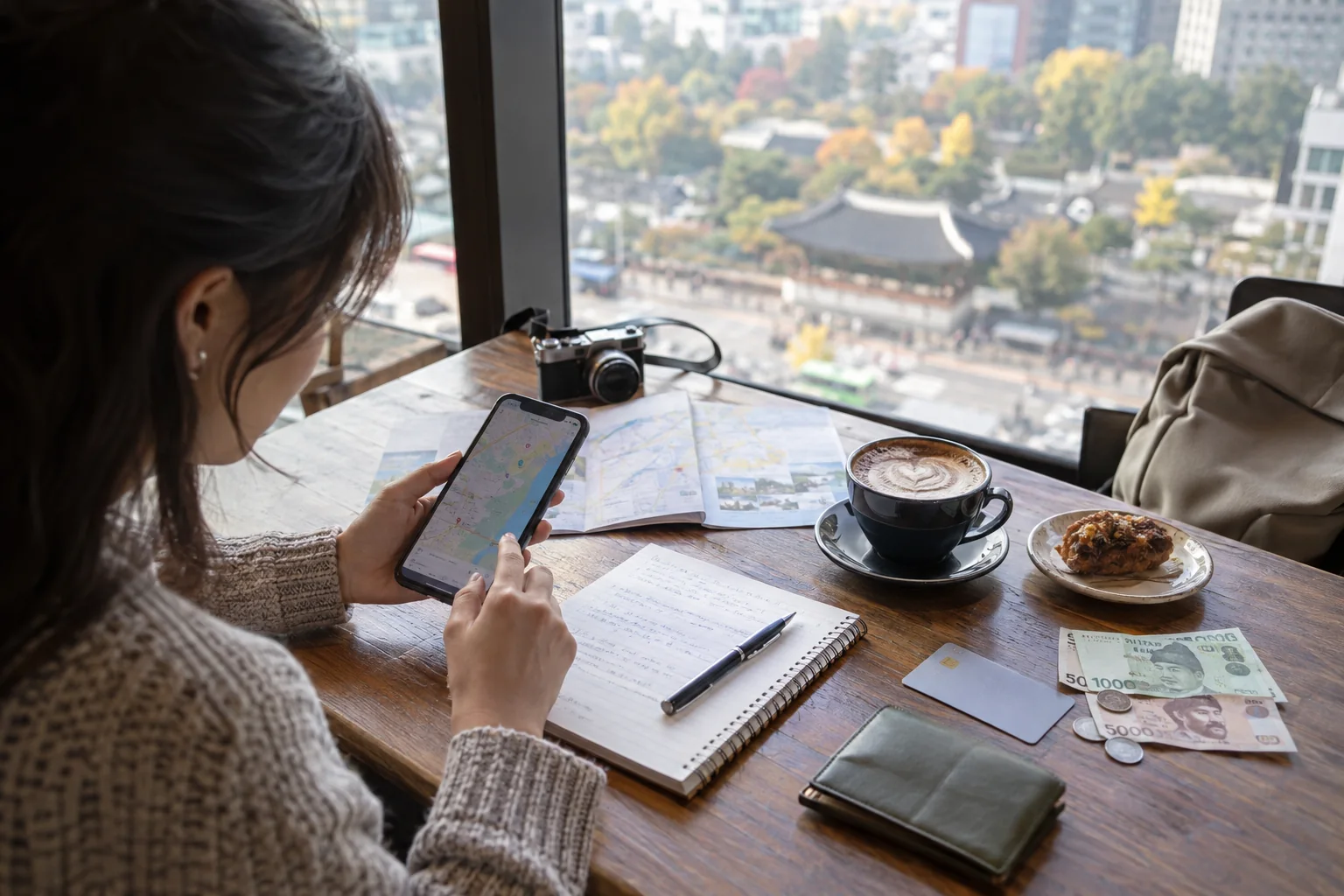
One of the most common questions travelers ask before visiting Korea is surprisingly simple:
How much money will I actually need?
Some visitors expect South Korea to be extremely expensive. Others assume it will be much cheaper than Japan. The reality usually sits somewhere in the middle, wearing comfortable shoes and carrying a cafe receipt.
Korea can be affordable if you travel carefully. Public transportation is reasonably priced, casual meals are easy to find, and many attractions are free or low-cost.
But Korea can also become expensive quickly if you stay in premium hotels, visit trendy cafes every day, shop for skincare like your suitcase has no weight limit, and rely on taxis instead of public transportation.
This Korea travel costs guide breaks down typical expenses for visitors in 2026, including accommodation, food, transportation, cafes, shopping, attractions, internet, cash, and sample budgets for 3-day, 5-day, 7-day, and 10-day trips.
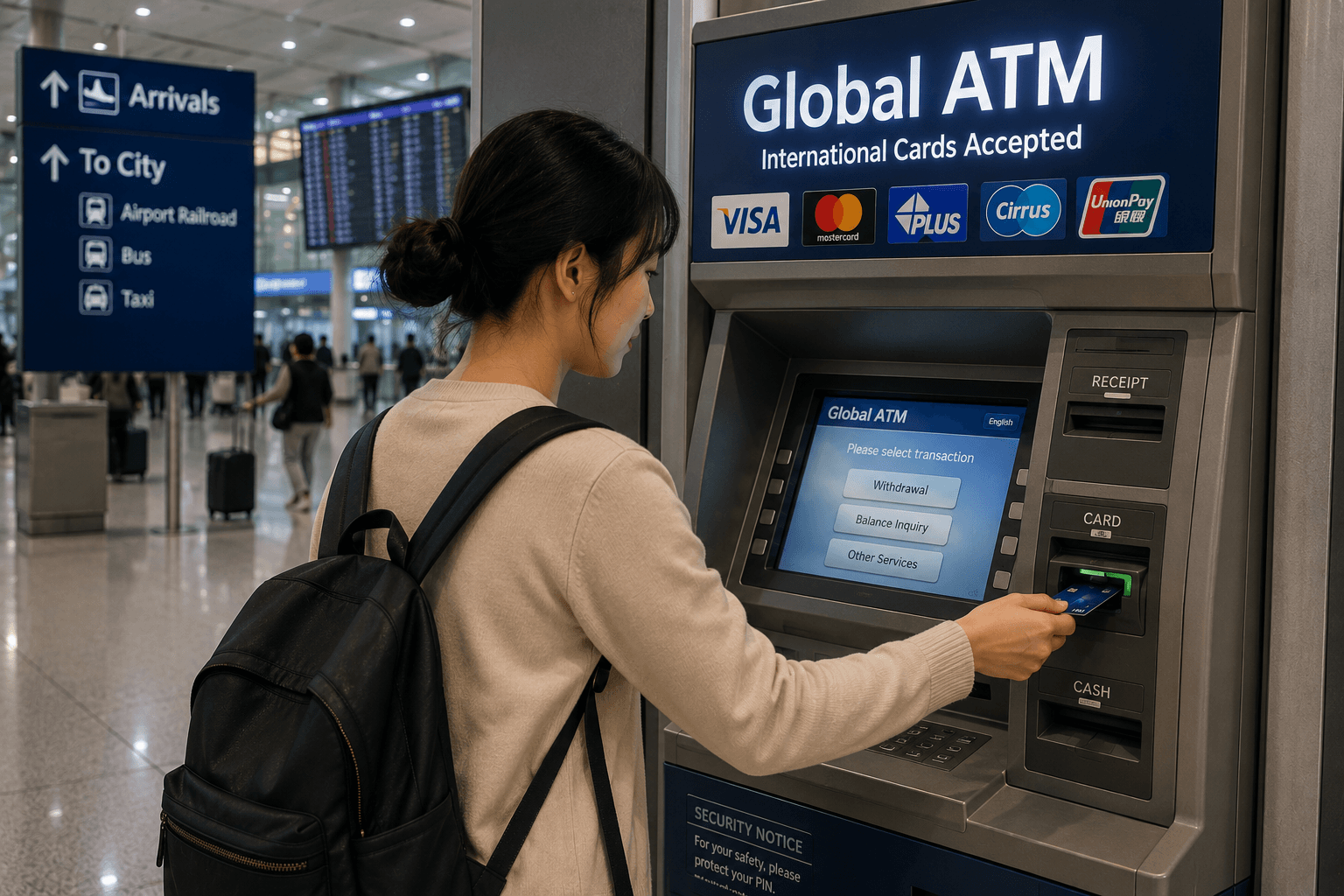
If you are planning your money setup, read Cash vs Card in Korea 2026, Korean Currency Guide 2026, and Korea ATM Guide 2026 before departure.
This article may contain affiliate links, which means we may earn a small commission if you book through them, at no extra cost to you.
Table of contents
Is Korea Expensive for Tourists?
Korea is not the cheapest destination in Asia, but it is not always as expensive as many first-time visitors expect.
Your total cost depends heavily on your travel style.
Korea feels affordable when you use public transportation, eat at local restaurants, stay in practical hotels, visit free attractions, and limit taxis.
Korea feels expensive when you stay in luxury hotels, eat at premium restaurants, book many paid experiences, take frequent taxis, and shop heavily.
The good news is that Korea gives travelers many options.
You can spend 8,000 to 12,000 KRW on a simple local meal. You can also spend 80,000 KRW or more on a premium dinner.
You can drink convenience store coffee for a few thousand won, or you can visit a famous design cafe where one drink and dessert quietly become a small financial event.
Both versions of Korea exist.
The best budget is not the lowest one. It is the one that matches the trip you actually want.
Quick Answer: Daily Korea Travel Budget
For most travelers, a realistic daily budget in Korea looks like this, excluding international flights.
| Travel Style | Daily Budget Per Person | Best For |
|---|---|---|
| Budget Traveler | 60,000 to 120,000 KRW | Hostels, cheap meals, public transport |
| Mid-Range Traveler | 150,000 to 300,000 KRW | Hotels, restaurants, cafes, attractions |
| Comfort Traveler | 300,000 to 500,000 KRW | Better hotels, taxis, shopping, tours |
| Luxury Traveler | 500,000 KRW and up | Premium hotels, fine dining, private transfers |
Most international visitors fall into the mid-range category.
If you already paid for hotels before arrival, your daily spending can feel much lower. But if your budget includes accommodation, Korea costs add up faster.
A useful planning rule:
- Budget trip: save on hotels and food
- Mid-range trip: spend on location and convenience
- Comfort trip: add taxis, nicer meals, and shopping
- Luxury trip: Korea is very willing to help you spend money elegantly
Accommodation Costs in Korea
Accommodation is usually the largest travel expense.
Hotel prices vary by city, season, location, room size, and how early you book.
Seoul is usually the most expensive city for accommodation, especially in popular areas such as Myeongdong, Hongdae, Gangnam, Jamsil, and near major stations.
Budget Accommodation
Typical range:
20,000 to 60,000 KRW per night
Budget accommodation may include:
- Hostels
- Guesthouses
- Dorm beds
- Simple private rooms
- Budget motels
- Small local stays
This is best for travelers who care more about location and price than room size.
Budget travelers can save a lot by staying slightly outside the most famous areas, but be careful. A cheaper hotel far from the subway can cost you time every day.
Mid-Range Hotels
Typical range:
80,000 to 180,000 KRW per night
Mid-range hotels are where many first-time visitors feel most comfortable.
They usually offer:
- Private rooms
- Good locations
- Basic amenities
- Easy subway access
- Comfortable beds
- Better luggage storage
- More predictable quality
This is the best category for most travelers staying in Seoul, Busan, or Jeju.
If this is your first trip, location matters more than a fancy lobby. A well-located hotel can save transportation time, taxi fares, and your feet’s daily complaint letters.
Read Best Areas to Stay in Seoul and Best Areas to Stay in Busan 2026 before booking.
Luxury Hotels
Typical range:
250,000 KRW and up per night
Luxury hotels in Korea can be expensive, especially in Seoul, Busan beach areas, Jeju resorts, and around major shopping or business districts.
Luxury stays are best for:
- Honeymoon trips
- Special occasions
- Premium city views
- Resort-style travel
- Families wanting more comfort
- Travelers who want convenience over budget
Luxury hotels can make a Korea trip feel very smooth, but they can also become the biggest part of your budget very quickly.
Food Costs in Korea
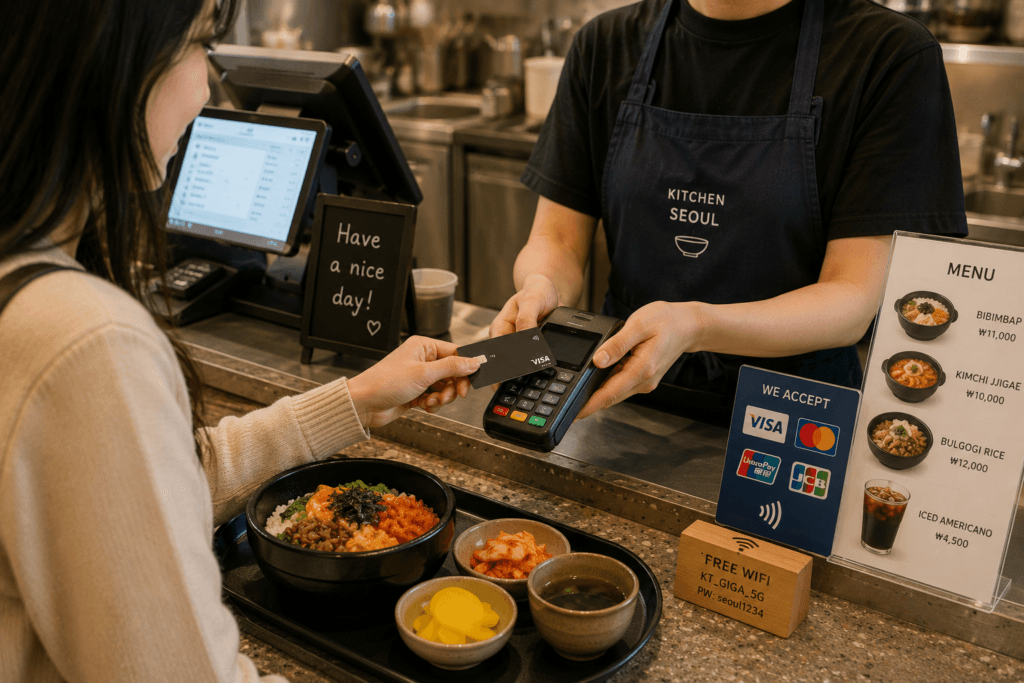
Food in Korea can be very affordable or surprisingly expensive depending on where and how you eat.
One of the best things about traveling in Korea is that good food does not always require a high budget.
Convenience Store Meals
Typical range:
4,000 to 10,000 KRW
Convenience stores are useful for:
- Breakfast
- Late-night snacks
- Quick meals
- Drinks
- Instant noodles
- Triangle kimbap
- Simple lunch boxes
They are not a replacement for every meal, but they are excellent budget helpers.
Read Korean Convenience Store Food Guide 2026 if you want to use convenience stores wisely instead of randomly choosing something that looks friendly.
Local Restaurants
Typical range:
8,000 to 18,000 KRW per meal
Casual Korean restaurants often offer good value.
You can find meals such as:
- Gimbap
- Bibimbap
- Stews
- Noodles
- Rice bowls
- Pork cutlet
- Soup dishes
- Simple Korean set meals
For budget and mid-range travelers, local restaurants are the sweet spot.
Korean BBQ
Typical range:
20,000 to 50,000 KRW or more per person
Korean BBQ costs vary widely depending on the meat, neighborhood, restaurant style, and how much you order.
Pork BBQ is usually cheaper than premium beef.
If you eat Korean BBQ every night, your food budget will become more muscular than expected.
Read Korean BBQ Guide 2026 before planning your meat-centered calendar.
Street Food and Markets
Typical range:
3,000 to 10,000 KRW per item or small meal
Street food and markets are budget-friendly and fun, especially in places like Gwangjang Market, Namdaemun Market, Myeongdong, and local food streets.
Cash can still be useful here.
Read Best Korean Street Food Guide 2026, Gwangjang Market Travel Guide 2026, and Namdaemun Market Travel Guide 2026.
Cafe and Dessert Costs
Cafe costs are one of the easiest expenses to underestimate in Korea.
Korea has a very active cafe culture. Many cafes are not just places to drink coffee. They are design spaces, dessert stops, photo spots, rest breaks, and sometimes tiny museums of chairs that look expensive.
Typical cafe prices:
- Americano: 4,000 to 6,000 KRW
- Latte or specialty drink: 5,000 to 8,000 KRW
- Dessert: 5,000 to 12,000 KRW
- Trendy cafe visit with drink and dessert: 10,000 to 20,000 KRW per person
Travelers visiting Hongdae, Seongsu-dong, Ikseon-dong, Gangnam, Aewol, or Jeju cafes may spend more than planned.
If you visit one stylish cafe every day, add a cafe budget. Do not pretend this expense will not happen. Korea’s cafe scene is persuasive.
Read Seongsu-dong Travel Guide 2026, Hongdae Travel Guide 2026, and Best Cafes in Jeju 2026 if cafes are part of your trip.
Transportation Costs in Korea
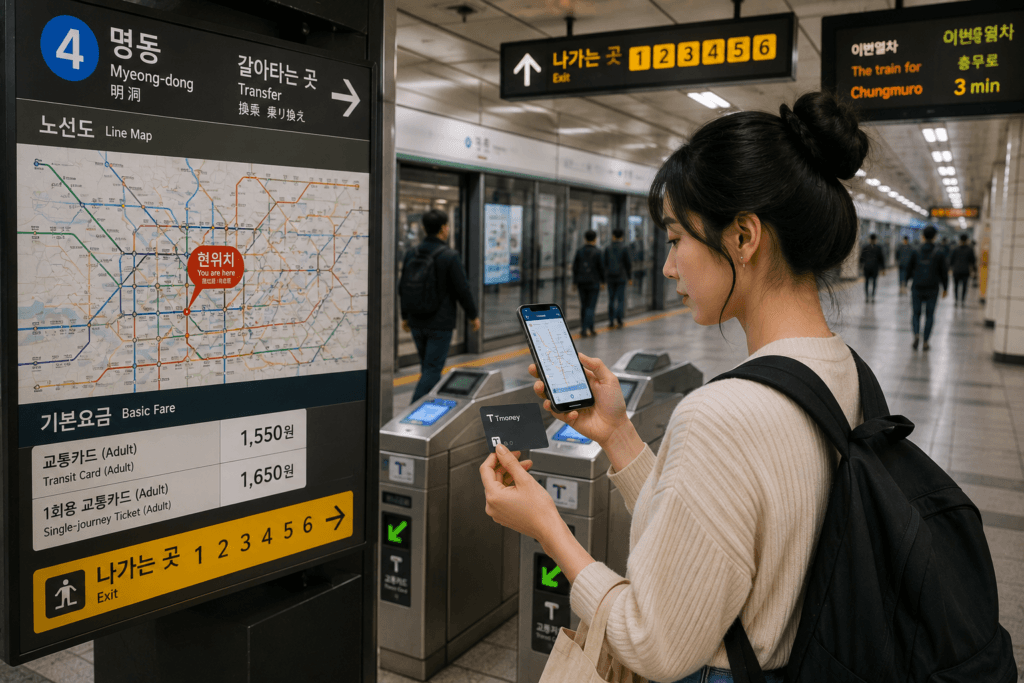
Transportation is one of Korea’s best-value categories.
Public transportation is efficient, affordable, and easy to use once you understand the basics.
Subway and Bus
Typical local trip:
Around 1,550 KRW and up with a transportation card in Seoul
Subway and bus travel is usually much cheaper than taxis.
Most visitors use T-money or another transportation card for daily travel.
Read Seoul Subway Guide 2026 and T-money Card Guide for Tourists in Korea before your first ride.
Airport Transportation
Airport transportation depends on comfort and route.
Common options include:
- AREX airport railroad
- Airport limousine bus
- Taxi
- Private transfer
Airport limousine buses often cost around 17,000 to 18,000 KRW for many Seoul routes, depending on route and operator.
AREX or all-stop airport rail can be cheaper, especially if you are going to Seoul Station or Hongdae. Airport buses are often easier with luggage if they stop near your hotel.
Read How to Get from Incheon Airport to Seoul and Korea Airport Bus Guide 2026.
Taxis
Taxis are convenient but can raise your budget quickly if used often.
Use taxis when:
- Arriving late at night
- Traveling with luggage
- Going somewhere far from subway access
- Traveling with family
- Weather is bad
- You are exhausted
Do not use taxis for every short trip unless your budget is ready for it.
KTX and Intercity Travel
KTX is one of the best ways to travel between cities such as Seoul, Busan, Gyeongju, Daegu, Daejeon, and Gangneung.
It is more expensive than local transit, but it saves time.
For multi-city trips, include intercity transportation in your budget. A Seoul and Busan itinerary costs more than a Seoul-only itinerary because of train tickets, local transfers, and possibly higher accommodation costs in multiple cities.
Read Korea KTX Guide 2026, Busan Travel Guide 2026, and Gyeongju Travel Guide 2026 before booking.
Internet and SIM Costs
Mobile data is a small expense that can make a big difference.
Typical options include:
- eSIM
- Physical SIM card
- Pocket WiFi
- Free Wi-Fi backup
Your cost depends on data amount, trip length, provider, and whether you choose unlimited data.
For many travelers, mobile data is worth budgeting before arrival because it helps with maps, translation, taxi apps, subway routes, restaurant searches, and booking confirmations.
Read Best eSIM for Korea 2026, Korea SIM Card Guide 2026, and Korea Internet Guide 2026.
You can compare Korea eSIM plans for travelers or Korea SIM card options before departure.
Attraction and Activity Costs
Many attractions in Korea are free or low-cost.
Budget-friendly or free options include:
- Han River parks
- Seoul Forest
- Bukchon Hanok Village
- Insadong
- Hongdae street areas
- Traditional markets
- Some cultural neighborhoods
- Scenic city walks
Paid attractions and tours can include:
- Palaces
- Observation decks
- Theme parks
- Aquariums
- DMZ tours
- Day trips
- K-beauty experiences
- Personal color analysis
- Head spa treatments
- K-pop experiences
Typical costs vary widely.
A palace visit may be low-cost, while theme parks, observation decks, private tours, beauty treatments, or day trips can be much more expensive.
If you plan several paid attractions, add a separate activity budget.
Useful guides include Gyeongbokgung Palace Guide 2026, N Seoul Tower Travel Guide 2026, Lotte World Guide 2026, Seoul Sky Guide 2026, DMZ Tour Guide 2026, and K-Beauty Treatments in Seoul.
You can compare Korea travel activities and tickets before your trip.
Shopping Costs in Korea
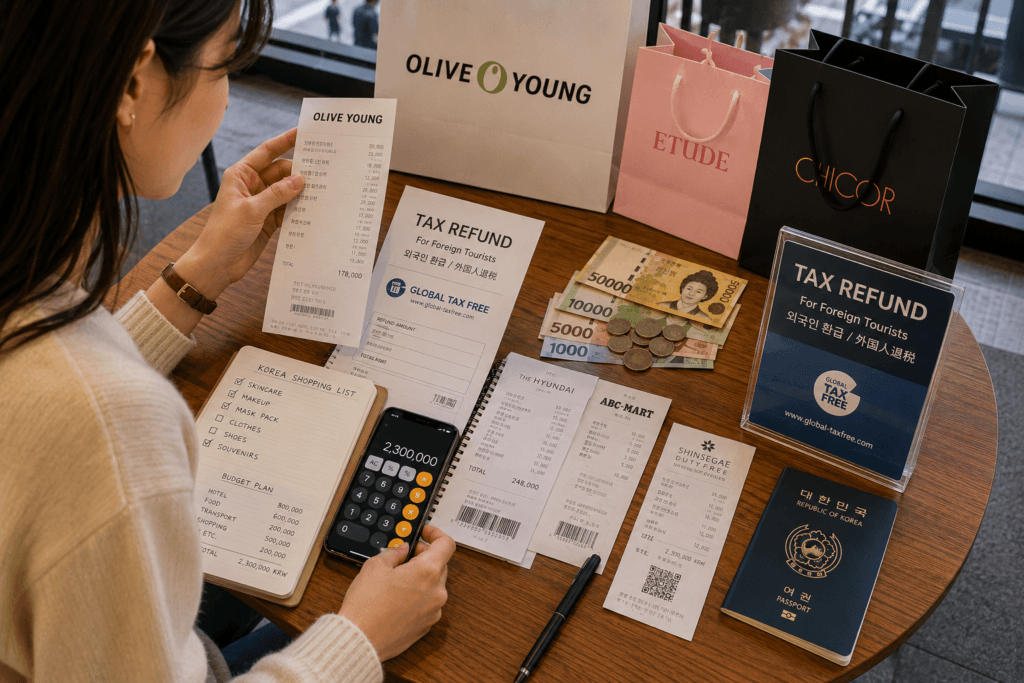
Shopping can be one of the biggest optional expenses.
Many travelers come to Korea for cosmetics, skincare, fashion, snacks, K-pop goods, souvenirs, and lifestyle items.
Popular shopping categories include:
- K-beauty products
- Olive Young items
- Fashion
- Accessories
- Stationery
- K-pop goods
- Convenience store snacks
- Souvenirs
- Department store goods
You can spend very little, or you can accidentally build a skincare museum in your suitcase.
Popular shopping areas include Myeongdong, Hongdae, Gangnam, The Hyundai Seoul, Dongdaemun, COEX, Seongsu-dong, and Olive Young stores across the country.
Read Olive Young Guide 2026, Best K-Beauty Shopping in Seoul, Seoul Shopping Guide 2026, Myeongdong Travel Guide 2026, and The Hyundai Seoul Guide 2026.
Tax Refund Savings
Foreign tourists may be eligible for tax refunds when shopping at participating tax-free stores.
Tax refund rules depend on purchase amount, store participation, item type, and departure timing.
This can be especially useful for travelers buying cosmetics, fashion, electronics, or higher-value goods.
Do not count tax refunds as guaranteed savings for every purchase. Think of them as a helpful bonus when eligible.
Read Korea Tax Refund Guide 2026 before shopping heavily.
How Much Cash Do You Need?
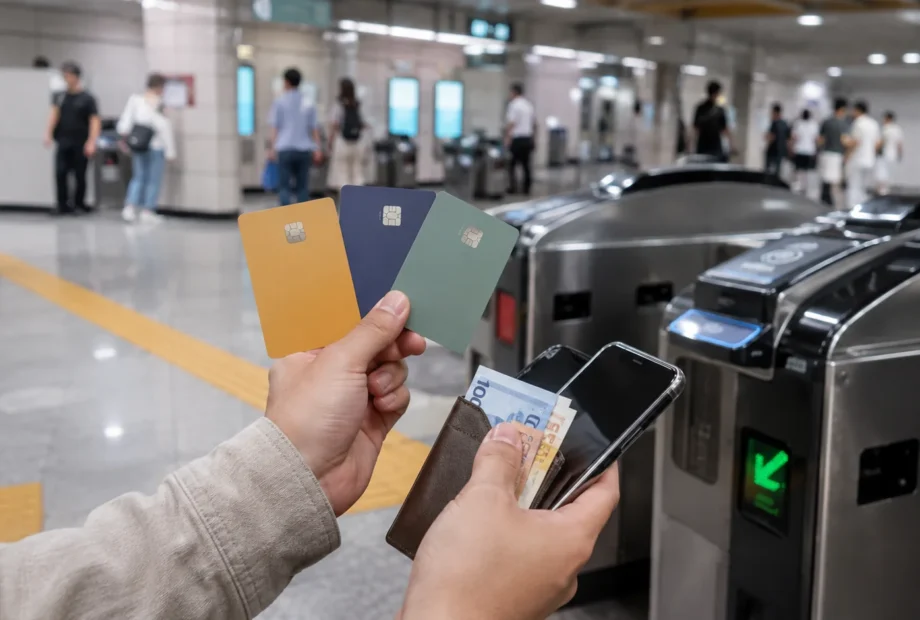
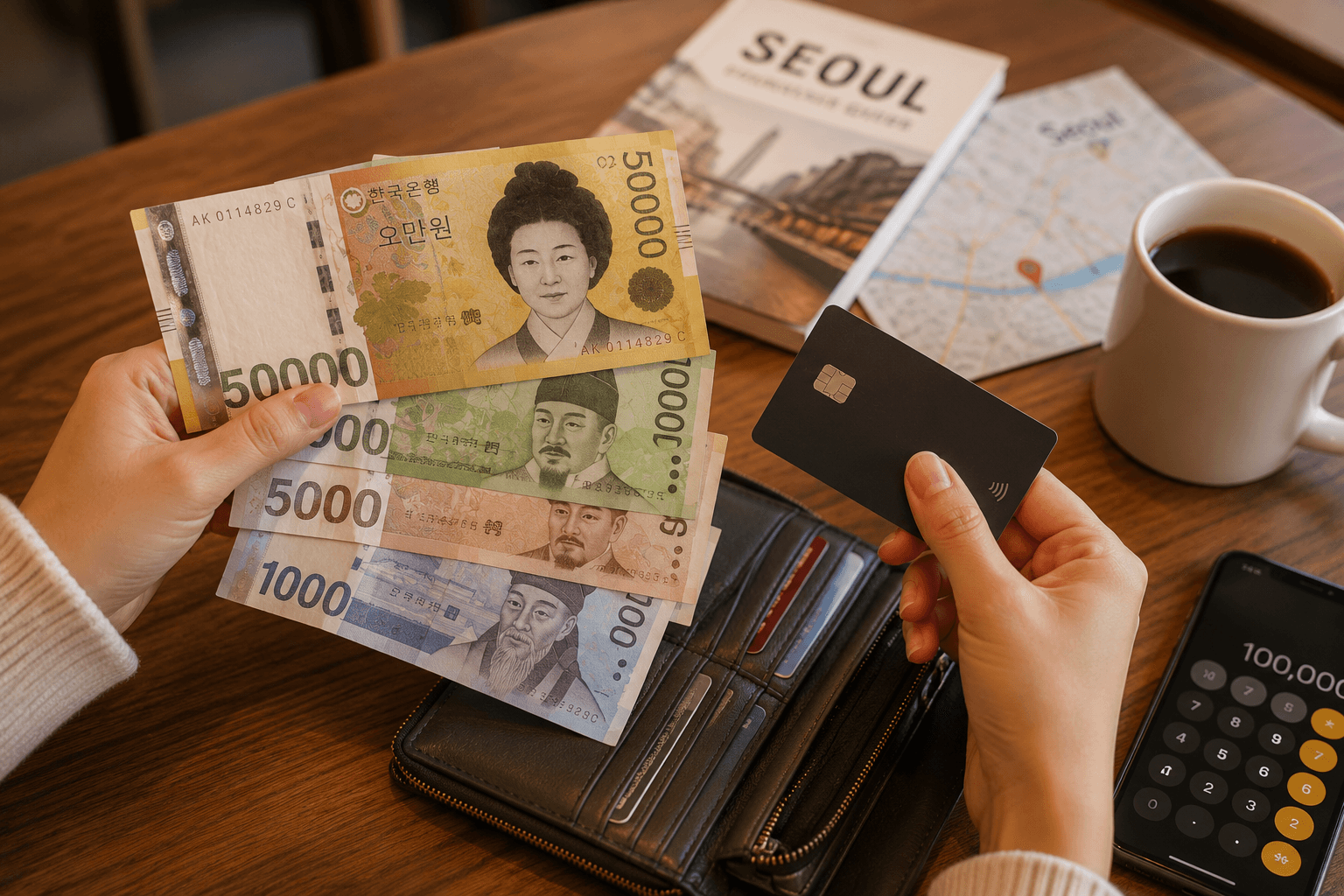
Korea is very card-friendly, so most travelers do not need much cash.
A good starting amount is:
50,000 to 100,000 KRW
This can cover:
- Street food
- Traditional markets
- Small local vendors
- T-money recharge
- Emergency taxi backup
- Cash-only moments
Use cards for most spending, and keep cash as backup.
Read Cash vs Card in Korea 2026, Korean Currency Guide 2026, and Korea ATM Guide 2026.
Sample Budget: 3 Days in Seoul
A short Seoul trip can be affordable if you already have your hotel booked.
3-Day Budget Traveler
Approximate total excluding international flights:
250,000 to 450,000 KRW
This may include:
- Hostel or budget guesthouse
- Public transportation
- Convenience store meals
- Local restaurants
- Free attractions
- Limited shopping
3-Day Mid-Range Traveler
Approximate total excluding international flights:
500,000 to 900,000 KRW
This may include:
- Mid-range hotel
- Restaurants and cafes
- Some paid attractions
- Airport transportation
- Small shopping budget
- Occasional taxi
3-Day Comfort Traveler
Approximate total excluding international flights:
1,000,000 KRW and up
This may include:
- Better hotel location
- More cafes and restaurants
- Taxis or transfers
- Shopping
- Paid attractions
- More flexible daily spending
A 3-day Seoul trip can be budget-friendly, but cafe stops, shopping, and taxis can quickly change the final number.
Sample Budget: 5 Days in Korea
A 5-day trip is common for first-time visitors.
Many travelers spend all 5 days in Seoul, while others add a short trip to Busan, Gyeongju, or Gangneung.
Seoul-Only 5-Day Trip
Budget traveler:
400,000 to 750,000 KRW
Mid-range traveler:
800,000 to 1,500,000 KRW
Comfort traveler:
1,700,000 KRW and up
Seoul + Busan 5-Day Trip
Budget traveler:
600,000 to 1,000,000 KRW
Mid-range traveler:
1,100,000 to 2,000,000 KRW
Comfort traveler:
2,200,000 KRW and up
Adding another city usually increases costs because of KTX tickets, extra local transportation, and hotel changes.
Read Seoul 5-Day Itinerary 2026 and Busan 3-Day Itinerary 2026.
Sample Budget: 7 Days in Korea
A 7-day trip gives you more room to explore.
A popular route is:
Seoul → Busan → Gyeongju → Seoul
Another option is:
Seoul → Jeju → Seoul
7-Day Budget Traveler
Approximate total excluding international flights:
800,000 to 1,300,000 KRW
Best for travelers who use budget stays, local restaurants, public transportation, and limited paid attractions.
7-Day Mid-Range Traveler
Approximate total excluding international flights:
1,500,000 to 2,700,000 KRW
This is realistic for many international travelers using mid-range hotels, restaurants, cafes, KTX or domestic flights, and some paid activities.
7-Day Comfort Traveler
Approximate total excluding international flights:
3,000,000 KRW and up
This may include better hotels, more taxis, shopping, premium meals, private transfers, and tours.
For multi-city planning, read Top 10 Places to Visit in South Korea, Korea KTX Guide 2026, Jeju Travel Guide 2026, and Gyeongju Travel Guide 2026.
Sample Budget: 10 Days in Korea
A 10-day trip can cover Seoul, Busan, Gyeongju, Jeju, or Gangneung depending on your route.
10-Day Budget Traveler
Approximate total excluding international flights:
1,200,000 to 1,900,000 KRW
10-Day Mid-Range Traveler
Approximate total excluding international flights:
2,200,000 to 4,000,000 KRW
10-Day Comfort Traveler
Approximate total excluding international flights:
4,500,000 KRW and up
For 10 days, the biggest budget drivers are accommodation, city-to-city travel, food habits, shopping, and whether Jeju is included.
Jeju can increase costs if you rent a car, stay in ocean-view hotels, or move around the island frequently.
Read Jeju Travel Guide 2026, Jeju 5-Day Itinerary 2026, and Best Areas to Stay in Jeju 2026.
Seoul vs Busan vs Jeju: Which Is More Expensive?
Costs vary, but here is a practical traveler view.
Seoul
Seoul can be expensive for hotels, cafes, shopping, and premium experiences.
But it is also easy to travel affordably because public transportation is excellent and there are many casual restaurants.
Seoul is flexible.
It can be budget-friendly or expensive depending on your choices.
Busan
Busan can feel slightly more relaxed than Seoul in some categories, especially if you avoid peak beach season and luxury ocean-view hotels.
Food and local transport can be reasonable, but popular beach areas such as Haeundae and Gwangalli may cost more.
Read Busan Travel Guide 2026 and Best Areas to Stay in Busan 2026.
Jeju
Jeju can become more expensive than expected.
Transportation is the biggest reason.
If you rent a car, take many taxis, or stay in scenic hotels, costs can rise quickly. Food, cafes, and attractions may also add up depending on your route.
Read Jeju Travel Guide 2026 and Best Areas to Stay in Jeju 2026.
How to Save Money in Korea
Korea is easier to budget when you make a few smart choices.
Stay Near a Subway Station
A slightly more expensive hotel near a good subway station can save time and taxi costs.
Use Public Transportation
Subways and buses are usually much cheaper than taxis.
Mix Local Meals with Cafe Treats
Do not try to save money by skipping every cafe if cafes are part of your Korea dream. Instead, balance them with affordable local meals.
Plan Shopping Before Arrival
Make a rough shopping list for Olive Young, skincare, souvenirs, and fashion.
Without a list, Korea’s shopping districts may begin whispering to your wallet.
Use Tax Refunds
If you shop at participating stores, ask about tax refunds and keep receipts.
Avoid Too Many Hotel Moves
Changing hotels too often can add transport costs and eat into your travel time.
Book Popular Transport Early
KTX, airport transfers, and major activities can be easier to manage when booked early.
Common Budget Mistakes Travelers Make
The first mistake is forgetting daily spending.
Flights and hotels are obvious, but cafes, snacks, subway rides, taxis, lockers, souvenirs, and small purchases quietly add up.
The second mistake is underestimating cafe costs.
One cafe visit is harmless. One cafe visit every day plus dessert is a budget category wearing whipped cream.
The third mistake is relying too much on taxis.
Taxis are useful, but public transportation is usually much cheaper.
The fourth mistake is not budgeting for intercity travel.
Seoul-only trips and Seoul-Busan-Gyeongju trips have very different costs.
The fifth mistake is bringing too much cash.
Korea is card-friendly, so carrying large amounts of cash is usually unnecessary.
The sixth mistake is ignoring tax refunds.
Shopping-heavy travelers may save money if they understand the process before departure.
Finally, do not make a budget so tight that the trip becomes stressful. A small buffer can save you when weather, cravings, or transportation plans change.
Frequently Asked Questions
How much money do I need for a week in Korea?
A budget traveler may spend around 800,000 to 1,300,000 KRW excluding international flights. A mid-range traveler may spend around 1,500,000 to 2,700,000 KRW. Comfort travelers may spend 3,000,000 KRW or more.
Is Korea expensive for tourists?
Korea can be affordable or expensive depending on your travel style. Public transportation and local food can be budget-friendly, while hotels, cafes, shopping, taxis, and premium experiences can raise costs.
How much should I budget per day in Korea?
Budget travelers may spend 60,000 to 120,000 KRW per day. Mid-range travelers may spend 150,000 to 300,000 KRW per day. Comfort travelers may spend 300,000 KRW or more per day.
How much does food cost in Korea?
Convenience store meals may cost around 4,000 to 10,000 KRW, casual meals often cost around 8,000 to 18,000 KRW, and Korean BBQ may cost 20,000 to 50,000 KRW or more per person.
Is public transportation expensive in Korea?
No. Public transportation in Korea is generally affordable and efficient. Subway and bus rides are much cheaper than frequent taxis.
How much cash should I carry in Korea?
Most travelers can start with 50,000 to 100,000 KRW in cash while using cards for most purchases.
Is Seoul more expensive than Busan?
Seoul is often more expensive for hotels, shopping, cafes, and premium experiences. Busan can be more affordable, but beach areas and peak seasons can raise prices.
Is Jeju expensive?
Jeju can be more expensive than expected because transportation, rental cars, taxis, scenic hotels, and cafes can add up.
Should I use cash or card in Korea?
Use cards for most purchases and keep a small amount of cash for markets, street food, T-money recharge, and emergencies.
Can I travel Korea on a budget?
Yes. Use public transportation, stay in budget accommodation, eat at local restaurants, enjoy free attractions, and limit shopping and taxis.
Recommended Travel Services
These can help you plan your Korea budget more smoothly:
- Korea eSIM plans for travelers
- Korea SIM card options
- KTX train ticket options
- Korea travel activities and tickets
- Private Incheon Airport transfer to Seoul
- Seoul hotel deals for first-time visitors
Related Guides
Continue planning your Korea travel budget with these guides:
- Cash vs Card in Korea 2026
- Korean Currency Guide 2026
- Korea ATM Guide 2026
- Korea Tax Refund Guide 2026
- Seoul Budget Travel Guide 2026
- Seoul on $50 a Day
- Best Areas to Stay in Seoul
- Best Areas to Stay in Busan 2026
- Best Areas to Stay in Jeju 2026
- How to Get from Incheon Airport to Seoul
- Korea Airport Bus Guide 2026
- Korea KTX Guide 2026
- Best eSIM for Korea 2026
- Korea SIM Card Guide 2026
Official Sources and Last Check
The figures in this guide are planning ranges, not promises from the universe or your favorite cafe. Recheck fixed transport fares and live rail prices before finalizing a budget, then leave room for exchange-rate movement and seasonal hotel pricing.
- Seoul Metropolitan Government subway fares — current base fares, transfer rules and distance charges
- VISITKOREA transportation cards — official visitor guidance for transit cards and passes
- KORAIL — live KTX schedules and ticket prices for specific dates
Last checked: September 8, 2026. Hotel, flight, activity and restaurant prices remain estimates and vary by date.
Final Thoughts
Korea can fit many different travel budgets.
You can travel carefully with public transportation, budget hotels, local meals, and free attractions. You can also spend much more on premium hotels, cafes, shopping, private transfers, K-beauty experiences, and multi-city travel.
The key is knowing where your money is likely to go.
For most travelers, accommodation is the biggest cost, followed by food, cafes, shopping, and transportation between cities. Public transportation inside cities is usually affordable, while taxis, Jeju transport, and premium experiences can raise the total quickly.
A smart Korea travel budget should include daily spending, accommodation, food, transportation, mobile data, shopping, cash backup, and a small emergency buffer.
Plan ahead, choose the travel style that fits you, and leave a little room for the things Korea does best: good food, tempting cafes, useful shopping, and one extra snack you absolutely did not budget for.