Affiliate disclosure: This guide may contain affiliate links. If you book through them, we may earn a small commission at no extra cost to you. Learn more.
Table of contents
Introduction
For many travelers visiting South Korea, the DMZ is the one place they never expected to find on their itinerary.
Most people arrive in Korea thinking about street food, palaces, K-pop, or beautiful beaches. Then they discover there is an opportunity to visit one of the most heavily guarded borders in the world, just a short distance from Seoul.
The Korean Demilitarized Zone, commonly known as the DMZ, separates North Korea and South Korea. While it is often associated with military checkpoints and political tensions, a visit to the DMZ is surprisingly educational, emotional, and memorable.
Standing at an observation point and looking into North Korea is a moment that stays with many visitors long after their trip ends.
If you’re considering a DMZ tour in 2026, here’s everything you need to know before booking.
Why Visit the DMZ?
Most attractions in Korea are designed to entertain visitors. The DMZ is different.
People come here to better understand a story that is still unfolding today.
The experience isn’t about crossing borders or seeing military equipment. Instead, it’s about learning how history continues to shape everyday life on the Korean Peninsula.
Whether you’re interested in history, politics, photography, or simply visiting a place unlike anywhere else in the world, the DMZ offers an experience that few travelers forget.
Many visitors include the DMZ as part of their Seoul 3-Day Itinerary 2026 or Seoul 5-Day Itinerary 2026.
Can You Visit the DMZ Without a Tour?
No.
This is one of the most common questions travelers ask before visiting.
Unlike most destinations in South Korea, the DMZ cannot be explored independently. Military checkpoints control access to the area, and visitors must join an authorized tour.
Many first-time travelers assume they can simply take a train to the border and explore on their own. In reality, access to the most important sites requires organized transportation and security clearance.
Because tour availability can change depending on military operations and seasonal demand, it is a good idea to reserve your spot in advance.
Compare DMZ Tour Options before finalizing your travel plans.
What You’ll See on a Typical DMZ Tour
While itineraries vary slightly between operators, most tours visit the same major attractions.
Dora Observatory
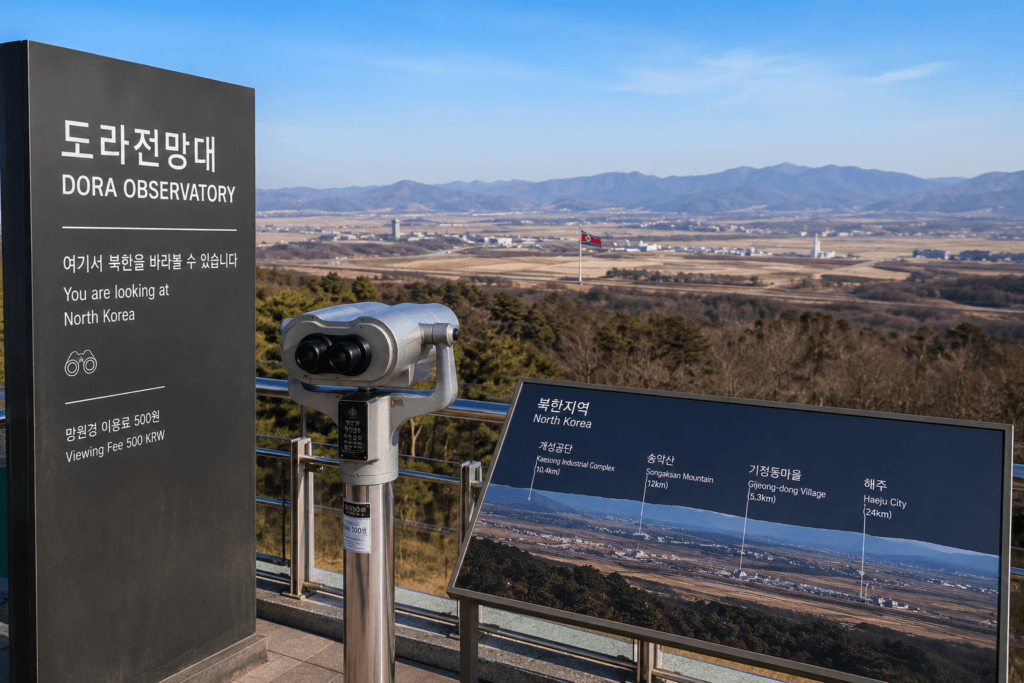
For many visitors, Dora Observatory becomes the highlight of the day.
The moment people step onto the observation deck, conversations often become quieter. Everyone is looking in the same direction, trying to spot villages, roads, and buildings across the border.
On clear days, North Korea feels surprisingly close.
Even travelers who know little about Korean history often find themselves standing here much longer than expected.
The Third Infiltration Tunnel
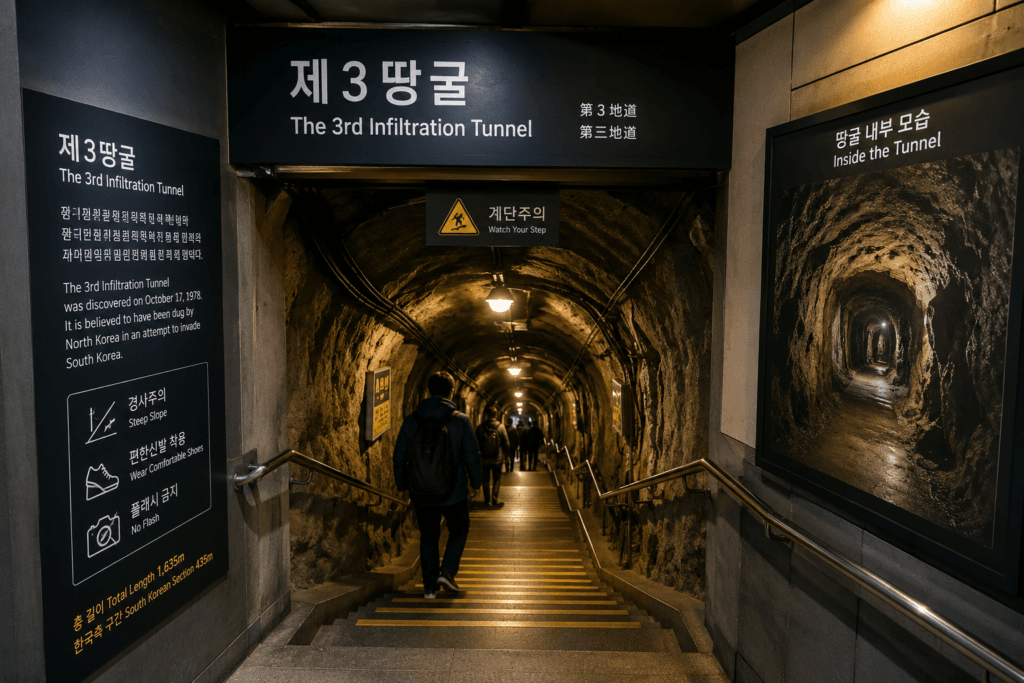
The Third Infiltration Tunnel was discovered in 1978 and remains one of the most fascinating sites inside the DMZ region.
Visitors descend underground and walk through part of the tunnel while learning about its history and purpose.
Most people focus on the historical significance of the tunnel and forget to ask about the walk back up. The climb is steeper than many expect, so comfortable shoes are highly recommended.
It’s not difficult for most visitors, but it is more physically demanding than a typical museum visit.
Imjingak Peace Park
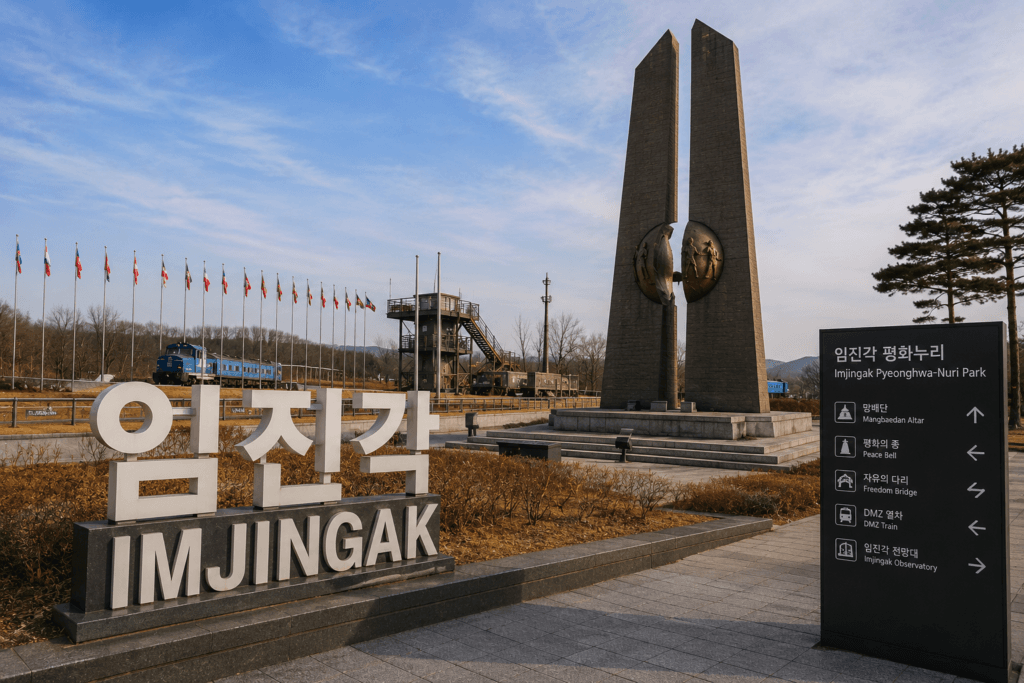
Unlike the tunnel, Imjingak feels calm and reflective.
The park contains memorials, monuments, and exhibits that help explain the human side of Korea’s division.
Many visitors arrive expecting military history and leave thinking about the families that remain separated by the border.
It’s often one of the most emotional stops on the tour.
Freedom Bridge
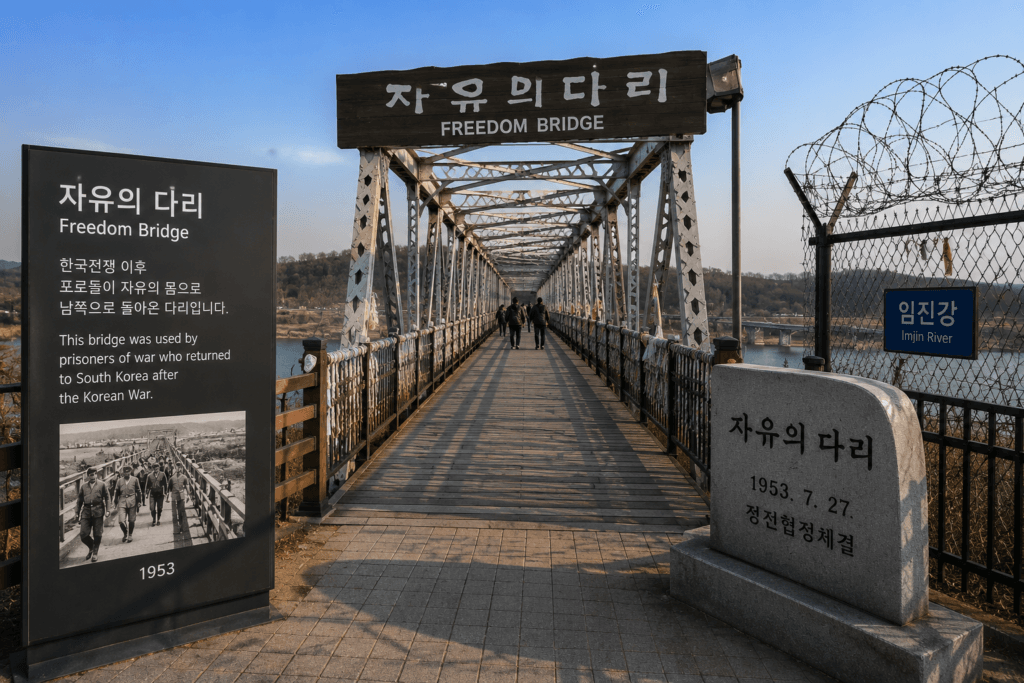
Freedom Bridge is one of the most symbolic locations near the DMZ.
After the Korean War, prisoners of war crossed this bridge while returning home.
Today, it serves as a reminder of both conflict and hope for future reunification.
What About the Joint Security Area (JSA)?
Many travelers assume every DMZ tour includes the Joint Security Area, commonly known as the JSA.
Unfortunately, that is usually not the case.
The JSA at Panmunjom is where negotiations between North and South Korea have historically taken place. It is also the location most often shown in documentaries and news coverage.
However, access remains heavily restricted, and most tours currently focus on Dora Observatory, the Third Infiltration Tunnel, Imjingak, and other nearby sites.
If visiting the JSA is important to you, always verify current availability before booking.
DMZ Peace Trail
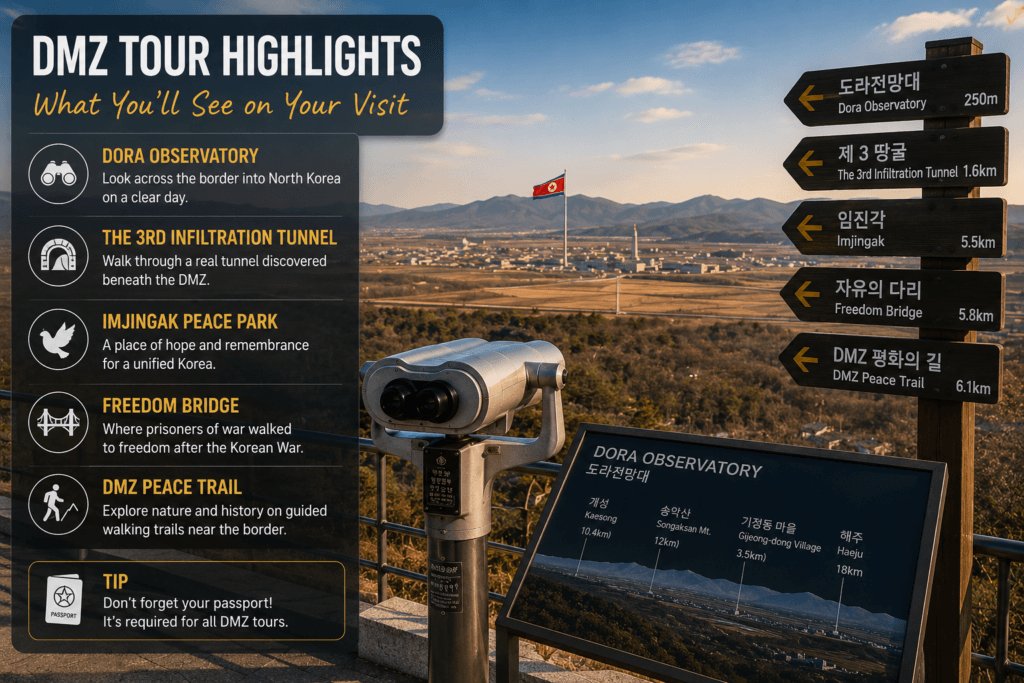
Travelers looking for something beyond the standard bus tour may want to consider the DMZ Peace Trail.
These guided routes allow visitors to explore selected areas near the border while learning about history, nature, and the unique ecosystem that has developed inside the DMZ over decades of limited human activity.
The atmosphere feels completely different from traditional sightseeing tours.
Reservations are required, and availability varies by season.
Important Things to Know Before Your Visit
Bring Your Physical Passport
Don’t leave your passport at the hotel.
Military checkpoints require all international visitors to present an original physical passport.
Digital copies are not accepted.
Photos of your passport are not accepted.
Without the original document, you will not be allowed to join the tour.
Wear Comfortable Shoes
The Third Infiltration Tunnel involves more walking than many travelers expect.
Comfortable footwear will make the experience significantly more enjoyable.
Expect Security Checks
The DMZ remains an active military area.
Security procedures are normal and visitors should always follow instructions provided by guides and military personnel.
Book Early
Spring and autumn tours often sell out well in advance.
Book a DMZ Day Tour from Seoul if you already know your travel dates.
Best Time to Visit the DMZ
Spring (March to May)
Spring offers pleasant temperatures and comfortable sightseeing conditions.
Visitors traveling during this period may also enjoy our Korea Cherry Blossom Guide 2027.
Summer (June to August)
Summer tours continue to operate, but heat and humidity can make outdoor sightseeing less comfortable.
Autumn (September to November)
Autumn is often considered the best season to visit.
Cool temperatures, clear skies, and excellent visibility make it easier to enjoy observation points and outdoor sites.
Travelers visiting multiple destinations may also find our Korea Autumn Foliage Guide 2026 useful.
Winter (December to February)
Winter can be extremely cold, but visibility is often at its best and visitor numbers are lower.
Who Should Visit the DMZ?
The DMZ is a great choice for:
- First-time visitors to Korea
- History enthusiasts
- Educational travelers
- Solo travelers
- Families with older children
- Travelers looking for a unique day trip from Seoul
It may be less appealing for visitors focused primarily on shopping, nightlife, or entertainment.
Common Mistakes Travelers Make
The DMZ Is Not a Border Crossing
Many visitors arrive expecting to step into North Korea.
Most tours focus on observation points, tunnels, and historical sites rather than actual border crossings.
Don’t Leave Your Passport Behind
This remains one of the most common reasons travelers are denied participation.
The Tunnel Is Harder Than It Looks
The walk inside the Third Infiltration Tunnel is manageable, but the incline surprises many visitors.
Tour Spots Fill Up Faster Than Expected
Popular dates can sell out weeks in advance during peak travel seasons.
FAQ
Is the DMZ safe to visit?
Yes. Authorized tours operate under strict security procedures and are considered safe for visitors.
Can I visit the DMZ without a tour?
No. Most DMZ attractions require participation in an authorized tour.
Do I need my passport?
Yes. An original physical passport is required.
How long does a DMZ tour take?
Most tours last between 6 and 9 hours.
Is the Third Infiltration Tunnel difficult?
The tunnel involves moderate walking and a noticeable incline, but most visitors can complete it comfortably.
Final Thoughts
Long after the tour ends, most people don’t remember the bus ride or the security checkpoints.
They remember standing at Dora Observatory and looking across a border that has shaped modern Korean history for generations.
A visit to the DMZ offers something that few destinations can provide: the opportunity to see history, politics, and human stories intersect in a single place.
For many travelers, it becomes one of the most memorable experiences of their entire trip to South Korea.
Before your visit, you may also find our Seoul 3-Day Itinerary 2026, Seoul 5-Day Itinerary 2026, Best Areas to Stay in Seoul, How to Use the Seoul Subway Like a Local, and Korea Travel Costs Guide 2026 helpful while planning your trip.