Luxury hotels, rooftop cocktails, Korean barbecue dinners, and department-store shopping can empty a travel budget quickly. At the same time, Seoul has an affordable subway system, filling local meals, inexpensive palace tickets, and enough free neighborhoods, parks, markets, and riverside spaces to fill several days.
So, can you travel around Seoul for $50 a day?
Yes, but only with a clear definition of what that budget includes.
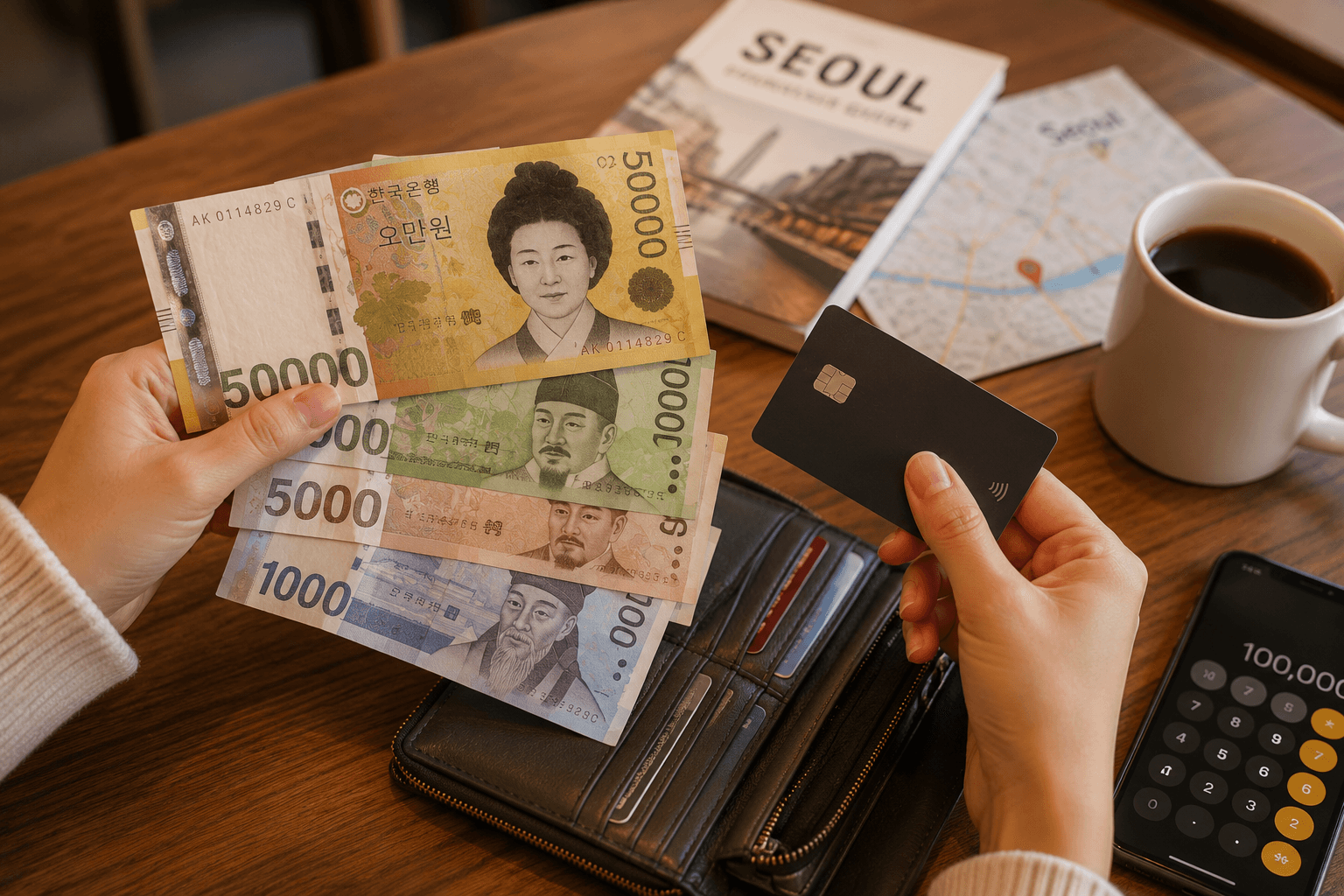
At the time of writing, $50 is roughly ₩75,000 to ₩76,500. Exchange rates change daily, so it is safer to think in Korean won and aim to spend no more than about ₩70,000 to ₩75,000 per day.
That budget can cover a hostel dorm bed, public transportation, three simple meals, one inexpensive attraction, and a small amount for snacks or unexpected expenses.
It will not cover a private hotel room, multiple cafe visits, taxis, premium Korean barbecue, nightlife, and shopping in the same day. Seoul is affordable, but it has not completely abandoned mathematics.
Table of contents
Can $50 Cover Accommodation Too?
It can, but accommodation is the part most likely to break the plan.
This budget assumes that you secure a hostel dorm bed or very simple guesthouse accommodation for around ₩30,000 per night. That price is more realistic when you book early, travel outside peak weekends, and stay in areas with plenty of budget accommodation.
Hongdae, Sinchon, Jongno, and parts of Dongdaemun usually give budget travelers more options than premium hotel districts. Read Cheapest Areas to Stay in Seoul before booking, because saving ₩10,000 on a room is not useful if the property is a long walk from the subway and every day begins with a transportation puzzle.
During cherry blossom season, autumn weekends, major concerts, and Korean public holidays, finding a ₩30,000 bed becomes harder. On those dates, $50 a day may still be possible without accommodation, but considerably less realistic with it included.
A Realistic $50 Seoul Budget
Here is a workable daily target based on a total of approximately ₩72,000.
| Expense | Daily Budget |
|---|---|
| Hostel dorm bed | ₩30,000 |
| Subway and buses | ₩5,000 |
| Three simple meals | ₩22,000 |
| Coffee or snacks | ₩5,000 |
| One cheap attraction | ₩3,000 |
| Emergency buffer | ₩7,000 |
| Total | ₩72,000 |
At the exchange rate checked for this update, ₩72,000 leaves a small cushion under $50.
The budget works because none of the individual expenses is especially ambitious. It is a day built from local restaurants, walking routes, public transportation, and low-cost attractions.
It also assumes restraint. A second specialty coffee, an unplanned taxi, and one “small” skincare purchase can hold a very efficient meeting and remove the remaining cushion.
A Sample $50 Day in Seoul
This route combines central Seoul’s historical area with a relaxed evening near the Han River. Most of the sightseeing is free or inexpensive, and several stops are close enough to connect on foot.
Breakfast: Keep It Simple
Target budget: ₩3,000 to ₩5,000
Start with a simple breakfast from a convenience store, bakery, or small kimbap shop.
Affordable choices include:
- Triangle kimbap and a drink
- Regular kimbap
- Toast or a basic sandwich
- Yogurt, fruit, and coffee
- A small bowl of noodles or porridge
Hotel breakfasts are convenient, but they are not always included with budget accommodation. Buying breakfast locally gives you more control over the cost.
Convenience-store breakfast is not the most cinematic opening to a Seoul adventure, but it is quick, cheap, and unlikely to demand a reservation.
Morning: Gwanghwamun and Gyeongbokgung Palace
Target budget: ₩3,000
Take the subway toward Gwanghwamun or Gyeongbokgung Station.
A standard adult subway ride using a transportation card starts at ₩1,550, with additional charges for longer distances. Seoul’s adult city-bus fare is generally ₩1,500 when paying with a transportation card.
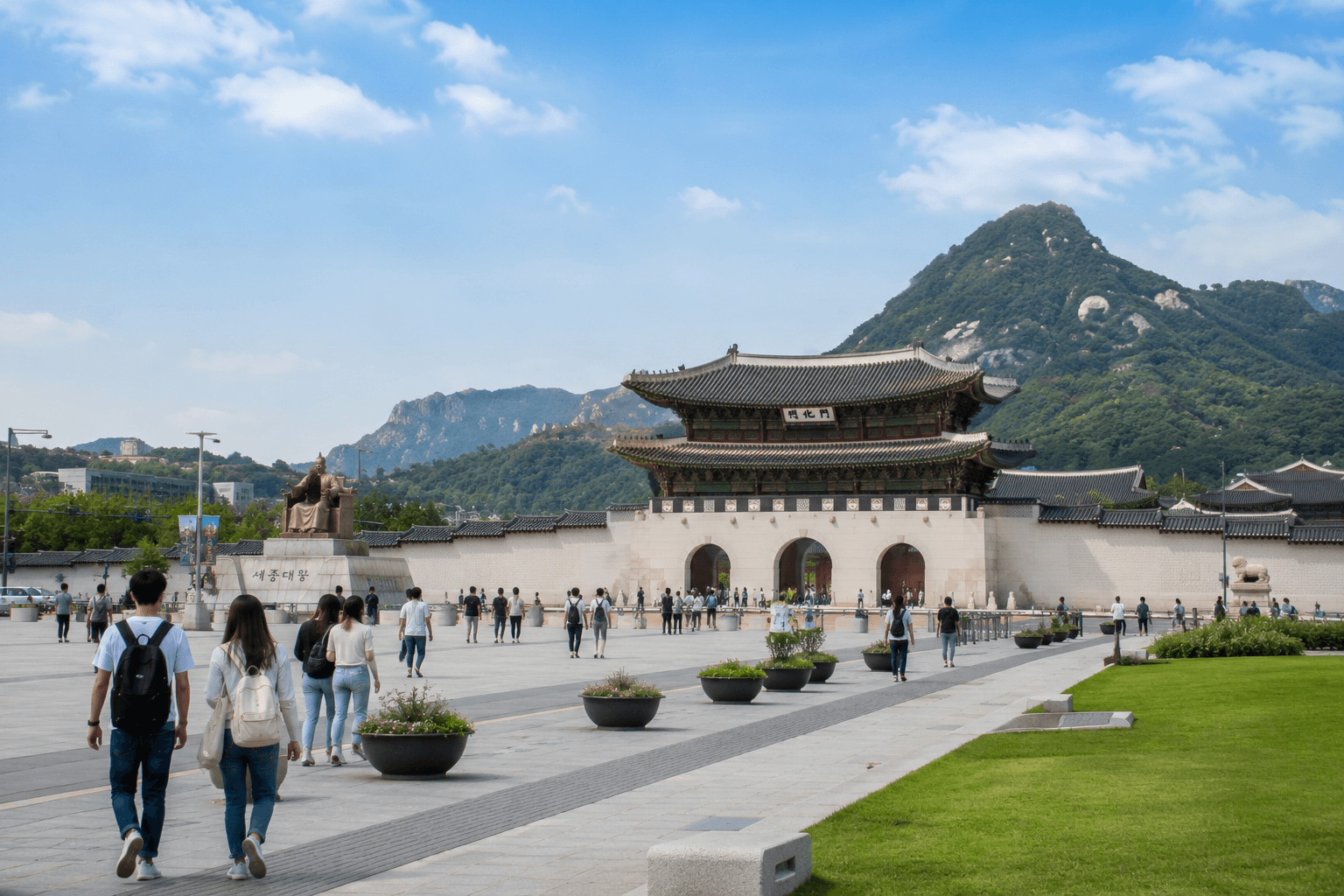
Begin at Gwanghwamun Square, where you can walk through the broad public space and see the palace gate and surrounding mountains without paying admission.
From there, enter Gyeongbokgung Palace. Adult admission is ₩3,000, making it one of the easiest major Seoul attractions to fit into a small budget.
Spend around 90 minutes exploring the main courtyards, palace buildings, and quieter paths. Check the closing day before visiting, since the palace generally closes on Tuesdays.
Hanbok rental is fun, but it does not fit naturally into a strict $50 day. Save it for another day unless you find a particularly good deal.
Lunch: Find a Local One-Dish Restaurant
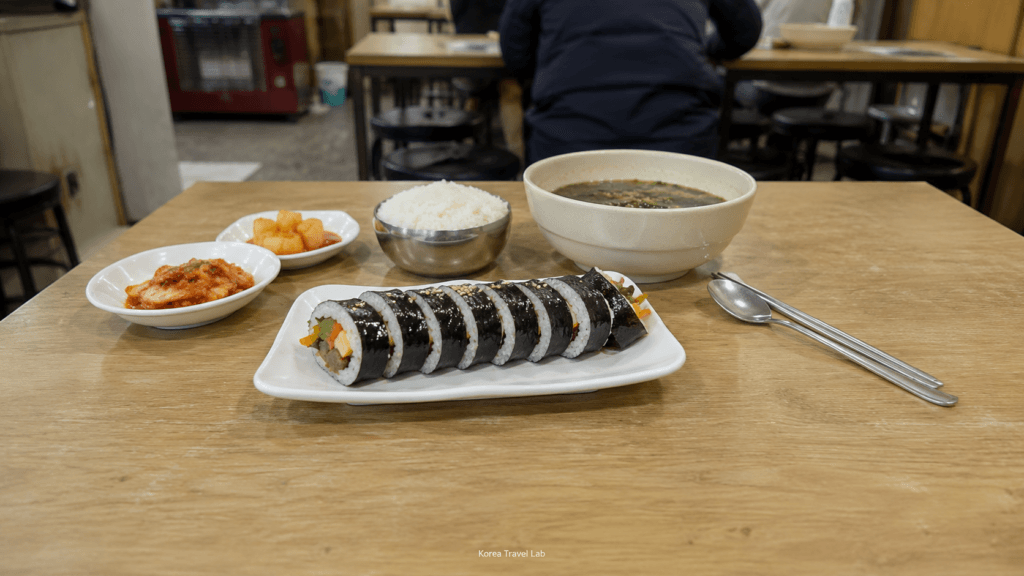
Target budget: ₩7,000 to ₩9,000
Avoid restaurants designed mainly around large set menus and look for small places serving one-dish meals.
Good budget options include:
- Kimbap
- Bibimbap
- Kimchi jjigae
- Doenjang jjigae
- Kalguksu
- Mandu
- Gukbap
- Simple rice bowls
Office areas and streets around subway stations often have practical lunch restaurants where people eat quickly and return to work. A busy room full of local diners is usually a more useful clue than decorative English menu boards.
You do not need to eat convenience-store food three times a day to keep the budget alive. Seoul’s small Korean restaurants are one of the reasons this challenge remains possible.
The difficult part is walking past every bakery afterward as though nothing happened.
Afternoon: Bukchon, Insadong, and Cheonggyecheon
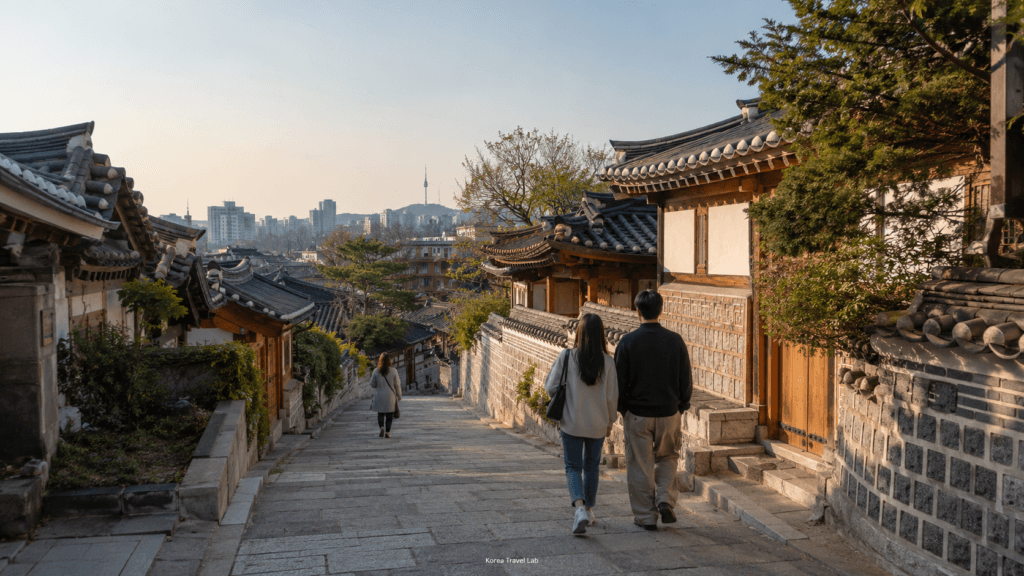
Target budget: Free, plus an optional ₩4,000 snack
After lunch, continue toward Bukchon Hanok Village.
Bukchon is free, but it is also a residential neighborhood with visitor restrictions. Tourist access to designated red-zone areas is limited to 10:00 AM–5:00 PM, and visitors should follow posted signs, keep voices low, and avoid blocking residential entrances.
Do not try to cover every alley. Choose a short walking route, enjoy the rooftops and city views, then continue toward Insadong.
Insadong costs nothing to explore. You can browse craft shops, galleries, souvenir stores, and side streets without buying anything. Traditional tea houses are appealing, but a full tea set may use most of the day’s snack budget.
A cheaper option is one small street snack or takeaway drink for around ₩3,000 to ₩5,000.
From Insadong, walk toward Cheonggyecheon Stream. The stream offers a quiet central-Seoul walking route without an entrance fee and gives your legs a brief break from palace stones and Bukchon hills.
“Brief” is the important word. They may still remember the hills.
Dinner: Eat Before You Reach the Most Expensive Streets
Target budget: ₩8,000 to ₩10,000
For dinner, choose another simple local meal rather than Korean barbecue or a fashionable restaurant.
Good options include:
- Kimchi stew
- Pork or beef soup
- Noodles and dumplings
- Tteokbokki with kimbap
- A market meal
- Convenience-store ramyeon with side dishes
- A basic rice bowl
Korean barbecue becomes expensive for solo travelers because many restaurants expect multiple portions or group-style ordering. Save it for a shared meal on a less restrictive budget day.
The goal is not to find the absolute cheapest dinner in Seoul. It is to eat something filling enough that you do not buy four emergency snacks an hour later.
Evening: Hongdae or the Han River
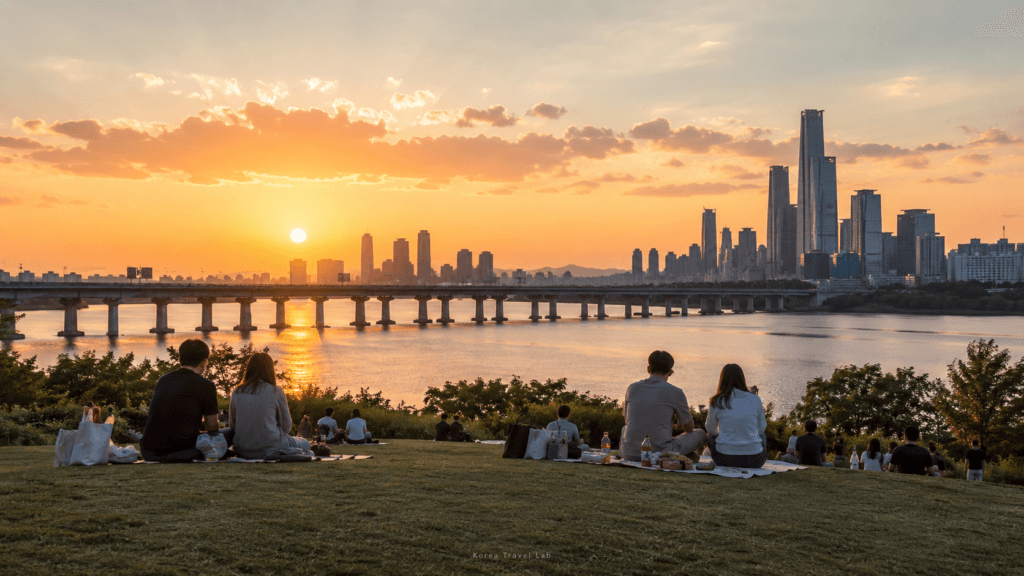
Target budget: Free, plus transportation
For the final stop, choose either Hongdae or a Han River park.
Option 1: Hongdae
Hongdae is free to explore and works well if you enjoy busy streets, shops, busking, photo booths, and youthful evening energy.
You do not need to enter a club or buy anything to enjoy the neighborhood. Walk around the main streets, continue toward Yeonnam-dong, or rest along Gyeongui Line Forest Park.
This option is particularly convenient if your hostel is in Hongdae or Sinchon because you can finish the day near your accommodation.
Option 2: Han River
For a calmer evening, take the subway to Mangwon, Yeouido, or Ttukseom and walk toward the Han River.
Buy a convenience-store drink or small snack, find a place by the water, and watch the skyline change after sunset. The park itself does not require an admission ticket.
This is one of the best budget experiences in Seoul because it does not feel like a compromise. Local residents are there for the same reason: the river is spacious, relaxing, and much cheaper than sitting in a rooftop bar pretending not to notice the menu prices.
How to Keep Food Under ₩22,000
Food is manageable if you avoid turning every meal into a “must-try” event.
A realistic food plan might look like this:
| Meal | Example | Budget |
|---|---|---|
| Breakfast | Kimbap or convenience-store breakfast | ₩4,000 |
| Lunch | Stew, noodles, or bibimbap | ₩8,000 |
| Dinner | Gukbap, kimbap meal, or noodles | ₩9,000 |
| Total | ₩21,000 |
The easiest way to overspend is not necessarily dinner. It is often the collection of small extras: a ₩6,000 latte, a ₩7,500 pastry, another drink, and a snack bought because it had a cheerful face printed on the package.
None of these purchases is disastrous alone. Together, they can eat an entire meal budget while behaving very innocently.
Affordable Foods to Look For
Kimbap shops are useful because they serve more than kimbap. Many also offer noodles, rice dishes, dumplings, stews, and tteokbokki.
Traditional markets can be affordable, but do not assume every famous stall is cheap. Popular markets increasingly include premium dishes and tourist-focused portions. Look at prices before ordering rather than treating “market” as a magic budget word.
Local soup and stew restaurants are often strong value because one order usually includes rice and basic side dishes.
Convenience stores are best used strategically. They work well for breakfast, drinks, or an emergency late meal, but eating every meal there is unnecessary unless the budget has already wandered into dangerous territory.
Transportation: T-Money or Climate Card?
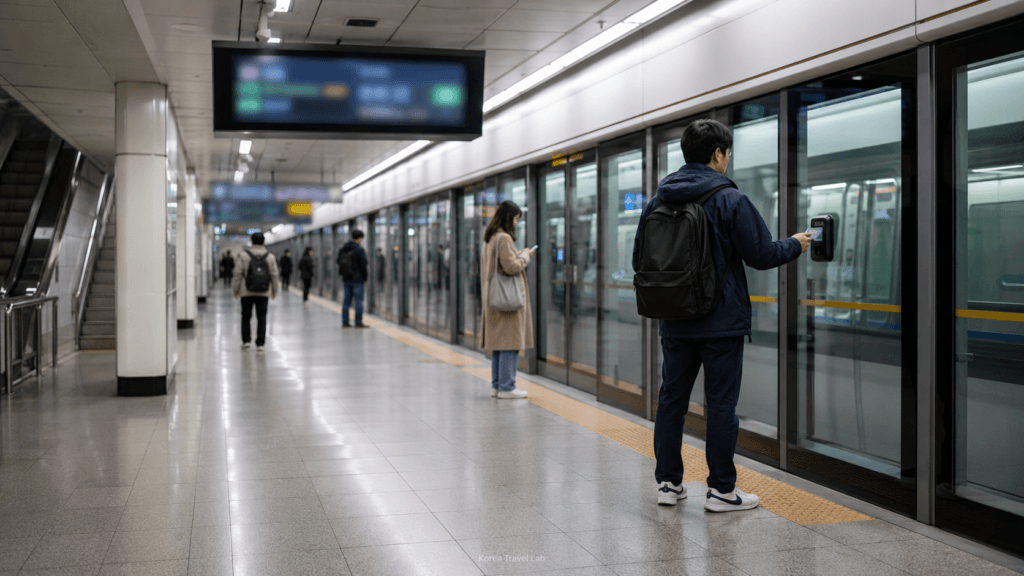
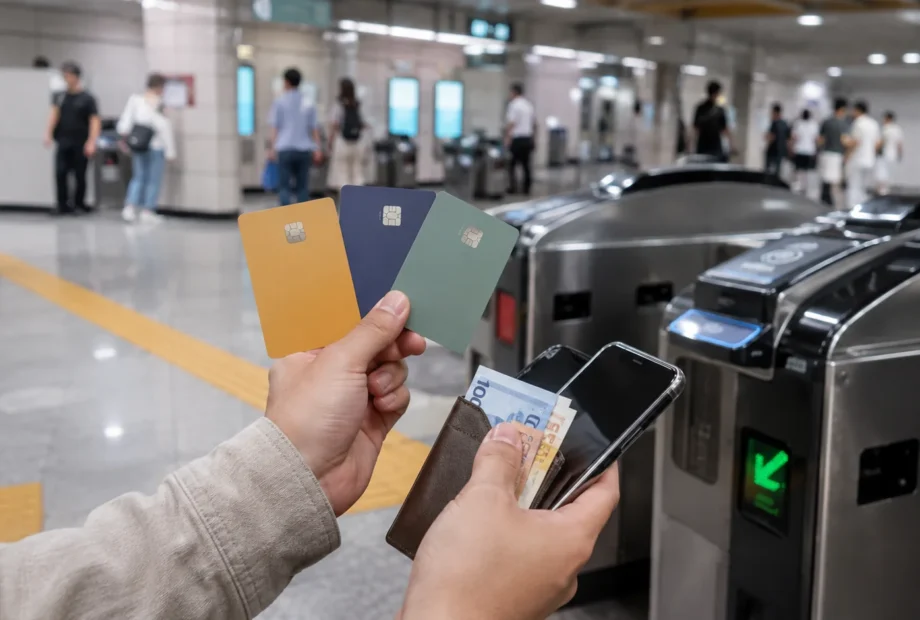
For a day with three or four ordinary rides, a T-money card is usually simple and practical.
Seoul’s current adult base subway fare is ₩1,550 with a transportation card, while ordinary city buses generally start at ₩1,500. Transfers can reduce the cost when you follow the required tap-in and tap-out rules.
A ₩5,000 daily transportation budget is therefore realistic for a carefully grouped itinerary, although longer distances can add extra fare.
Seoul also offers a short-term Climate Card priced at ₩5,000 for one day. It can be useful on transit-heavy days, but coverage rules apply and the physical card may involve an additional purchase. For a walking-focused budget route, T-money is often easier.
The biggest transportation saving does not come from choosing the perfect card. It comes from grouping nearby attractions.
Gyeongbokgung, Bukchon, Insadong, and Cheonggyecheon belong together. Sending yourself from Bukchon to Gangnam and then back to Jongno because the map looked optimistic is how both money and enthusiasm begin leaking.
Free and Cheap Places That Fit This Budget
You do not need to build every day around paid attractions.
Good free or inexpensive options include:
- Gwanghwamun Square
- Bukchon Hanok Village during permitted hours
- Insadong
- Ikseon-dong
- Cheonggyecheon Stream
- Hongdae and Yeonnam-dong
- Han River parks
- Namsan walking trails
- Seoul Forest
- Olympic Park
- Traditional markets
- Neighborhood cafe streets, without entering every cafe
Paid attractions can still fit if you choose carefully. Gyeongbokgung Palace at ₩3,000 is far easier to include than an observation deck, theme park, or full-day tour.
A budget itinerary should not feel like punishment. Pick one paid attraction that genuinely matters to you, then use free neighborhoods and parks to shape the rest of the day.
What Will Break the $50 Budget?
Several common Seoul experiences can push the total over $50 very quickly.
Private Accommodation
A private hotel room can consume most or all of the budget before breakfast. This challenge works best with a dorm bed, shared room, or accommodation paid from a separate trip budget.
Korean Barbecue
A proper Korean barbecue dinner can be reasonable when shared, but it rarely fits neatly into a strict solo budget.
Taxis
One taxi ride may not destroy the day, but repeated taxis will. Use them when safety, late-night timing, luggage, or mobility makes them necessary, not simply because the subway entrance looks far away.
Specialty Cafes
Seoul’s cafes are attractions in their own right. That also means a drink and dessert can cost as much as lunch.
Choose one cafe experience rather than attempting a multi-stage pastry expedition.
Shopping
K-beauty, fashion, souvenirs, and character goods should have their own separate budget.
A $50 daily challenge and a Myeongdong skincare haul are two different financial genres.
Nightlife
Cocktails, clubs, craft beer, and late-night food can easily exceed the remaining budget. Hongdae is free to walk around, but what happens after entering three venues is between you and tomorrow’s spreadsheet.
Can You Travel This Way for an Entire Week?
You can, but repeating the exact same budget every day may become tiring.
A better approach is to average your spending across several days.
For example:
- Two low-cost days at ₩60,000–₩65,000
- Several normal budget days around ₩70,000–₩75,000
- One higher-spending day for barbecue, a tour, or a major attraction
This gives you room to enjoy Seoul without feeling guilty every time a cafe menu appears.
A strict $50 day works best as a framework, not a test of personal virtue. Travel budgets are supposed to help you make decisions, not stand behind you holding a tiny calculator.
Money-Saving Rules That Actually Matter
Stay within 5–10 minutes of a subway station. A cheaper room loses value when it requires long walks, buses, or taxis every day.
Plan each day by area. Use the Seoul 3-Day Itinerary as a starting point and avoid crossing the city repeatedly.
Eat one-dish Korean meals. Stews, soups, noodles, rice dishes, and kimbap restaurants are easier on the budget than barbecue sets and international food.
Carry a refillable water bottle. Seoul has convenience stores everywhere, which makes buying another drink far too easy.
Check prices before entering famous cafes or markets. Popular does not always mean affordable.
Book accommodation early. The ₩30,000 hostel assumption is the weakest part of the plan, especially during peak seasons.
Keep shopping separate. Do not ask your food budget to absorb a toner, socks, a keychain, and something adorable that has no clear purpose.
FAQ
Is $50 a day enough for Seoul with accommodation?
It can be enough if you find a hostel dorm bed around ₩30,000, use public transportation, eat inexpensive local meals, and focus on free or low-cost attractions. It is unlikely to cover a normal private hotel room.
How much is $50 in Korean won?
At the exchange rate checked for this update, $50 was approximately ₩76,500. Exchange rates change daily, so check again before your trip.
How much should I budget for food in Seoul?
A careful budget traveler can target around ₩20,000 to ₩25,000 per day by eating kimbap, noodles, soups, stews, rice dishes, and simple convenience-store breakfasts.
What are the best free attractions in Seoul?
Popular free options include Gwanghwamun Square, Insadong, Cheonggyecheon Stream, Hongdae, Seoul Forest, Han River parks, and Namsan walking trails. Bukchon is free but has restricted visitor areas and hours.
Is Seoul cheaper than Tokyo?
The answer depends on exchange rates, accommodation, and travel style. Seoul can offer excellent value for public transportation and local meals, but trendy cafes, hotels, nightlife, and shopping can still be expensive.
Should I use T-money or a Climate Card?
T-money is usually easiest for a day with a few rides. A short-term Climate Card may offer better value when you expect to use covered public transportation repeatedly throughout the day.
Can I visit Seoul on $50 a day without staying in a hostel?
Yes, if accommodation is paid separately. Without lodging included, $50 provides a much more comfortable budget for food, transportation, attractions, and occasional cafe visits.
Final Thoughts
Seoul on $50 a day is possible, but it works because the city’s simple experiences are genuinely good.
A palace ticket costs little. Traditional neighborhoods are free to walk through. Local soups and noodles can be filling without being expensive. The subway reaches almost everywhere a first-time visitor needs to go. The Han River does not check your budget before providing a sunset.
The challenge becomes difficult when you try to combine budget travel with a private hotel, premium cafes, taxis, shopping, nightlife, and Korean barbecue every evening.
Choose what matters most.
Book an affordable bed. Group nearby attractions. Eat local meals. Pay for one experience you genuinely care about, then let Seoul’s streets, parks, markets, and river fill the rest of the day.
Some of the city’s best moments are surprisingly cheap.
Seoul simply places enough tempting cafes between them to keep the challenge interesting.