Three days in Seoul is not enough to see everything.
That is the honest answer.
But three days is enough to understand why so many travelers fall for the city. In one trip, you can walk through royal palace gates, wander past traditional hanok rooftops, eat too much market food, get lost in shopping streets, watch the skyline from Namsan, and end your final evening beside the Han River with convenience store snacks and a suspiciously peaceful heart.
What surprised me most about Seoul was how different each part of the city felt.
Day 1 feels historic: palaces, hanok villages, tea houses, and narrow old streets.
Day 2 feels bright and busy: shopping, markets, street food, K-beauty, and city views.
Day 3 feels more local and modern: food markets, creative neighborhoods, cafes, and riverside sunset.
This Seoul 3-day itinerary is designed for first-time visitors who want a balanced route without turning the trip into a military operation with better snacks.
You will still walk a lot. Seoul does not apologize for stairs, subway exits, or “just 10 more minutes” routes. But this itinerary keeps each day focused by area, so you spend more time enjoying the city and less time arguing with your map app.
Table of contents
Is 3 Days Enough for Seoul?
Three days is enough for a first visit to Seoul if you focus on the city’s main highlights and plan your route by neighborhood.
You will not see everything. You will miss some museums, neighborhoods, day trips, cafes, and hidden restaurants. Seoul is not a city you finish. It is a city that quietly opens another tab.
But with three days, you can experience:
Royal palaces
Traditional neighborhoods
Hanok alleys
Street food markets
Shopping districts
K-beauty stores
N Seoul Tower
Hongdae
Han River sunset
Local cafes and casual food
For most first-time visitors, three full days in Seoul feels satisfying if the itinerary is not overloaded.
The key is balance. Do not try to visit every famous attraction in one day. Seoul rewards travelers who leave a little breathing room for side streets, snacks, wrong turns, and cafes that appear exactly when your feet begin writing complaints.
Quick Seoul 3-Day Itinerary Overview
| Day | Main Area | Best For |
|---|---|---|
| Day 1 | Gyeongbokgung, Bukchon, Insadong, Ikseon-dong | Traditional Seoul, palaces, hanok streets, tea, cafes |
| Day 2 | Myeongdong, Namdaemun, N Seoul Tower | Shopping, K-beauty, markets, skyline views |
| Day 3 | Gwangjang Market, Hongdae, Han River | Street food, youth culture, local sunset |
This itinerary works best if you are staying in Myeongdong, Jongno, Hongdae, or another central area with easy subway access.
If you are still choosing accommodation, read Best Areas to Stay in Seoul for First-Time Visitors before booking.
Before You Start: Seoul Travel Basics
Before your first full day, set yourself up properly.
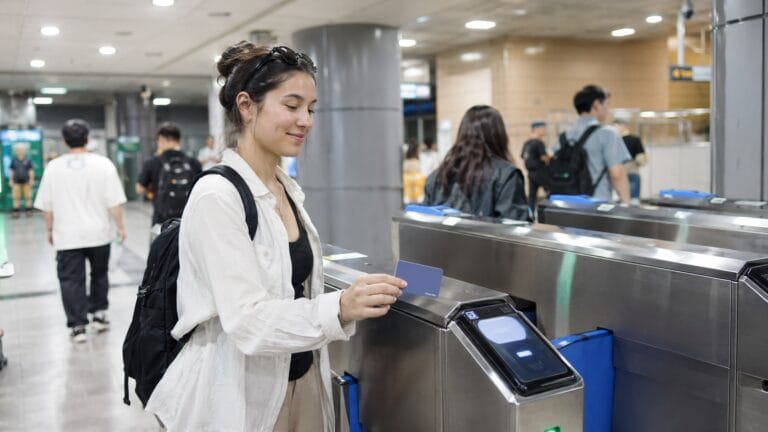
Buy a T-money card as soon as you arrive. You can use it on Seoul subway, buses, convenience store transport payments, and many local transit routes across Korea.
Use the subway whenever possible. Seoul traffic can be slow, especially around rush hour, while the subway is usually faster and easier once you understand the system.
Wear comfortable shoes. This is not optional advice pretending to be gentle. Seoul has hills, long station corridors, palace grounds, markets, and neighborhoods that look close on a map but somehow grow while you walk.
Carry a little cash for traditional markets and small vendors. Cards are widely accepted in Korea, but market snacks sometimes prefer old-fashioned payment energy.
Most importantly, do not plan every hour too tightly. Seoul is full of small distractions, and some of them will be the best part of your trip.
Day 1: Traditional Seoul
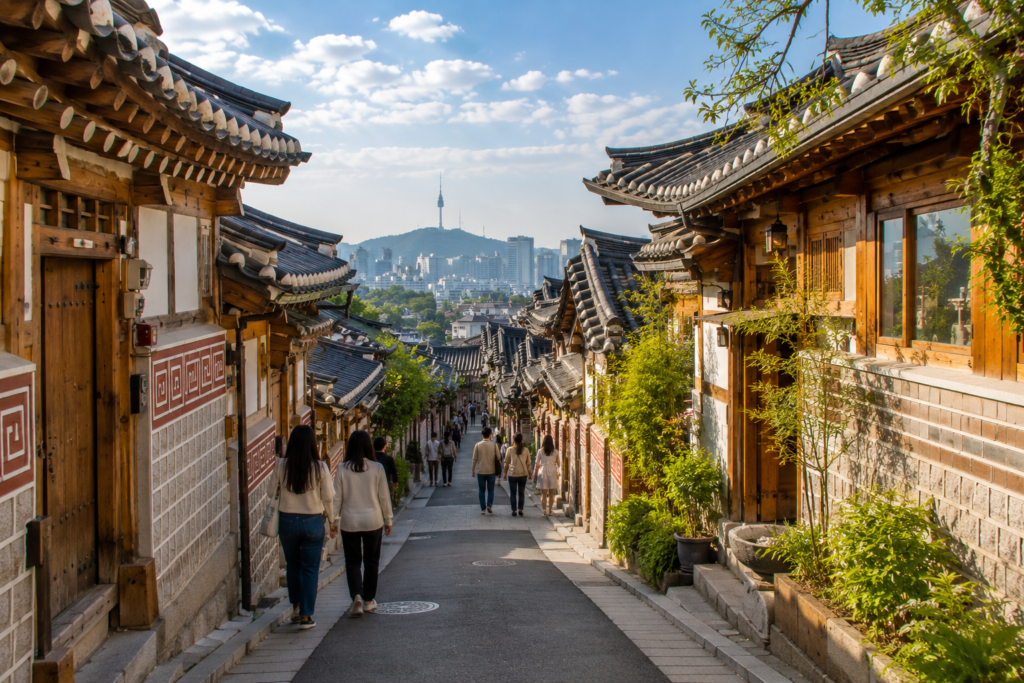
Your first day focuses on Seoul’s historic heart: Gyeongbokgung Palace, Bukchon Hanok Village, Insadong, and Ikseon-dong.
This is the best way to begin a first Seoul trip because the route shows Korea’s royal history, traditional architecture, cultural streets, and modern hanok cafes in one connected area.
Try to start early. Day 1 includes popular attractions, and the morning is much better before tour groups and photo crowds arrive.
Morning: Gyeongbokgung Palace
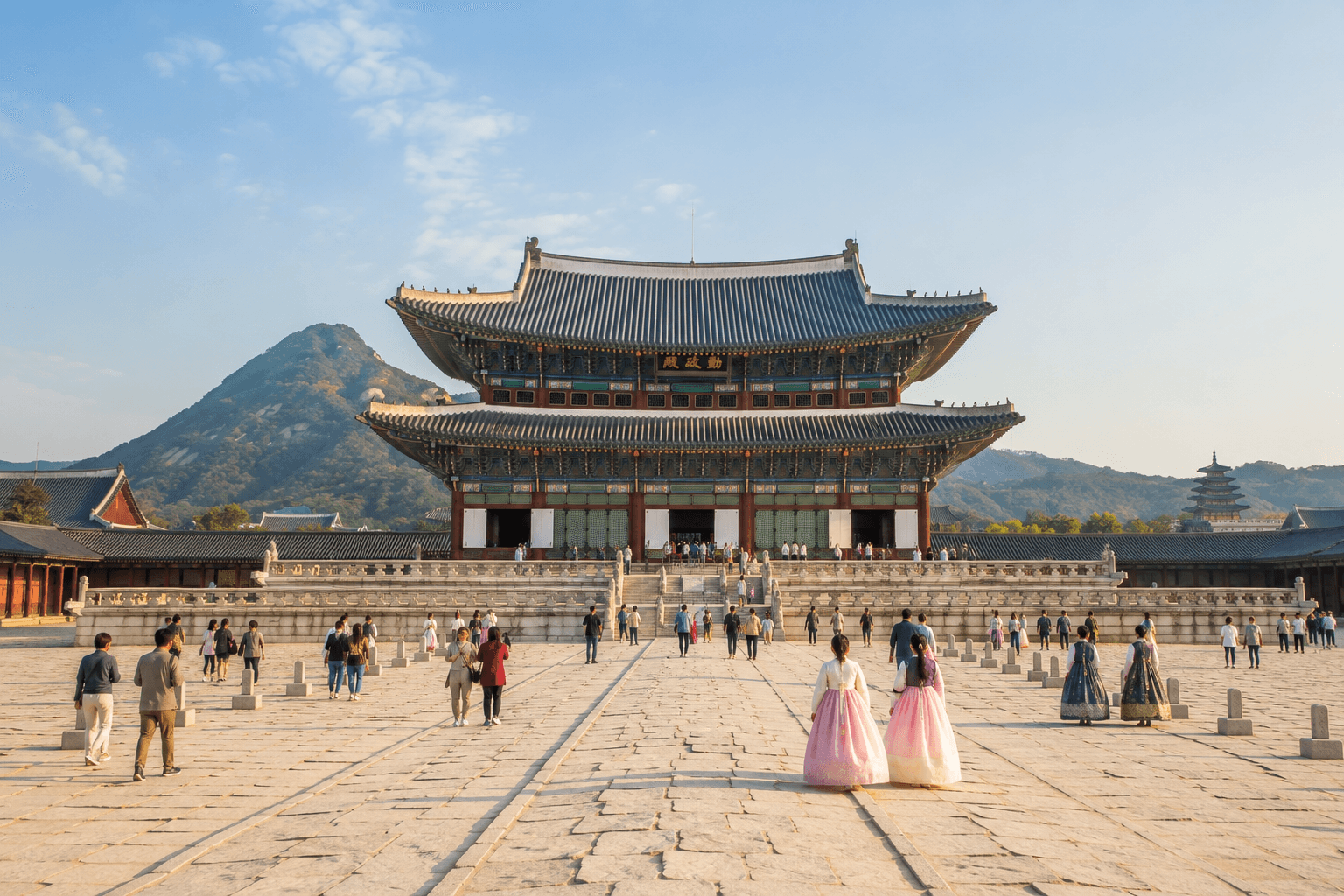
Start your trip at Gyeongbokgung Palace, Seoul’s largest and most famous royal palace.
This is one of the best introductions to Korea’s history. The palace grounds are spacious, the gates are impressive, and the mountain backdrop gives the whole place a dramatic first impression.
Arrive early if possible. The palace feels much calmer in the morning, and the light is better for photos. If you want the full tourist experience, consider renting a hanbok nearby. Visitors wearing hanbok can usually enter the palace for free, and it also makes photos more memorable.
The Royal Guard Changing Ceremony at Gwanghwamun Gate is also worth watching if the schedule lines up with your visit. It is colorful, easy to watch, and does not require extra planning beyond showing up at the right time.
One thing many first-time visitors underestimate is the size of the palace. Gyeongbokgung is not just a gate and a courtyard. Give yourself enough time to walk through the main buildings, side paths, ponds, and quieter corners.
Also check the palace closing day before you go. Gyeongbokgung is generally closed on Tuesdays, so switch Day 1 with another day if needed.
Late Morning: Bukchon Hanok Village
After Gyeongbokgung, walk or take a short ride toward Bukchon Hanok Village.
Bukchon is famous for its traditional Korean houses, narrow uphill alleys, and beautiful views over old rooftops and modern Seoul. It is one of the most photogenic neighborhoods in the city, but it is also a real residential area.
That part matters.
Keep your voice low, stay on public paths, and avoid blocking doorways for photos. The homes are not movie sets. People actually live there, possibly with strong opinions about tourists leaning into their gates.
The best way to enjoy Bukchon is to slow down. Do not only rush to the famous viewpoint. Some of the smaller side streets are more peaceful and often more interesting.
If you are visiting in summer, prepare for hills and heat. Bukchon is beautiful, but it does not believe in flat walking.
Afternoon: Insadong
From Bukchon, continue toward Insadong.
Insadong is one of Seoul’s best neighborhoods for traditional culture, tea houses, galleries, crafts, souvenirs, and relaxed walking. Compared with Bukchon, it feels more commercial and easier to explore without worrying about residential etiquette.
This is a good place to take a break.
Visit a traditional tea house, browse small shops, look for Korean crafts, or walk through Ssamziegil if you want a compact shopping and culture stop. Insadong is also good for buying souvenirs that feel more meaningful than a random airport keychain staring into the distance.
If you are hungry, look for Korean restaurants in the side alleys. The main street is useful, but the smaller lanes usually feel more atmospheric.
Evening: Ikseon-dong
Finish Day 1 in Ikseon-dong.
Ikseon-dong is a small hanok neighborhood filled with cafes, bakeries, restaurants, bars, and boutique shops inside renovated traditional buildings. It feels different from Bukchon because it is less residential and more focused on food, drinks, and atmosphere.
This is one of the best places in Seoul for a relaxed dinner or evening cafe stop.
The neighborhood becomes especially charming after sunset when warm lights glow from the hanok windows and narrow alleys. It is small, but very easy to lose time here. One moment you are choosing dinner. The next, you are emotionally attached to a dessert cafe you did not know existed ten minutes earlier.
A good Day 1 ending is simple: dinner in Ikseon-dong, short walk through the alleys, then return to your hotel before your feet begin sending formal notices.
Day 2: Shopping, Markets, and Seoul’s Skyline
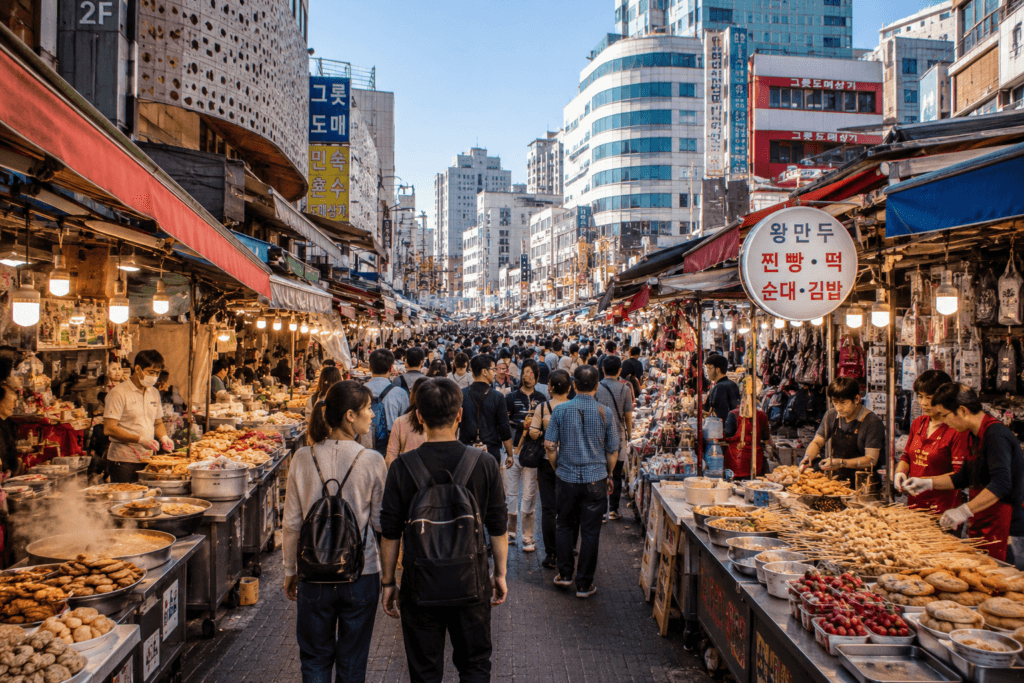
Day 2 focuses on Myeongdong, Namdaemun Market, and N Seoul Tower.
This day gives you modern shopping, K-beauty, traditional market food, and one of the best skyline views in the city. It is also a practical day because the areas are close enough to connect without wasting too much time in transit.
Morning: Myeongdong
Start Day 2 in Myeongdong, one of Seoul’s most famous shopping districts.
Myeongdong is busy, bright, commercial, and useful. It is not the quietest or most local area in Seoul, but for first-time visitors, it is very convenient.
You will find K-beauty stores, fashion shops, snack shops, cafes, money exchange booths, restaurants, and street food stalls. Even if you do not plan to shop much, it is still fun to walk around and feel the energy.
Myeongdong is especially good if you want skincare, sheet masks, sunscreen, makeup, or small beauty gifts. K-beauty shopping can start as “just looking” and end with a bag full of toner pads and the confidence of a laboratory assistant.
Visit in the morning if you want it calmer. The area becomes livelier later in the day and evening.
Lunch: Namdaemun Market
From Myeongdong, walk to Namdaemun Market.
Namdaemun feels completely different from Myeongdong. It is older, busier, more traditional, and more local in texture. The alleys are full of food stalls, clothing shops, kitchenware, accessories, souvenirs, and small vendors.
Come hungry.
Try vegetable hotteok, dumplings, fish cakes, noodles, or simple market snacks. If you want a more local meal, look for Galchi Alley, known for spicy braised hairtail fish.
Namdaemun is also useful for affordable souvenirs, socks, snacks, and everyday goods. The market can feel a little chaotic at first, but that is part of the charm. Let yourself wander a bit.
Just remember where you entered. Namdaemun has a talent for rearranging your sense of direction when you are distracted by food.
Afternoon: Cafe Break, Shopping, or K-Beauty Time
Keep the afternoon flexible.
This is important because Day 2 can easily become tiring if you overpack it. After Myeongdong and Namdaemun, you may want a cafe break, more shopping, a rest at your hotel, or a short walk through nearby streets.
Good afternoon options include:
More K-beauty shopping in Myeongdong
Coffee break near Myeongdong or City Hall
Short walk around Sungnyemun Gate
Rest before N Seoul Tower
Extra market browsing in Namdaemun
If you are traveling with people who do not love shopping, this is also a good time to split briefly and meet again before sunset. Not every traveler needs to witness every moisturizer decision.
Sunset and Evening: N Seoul Tower
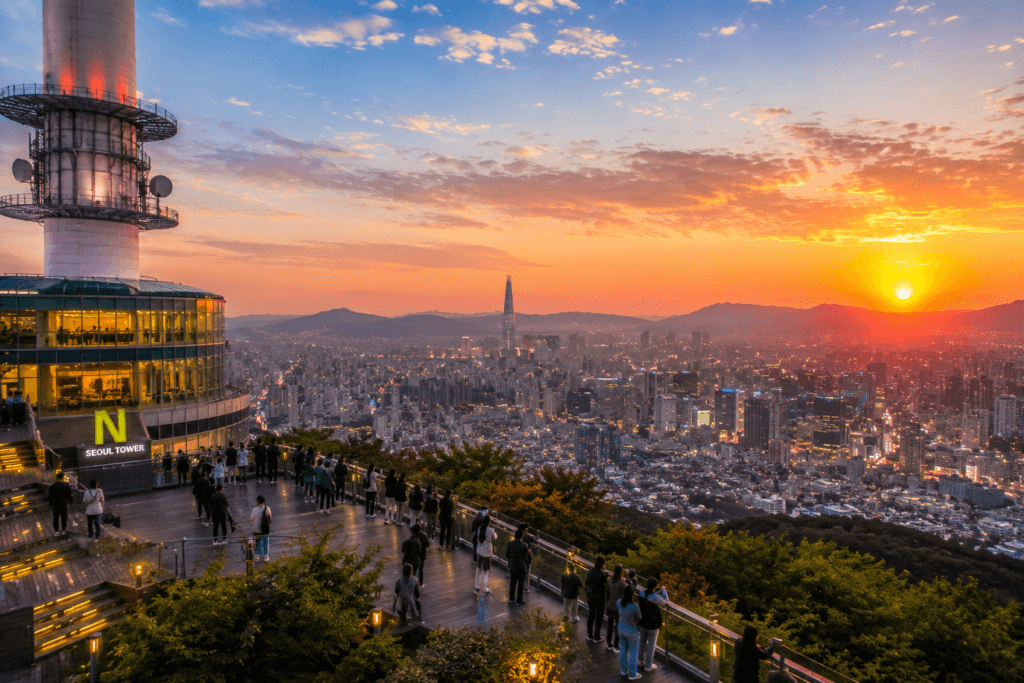
Visit N Seoul Tower about one hour before sunset.
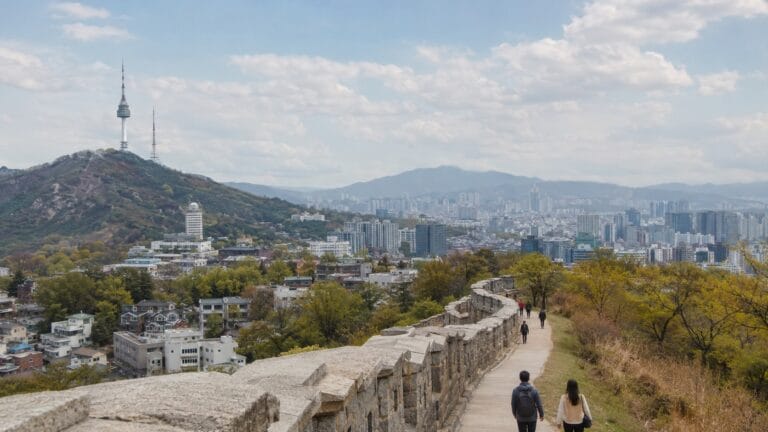
This timing lets you enjoy three different views in one visit: daytime Seoul, sunset colors, and the city lights after dark. On a clear day, the view from Namsan is one of the best ways to understand how huge Seoul really is.
There are several ways to reach the tower. Many first-time visitors take the Namsan Cable Car, while others use local buses or walk through Namsan Park. The cable car can have long lines around sunset, so leave extra time.
The observation deck is the main attraction, but the outdoor areas around the tower are also worth exploring. You will find city views, photo spots, cafes, and the famous Love Locks area.
N Seoul Tower can feel touristy, but the view still works. Sometimes popular places are popular because they are good, not because the internet held a meeting.
After visiting, you can return to Myeongdong for dinner or head back to your hotel.
Day 3: Street Food, Creative Seoul, and the Han River
Day 3 gives you a different side of Seoul: local market food, Hongdae’s creative energy, and a relaxing Han River sunset.
This day is less about major historical landmarks and more about how Seoul feels in daily life.
Brunch: Gwangjang Market
Start your final day at Gwangjang Market.
Arrive hungry. This is not decorative advice.
Gwangjang Market is one of Seoul’s most famous traditional food markets and a great place to try classic Korean dishes in a lively setting. Popular foods include bindaetteok, mayak gimbap, tteokbokki, mandu, noodles, and yukhoe.
The first challenge is choosing what to eat. Every few steps, another stall appears with steam, sizzling oil, or a line of customers who look like they know something you do not.
Many stalls offer small portions, which makes it easy to try more than one dish. During busy times, you may be asked to share a table with other customers. This is normal and part of the market experience.
Gwangjang is not polished or quiet. It is busy, direct, and delicious. The market has its own rhythm, and the best approach is to follow the smell, the line, or your strongest snack instinct.
Afternoon: Hongdae
After Gwangjang Market, head to Hongdae.
Hongdae is one of Seoul’s most youthful and creative neighborhoods. It is known for cafes, street performances, casual shopping, independent shops, music, restaurants, and nightlife.
The atmosphere is very different from Day 1’s traditional route. Hongdae feels like Seoul with a playlist, a coffee in hand, and no strong intention of going home early.
In the afternoon, explore the main streets, side alleys, and nearby cafe areas. If you want something calmer, walk toward Yeonnam-dong and the Gyeongui Line Forest Park area. It gives you a softer version of Hongdae with cafes, small restaurants, and leafy walking paths.
Hongdae is also a good place for photo booths, small fashion shops, accessories, dessert cafes, and casual street food.
Do not rush it. Hongdae is better when you let the neighborhood unfold instead of treating it like one attraction.
Evening: Han River
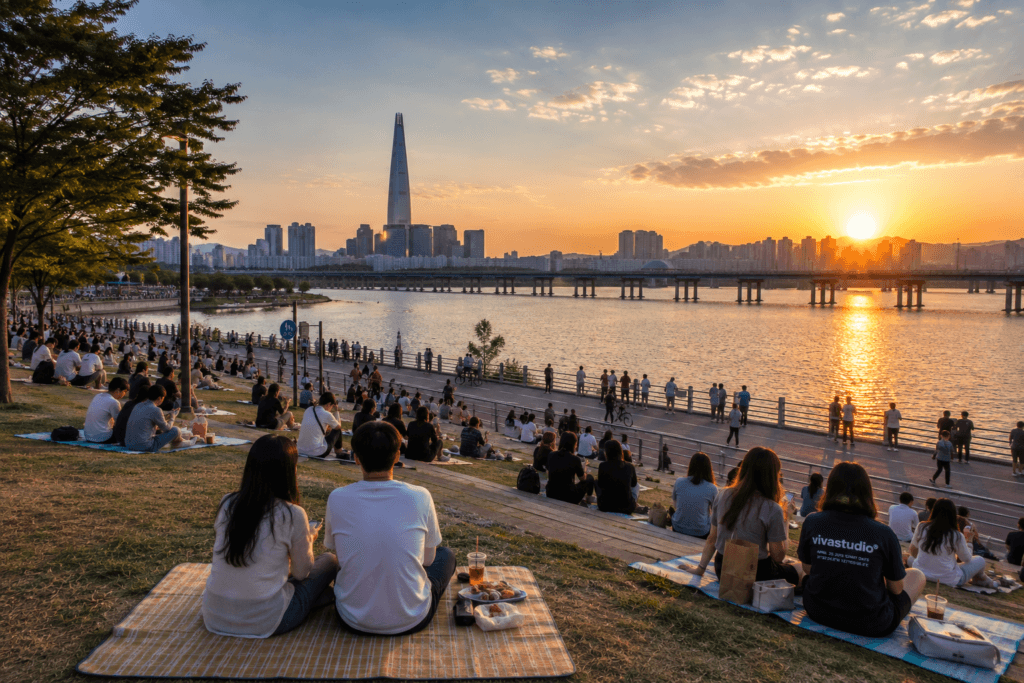
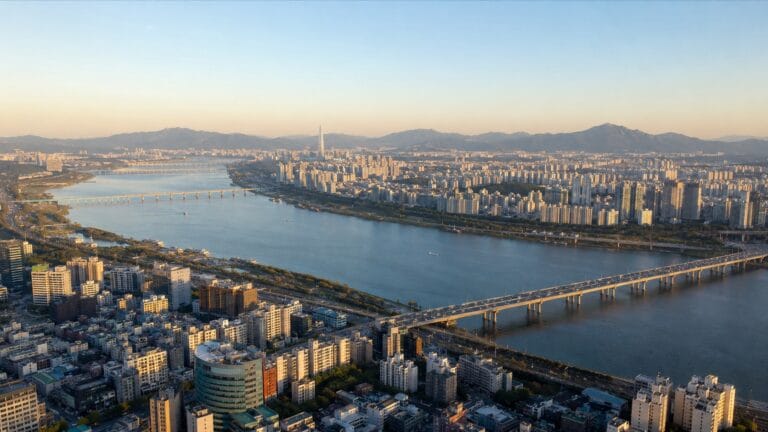
Finish your Seoul trip at the Han River.
This may become one of your favorite memories, even though it is not complicated. That is the Han River effect.
Choose a park depending on your location and mood. Yeouido Hangang Park is popular and convenient. Banpo Hangang Park is good for night views and the fountain season when operating. Ttukseom Hangang Park is easy to reach and has a relaxed local feel. Mangwon Hangang Park works well if you are coming from the Hongdae or Mangwon area.
For this itinerary, Mangwon or Yeouido often makes sense after Hongdae.
Grab snacks, a convenience store drink, or simple takeaway food. Sit near the water, watch the sunset, and let the city slow down around you.
One of the best Seoul moments is not always a palace or tower. Sometimes it is sitting by the river with cheap snacks, tired legs, and the quiet realization that the day turned out better than planned.
If you still have energy, you can stay into the evening and watch the city lights appear. If not, this is a perfect final stop before returning to your hotel.
Optional Changes by Travel Style
This itinerary is balanced for first-time visitors, but you can adjust it depending on your interests.
If you love cafes and trends, replace part of Day 3 afternoon with Seongsu-dong. It is one of Seoul’s best neighborhoods for warehouse cafes, pop-up stores, K-beauty flagships, and creative shops.
If you are traveling with children or theme park fans, add Lotte World as a full-day replacement for Day 3 or as an extra day.
If you want a major day trip, consider the DMZ, Everland, or Nami Island, but do not squeeze them into this 3-day route unless you are willing to remove something else.
If you are continuing around Korea, go from Seoul to Gyeongju or Busan by KTX. This creates a strong first-time Korea route: modern capital, ancient capital, then coastal city.
Where to Stay for This 3-Day Seoul Itinerary
The best areas to stay for this itinerary are Myeongdong, Jongno, Insadong, Euljiro, City Hall, or Hongdae.
Myeongdong is the easiest for first-time visitors who want shopping, restaurants, airport access, and simple subway connections.
Jongno and Insadong are better if you want traditional areas, palaces, Ikseon-dong, and central sightseeing nearby.
Hongdae is better for nightlife, cafes, airport train access, and a younger atmosphere.
City Hall and Euljiro are practical if you want to stay central without being directly in the busiest shopping streets.
For most first-time visitors, Myeongdong or Jongno is the safest choice. Your feet may still complain, but at least they will complain from a convenient neighborhood.
Seoul 3-Day Itinerary Map Logic
This itinerary works because each day is grouped by area.
Day 1 stays around Jongno and traditional central Seoul.
Day 2 stays around Myeongdong, Namdaemun, and Namsan.
Day 3 connects Gwangjang Market, Hongdae, and the Han River.
This avoids one of the biggest beginner mistakes: bouncing across Seoul all day because the attractions looked close in separate tabs.
Seoul is huge. A good itinerary respects that.
The goal is not to visit the most places possible. The goal is to finish each day feeling like you experienced Seoul, not like Seoul chased you through the subway system with a clipboard.
Travel Tips for First-Time Visitors
Buy a T-money card on your first day.
Use the Seoul subway whenever possible.
Start palace and market days early.
Wear comfortable walking shoes.
Carry some cash for traditional markets.
Use Naver Map or Kakao Map instead of relying only on Google Maps.
Check attraction closing days before you go.
Book popular tickets or experiences in advance during peak season.
Leave time for cafes and spontaneous stops.
Do not schedule too many neighborhoods in one day.
This last point matters most. Seoul is more enjoyable when your itinerary has space for curiosity.
Recommended Travel Services
This article may contain affiliate links, which means we may earn a small commission if you book through them, at no extra cost to you.
For first-time visitors, a Seoul Discover Pass or attraction pass may be useful if you plan to visit paid attractions such as observatories, museums, or major experiences.
A Hanbok rental near Gyeongbokgung Palace is a good option for Day 1, especially if you want photos and free palace entry.
A N Seoul Tower observatory ticket can save time on Day 2 if you plan to visit around sunset.
A Korea eSIM or SIM card is one of the most useful travel purchases for Seoul because you will rely on maps, subway routes, restaurant reviews, translation, and reservation checks throughout the trip.
For airport arrival, Incheon Airport transfer or AREX ticket can make your first day smoother, especially if you are landing late or carrying luggage.
FAQ
Is 3 days enough for Seoul?
Yes, 3 days is enough for a first visit to Seoul if you focus on major areas and do not overload the itinerary. You can see palaces, markets, shopping districts, Hongdae, N Seoul Tower, and the Han River.
What should I do on my first day in Seoul?
For a first day, visit Gyeongbokgung Palace, Bukchon Hanok Village, Insadong, and Ikseon-dong. These areas are close together and give a strong introduction to traditional Seoul.
Should I stay in Myeongdong for 3 days in Seoul?
Myeongdong is a convenient base for first-time visitors because it has shopping, restaurants, subway access, airport connections, and easy routes to many attractions.
What is the best area to stay in Seoul for this itinerary?
Myeongdong, Jongno, Insadong, City Hall, Euljiro, and Hongdae all work well. Myeongdong and Jongno are especially convenient for first-time visitors.
Is Seoul easy to travel around without a car?
Yes. Seoul is very easy to explore by subway and bus. Most travelers do not need a car. A T-money card and a good map app make the trip much easier.
Which Han River park should I visit?
Yeouido is convenient and popular, Banpo is good for night views and fountain season, Ttukseom is relaxed and easy to reach, and Mangwon works well after Hongdae or Mangwon Market.
Can I add Seongsu-dong to this itinerary?
Yes. Seongsu-dong is a great modern neighborhood for cafes, pop-ups, K-beauty, and creative shops. Add it if you have extra time or replace part of Day 3 afternoon.
Should I visit DMZ, Nami Island, or Everland during a 3-day Seoul trip?
Only if one of them is a major priority. Each takes a large part of the day, so you would need to remove several Seoul attractions from this itinerary.
What is the best season for this Seoul itinerary?
Spring and autumn are the most comfortable seasons for walking. Winter is cold but manageable, while summer can be hot and humid, so plan more indoor breaks.
Related Guides
If you are planning your first Seoul trip, these guides can help:
Gyeongbokgung Palace Guide is useful before Day 1 if you want palace tips, hanbok advice, and visitor information.
Bukchon Hanok Village Guide helps you understand the best walking routes and visitor etiquette.
Insadong Travel Guide is helpful for tea houses, crafts, galleries, and traditional shopping.
Ikseon-dong Travel Guide is perfect for planning Day 1 dinner or evening cafes.
Myeongdong Travel Guide helps with shopping, K-beauty, street food, and where to stay.
Namdaemun Market Guide is useful before Day 2 lunch and traditional market exploring.
N Seoul Tower Guide helps you plan sunset timing and transportation.
Gwangjang Market Guide is helpful before your Day 3 food stop.
Hongdae Travel Guide gives more ideas for cafes, shops, nightlife, and nearby Yeonnam-dong.
Han River Travel Guide helps you choose the best riverside park for your final evening.
Final Thoughts
Three days in Seoul will not show you everything.
But it can show you enough.
You will see royal palaces, hanok rooftops, tea streets, market alleys, beauty shops, skyline views, creative neighborhoods, and riverside sunsets. You will probably eat more than planned, walk farther than expected, and save at least one place for “next time” before the trip is even over.
That is normal. Seoul is very good at creating unfinished business.
This itinerary gives first-time visitors a balanced route through the city: traditional Seoul on Day 1, shopping and skyline views on Day 2, and local food, modern culture, and the Han River on Day 3.
Follow the plan, but do not grip it too tightly. Some of Seoul’s best moments happen between the planned stops.
A quiet alley in Ikseon-dong.
A hot snack in Namdaemun.
A sunset by the Han River.
A cafe you entered only because your feet staged a rebellion.
That is the real Seoul 3-day itinerary: a plan with enough space for the city to interrupt you.