Planning a trip to South Korea in 2026?
Travel insurance is probably not the most exciting part of your travel checklist. It does not sparkle like a Seoul night view, smell like Korean BBQ, or fit neatly into an Olive Young basket.
But it can be one of the most important things you prepare before departure.
For most short-term tourists, South Korea does not require travel insurance as an entry condition. Many visitors can enter Korea without showing proof of insurance at immigration.
However, “not required” does not mean “not useful.”
Unexpected medical bills, flight delays, lost luggage, canceled tours, winter sports injuries, hiking accidents, or travel disruptions can quickly become expensive.
This Korea travel insurance guide explains whether tourists need insurance, what coverage to look for, what medical care is like in Korea, when insurance becomes especially important, what is usually not covered, and how to prepare before your trip.
If you are planning your full travel setup, read South Korea Entry Requirements 2026, Korea Travel Costs Guide 2026, and Best eSIM for Korea 2026 before departure.
This article may contain affiliate links, which means we may earn a small commission if you book through them, at no extra cost to you.
Table of contents
Is Travel Insurance Required for Korea in 2026?
For most short-term tourists, travel insurance is not required to enter South Korea in 2026.
Most visitors do not need to show proof of travel insurance during normal tourist immigration procedures.
That said, rules can vary by nationality, visa type, school program, work status, tour package, airline, or special circumstances.
Always check your own entry requirements before departure, especially if you are:
- Staying long term
- Studying in Korea
- Working in Korea
- Joining an organized program
- Applying for a visa
- Traveling with a medical condition
- Visiting Korea as part of a multi-country trip
For general tourist entry planning, read South Korea Entry Requirements 2026.
Quick Answer: Should You Buy Travel Insurance for Korea?
Yes, travel insurance is recommended for most visitors, even if it is not mandatory.
You should strongly consider travel insurance if:
- You are visiting Korea for more than a few days
- You have expensive flights or hotels booked
- You are traveling during winter or rainy season
- You plan to hike
- You plan to ski or snowboard
- You are visiting Jeju or multiple cities
- You are bringing expensive devices
- You are traveling with children or older family members
- You have a medical condition
- Your trip includes non-refundable tours or activities
You may feel comfortable with minimal coverage if:
- Your trip is very short
- Your bookings are flexible
- Your credit card already includes strong travel coverage
- Your home insurance or health plan covers international travel
- You are willing to pay minor costs out of pocket
The best policy is not always the most expensive one. It is the one that actually covers the risks of your trip.
Travel insurance is boring until you need it. Then it suddenly becomes the most interesting PDF on your phone.
Why Travel Insurance Is Recommended for Korea
South Korea has modern hospitals, efficient medical services, and high-quality healthcare, especially in major cities such as Seoul, Busan, Daegu, Daejeon, and Incheon.
Many large hospitals in Seoul have international clinics or support services for foreign patients.
But short-term tourists are usually responsible for their own medical expenses.
A simple clinic visit may not destroy your budget. But emergency treatment, hospitalization, surgery, ambulance-related costs, extended hotel stays, missed flights, or medical evacuation can become expensive.
Travel insurance can also help with non-medical issues, such as:
- Flight cancellation
- Trip interruption
- Travel delay
- Lost baggage
- Delayed baggage
- Stolen belongings
- Personal liability
- Emergency assistance
- Missed connections
- Non-refundable bookings
Korea is safe and convenient, but travel is still travel. Plans can trip over their own shoelaces.
What Should Korea Travel Insurance Cover?
Not all travel insurance policies are the same.
Before buying a policy, check what is included, what is excluded, and how claims are handled.
Emergency Medical Treatment
Medical coverage should be the top priority.
Look for coverage for:
- Doctor visits
- Emergency room treatment
- Hospitalization
- Prescription medication
- Medical tests
- Emergency procedures
- Accidents and injuries
- Sudden illness
This matters because tourists may need to pay medical costs first and claim reimbursement later.
Keep all medical receipts, reports, prescriptions, and payment records.
Emergency Evacuation and Repatriation
This coverage can help in serious medical situations where you need transportation to another hospital or back to your home country.
Medical evacuation can be extremely expensive without insurance.
Most travelers will never need it. But if something serious happens, this is one of the most important parts of a policy.
Trip Cancellation and Interruption
Trip cancellation coverage may help if you need to cancel before departure for a covered reason.
Trip interruption coverage may help if you need to cut your Korea trip short after it begins.
This can apply to prepaid expenses such as:
- Flights
- Hotels
- Tours
- Activities
- Transportation bookings
- Non-refundable reservations
Read the covered reasons carefully. “I changed my mind” is usually not enough unless you buy a more flexible policy with cancel-for-any-reason coverage.
Travel Delay Coverage
Travel delay coverage can help if a flight delay causes extra expenses.
This may include:
- Meals
- Accommodation
- Transportation
- Essential items
- Missed connections
This is especially useful if your Korea trip includes tight transfers, multi-city travel, or expensive bookings.
Lost or Delayed Baggage
Airlines occasionally lose or delay bags.
Baggage delay coverage can help pay for essential items while you wait for your luggage.
Lost baggage coverage may help if your luggage is not recovered.
This is useful if your trip includes:
- Winter clothing
- Hiking gear
- Business clothing
- Medicine
- Important travel items
- Multiple destinations
Do not pack critical medication or documents only in checked luggage. Insurance helps, but it does not magically teleport your prescription bottle to Myeongdong.
Personal Belongings Protection
Many travelers carry valuable items such as:
- Smartphones
- Cameras
- Laptops
- Tablets
- Headphones
- Travel gear
Some policies provide protection if these items are stolen, lost, or damaged.
However, limits can be low for electronics. Check per-item limits and exclusions before assuming your expensive camera is fully covered.
For travel tech planning, read Best Apps for Korea Travel 2026, Korea Internet Guide 2026, and Best eSIM for Korea 2026.
Personal Liability Coverage
Personal liability coverage may help if you accidentally injure someone or damage property during your trip.
Not every traveler thinks about this, but it can be useful.
For example, if you accidentally damage rental property, injure someone while cycling, or cause a costly accident, liability coverage may help depending on the policy.
Medical Costs and Hospital Visits in Korea
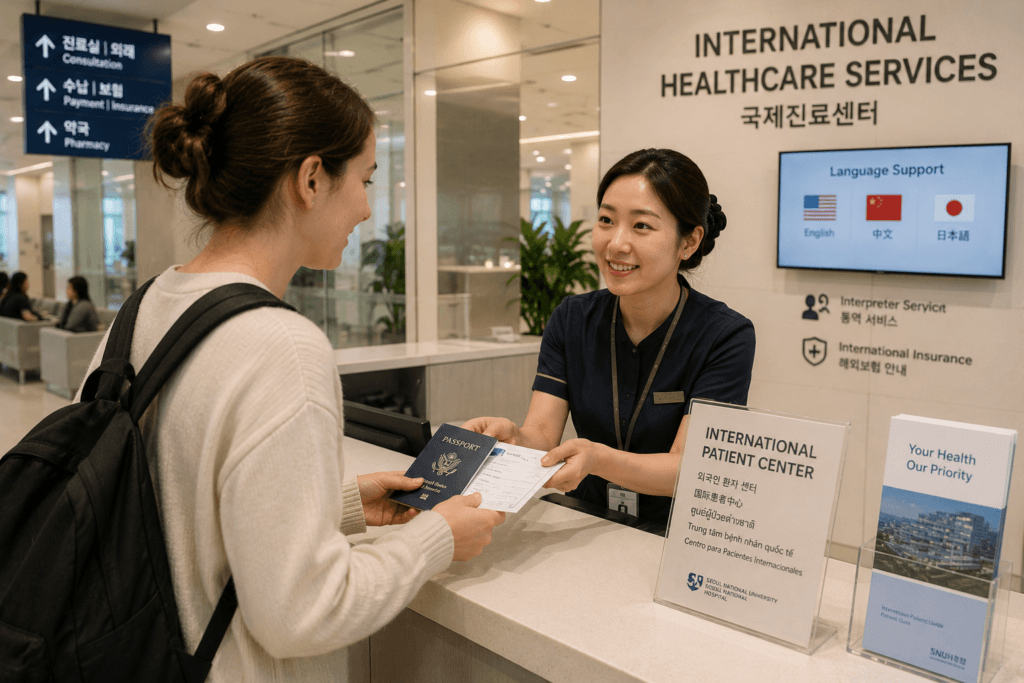
Korea has high-quality medical care, especially in major cities.
Many large hospitals have international clinics or foreign patient services. Some clinics in tourist areas also provide basic English support.
If you need medical care in Korea, the general process may look like this:
- Visit a clinic, hospital, or emergency room.
- Show your passport and travel insurance details if requested.
- Pay for treatment directly.
- Collect receipts, medical reports, prescriptions, and payment records.
- Submit a claim to your insurance company after treatment.
Some insurers may offer direct billing with certain hospitals, but do not assume this is available everywhere.
Before departure, save your insurer’s emergency phone number and claim instructions.
Keep digital and printed copies of:
- Travel insurance policy
- Emergency assistance number
- Passport
- Medical history summary if needed
- Medication list
- Allergy information
- Emergency contact
The hospital visit is stressful enough. Do not make your future self search through 900 screenshots named “IMG_4829.”
Short-Term Tourists and Korean National Health Insurance
Most short-term tourists should not expect to be covered by Korea’s National Health Insurance.
Korea’s National Health Insurance system mainly applies to residents and eligible long-term foreign nationals. Foreigners who stay in Korea for more than six months may become subject to mandatory enrollment depending on their status.
This is very different from a short tourist trip.
If you are visiting Korea for a short vacation, you should plan as if you are responsible for your own medical costs unless your travel insurance or home insurance covers them.
Long-term visitors, students, workers, and residents should check their own visa and insurance rules carefully.
Travel Insurance for Hiking in Korea
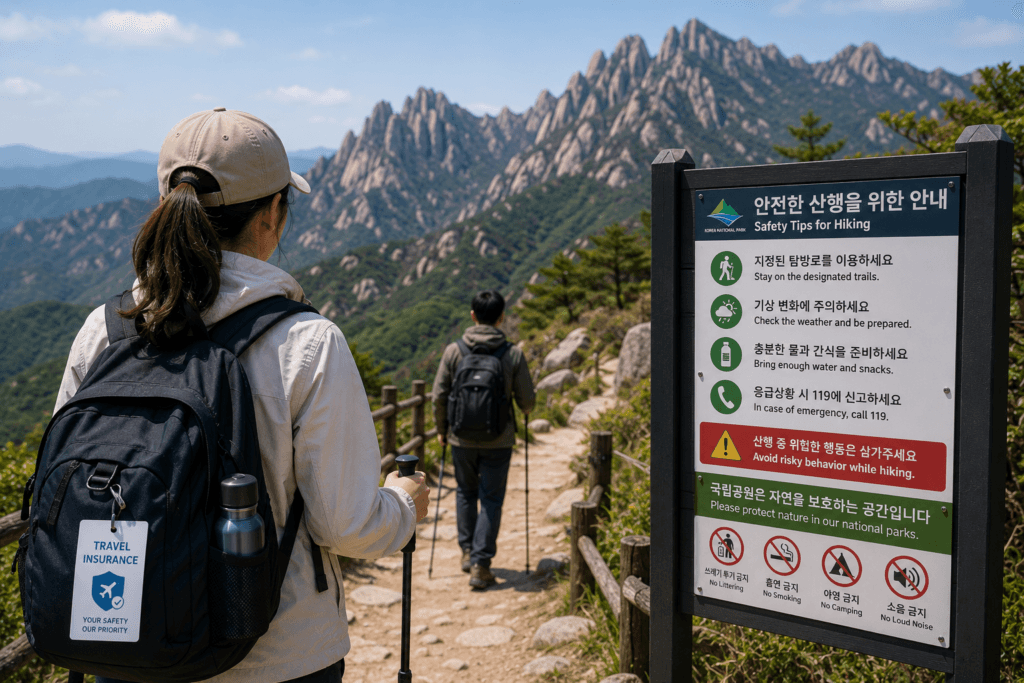
Korea is a fantastic hiking destination.
Popular hiking areas include:
- Bukhansan National Park
- Seoraksan National Park
- Hallasan National Park
- Namsan trails
- Jeju Olle trails
- Coastal and mountain routes around the country
Hiking in Korea can be beautiful, but trails can also be steep, icy, slippery, rocky, or weather-sensitive.
If you plan to hike, check whether your insurance covers:
- Hiking
- Mountain trails
- Accidental injury
- Search or rescue costs
- Emergency treatment
- Weather-related delays
- Outdoor activities
Some policies cover normal hiking but exclude technical climbing, high-altitude routes, or risky activities.
For Jeju hiking, read Hallasan National Park Guide 2026 and Jeju Travel Guide 2026.
For seasonal planning, read Best Time to Visit South Korea in 2026, Korea Weather by Month, and Is Korea Worth Visiting During the Rainy Season?
Travel Insurance for Winter Sports in Korea
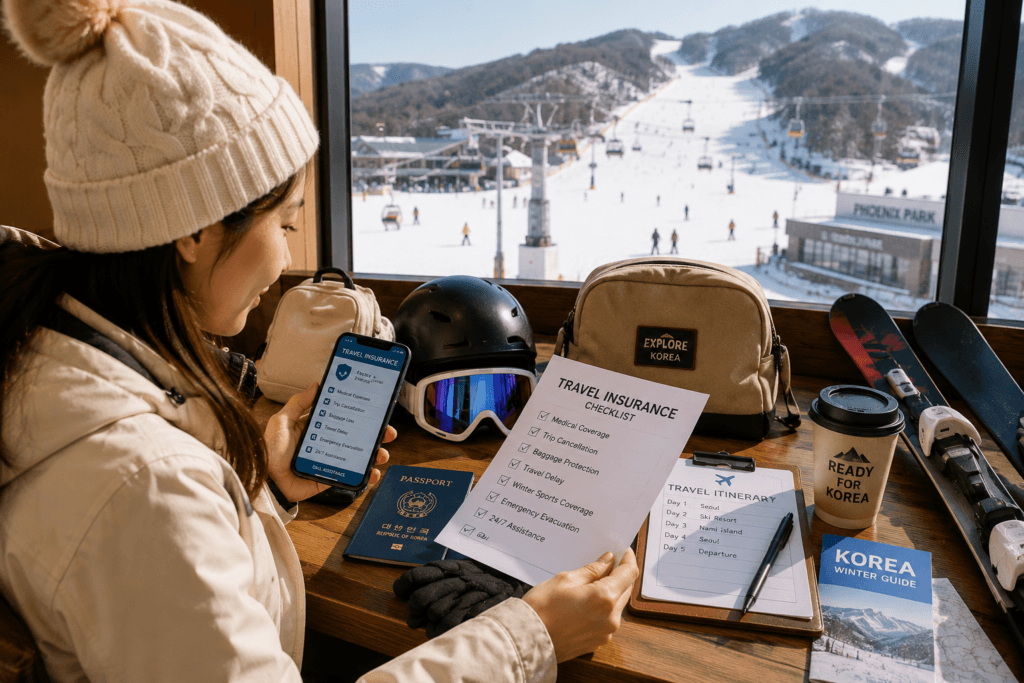
Korea is a popular winter travel destination, especially in Gangwon Province.
Visitors may try:
- Skiing
- Snowboarding
- Snow sledding
- Winter resort activities
Winter sports are often not automatically covered by basic travel insurance.
Before skiing or snowboarding, check whether your policy includes winter sports coverage.
Look for coverage for:
- Skiing
- Snowboarding
- Equipment damage or loss
- Ski lift closure
- Winter sports medical treatment
- Personal liability during winter activities
- Rescue or transport if needed
If winter sports are excluded, you may need to add extra coverage.
Snow is pretty. Medical bills are less decorative.
Travel Insurance for Jeju, Busan, and Multi-City Trips
Travel insurance becomes more useful when your itinerary includes several cities.
A Seoul-only trip is usually easier to adjust if something changes. A multi-city route has more moving parts.
Insurance may be helpful if your trip includes:
- Seoul to Busan by KTX
- Jeju flights
- Car rental in Jeju
- Ferry trips
- Gyeongju side trips
- Gangneung coastal travel
- Prepaid hotels in multiple cities
- Non-refundable tours
- Weather-sensitive activities
For multi-city planning, read Korea KTX Guide 2026, Busan Travel Guide 2026, Gyeongju Travel Guide 2026, Jeju Travel Guide 2026, and Gangneung Travel Guide 2026.
Travel Insurance and K-Beauty Treatments
Korea is popular for skincare, dermatology, beauty treatments, head spas, and cosmetic procedures.
However, travel insurance may not cover elective beauty treatments, cosmetic procedures, or complications from treatments you choose for non-medical reasons.
This is extremely important.
If your Korea trip includes clinics, dermatology, cosmetic surgery, or aesthetic procedures, check your insurance policy carefully before booking.
Ask:
- Are elective treatments covered?
- Are complications from cosmetic procedures covered?
- Is outpatient treatment covered?
- Are follow-up visits covered?
- What documents are required for claims?
- Does the clinic provide English medical documents?
For beauty-related planning, read K-Beauty Treatments in Seoul, Korean Head Spa Guide, Korean Pharmacy Skincare Guide 2026, and Personal Color Analysis in Seoul Guide.
What Is Usually Not Covered?
Many travelers assume travel insurance covers everything.
It does not.
Common exclusions may include:
- Pre-existing medical conditions
- Cosmetic procedures
- Elective treatments
- Extreme sports
- Winter sports without add-on coverage
- Alcohol-related incidents
- Illegal activities
- Unattended belongings
- High-value electronics above policy limits
- Claims without receipts
- Cancellations for reasons not listed in the policy
- Normal travel inconvenience
- Known events purchased after the issue became public
Always read the policy wording before buying.
Insurance documents are not thrilling literature, but they do contain the plot twist.
Korea Emergency Numbers for Travelers
Save these numbers before arrival:
| Service | Number |
|---|---|
| Police | 112 |
| Fire and Ambulance | 119 |
| Medical Emergency Information | 1339 |
| Korea Travel Helpline | 1330 |
Use 112 for police emergencies.
Use 119 for fire or ambulance emergencies.
Use 1339 for medical emergency information.
Use 1330 for tourist information, interpretation, and travel assistance.
Reliable mobile data can make it much easier to access maps, hospital information, translation apps, insurance documents, and emergency contacts.
Read Best eSIM for Korea 2026, Korea SIM Card Guide 2026, and Korea Internet Guide 2026 before departure.
What to Do If You Need Medical Help in Korea
If the situation is serious, call 119 or go to the nearest emergency room.
For less urgent issues, you may visit a clinic, international clinic, or hospital outpatient department.
A practical process:
- Contact your insurer’s emergency assistance line.
- Ask which hospital or clinic they recommend.
- Confirm whether direct billing is possible.
- Bring your passport and insurance details.
- Keep all receipts and medical reports.
- Ask for documents in English if possible.
- Save prescriptions and payment records.
- Submit your claim as soon as possible.
If you are unsure where to go, ask your hotel, call 1330 for travel assistance, or use hospital information services.
For translations, Papago or another translation app can help, but do not rely on machine translation for serious medical decisions if professional help is available.
What Documents Should You Keep?
If you need to make a claim, documents matter.
Keep:
- Medical receipts
- Diagnosis notes
- Doctor reports
- Prescription records
- Hospital payment confirmations
- Police report if theft occurs
- Airline delay confirmation
- Baggage delay report
- Hotel receipts for delay expenses
- Tour cancellation proof
- Photos of damaged belongings
- Original purchase receipts for expensive items
No documents, no claim. Or at least, no easy claim.
A small folder in your email or cloud storage can save a lot of trouble later.
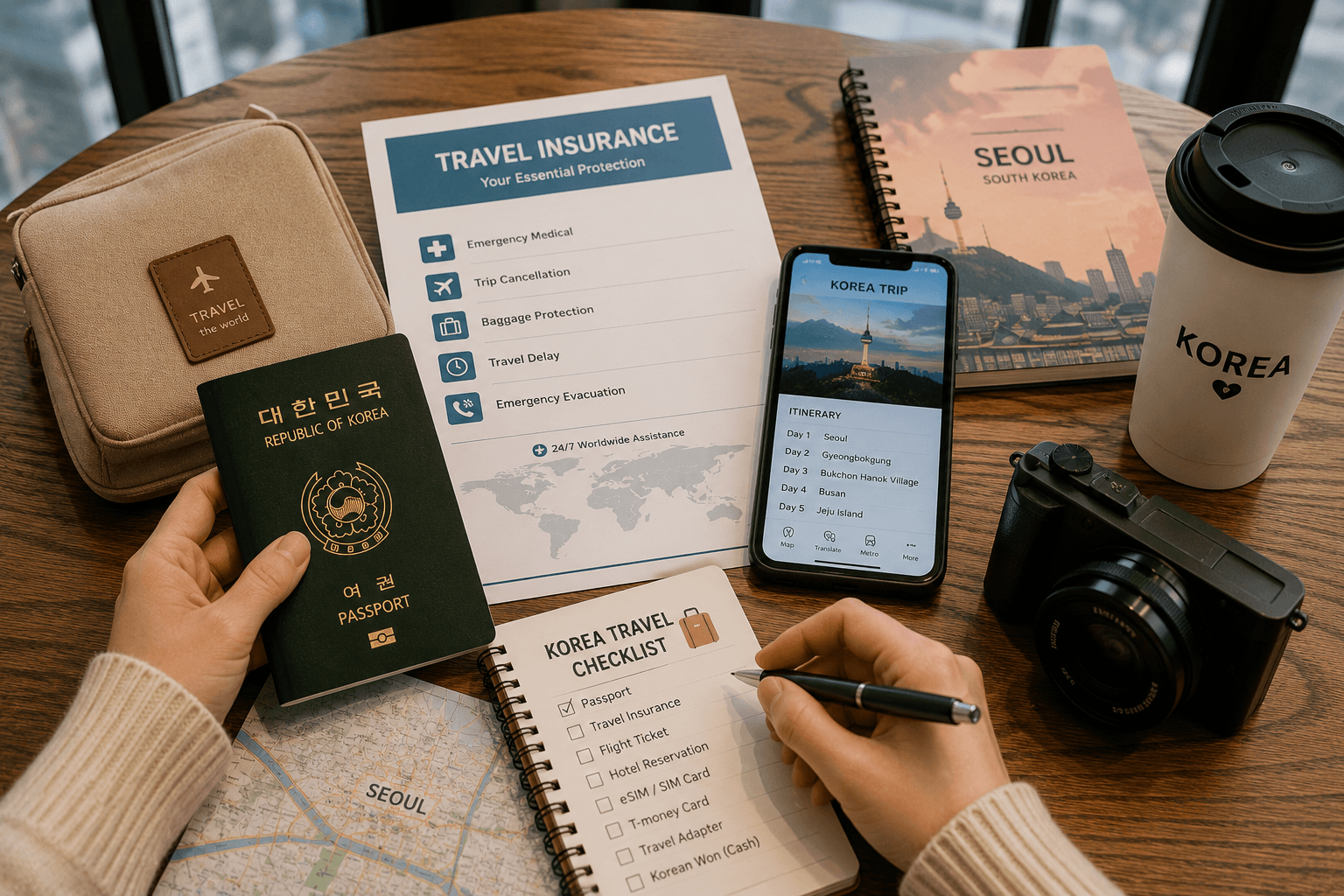
Travel Insurance Checklist Before Visiting Korea
Before departure, check that your policy includes:
- Emergency medical treatment
- Hospitalization
- Emergency evacuation
- Repatriation
- Trip cancellation
- Trip interruption
- Travel delay
- Lost or delayed baggage
- Personal belongings
- Personal liability
- Hiking coverage if needed
- Winter sports coverage if needed
- Rental car coverage if driving in Jeju
- Coverage for pre-existing conditions if relevant
Also prepare:
- Digital copy of policy
- Printed copy of policy
- Emergency assistance phone number
- Claim instructions
- Passport copy
- Medication list
- Allergy information
- Emergency contacts
- Proof of major bookings
If your trip includes several cities, keep all hotel, train, flight, ferry, and tour confirmations organized.
Common Travel Insurance Mistakes
The first mistake is buying the cheapest policy without checking medical limits.
Low-cost insurance can be fine, but only if it covers what you actually need.
The second mistake is assuming hiking or skiing is automatically covered.
Outdoor activities may require extra coverage.
The third mistake is ignoring pre-existing condition rules.
If you have a medical condition, read the policy carefully.
The fourth mistake is not saving the emergency assistance number.
You do not want to hunt for it while stressed.
The fifth mistake is throwing away receipts.
Receipts are the breadcrumbs that lead your claim out of the forest.
The sixth mistake is buying insurance after a problem is already known.
Insurance usually does not cover events that were already foreseeable before you bought the policy.
Finally, do not assume your credit card travel insurance covers everything. Some credit card benefits are limited and may require you to pay for the trip with that card.
Frequently Asked Questions
Do I need travel insurance to enter Korea?
For most short-term tourists, travel insurance is not required to enter South Korea in 2026. However, it is recommended because tourists are generally responsible for their own medical and travel disruption costs.
Is healthcare expensive in Korea for tourists?
Routine care may be manageable, but emergency treatment, hospitalization, surgery, or medical evacuation can become expensive without insurance.
Does Korea have good hospitals?
Yes. Korea has modern hospitals and high-quality medical care, especially in major cities. Many large hospitals offer international clinics or support for foreign patients.
Does travel insurance cover hiking in Korea?
Some policies cover normal hiking, while others exclude mountain activities or require adventure activity coverage. Check your policy before hiking places such as Bukhansan, Seoraksan, or Hallasan.
Is skiing covered by travel insurance?
Not always. Skiing and snowboarding may require winter sports coverage or an add-on policy.
Does travel insurance cover K-beauty treatments?
Usually, basic travel insurance does not cover elective cosmetic or beauty treatments. Check your policy carefully before booking clinics or procedures.
What should I do if I visit a hospital in Korea?
Contact your insurer, keep all receipts and medical documents, ask for English documents if possible, and submit your claim according to your policy rules.
What emergency number should tourists call in Korea?
Call 112 for police, 119 for fire or ambulance, 1339 for medical emergency information, and 1330 for Korea travel assistance.
Should I rely on credit card travel insurance?
Credit card travel insurance can be helpful, but coverage may be limited. Check medical limits, exclusions, trip cancellation rules, and whether you must pay for the trip with that card.
When should I buy travel insurance?
It is usually best to buy travel insurance soon after booking major trip expenses, especially if you want trip cancellation or interruption coverage.
Recommended Travel Services
These can help with safety, connectivity, and arrival planning:
- Korea eSIM plans for travelers
- Korea SIM card options
- Private Incheon Airport transfer to Seoul
- Korea travel activities and tickets
- Seoul hotel deals for first-time visitors
Related Guides
Continue planning your Korea trip with these guides:
- South Korea Entry Requirements 2026
- Korea Travel Costs Guide 2026
- Cash vs Card in Korea 2026
- Korean Currency Guide 2026
- Korea ATM Guide 2026
- Best eSIM for Korea 2026
- Korea SIM Card Guide 2026
- Korea Internet Guide 2026
- Best Apps for Korea Travel 2026
- Is Korea Worth Visiting During the Rainy Season?
- Hallasan National Park Guide 2026
- Jeju Travel Guide 2026
- Korea KTX Guide 2026
- K-Beauty Treatments in Seoul
Final Thoughts
Travel insurance is not the most exciting part of planning a Korea trip, but it can be one of the smartest.
For most short-term tourists, Korea does not require travel insurance for entry. Still, a good policy can protect you from medical expenses, trip disruptions, lost luggage, delays, winter sports accidents, hiking injuries, and other problems that are much easier to handle with support.
Korea is safe, modern, and convenient. But travel can still surprise you.
The best approach is simple: check your coverage before departure, save emergency numbers, keep insurance documents on your phone, prepare mobile data, and keep receipts if something happens.
Then you can focus on the better parts of Korea: food, neighborhoods, mountains, shopping, trains, cafes, and the small joy of arriving prepared instead of panicked.