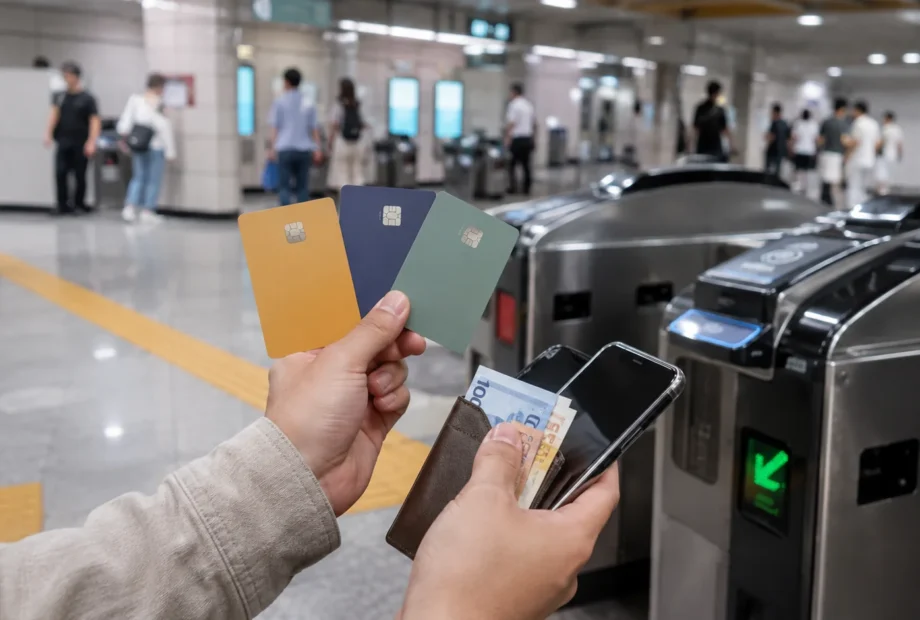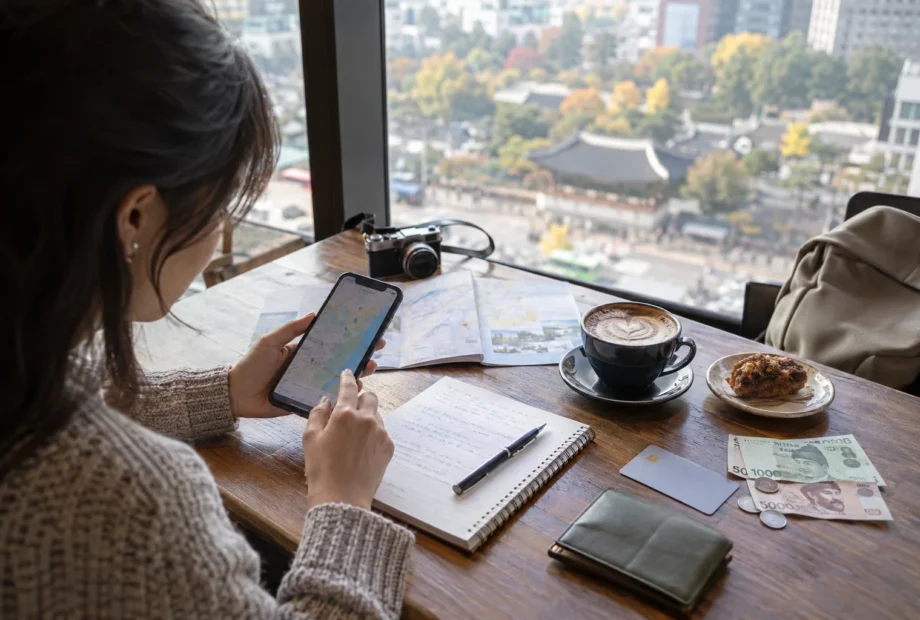
Can I use my credit card everywhere, or should I bring cash?
The practical answer is this: cards work almost everywhere in Korea, but carrying a small amount of cash is still a smart idea.
South Korea is one of the most card-friendly countries in Asia. Hotels, department stores, shopping malls, convenience stores, coffee shops, popular restaurants, airports, train stations, and tourist attractions usually accept cards without much trouble.
But cash has not disappeared.
Traditional markets, street food stalls, small local restaurants, older vendors, some rural areas, transportation card top-ups, and emergency situations can still make cash useful.
This guide explains when to use cash, when to use cards, how much Korean won tourists should carry, which cards work best, whether mobile payments are useful for foreigners, and the best payment strategy for travelers visiting Korea in 2026.
If you are planning your money setup, also read Korean Currency Guide 2026, Korea ATM Guide 2026, Korea Tax Refund Guide 2026, and T-money Card Guide for Tourists in Korea.
This article may contain affiliate links, which means we may earn a small commission if you book through them, at no extra cost to you.
Table of contents
Quick Answer: Should You Bring Cash or Card to Korea?
Bring both.
For most travelers, the best payment strategy in Korea is:
- Use cards for most purchases
- Carry a small amount of Korean won for backup
- Use T-money for subway and bus rides
- Keep at least two different cards
- Use cash for markets, street food, small vendors, and emergencies
A good starting amount is around 50,000 to 100,000 KRW in cash for short trips. You can withdraw more later if needed.
You do not need to carry a thick envelope of cash like you are funding a secret palace renovation. Korea is very card-friendly. But having no cash at all can still create small problems at exactly the wrong moment.
Can You Use Credit Cards Everywhere in Korea?
For most tourist situations, yes, cards are widely accepted.
International visitors can usually use credit or debit cards at:
- Hotels
- Department stores
- Shopping malls
- Convenience stores
- Coffee shops
- Popular restaurants
- Museums and attractions
- Airports
- KTX stations
- Pharmacies
- Beauty stores
- Many taxis
- Large chain stores
Visa and Mastercard are the safest card networks to bring. They are accepted at most businesses that take international cards.
Many travelers spend several days in Seoul without using cash at all.
However, “almost everywhere” is not the same as “everywhere.”
That tiny difference is where travel inconvenience likes to hide.
Why Korea Is So Card-Friendly
Korea has a highly developed payment culture.
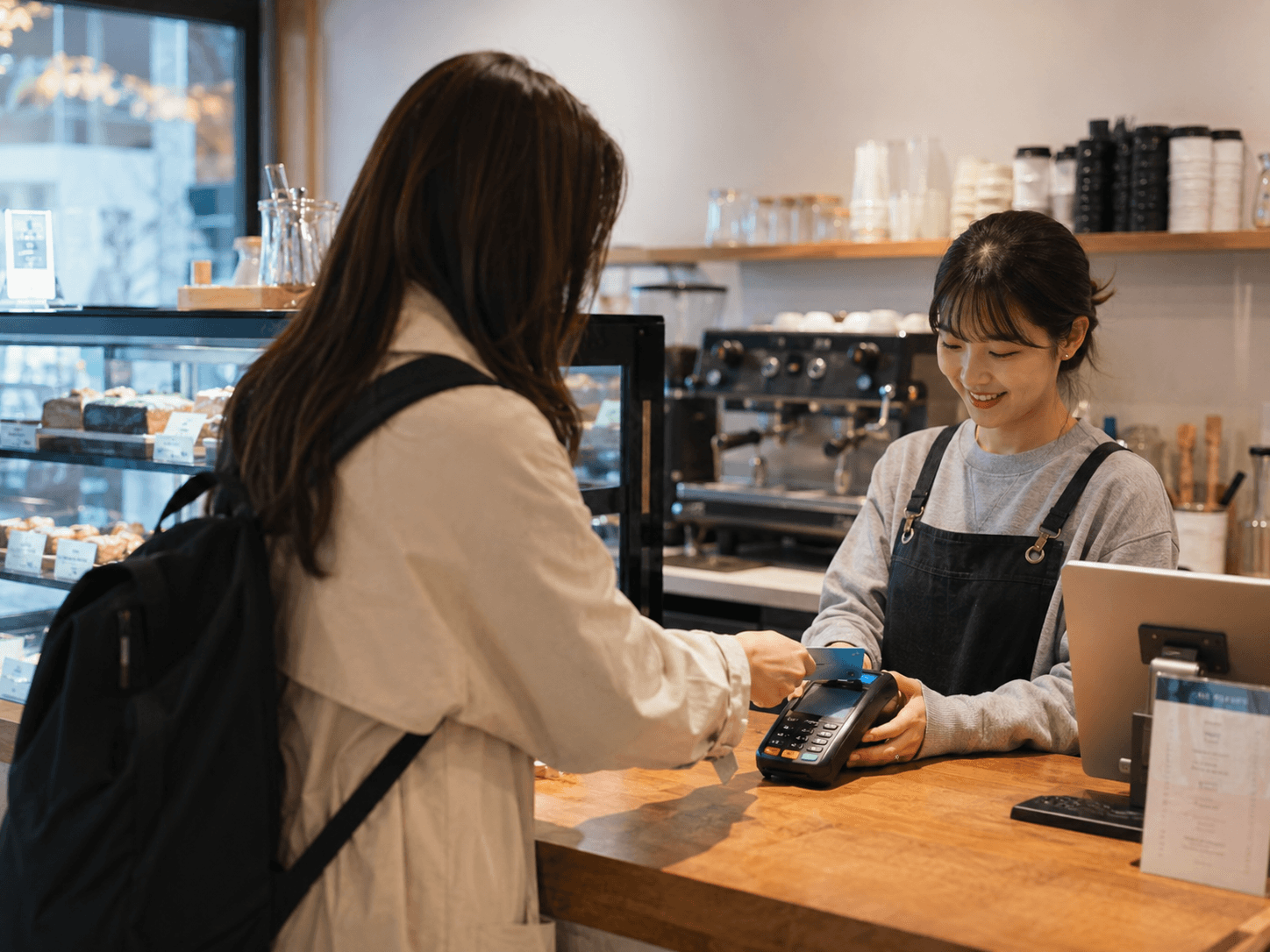
Local residents commonly use credit cards, debit cards, mobile wallets, prepaid cards, and contactless payment systems for daily purchases. Paying by card at cafes, restaurants, convenience stores, and shops is normal.
For tourists, this means you usually do not need large amounts of cash.
Card payments are especially convenient for:
- Hotel bookings
- Shopping
- Restaurants
- Cafes
- Cosmetics stores
- Department stores
- Electronics stores
- Attraction tickets
- KTX tickets
- Travel bookings
Using a card also gives you a transaction record, which can be useful for budgeting, purchase tracking, and tax refund claims.
When Cash Is Still Useful in Korea
Cash is still helpful in specific situations.
You may need cash at:
- Traditional markets
- Street food stalls
- Small local restaurants
- Older family-run shops
- Rural areas
- Local festivals
- Some parking areas
- Some taxis or small vendors
- Transportation card top-ups
- Emergency backup situations
Markets are the biggest reason to carry cash.
Places such as Gwangjang Market, Namdaemun Market, and smaller local markets may have vendors who prefer cash, accept only Korean payment apps, or have trouble with foreign cards.
Cards are becoming more common even in markets, but cash is still easier in many small-stall situations.
If food markets are on your itinerary, read Gwangjang Market Travel Guide 2026, Namdaemun Market Travel Guide 2026, and Best Korean Street Food Guide 2026.
How Much Cash Should Tourists Carry?
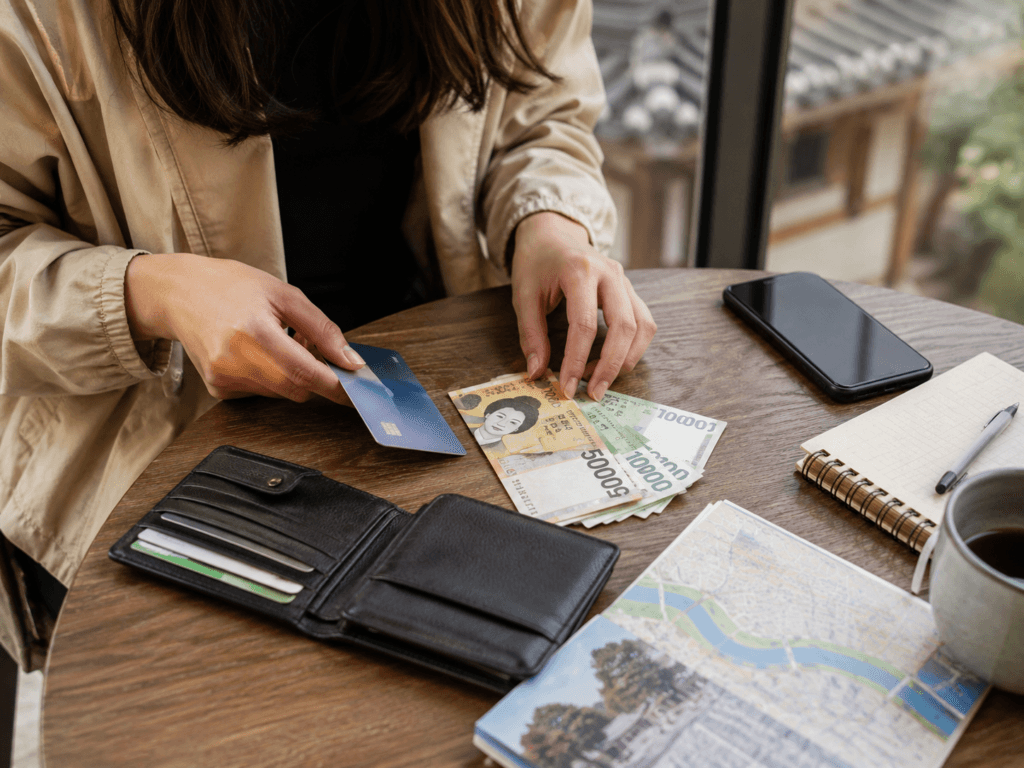
Most tourists do not need much cash in Korea.
For a typical trip, carrying 50,000 to 100,000 KRW is a good starting range.
This amount can cover:
- Street food
- Market snacks
- Small purchases
- Emergency taxi fare
- T-money recharge
- Cash-only vendors
- Backup spending if a card fails
For short Seoul trips, 50,000 KRW may be enough to start.
For longer trips, family travel, or market-heavy itineraries, 100,000 KRW feels safer.
You can always withdraw more from an international ATM if needed.
The goal is not to use cash for everything. The goal is to avoid standing in front of a hotteok stall with no Korean won and a very sad snack destiny.
Best Payment Strategy for Korea Travel
The best strategy is simple:
Use cards for most purchases and keep cash as backup.
A realistic split for many tourists looks like this:
- 80 to 90% card
- 10 to 20% cash
Use cards for:
- Hotels
- Shopping
- Restaurants
- Cafes
- Attractions
- KTX tickets
- Beauty stores
- Department stores
- Online bookings
Use cash for:
- Traditional markets
- Street food
- Small vendors
- T-money recharge
- Emergency backup
- Rural or less touristy areas
This gives you the best mix of convenience and flexibility.
Which Cards Work Best in Korea?
The safest options are Visa and Mastercard.
Bring at least two cards if possible, ideally from different networks or different banks.
Visa
Visa is one of the most reliable international card networks in Korea.
It works at most businesses that accept foreign cards.
Mastercard
Mastercard is also widely accepted and is a strong backup or main card.
Many experienced travelers bring one Visa and one Mastercard.
American Express
American Express can work in many larger hotels, department stores, and major businesses, but acceptance may be less consistent than Visa or Mastercard.
Do not rely on American Express as your only card.
UnionPay
UnionPay is accepted in many tourist-friendly places, especially shopping districts, duty-free stores, and areas popular with Chinese visitors.
Debit Cards
International debit cards can work for purchases and ATM withdrawals, but reliability depends on your bank, card network, and merchant terminal.
Tell your bank before travel if needed, and check foreign transaction fees.
Why You Should Bring Two Cards
Bringing only one card is risky.
Cards can fail for many reasons:
- Fraud protection blocks
- Bank security checks
- Damaged card chips
- Network issues
- Merchant terminal errors
- Foreign card restrictions
- Daily spending limits
A backup card can save your trip from a small financial thunderstorm.
Keep the second card in a separate place from your wallet if possible.
Can You Use Contactless Cards in Korea?
Contactless payments are becoming more common in Korea, especially at modern stores, cafes, and major chains.
However, contactless support is not universal for foreign cards.
Sometimes the terminal accepts tap-to-pay. Sometimes the staff may insert or swipe the card instead. Sometimes the payment terminal behaves like it is pondering philosophy.
Carry a physical card, not only a phone wallet.
For tourists, physical Visa or Mastercard is still the safest payment tool.
Can Tourists Use Mobile Payments in Korea?
Local mobile payments are very popular among Korean residents.
Common Korean payment systems include:
- Kakao Pay
- Naver Pay
- Samsung Pay
- Toss
- Local bank apps
However, these are not always easy for short-term foreign visitors to use. Some services may require a Korean phone number, Korean bank account, identity verification, or local app setup.
For most tourists, international credit cards are easier than trying to set up Korean mobile payment systems.
Use mobile payments only if they work naturally for you. Do not build your entire trip around setting up local payment apps.
If you need mobile data for banking apps, payment notifications, or card alerts, read Best eSIM for Korea 2026, Korea SIM Card Guide 2026, and Korea Internet Guide 2026.
What About WOWPASS?
WOWPASS is a prepaid card service designed for foreign travelers in Korea.
It can combine currency exchange, card payments, balance checking, and transportation card functions depending on setup. Many visitors like it because it can feel more Korea-friendly than relying only on foreign cards.
WOWPASS can be useful if:
- You want a prepaid spending card
- You want to manage a fixed travel budget
- Your foreign card often has problems
- You want a card designed for tourists
- You prefer app-based balance checking
- You want exchange and payment features in one system
However, WOWPASS is not mandatory.
Many travelers do perfectly fine with:
- One Visa card
- One Mastercard
- Some cash
- T-money for transport
Think of WOWPASS as an optional convenience tool, not a required Korea travel pass.
What About T-money?
T-money is not the same as a credit card.
It is a rechargeable transportation card used for subways, buses, and some other small payments. For most tourists, it is still one of the easiest ways to use public transportation in Korea.
Use T-money for:
- Subway rides
- City buses
- Transfers
- Some taxis
- Some convenience store purchases
Even though Seoul has expanded support for overseas cards at some subway ticket machines, many travelers still prefer T-money because it is simple for repeated daily transport.
One important thing: T-money recharge may still require cash in many common tourist situations.
That is one reason carrying Korean won is useful.
Read T-money Card Guide for Tourists in Korea and Seoul Subway Guide 2026 before your first ride.
Can You Buy Subway Tickets with Foreign Cards?
In Seoul, overseas-issued cards are becoming more useful for subway ticketing.
Some new ticket machines on Seoul subway lines now accept internationally issued credit and debit cards for single-journey tickets and Climate Cards.
This is good news for tourists.
But it does not mean every transportation situation is now card-only or friction-free. Subway lines, ticket machines, card types, and routes can still vary.
For the smoothest everyday travel, many visitors still use T-money.
If you are staying in Seoul for several days, compare T-money and Climate Card options before choosing.
Read Seoul Subway Guide 2026 and T-money Card Guide for Tourists in Korea for more details.
Should You Exchange Money Before Arriving?
You do not need to exchange a large amount before arriving in Korea.
Many travelers bring a small amount of Korean won or withdraw cash after arrival.
A practical strategy is:
- Bring a small amount of KRW if convenient
- Use your card for most spending
- Withdraw more cash from a Global ATM if needed
- Avoid carrying too much cash at once
If your flight lands late at night, having some Korean won before arrival can be comforting. It is one less thing to solve while tired.
For cash basics, read Korean Currency Guide 2026.
Using ATMs in Korea
ATMs are widely available in Korea, but not every ATM works with foreign cards.
Look for machines marked:
- Global ATM
- International ATM
- Foreign card accepted
You can often find international ATMs at:
- Airports
- Subway stations
- Convenience stores
- Banks
- Shopping malls
- Tourist districts
Airport ATMs are useful for arrival cash.
Convenience store ATMs can be convenient, but fees may vary.
Before traveling, check:
- Your bank’s foreign ATM fee
- Daily withdrawal limit
- Foreign transaction fee
- Whether your card supports international withdrawals
- Whether your bank blocks overseas use by default
For ATM details, read Korea ATM Guide 2026.
Shopping in Korea: Cash or Card?
For most shopping, card is the better choice.
Use cards at:
- Olive Young
- Department stores
- Duty-free shops
- Shopping malls
- Fashion stores
- Electronics shops
- Beauty clinics
- Souvenir shops
- Major tourist stores
Cards are convenient and create a purchase record. This can be helpful when claiming a tax refund before leaving Korea.
For shopping planning, read Olive Young Guide 2026, Best K-Beauty Shopping in Seoul, Seoul Shopping Guide 2026, and Korea Tax Refund Guide 2026.
Markets and Street Food: Cash or Card?
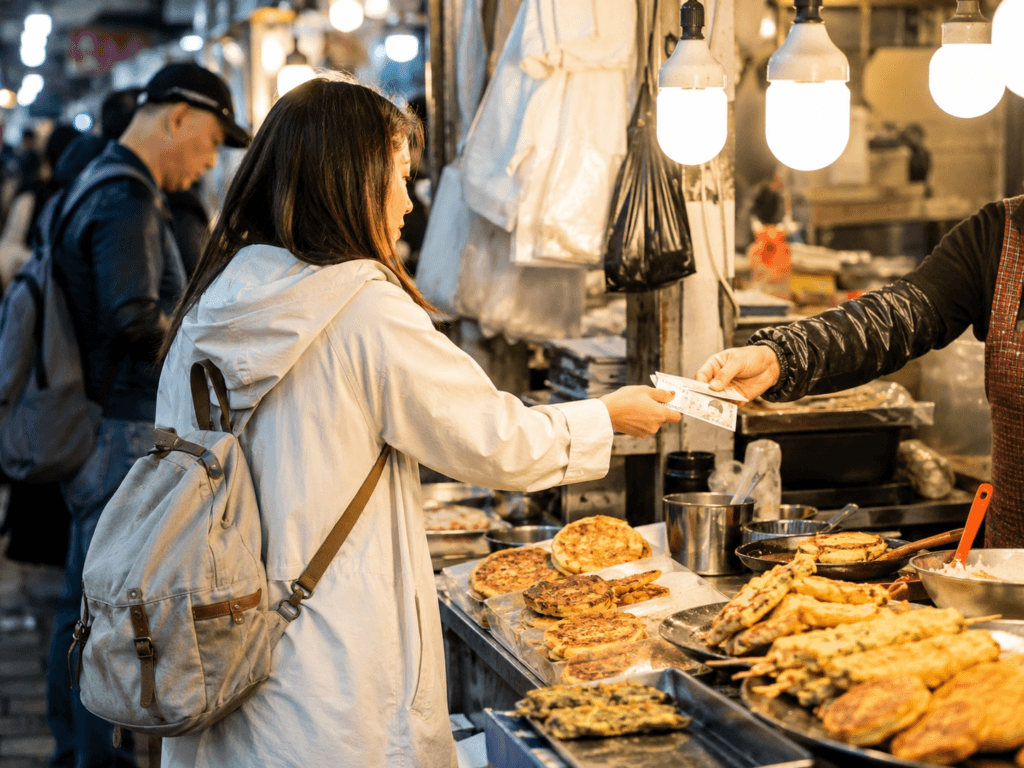
For markets and street food, carry cash.
Some vendors accept cards, especially in popular tourist markets. But small stalls may prefer cash, and some may not accept foreign cards.
Cash is useful at:
- Gwangjang Market
- Namdaemun Market
- Street food stalls
- Local markets
- Night market-style vendors
- Small snack stands
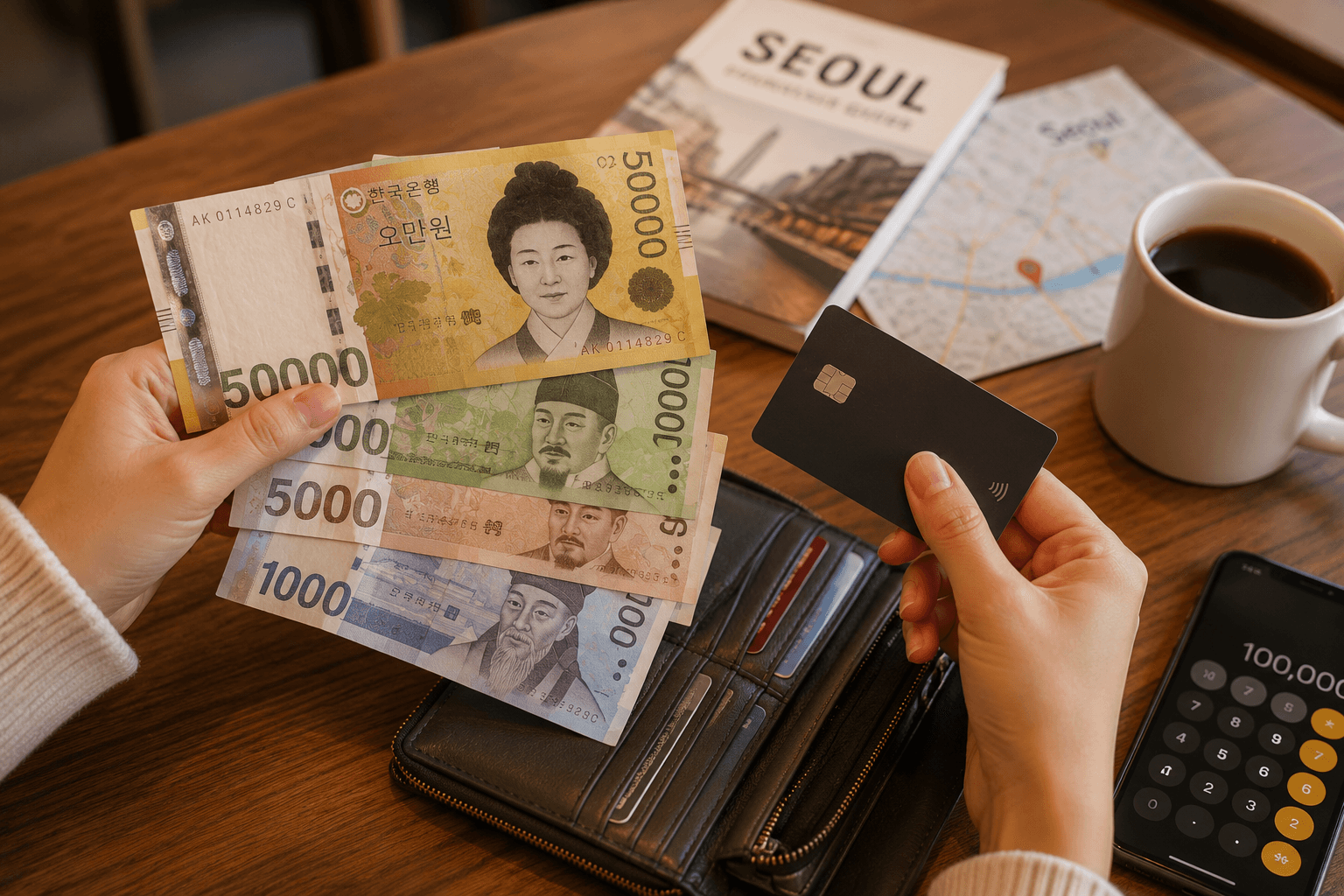
A few 1,000 KRW, 5,000 KRW, and 10,000 KRW notes are useful.
Street food is where cash quietly earns its place in your wallet.
Restaurants and Cafes: Cash or Card?
Most restaurants and cafes accept cards.
This is especially true in Seoul, Busan, Jeju, and major tourist areas.
Cards usually work well at:
- Coffee chains
- Brunch cafes
- Korean BBQ restaurants
- Fried chicken restaurants
- Casual restaurants
- Hotel restaurants
- Shopping mall food courts
- Convenience stores
Cash can still be useful at older local restaurants, market food stalls, or tiny family-run places.
For food planning, read What to Eat in Korea, Korean BBQ Guide 2026, Korean Fried Chicken Guide 2026, and Korean Convenience Store Food Guide 2026.
Taxis: Cash or Card?
Most taxis in Korea accept cards, but it is still smart to carry a little cash as backup.
If you use a taxi app, payment options may depend on the app setup, your card, and foreign user support.
For regular taxis, many accept credit cards and transportation cards, but occasional issues can happen.
Late at night, with luggage, or after a long flight, a backup payment method is comforting.
For airport arrivals, compare How to Get from Incheon Airport to Seoul, Korea Airport Bus Guide 2026, and Private Incheon Airport transfer to Seoul.
Budget Planning: Cash and Card Together
Cash and card planning is part of your travel budget.
Tourists often think about hotels, flights, and food, then forget smaller expenses such as:
- Subway fares
- Airport transportation
- T-money recharge
- ATM fees
- Taxi backup
- Market snacks
- Coin lockers
- Small souvenirs
- Laundry
- Emergency purchases
For a full cost breakdown, read Korea Travel Costs Guide 2026, Seoul Budget Travel Guide 2026, and Seoul on $50 a Day.
Common Payment Mistakes Tourists Make
The first mistake is bringing only one card.
Always bring a backup card if possible.
The second mistake is carrying no cash at all.
Korea is card-friendly, but cash still helps at markets, street stalls, transportation card top-ups, and emergencies.
The third mistake is relying only on mobile wallets.
Physical cards are still safer for tourists.
The fourth mistake is forgetting foreign transaction fees.
A card that works perfectly can still quietly nibble your budget with fees.
The fifth mistake is not checking ATM access before traveling.
Make sure your debit card can withdraw cash overseas.
The sixth mistake is assuming every Korean payment app works for foreigners.
Some local apps require Korean phone numbers, local bank accounts, or identity verification.
Finally, do not keep all payment methods in one wallet. If you lose it, the day can become much louder than planned.
Frequently Asked Questions
Do I need cash in Korea in 2026?
Yes, but only a small amount. Most tourists can rely mainly on cards while keeping 50,000 to 100,000 KRW in cash for markets, street food, T-money recharge, and emergencies.
Can I use Visa and Mastercard in Korea?
Yes. Visa and Mastercard are widely accepted at hotels, restaurants, shops, cafes, convenience stores, and tourist facilities.
Is American Express accepted in Korea?
American Express is accepted in some larger businesses, hotels, and department stores, but it may be less reliable than Visa or Mastercard. Do not rely on it as your only card.
Are street food vendors cash only?
Some are cash-only or cash-preferred. Bring small bills when visiting traditional markets or street food areas.
Should I exchange money before arriving in Korea?
You do not need to exchange a large amount before arrival. Bringing a small amount or withdrawing cash from a Global ATM after arrival is usually enough.
Can tourists use Kakao Pay or Naver Pay?
Usually not easily. Many Korean mobile payment systems require local setup, identity verification, or Korean banking access. International cards are simpler for most tourists.
Is WOWPASS necessary in Korea?
No. WOWPASS can be useful for some travelers, but it is not required. Many visitors manage well with Visa, Mastercard, T-money, and some cash.
Can I use foreign cards for subway tickets?
Some Seoul subway ticket machines now accept overseas-issued cards for single-journey tickets and Climate Cards. For daily travel, many tourists still prefer using T-money.
Can I pay by card in taxis?
Most taxis accept cards, but it is wise to carry some cash as backup.
How much cash should I carry per day?
Many travelers do not need a fixed daily cash amount. Keep 50,000 to 100,000 KRW total as a flexible backup, then withdraw more if needed.
Recommended Travel Services
These can help with payments, transportation, and travel setup:
- Korea eSIM plans for travelers
- Korea SIM card options
- Private Incheon Airport transfer to Seoul
- Korea travel activities and tickets
- Seoul hotel deals for first-time visitors
Related Guides
Continue planning your Korea money and travel setup with these guides:
- Korean Currency Guide 2026
- Korea ATM Guide 2026
- Korea Tax Refund Guide 2026
- Korea Travel Costs Guide 2026
- T-money Card Guide for Tourists in Korea
- Seoul Subway Guide 2026
- Korea Internet Guide 2026
- Best eSIM for Korea 2026
- Korea Airport Bus Guide 2026
- How to Get from Incheon Airport to Seoul
- Olive Young Guide 2026
- Seoul Shopping Guide 2026
Final Thoughts
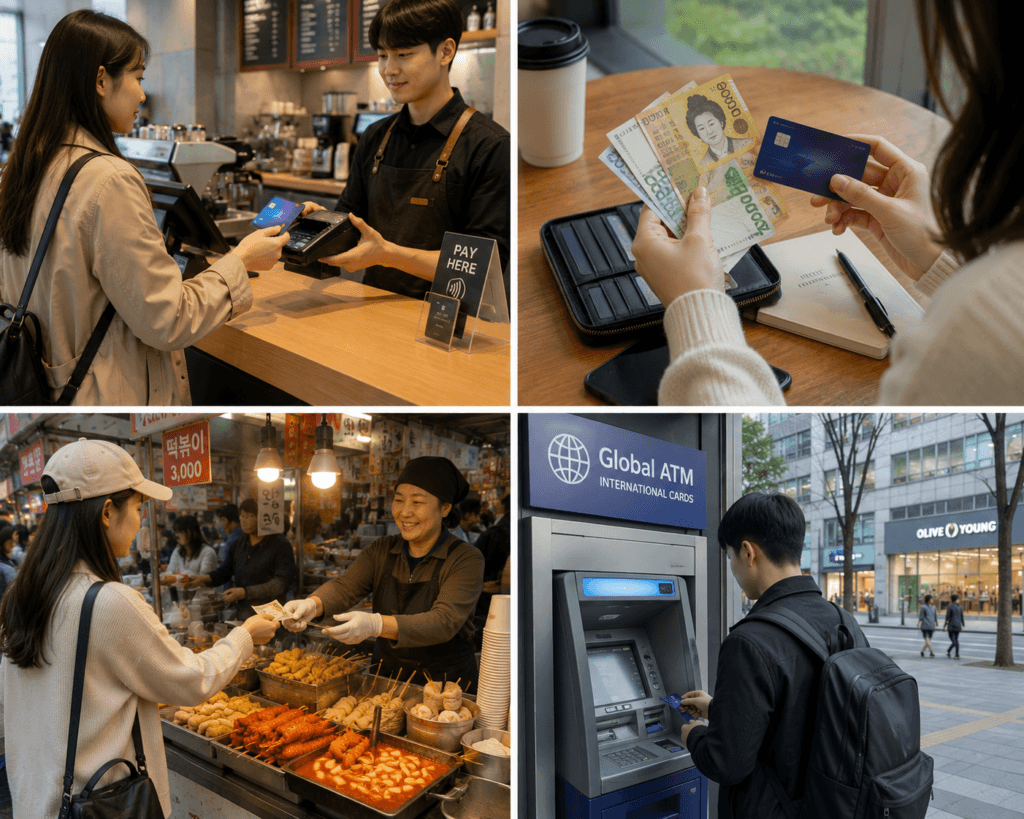
For most travelers visiting South Korea in 2026, cards should be your main payment method.
Visa and Mastercard work well in most hotels, restaurants, cafes, stores, tourist attractions, and travel facilities. You do not need to carry large amounts of cash.
At the same time, cash is still useful.
Traditional markets, street food stalls, small vendors, T-money recharge, taxis, and emergency situations can all make Korean won helpful.
The best strategy is simple: use cards for daily spending, carry a small cash backup, bring at least two cards, and prepare your transportation and internet setup before arrival.
With the right mix, you can travel through Korea without worrying every time the bill arrives.
Your wallet does not need to be heavy. It just needs to be ready.