The best day trip from Seoul is not always the most famous one.
It is the one that fits your starting time, the weather, your energy level, and how many buses you are willing to negotiate before lunch.
Some places are genuinely easy to visit independently. Suwon and Incheon can be reached by train or subway with only a little local planning. Other destinations are possible without a tour but become noticeably smoother with one. The DMZ has access restrictions, Gapyeong’s attractions are spread out, and Seoraksan requires a long journey before the walking even begins.
Then there are places such as Jeonju, Gangneung, and Danyang. They are not exactly close to Seoul, but Korea’s high-speed rail network makes them realistic day trips for travelers who do not mind an early alarm.
This guide covers 15 of the best day trips from Seoul in 2026, including transportation, realistic travel effort, seasonal considerations, and who each destination suits.
The goal is not to pretend that every place is equally convenient. A subway ride to Suwon and a mountain day at Seoraksan may both count as day trips, but they ask very different things from your morning.
Table of contents
Quick Comparison: Which Day Trip Fits You?
| Destination | Best for | Main transport | Effort | Best season |
|---|---|---|---|---|
| DMZ | Modern history | Guided tour | Easy with a tour | Spring to autumn |
| Nami Island | Seasonal scenery | ITX or tour | Moderate | Spring, autumn, winter |
| Suwon | History and walking | Train or subway | Easy | Spring and autumn |
| Incheon | Food, history, architecture | Subway | Easy | Year-round |
| Gangneung | Beaches and coffee | KTX | Moderate | Spring to autumn |
| Seoraksan | Hiking and mountains | Bus or tour | High | Spring and autumn |
| Jeonju | Hanok and food | KTX | Moderate | Spring and autumn |
| Everland | Theme parks and families | Shuttle or subway | Moderate | Year-round |
For the easiest independent trip, choose Suwon.
For a guided history trip, choose the DMZ.
For seasonal scenery, choose Nami Island.
For a beach day, choose Gangneung.
For hiking, choose Seoraksan.
For food and hanok streets, choose Jeonju.
For families, Everland and Korean Folk Village are the strongest options.
For a quieter day, Yangpyeong is a better fit than the headline attractions.
1. DMZ and the Third Tunnel
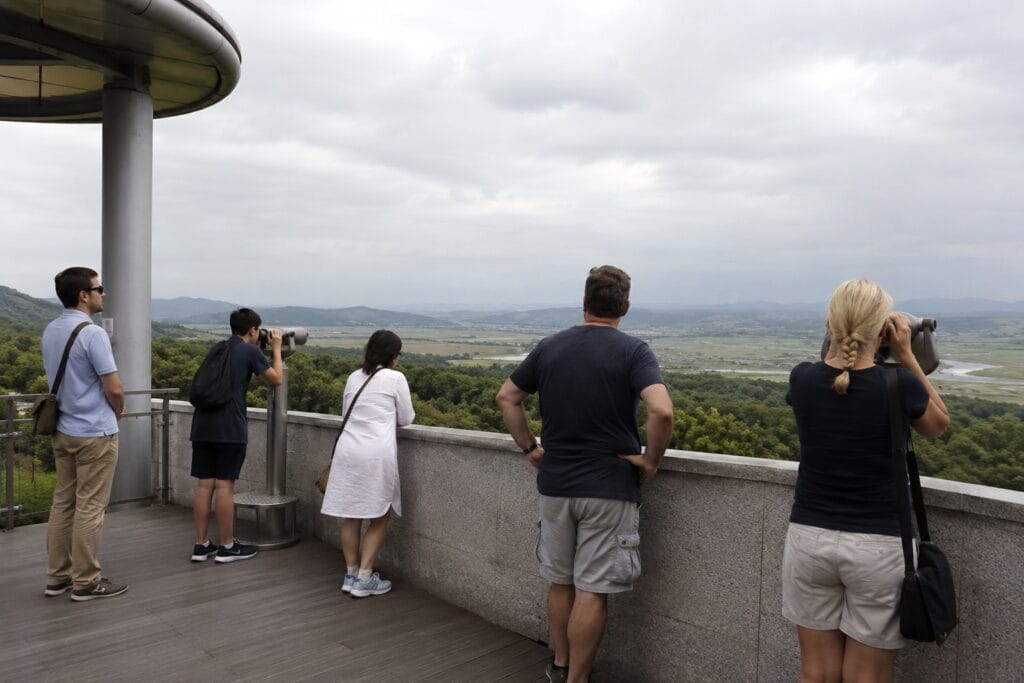
The DMZ is the most distinctive day trip from Seoul, but it is also the one with the most rules.
Most standard tours visit a selection of sites around Paju, such as Imjingak, the Third Infiltration Tunnel, Dora Observatory, and exhibitions connected to the Korean War and national division. The exact order can change according to military conditions, weather, traffic, and local access restrictions.
Bring your passport or another accepted form of identification.
This is not a detail to leave to chance. Identification checks are part of the visit, and tour companies normally require the passport information used during booking.
It is also important to understand the difference between the DMZ and the Joint Security Area.
Many travelers use the terms interchangeably, but the JSA at Panmunjom is a separate and much more restricted area. A normal DMZ tour does not automatically include it, and access may be suspended according to security conditions.
Do not assume that a tour mentioning “DMZ” includes Panmunjom or the JSA. Check the confirmed itinerary for your specific date.
What the day feels like
A DMZ visit is structured and bus-based.
You are not independently wandering through a military zone with a flexible route. The tour moves according to assigned access times, and there may be waiting periods before entering controlled sites.
The Third Tunnel is also more physically demanding than some visitors expect. The route is steep, enclosed, and humid. Travelers with mobility problems, serious knee issues, heart conditions, or severe claustrophobia may prefer to skip the tunnel and wait near the visitor facilities.
Tour or independent travel?
A guided tour is strongly recommended.
Parts of the wider border region can be visited independently, but reaching the main controlled attractions is much easier through an authorized operator.
A half-day tour works for travelers with limited time. Full-day versions may add a suspension bridge, observatory, or another Paju attraction.
The DMZ Tour Guide from Seoul explains passport requirements, tunnel access, tour types, and the difference between the DMZ and JSA in more detail.
2. Nami Island and Gapyeong
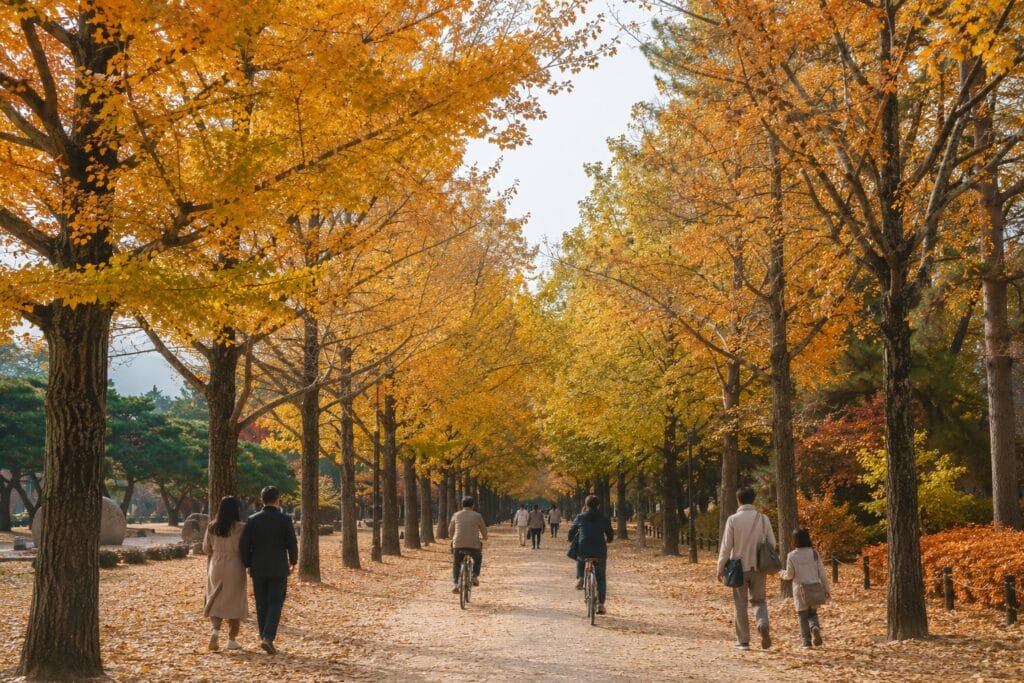
Nami Island is one of the most popular day trips from Seoul, but the island is only one part of the wider Gapyeong area.
The island itself is easy to understand. Take the ferry, walk beneath tree-lined paths, rent a bicycle, eat lunch, and return when you are ready.
The surrounding attractions require more planning.
The Garden of Morning Calm, Gapyeong Rail Bike, Petite France, and the Italian-themed village are spread across the region. Public transportation exists, but combining several of them can turn the day into a careful exercise in bus timing.
Nami Island only
Independent travel works well when Nami Island is your main goal.
Take an ITX-Cheongchun train from Yongsan or Cheongnyangni toward Gapyeong, then continue by local bus or taxi to the ferry terminal.
Reserve the ITX in advance when traveling on weekends, public holidays, or during peak foliage season.
A Nami Island-only trip leaves enough time for a slow walk, bicycle rental, riverside lunch, and perhaps one nearby stop.
Nami Island plus other attractions
A tour becomes more practical when combining three or four locations.
A common route includes Nami Island, the Garden of Morning Calm, and either a rail bike or one of the themed villages.
The main advantage is not that independent travel is impossible. It is that a tour removes several transfers between attractions that were not built around one convenient railway station.
Best season
Autumn is popular for foliage, while spring brings fresh green landscapes and flowers.
Winter creates a quieter island with bare trees, cold air, and occasional snow. Summer is green but humid, so cycling and long walks are more comfortable earlier in the day.
The Nami Island Guide 2026 covers ferry tickets, transport, seasonal scenery, and realistic attraction combinations.
3. Suwon Hwaseong Fortress
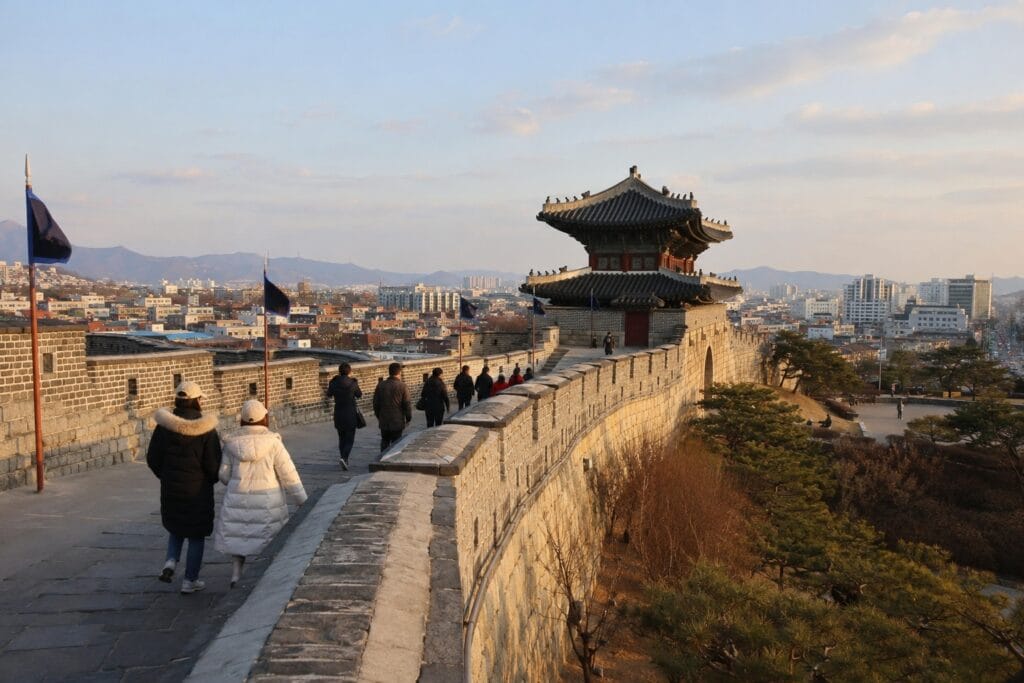
Suwon is one of the strongest all-round day trips from Seoul.
It has UNESCO-listed history, a long fortress wall, a royal temporary palace, traditional markets, modern cafes, and enough food to justify staying into the evening. It is also easier to explore independently than many places on this list.
The fortress wall stretches for approximately 5.7 kilometers around central Suwon. Walking the entire circuit is optional.
A realistic route
Start at Hwaseong Haenggung, the temporary royal palace used when King Jeongjo visited Suwon.
Continue toward Paldalmun and the surrounding market area, then walk part of the fortress toward Seojangdae or Janganmun Gate.
Finish around Haengnidan-gil, where renovated buildings now contain cafes, restaurants, and small shops.
This route combines formal history, local market streets, fortress views, and a relaxed late-afternoon neighborhood without requiring a complicated itinerary.
How difficult is it?
The transportation is easy. The walking can be less easy.
Some fortress sections include slopes and stone stairs, particularly near Paldalsan. Travelers wanting a gentler day can focus on Hwaseong Haenggung, the market, and the flatter sections near Janganmun.
Train or subway?
Both work.
The subway is cheaper but slower. Faster trains from Seoul Station or Yongsan can reduce travel time, though you will still need a local bus or taxi from Suwon Station to the historic area.
For travelers who want an easy but worthwhile first day trip, Suwon is hard to beat.
The Seoul Subway Guide is useful if you plan to use the metropolitan rail network rather than an express train.
4. Incheon
Incheon can be two completely different day trips.
One version is historic and food-focused. The other is modern, spacious, and built around glass towers and waterfront scenery.
Trying to combine both is possible, but the city is large enough that choosing one theme creates a better day.
Option 1: Chinatown and the Open Port District
Incheon Chinatown sits close to Incheon Station and is the easier historical route.
Explore Chinatown, Jayu Park, the Open Port cultural district, and nearby streets connected to Korea’s late-19th-century port history.
The area is also closely associated with Korean-style jajangmyeon, which developed differently from the Chinese dish that inspired it.
Continue to Wolmido when the weather is good, especially if you want waterfront views, amusement rides, or a sunset walk.
Option 2: Songdo
Songdo offers a much more modern experience.
The main attraction is Songdo Central Park, surrounded by high-rise buildings, walking paths, water, and contemporary architecture.
Depending on seasonal operations, visitors may also find boats or other water activities available.
Songdo is clean, spacious, and visually impressive, but it can feel quiet compared with central Seoul. Visit for architecture and waterfront scenery rather than nightlife.
Incheon works well for travelers who want an easy subway trip without advance reservations.
5. Gangneung
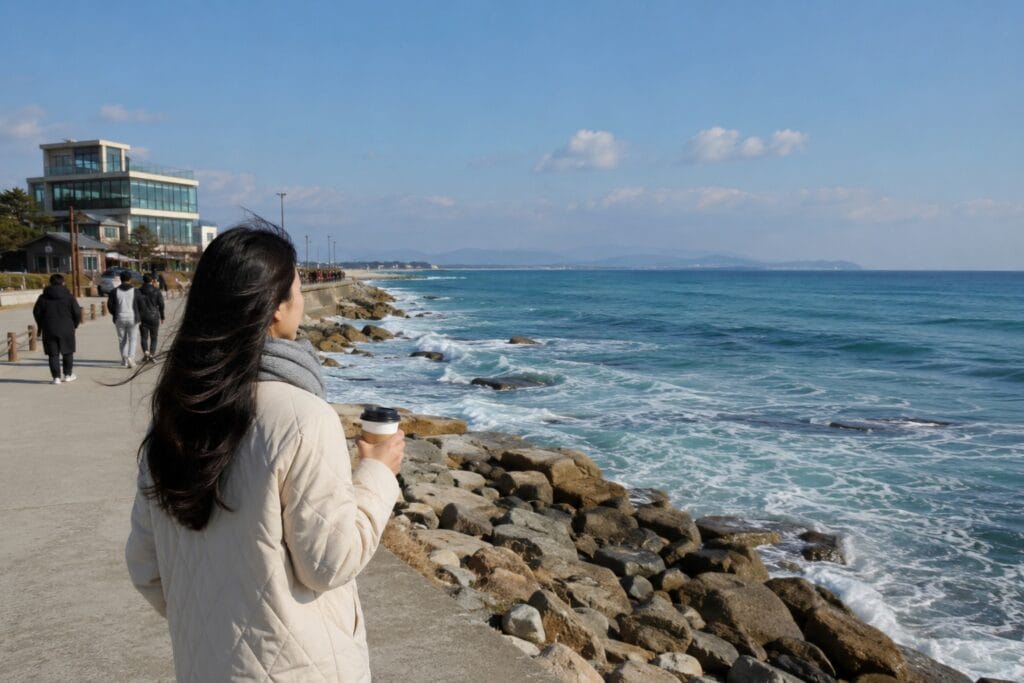
Gangneung is the best day trip from Seoul for travelers who want to see the East Sea without spending half the day on a highway bus.
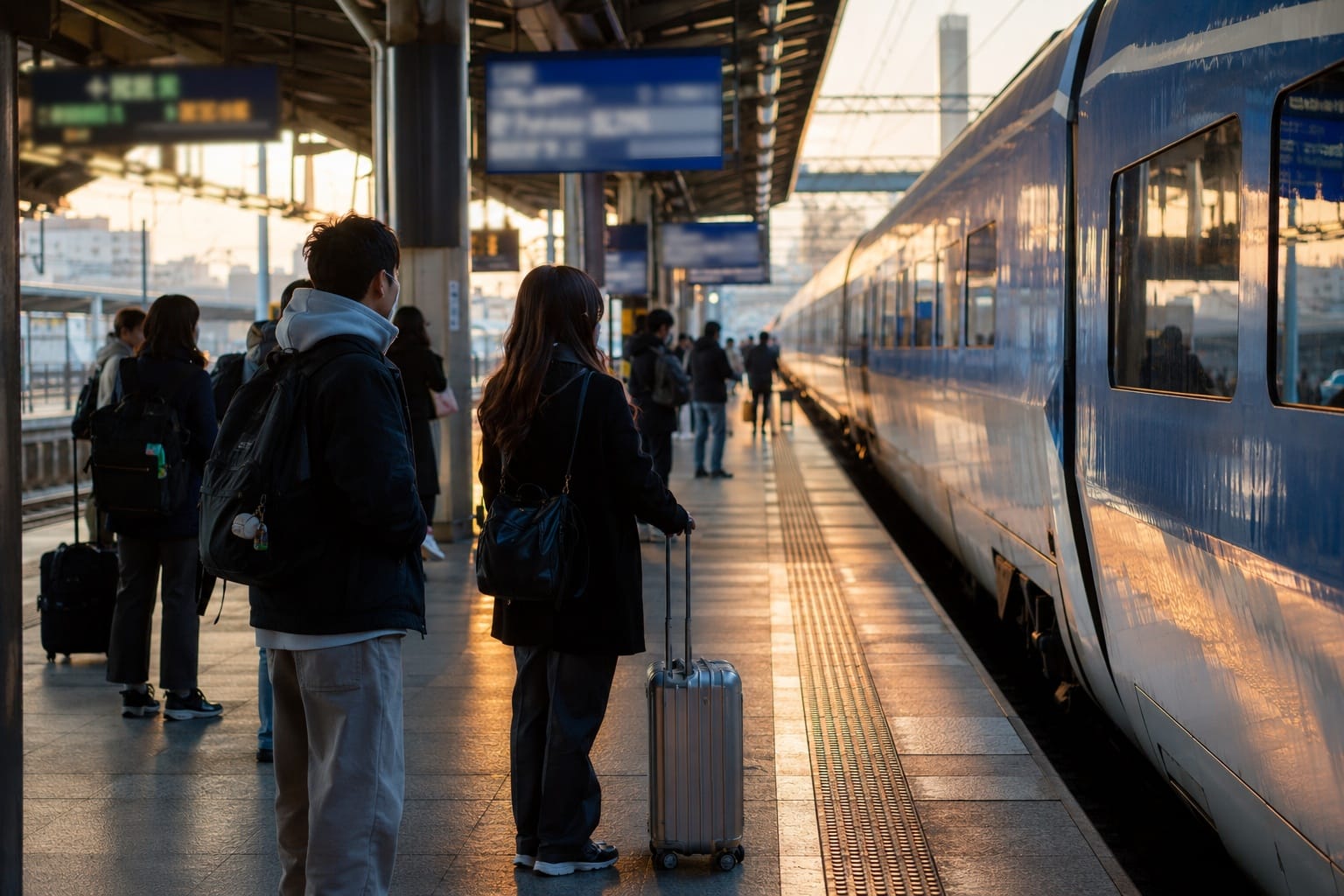
KTX services from Seoul Station or Cheongnyangni make Gangneung realistic as a long day trip. Check the exact departure station when booking because it may differ by train.
What to see
A comfortable route usually includes three or four places:
- Gyeongpo Lake or Gyeongpo Beach
- Gangmun Beach
- Anmok Coffee Street
- Gangneung Jungang Market
Gyeongpo offers broader beach scenery, while Gangmun has a smaller coastal atmosphere and easy cafe access.
Anmok is lined with coffee shops facing the sea. Jungang Market works well before the return train, particularly for snacks, seafood, and a final meal.
Getting around
The train journey is straightforward. Local movement requires more thought.
Buses are available, but taxis save considerable time when combining the beach, market, and station.
For two or more travelers, several short taxi rides may be worth the extra cost.
Who should skip it?
Skip Gangneung as a day trip if you dislike early trains, have several large bags, or want a slow beach day.
The city works better as an overnight stay when you want sunrise, long coastal walks, cafes, and time beyond the most popular stops.
The Gangneung Travel Guide 2026 provides a fuller route and food plan.
6. Seoraksan National Park and Sokcho
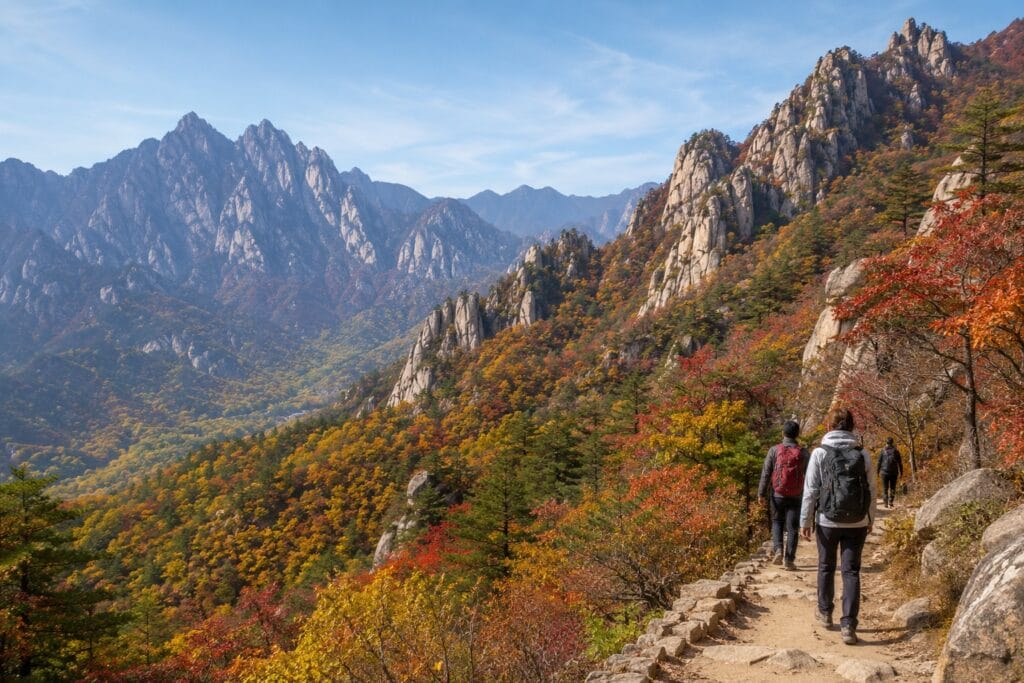
Seoraksan is possible as a day trip from Seoul.
That does not make it relaxed.
The day requires an early departure, several hours of transportation, local movement between Sokcho and the park, and enough energy for walking after arrival.
What can you realistically do?
Visitors who are not planning a major hike can focus on the Outer Seorak area.
Common stops include Sinheungsa Temple, short forest paths, valley scenery, and the cable car when it is operating.
Cable car service may be suspended because of strong wind or poor weather, so it should never be treated as guaranteed.
Serious hiking routes require more time, preparation, and daylight than a casual day trip allows.
Tour or independent travel?
A tour is the simplest choice for first-time visitors.
Independent travel normally involves an intercity bus to Sokcho, followed by another bus or taxi to the national park.
It can work for experienced travelers, but missed connections quickly remove hiking time.
Autumn warning
Autumn foliage season is beautiful and extremely busy.
Roads around the park can become congested, cable car queues may be long, and restaurants fill quickly.
An overnight stay in Sokcho is usually better for serious hikers or anyone who wants to combine the mountain with the coast and local market.
7. Jeonju Hanok Village
Jeonju is not close to Seoul, but the KTX makes it one of Korea’s most popular long-distance day trips.
The main appeal is not one attraction. It is the concentration of hanok streets, traditional food, crafts, small museums, religious architecture, and cultural experiences within one walkable district.
What to see
Start at Jeonju Hanok Village, then continue to Gyeonggijeon Shrine and Jeondong Cathedral.
The village contains hundreds of traditional-style buildings, though many now operate as restaurants, guesthouses, cafes, rental shops, and stores.
It is a living tourism district rather than a silent preserved village.
Food is part of the trip
Jeonju is strongly associated with bibimbap, but the city also offers kongnamul gukbap, makgeolli table meals, street snacks, and regional dishes.
A day trip should leave enough time for lunch. Rushing through Jeonju while eating only a convenience-store sandwich misses much of the point.
Travel reality
Take an early KTX.
Jeonju Station is outside the Hanok Village area, so add time for a local bus or taxi.
A late departure from Seoul creates a compressed afternoon followed by a rushed return to the station.
Jeonju deserves an overnight stay, but a carefully planned day trip still works.
8. Chuncheon
Chuncheon often appears in Nami Island itineraries, but the city can stand on its own.
Its identity is built around lakes, rivers, dakgalbi, makguksu, and outdoor activities. The ITX-Cheongchun makes it accessible without the heavier planning required for more remote destinations.
What to do
One route focuses on central Chuncheon and food.
Arrive, explore the riverside, eat dakgalbi, and visit a cafe or local market.
Another route focuses on Kim You-jeong Rail Bike and nearby rural scenery. This version requires more attention to booking times and station connections.
Nami Island or Chuncheon?
Choose Nami Island for curated scenery, seasonal photographs, and a self-contained attraction.
Choose Chuncheon for local food, riverside atmosphere, and activities.
Combining both is possible, but it creates a busier day with less time in each place.
Spring and autumn are the most comfortable seasons. Summer can be beautiful but humid, while winter rail biking requires serious cold-weather clothing.
9. Paju Book City and Heyri Art Valley
Paju is usually associated with the DMZ, but Book City and Heyri offer a completely different reason to travel north of Seoul.
This is a quieter cultural day built around publishing, architecture, galleries, museums, and cafes.
Paju Book City
Paju Book City is a planned publishing district containing publishing companies, bookstores, cultural buildings, and book-related spaces.
The Forest of Wisdom is one of its best-known interiors, with tall shelves and a quiet reading atmosphere.
Some buildings operate according to their own schedules, so the area feels less like a conventional attraction and more like an active design and publishing district.
Heyri Art Valley
Heyri contains galleries, studios, small museums, architectural buildings, cafes, and cultural spaces spread across a large area.
Not every gallery opens every day. Part of the experience is walking between unusual buildings and seeing which spaces are active.
Transportation reality
Public buses are possible, but the area is spread out.
A car or taxi makes combining Book City and Heyri much easier. Without one, check bus intervals carefully and avoid building a minute-by-minute schedule.
Paju works best for travelers interested in books, architecture, small galleries, and a slower cafe day rather than major headline attractions.
It is more suitable for a second trip to Korea than a first three-day itinerary.
10. Korean Folk Village
Korean Folk Village in Yongin is designed around traditional life, performances, crafts, historic buildings, and family entertainment.
It is not a substitute for a royal palace.
Gyeongbokgung and Changdeokgung focus on royal architecture and court history. Korean Folk Village gives more attention to homes, workshops, agricultural life, marketplaces, performance, and recreated social settings.
What to expect
The site is large enough for a full day.
Depending on the schedule, visitors may see traditional performances, martial arts, music, ceremonies, and craft demonstrations.
There are also family-oriented rides and entertainment areas.
Some displays are educational. Others are theatrical. That mixture is part of the attraction.
Public transportation is possible using the subway and bus, but a direct transfer or organized package can simplify the journey.
Spring and autumn are the most comfortable seasons because much of the day is spent outdoors.
11. Everland
Everland is the strongest day trip for theme park fans and families who want rides, animal attractions, gardens, parades, and seasonal events.
T-Express is the best-known thrill ride, but the overall experience changes throughout the year.
Spring focuses on flowers, summer brings water-related events, autumn introduces Halloween themes, and winter usually includes lighting and holiday displays.
Getting there
Everland is outside central Seoul, and the final section of the journey takes time.
Options may include a direct shuttle bus, subway connections followed by the Everline and local shuttle, or a package that combines transportation and admission.
A direct shuttle is often worth considering because the return journey feels considerably longer after a full day in the park.
Check the official app
Park hours, ride closures, parade times, and queue systems can change by date.
Download the official app before visiting and check the operating schedule rather than relying on one universal closing time.
Give Everland the full day. Combining it with another major attraction usually means rushing through both.
12. Namhansanseong Fortress
Namhansanseong is one of the best choices for travelers who want history and hiking without traveling as far as Seoraksan.
The mountain fortress served as an emergency capital and defensive stronghold during the Joseon period.
Today, visitors can walk sections of the wall, visit gates and temples, explore the temporary palace area, and look toward the Seoul region from elevated viewpoints.
What the day feels like
Namhansanseong feels less polished than Suwon and less dramatic than Seoraksan, which is precisely why some visitors prefer it.
The paths pass through forest, local restaurants, small historic sites, and wall sections that feel integrated into the mountain.
How difficult is it?
The journey usually combines subway and local bus.
Walking difficulty depends on the route. Visitors can choose a short fortress section or spend several hours hiking.
Check the temporary palace schedule before visiting, particularly around Mondays and public holidays.
Spring and autumn are ideal. Summer is green but humid, and winter paths can be icy.
13. Yangpyeong and Dumulmeori
Yangpyeong is for travelers who do not need every day trip to contain a major monument.
Dumulmeori sits where the North Han and South Han rivers meet. The area is known for riverside paths, old trees, morning mist, photography, and a slower atmosphere than Seoul.
Nearby Semiwon adds gardens and aquatic plants, especially during lotus season.
What to do
Walk along the river, stop for snacks or coffee, visit Semiwon when open, and spend time enjoying the landscape.
That is the itinerary.
Travelers who enjoy rivers, quiet cafes, and photography may love it. Visitors waiting for a large headline attraction may find the day too slow.
The railway and metropolitan subway network make the region accessible, but some local movement may require walking or a taxi.
The area is best in good weather. Heavy rain, extreme heat, or poor visibility can remove much of its appeal.
14. Pocheon Art Valley
Pocheon Art Valley is a former quarry transformed into a cultural and landscape attraction.
Its most recognizable feature is Cheonjuho Lake, surrounded by steep rock walls that create an unusually dramatic setting.
Visitors can also find exhibition spaces, walking routes, performances, and a monorail that helps with the slope when operating.
Why visit?
The attraction feels different from Seoul’s palaces, neighborhoods, and markets.
It works especially well for photography and for travelers interested in repurposed industrial spaces.
Transportation reality
Reaching Pocheon Art Valley by public transport is possible, but it is rarely the most comfortable option.
Bus connections and local transfers take time. A car or organized tour is more realistic, particularly when combining the site with Herb Island or Sanjeong Lake.
Avoid placing too many Pocheon attractions into one day. Rural transfer time adds up quickly.
15. Danyang
Danyang is one of the most scenic and ambitious day trips on this list.
The region is known for mountains, river bends, cliffs, viewing platforms, and attractions spread along the Namhan River.
High-speed rail makes the journey from Seoul possible, but local transportation remains the main challenge.
What to see
A practical route might include:
- Mancheonha Skywalk
- Danyanggang Jando Trail
- Dodamsambong Peaks
- Danyang Gugyeong Market
The skywalk provides elevated views over the river and surrounding mountains.
The nearby Jando Trail follows the cliffside above the water and is easier than a major hike.
Dodamsambong is one of the area’s classic landmarks, while the market works well for local food before returning to the station.
Getting around
Take an early KTX-Eum from Cheongnyangni, but check carefully that your selected train stops at Danyang Station.
Not every service follows the same stopping pattern.
Once in Danyang, taxis or a local sightseeing option are usually the most practical way to reach the main attractions.
Choose Danyang when scenery matters more than convenience.
Skip it when you want a late start, minimal planning, or a relaxed evening back in Seoul.
Danyang is possible as a day trip, but it makes a strong case for one night.
Bonus Half-Day Trip: Gwangmyeong Cave
Gwangmyeong Cave is useful when you want something closer than the destinations above.
The former mine has been converted into a large visitor attraction with underground tunnels, illuminated spaces, exhibitions, and themed installations.
It is particularly useful during rain, summer heat, or a schedule that cannot support a full day outside Seoul.
The cave is normally closed on Mondays, and the official visitor listing says final admission is one hour before closing. Holiday schedules can differ, so confirm the day before visiting.
This works better as a half-day excursion than as one of Korea’s major full-day destinations.
Tour or Public Transport?
Choose public transport when the destination has one clear station and a reasonably walkable center.
Good independent choices include:
- Suwon
- Incheon
- Gangneung
- Jeonju
- Chuncheon
- Nami Island by itself
Choose a tour when access is controlled or attractions are spread across a wide rural area.
Tours make more sense for:
- DMZ
- Multiple Gapyeong attractions
- Seoraksan on a tight schedule
- Pocheon combinations
- Some Danyang routes
- Everland or Korean Folk Village when direct transportation is included
A tour is not automatically better. It trades flexibility for simpler transportation.
Independent travel gives you more control over meals and pacing, but it also makes you responsible for every station exit, bus interval, and return connection.
Korea’s transport network is excellent. It is not psychic.
A Korean transportation card can be used for many metropolitan subway and local bus journeys. KTX, ITX, intercity buses, ferries, attraction tickets, and organized tours require separate payment or reservations.
The KTX Guide covers long-distance train booking, while the Seoul Subway Guide explains metropolitan transfers and transport cards.
What Time Should You Leave Seoul?
For Suwon, Incheon, Namhansanseong, or Gwangmyeong, leaving between 8:00 and 9:00 a.m. is usually enough.
For Nami Island, Chuncheon, Korean Folk Village, or Everland, aim for around 7:00 to 8:00 a.m.
For Gangneung, Jeonju, Seoraksan, Pocheon, or Danyang, an early departure matters much more. A train or bus before 7:00 a.m. gives the destination enough time to feel like a real visit rather than a long lunch stop.
Always check the final return train or bus before leaving Seoul.
Best Day Trips from Seoul by Season
Spring
Spring is one of the easiest seasons for day trips.
Suwon, Nami Island, Jeonju, Namhansanseong, and Korean Folk Village all work well in mild weather.
Cherry blossom timing changes each year, so avoid building an entire non-refundable itinerary around one predicted weekend.
Summer
Choose Gangneung for the coast, Yangpyeong for lotus season, or Gwangmyeong Cave during extreme heat and rain.
Seoraksan and Gapyeong remain attractive, but humidity makes long walks and transfers more tiring.
Autumn
Autumn is the strongest season for Seoraksan, Nami Island, Namhansanseong, Suwon, and Danyang.
It is also the busiest. Reserve trains, tours, and major attraction tickets early, especially from late October into early November.
Winter
Nami Island, Everland, Gangneung, and Jeonju can all work in winter.
Snow is never guaranteed, and mountain transportation may be affected by weather. Shorter daylight also makes early departures more important.
The Best Time to Visit Korea guide covers seasonal weather, crowds, and travel costs in more detail.
Frequently Asked Questions
What is the easiest day trip from Seoul?
Suwon is one of the easiest high-value choices.
It combines straightforward transportation, major historical attractions, food, walking routes, and enough flexibility for independent travel.
Incheon is even easier by subway, especially for Chinatown and the Open Port district.
What is the best guided day trip from Seoul?
The DMZ is the strongest guided option because access rules and controlled transportation make a tour genuinely useful.
Gapyeong and Pocheon tours can also save considerable time between spread-out attractions.
Can you visit Jeonju from Seoul in one day?
Yes.
Take an early KTX, use a bus or taxi from Jeonju Station, and focus on the Hanok Village area.
An overnight stay is more relaxed, but a day trip is realistic.
Can you visit Seoraksan without a tour?
Yes, but the day requires an early intercity bus, local transportation from Sokcho, and careful return planning.
A tour is more convenient for visitors who want to reduce transportation stress.
What is the best beach day trip from Seoul?
Gangneung is the most practical choice because the KTX reduces travel time.
Gyeongpo, Gangmun, and Anmok can be combined using local buses or taxis.
Should you book trains in advance?
Book KTX and ITX trains in advance for weekends, public holidays, cherry blossom season, autumn foliage season, and major festivals.
Weekday seats are often easier to find, but popular early-morning and evening services can still sell out.
Official Links to Check Before You Go
Schedules, closures, access rules, and ticket systems can change. Use these official pages for your final checks:
- KORAIL train schedules and reservations
- Nami Island ferry schedule
- Everland operating information
- Seoraksan National Park visitor information
- Jeonju Hanok Village map and directions
- Gwangmyeong Cave visitor information
Final Thoughts
Seoul is surrounded by enough history, coast, mountains, theme parks, and regional food to make leaving the city feel less like an escape and more like opening another chapter.
The main mistake is choosing by fame alone.
The DMZ is meaningful but structured. Nami Island is scenic but commercial. Seoraksan is beautiful but tiring. Jeonju is culturally rich but far. Suwon may sound less dramatic, yet it delivers one of the most balanced days on the list.
Choose according to the trip you will actually enjoy.
For an easy independent day, start with Suwon or Incheon.
For nature, choose Nami Island, Gangneung, Seoraksan, Yangpyeong, or Danyang according to how much travel you are willing to accept.
For guided convenience, the DMZ remains the clearest choice.
And when the alarm rings before sunrise for a train to the other side of Korea, remember that “day trip” describes the absence of a hotel, not the absence of effort.