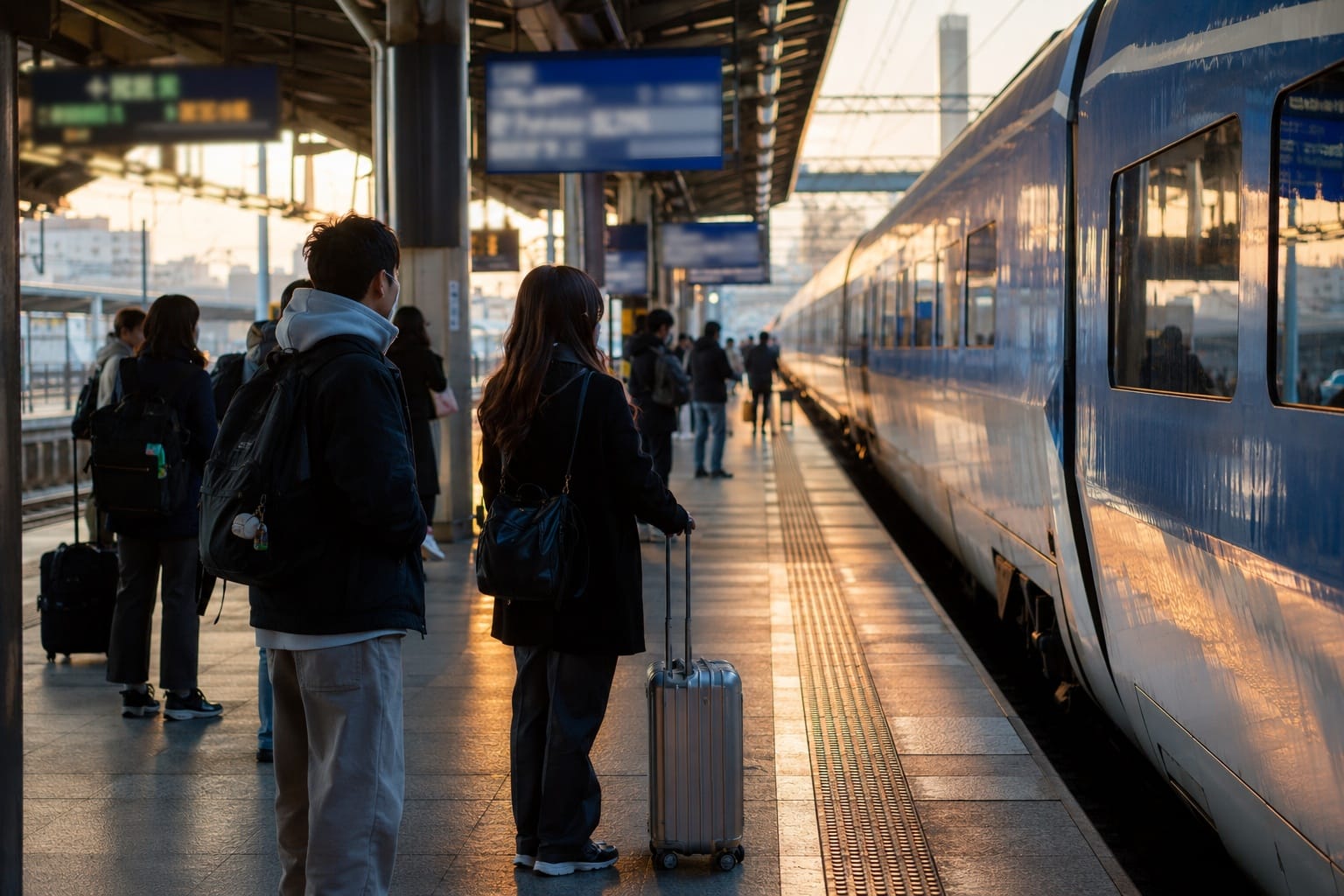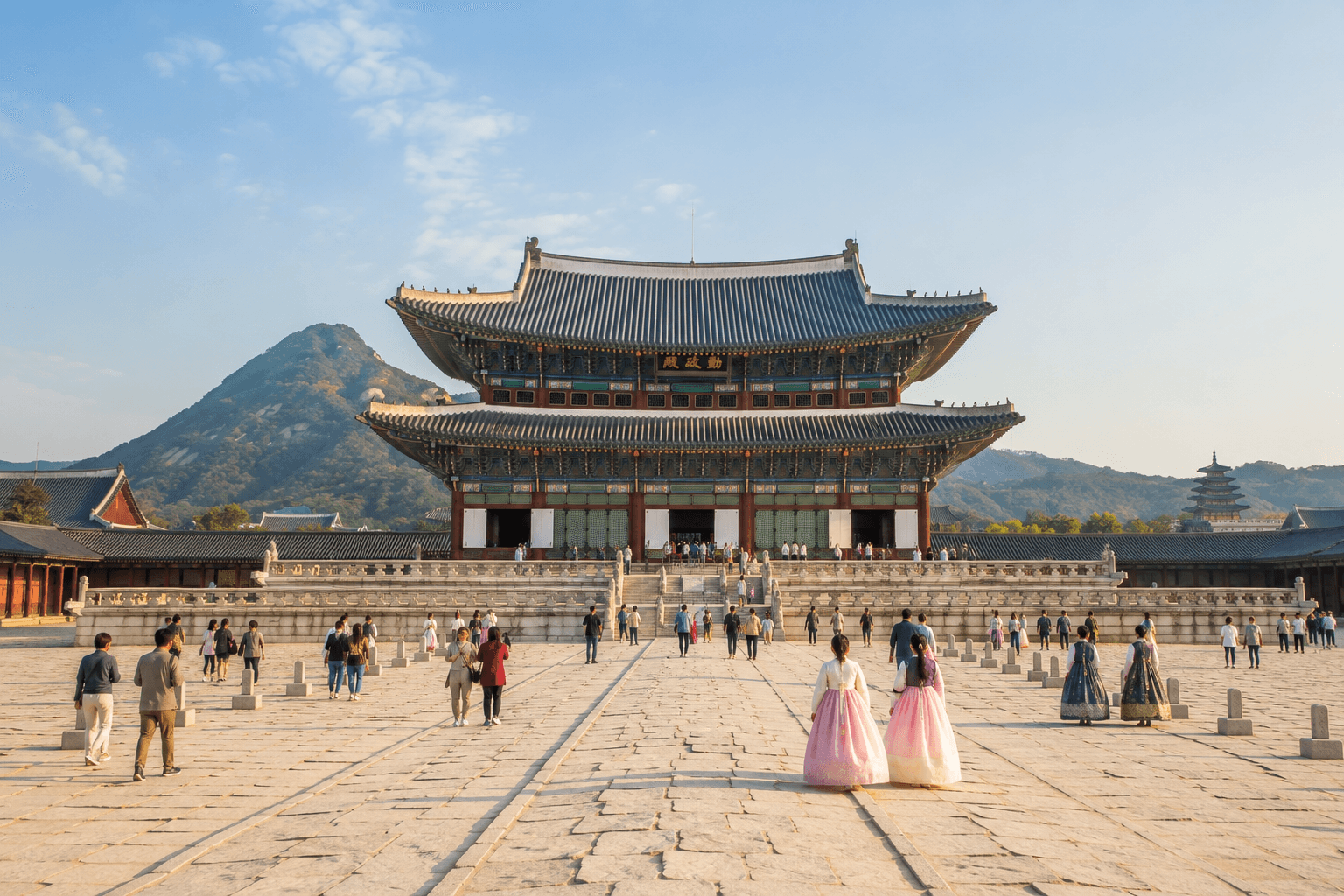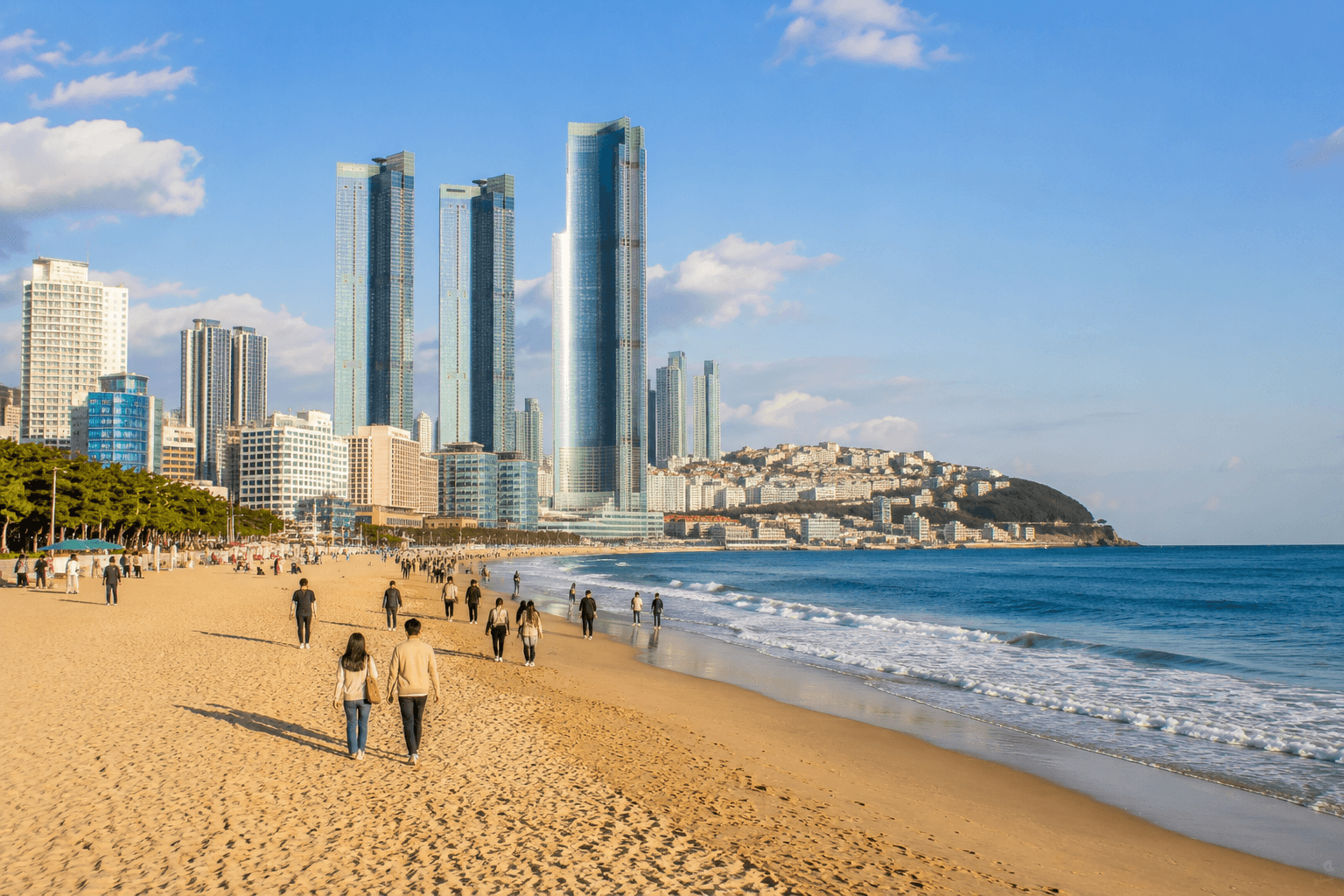
Seven days in South Korea is enough for a memorable first trip. It is not enough for Seoul, Busan, Gyeongju, Jeju, the DMZ, three theme parks and a healing mountain retreat where someone hands you tea at sunrise.
The useful question is not, “How much can I fit?” It is, “How many times can I change hotels before the trip starts feeling like a luggage relay?”
For most first-time visitors, the strongest one-week route connects Seoul, Gyeongju and Busan. Seoul gives you palaces, neighborhoods, shopping and modern city life. Gyeongju adds the Silla-era history that makes Korea feel deeper than one enormous capital. Busan finishes the trip with markets, hills and a coast that changes the pace completely.
This guide gives you two versions:
- the best route if you can fly into Seoul and out of Busan;
- the safer route if your international flights both use Incheon Airport.
Information and transport links last checked: August 27, 2026. Always confirm live train times, attraction schedules and entry rules before travel. Station naming and Busan guide connections reviewed: October 3, 2026.
Table of contents
The 30-Second Decision
| Your flights | Best route | Overnight split | Main trade-off |
|---|---|---|---|
| Arrive at Incheon, depart from Busan | Seoul → Gyeongju → Busan | 3 nights Seoul, 1 Gyeongju, 2 Busan | Best flow, but your onward flight must work from Busan |
| Arrive and depart at Incheon | Seoul → Busan → Gyeongju day trip → Seoul | 3 nights Seoul, 2 Busan, 1 Seoul | Less elegant, but safer for the international flight |
| You dislike changing hotels | Seoul → Busan, with Gyeongju as a day trip | 3 nights Seoul, 3 Busan | Easier luggage handling, less evening time in Gyeongju |
| You prefer slow travel | Seoul + Busan only | 3 nights each | You skip Gyeongju, but the trip breathes better |
If you have not booked flights yet, an open-jaw ticket—arriving through Incheon and leaving from Busan—creates the cleanest route. If the fare is much higher or Busan does not have a practical onward flight, use the round-trip Incheon version. Do not build your entire trip around saving one train ride if the flight connection becomes fragile.
Before paying for anything, check the current South Korea entry requirements and compare your travel month with our best time to visit South Korea guide. A route that feels easy in October can feel ambitious in August humidity or during a major holiday travel period.
Route A: Seoul In, Busan Out
This is the version I would choose for a first trip when the flights cooperate.
Day 1: Land, Reach Seoul and Do Less Than You Think
Your first day depends on the landing time, immigration queue and how convincing you were when you told yourself you would sleep on the plane.
From Incheon Airport, the AREX train is useful for Seoul Station and Hongdae. Airport limousine buses can be easier when your hotel is near a bus stop and your suitcase has already developed its own personality. A taxi or private transfer costs more but can make sense for three or four travelers, late arrivals or heavy luggage.
Our Incheon Airport to Seoul guide compares the realistic options.
After check-in, choose one compact area near your hotel. Good first-evening choices include:
- Myeongdong for food, shopping and an easy introduction;
- Hongdae for a later night and plenty of casual restaurants;
- Cheonggyecheon and Euljiro for a central walk without committing to a major attraction.
Do not schedule Gyeongbokgung, N Seoul Tower and a night market after a long-haul arrival. Airport days contain hidden minutes. The bag takes longer. The train platform is farther away. Someone walks out of the wrong station exit. Suddenly your carefully color-coded schedule is eating dinner at 9:40 p.m.
Day 2: Traditional Seoul Without Crossing the City Five Times
Keep this day in central Seoul.
Start at Gyeongbokgung Palace, then continue toward Bukchon or Insadong. After lunch, walk through Ikseon-dong or along Cheonggyecheon. Finish at Gwangjang Market if you still want a busy food stop.
The order works because the places sit in the same broad part of the city. It also gives you several exit points. If the palace takes longer than expected, skip one cafe street. If rain arrives, move toward a museum or covered market.
Check the official palace calendar before assigning dates. Gyeongbokgung normally closes on Tuesdays. If that day is a public or substitute holiday, it opens and closes on the next non-holiday day instead. Swap the traditional and modern Seoul days when necessary rather than arriving at a closed gate.
Gyeongbokgung hours change by season, with last admission one hour before closing. Our palace guide covers entrances and timing; the Seoul three-day itinerary provides local route detail, not three more days to add to this week.
For Bukchon’s marked Red Zone around Bukchon-ro 11-gil, keep tourist visits within 10:00 a.m.–5:00 p.m.. The official notice lists a KRW 100,000 fine outside those hours. This rule applies to the defined residential zone, not every street in Bukchon; follow the boundary signs and keep voices low.
One practical detail: choose the subway exit before you leave the platform. Large Seoul stations may have exits on opposite sides of a wide road or several blocks apart. “We will just come up anywhere and look around” is how a seven-minute walk becomes twenty-five.
Day 3: Pick the Seoul You Actually Came For
The third day should not repeat the palace-and-market formula. Choose one direction.
For neighborhoods and shopping: Combine Seongsu, Seoul Forest and one K-beauty or pop-up stop. Gangnam and COEX can fill the second half, but “Gangnam” does not mean everything is near Gangnam Station.
For modern views: Keep Jamsil, Seoul Sky, Seokchon Lake and the Han River together.
For bad weather: Choose one museum or COEX, then check that choice’s calendar. The War Memorial’s official listing gives Mondays as a closing day. The National Museum of Korea has its own holiday and gallery-maintenance closures, rather than the same weekly pattern. A rainy-day alternative should have open doors, not merely a roof.
For the DMZ: Give it most of the day. Departures can be early, passport rules matter and return times can shift.
If you already have a longer Seoul plan, remove what does not match your interests. An itinerary is a tool, not a dare.
Day 4: Seoul to Gyeongju, Then Walk Through Silla History
Take a morning KTX from Seoul Station to Gyeongju Station, the high-speed station formerly called Singyeongju. The city confirmed the name change on December 28, 2023, so search for Gyeongju when booking. Direct journey times vary by train; choose a morning departure with enough daylight left for the historic center.
Gyeongju Station is outside central Gyeongju. A local bus is cheaper; a taxi is simpler with luggage. Allow extra time between the platform and your accommodation instead of treating the KTX arrival as the moment sightseeing begins.
Stay near Hwangnidan-gil or the central historic district for one night. After dropping your bag, follow a walkable sequence:
- Daereungwon Ancient Tomb Complex
- Hwangnidan-gil
- Cheomseongdae
- Gyochon Village or Woljeonggyo Bridge
- Donggung Palace and Wolji Pond after sunset
This is the evening when an overnight stay beats a rushed day trip. The central heritage area becomes calmer, the lighting improves and you are not checking the time every twelve minutes because the last bus back to Busan has entered the conversation.
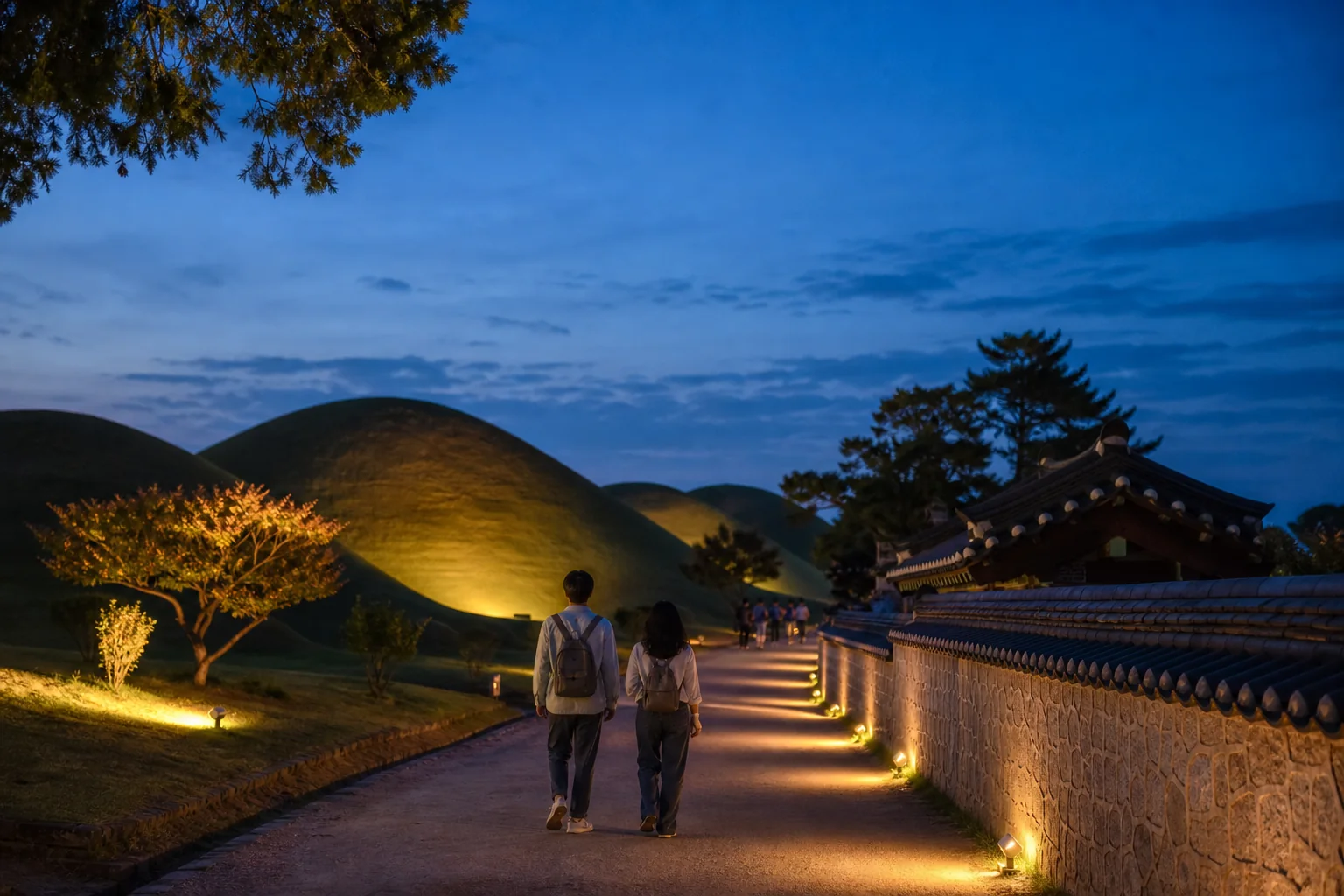
The official VISITKOREA listing gives Donggung Palace and Wolji Pond hours as 9:00 a.m.–10:00 p.m., with ticketing and admission ending at 9:30 p.m. Arrive with time to walk around the pond rather than treating the final admission minute as a sightseeing appointment. Recheck temporary notices for your date.
For the central walking route, keep Gyochon or Woljeonggyo optional if your arrival, dinner or feet need more time. Our Donggung Palace and Wolji guide helps you plan the night-view stop. The entrance cutoff does not become later because your dinner was excellent.
Day 5: Bulguksa Early, Busan by Afternoon
Before checkout, confirm whether your accommodation can hold your main bag, when you can collect it and whether someone will be there. Then visit Bulguksa in the morning only if the onward connection leaves enough room for the temple, the return journey, luggage pickup and the transfer to your departure point.
Bulguksa is outside central Gyeongju, so this is not a quick stroll from Hwangnidan-gil. The official VISITKOREA listing currently shows free admission, year-round opening and visiting hours of 9:00 a.m.–6:00 p.m., with exit time listed separately as 7:00 p.m. Plan the morning near the listed 9:00 opening, not a dawn visit based on an older timetable, and confirm any temporary changes.
Check the current bus route or use a taxi when the connection warrants it. Our Bulguksa Temple guide covers the visit itself. Keep Seokguram for another trip or a longer Gyeongju stay unless you deliberately remove another stop; it should not quietly become a second temple on your transfer morning.
Return for your luggage, then continue to Busan. Two common choices are:
- return to Gyeongju Station and take a short KTX ride to Busan Station;
- take an intercity bus from Gyeongju to Busan, which can be simpler depending on your hotel area.
Do not automatically choose the fastest train on paper. Build the journey as Bulguksa → your luggage pickup → Gyeongju Station or the bus terminal → your Busan arrival point → hotel. Check the specific train or bus departure and arrival terminal before booking. Door-to-door time wins this argument.
If the available departure is too early, move Bulguksa to a longer Gyeongju stay or skip it. If you keep the temple, choose an onward service with a comfortable buffer rather than promising a particular Busan afternoon arrival. A short KTX ride cannot make the temple-to-station journey disappear.
For your first Busan evening, keep the route near your accommodation. If you stay in Haeundae, walk the beach and eat nearby. If you stay around Seomyeon, use the evening for dinner and nightlife. If you stay in Nampo, Jagalchi and the harbor area are close.
The best areas to stay in Busan guide explains the trade-off. Haeundae gives you the coast but increases travel time to western Busan. Seomyeon is the transport compromise. Nampo works well for markets and Gamcheon.
Day 6: Choose East Busan or West Busan
Busan is too spread out for a one-day “best of everything” route. Pick one side in the morning and cross the city only once, if at all. Our Busan planning guide explains which neighborhoods belong together; use it to choose a route, not to add another five stops.
East Busan route
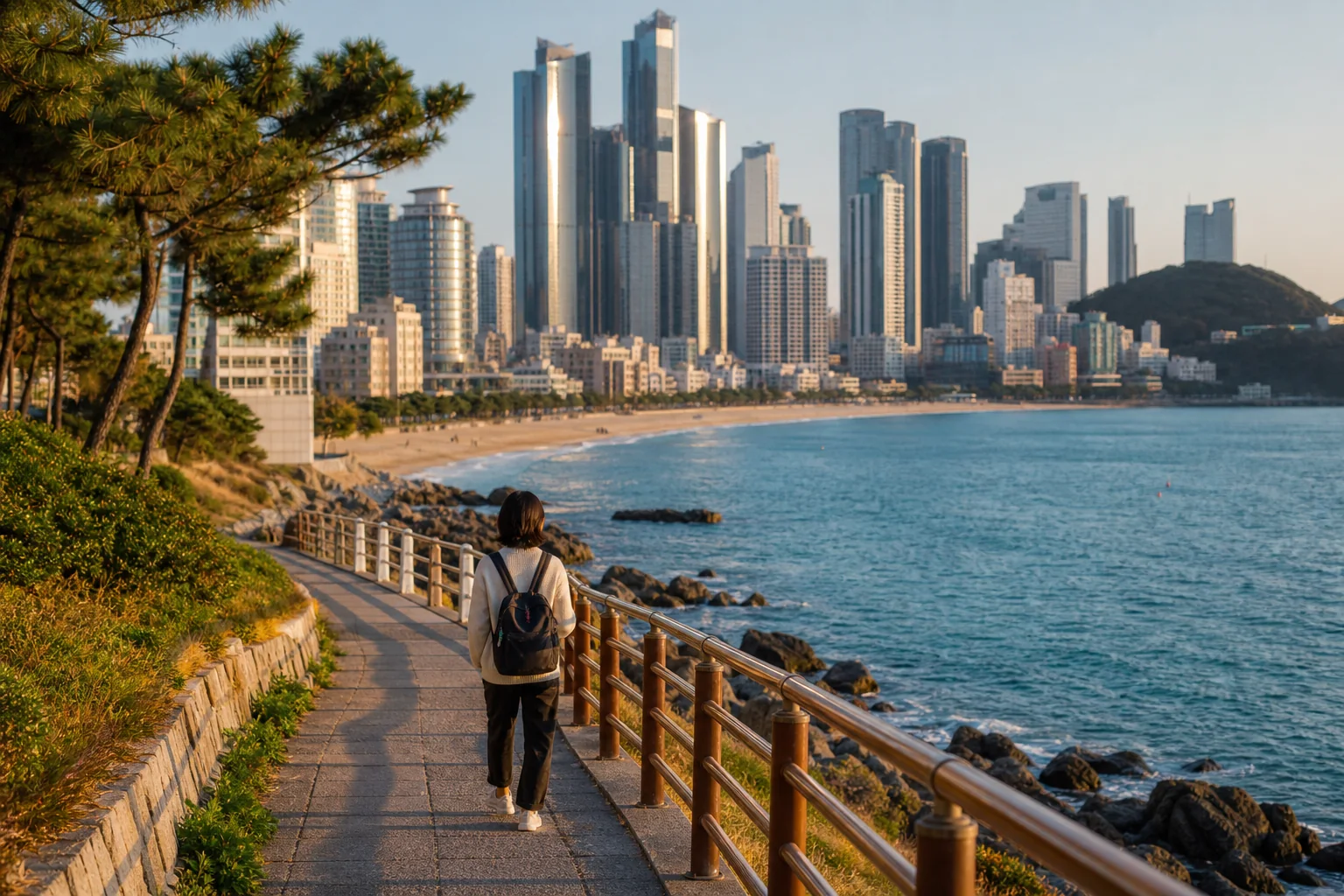
Start around Haeundae. Continue along the coast toward Blueline Park, Cheongsapo or Songjeong, depending on reservations and weather. Finish at Gwangalli for the evening bridge view. Use the beach guide for the Millak walking route and Saturday show notices; the drone show is not a nightly attraction.
This route suits travelers who want beaches, coastal walking and a lighter final day. Read the Haeundae Beach guide before choosing how long to stay on the eastern coast.
If you choose the Sky Capsule, check the official booking page: tickets for the Monday–Sunday week four weeks ahead open every Tuesday at 7:00 a.m. Korea Standard Time (KST). The booked window is for joining the queue, not a guaranteed departure minute. Leave room for the ride and the transfer to Gwangalli; do not reserve another activity immediately after the printed time.
Put Gwangalli on a Saturday evening only if the show is a priority and that date fits your stay. Read the operator’s current program and cancellation notices; a seasonal timetable is not confirmation that a particular show will run. On other nights, plan for the bridge lights and dinner. The Busan three-day itinerary explains the local booking and departure checks, but this one-week route still gives you only the Busan time shown here.
West Busan route
Visit Gamcheon Culture Village in the morning, then move toward Nampo, Gukje Market and Jagalchi Market. The order reduces backtracking and gives you an easy food finish.
Gamcheon has steep lanes. A taxi to an upper entrance can save time and knees, especially in summer. At Jagalchi, confirm the seafood price and preparation method before sitting down. Our Gamcheon Culture Village guide covers the hillside route.
Trying to combine Haedong Yonggungsa, Haeundae, Gamcheon, Jagalchi and Gwangalli in one day creates a fine survey of Busan's roads. You will see many of them through a window.
Day 7: Leave Busan Without Adding a Secret Eighth Day
If your international or regional flight leaves from Gimhae Airport, choose an airport route based on your hotel and departure time. The light rail connects with the metro at Sasang, while taxis can be easier for early flights or groups.
Work backwards from your confirmed flight and the arrival buffer recommended by your airline. Include checking out, collecting stored luggage, the airport transfer and any terminal or baggage requirements. Keep Day 7 near your accommodation when time is limited; do not add Yonggungsa, a coastal reservation or a drone-show evening just because it appears in a longer Busan guide.
Busan traffic, station transfers and baggage rules are not interested in how perfectly the first six days went. If Gwangalli matters, use an earlier evening that genuinely fits your route rather than borrowing time from the flight.
Route B: Round-Trip Through Incheon Airport
If both international flights use Incheon, do not travel from Busan to Incheon Airport on the morning of an early flight. One delayed train or long airport transfer can turn a good trip into an expensive lesson.
Use this split instead:
| Day | Base | Plan |
|---|---|---|
| 1 | Seoul | Arrival and a light neighborhood evening |
| 2 | Seoul | Traditional central Seoul |
| 3 | Seoul | Modern Seoul, shopping, museum or DMZ |
| 4 | Busan | Morning KTX, then one compact Busan area |
| 5 | Busan | Gyeongju day trip or full Busan day |
| 6 | Seoul | Busan morning, afternoon KTX, final Seoul night |
| 7 | — | Incheon Airport departure |
Protect the Day 6 return to Seoul. Choose a compact morning near your hotel, then allow for luggage collection and reaching Busan Station before your reserved KTX. This is not the day for a full eastern-coast route or a late Gwangalli performance. Keep the final Seoul night; if your Incheon flight is early, consider sleeping closer to the airport instead of trying to rescue the plan with the first train.
In this version, Gyeongju becomes a day trip from Busan. Independent travel is possible, but the connections require more attention. A tour is useful when you want Bulguksa and the central historic district without coordinating station transfers and local buses.
This article contains affiliate links. If you book through them, we may earn a small commission at no extra cost to you.
You can compare current Gyeongju tour options on Klook. The link opens a Gyeongju search page rather than one fixed product, so check the departure city, included sites, language and return time before booking.
If history is not a priority, keep Day 5 in Busan. You gain a full coast or market day and remove one long transfer. Skipping a place you do not care about is not failing the itinerary. It is using it correctly.
Book These Parts Before the Trip
Long-Distance Trains
Reserve the important KTX legs once your dates are fixed, especially for Friday evenings, weekends and major Korean holidays. Use the official KORAIL reservation page to confirm live schedules and fares.
For the open-jaw route, search Seoul → Gyeongju. For the round-trip route, search Seoul → Busan and Busan → Seoul. Gyeongju’s high-speed station is outside the historic center; older guides call it Singyeongju. Do not confuse it with the former downtown station.
Travelers who prefer another English booking interface can compare Seoul–Gyeongju train options on Trip.com. Always compare the displayed train, station and ticket conditions with KORAIL before payment.
Our Korea KTX guide covers ticket collection, luggage, station timing and common booking mistakes.
Hotels Near the Route You Will Actually Use
In Seoul, Myeongdong or Seoul Station keeps central sights and the southbound train practical. Hongdae is stronger for AREX access and nightlife. In Gyeongju, stay near Hwangnidan-gil for the evening walk.
In Busan, choose the neighborhood before the hotel discount. A cheap Haeundae room is expensive in time if every planned stop is around Nampo. The reverse is also true.
Use the best areas to stay in Seoul guide and the Busan accommodation guide above to make the decision first.
Reserved Attractions and Tours
Book only the items that can genuinely sell out or that control your day. That may include a DMZ tour, a timed coastal attraction or a guided day trip.
Keep bookings tied to the version of the itinerary you are actually following. A Gyeongju tour should return comfortably before your next fixed departure, and a Busan attraction should not overlap your Seoul-bound train. Confirm starting city, station, boarding window and cancellation terms before paying.
Do not reserve every meal, museum and cafe. Korea is easier when the schedule has some air in it. Rain moves plans. Queues move plans. A bakery with a suspiciously long line may also move plans.
A Realistic One-Week Budget
Use these ranges as a planning frame, not a promise; season and room type change the total quickly.
| Expense | Practical planning range |
|---|---|
| Midrange hotel room | Roughly KRW 90,000–220,000 per night, with large seasonal variation |
| Food | Roughly KRW 35,000–70,000 per person per day |
| Local transport | Roughly KRW 8,000–20,000 per person per day |
| Long-distance rail | Check live KORAIL fares for each route |
| Attractions | Often modest for public heritage sites; tours and major commercial attractions cost much more |
A couple sharing rooms will usually spend less per person than a solo traveler. Cherry blossom weeks, autumn weekends, festivals and holidays can raise accommodation costs quickly.
The detailed Korea travel costs guide breaks down budget, midrange and higher-comfort trips.
Mistakes That Make Seven Days Feel Shorter
Adding Jeju to this route. Jeju requires flights, airport transfers and weather flexibility. For seven days, combine Seoul with Jeju or use the mainland route. Doing both usually sacrifices too much time.
Treating Gyeongju Station as downtown. Gyeongju Station is outside the historic center. Include the local transfer in your schedule.
Planning Busan by attraction rank instead of geography. East and west Busan are far apart. Group the coast together and the western markets together.
Returning to Incheon on departure morning. If the international flight matters—and it generally does—sleep in Seoul the final night.
Leaving no weather swap. Keep one flexible Seoul day and one flexible Busan route. Korea can produce bright morning sun and an afternoon downpour with impressive efficiency.
FAQ
Is seven days enough for South Korea?
Yes. Seven days is enough for Seoul plus one or two additional destinations. It is not enough for a relaxed trip covering Seoul, Busan, Gyeongju and Jeju. Keep the trip to two or three hotel bases.
Should I visit Gyeongju or spend more time in Busan?
Choose Gyeongju if Korean history, temples and heritage landscapes matter to you. Keep the extra day in Busan if you prefer beaches, markets, cafes and a slower schedule.
Is it better to travel Seoul–Gyeongju–Busan or Seoul–Busan–Gyeongju?
Seoul–Gyeongju–Busan is the cleanest direction when departing from Busan. If you must return to Incheon, Seoul–Busan with a Gyeongju day trip reduces hotel changes and makes the final return easier.
Can I add Jeju to a seven-day Korea itinerary?
You can, but remove Busan and Gyeongju. A practical seven-day Jeju route would usually combine Seoul and Jeju rather than four destinations.
Do I need a Korea Rail Pass?
Not automatically. Compare the rail-pass price with the exact point-to-point trains you plan to take. A pass is useful only when the included travel and reservation rules fit your route.
Should I take the KTX or fly between Seoul and Busan?
KTX is usually more convenient for a city-center itinerary because Seoul Station and Busan Station connect directly with urban transport. Flights may make sense when they connect with your international ticket or when the fare and timing are unusually favorable.
Where should I stay for this itinerary?
Myeongdong or Seoul Station is practical in Seoul, central Gyeongju near Hwangnidan-gil is useful for the one-night stop, and Seomyeon, Haeundae or Nampo works in Busan depending on your route.
Can I reverse the route and start in Busan?
Yes. If your flight arrives in Busan, follow Busan → Gyeongju → Seoul and depart through Incheon. The same rule applies: move in one direction and avoid returning across the country without a clear reason.
Selected Route Checks
Selected access and booking details checked: October 12, 2026 — palace closure rules, Bukchon Red Zone access, Seoul museum calendar guidance, and Blue Line Park’s booking-release guidance. Gwangalli’s operator notice page is linked for current programs and cancellations. This is not a full recheck of Gyeongju attractions, hotel prices, rail inventory, airport transfers or a specific performance. The earlier dates near the introduction apply to those earlier reviews.
Selected Gyeongju details checked: October 12, 2026 — VISITKOREA’s Bulguksa visiting hours and admission guidance, and Donggung Palace and Wolji Pond’s hours and ticket/admission cutoff. The temple’s own website could not be independently checked during this review. Luggage storage, local transfers and onward train/bus departures depend on your actual booking and must be confirmed separately; this does not refresh the other Gyeongju attractions or budget estimates.
The Route I Would Choose
With an open-jaw flight, I would choose three nights in Seoul, one in central Gyeongju and two in Busan. With round-trip Incheon flights, I would use Seoul and Busan as the bases, visit Gyeongju from Busan, and return to Seoul on Day 6.
Seven days will still pass quickly. The goal is not to defeat the calendar. It is to leave Korea remembering neighborhoods, meals and changes of atmosphere—not only station names and the sound of suitcase wheels.