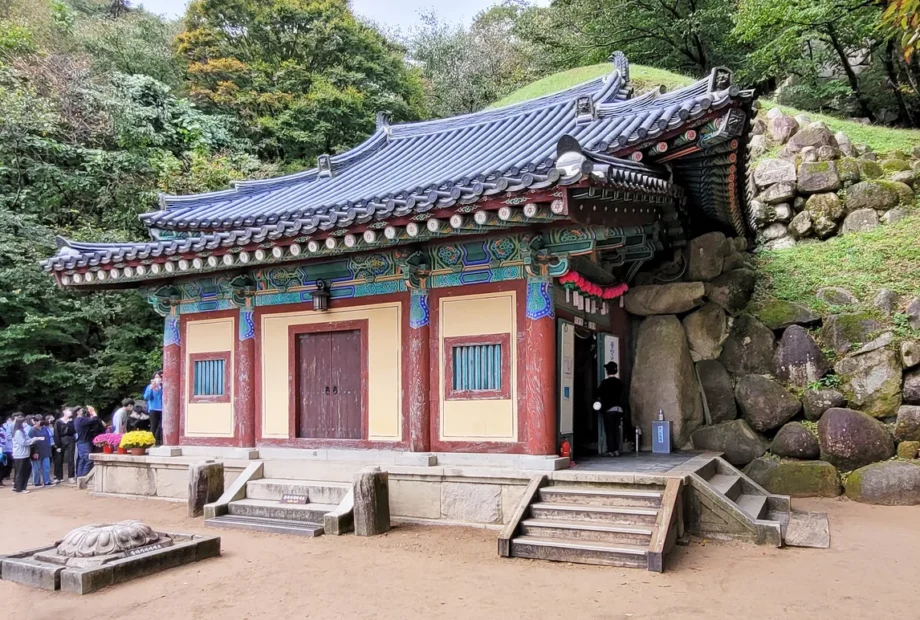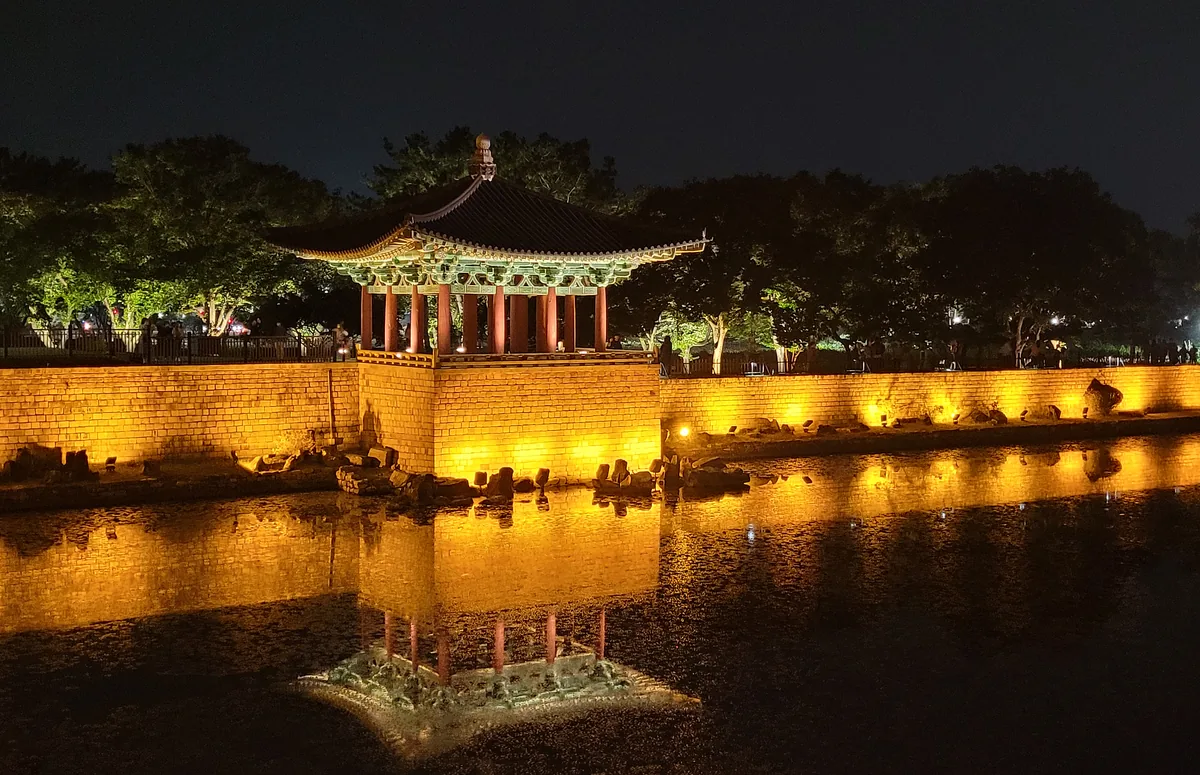
Donggung Palace and Wolji is an easy place to give your Gyeongju day a proper ending: restored pavilions, a pond, and lights reflected on the water after dark. You may also see the older name Anapji on maps or signs; it refers to the same palace-and-pond site.
The useful question is not whether to take a photograph—you probably will—but how to arrive with enough time to enjoy the changing light and still get back comfortably. Start with our Gyeongju travel guide if you are also sorting out trains and where to stay.
Table of contents
Hours, Tickets and the Entrance
The following reference information was checked against Korea Tourism Organization’s VISITKOREA listing on October 12, 2026:
- Address: 102 Wonhwa-ro, Gyeongju-si, Gyeongsangbuk-do.
- Published hours: 09:00–22:00.
- Last ticketing and admission: 21:30. Closing time is not the same as entrance time.
- Individual admission: adults ₩3,000; teenagers ₩2,000; children ₩1,000.
- Inquiries: +82-54-750-8655.
Recheck the official listing or contact the site for temporary restrictions, eligibility for discounts, and your exact visit date. Do not arrive at 21:30 expecting a relaxed hour-long walk before a 22:00 close. A paid guided tour is optional; it is not the entrance ticket itself.
For route planning, use the visitor entrance rather than whichever pond-side pin appears closest on your map. Keep your ticket until you leave, and ask staff before assuming you can exit for dinner and re-enter on the same admission.
When to Arrive for the Night View
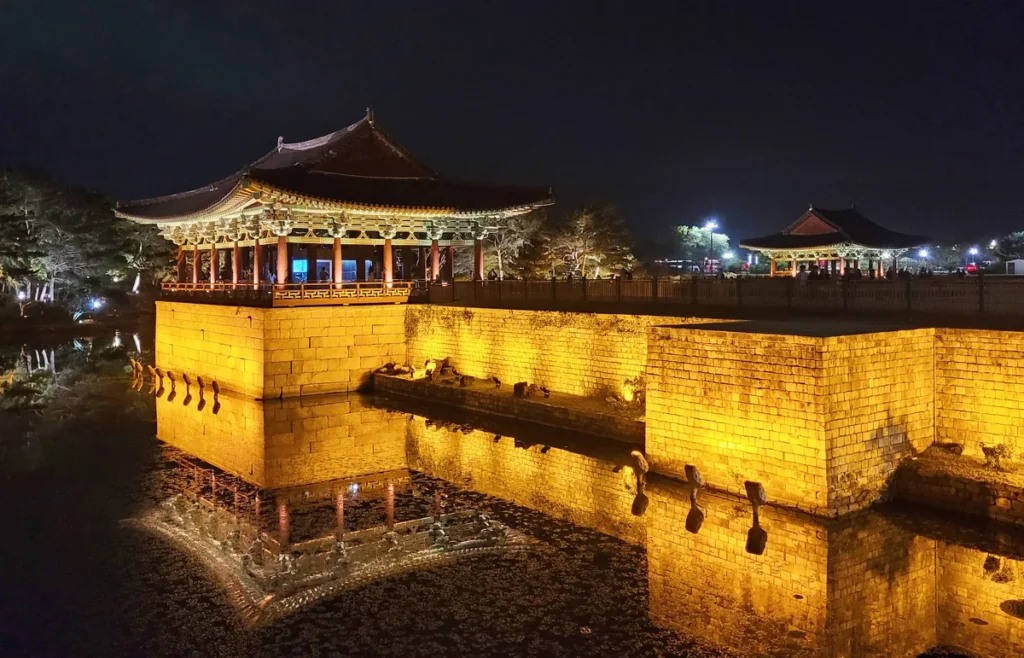
Our planning suggestion is to arrive around 30–45 minutes before the local sunset if your schedule allows. That gives you time to enter and see the site in daylight before waiting for the evening view. It is a flexible suggestion, not a measured visitor average or a guaranteed lighting timetable.
Sunset changes with the date. Check the time for Gyeongju rather than treating “6 p.m.” as a year-round appointment. Blue hour can be attractive, but clouds, lighting operations, and your position by the water all affect the result. The sky has not agreed to match the cover image.
Allow roughly 60–90 minutes for an unhurried visit, plus your journey and any ticket queue. If you are arriving late, shorten the plan instead of trying to fit a full circuit into the last few minutes.
What Is Historic—and What Is Restored
This was a secondary palace area of Silla, associated with the crown prince and royal gatherings. VISITKOREA dates the pond’s creation to 674 and explains that the name Wolji was recovered through excavated evidence. The older name Anapji continued to be used for the site for many years.
Do not read the illuminated pavilions as an untouched palace that survived intact from Silla. The present visit combines an archaeological site with restored structures and landscaped views. Enjoy the reflection, then spend a moment noticing the wider footprint of the former palace rather than treating everything as a single photo backdrop.
Walking and Photographing the Pond
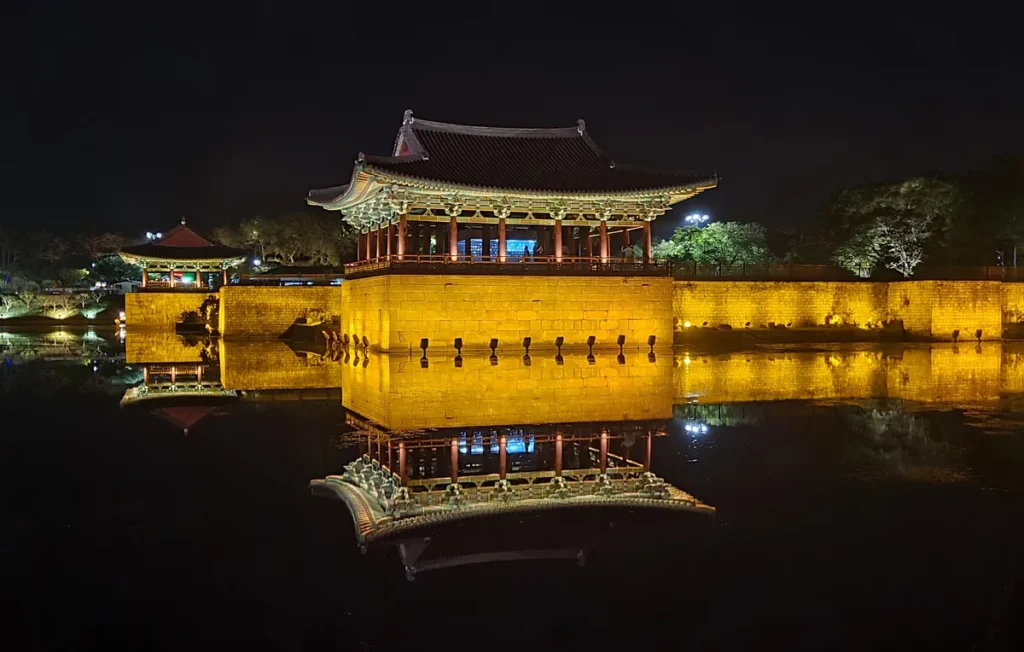
Follow the open visitor paths and any staff directions; this guide does not prescribe a clockwise circuit as an official rule. Different points along the water change how the pavilions and their reflections line up. Stop where there is room, then move on when other visitors need the same view.
- Take a few daylight pictures before concentrating on the lights, so the visit does not become one long wait for darkness.
- Use your phone’s night mode if it helps, but keep equipment out of the path. Check on-site rules before setting up a tripod.
- Look for calmer water rather than assuming rain improves reflections; wind and falling rain can break up the surface.
- Wear shoes with grip, keep children close beside the water, and use extra care on wet or dim sections.
Light rain may still allow a pleasant visit, but a downpour is not a photography upgrade. Check conditions and any temporary closure notices; you can leave the night view for another evening without having failed Gyeongju.
A Simple Evening Route
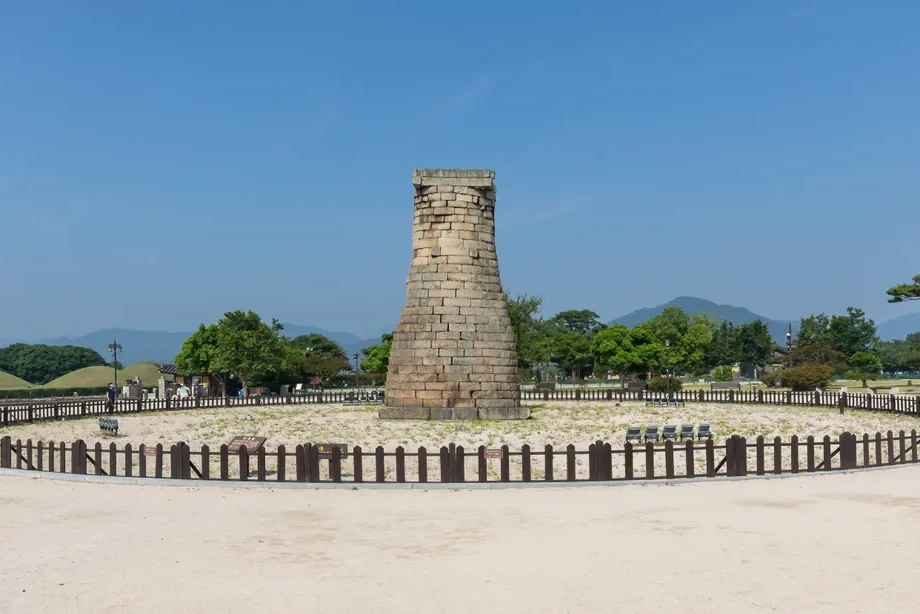
For a first visit, keep the core plan simple: late-afternoon Cheomseongdae → Donggung Palace and Wolji around dusk → dinner or your accommodation. Use a live walking map for the actual entrance-to-entrance route, crossings, and today’s access conditions.
If You Have More Time
Add Daereungwon earlier in the day if its admission and your energy fit. Hwangnidan-gil can be your food stop, but choose a specific restaurant and check its last order rather than assuming every kitchen stays open until the palace closes.
If You Also Want Woljeonggyo Bridge
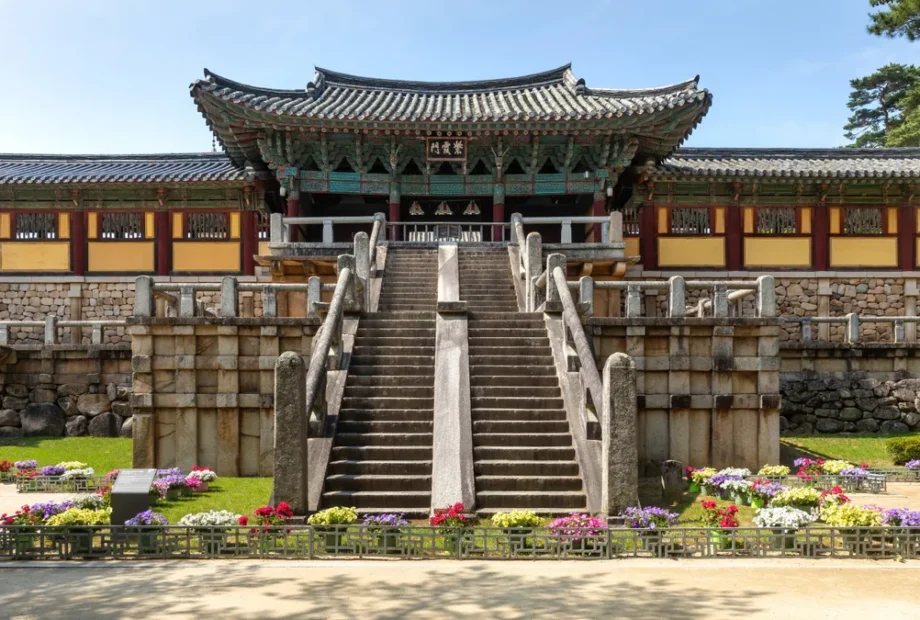
Treat the bridge as an optional extra, with its own opening/access checks and additional walking. The old five-stop route is not a compact loop that everyone must finish. If you already spent the day at Bulguksa and Seokguram, Wolji alone may be enough for the evening.
Gyeongju tourism’s city-centre guide is useful for understanding which historic sites belong to the central area. This route is an editorial suggestion, not a timed test walk or a promise that every attraction is open together.
Transport and the Journey Home
KTX arrivals use Gyeongju station, formerly Singyeongju. It is a separate arrival leg from the central sightseeing area: allow for the local transfer before committing to a sunset arrival. Our Korea KTX guide helps with the train part; Gyeongju’s live bus information helps with the local journey.
Before entering, check how you will leave: a walk to your exact hotel, a suitable bus departure, or a taxi pickup location. A 22:00 attraction closing does not guarantee a convenient bus or your chosen train afterwards. Keep more than a “run to the station” buffer if you are not staying overnight.
Our South Korea 7-day itinerary separates an overnight Gyeongju stop from a Busan-based day trip. Staying overnight gives the pond room in your evening; a day trip needs a confirmed return train or bus, the transfer to its departure point and any luggage collection. If the return service leaves too early, choose a daytime visit or leave the night view for another trip.
Where to Stay and When a Tour Helps
A central Gyeongju base around Daereungwon or Hwangnidan-gil can make evening plans simpler, but check the actual property pin and the walk back. “Near the sights” in a hotel description does not mean it is beside the Wolji entrance. Families and travelers with mobility needs should also confirm the exact paths and access rather than relying on an all-ages label.
Independent visitors can plan this stop without a tour. Arranged transport may suit a wider day trip, especially when combining mountain attractions, but confirm that the product really includes an evening Wolji visit—not just a daytime drive past Gyeongju.
Optional affiliate links: we may earn a small commission at no extra cost to you. You can compare Gyeongju tours, compare accommodation, or compare rail booking options on Trip.com. Check the exact itinerary, property location, ticket conditions, and cancellation policy before paying; these links do not guarantee availability or inclusion.
Seasonal Planning Without Promised Scenery
Spring blossoms and autumn foliage depend on the year’s weather. Summer evenings can be humid, so bring water and do not schedule the whole walk at a sprint. In winter, dress for standing still by the pond as well as walking; “only an hour outside” can feel longer when you are waiting for the light.
The images in this guide provide visual context, not a promise of current foliage, an empty path, or identical reflections. For the wider seasonal choice, see when to visit South Korea.
A good Wolji evening does not require every historic stop on the map. Leave space for the pond, the walk, and a sensible journey home. The reflection should be the memorable part—not the taxi hunt afterwards.
Official Sources and Review Scope
Reviewed October 4, 2026: VISITKOREA’s Donggung Palace and Wolji listing for published hours, last admission, individual fees, address, contact and historical context; Gyeongju tourism’s city-centre guide for the surrounding heritage area. Published times and fees are reference information, not a same-day confirmation of operations.
Hours, last ticketing/admission and individual fees were rechecked against the same VISITKOREA listing on October 12, 2026 and still match the reference information above. The historical and city-centre review retains its October 4 date; this is not a new confirmation of every surrounding attraction.
This review did not confirm a precise lighting switch-on time, re-entry policy, current bus departures, individual restaurants’ last orders, or step-free access. Suggested arrival and visit durations are planning estimates, not measured averages or claims of personal visits. Check the details that matter for your date before departure.