Skip to content
Independent Korea guide · Current practical details
Updated for 2026

Destinations

Korea Autumn Foliage 2026: Forecast, Peak Dates & Best Places

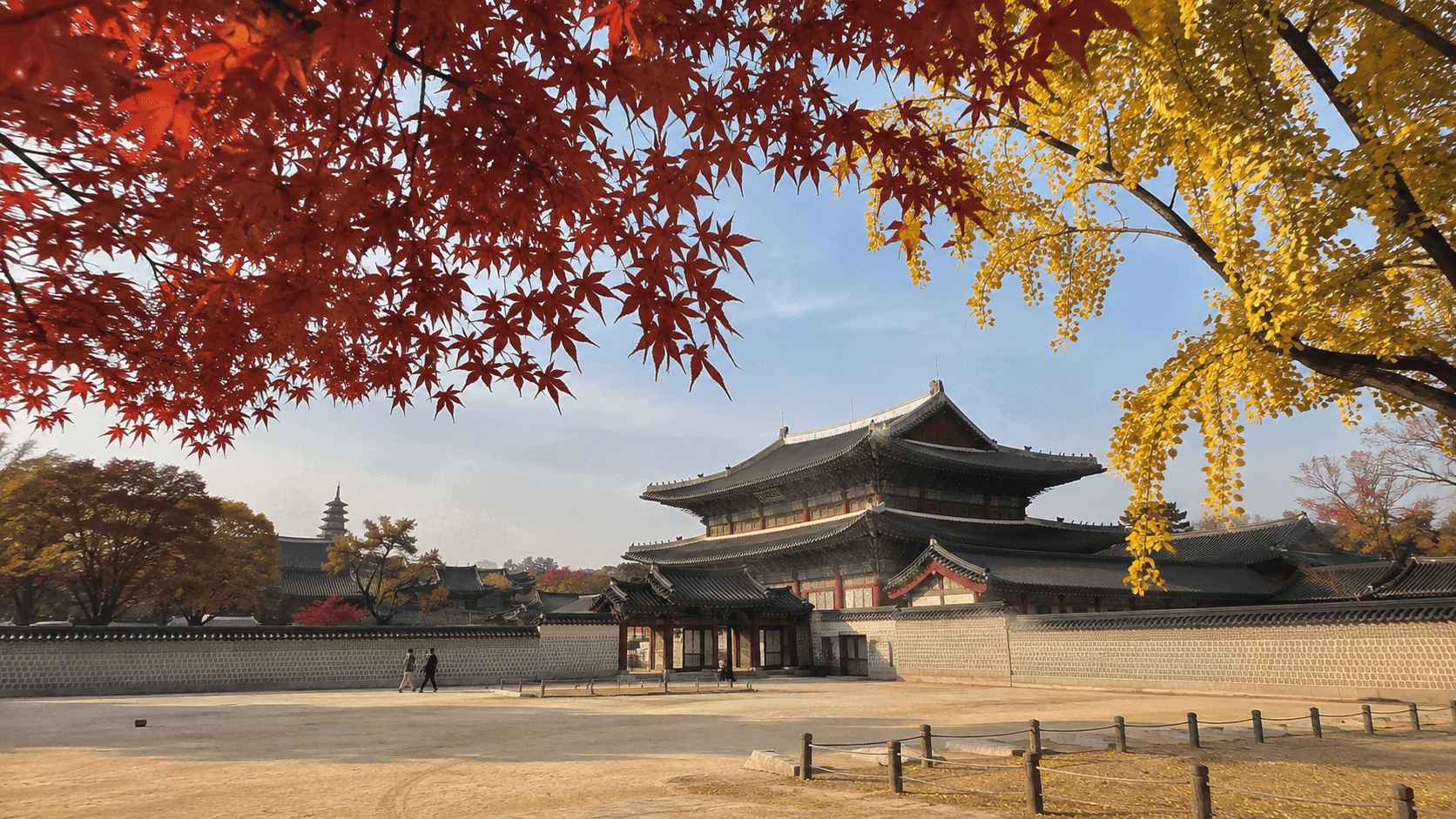
Autumn in South Korea is less about finding one perfect weekend and more about being in the right part of the country at the right time.

Korea Travel Lab

Published
Aug 25, 2026
Updated
Sep 6, 2026
Reading time
16 min read
Written by
Korea Travel Lab
Independent travel guide

Affiliate disclosure: This guide may contain affiliate links. If you book through them, we may earn a small commission at no extra cost to you. Learn more.

Autumn in South Korea is less about finding one perfect weekend and more about being in the right part of the country at the right time.

The colors do not arrive everywhere at once. Higher mountain areas usually change first, Seoul follows later, and parts of southern Korea can still look spectacular after the famous mountain destinations farther north have already passed their peak.

That is useful if your flights are already booked.

Instead of trying to build an entire trip around one predicted “peak foliage date,” it usually makes more sense to match your travel dates with the part of Korea most likely to have good color.

This guide does exactly that.

It covers the typical 2026 autumn foliage window, where to look depending on when you visit, the best places in Seoul and beyond, and which famous foliage destinations are actually worth the extra travel time.

2026 foliage update: Korea’s detailed autumn foliage dates are normally confirmed closer to the season. Until the full 2026 forecast is available, the periods below should be treated as planning windows rather than guaranteed peak dates. Weather in September and October can shift the season by several days.

Table of contents

If Your Korea Travel Dates Are Already Fixed

This is the easiest way to plan.

You do not need to predict the exact day a maple tree will turn red three months in advance. Start with the dates you will actually be in Korea.

Your Travel DatesWhere to Look First
Late September–early OctoberFirst color at Seoraksan and higher elevations
Early–mid OctoberMountain areas in Gangwon and northeastern South Korea
Mid–late OctoberSeoraksan, Gangwon, Gapyeong and central regions
Late October–early NovemberSeoul, Nami Island, central Korea and Gyeongju
Early–mid NovemberSeoul’s later color, Naejangsan and southern regions

There is an important distinction here.

First foliage is not the same as peak foliage.

A mountain can begin showing autumn color weeks before the landscape reaches its most photogenic stage.

For example, Korea’s official 2025 forecast placed the first foliage at Seoraksan at the end of September, while peak color there was expected in late October. Seoul’s Bukhansan peaked later, and Naejangsan later still.

That north-to-south and high-to-low progression is more useful for trip planning than any single national “best week.”

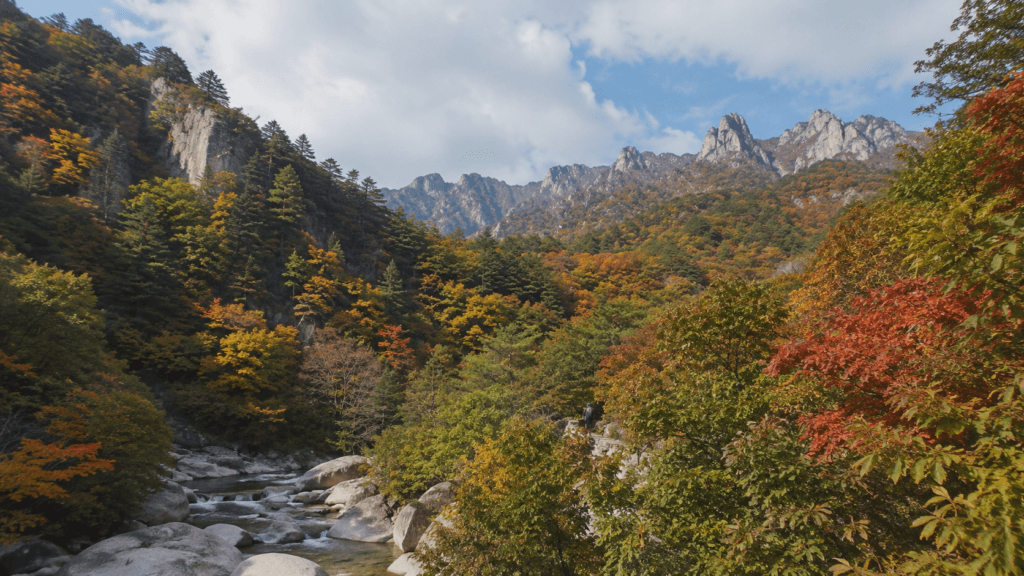
Seoraksan mountain valley with colorful autumn foliage and rocky peaks
Autumn colors spreading through the valleys and rocky peaks of Seoraksan.

If you are still deciding whether October or November works better for your trip, our best time to visit South Korea guide compares autumn with the rest of the year.

Visiting in Late September or Early October

Keep expectations realistic.

Seoul will usually not look like the red-and-gold autumn photos filling travel feeds yet.

If foliage is a priority, look toward higher elevations and Seoraksan. Even there, you may be seeing the beginning of the season rather than full peak color.

The upside is that temperatures are often much more comfortable for outdoor sightseeing than in summer.

Visiting from Early to Mid-October

Mountain destinations become more interesting.

Seoraksan is one of the strongest options during this period, particularly if hiking or mountain scenery is already part of your Korea plans.

Seoul may show early signs of autumn, but it is usually too soon to plan an entire city trip around peak fall foliage.

Visiting from Mid to Late October

This is where your options widen.

Seoraksan and other mountain areas may be colorful, while Gapyeong, Nami Island and central Korea begin becoming more reliable.

Toward the end of October, Seoul itself becomes increasingly useful for foliage.

If you are traveling through several regions rather than staying in one city, this is one of the easiest periods to work with.

Visiting from Late October to Early November

For many first-time travelers, this is the sweet spot.

You have a good chance of seeing autumn scenery without redesigning the entire trip around mountains.

Palaces, parks, neighborhoods and hiking areas around Seoul may all offer color, while places such as Gyeongju can work especially well as you travel farther south.

Visiting in Early to Mid-November

You may not be too late.

Northern mountain areas can already be past their best, but Seoul sometimes retains good color into early November and southern destinations tend to run later.

This is when places such as Naejangsan become particularly interesting.

The trade-off is temperature. Mornings and evenings are noticeably colder by this point.

First Decide How Much of Your Trip Autumn Is Worth

Not everyone needs to travel across the country for leaves.

There are three sensible ways to approach autumn in Korea.

You want foliage without changing your Seoul itinerary

Stay in Seoul.

Royal palaces, Namsan, Seoul Forest, Deoksugung Stone Wall Path, Olympic Park and Bukhansan can all add autumn color to places that are already useful sightseeing stops.

This is the best option if fall foliage is a bonus rather than the main purpose of the trip.

You want one easy autumn day outside Seoul

Look at Nami Island, Garden of Morning Calm or Hwadam Botanic Garden.

These offer stronger nature scenery without requiring a multi-day regional detour.

They are popular for a reason, but popularity also means you should think about reservations, weekday visits and early starts.

If you want to compare other options before using a full day outside the city, see our best day trips from Seoul guide.

Autumn foliage is one of the main reasons you are coming to Korea

Then it makes sense to consider Seoraksan, Naejangsan or a regional autumn route that includes Gyeongju.

The important part is keeping the rest of your itinerary realistic.

A traveler with five days in Seoul probably should not spend two of them sitting on intercity buses just to collect another red-leaf photograph.

The leaves are pretty.

Not exhausting yourself is also pretty good.

Where to See Autumn Foliage in Seoul

One of Seoul’s biggest autumn advantages is that you do not have to choose between sightseeing and foliage.

Many of the city’s best fall locations are places worth visiting anyway.

Changdeokgung Palace and Secret Garden

Changdeokgung is one of my first choices for a Seoul autumn day because the trees feel like part of the palace rather than decoration around it.

The Secret Garden is particularly attractive.

Wooded paths run between ponds and traditional pavilions, giving the area a quieter, more natural atmosphere than many of Seoul’s busier palace courtyards.

If you want to visit the Secret Garden, check the current entry and tour arrangements before your visit. Autumn is a popular period and simply arriving at the busiest time of day is not always the best strategy.

For ticket details, timed entry and how long to allow, see our Changdeokgung Palace and Secret Garden guide.

Try to give yourself enough time to walk rather than treating Changdeokgung as a quick photo stop.

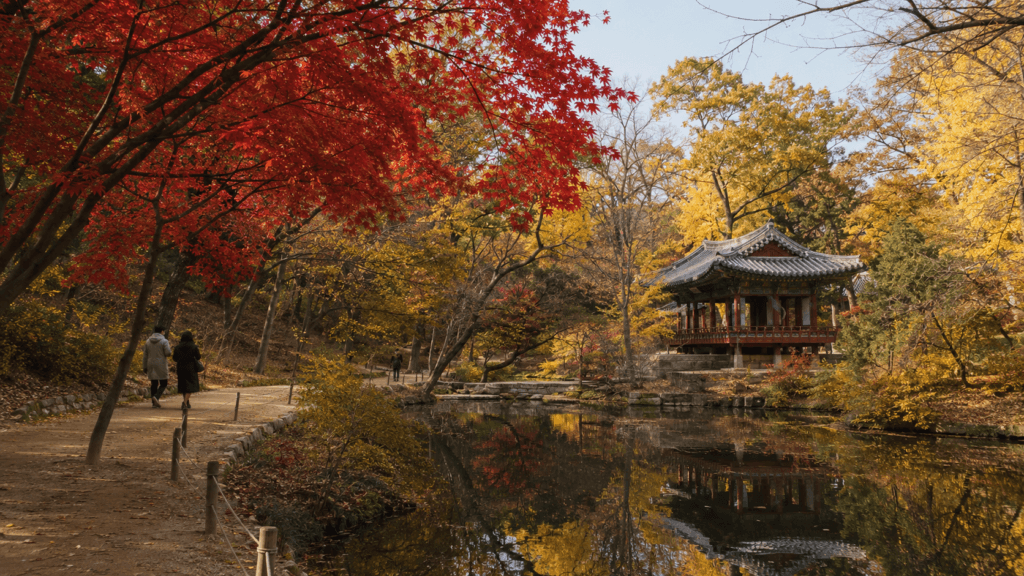
Traditional pavilion and pond surrounded by autumn foliage in Changdeokgung Secret Garden
A quiet autumn walk through the gardens of Changdeokgung Palace in Seoul.

Deoksugung Stone Wall Path

For something much easier, head to Deoksugung.

The stone wall and yellow ginkgo leaves create one of central Seoul’s classic autumn scenes.

More importantly, it fits neatly into an ordinary sightseeing day.

You can combine the walk with Deoksugung Palace, City Hall and Jeongdong-gil without losing half a day to transportation.

If you are staying near Myeongdong or central Seoul, this is one of the lowest-effort ways to add fall color to the trip.

Seoul Forest

Seoul Forest makes particular sense if you are already visiting Seongsu.

It is flat, spacious and easy to walk, and you can head straight into Seongsu’s cafés, shops and restaurants afterward.

That makes it a good option for families, couples and anyone who wants autumn scenery without turning the day into a hike.

Do not expect dramatic mountain landscapes.

The appeal is different: a relaxed city park that happens to look much better in autumn.

Namsan

Namsan combines autumn leaves with views over central Seoul.

You can walk, use public transportation for part of the journey or include N Seoul Tower.

If foliage is the priority, do not rush directly to the observation deck and leave.

The paths around the mountain are part of the experience.

Walking downhill can also be a wise piece of trip planning after several days of Seoul sightseeing. By day four, your step counter may already be behaving like a personal trainer with a grudge.

Bukhansan National Park

Bukhansan is the choice for travelers who want something more dramatic without taking an intercity trip.

You get real mountain scenery within reach of Seoul.

You also get a real hike.

Choose a route that matches your fitness level and daylight rather than automatically aiming for the hardest summit.

Autumn weekends can become extremely busy, especially when the colors are good.

Start early, wear proper footwear and bring water.

If your priority is simply seeing foliage rather than reaching a summit, you do not need the longest trail to have a good day.

Olympic Park

Olympic Park is another useful option if you prefer open space to hiking.

It works well for a slower autumn walk and can be combined with southeastern Seoul attractions without crossing the entire city.

This is also a good backup when you want to spend time outside but do not have the energy or weather window for Bukhansan.

Easy Autumn Day Trips from Seoul

If Seoul’s parks are not enough, you can get noticeably stronger autumn scenery without turning the trip into a regional expedition.

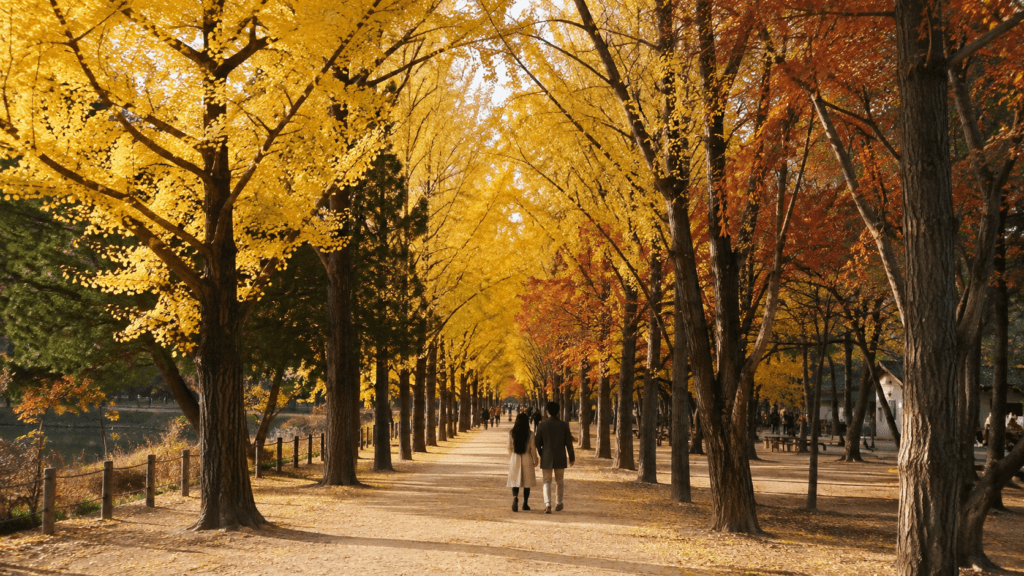
Visitors walking along a golden tree-lined path on Nami Island in autumn
Golden autumn trees along one of Nami Island’s famous walking paths.

Nami Island

Nami Island is probably Korea’s most recognizable easy autumn day trip.

The long tree-lined paths become especially photogenic as the season changes, and the island requires very little hiking experience.

That makes it particularly popular with couples, families and first-time visitors.

It also makes it busy.

If you care about getting quieter photos, arriving early matters more than finding a secret corner of the island. Autumn weekends and peak periods can attract large numbers of visitors.

Nami Island works particularly well if you want an uncomplicated nature day.

For ferry details, transport and realistic attraction combinations, check our Nami Island Guide 2026 before choosing your day.

If you would rather skip the ITX, local buses and transfers between Gapyeong attractions, you can also compare a Nami Island and Garden of Morning Calm day tour from Seoul.

Nami Island works less well if you are searching for somewhere undiscovered.

That ship left the dock a few million photographs ago.

Garden of Morning Calm

Garden of Morning Calm is often combined with Nami Island, but the experience is different.

It is a landscaped garden rather than a single famous tree-lined destination, so the autumn scenery feels more varied.

Expect ponds, garden paths, wooded sections and carefully maintained seasonal landscapes.

Combining the two in one day is possible.

Just be realistic about travel time between Gapyeong attractions.

Adding rail bikes, multiple cafés and every nearby attraction can turn a pleasant autumn day into a small transportation project.

Pick the places you actually care about.

Hwadam Botanic Garden

Hwadam is one of the places I would plan in advance rather than improvise on the morning of the trip.

The garden has landscaped forest paths, seasonal foliage and a monorail, making it attractive to travelers who want strong autumn scenery without a difficult mountain hike.

Autumn is also one of its busiest periods.

Admission is handled through the official online reservation system, and popular fall dates or monorail times can sell out.

If Hwadam is high on your list, check the official October–November visitor notice and reservation page before deciding which day of your itinerary to use.

Do not assume that arriving at the entrance during peak foliage season will produce the ticket you wanted.

The garden itself can be explored on foot, so the monorail is useful but it is not the only way to experience Hwadam.

Seoraksan: The Mountain Option

If your trip falls earlier in the autumn season, Seoraksan deserves serious consideration.

Its elevation and location in northeastern South Korea mean foliage activity generally begins earlier here than in Seoul.

That does not mean early October automatically equals peak foliage.

The first leaves can turn well before the mountain reaches its strongest overall color.

For most international travelers, Sokcho is the practical base.

You can travel from Seoul, stay in Sokcho and combine the national park with the east coast.

A Seoul day trip is possible, but an overnight stay makes more sense if you want to hike rather than spend most of the day moving between buses.

You also do not need to choose the hardest trail.

Seoraksan has easier walks and temple areas as well as serious hiking routes. If autumn scenery is the goal, a demanding summit is optional.

If you want the mountain scenery without managing intercity buses and local transfers yourself, you can compare a Seoraksan autumn foliage day tour from Seoul.

Gyeongju: History with Autumn Around It

Gyeongju works differently from Seoraksan.

You are not traveling there for one mountain or one line of trees.

The appeal is what autumn does to places you would probably visit anyway.

Bulguksa becomes particularly atmospheric when surrounded by autumn color, while historic areas around central Gyeongju feel better suited to slow walking and cycling once the summer heat has disappeared.

If Bulguksa is one of your priorities, our Bulguksa Temple guide covers transportation, visiting time and practical details.

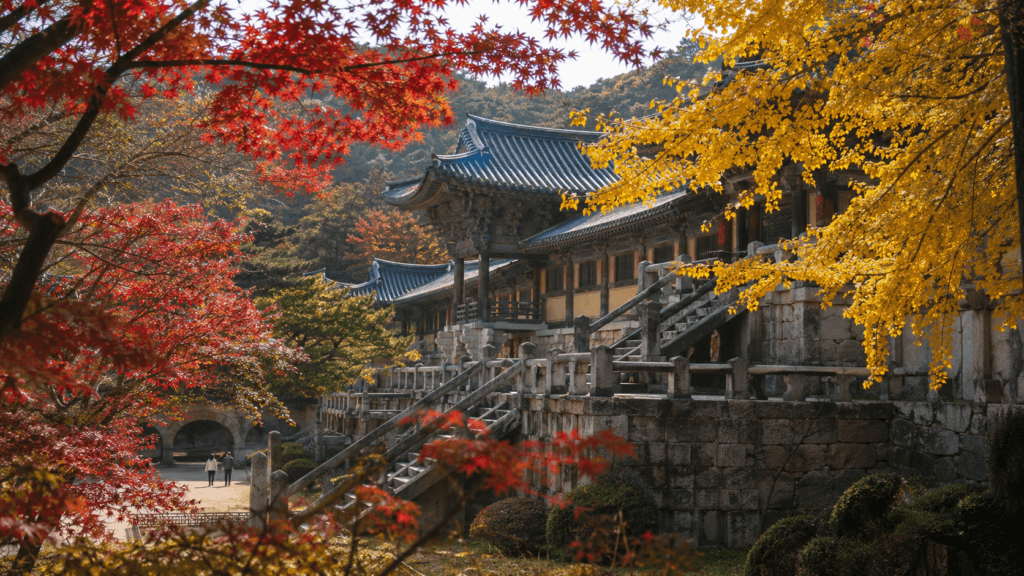
Bulguksa Temple in Gyeongju framed by red and yellow autumn foliage
Autumn foliage adds another layer of color to historic Bulguksa Temple in Gyeongju.

Even if your foliage timing is imperfect, the trip still works.

You still have Bulguksa, Daereungwon, Cheomseongdae, Donggung Palace and Wolji Pond, Hwangnidan-gil and the city’s historic neighborhoods.

For a wider route through these sights, use our Gyeongju Travel Guide.

That makes Gyeongju one of the safer choices for first-time travelers.

You are not gambling an entire travel day on whether one forest has reached exactly the right shade of orange.

Naejangsan: Worth It If Foliage Is the Point

Naejangsan is one of Korea’s classic late-autumn foliage destinations.

When timing and weather line up, the combination of mountain scenery and dense red and orange leaves can be spectacular.

The downside is predictable.

Everyone else knows this too.

Roads, public transportation and popular walking areas can become crowded during peak weekends.

Naejangsan therefore makes most sense for travelers who consider autumn scenery a major reason for visiting Korea.

If this is your first short Korea trip and you are also trying to cover Seoul, Busan and Gyeongju, adding another long-distance foliage stop may create more transportation than actual holiday.

If you have more time or photography and autumn landscapes are priorities, the equation changes.

Seoul vs Nami Island vs Seoraksan vs Naejangsan

If you are still deciding, use this rather than trying to rank them from “best” to “worst.”

DestinationBest ForTypical Planning WindowEffort
Seoul palaces & parksFirst-time trips, easy sightseeingLate Oct–early NovLow
Nami IslandEasy day trip, photos, couplesLate Oct–early NovLow
BukhansanHiking without leaving SeoulLate Oct–early NovMedium–High
SeoraksanMountain scenery, earlier seasonMid–late OctMedium–High
GyeongjuHistory + autumn sceneryLate Oct–early NovMedium
NaejangsanDedicated foliage tripEarly–mid NovHigh

These are planning windows, not confirmed 2026 peak dates.

Weather can move the season, sometimes noticeably.

The most useful approach is to choose destinations that fit your route first, then check current foliage conditions shortly before the visit.

How to Add Autumn Foliage to a Normal Seoul Trip

You do not need a separate “autumn itinerary.”

Attach foliage to days you already have.

Palace day: Add Changdeokgung and the Secret Garden.

City Hall or Myeongdong day: Walk Deoksugung Stone Wall Path or head toward Namsan.

Seongsu day: Spend part of the afternoon at Seoul Forest.

Outdoor day: Choose Bukhansan if the weather is clear.

Free day outside Seoul: Use Nami Island, Garden of Morning Calm or Hwadam.

For a complete sightseeing route, use our Seoul 5-Day Itinerary as the base and move your main foliage day according to the weather.

This is safer than building five consecutive days around foliage.

Rain, strong wind or a sudden temperature change can alter the appearance of the trees surprisingly quickly.

If one autumn stop disappoints, the rest of your Korea trip should still make sense.

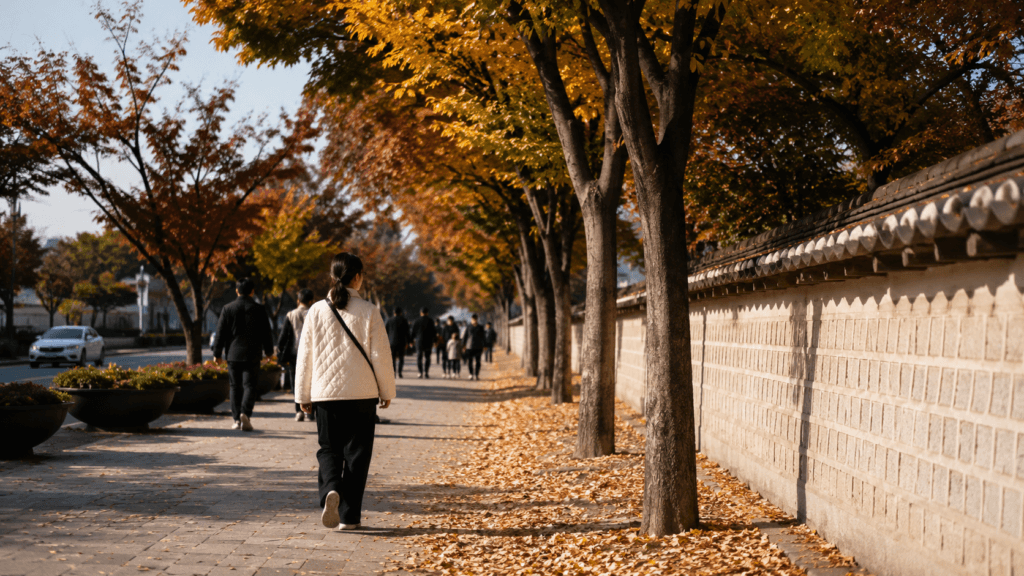
Traveler wearing a light jacket walking along an autumn street in Seoul
Light layers and a jacket work well for many late-October autumn days in Seoul.

What to Wear for Autumn in Korea

Autumn is generally comfortable for walking, but temperatures can change a lot between the afternoon and evening.

Layers are the easiest solution.

For an October trip, consider packing:

  • T-shirts or light base layers
  • long trousers
  • a sweatshirt or knit layer
  • light to medium jacket
  • comfortable walking shoes
  • compact umbrella
  • sunscreen

Mountain destinations can be significantly colder than central Seoul.

If you are heading to Seoraksan or spending hours outside at higher elevation, do not pack based only on Seoul’s afternoon forecast.

For typical temperatures, rainfall and seasonal clothing in the capital, see our Seoul weather by month guide.

By November, a warmer outer layer becomes much more useful, especially early in the morning and after sunset.

How to Avoid the Worst Autumn Crowds

There is no magic trick here.

Good weather plus peak foliage plus a Saturday produces people.

A lot of them.

But you can make the experience much better.

Choose weekdays when possible

This matters most for famous foliage destinations and national parks.

Domestic travelers are chasing the same short seasonal window.

Start earlier than you normally would

This helps at Nami Island, Bukhansan, Seoraksan and other high-demand destinations.

An early departure usually improves both transportation and the first couple of hours at the attraction.

Reserve what actually requires reservations

Do not assume every nature destination is a walk-up attraction.

Hwadam is the clearest example.

Check current ticket and reservation rules before travel.

Keep one day flexible

If autumn scenery matters to you, a little flexibility is more valuable than trying to predict exact conditions months ahead.

Check the latest foliage reports and weather forecast once you are in Korea, then use your best-weather day for the most important outdoor destination.

Do not chase peak color across the whole country

Travel time matters.

Seeing slightly less-than-perfect leaves in a place that fits your route is often better than spending six hours traveling to somewhere supposedly at “100% peak.”

Your camera does not know the official foliage percentage.

Frequently Asked Questions

When is peak autumn foliage in Korea in 2026?

Exact 2026 peak dates vary by region and depend on autumn temperatures.

As a general planning rule, Korea’s major foliage season runs from October into early November, with higher-elevation and northeastern areas changing earlier than Seoul and southern Korea.

Use official seasonal forecasts closer to your travel date for exact timing.

When is the best time for autumn foliage in Seoul?

Late October through early November is usually the most useful planning window.

Actual peak color can shift from year to year, so check current conditions shortly before visiting.

Is November too late for fall foliage in Korea?

Not necessarily.

Early November can still be excellent in Seoul and central Korea, while some southern destinations reach strong color later than the northern mountains.

By late November, reliable foliage becomes much harder to find.

Is Nami Island worth visiting in autumn?

Yes, if you want an easy day trip with photogenic tree-lined paths and very little hiking.

The biggest drawback is crowds.

Go early or choose a weekday if possible.

Where should I go if autumn foliage is the main purpose of my trip?

That depends mostly on your dates.

Seoraksan works better earlier in the season, Seoul and central Korea become stronger later in October, and places such as Naejangsan are more useful as the season moves into November.

Rather than choosing one destination months in advance, build two or three realistic options into your route and make the final decision closer to the trip.

Final Thoughts

The hardest part of planning an autumn trip to Korea is accepting that there is no single perfect foliage date for the entire country.

That is also what makes the season flexible.

Come earlier and you can look toward Seoraksan and higher elevations.

Arrive later in October and Seoul, Gapyeong and central Korea become much more useful.

Travel into early November and you may still find excellent color in Seoul or farther south.

For most visitors, the best strategy is not to chase leaves from city to city.

Choose places that already fit your Korea itinerary, leave one outdoor day flexible, and check the latest conditions once the season gets closer.

Autumn should make your trip better.

It should not become a logistics problem with prettier trees.