Affiliate disclosure: This guide may contain affiliate links. If you book through them, we may earn a small commission at no extra cost to you. Learn more.
Planning a trip to South Korea in June or July and suddenly worried about the rainy season? You are not alone. Many travelers start with dreamy images of palaces, street food, rooftop cafes and mountain views, then discover the word “jangma” and wonder if their Korea trip is about to become one long umbrella commercial.
The honest answer is this: yes, Korea can still be worth visiting during the rainy season, but only if you plan realistically.
Rainy season in Korea does not usually mean it rains every minute of every day. You can still have dry hours, cloudy-but-walkable days and surprisingly beautiful moments after the rain. But you should expect humidity, sudden heavy rain, wet shoes, schedule changes and outdoor plans that need a backup.
If your dream Korea trip is 100% hiking, beaches, sunrise views and outdoor photo spots, rainy season may frustrate you. If you are happy mixing cafes, shopping, museums, food, spas, indoor attractions and flexible sightseeing, Korea can still be a great trip.
Before choosing your dates, you may also want to compare this guide with our Best Time to Visit Korea article. Rainy season is not the easiest time to visit, but it is not a travel disaster either. It just asks you to pack smarter and stop trusting white sneakers like they signed a waterproof contract.
Table of contents
Quick Answer: Is Korea Worth Visiting During the Rainy Season?
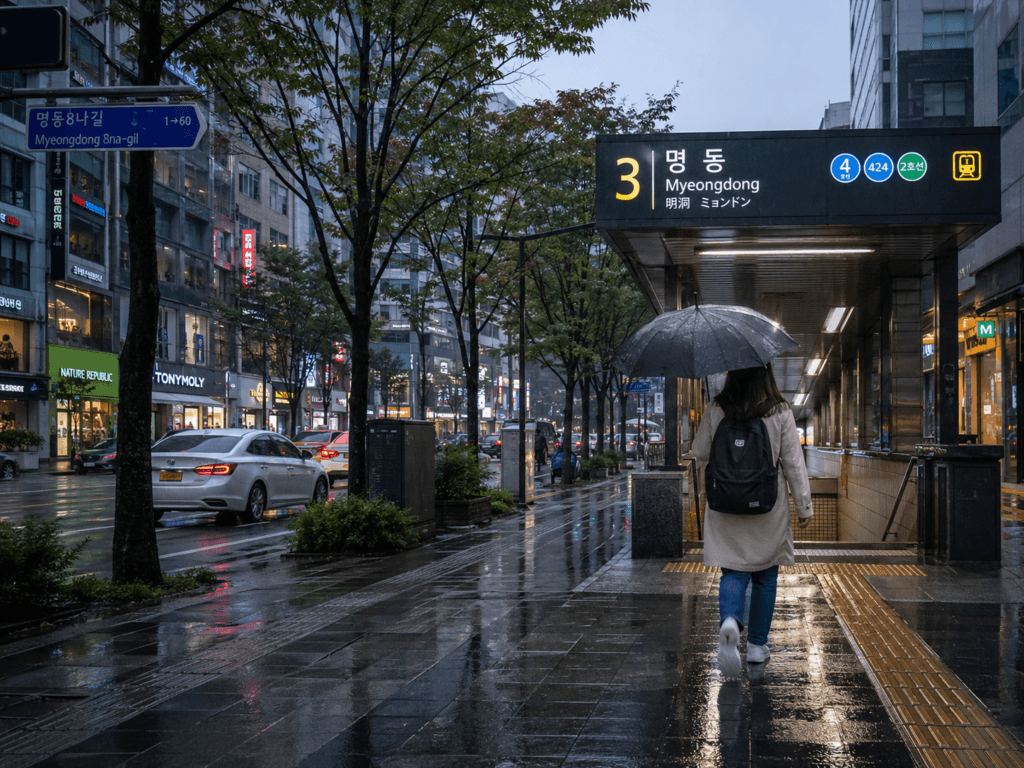
Yes, Korea is worth visiting during the rainy season if you are flexible with your itinerary.
The rainy season is best for travelers who enjoy:
- Food-focused trips
- Cafes and shopping
- Museums and galleries
- K-beauty treatments
- Indoor activities
- Seoul city travel
- Slower travel days
- Lower-pressure sightseeing
It is less ideal for travelers who mainly want:
- Beach days
- Mountain hikes
- Sunrise viewpoints
- Long outdoor walking routes
- Jeju coastal drives every day
- Perfect blue-sky photos
For first-time visitors, Seoul is usually the safest rainy-season base. The subway is excellent, there are many indoor alternatives, and you can change your plans quickly when the weather turns dramatic.
If you are planning a Seoul trip, read our Seoul Subway Guide before you go. During rainy season, the subway is not just transportation. It becomes your umbrella-powered survival system.
When Is Korea’s Rainy Season?
Korea’s rainy season is called “jangma.” It usually begins in late June and continues into late July, although exact dates can change every year.
A typical pattern looks like this:
- Jeju Island: around mid to late June to around July 20
- Southern Korea: around late June to late July
- Central Korea, including Seoul: around late June to late July
In 2026, the rainy season is expected to follow a fairly normal pattern, with Jeju likely starting first, then the southern region, then central Korea including Seoul.
This does not mean you should cancel every Korea plan between late June and July. It means you should build your itinerary with weather flexibility. In other words, do not make Day 1 hiking, Day 2 beach, Day 3 island ferry, Day 4 outdoor palace marathon and Day 5 “cry into wet socks.”
A smarter rainy-season itinerary mixes outdoor and indoor plans.
What Is Korea’s Rainy Season Really Like?
The biggest misunderstanding is that rainy season means constant rain from morning to night for weeks.
That can happen during bad weather systems, but many days are more mixed. You might get cloudy skies, short dry windows, sudden heavy showers, light rain, humid afternoons and clear moments after the rain.
The harder part is often not the rain itself. It is the humidity.
Korea in summer can feel hot, damp and sticky, especially in July. Clothes may dry slowly. Hair may choose independence. Walking long distances can feel heavier than expected. Even when it is not raining, the air can feel thick enough to chew politely.
A good rainy-season mindset is this:
Plan outdoor activities in the morning when possible, keep afternoons flexible, and always have an indoor backup nearby.
Pros of Visiting Korea During the Rainy Season
But jangma is not just a month of wet socks and cancelled plans. There are real advantages, especially if you are not chasing perfect weather every day.
1. Some Places Feel Less Crowded
Korea’s spring cherry blossom season and autumn foliage season can be very crowded. Rainy season is not empty, but some outdoor attractions may feel less packed than peak travel periods.
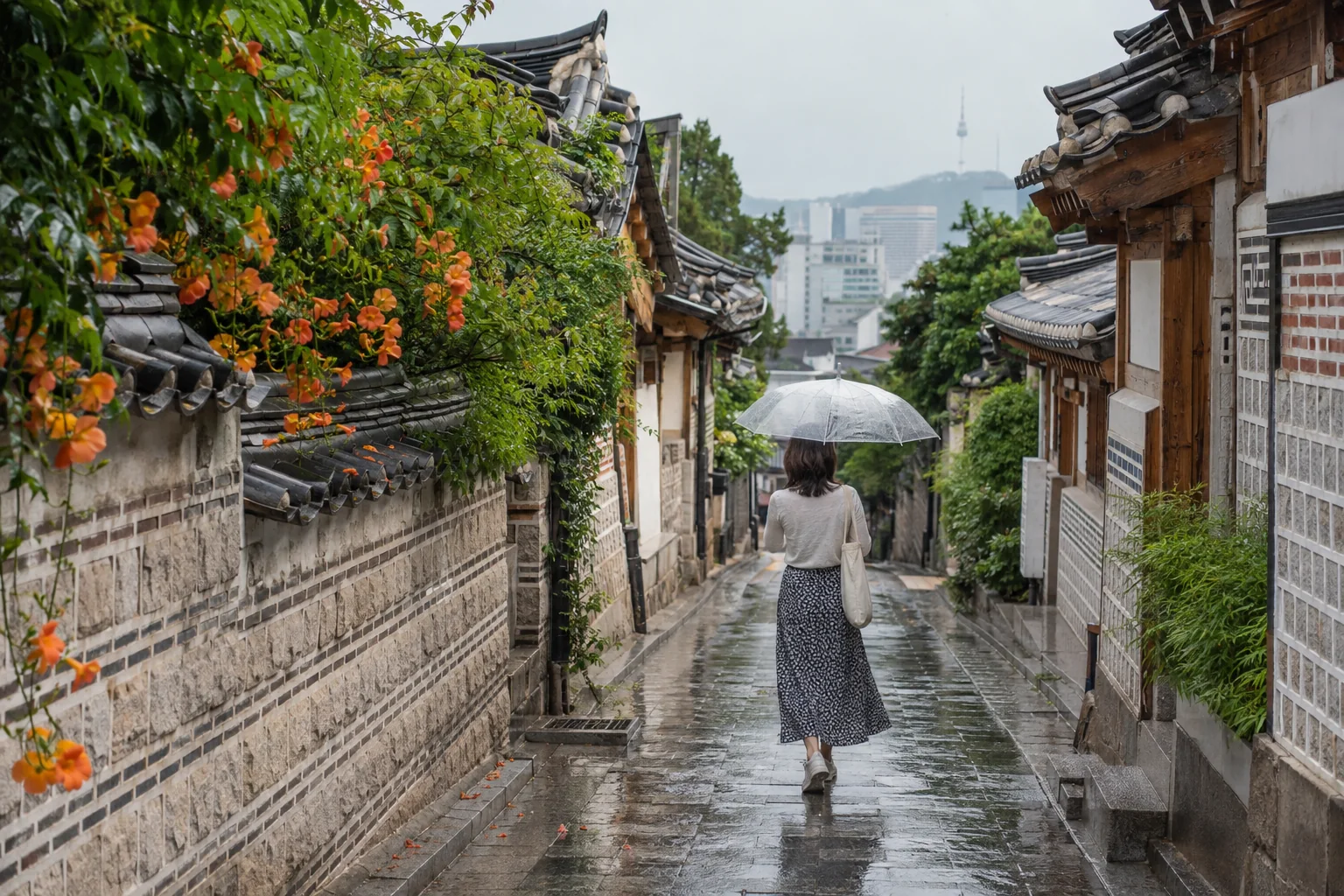
Popular areas like Gyeongbokgung Palace, Bukchon Hanok Village or Han River parks can be quieter on cloudy or lightly rainy days. You may not get the bright postcard sky, but you might get more space to breathe.
If you still want classic Seoul sights, choose light-rain days and move slowly. Palaces can look beautiful after rain, especially when the stone paths shine and the colors feel deeper.
For palace planning, our Gyeongbokgung Palace Guide 2026 can help you decide whether it fits your weather day.
2. Seoul Has Excellent Indoor Alternatives
This is the biggest reason Seoul works well during rainy season.
If rain cancels your outdoor plan, you can switch to:
- Myeongdong shopping
- COEX Mall
- Starfield Library
- National Museum of Korea
- Leeum Museum of Art
- Seongsu cafes
- Underground shopping malls
- Jjimjilbang
- K-beauty treatments
- Department stores
- Food markets
- Movie theaters
- Indoor observatories
Seoul is good at giving you plan B, plan C and plan “fine, I guess we are eating dessert again.”
For rainy shopping and food days, our Myeongdong Travel Guide 2026 and Seongsu-dong Travel Guide 2026 are easy guides to add to your itinerary.
3. Cafes and Food Trips Work Very Well
Rainy season can actually make Korea’s cafe culture feel even better.
A rainy afternoon in Seoul with coffee, cake and people-watching is not a failed travel day. It is a perfectly respectable indoor sport. Areas like Seongsu, Hongdae, Ikseon-dong and Yeonnam-dong are especially good for cafe-hopping when the weather is moody.
Food also becomes a rainy-day hero. Korean meals like kalguksu, sundubu-jjigae, hotteok, kimchi-jjigae, Korean BBQ and fried chicken feel even better when the sky is doing percussion practice outside.
If your itinerary leans heavily into food, rainy season is much easier to enjoy.
4. Green Spaces Look Lush
Rainy season brings deep green colors to parks, mountains and palace gardens. After a shower, places like Changdeokgung, Seoul Forest, Olympic Park and the Han River can look fresh and cinematic.
The trick is timing. Go during light rain or after rain, not during heavy downpours.
Do not walk along riverside paths during heavy rain or flood alerts. Light rain can be charming, but severe weather deserves a different plan.
5. Hotel and Schedule Flexibility May Be Better
Rainy season is not always cheap, and prices depend on dates, events, flights and location. But compared with Korea’s most popular spring and autumn periods, you may sometimes find more flexible accommodation options.
This is especially useful if you want to stay in central areas like Myeongdong, Hongdae, Insadong or Seoul Station.
Our Best Areas to Stay in Seoul guide can help you choose a neighborhood that works well in rainy weather. During jangma, staying near a subway station is not a small detail. It is a tiny daily blessing with escalators.
Cons of Visiting Korea During the Rainy Season
Now the honest part. Rainy season can be inconvenient.
1. Outdoor Plans Can Change Suddenly
A forecast may look fine, then the sky decides to improvise. Sudden heavy rain can make outdoor attractions uncomfortable or unsafe.
Be careful with:
- Mountain hikes
- Coastal walks
- Han River picnics
- Outdoor markets
- Palace visits during heavy rain
- Observation decks on cloudy days
- Ferry or island plans
- Sunrise viewpoints
Do not build a tight itinerary where every day depends on clear weather. Leave space to swap days around.
2. Humidity Can Be Tiring
Even if it does not rain all day, humidity can make travel more exhausting. You may need more cafe breaks, shorter walking routes and lighter clothing.
That is not bad planning. That is weather diplomacy.
Plan fewer major stops per day than you would in spring or autumn. A rainy-season Seoul day with three good stops can feel much better than a seven-stop schedule that turns into a damp treasure hunt.
3. Taxis Can Be Harder to Get
When heavy rain starts, everyone suddenly wants a taxi. Ride-hailing apps can become slower, prices may feel higher, and traffic can get worse.
This is why the subway is so important. In Seoul, it is often faster, cheaper and more reliable than taxis during rainy weather.
Before your trip, save subway routes and install useful map apps. A Korea eSIM options can also help because you will probably check maps, weather and transport more often during rainy season.
4. Some Views May Disappoint
N Seoul Tower, Lotte World Tower, coastal viewpoints, sunrise spots and mountain observatories can be underwhelming when visibility is poor.
This does not mean you should skip them entirely. Just do not book your entire day around a view if the weather looks cloudy.
For example, if you want to visit N Seoul Tower, keep it flexible. Go when visibility improves rather than forcing it on a foggy afternoon.
5. Flooding and Landslides Can Happen During Heavy Rain
Most tourist days are manageable, but Korea can experience strong summer downpours. Heavy rain can cause flooding near rivers, underpasses and low-lying areas. Landslides are also possible in mountainous areas.
During heavy rain warnings, avoid:
- Riverbanks
- Streamside paths
- Mountain trails
- Basement-level areas in flood-prone zones
- Driving through flooded roads
- Remote outdoor spots
Check weather alerts, follow local instructions and do not treat severe rain like a cute travel inconvenience. Some weather deserves respect, not content.
Best Places to Visit in Korea During Rainy Season
Seoul
Seoul is the best rainy-season choice for most first-time visitors. It has excellent public transportation, countless indoor attractions and many neighborhoods where you can adjust plans quickly.
Good rainy-day areas in Seoul include:
- Myeongdong
- Seongsu
- Hongdae
- Insadong
- Ikseon-dong
- COEX and Samseong
- Dongdaemun
- Seoul Station
- Yongsan
Myeongdong works well because of shopping, food, beauty stores, underground walkways and easy subway access. Seongsu is great for cafes, design shops and slower rainy afternoons. Insadong and Ikseon-dong are better in light rain than heavy rain because the alleys are charming but can feel crowded with umbrellas.
If it is your first time in Seoul, start with our Seoul 3-Day Itinerary 2026 and adjust each day with indoor backups.
Busan
Busan can still be enjoyable during rainy season, but it depends on your expectations.
If you are going mainly for Haeundae Beach, Gwangalli Beach and coastal views, rainy weather can be disappointing. But Busan also has good rainy-day options:
- Shinsegae Centum City
- Spa Land
- Jagalchi Market
- Busan Museum of Art
- Cafes near Gwangalli
- Indoor food markets
- Department stores
- Rainy beach views during light rain
Busan works best if you mix beach expectations with food, spa, shopping and city exploring.
For planning, connect this section naturally to our Busan Travel Guide 2026, Haeundae Beach Guide 2026, Gwangalli Beach Guide 2026 and Jagalchi Market Guide 2026.
Jeju Island
Jeju is beautiful during rainy season, but it is less predictable than Seoul.
Rain and wind can affect:
- Hallasan hiking
- Seongsan Ilchulbong sunrise views
- Coastal drives
- Beaches
- Ferry plans
- Outdoor photo spots
- Oreum walks
Jeju can still be worth visiting if you have enough days and flexible plans. But if your Jeju dream depends on clear sunrise views, hiking and beach time, rainy season is risky.
A good approach is to book a longer stay rather than a short, packed one. Give yourself backup days.
For Jeju planning, connect this section naturally to our Jeju Travel Guide 2026, Hallasan Guide 2026 and Seongsan Ilchulbong Guide 2026.
Gyeongju
Gyeongju can be atmospheric in light rain. Historic sites, temples and ponds can look calm and beautiful after showers.
But many of Gyeongju’s highlights are outdoors, so heavy rain can make sightseeing harder.
Good rainy-season choices include:
- Bulguksa Temple during light rain
- Donggung Palace and Wolji after rain
- Cafes near Hwangnidan-gil
- Museums
- Shorter walks instead of full-day outdoor routes
Gyeongju is better for travelers who enjoy slow history days rather than those trying to rush through every site.
Best Rainy Day Itinerary Ideas in Seoul
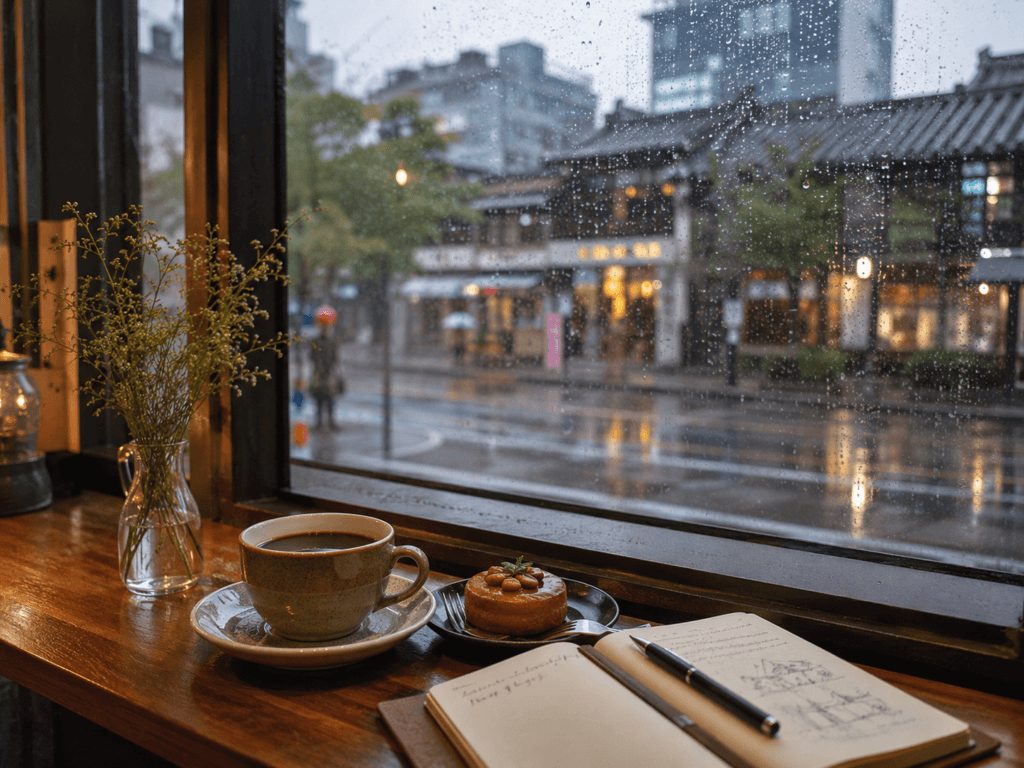
Here are easy rainy-day itinerary ideas you can use if the forecast looks wet.
Rainy Day Seoul Itinerary 1: Shopping and Food
Start in Myeongdong for skincare stores, street food and shopping. If the rain gets heavier, move indoors to department stores or underground shopping areas.
Later, head to Euljiro or Jongno for dinner. This is a good day for Korean BBQ, hot soup or fried chicken. Rain outside, sizzling grill inside. Balance restored.
Suggested internal link: Myeongdong Travel Guide 2026
Rainy Day Seoul Itinerary 2: Museum and Cafe Day
Start at the National Museum of Korea or Leeum Museum of Art. Then move to a cafe area like Hannam, Seongsu or Ikseon-dong.
This itinerary is perfect when the rain is steady but not severe. It gives you culture, coffee and enough indoor time to avoid becoming a walking laundry pile.
Suggested internal link: Seongsu-dong Travel Guide 2026
Rainy Day Seoul Itinerary 3: COEX and Gangnam Indoor Day
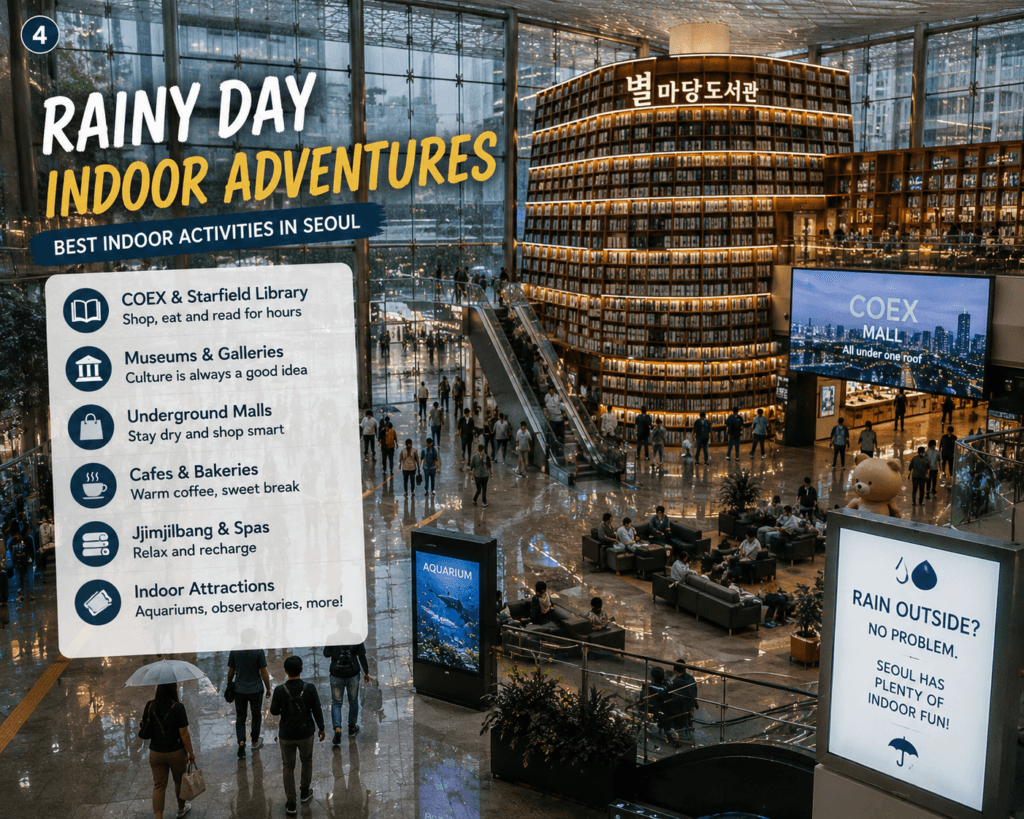
Spend the day around COEX Mall, Starfield Library, shopping areas, restaurants and nearby indoor attractions.
This works especially well if the rain is heavy because you can stay indoors for hours without feeling trapped.
If you like having backup plans ready, keeping a few Seoul indoor activity tickets in mind can make rainy days feel less stressful.
Rainy Day Seoul Itinerary 4: Spa and Recovery Day
Rainy season is a good excuse to slow down. Try a jjimjilbang, spa, massage or K-beauty appointment.
This is especially useful in the middle of a long trip. Your legs will know. They always know.
Beauty clinics, spas and wellness treatments also work well as rainy-day plans because they do not depend on clear skies.
Places to Be Careful With During Rainy Season
Some places are not impossible during rainy season, but they need caution.
Mountain Hikes
Avoid hiking during heavy rain, thunder, strong wind or landslide warnings. Trails can become slippery, streams can rise and visibility can drop quickly.
This includes popular hikes like Bukhansan, Hallasan and other mountain trails.
Han River Parks
The Han River is beautiful, but riverside areas are not ideal during heavy rain or flood alerts. Light rain can be fine for a short visit, but do not walk near flooded paths.
For dry or mild weather days, our Han River Travel Guide 2026 can help you plan a better visit.
Beaches
Haeundae, Gwangalli and Jeju beaches are much less enjoyable during heavy rain. Swimming conditions can change, visibility can be poor and strong winds may affect comfort.
Beach towns can still be nice for cafes and seafood, but do not expect perfect summer beach energy every day.
Outdoor Markets
Outdoor markets can be fun in light rain, but heavy rain makes them harder. Wet shoes, crowded umbrellas and slippery paths can drain the fun quickly.
Choose indoor markets or covered areas when the weather is rough.
What to Pack for Korea’s Rainy Season
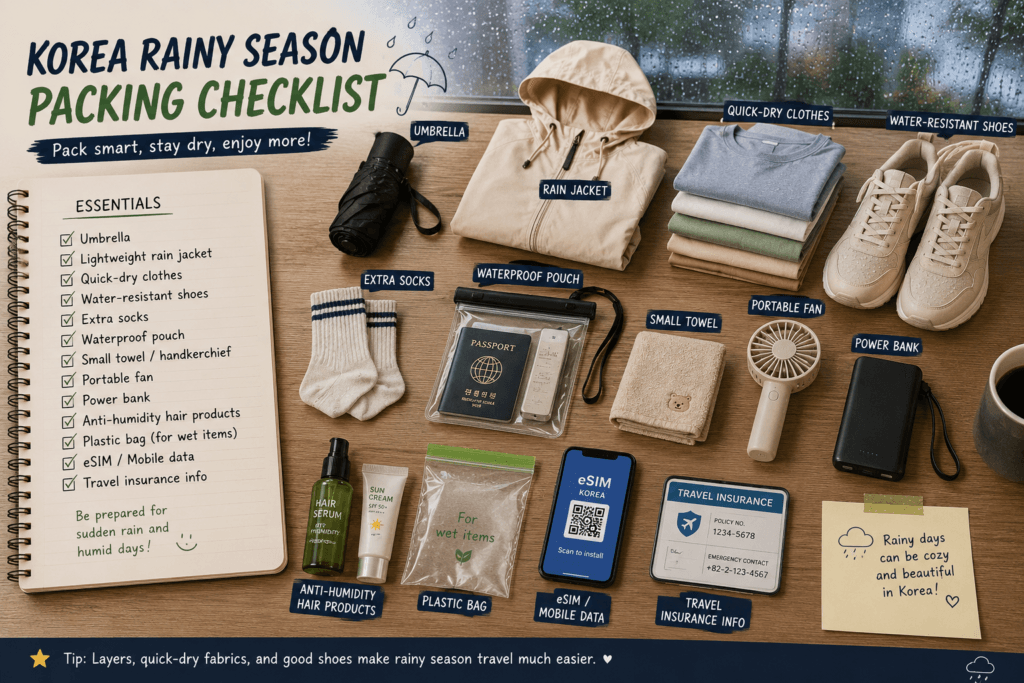
Packing well can make rainy-season travel much easier.
Bring:
- A compact umbrella
- Lightweight rain jacket
- Quick-dry clothes
- Comfortable water-resistant shoes
- Extra socks
- Waterproof pouch for documents
- Small towel or handkerchief
- Portable fan
- Power bank
- Anti-humidity hair products, if you care
- Plastic bag for wet items
- eSIM or mobile data plan
- Travel insurance details
Do not rely on flip-flops for city travel. They may seem practical, but wet subway stairs and long walking days can turn them into tiny chaos boards.
Also avoid heavy denim if possible. Wet denim is not clothing. It is a punishment with pockets.
For mobile data, arrange Korea eSIM options before departure so you can check weather alerts, subway routes, taxi apps and indoor backup plans without hunting for Wi-Fi.
Should You Book Tours During Rainy Season?
You can book tours during rainy season, but choose carefully.
Good rainy-season tour options include:
- Food tours
- Market tours with covered stops
- K-beauty experiences
- Cooking classes
- Indoor cultural workshops
- Museum-focused tours
- Night food tours, if rain is light
Be more careful with:
- Hiking tours
- Island tours
- Sunrise tours
- Beach tours
- Outdoor photography tours
- Long walking tours with no indoor backup
Check cancellation rules before booking. Weather flexibility matters more in June and July than in spring or autumn.
For rainy-season plans, Seoul indoor activity tickets and flexible booking options can be more useful than outdoor-only tours.
Should You Get Travel Insurance for Rainy Season?
Travel insurance is not usually required just because you visit Korea during rainy season, but it can be useful.
Heavy rain can sometimes affect flights, outdoor tours, ferries or transport. Insurance may also help with medical issues, delays, cancellations or lost luggage depending on your policy.
You can compare Korea travel insurance options before your trip. It is not the exciting part of planning, but rainy season is exactly when boring preparation can become heroic.
Airport Arrival Tips During Rainy Season
If you arrive during heavy rain, your first travel day can feel harder than expected. Incheon Airport is modern and organized, but the journey into Seoul can still take time.
For most travelers, the AREX train is reliable and weather-resistant. Airport limousine buses are convenient if they stop near your hotel, but traffic can be slower in heavy rain. Taxis and private transfers are easier with luggage, especially late at night or during bad weather.
If your flight arrives at night or during a stormy forecast, checking airport transfer options from Incheon Airport before flying can make your first day smoother.
You can also read our Incheon Airport to Seoul Guide for a full breakdown of trains, buses, taxis and transfers.
Common Mistakes Travelers Make During Korea’s Rainy Season
1. Planning Too Many Outdoor Activities
This is the big one. A rainy-season itinerary should not be packed with outdoor activities from morning to night.
Instead, pair one outdoor plan with one indoor backup each day.
Example:
- Morning: Gyeongbokgung Palace
- Backup: National Museum of Korea
- Evening: Myeongdong shopping and dinner
That kind of plan bends without breaking.
2. Wearing the Wrong Shoes
Cute shoes are fine until the rain starts. Then they become a personal enemy.
Bring shoes that can handle wet pavement, subway stairs and long walking days. Water-resistant sneakers or quick-dry walking shoes are better than heavy canvas shoes.
3. Trusting the Forecast Too Literally
Weather forecasts are helpful, but rainy-season weather can change quickly. Check the forecast in the morning and again during the day.
Do not panic if you see rain icons all week. It may not rain constantly. But also do not ignore heavy rain alerts.
The correct mood is calm suspicion.
4. Staying Too Far from a Subway Station
During rainy season, location matters more. A hotel that looked “only 15 minutes from the station” can feel much farther when you are walking through heavy rain with luggage.
Try to stay close to a subway station, especially in Seoul.
Our Best Areas to Stay in Seoul guide can help you choose a neighborhood that works well for first-time visitors.
5. Forgetting Indoor Backup Plans
Every day should have a backup.
Good backup categories include:
- Museums
- Cafes
- Shopping malls
- Spas
- K-beauty
- Food markets
- Indoor observatories
- Cooking classes
- Department stores
Rainy season punishes overconfidence, but rewards flexible people with snacks.
6. Ignoring Safety Alerts
Light rain is manageable. Heavy rain warnings are different.
Avoid rivers, streams, underpasses, mountain trails and flood-prone areas during severe weather. Follow local guidance and check alerts when rain is intense.
A missed viewpoint is better than a dangerous travel story.
FAQ: Korea Rainy Season Travel
Does it rain all day during Korea’s rainy season?
Not always. Some days have steady rain, but many days have mixed weather with cloudy periods, dry windows and sudden showers. The problem is that heavy rain can arrive quickly, so flexible plans are important.
Is July a bad time to visit Korea?
July is not the easiest time to visit Korea because it is humid and rainy, but it is not automatically a bad time. It can still work well for food, shopping, cafes, museums, beauty treatments and city travel.
Is Seoul good during rainy season?
Yes. Seoul is one of the best places in Korea to visit during rainy season because it has excellent subways, many indoor attractions and plenty of neighborhoods where you can change plans quickly.
Is Jeju worth visiting during rainy season?
Jeju can still be beautiful, but it is riskier than Seoul during rainy season. Rain and wind can affect hiking, sunrise views, beaches and coastal drives. If you visit Jeju during jangma, build in extra days and backup plans.
What should I wear in Korea during rainy season?
Wear light, breathable clothes and comfortable water-resistant shoes. Bring a compact umbrella, extra socks and a light rain jacket. Avoid heavy denim and shoes that become slippery when wet.
Are Korean palaces worth visiting in the rain?
Yes, if the rain is light. Palaces can look beautiful after rain, and crowds may be smaller. But during heavy rain, thunder or slippery conditions, choose an indoor attraction instead.
Are taxis easy to get when it rains in Seoul?
They can be harder to get during heavy rain because demand rises. The subway is often more reliable during rainy weather, so choose accommodation near a station.
Is Busan good during rainy season?
Busan can still be enjoyable, especially for food, markets, cafes, shopping and spa days. But beach plans may be disappointing during heavy rain or poor visibility.
Is rainy season cheaper in Korea?
It can sometimes be more flexible than peak spring or autumn travel, but it is not always cheaper. Flight and hotel prices depend on dates, events, route demand and location.
Official Sources and Last Check
A monthly forecast is useful for packing; a live warning is what should change your day. Check conditions again before hiking, visiting a beach or entering a riverside park, especially after sustained heavy rain.
- Korea Meteorological Administration — live forecasts, radar and weather warnings
- Korea Disaster Safety Portal — English emergency alerts, safety guidance and shelter information
- Emergency Ready App guide — official multilingual disaster-alert information for visitors and foreign residents
Last checked: September 8, 2026. Weather and access conditions can change on the day of travel.
Final Thoughts
So, is Korea worth visiting during the rainy season?
Yes, if you plan with the weather instead of pretending it does not exist.
Rainy season is not the best time for perfect outdoor photos, beach-heavy trips or nonstop hiking. But it can still be a rewarding time to visit Korea, especially if your trip focuses on Seoul, food, cafes, shopping, museums, beauty treatments and flexible city exploring.
The key is to slow down a little. Choose hotels near subway stations. Keep indoor backup plans. Pack shoes that can handle wet streets. Check weather alerts. Do not build your whole trip around one sunrise, one hike or one beach day.
Korea in the rainy season is not always polished and postcard-perfect. Sometimes it is humid, cloudy and mildly dramatic. But it can also be cozy, green, delicious and surprisingly memorable.
And honestly, a rainy evening in Seoul with hot soup, neon signs and dry socks? That is still a pretty good travel story.