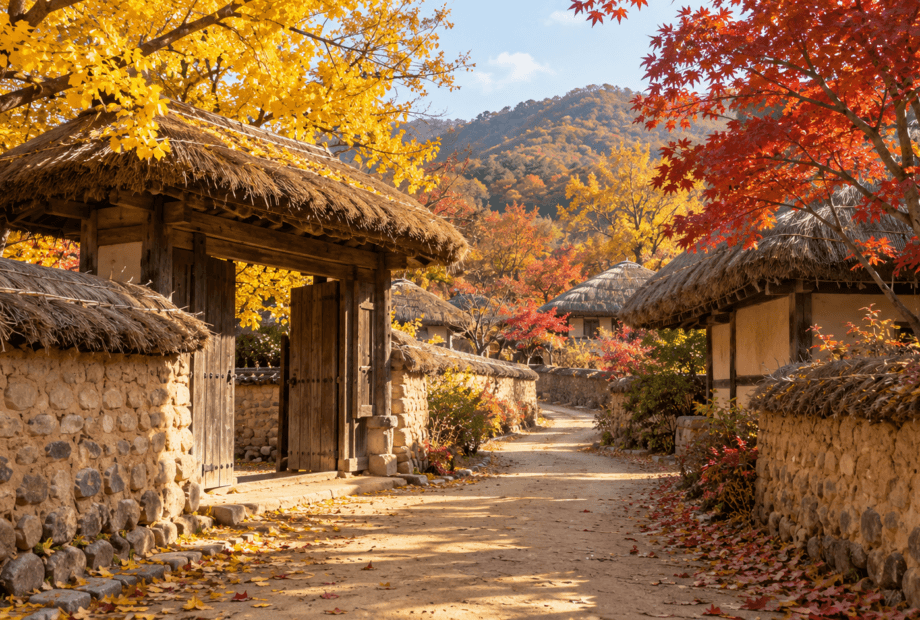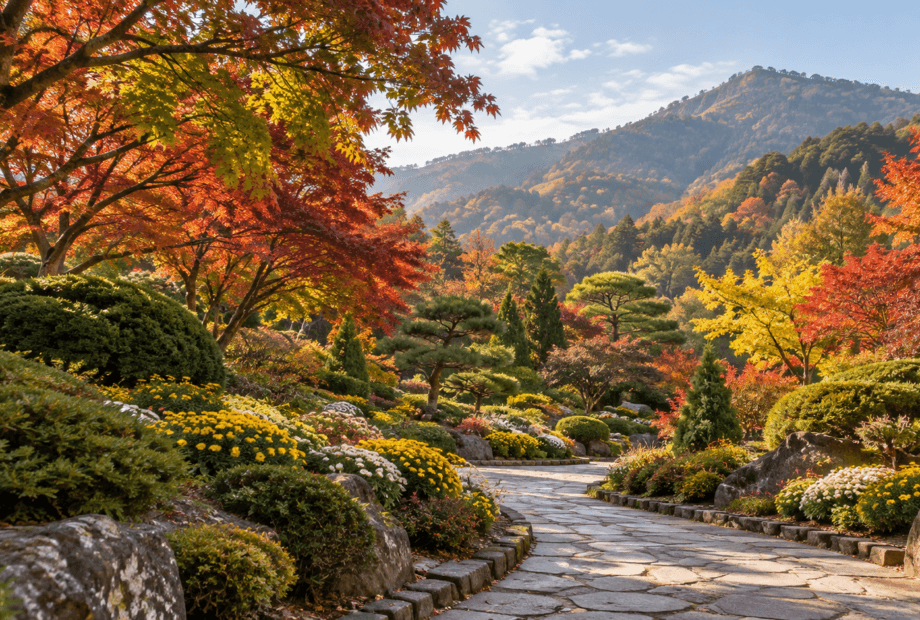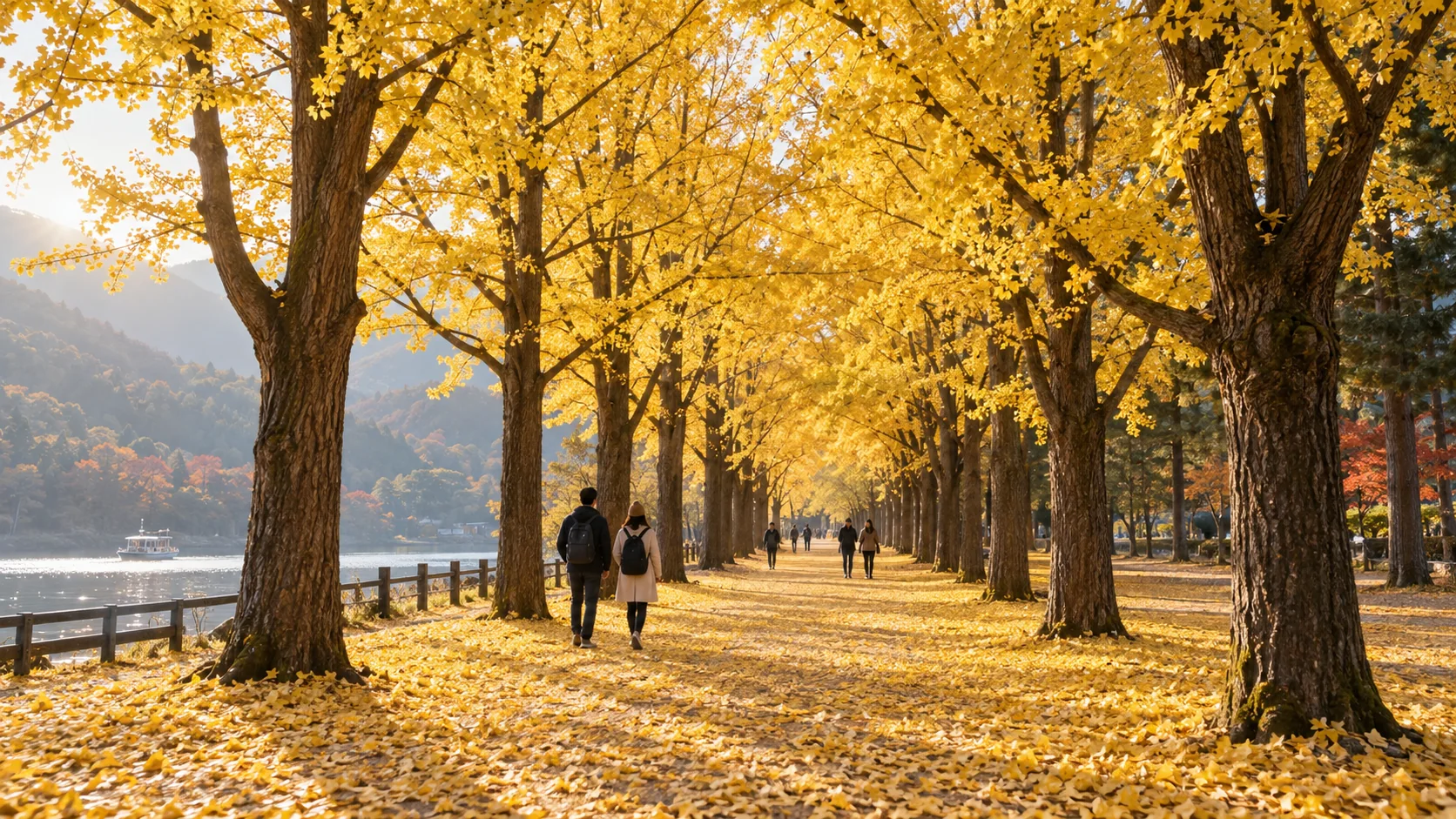
Nami Island in autumn has two versions. One is a quiet riverside path under red maples and gold ginkgo trees. The other is the same path with three tour groups, a bicycle bell behind you and someone patiently waiting for you to leave their photo.
Timing changes the experience, although no arrival time guarantees an empty lane. For admission basics and a year-round visit plan, start with the general Nami Island guide.
Use late October through early November as a flexible planning window, not an officially confirmed Nami Island peak. The 2026 national foliage forecast covers named regional observation points; a nearby mountain’s forecast is not the island’s forecast. Tree species and weather differ. Look for genuinely recent local images and conditions three to five days before travel.
The second decision is transport. DIY gives you control over island time; a Seoul tour reduces transfer work but fixes the schedule. Staying nearby can make an early start easier, though neither an overnight booking nor an early ferry guarantees quiet lanes. Check the property’s actual location and guest procedures.
Reviewed October 5, 2026. Seasonal operations were checked against the operator’s notice; actual foliage, train availability and booking inventory are not verified for your date.
Table of contents
Make This Choice First
| Plan | Useful when | Check first |
|---|---|---|
| DIY train | You want flexible island time | Train ticket and wharf transfer |
| Seoul tour | You prefer arranged logistics | Actual island duration |
| Overnight | You want less morning travel | Location and guest arrival rules |
If foliage is the purpose of the day, choose DIY or overnight. If Nami Island is one stop in a wider Gapyeong sampler, a tour is efficient. Trying to do Nami Island, a rail bike, an alpaca attraction and the Garden of Morning Calm independently in one short autumn day is less an itinerary than a transport endurance test.
For the national timing picture, use our 2026 regional foliage forecast. For choosing between destinations, use the autumn destination guide. Early-November travelers can also check packing and seasonal tradeoffs in Korea in November.
What Is Confirmed for the 2026 Autumn Season
The official admission page lists KRW 19,000 for regular admission including a round-trip regular ferry. Discount eligibility and motorboat packages differ. The general guide covers standard operations; the seasonal change below is what matters for this autumn plan.
The operator’s ferry FAQ publishes extended autumn service for September 18 through November 22, 2026:
- first ferry from Gapyeong Wharf at 7:30 a.m. daily;
- last ferry at 9:30 p.m. on Fridays, Saturdays, Sundays and public holidays during the stated period;
- the crossing itself takes roughly five minutes;
- operations can change because of weather, water conditions or other circumstances.
The regular daytime pattern is more frequent than the early and late service. Current visitor information lists departures about every 30 minutes from 8:00 to 9:00 a.m., every 10–20 minutes from 9:00 a.m. to 6:00 p.m., and every 30 minutes from 6:00 to 9:00 p.m. These are operating intervals, not reservations for a specific sailing. A busy queue can still place you on a later boat.
The VISITKOREA visitor listing lists parking at KRW 6,000 for small vehicles and KRW 10,000 for large vehicles, with an extra KRW 1,000 per hour after 12 hours. Recheck the conditions before an overnight stay. Driving removes the train connection, not the possibility of traffic or parking queues.
DIY Route: Seoul to the Ferry Without Wasting the Morning
One practical independent route is an ITX-Cheongchun to Gapyeong Station, then an onward transfer to the ferry terminal. Check your actual date and departure station through Korail’s official booking site.
Check ITX-Cheongchun departures from Yongsan or Cheongnyangni for your date and reserve an appropriate service before building the island schedule. This is a separate train ticket, not a subway ride entered with a transport card. Compare the Gyeongchun Line local service as an alternative, allowing for its actual route, transfers and travel time.
Our Korea train guide explains the Korail booking process and station basics. ITX-Cheongchun is not KTX, but the same rule helps here: confirm the departure station printed on the booking. Yongsan and Cheongnyangni are not interchangeable once the clock becomes interesting.
Gapyeong Station and the ferry wharf are separate stops. Check the onward route on a current map and leave time for traffic or a taxi queue after your train arrives. A short road leg is not the same as an immediate transfer; organize your booking and destination before leaving the station.
Aim for an early arrival your actual connections can support. A 7:30 a.m. first ferry does not mean a Seoul departure can get you there in time. Check the first usable train, your journey to its station and the onward transfer before promising yourself that sailing. If it is important, compare a nearby overnight stay and confirm morning transport.
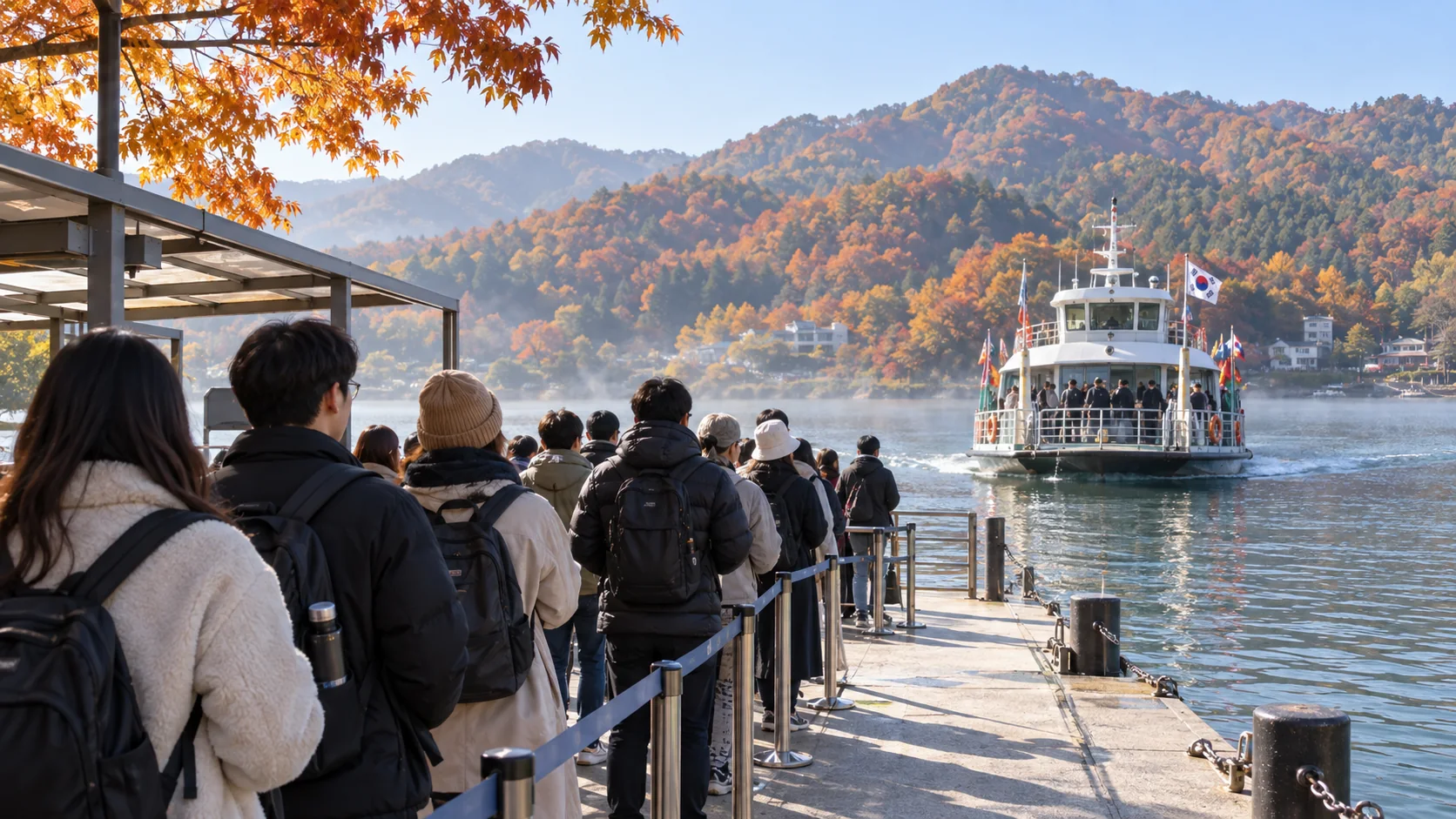
The Return Trip Needs a Realistic Buffer
Do not book the return ITX as if the ferry, taxi and platform were parts of one synchronized machine. They are not.
Allow at least 60–75 minutes between joining the island-side ferry queue and your scheduled train from Gapyeong on a normal autumn day. Use more on a Saturday afternoon. The ferry crossing is short; waiting, disembarking and finding a taxi are the uncertain pieces. If you miss a reserved ITX, the local Gyeongchun Line remains a fallback, but you may stand for part of the journey.
An easy independent rhythm is:
- early ITX from Seoul;
- taxi to the wharf;
- an island visit of roughly three to four hours, adjusted to your actual arrival;
- lunch near the wharf or back in Gapyeong;
- optional rail-bike booking only if its time is comfortably separated from the ferry exit.
The mistake is scheduling a timed attraction 20 minutes after you expect to leave the island. Autumn queues enjoy eating optimistic buffers for breakfast.
Tour Route: Convenient, but Read the Package Name Slowly
A Seoul tour is the better choice when you do not want to reserve an ITX, manage transfers or negotiate the final return connection. It can also be good value if you genuinely want two or three Gapyeong-area attractions.
The important word is genuinely. Tour product pages often group many packages under one listing. A “Nami Island tour” may mean Nami Island only, Nami plus a rail bike, Nami plus an alpaca park, or a 13-hour circuit ending at an illuminated garden. The thumbnail does not tell you how many minutes you receive on the island.
Affiliate disclosure: The tour and hotel links below are affiliate links. Korea Travel Lab may earn a commission if you book through them, at no extra cost to you. Prices, schedules, room inventory and cancellation terms are set by the provider and can change.
You can compare Nami Island tour options on Klook. Before paying, check the exact package’s pickup location, departure time, island duration and final drop-off. Available combinations and prices can change; the listing headline is not the itinerary.
If available for your date, a Nami-focused shuttle may suit an autumn visit better than a long multi-stop circuit. Compare actual island time rather than assuming every shuttle arrives late or every combination feels rushed. The bus timetable and your slow stroll beneath a photogenic maple need to agree before you book.
Choose a tour if:
- ITX seats are sold out for your date;
- your group would otherwise need multiple taxis;
- you want a rail bike or garden visit as much as the island;
- navigating Korean transport creates more stress than a fixed schedule.
Choose DIY if you want to arrive before 9:00 a.m., leave when the weather changes or spend more than three hours walking and photographing.
The Island Route That Avoids Backtracking
The central avenues can become busy once groups arrive. Visit them early if your connections allow, then move toward outer paths rather than committing to one congested photo corridor. There is no dependable clock time at which a lane suddenly becomes crowded.
Use this route instead:
1. Walk to Ginkgo Tree Lane First
Go directly to the golden ginkgo avenue while the light is low and the ground has not been churned by a full day of foot traffic. The leaves often turn and fall quickly. A windy night can change a thick yellow canopy into a yellow carpet, which is not a failed visit—just a different photograph.
If the lane is already crowded, do not wait in its center. Walk to one end, use a longer view down the avenue and let people become scale rather than obstacles. Standing in the middle while adjusting twelve camera settings is how international diplomacy becomes necessary.
2. Continue to Metasequoia Lane, Then Leave the Center
Metasequoia Lane has a strong straight perspective and tends to attract organized groups. Visit it next, then move toward the quieter outer roads rather than circling the central lawn repeatedly.
The redwood-like trees do not always peak at the same moment as the ginkgo trees. This is why one exact “best day” is misleading. On a mixed-tree island, staggered color is normal and often more interesting than a uniformly orange postcard.
3. Follow a Riverside Section
The quieter autumn experience is usually beside the water, where maples, reeds and mountain views open up the composition. Bicycles are useful if walking distance is a concern, but they are less enjoyable during the midday pedestrian surge. Rent early or walk. A bicycle does not gain magical passing rights because it has a basket.
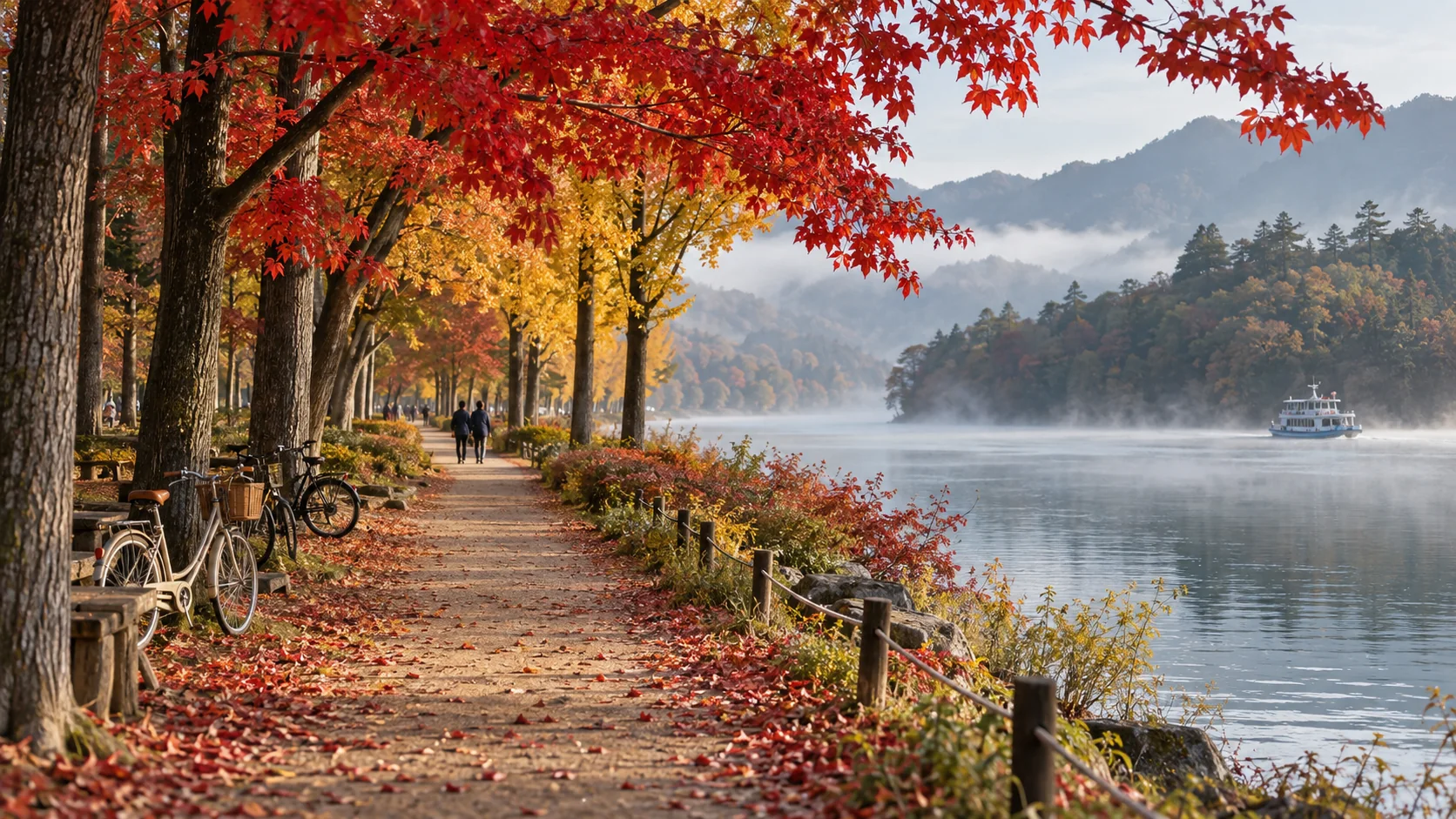
4. Eat Before or After the Standard Lunch Rush
Eat before 11:30 a.m. or after 1:30 p.m. if you want shorter waits. Island cafes and restaurants are convenient, but the busiest autumn weekends can produce queues and limited indoor seats. Carry water and one small snack so hunger does not choose your route.
Card payment is widely expected at formal businesses, but a backup payment method is sensible. Mobile wallets tied to overseas accounts do not always work, and connectivity can slow when crowds are dense. Keep the physical card you used for a booking and a little Korean won.
5. Decide Your Exit Before You Reach the Wharf
Check your return train and work backward. When rain begins, many visitors make the same exit decision at once. Add time rather than waiting under cover until the queue looks dramatic.
Is an Overnight Stay Worth It?
Yes, if quiet autumn photographs are a priority or if you dislike compressing the day around a return train.
Hotel Jeonggwanru is an on-island option noted in official visitor information. Confirm current guest access, luggage handling and ferry arrangements directly with the property. The optional Agoda hotel link requires a further check of the displayed property name, location and room terms before booking; it is not a verified availability quote.
A mainland stay can reduce morning travel, but “Gapyeong” covers a wide area. Ask whether luggage storage and early transport are available, and check the map distance to both the station and the wharf. A beautiful pension can be inconvenient without a car. Optional affiliate option: compare Gapyeong accommodation on Trip.com.

Stay on the island for atmosphere. Stay near Gapyeong Station or the wharf for transport convenience. Stay farther into the countryside only if you have a car or the property confirms a pickup service. “Ten kilometers away” can become surprisingly philosophical when taxis are scarce at night.
Weather Changes the Plan More Than the Calendar Does
Late October mornings around Gapyeong can feel cold beside the water, even when Seoul is comfortable at midday. Wear removable layers, bring a light wind-resistant outer layer and choose shoes that handle damp leaves. A compact umbrella helps in light rain; in strong wind it may become performance art.
Rain does not automatically ruin the island. Wet trunks and saturated foliage can look excellent, and crowds often thin. Heavy rain or strong wind is different because ferries and outdoor attractions may adjust operations. Check the official Nami Island notice board on the morning of travel.
For photography, an overcast day gives even color and fewer harsh shadows. A clear morning creates attractive backlight in the ginkgo lanes but also stronger contrast. Phone users should tap on the bright leaves and lower exposure slightly to protect the yellow detail.
A Practical 2026 Booking Order
Book in this order so one reservation does not trap the others:
- Choose DIY, tour or overnight.
- If DIY, reserve the outbound ITX first, then a return with a generous ferry buffer.
- If touring, compare the exact package itinerary rather than the listing headline.
- If staying overnight, check the property's map location and arrival procedure before payment.
- Recheck recent foliage photos and the weather three to five days before departure.
- On the morning, verify official ferry notices and leave Seoul early.
If Nami Island is part of a longer first trip, our 7-day South Korea itinerary helps decide whether this day fits better before or after Seoul's main sightseeing days.
Quick Answers Before You Go
When is peak autumn foliage on Nami Island in 2026?
Late October to early November is a flexible planning window, not an officially confirmed Nami peak for 2026. Do not turn a nearby mountain’s forecast into an island-specific promise. Check recent local conditions, and expect different tree species to change at different times.
How early should I arrive?
An early start can help, but first confirm a workable journey. The published autumn notice lists a 7:30 a.m. first ferry; it does not confirm that your first train from Seoul reaches the wharf before then. Check the travel-date timetable, transfer and operator notice.
Is the ferry included in admission?
Yes. Current visitor information lists round-trip ferry transportation as part of the Nami Island admission fee.
Can I use a Seoul transport card for the ITX-Cheongchun?
Do not treat ITX-Cheongchun as a normal subway trip. Reserve the train and seat through an official Korail channel. A transport card can be useful for local transit, but it does not replace your ITX reservation.
Is a day tour better than going independently?
A tour is better for easy logistics and multi-attraction combinations. DIY is better for early arrival, flexible island time and photography. If the package gives very little time on Nami Island, its convenience may not serve an autumn-focused visit.
How long should I spend on the island?
Allow three to four hours for the main lanes, a riverside walk and an unhurried break. Two hours can cover highlights but will feel compressed in peak crowds. Photographers and families may prefer four to five hours.
Should I visit on a weekday?
Yes, if your schedule allows it. Weekdays are still busy during peak color, but weekend ferry queues, restaurant waits and photo-lane congestion are usually harder. Early arrival matters on any day.
What if ITX tickets are sold out?
Use the Gyeongchun Line local train, book an organized shuttle tour or stay overnight near Gapyeong. Do not buy a tour solely because the first train search failed; check alternate Seoul departure stations and times first.
Nami Island rewards one simple decision: arrive earlier than feels necessary, then walk beyond the famous lane. The foliage provides the color. Good logistics provide the space to see it.
Sources and Review Scope
Checked October 5, 2026: Nami Island seasonal ferry notice, operator admission information, VISITKOREA visitor information and Korail booking. This is planning guidance, not a recent personal visit or a live crowd report. Existing images provide visual context and are not evidence of current foliage or a verified hotel-room view. Confirm exact tour, hotel and train terms before payment.