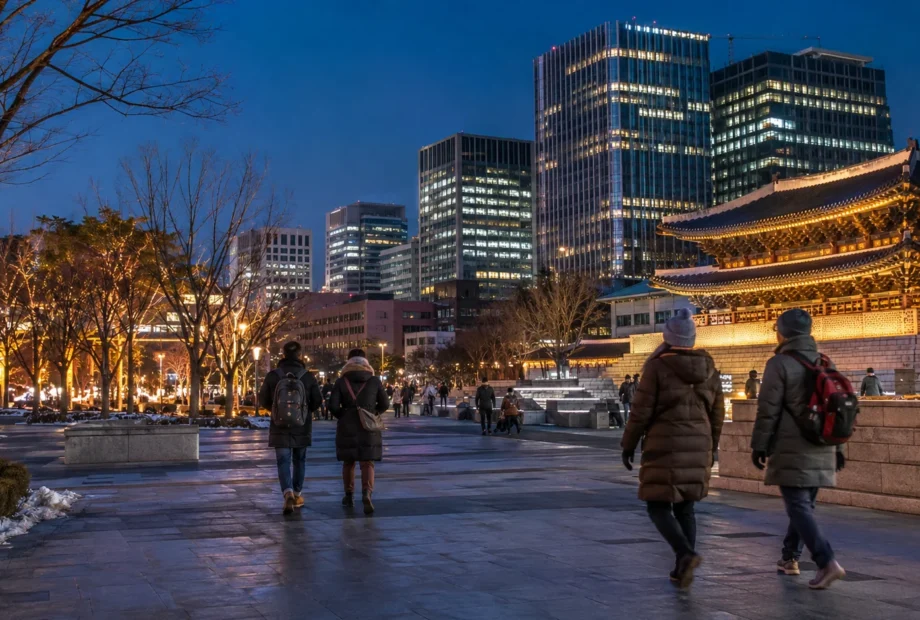
November is the month when one Korea itinerary can contain two different seasons.
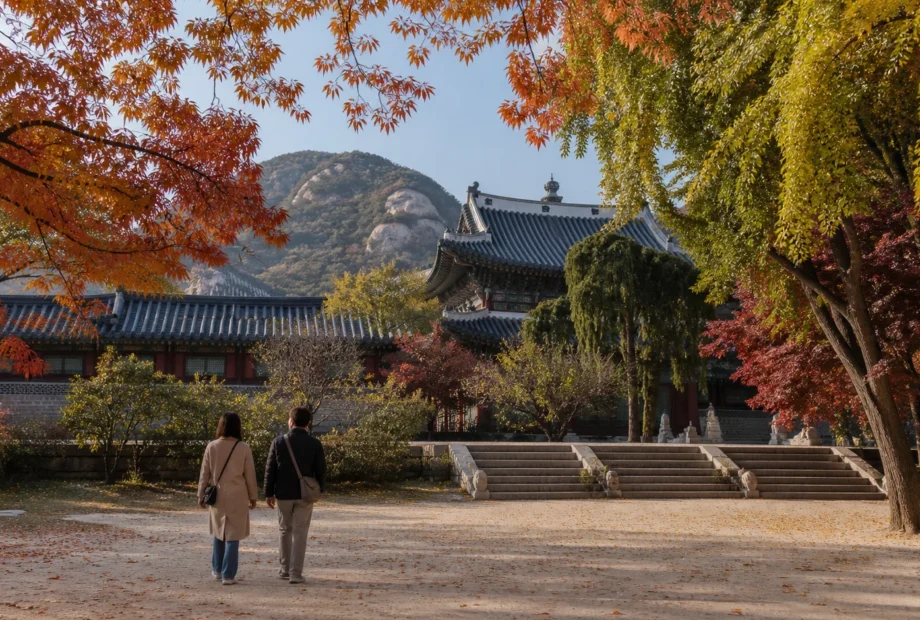
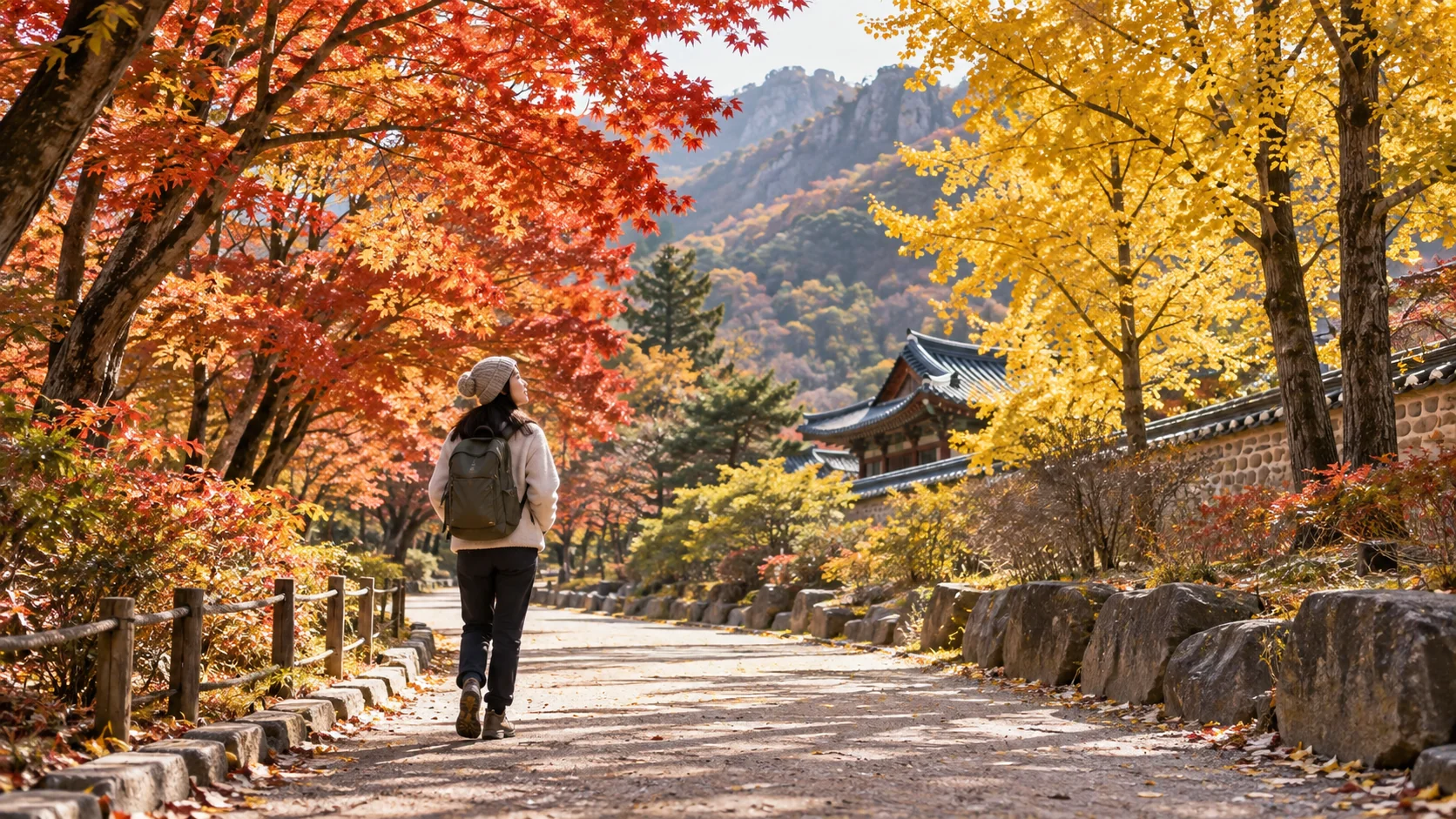
Spend the first week in Seoul and you may find Bukhansan near peak color, palace courtyards edged with yellow ginkgo trees and temperatures made for long walks. Arrive two weeks later and those same trees may be bare while Hallasan is moving from late autumn toward winter conditions.
That is why “Is November a good time to visit Korea?” is the wrong first question. The useful question is: which part of November, and which part of Korea?
The newly published 2026 foliage forecast gives travelers a much better planning tool than vague promises about “late October to early November.” Bukhansan is expected to peak on November 4, Jirisan on November 5, Naejangsan on November 11 and Hallasan on November 13. Those are forecast dates, not appointments. Weather and elevation still get the final vote.
Table of contents
Start With Your Actual Dates
| Travel window | Best strategy | Main risk |
|---|---|---|
| November 1–5 | Seoul, Bukhansan, Gyeongju or Jirisan | Weekend crowds and assuming Seoraksan is still at peak |
| November 6–11 | Naejangsan, Jeonju, Gyeongju and southern cities | Long day trips, sold-out buses and traffic near foliage sites |
| November 12–16 | Jeju and Hallasan, with Busan as a milder base | Short daylight and fast-changing mountain weather |
| November 17–30 | City travel, food, museums and early winter planning | Packing for autumn when mornings can feel wintry |
There is no national public holiday in Korea in November 2026. Ordinary attractions, banks and transportation therefore follow regular schedules unless a venue has its own closure day. That makes November easier than Chuseok, but not magically crowd-free. Peak foliage weekends can be among the busiest outdoor weekends of the year.
What the 2026 Foliage Forecast Really Means
The Korea Tourism Organization’s September 8 forecast says the first color begins at Seoraksan on October 3. The headline peak dates are:
| Destination | 2026 forecast peak | How to use the date |
|---|---|---|
| Seoraksan | October 25 | Treat early November as late season, especially at higher elevations |
| Bukhansan | November 4 | Best fit for travelers based in Seoul during the first week |
| Jirisan | November 5 | Useful for a southern mountain itinerary, not a casual Seoul day trip |
| Naejangsan | November 11 | Strong target for the second week of November |
| Hallasan | November 13 | Late-season option, with large differences by elevation and trail |
“First foliage” usually describes color appearing near the upper part of a mountain. It does not mean every valley, road and city park changes on the same morning. Peak is a broader estimate, and even then a sunny lower trail can look different from a windy ridge.
Plan a three- to five-day viewing window, not one sacred Tuesday. If the forecast shifts, move the nature day and keep museums, markets or neighborhoods as flexible backups. Autumn leaves are lovely. They are not known for respecting spreadsheets.
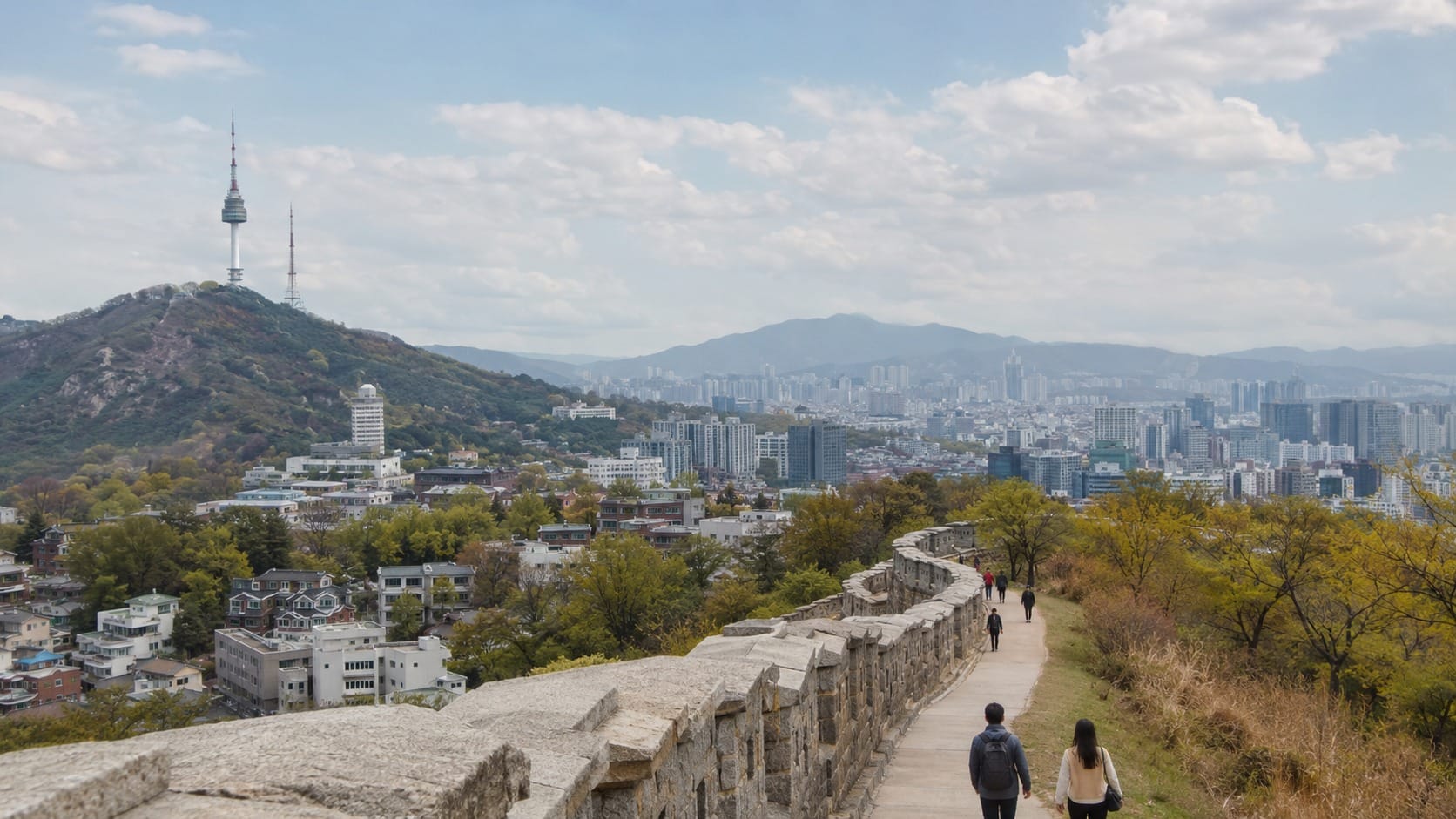
The official forecast also names Gyeongbokgung Palace, Seoul Forest, Olympic Park and N Seoul Tower as popular Seoul choices. Outside the capital, it highlights Hwadam Botanic Garden, Nami Island, the Garden of Morning Calm, Hongcheon’s Ginkgo Forest, Jangtaesan Mountain, Baegyangsa Temple and Bulguksa Temple.
Our broader Korea autumn foliage guide explains the main destinations. Use the dates above as the newer 2026 timing layer.
If You Visit November 1–5
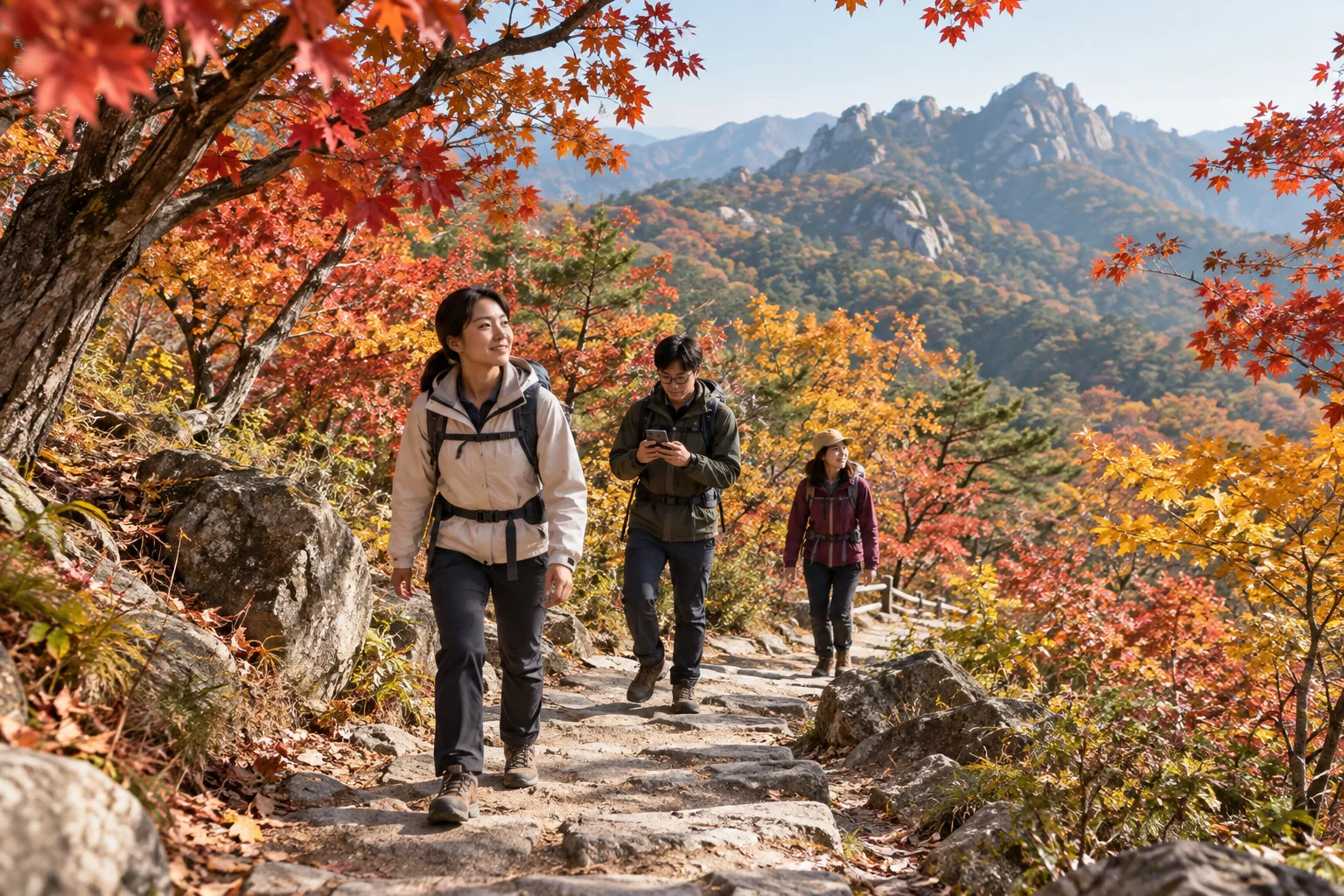
This is the easiest window for a first-time visitor who wants autumn color without rebuilding the whole trip around a mountain.
Base yourself in Seoul. Use one clear-weather weekday for Bukhansan, then keep the palaces, Seoul Forest or Olympic Park for lower-effort foliage. Bukhansan’s forecast peak is November 4, but the exact look will vary between exposed ridges and lower entrances.
You do not need to hike Baegundae to prove that you visited a mountain. The summit route is steep and can take around five hours. A lower trail or Bukhansan Dulle-gil section is a better choice for travelers carrying ordinary sneakers, a tired parent or a schedule that includes dinner reservations.
For a city day, pair Gyeongbokgung with nearby streets in our Gyeongbokgung Palace guide. Go near opening time. Midday tour groups and hanbok photo sessions gather quickly around the main gates, while the quieter northern grounds usually reward a slower walk.
Seoraksan is the trap in this date range. Its forecast peak is October 25, so November 1 is not automatically a failure, particularly in lower valleys. Still, booking a long Seoul day trip purely for guaranteed peak color is optimistic. If Seoraksan matters more than Seoul, sleep in Sokcho and start early instead of spending much of the day watching expressway barriers from a bus window.
If You Visit November 6–11
Move south rather than chasing the last leaves around Seoul.
Naejangsan is forecast to peak on November 11. The park is reachable from Jeongeup, but the transfer is not as frictionless as a Seoul subway ride. The commonly published route uses the Honam-line KTX to Jeongeup, followed by local Bus 171 toward the Naejang area. During peak season, road congestion and queues can stretch the final part of the journey.
The practical version is to stay in Jeonju or Jeongeup, travel on a weekday and arrive early. Do not schedule a late-afternoon cable-car arrival and assume the queue will politely fit around your return train.
Gyeongju also works well in this window. Bulguksa, temple roads and historic areas can retain color after northern mountains have passed peak. The city is easier to combine with Busan than with a same-day return to Seoul. Use our Gyeongju travel guide to keep the heritage sites in sensible geographic groups.
Food can supply the backup plan. The 2026 Gumi Ramyun Festival is scheduled for November 6–8 in Gumi. It is a useful stop for travelers already moving between central and southeastern Korea, but not a reason to perform a four-hour transport detour for one bowl of noodles. Ramyeon deserves enthusiasm, not logistical self-harm.
If You Visit November 12–16
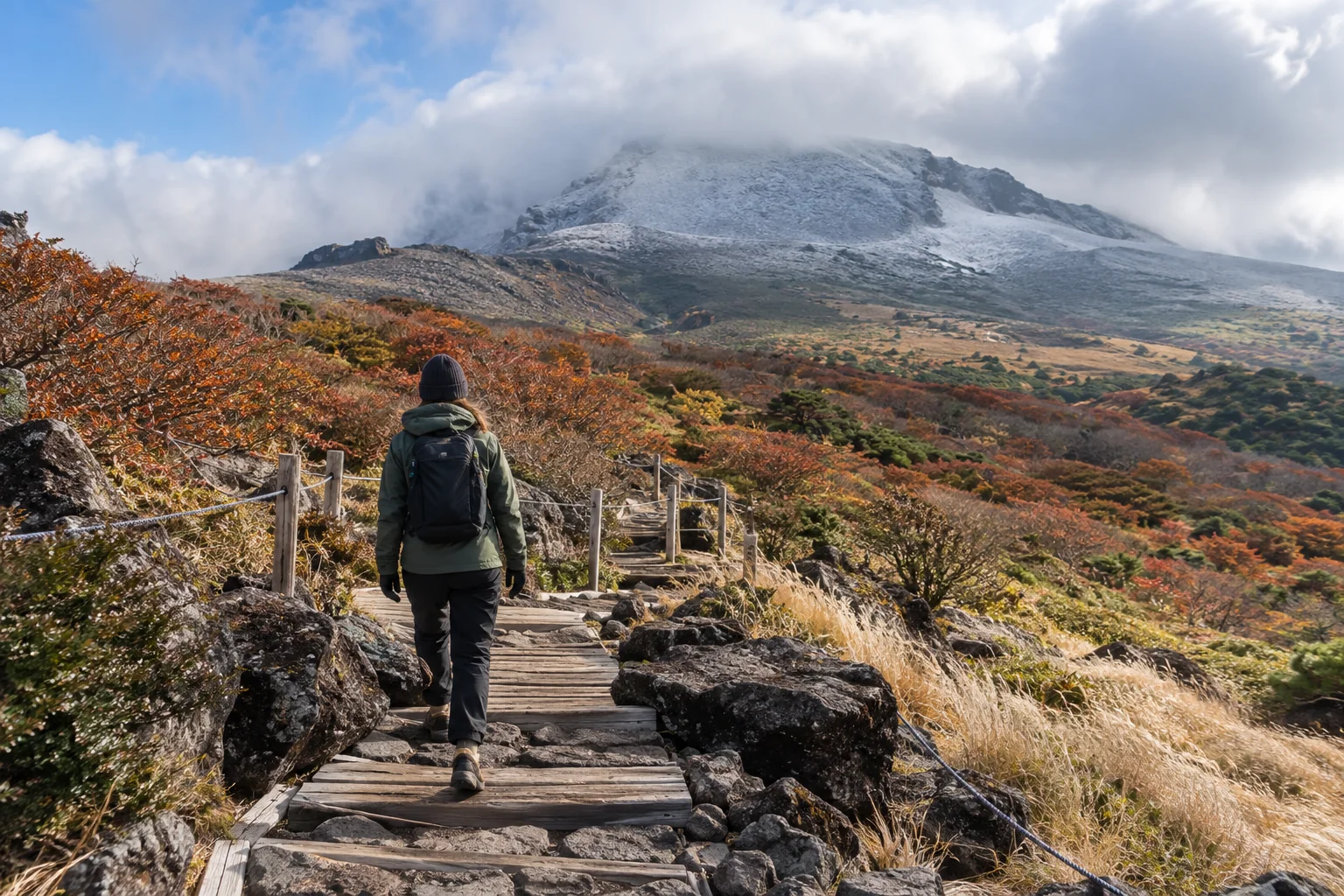
Jeju becomes the stronger foliage bet. Hallasan’s forecast peak is November 13, while Seoul is likely moving into late foliage or bare-tree conditions.
Hallasan is not one uniform viewing platform. Summit trails, mid-mountain forests and lower roads sit at different elevations. Seongpanak and Gwaneumsa reach Baengnokdam and require more preparation; the summit access system can require reservations and enforces entry cutoffs. Yeongsil is shorter and is often a more realistic autumn walk, but it does not reach the summit.
For October through March, the published Yeongsil entry cutoff is noon. Trail controls can change because of wind, rain, ice or safety conditions, so check the official Hallasan notice on the morning of the hike. A forecast peak date does not cancel mountain weather.
Build at least two nights on Jeju, preferably three. A one-night trip leaves no recovery day if the mountain closes. Our Hallasan guide helps compare the trails before you reserve transport and accommodation.
Travelers who do not want a mountain hike can use Busan as a milder base and visit Gyeongju or coastal parks. Our Busan travel guide is the better starting point once foliage becomes a bonus rather than the entire mission.
After November 16: Stop Chasing Peak Color
Late November can still be attractive, especially in southern cities and protected lowland areas. It is simply less reliable as a foliage-first trip.
Choose Seoul for museums, neighborhoods, shopping and food. Choose Busan for somewhat milder evenings and coastal walks. Choose Jeju for scenery and driving, while accepting that Hallasan can already feel wintry.
This is also the point when the Korea in December guide becomes useful. Late-November packing and daylight resemble early winter more than the postcard version of autumn.
Avoid forcing a six-hour round trip to a famous mountain because an old social post shows perfect leaves on the same calendar date. That photograph recorded one year, one elevation and probably one very patient photographer.
What November Weather Feels Like
November is generally dry and walkable, but the temperature drop across the month is substantial. The official tourism climate table lists November average low temperatures of about 3.5°C in Seoul, 8.3°C in Busan and 5°C in Gwangju. Those are monthly averages, not forecasts for your dates.
A sunny early-November afternoon in Seoul may feel comfortable in a light jacket. A windy morning at a mountain entrance can feel much colder. By late November, Seoul can dip below freezing overnight even when the afternoon is manageable.
The north–south difference matters:
- Seoul and Gangwon: cold mornings, larger temperature swings and colder mountain conditions;
- Gyeongju and Jeonju: cool walking weather, but evenings still require a proper outer layer;
- Busan: milder than Seoul, with coastal wind adding its own opinion;
- Jeju: relatively mild at sea level, dramatically colder and windier on Hallasan.
Check the Korea Meteorological Administration forecast three days before each outdoor plan and again that morning. A two-week app forecast is useful for mood, not for deciding a mountain trail.
Pack for Two Seasons, Not One Photograph
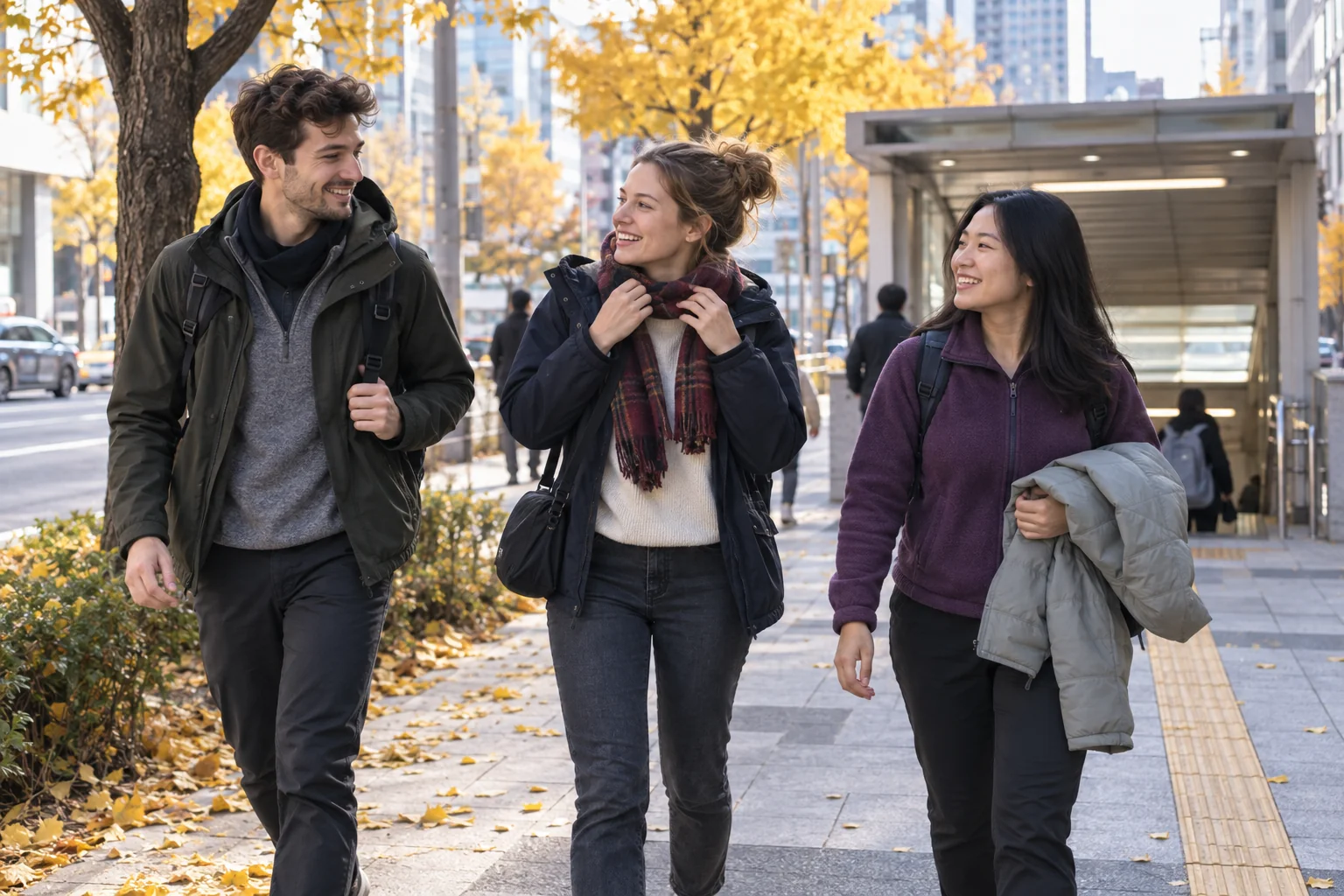
The useful November packing system is layered:
- a breathable base layer or ordinary long-sleeve shirt;
- a knit, fleece or light insulated middle layer;
- a wind-resistant outer jacket;
- a compact umbrella or light rain shell;
- shoes with grip if any mountain trail is planned.
Add a scarf, thin gloves and a light down jacket for late November, early starts or higher elevations. A heavy winter coat can be excessive on a sunny Busan afternoon, but a thin fashion jacket is not a strategy for Hallasan.
Indoor spaces, trains and subway cars are heated. Wear layers you can remove without unpacking half your suitcase in the aisle. For a fuller seasonal comparison, see our Korea weather by month guide.
Two Routes That Do Not Waste the Week
Route A: November 1–8
- Days 1–3 — Seoul: one Bukhansan or Seoul Forest foliage day, one palace day and one flexible neighborhood day;
- Days 4–5 — Gyeongju: Bulguksa and the central heritage district;
- Days 6–8 — Busan: coastal walks, markets and a weather buffer.
This route follows the season south and uses KTX efficiently. Read the Korea KTX guide before choosing Seoul Station, Singyeongju and Busan connections.
Route B: November 8–15
- Days 1–2 — Seoul: city sightseeing without promising yourself peak leaves;
- Days 3–4 — Jeonju or Jeongeup: weekday Naejangsan visit with an early start;
- Days 5–7 — Jeju: one Hallasan day, one weather backup and one coast or oreum day;
- Day 8 — departure buffer: return to Seoul the previous evening if flying internationally from Incheon.
Do not book Jeju-to-Gimpo and Incheon-to-home as a tight same-day chain. Domestic weather disruption plus a cross-city airport transfer is how a pleasant autumn holiday ends with cardio.
When a Tour Is Actually Useful
A foliage day tour makes sense when the destination is awkward by public transport, when you do not want to coordinate rural buses, or when the operator selects among locations based on current color.
It makes less sense for Bukhansan or central Seoul parks, which are already reachable by metropolitan transit. Before booking, check the exact destination, minimum participants, cancellation terms and whether “autumn tour” means a fixed site regardless of live conditions.
Affiliate disclosure: The following link is an affiliate link. If you make a booking, Korea Travel Lab may earn a commission at no extra cost to you.
You can compare Korea fall foliage tours from Seoul on Klook. Treat availability as live inventory, not confirmation that a particular mountain will be at peak.
November 19: Korea’s National Exam Day
The 2027 College Scholastic Ability Test is scheduled for Thursday, November 19, 2026. This is the national university entrance exam, commonly called Suneung.
Travelers do not need to avoid Korea that day. They should avoid creating unnecessary noise around marked test sites and check same-day transport or airport notices. Government agencies announce special traffic and operational measures closer to the exam, so do not copy last year’s exact timing into a 2026 itinerary.
If November 19 is your departure date, leave a wider airport buffer and review airline and airport notices the previous day.
Small Problems That Matter More in November
Daylight disappears early
Put mountain walks and outdoor photography first. Markets, spas, museums and food streets work after sunset. Starting a rural trail at 2:30 p.m. because lunch took longer is not flexibility; it is bad arithmetic.
Weekend traffic changes the value of a day trip
A famous peak-date Saturday attracts domestic visitors too. Travel Friday morning, stay overnight or choose a city park if your schedule cannot absorb delays.
Leaves become slippery
Dry leaves hide stones and wet leaves reduce grip. Wear actual walking shoes and do not rely on white platform sneakers simply because they survived Hongdae.
Luggage lockers fill
KTX stations near popular weekend routes can be busy. Leave large bags at your hotel or use station storage early rather than building the day around finding an empty locker at noon.
Reservation pages may not be English-friendly
Some gardens, trails and seasonal programs use Korean booking systems, local phone verification or timed entry. Check before committing to transport. A sold-out entrance plus a two-hour train ride is a very educational form of sightseeing.
Quick Answers
Is November 2026 a good time to visit Korea?
Yes. Early and mid-November offer cool walking weather and strong foliage possibilities, while late November suits city travel and travelers comfortable with colder mornings.
When is peak foliage in Seoul in 2026?
Bukhansan is forecast to peak on November 4. Lower city parks and palace grounds do not change on exactly the same schedule, so use this as a planning window rather than a guarantee.
Can I see autumn leaves in Korea in mid-November?
Yes, especially around Naejangsan and Hallasan, forecast to peak on November 11 and 13. Southern and lower-elevation locations generally offer better odds than northern mountains.
Does it snow in Korea in November?
Snow is possible, particularly in northern or high-elevation areas, but visitors should not plan a normal November trip around reliable snow. Mountain conditions can become icy before cities look wintry.
Do I need a winter coat?
A light down or warm layered jacket is sensible for late November, mountain trips and early mornings. Early-November city travelers may be comfortable with a medium jacket plus layers.
Is November crowded?
Major cities are manageable, but foliage hotspots can be extremely busy on peak weekends. Weekday visits and overnight stays reduce transport stress.
Which is better in November: Seoul, Busan or Jeju?
Choose Seoul for a first trip and early-November foliage, Busan for milder city weather, and Jeju for the strongest mid-November nature option. For a first visit, Seoul plus one southern destination is usually more satisfying than trying to collect all three.
The Short Recommendation
For November 1–5, stay in Seoul and use one flexible day for Bukhansan or city foliage. For November 6–11, move south toward Gyeongju, Jeonju or Naejangsan. For November 12–16, Jeju and Hallasan offer the strongest late-season chance. After that, plan a city-and-food trip and treat remaining color as a bonus.
Pack layers, protect one weather-flexible day and stop trying to make every famous mountain fit into a single week. Korea in November rewards timing more than speed.
Information checked September 10, 2026. Foliage dates are forecasts; weather, trail access, transport and event schedules can change. Confirm official notices shortly before travel.