Affiliate disclosure: This guide may contain affiliate links. If you book through them, we may earn a small commission at no extra cost to you. Learn more.
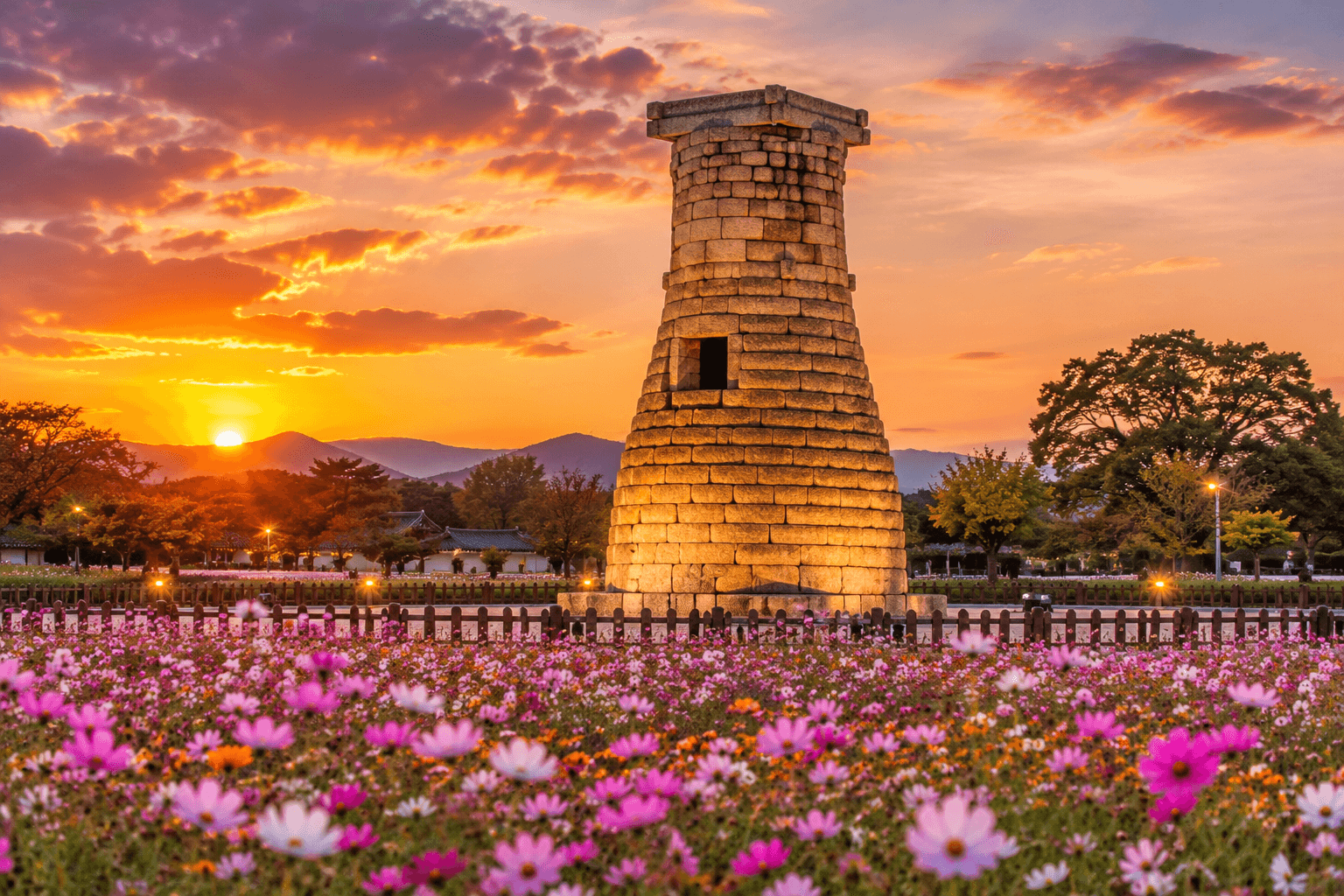
Cheomseongdae is one of the most famous landmarks in Gyeongju and one of the oldest surviving astronomical observatories in Asia. Built during the Silla Kingdom, this iconic stone tower has become a symbol of Gyeongju’s rich history and cultural heritage.
Although Cheomseongdae may appear simple at first glance, it remains one of the most significant historical sites in South Korea. Its unique design, beautiful surroundings, and easy access from other attractions make it a must-visit destination for travelers exploring Gyeongju.
If this is your first visit to the city, start with our Gyeongju Travel Guide 2026 for a complete overview of Gyeongju’s top attractions.
Table of contents
Why Visit Cheomseongdae?
Cheomseongdae is believed to have been built during the reign of Queen Seondeok in the 7th century.
Today, visitors come to see:
- One of Asia’s oldest astronomical observatories
- An important Silla Kingdom landmark
- Beautiful seasonal flower displays
- Scenic walking paths
- Illuminated night views
- Historic surroundings in central Gyeongju
Its location also makes it easy to combine with several nearby attractions.
Visitor Information (2026)
Location
839-1 Inwang-dong, Gyeongju-si, Gyeongsangbuk-do
Opening Hours
Open 24 Hours
Admission Fee
Free
Recommended Visit Time
30 to 60 minutes
Local Tip
Many visitors spend only 15 to 20 minutes here.
However, the surrounding park, flower fields, and nearby walking trails are part of the experience and are worth exploring.
The History of Cheomseongdae
Cheomseongdae was constructed during the Silla Kingdom and is widely regarded as one of the oldest astronomical observatories in East Asia.
The tower consists of carefully stacked stones and was used to observe the stars and track seasonal changes.
Today, it stands as one of the most recognizable symbols of Gyeongju and an important reminder of Korea’s scientific achievements during the Silla era.
Best Time to Visit Cheomseongdae
One of the most common questions travelers ask is when they should visit.
The answer depends on what you want to experience.
Daytime
During the day, visitors can appreciate the tower’s construction details and enjoy the surrounding gardens.
Sunset
Sunset creates beautiful lighting conditions and fewer harsh shadows.
Night
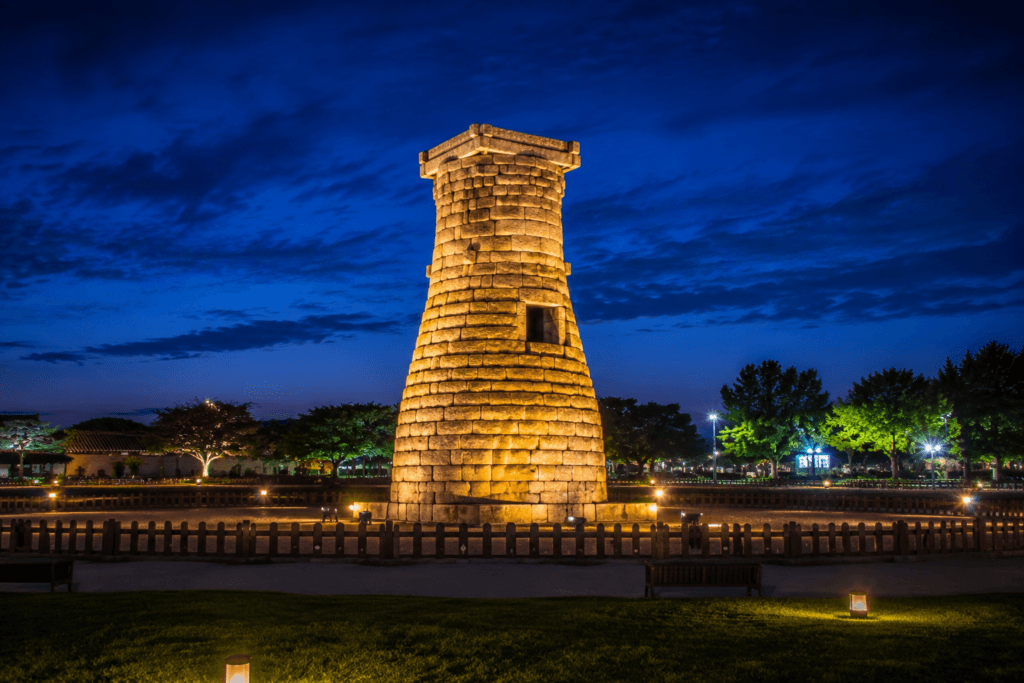
Many travelers consider evening the best time to visit.
Local Tip
Visit shortly before sunset and stay through blue hour.
This allows you to enjoy:
- Daytime views
- Sunset colors
- Evening illumination
all during a single visit.
Seasonal Highlights
Cheomseongdae looks different throughout the year.
Spring
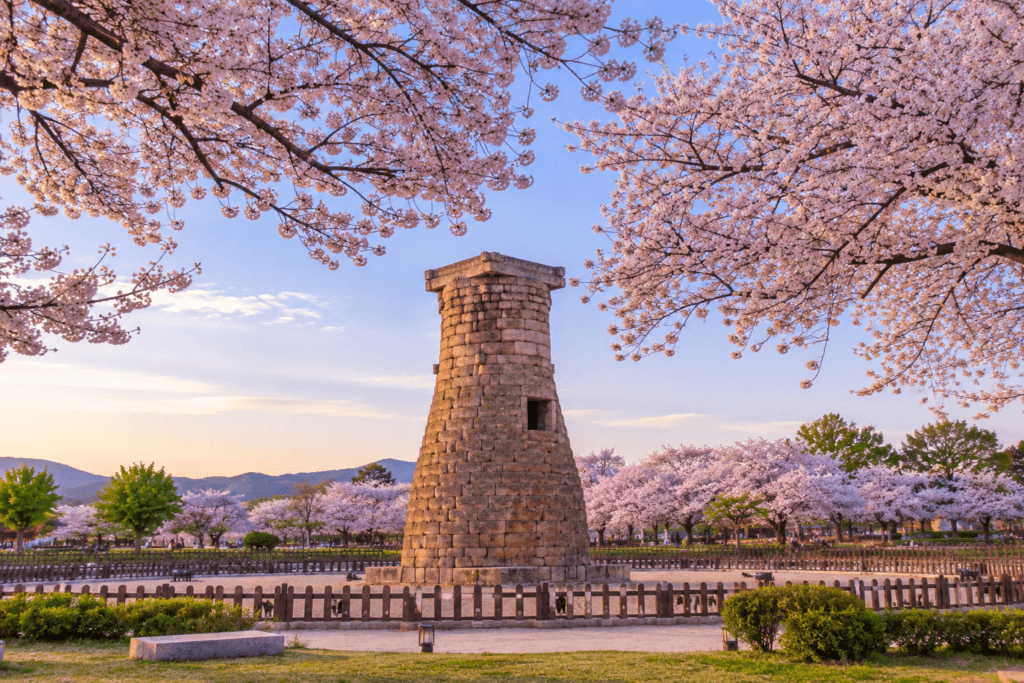
Spring is one of the most popular seasons.
Cherry blossoms bloom around the area and create some of the most beautiful photo opportunities in Gyeongju.
Local Tip
Cherry blossom season usually attracts large crowds. Arriving early in the morning can make photography much easier.
Summer
The surrounding gardens become vibrant and green.
Autumn
Autumn is another excellent time to visit.
Colorful foliage and seasonal flowers provide a stunning backdrop for photos.
Local Tip
Autumn afternoons often provide the best lighting for photography.
Winter
Winter offers a quieter atmosphere and fewer tourists.
For more seasonal travel advice, read Best Time to Visit South Korea.
Flower Fields Around Cheomseongdae
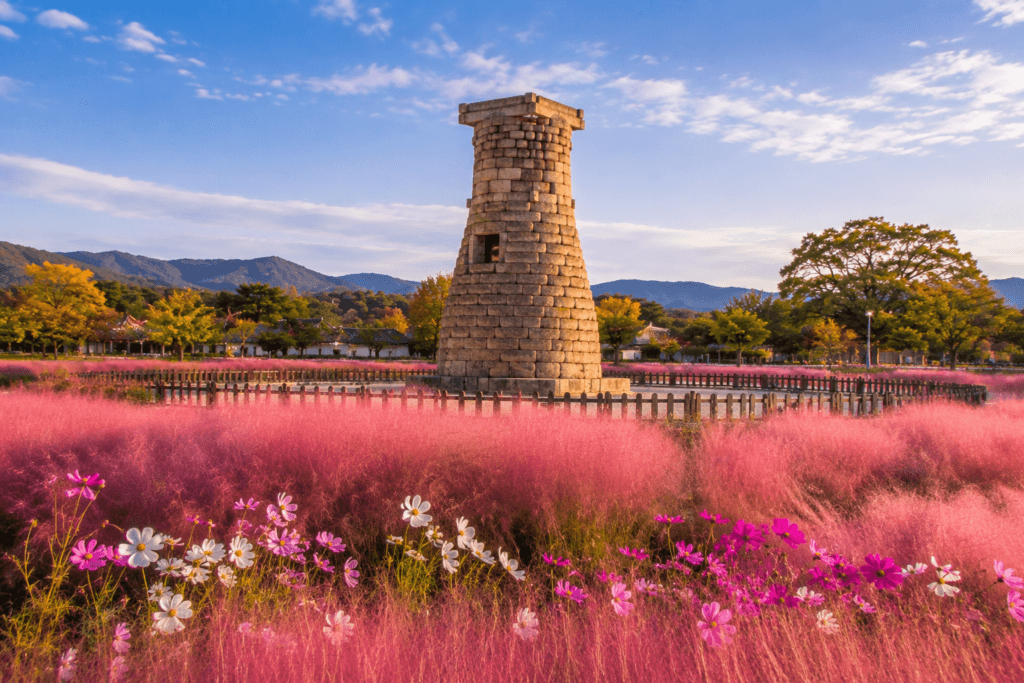
One of the reasons Cheomseongdae remains popular among photographers is the changing flower displays nearby.
Depending on the season, visitors may find:
- Canola flowers
- Cosmos flowers
- Pink muhly grass
- Seasonal garden displays
Local Tip
Many social media photos focus on drone views.
In reality, some of the best photographs are taken from ground level using the flower fields as a foreground element.
Things to Do Nearby
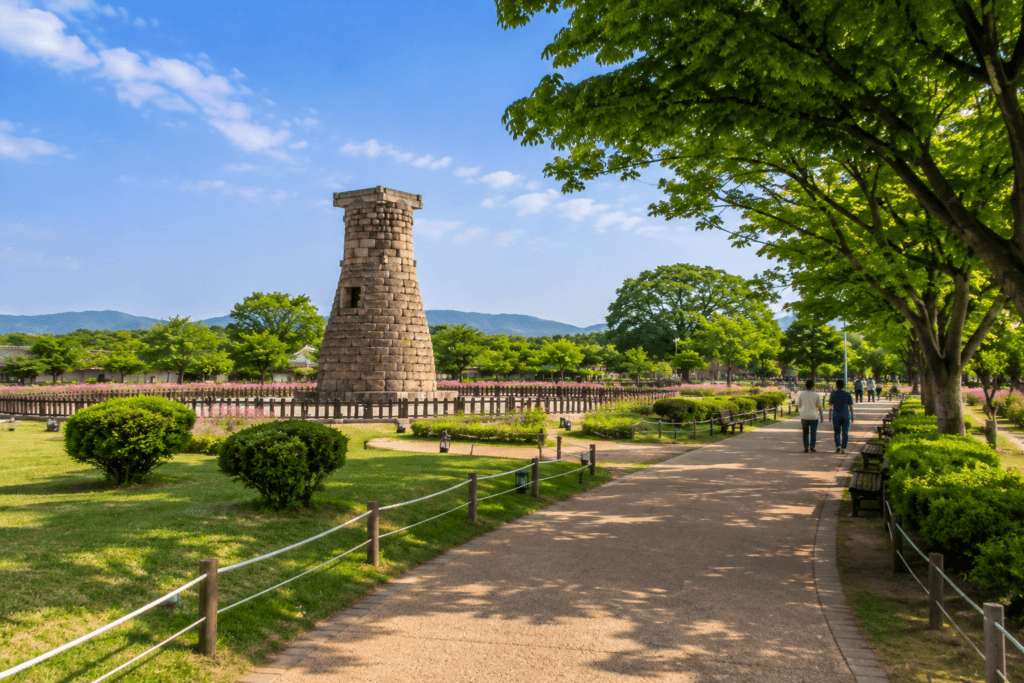
Cheomseongdae is located near several major attractions.
Many visitors follow this walking route:
Daereungwon Tomb Complex
↓
Cheomseongdae
↓
Donggung Palace and Wolji
↓
Woljeonggyo Bridge
↓
Hwangnidan-gil
This route can easily fill an entire afternoon and evening.
Be sure to read Donggung Palace and Wolji Guide 2026 for one of the most beautiful night attractions in Korea.
Photography Tips
Cheomseongdae is one of the easiest landmarks in Gyeongju to photograph.
Best Photo Times
- Early morning
- Sunset
- Blue hour
- Night illumination
Local Tip
Don’t stand directly in front of the tower.
Move slightly to the side and include flowers or trees in the foreground for a more interesting composition.
Local Tip
Night photos often look better than daytime photos because the lighting creates more depth and atmosphere.
Guided Tours vs Independent Travel
Independent travel is easy because Cheomseongdae is located near many attractions.
However, travelers with limited time often choose guided tours that combine Cheomseongdae, Bulguksa Temple, Donggung Palace and Wolji, and other highlights of Gyeongju.
If you’re planning to explore more historical sites, check out our Bulguksa Temple Guide 2026.
Where to Stay
Many visitors choose to stay in central Gyeongju.
Popular areas include:
- Hwangnidan-gil
- Daereungwon
- Downtown Gyeongju
Local Tip
Staying near hotels around Hwangnidan-gil or Daereungwon allows you to walk to Cheomseongdae, restaurants, cafés, and several historical attractions without needing transportation.
Getting to Gyeongju
Most travelers arrive by KTX from Seoul or Busan.
If you’re visiting during weekends, holidays, or cherry blossom season, consider booking KTX tickets in advance as trains can sell out quickly.
International visitors should also read How to Get from Incheon Airport to Seoul before continuing their trip.
Local Tips You Shouldn’t Miss
Visit at Night
Cheomseongdae becomes much more atmospheric after sunset.
Combine Nearby Attractions
The observatory is best enjoyed as part of a larger walking route through central Gyeongju.
Explore the Flower Fields
Seasonal flowers often become just as memorable as the observatory itself.
Stay Longer Than Expected
Many visitors arrive expecting a quick stop but end up spending much longer enjoying the surrounding park.
Visit During Cherry Blossom Season
Spring offers some of the most photogenic scenery in all of Gyeongju.
Common Mistakes Travelers Make
Mistake #1
Treating Cheomseongdae as just a quick photo stop.
Many visitors arrive expecting to spend only a few minutes here. Once they begin exploring the surrounding park, they often realize the area offers much more than the observatory itself.
Mistake #2
Only visiting during the middle of the day.
While daytime visits are pleasant, early morning and late afternoon usually provide better lighting, cooler temperatures, and a more relaxed atmosphere.
Mistake #3
Skipping nearby attractions.
Cheomseongdae is located near several of Gyeongju’s most important historical sites. Many travelers combine it with Donggung Palace and Wolji Guide 2026 for a more complete experience.
Mistake #4
Missing flower season.
The observatory remains impressive year-round, but seasonal flowers dramatically enhance the scenery during spring and autumn.
Mistake #5
Focusing only on the monument.
Some visitors spend a few minutes taking photos of the observatory and leave immediately. The surrounding landscape is often what makes the visit memorable.
FAQ
Is Cheomseongdae worth visiting?
Yes. While the observatory itself is relatively small, its historical importance and beautiful surroundings make it one of Gyeongju’s most popular attractions.
How old is Cheomseongdae?
Cheomseongdae was built during the 7th century and has stood for more than 1,300 years.
How much time do I need?
Most visitors spend between 30 minutes and one hour exploring the site and nearby park areas.
Is Cheomseongdae free to visit?
Admission policies can change, so it’s always worth checking current visitor information before your trip.
Can I visit Cheomseongdae and Donggung Palace and Wolji on the same day?
Absolutely. Many travelers visit Cheomseongdae in the late afternoon before heading to Donggung Palace and Wolji for sunset and evening views.
What season is best?
Spring and autumn are generally considered the most scenic times to visit.
Final Thoughts
Cheomseongdae is more than just an ancient stone tower.
It represents Korea’s scientific history, the achievements of the Silla Kingdom, and the timeless charm of Gyeongju.
Whether you visit during cherry blossom season, autumn foliage season, or a quiet winter evening, Cheomseongdae remains one of the most rewarding stops in the city.
Before planning your trip, don’t forget to explore Gyeongju Travel Guide 2026, Donggung Palace and Wolji Guide 2026, and Bulguksa Temple Guide 2026 for more ideas on what to see in Korea’s ancient capital.