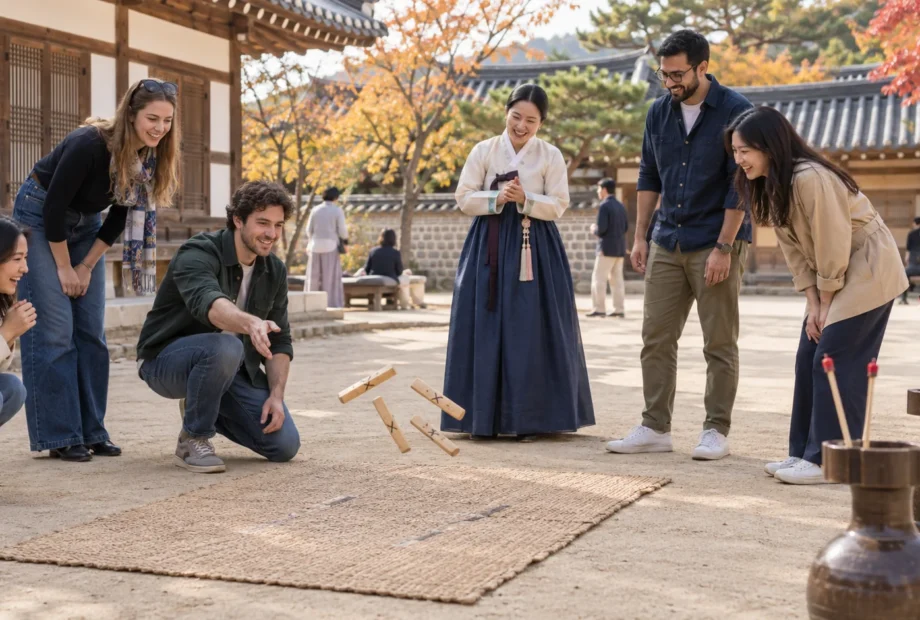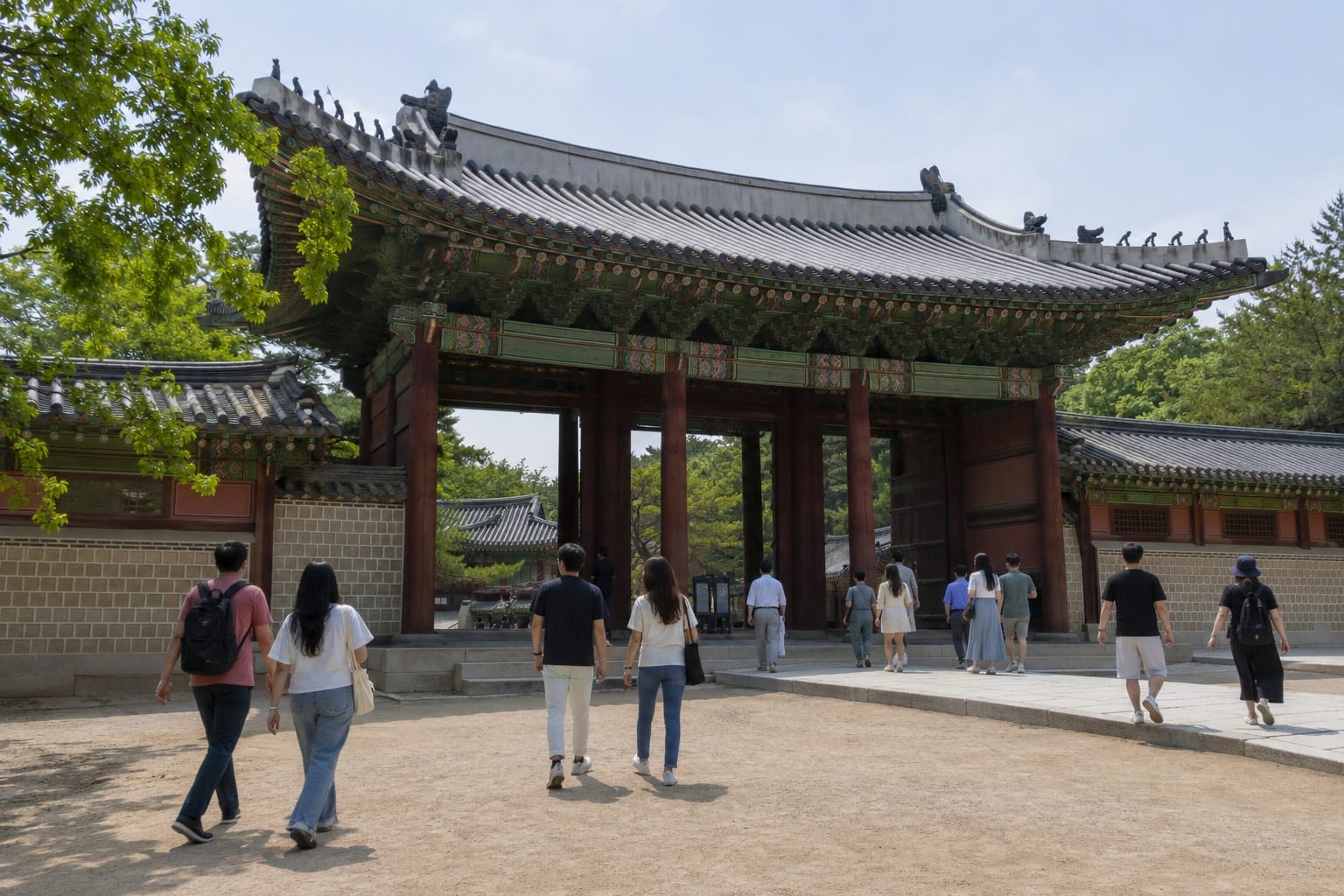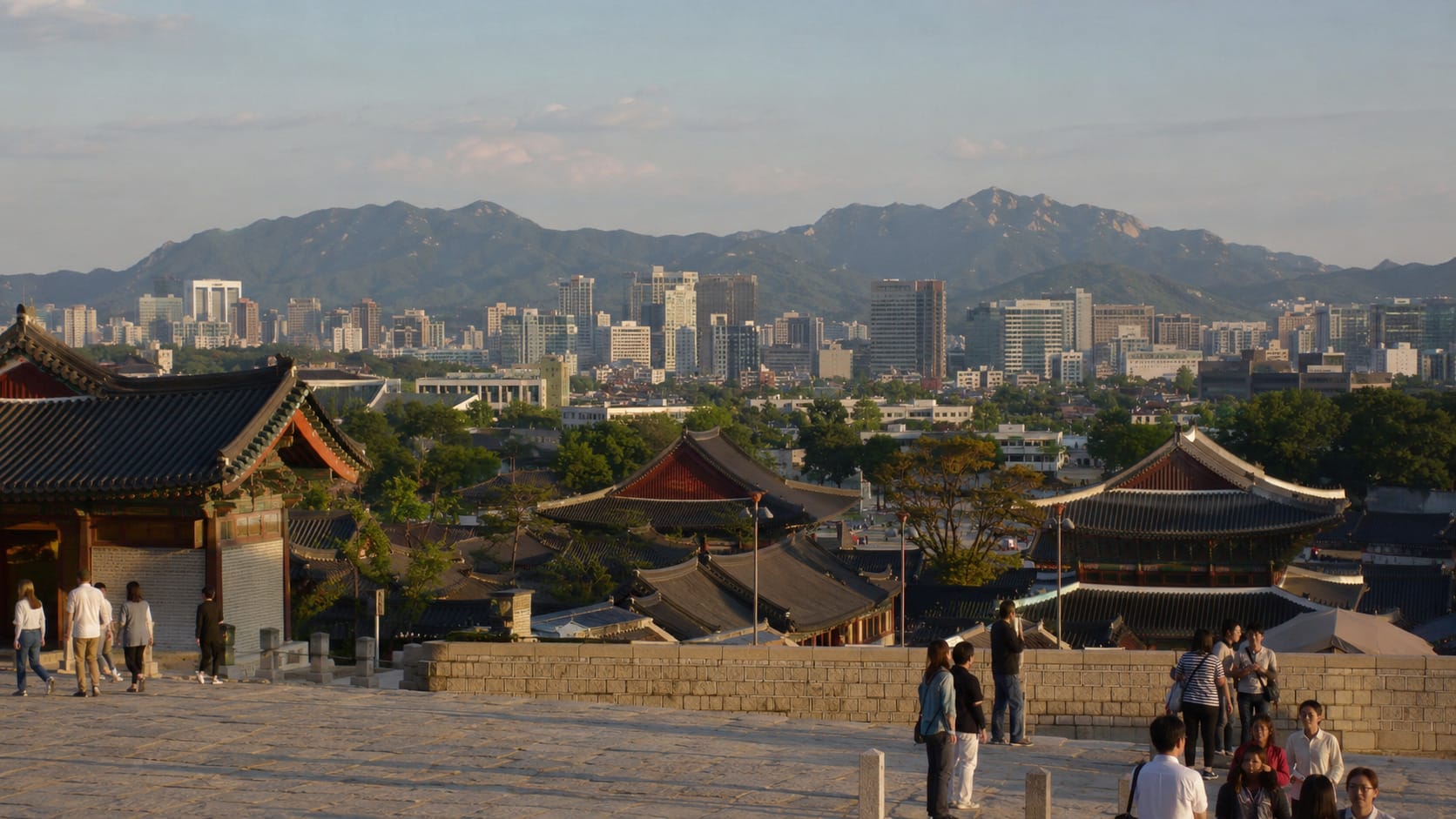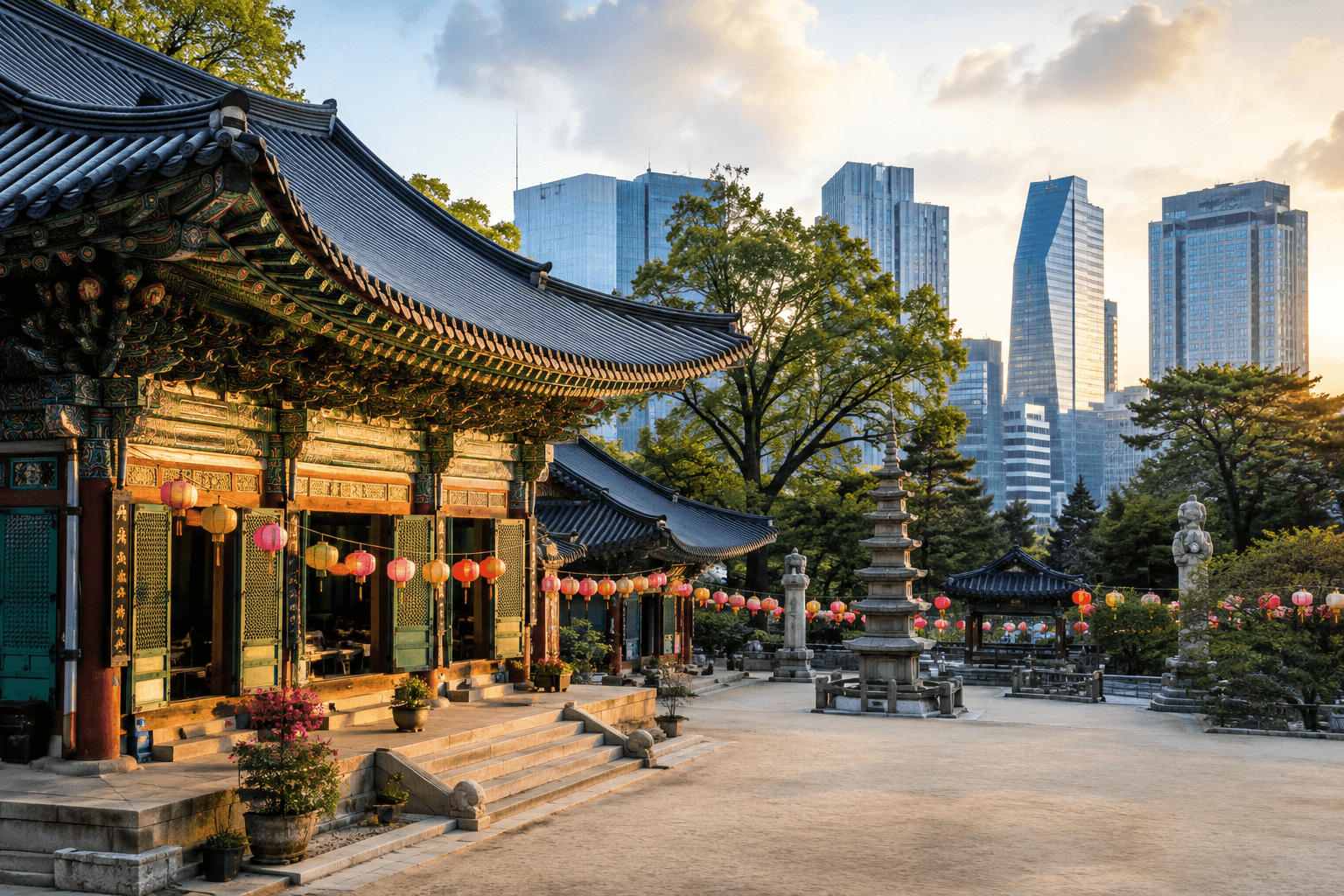
That contrast is the main reason to add Bongeunsa to a Gangnam route. It gives you a calm cultural stop without requiring a long subway ride, mountain hike, or half-day detour.
Table of contents
Quick Answer: Is Bongeunsa Temple Worth Visiting?
Yes, Bongeunsa Temple is worth visiting if you are already planning to visit Gangnam, COEX, Starfield Library or SEA LIFE COEX Seoul Aquarium.
It is especially good for travelers who want a traditional Korean temple experience without leaving central Seoul. The location is convenient, admission is free, and the temple offers a calm break from the busy modern surroundings of Gangnam.
Bongeunsa is not the largest or most remote temple in Korea, but that is not its purpose. Its strength is contrast. You can see Buddhist halls, lanterns, courtyards and a large Buddha statue while still being a short walk from one of Seoul’s biggest shopping and convention areas.
Visit Bongeunsa if you want a peaceful cultural stop near COEX, a free attraction in Gangnam, a short temple visit without a long trip or a quiet place to slow down during a busy Seoul day.
Skip it only if your schedule is very tight and you are already visiting larger historic areas such as Gyeongbokgung Palace, Bukchon Hanok Village or Insadong on the same day.
For most travelers spending time around COEX, Bongeunsa is an easy yes.
For a wider plan around the area, read Gangnam Travel Guide 2026.
What Is Bongeunsa Temple?
Bongeunsa Temple is a Buddhist temple located in Samseong-dong, Gangnam, Seoul.
The temple was originally founded in 794 during the Silla period, long before modern Gangnam became one of Seoul’s most famous business and shopping districts. That history is part of what makes Bongeunsa feel so unusual today.
It sits near COEX, Starfield COEX Mall and major roads, but the temple grounds still feel separate from the city around them. You may hear traffic nearby, but inside the temple area, the mood changes. The pace becomes slower. The colors become warmer. The buildings feel older. Even your phone seems to know it should behave itself.
Bongeunsa is an active religious site, not just a tourist attraction. People come here to pray, attend ceremonies, practice Buddhism, join temple programs and spend quiet time on the grounds. Visitors are welcome, but it is important to remember that this is a place of worship.
For travelers, Bongeunsa offers a chance to see traditional Korean Buddhist architecture, temple courtyards, lanterns, Buddhist statues and cultural programs without traveling far from central Seoul.
It is one of the best examples of old and new Seoul standing side by side.
Basic Information: Location, Hours and Admission
Bongeunsa Temple is located in Gangnam, just north of the COEX area.
Address:
531 Bongeunsa-ro, Gangnam-gu, Seoul
Nearest subway station:
Bongeunsa Station, Line 9
Nearby area:
COEX, Starfield COEX Mall, Starfield Library, SEA LIFE COEX Seoul Aquarium, Samseong Station
Bongeunsa Temple is generally listed as open from 05:00 to 22:00 and admission is free. Since it is an active temple, access to some halls, events or areas may vary depending on ceremonies, temple activities or special dates.
Always check current information if you are planning your visit around a specific program, late evening timing or temple event.
For most casual visitors, Bongeunsa is easy to visit without reservation. You can walk around the grounds, enjoy the atmosphere, take respectful photos and combine it with nearby COEX attractions.
There is no entrance fee, but donations are possible if you want to support the temple. Do not treat free admission as an invitation to rush. The best part of Bongeunsa is the feeling of slowing down.
The temple does not charge you, but it does gently ask you to stop marching through Seoul like your schedule is being chased by a dragon.
How to Get to Bongeunsa Temple
The easiest way to reach Bongeunsa Temple is by subway.
Bongeunsa Station on Line 9 is the closest station and the most convenient option if you are going directly to the temple. From the station, the temple is only a short walk away.
Samseong Station on Line 2 can also work well if you are visiting COEX Mall, Starfield Library or SEA LIFE COEX Seoul Aquarium first. From COEX, you can walk north toward Bongeunsa Temple.
If your day is centered around COEX, the route is simple. Visit COEX or Starfield Library first, then walk to Bongeunsa when you want a quieter break. If you start at Bongeunsa, you can do the opposite and move into COEX afterward for food, shopping or indoor attractions.
For first-time visitors, use Naver Map or Kakao Map for the most accurate walking route and subway exit details. Google Maps can be less helpful for detailed walking directions in Korea, especially around large complexes.
If you are still getting used to Seoul’s subway system, read Seoul Subway Guide before your trip.
Mobile data helps with maps, translation and checking current program details, especially around the large COEX area. This neighborhood is convenient, but it has enough underground paths and mall corridors to make a traveler briefly question geometry.
Best Things to See at Bongeunsa Temple
The Large Buddha Statue
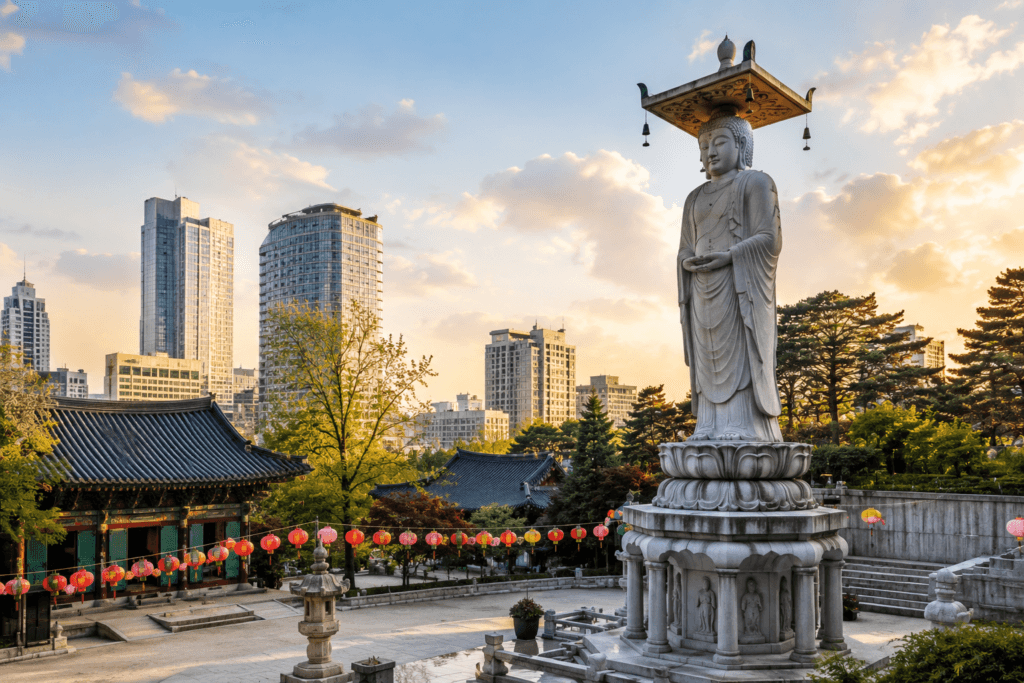
One of the most recognizable sights at Bongeunsa Temple is the large Buddha statue.
This statue is often one of the first images travelers remember from the temple. It stands above the grounds with modern Gangnam in the background, creating a powerful contrast between Buddhist tradition and Seoul’s cityscape.
It is also one of the most popular photo spots at Bongeunsa. Try to take photos respectfully, especially if people are praying nearby. This is not a theme park prop. It is part of a living religious space.
The statue area feels especially memorable in the morning or late afternoon, when the light is softer and the temple grounds feel calmer.
If you only have a short time at Bongeunsa, make sure to walk toward the statue area. It gives you one of the clearest feelings of why this temple is special.
Main Temple Halls
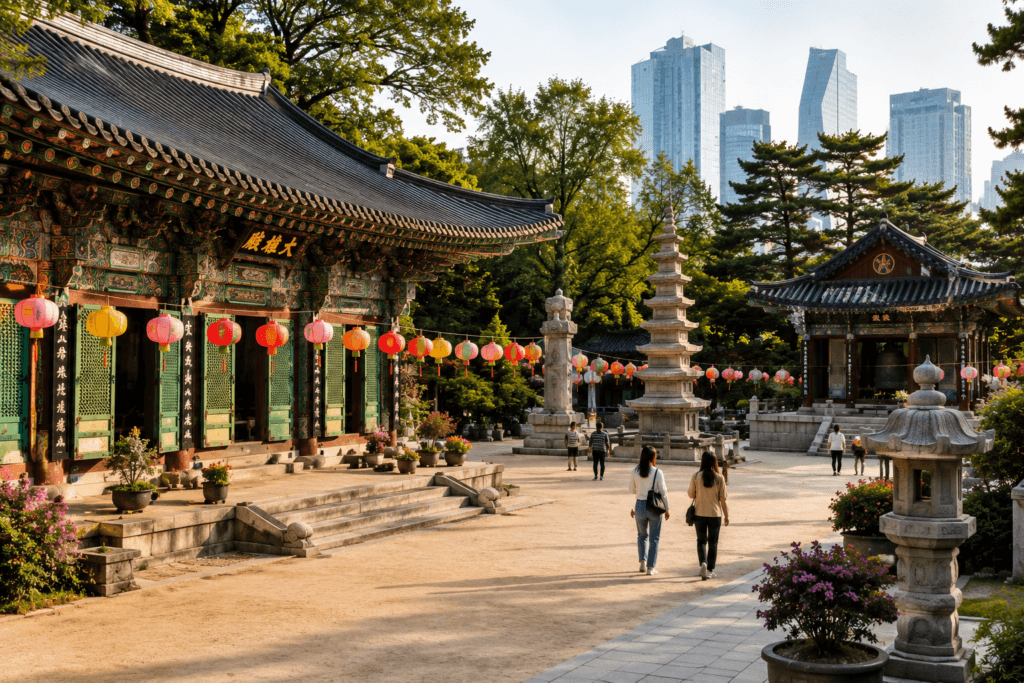
Bongeunsa has several temple halls where Buddhist rituals, prayers and ceremonies may take place.
Even if you do not enter every building, it is worth walking slowly through the temple grounds and noticing the details: painted wooden beams, tiled roofs, doors, lanterns, incense, courtyards and quiet corners.
Some halls may be open to visitors, while others may be used for prayer or temple activities. If people are praying inside, be quiet and avoid walking directly in front of them. You can observe respectfully from a distance.
If you do enter a hall, remove your shoes when required and follow signs or local behavior. When unsure, pause for a second and watch what others do. Temples reward patience. They do not reward loud confidence.
The main halls help Bongeunsa feel more than just a photo stop. They remind you that this is an active temple with daily religious life.
Lanterns and Courtyards
Bongeunsa is especially beautiful when lanterns are displayed around the temple grounds.
Lanterns are common at Korean Buddhist temples, and they can become especially impressive around Buddha’s Birthday and the Lotus Lantern Festival season. The dates vary by lunar calendar, so check the season if lanterns are one of your main reasons to visit.
Even outside major festival periods, Bongeunsa’s courtyards are peaceful and photogenic. The temple grounds offer a slower rhythm than the surrounding Gangnam streets.
Take your time walking between the halls. The best photos are not always the most obvious ones. Sometimes it is a line of lanterns, a roof detail, a quiet path or the moment when temple colors meet the city skyline.
Bongeunsa is not a place where you need to hunt aggressively for photo spots. Let the temple do some of the work.
Traditional Architecture and Painted Details
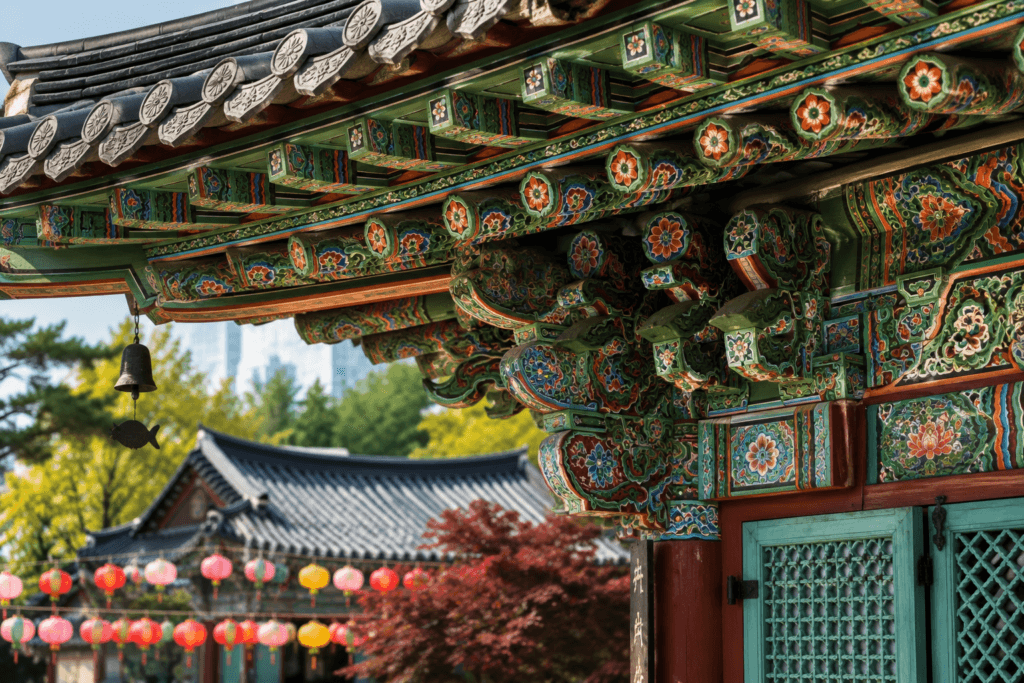
Korean Buddhist temples often feature colorful painted wooden architecture known as dancheong.
At Bongeunsa, these painted details appear on halls, beams and roof areas. They are worth noticing because they add texture and history to the temple visit. The colors may look decorative, but they also carry cultural and symbolic meaning.
For travelers who enjoy photography, these details are excellent for close-up shots. They also help balance your article or photo album if you already have wide shots of the Buddha statue and temple grounds.
Look up, not only forward. Temple roofs and painted beams often hide some of the best visual details.
Your neck may complain slightly, but it is a small price to pay for better travel photos.
Buddhist Scriptures and Cultural Heritage
Bongeunsa is connected to important Buddhist cultural history, including historic scriptures and temple traditions.
You do not need to study Buddhist texts before visiting, but knowing that Bongeunsa has a long religious and cultural background makes the visit more meaningful. This is not simply a pretty temple placed beside a mall for contrast. It has been part of Korean Buddhist history for centuries.
For casual visitors, the best approach is to understand the broad story: Bongeunsa is an old Buddhist temple in a very modern part of Seoul, and that contrast is central to the experience.
If you are deeply interested in Korean Buddhism, consider joining a temple program or guided experience instead of only walking through the grounds.
Templestay and Cultural Programs
Bongeunsa offers Templestay and cultural programs for visitors who want a deeper experience.
Programs can include temple tours, tea experiences, Buddhist culture activities, meditation or overnight stays, depending on the schedule and availability. Some programs are especially useful for foreign visitors because they introduce temple culture in a more structured way.
However, program schedules change. Availability, language support, dates, prices and reservation rules can vary. If you want to join a specific program, check the official Templestay page before planning your day around it.
A casual walk through Bongeunsa does not require a reservation. A Templestay or cultural program usually does.
For most first-time travelers, a short visit to the temple grounds is enough. But if you are interested in Korean Buddhism, meditation, temple food or a slower cultural experience, Bongeunsa’s programs can be worth exploring.
Just do not assume every program is available every day. Temples may be peaceful, but their schedules still have teeth.
Best Time to Visit Bongeunsa Temple
The best time to visit Bongeunsa Temple is usually early morning or late afternoon.
Morning is quiet, calm and good for travelers who want a peaceful start to the day. Late afternoon can be beautiful when the light becomes softer and the temple colors feel warmer. Evening can also be atmospheric, but check access and timing if you plan to visit late.
Weekdays are usually calmer than weekends. Weekends and holidays can bring more visitors, especially when the weather is nice or seasonal events are happening.
Spring and autumn are especially pleasant because the weather is better for walking around the temple grounds. Summer can be hot and humid, while winter can be cold, but Bongeunsa is still manageable because the visit does not require a long outdoor route.
During rainy season, Bongeunsa is better for light rain or cloudy weather than heavy rain. The good news is that COEX is nearby, so you can quickly move indoors if the weather changes. For broader planning, read Rainy Season Korea Guide and Korea Weather by Month.
If photography matters to you, avoid the harshest midday light. Bongeunsa is more photogenic when the sun is lower and the temple shadows soften.
The temple is not going anywhere. Your lighting can wait.
Bongeunsa Temple Etiquette
Bongeunsa is an active Buddhist temple, so basic etiquette matters.
Speak quietly, especially near prayer halls. Avoid loud phone calls, shouting, running or blocking entrances. If people are praying, give them space and do not photograph them closely without permission.
Dress comfortably but respectfully. You do not need formal clothing, but avoid outfits that feel too revealing for a religious site. Seoul is modern, but temples still appreciate a little restraint.
When entering temple halls, check whether shoes should be removed. Follow signs and observe local visitors if you are unsure.
Do not touch statues, ritual objects, candles, offerings or temple decorations unless clearly allowed. Do not climb on structures or sit in places that are not meant for visitors.
Photography is usually fine around outdoor areas, but be careful inside halls and during ceremonies. If there is a sign asking visitors not to take photos, respect it.
The simplest rule is this: behave as if someone nearby came here for peace, not for your travel content.
That rule works surprisingly well.
Is Bongeunsa Temple Good for First-Time Visitors?
Yes, Bongeunsa Temple is good for first-time visitors, especially if they are already visiting Gangnam or COEX.
It is easy to reach, free to enter and not difficult to understand. You do not need special knowledge of Buddhism to appreciate the atmosphere, architecture and contrast with modern Seoul.
However, if you only have one or two days in Seoul, Bongeunsa should probably not replace the city’s most famous historic areas. Gyeongbokgung Palace, Bukchon Hanok Village and Insadong are stronger first-time cultural priorities.
Bongeunsa is best as a smart addition to a Gangnam day.
If your itinerary already includes COEX Aquarium, Starfield Library or shopping in Gangnam, adding Bongeunsa gives the day more balance. Without it, the route can feel very mall-heavy. With it, the day gets a quiet cultural pause.
This is where Bongeunsa shines.
Is Bongeunsa Temple Free?
Yes, Bongeunsa Temple is generally free to enter.
There is no standard admission fee for walking around the temple grounds. Donations may be possible, and paid programs such as Templestay or cultural experiences may require separate fees and reservations.
For budget travelers, this makes Bongeunsa a useful stop in Gangnam. Gangnam can be an expensive area, so a free historic temple near COEX is a small gift from the itinerary gods.
You can visit without spending money, then choose whether to continue to COEX for food, shopping or paid attractions.
If you are planning more free stops across the city, read Best Free Things to Do in Seoul.
What to Combine Nearby in COEX and Gangnam
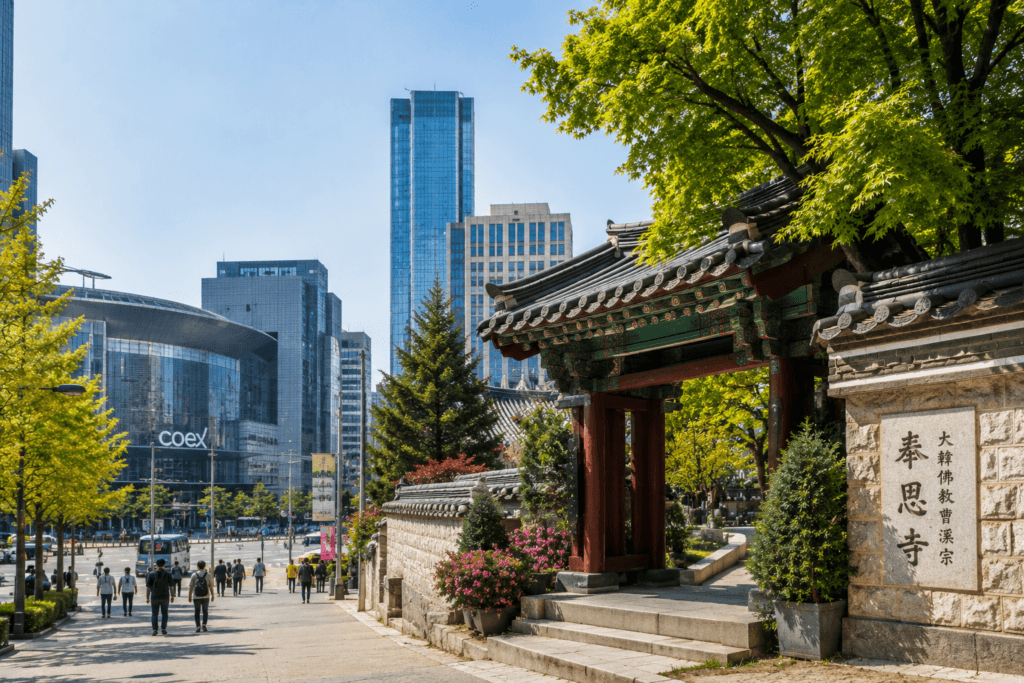
Bongeunsa Temple fits naturally with nearby COEX and Gangnam attractions.
The most natural route is to visit Bongeunsa together with Starfield Library, Starfield COEX Mall and SEA LIFE COEX Seoul Aquarium. These places are close enough to fit into one relaxed half-day itinerary.
A simple route is to start at Bongeunsa Temple in the morning, walk to COEX for lunch or coffee, visit Starfield Library, then choose either shopping or SEA LIFE COEX Seoul Aquarium depending on your mood.
You can also do it in reverse. Start indoors at COEX, visit the aquarium or library, then walk to Bongeunsa when you want fresh air and a quieter atmosphere.
If you are traveling with children, COEX Aquarium plus Bongeunsa can work well because the aquarium gives them something active and visual, while the temple gives the day a cultural stop. If you are traveling as a couple, Starfield Library plus Bongeunsa makes a relaxed photo-friendly route.
For nearby planning, read COEX Aquarium Guide 2026 and Starfield Library Guide 2026.
For a wider area plan, use Gangnam Travel Guide 2026.
Common Mistakes to Avoid
Thinking Bongeunsa Is Far from COEX
Bongeunsa is very close to COEX.
Many travelers miss it because they stay inside the mall and never look beyond the shopping complex. That is a shame because the temple is one of the easiest cultural stops in the area.
If you are already visiting COEX, check the walking route before leaving the neighborhood.
Treating It Like a Photo Studio
Bongeunsa is photogenic, but it is still a temple.
Take photos respectfully. Avoid posing loudly near prayer spaces, blocking walkways or treating religious objects as props. A quiet photo will usually look better anyway.
The temple atmosphere is part of the image.
Visiting Too Quickly
You can technically see Bongeunsa quickly, but rushing through it makes the visit feel thin.
Give yourself at least 30 to 60 minutes. If you enjoy photography, quiet walks or temple architecture, you may want longer.
The temple is free, but your attention should not be cheap.
Not Checking Program Schedules
If you want to join a Templestay, tea experience or cultural program, check the official schedule in advance.
Do not assume programs are available every day or in every language. Reservation rules and availability can change.
Wearing Uncomfortable Shoes
Bongeunsa is not a difficult walking attraction, but you will still move around outdoor grounds, steps and courtyards.
Comfortable shoes make the visit easier, especially if you are combining it with COEX Mall or Gangnam walking afterward.
Forgetting It Is an Active Religious Site
People visit Bongeunsa to pray and practice Buddhism.
Be respectful around ceremonies, halls and visitors. You do not need to know every rule perfectly. You just need to be quiet, observant and considerate.
That already puts you ahead of many loud backpacks.
Who Should Visit Bongeunsa Temple?
Bongeunsa Temple is best for travelers visiting Gangnam, COEX or Starfield Library who want a traditional cultural stop nearby.
It is also good for first-time visitors who want to see a Buddhist temple without traveling far, photographers looking for old-and-new Seoul contrast, budget travelers looking for free attractions and anyone who wants a quiet break from shopping and city noise.
It may not be the best choice if you dislike temple visits, have very limited Seoul time or are already spending a full day around larger traditional areas like Gyeongbokgung, Bukchon and Insadong.
Bongeunsa is not about checking off the biggest temple in Korea. It is about finding a calm historic space in the middle of modern Gangnam.
That makes it small in effort and big in atmosphere.
FAQ: Bongeunsa Temple Guide 2026
Is Bongeunsa Temple worth visiting?
Yes, Bongeunsa Temple is worth visiting if you are spending time around Gangnam or COEX. It is free, easy to reach and offers a peaceful traditional contrast to the modern area around it.
Where is Bongeunsa Temple located?
Bongeunsa Temple is located at 531 Bongeunsa-ro, Gangnam-gu, Seoul, just north of the COEX area.
What subway station is closest to Bongeunsa Temple?
Bongeunsa Station on Line 9 is the closest and most convenient station. Samseong Station on Line 2 also works if you are combining the temple with COEX Mall or Starfield Library.
What are Bongeunsa Temple opening hours?
Bongeunsa Temple is generally listed as open from 05:00 to 22:00. Hours or access may vary depending on temple events or ceremonies, so check current information if timing is important.
Is Bongeunsa Temple free?
Yes, admission to the temple grounds is generally free. Some cultural programs or Templestay experiences may require reservations and fees.
How long do you need at Bongeunsa Temple?
Most visitors need about 30 to 60 minutes. If you enjoy photography, temple architecture or a slower visit, plan 1 to 1.5 hours.
Can I visit Bongeunsa Temple and COEX together?
Yes. Bongeunsa Temple is very close to COEX, Starfield Library and SEA LIFE COEX Seoul Aquarium, making it easy to combine them in one Gangnam itinerary.
Is Bongeunsa Temple good for photos?
Yes. The temple is photogenic, especially around the large Buddha statue, lanterns, courtyards and painted temple architecture. Take photos respectfully because it is an active religious site.
Can foreigners join a Templestay at Bongeunsa?
Bongeunsa offers Templestay and cultural programs that may be available to foreign visitors. Schedules, language support and reservations can change, so check the official Templestay page before booking.
What should I wear to Bongeunsa Temple?
Comfortable and respectful clothing is best. You do not need formal clothes, but avoid outfits that feel too revealing for a religious site.
Is Bongeunsa Temple good on a rainy day?
Bongeunsa is outdoors, so heavy rain is not ideal. However, because it is close to COEX, it can still work on a light rainy day if you combine it with indoor stops nearby.
Is Bongeunsa Temple better in the morning or evening?
Morning is quieter and good for a peaceful visit. Late afternoon and evening can be atmospheric, especially when the light is softer or temple lanterns are visible.
Final Thoughts
Bongeunsa Temple is one of the easiest ways to add tradition and quiet to a Gangnam itinerary.
It is free, convenient and close to COEX, but it feels very different from the shopping malls and busy roads around it. That contrast is the reason to visit.
You can walk from Starfield Library or COEX Aquarium to a temple founded over a thousand years ago. You can see lanterns, painted halls, courtyards and a large Buddha statue without leaving one of Seoul’s most modern districts.
Bongeunsa should not replace Seoul’s biggest historic areas if this is your first trip and you have limited time. But if you are already visiting Gangnam, it is one of the most worthwhile nearby stops.
Go slowly. Be respectful. Check program details if you want more than a casual visit.
And give yourself a few quiet minutes before returning to COEX, traffic, coffee and the bright machinery of modern Seoul.
That small pause is the real souvenir.