Busan looks easy on a map: beaches on the right, markets on the left, a temple near the sea. Then you try to connect all three before lunch and discover that the coastline has opinions.
The city is broad, hilly and divided into neighborhoods with very different rhythms. Haeundae does not feel like Nampo, Gamcheon is not a quick detour from Haedong Yonggungsa, and a “nearby” bus stop may still come with a staircase.
This three-day route solves that problem by keeping each day in one geographic cluster: western markets and hillside streets, the Haeundae coast, then the eastern temple route with a Gwangalli finish.
You will still do plenty of walking, but at least it will be toward something interesting rather than back to the station you left an hour ago.
Table of contents
Why Spend 3 Days in Busan?
Three days is the sweet spot for most travelers.
One day usually becomes a race across the city. Two days can cover the headline attractions, while three days gives a first-time visitor enough time to group the west coast, Haeundae coast, and eastern temple route without constant backtracking.
This itinerary combines:
- Coastal scenery
- Local food
- Cultural attractions
- Markets
- Beaches
- Night views
All of it works without renting a car.
Day 1: Markets, Street Food, and Colorful Streets
Morning: Gamcheon Culture Village
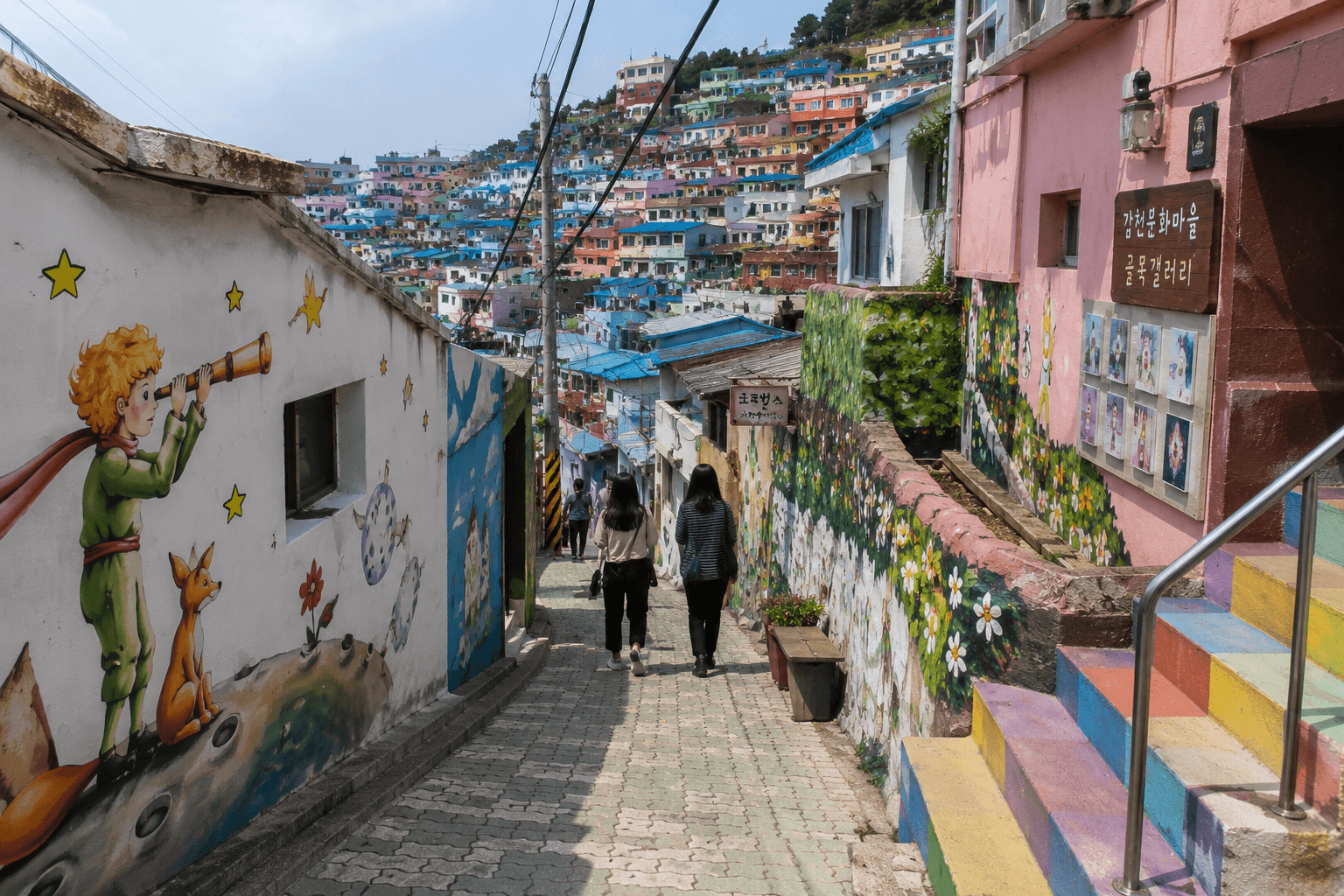
Start your Busan adventure at Gamcheon Culture Village.
Many visitors describe it as one of the most photogenic places in Korea.
The colorful houses built along the hillside create a maze of narrow alleys, art installations, and viewpoints overlooking the city.
One thing many travelers discover too late is that Gamcheon becomes significantly busier later in the day.
Arriving in the morning usually means cooler temperatures, softer lighting, and fewer crowds.
Take your time exploring the side streets.
Some of the best photo opportunities are found away from the main walking route.
Lunch: Jagalchi Market

After Gamcheon, head toward Jagalchi Market, Korea’s largest seafood market.
Even travelers who aren’t seafood lovers often enjoy visiting simply to experience the atmosphere.
Fresh seafood tanks line the market, while restaurants upstairs serve meals prepared from seafood purchased below.
It’s one of the easiest places to experience Busan’s connection to the sea.
For adventurous travelers, this may become one of the most memorable meals of the trip.
Afternoon: BIFF Square and Nampo-dong
From Jagalchi Market, continue to BIFF Square and Nampo-dong.
This area combines shopping, street food, cafés, and local energy.
Many visitors spend far longer here than expected.
Street food vendors, small shops, and hidden alleys create a completely different atmosphere from Seoul’s shopping districts.
If you’re looking for a casual afternoon, this is one of the best places in Busan to simply wander without a plan.
Evening: Busan Tower Area
As the sun begins to set, head toward Yongdusan Park and the Busan Tower area.
While many travelers focus on Busan’s beaches, the city views from here provide an excellent introduction to Busan’s layout.
After dark, the harbor lights and city skyline create a completely different atmosphere.
Finish your first evening with dinner nearby before returning to your hotel.
Day 2: Beaches and Coastal Scenery
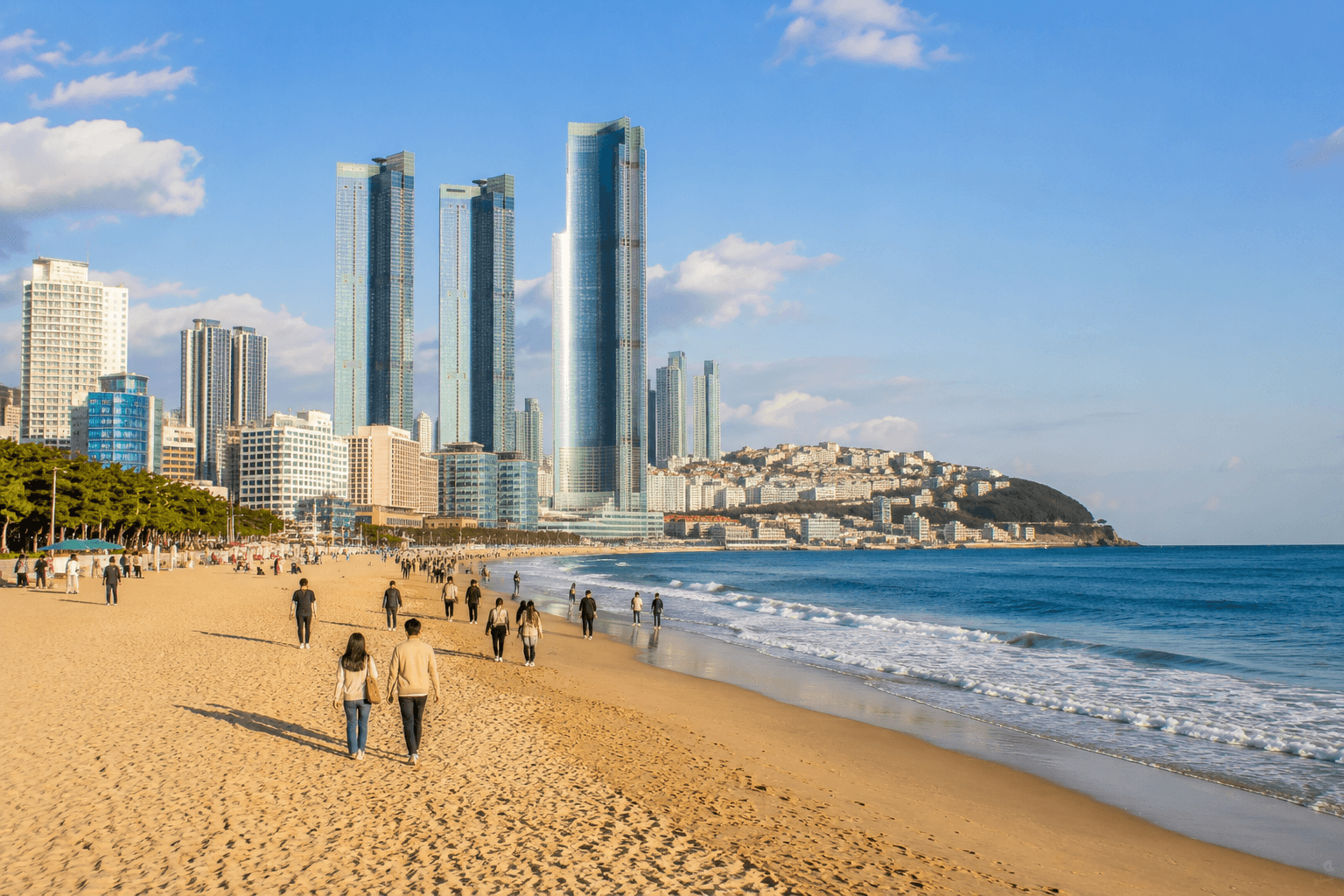
Morning: Haeundae Beach
No first trip to Busan feels complete without visiting Haeundae Beach.
Even outside summer, Haeundae remains useful for shoreline walks, cafés and coastal views. If swimming is part of the plan, Busan’s 2026 supervised season runs from June 26 to September 15, from 9:00 AM to 6:00 PM.
Stay inside the marked swimming area and follow lifeguard instructions. Outside those dates and hours, enjoy the sand without assuming the sea has extended its opening schedule for you.
Early mornings tend to be quieter and more peaceful than afternoons.
Late Morning: Dongbaekseom Coastal Walk
From Haeundae, take a walk around Dongbaekseom.
The coastal path offers beautiful views of the ocean, bridges, and city skyline.
Many travelers consider this one of Busan’s most underrated experiences.
The route is easy to follow and doesn’t require much time, making it a perfect addition to a busy sightseeing day.
Afternoon: Blue Line Park
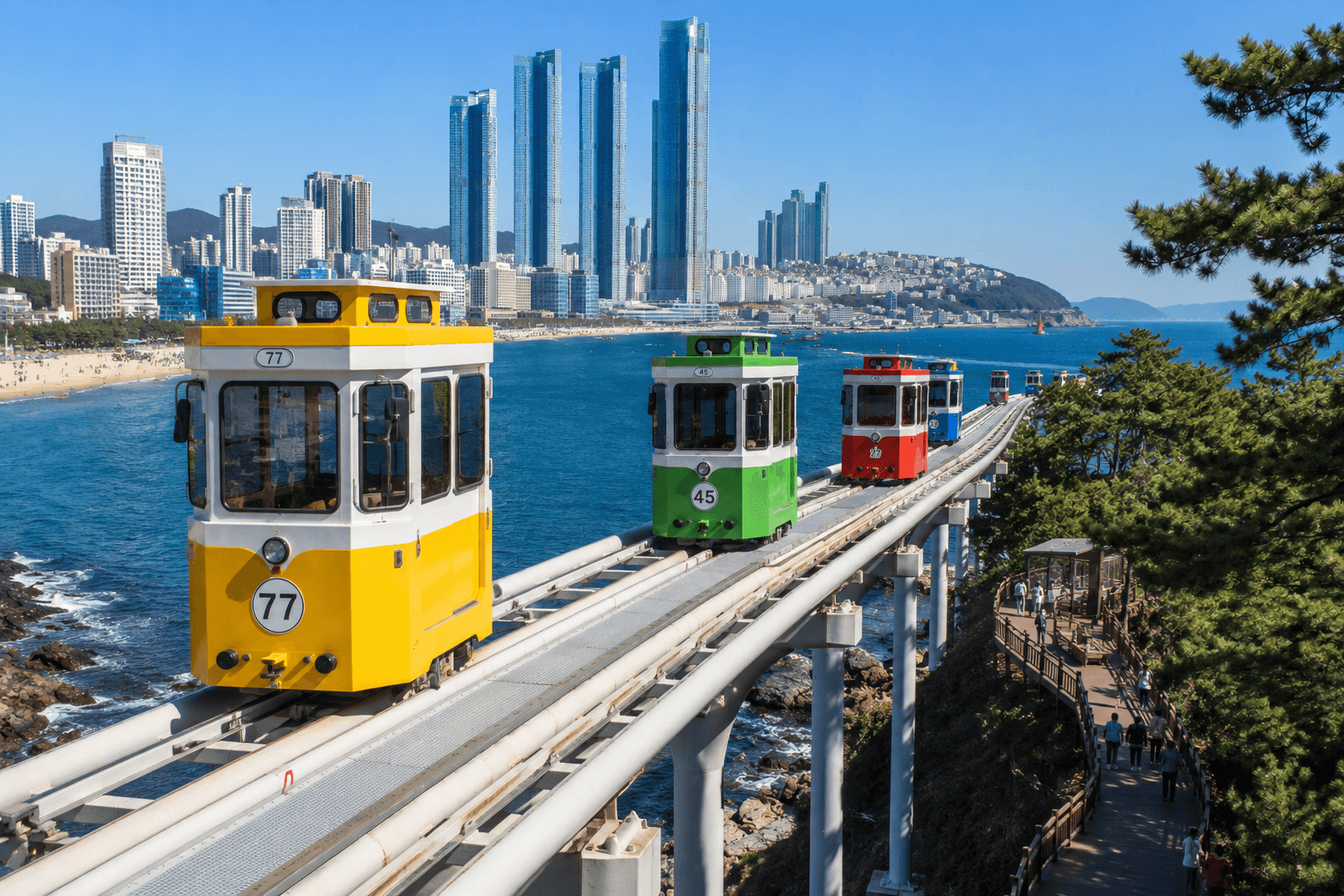
Walk or take a short taxi from Haeundae toward Mipo Station. The Sky Capsule and Beach Train are different products: the capsule runs one way between Mipo and Cheongsapo, while the Beach Train continues along the coast toward Songjeong.
Reserve through the official Blue Line Park booking page when the Sky Capsule is a priority. Tickets for the Monday–Sunday week four weeks ahead open every Tuesday at 7:00 a.m. Korea Standard Time (KST). That is a weekly release, not a new batch every morning. Limited walk-up tickets are sold first come, first served and can sell out early.
The operator’s boarding guide says the time on a Sky Capsule ticket is the period for joining the queue, not a guaranteed departure or arrival minute. Join the queue within your booked window, allow time for boarding delays and the ride, and avoid a tight onward Beach Train connection. Confirm whether you booked Mipo or Cheongsapo, and save the ticket QR code: the booking page identifies that as the boarding pass, while the barcode is for a parking discount. The capsule is charming; explaining to it that you went to the wrong station is less so.
Evening: Haeundae Night Views
As night falls, return to the Haeundae area.
The atmosphere changes dramatically after sunset.
Restaurants fill with visitors, beach lights illuminate the shoreline, and the area becomes one of Busan’s most vibrant nightlife districts.
Many travelers end their second day here without realizing how quickly time has passed.
Day 3: Temples, Ocean Views, and Busan’s Best Night Scene
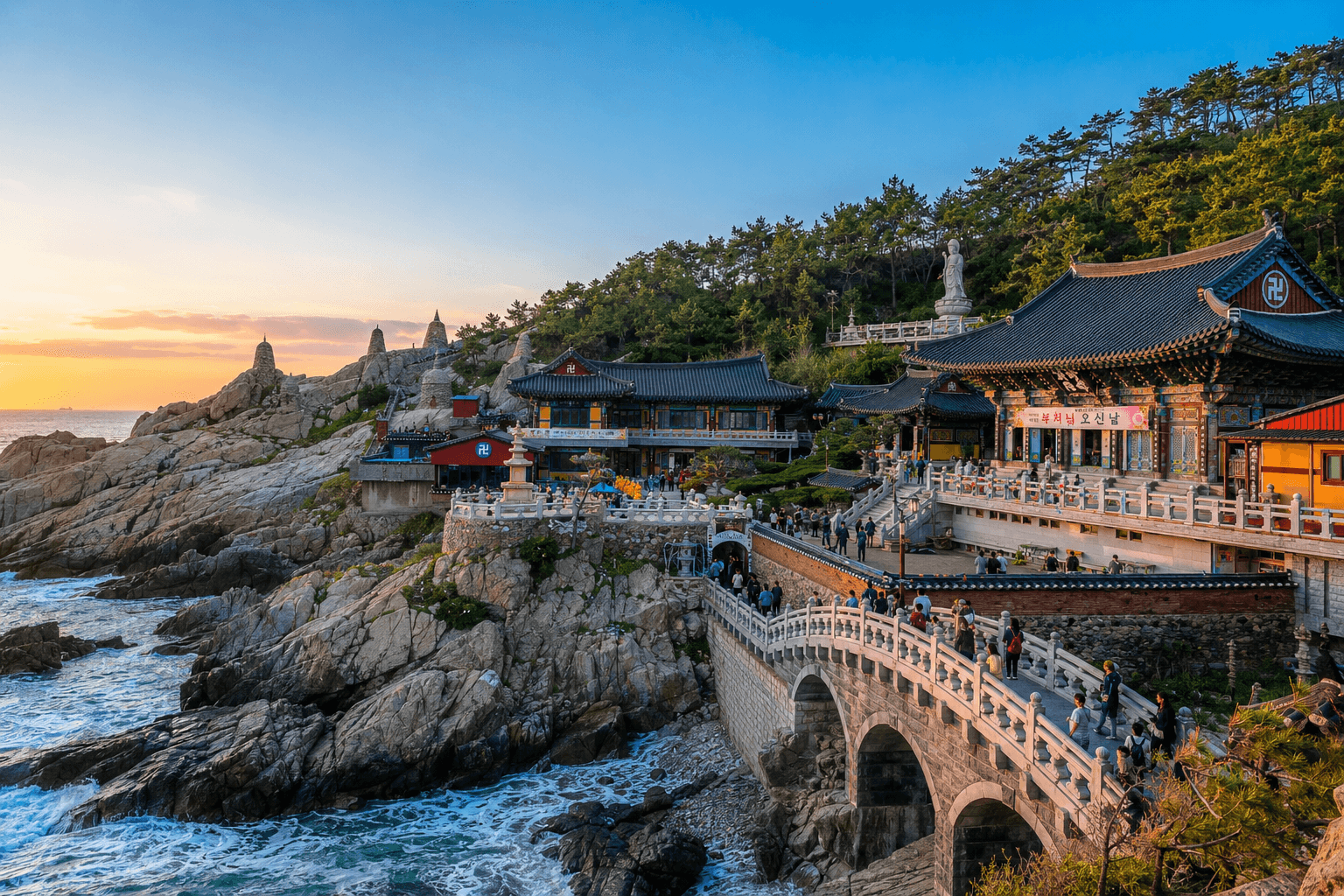
Morning: Haedong Yonggungsa
Start your final day at Haedong Yonggungsa, one of the most unique temples in Korea.
Unlike many Korean temples that sit deep in the mountains, Haedong Yonggungsa overlooks the sea.
The combination of waves, cliffs, and traditional architecture creates a setting that feels completely different from places like Bulguksa Temple in Gyeongju.
Morning is generally the best time to visit.
The light is softer, temperatures are cooler, and tour groups are usually smaller.
Many travelers consider this one of the most beautiful locations in Busan.
Late Morning: Songjeong Beach
After visiting the temple, continue to nearby Songjeong Beach.
Compared to Haeundae, Songjeong feels quieter and less crowded.
It’s a great place to slow down, enjoy a coffee, and take a break from sightseeing.
Many visitors end up wishing they had spent more time here.
Afternoon: Millak Waterfront and Gwangalli
After lunch around Songjeong, move toward Gwangalli rather than leaving the afternoon undefined. Check the live route for your exact starting point and include bus waits, walking and traffic; the transfer is not a fixed one-hour promise. If your departure leaves little room, skip this cross-town evening rather than relying on the fastest map estimate.
Start around Millak Waterfront Park or the northern end of Gwangalli Beach, then walk toward the main beachfront as the light softens. A café stop here is more useful than returning to Haeundae for another unplanned loop.
Evening: Gwangalli Beach and Drone Show
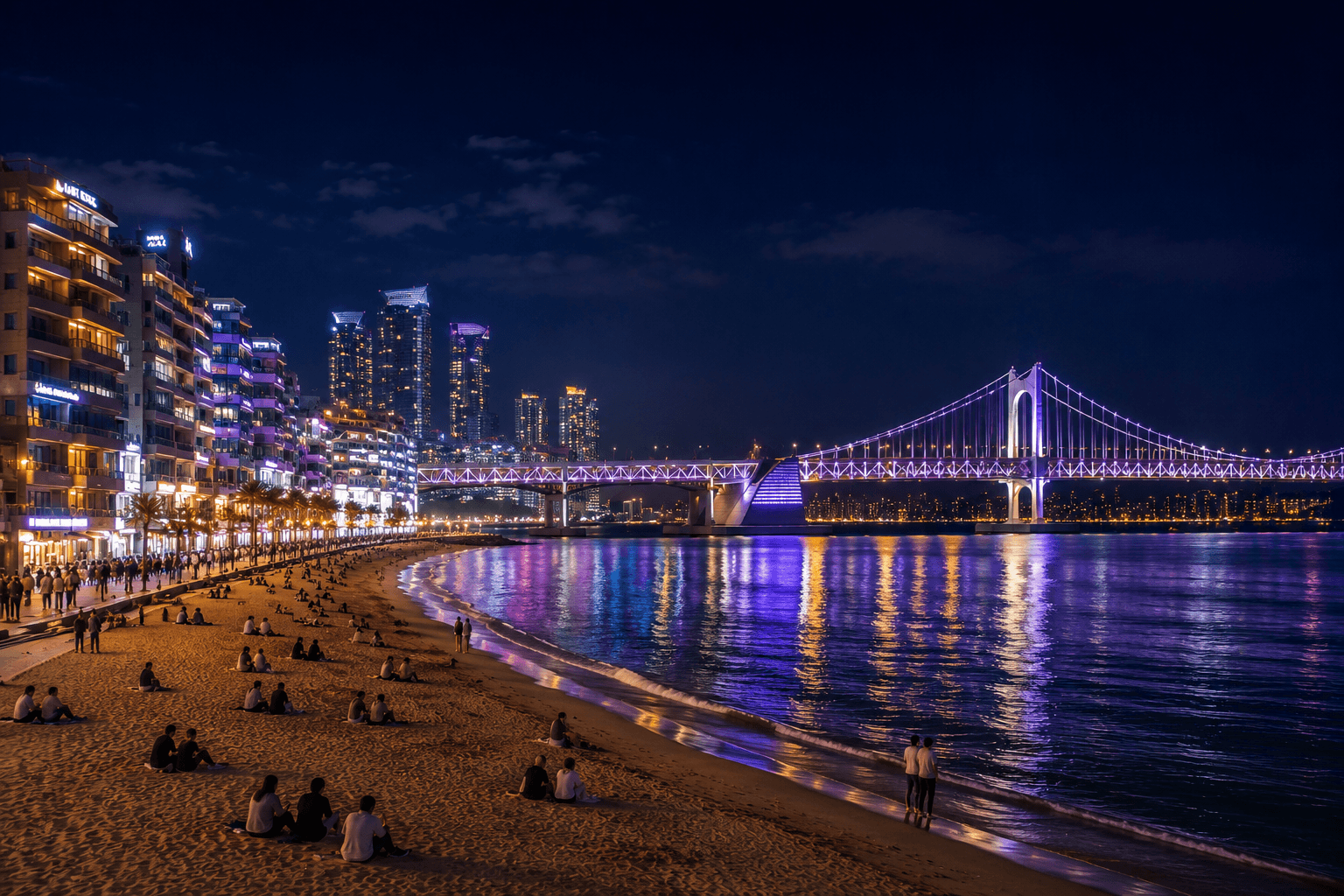
Finish at Gwangalli Beach for the illuminated Gwangan Bridge and dinner near the waterfront.
The regular drone show is scheduled on Saturdays, not every night. The city’s official schedule lists 8:00 p.m. and 10:00 p.m. from March through September. The operator’s winter notice confirms 7:00 p.m. and 9:00 p.m. from October through February. All times are local Korean time; special performances can follow a different program.
For the first and third Saturdays, the official drone-and-laser sequence starts with lasers and launches the drones six minutes later. Arrive for the scheduled start; that opening is part of the performance, not a delay. For viewing and return-route planning, see our Gwangalli Beach guide.
The operator’s safety notice says delays or cancellations may be announced the day before or on the day because of rain, strong wind, typhoons or communication problems. Check the latest program and cancellation notices before heading to the beach. Gwangalli is still worth visiting for the bridge view when no show is running.
If the show is a priority, put the Gwangalli evening on a Saturday that fits your stay; it does not have to be your third calendar day. Do not wait for the later performance when it leaves a narrow connection to a train or flight. Bridge lights make a perfectly good ending without turning the evening into a timetable negotiation.
If You Leave Busan on Day 3
The temple–Songjeong–Gwangalli route assumes you have enough time for an eastern Busan day and a waterfront evening. If Day 3 is also your departure day, start with your confirmed train or flight and work backwards from the operator’s recommended arrival time. Add luggage collection and the transfer to Busan Station or Gimhae Airport; they are different departure points, not interchangeable map pins.
For an earlier departure, keep the morning local to your accommodation or choose just one eastern stop if the live route leaves a comfortable buffer. Move Gwangalli to another evening or omit it. Keep the full Day 3 only when your departure genuinely allows it; a drone show is not worth discovering how fast you can run with a suitcase.
Local Tips for First-Time Visitors
Budget Time for Cross-City Transfers
Many travelers underestimate how large Busan is. Attractions that appear close together on a map can still require significant travel time. Planning fewer activities often leads to a more enjoyable experience.
Visit Gamcheon Early
If Gamcheon Culture Village is high on your list, make it one of your first stops of the day. By afternoon, narrow streets and photo spots can become much more crowded.
See Both Haeundae and Gwangalli
Many visitors focus entirely on Haeundae and never make it to Gwangalli. While Haeundae is Busan’s most famous beach, plenty of travelers leave Busan saying Gwangalli became their favorite part of the trip.
Reserve Intercity Trains Directly
If you’re traveling from Seoul, use the KTX Guide to understand stations and booking, then compare the actual schedule on KORAIL’s official reservation page.
Common Mistakes Travelers Make
Crossing the City Too Many Times
Putting Gamcheon, Haedong Yonggungsa and Gwangalli into one day looks efficient only until the transfers begin. Group the western sights, Haeundae coast and eastern temple route separately; remove a stop before turning every visit into a station-platform preview.
Treating Haeundae as the Whole City
Haeundae is a convenient base, not a substitute for Nampo, Gamcheon or Gwangalli. Staying there is perfectly sensible, but spend at least one full day west of the beach district to understand why Busan cannot be summarized by one shoreline.
Arriving at Gamcheon Too Late
Gamcheon is a residential hillside neighborhood with narrow routes. An earlier visit means cooler walking, fewer blocked viewpoints and less temptation to treat someone’s front door as a photo set.
Assuming the Drone Show Runs Nightly
The regular Gwangalli program is Saturday-only, and weather, technical conditions or a special event can change it. Check the official notice on the day and plan an evening you would still enjoy with only the bridge lights.
Underestimating the Final Bus and Walk
The subway handles the long distances, but several major sights require a bus, taxi, uphill walk or all three. Add a buffer before reservations and avoid treating the map’s arrival estimate as a personal guarantee from the city.
FAQ
Is 3 days enough for Busan?
Yes. Three days is ideal for most first-time visitors and allows enough time to see Busan’s major attractions without rushing.
Where should I stay in Busan?
Choose Seomyeon for the best transport balance, Haeundae for beach evenings, or Nampo for markets and the western sights on Day 1.
Is Busan better than Seoul?
They offer very different experiences. Many travelers enjoy both for different reasons.
Do I need a car in Busan?
No car is required for this itinerary. Subway and buses cover the main areas, but taxis can be worthwhile for short links involving steep hills, luggage, or a tight connection.
When is the best time to visit Busan?
Spring and autumn are generally considered the most comfortable seasons.
Is Busan expensive?
Busan can suit many budgets, but beachfront hotels, summer weekends, festivals, and major events can raise prices sharply. Compare dates as well as neighborhoods.
Official Sources and Last Check
Train inventory, attraction reservations, and outdoor events can change quickly. Use these official pages for final checks:
- KORAIL train schedules and reservations
- Haeundae Blue Line Park official reservations
- Busan Metropolitan City: Gwangalli drone show schedule
- Visit Busan official travel portal
- Busan Metropolitan City: Haeundae Beach 2026 season and safety guidance
Targeted recheck: October 21, 2026. Only the Gwangalli seasonal showtimes, first/third-Saturday laser sequence and cancellation guidance were reviewed; this is not a fresh check of every stop, fare or connection in the itinerary.
Earlier general source check: September 13, 2026. Recheck train inventory, Sky Capsule reservations, beach controls and the Gwangalli performance notice shortly before each fixed-time activity.
Selected booking and event details checked: October 12, 2026 — Blue Line Park’s ticket-release and boarding guidance, Gwangalli seasonal showtimes, and operator delay/cancellation notices. This is not confirmation of ticket availability, a particular performance, train seats, flight timing or every attraction in the guide. The earlier date applies to other details.
Related Guides
If you’re planning a longer trip around Busan, these guides may also help:
Best Areas to Stay in Busan helps you choose a base that fits the east-and-west route in this itinerary.
Gamcheon Culture Village Guide 2026
Final Thoughts
Three days works when each day stays in one side of Busan: Gamcheon and Nampo in the west, Haeundae and the Blue Line coast in the east, then Yonggungsa, Songjeong, and Gwangalli.
The main planning mistake is measuring distance on a map without accounting for hills, bus waits, station exits, and the time needed to cross the city. Leave space around every coastal transfer and keep a weather alternative for beaches and outdoor events.
If one day becomes too full, remove one stop rather than cutting every visit short. Busan is most memorable when there is enough time to eat, walk, and watch the coastline change after sunset.