Sometimes it is standing near a busy market stall with a paper cup of tteokbokki, steam rising from a fish cake broth, someone frying hotteok nearby, and your travel plan quietly losing control in the best possible way.
Korean street food is affordable, easy to try, and full of small surprises. You can find it near subway stations, inside traditional markets, around shopping streets, and in food alleys where locals and visitors gather around simple stalls for quick snacks, late-night bites, or something warm on a cold evening.
Many travelers arrive in Korea thinking mostly about Korean BBQ, fried chicken, and restaurant meals. Those are absolutely worth trying, but street food shows a different side of Korean food culture. It is more casual, more spontaneous, and often more memorable than expected.
Whether you are exploring Seoul, Busan, Gyeongju, or Jeju Island, Korean street food is one of the easiest ways to taste local life without needing a reservation, a big budget, or perfect Korean skills.
If this is your first food trip in Korea, start with What to Eat in Korea for a broader overview of the country’s most famous dishes.
This article may contain affiliate links, which means we may earn a small commission if you book through them, at no extra cost to you.
Table of contents
Why Korean Street Food Is So Popular
Korean street food has long been part of everyday life.
Many snacks started as quick, inexpensive, filling foods for students, workers, market visitors, and people heading home after school or work. Today, those same foods are still loved by locals and have become a major attraction for travelers.
Part of the appeal is variety. In one market, you can try spicy rice cakes, crispy fried snacks, sweet pancakes, dumplings, fish cakes, grilled skewers, egg bread, and seafood items within a short walk. It is the kind of meal where “just one snack” can become five snacks before anyone has time to defend themselves.
Street food is also budget-friendly. Most items are affordable compared with restaurant meals, making them useful for travelers who want to eat well without spending too much. You can try several different foods for the price of one sit-down meal.
Another reason Korean street food is fun is that it fits naturally into sightseeing. You do not need to stop your day completely. You can explore a market, visit a shopping area, walk between attractions, and snack along the way.
For budget planning, check Seoul Budget Travel Guide 2026 and How to Visit Seoul on $50 a Day.
Where to Find the Best Korean Street Food
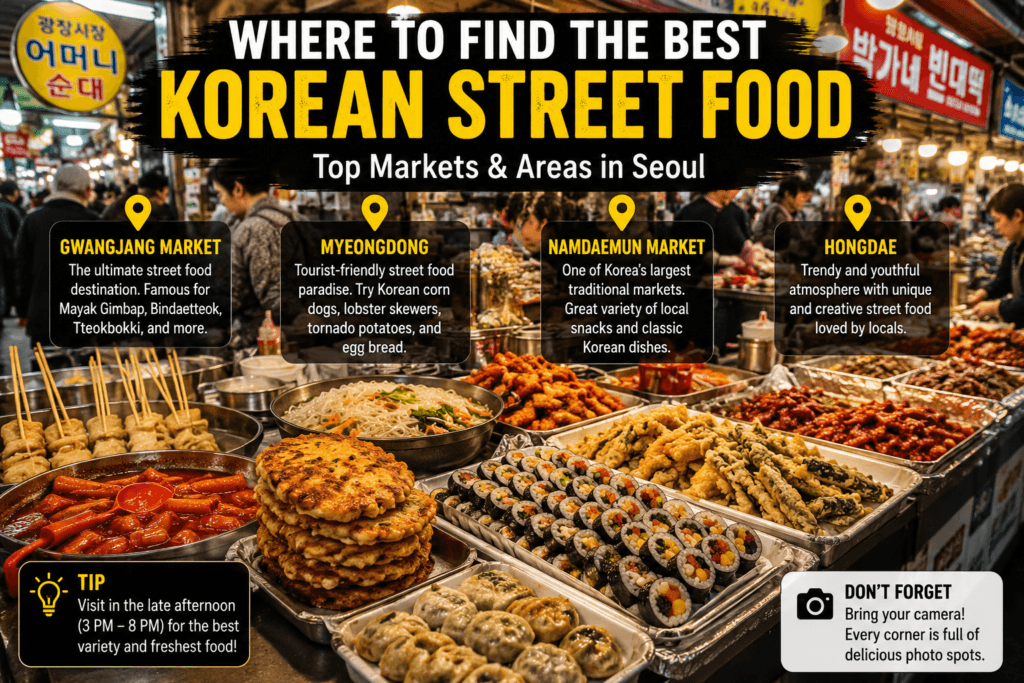
Gwangjang Market
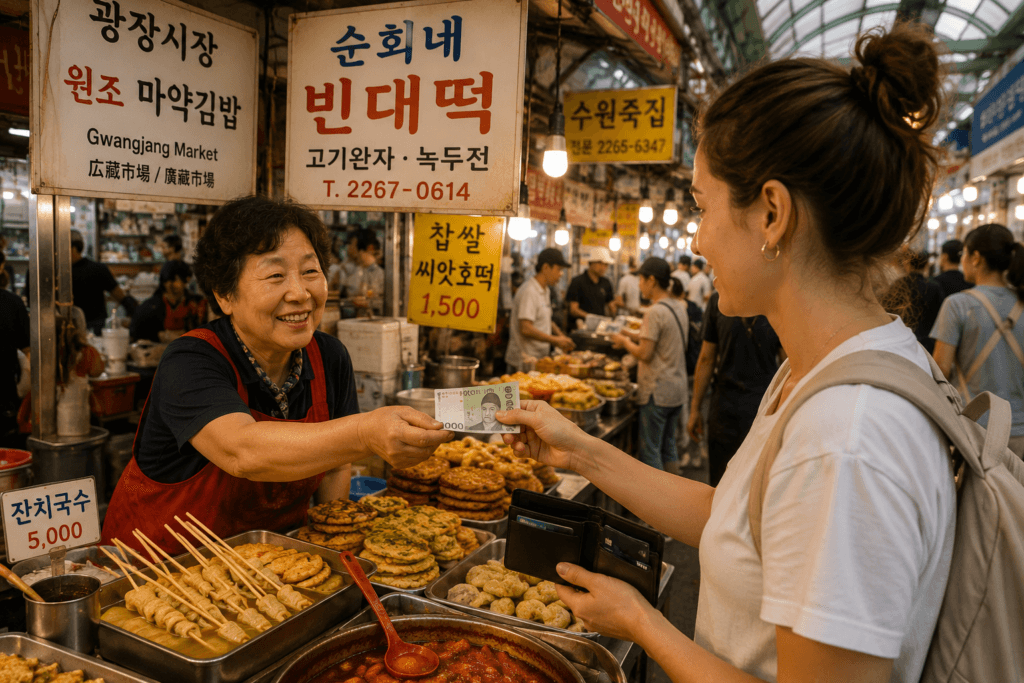
Gwangjang Market is one of the best places in Seoul for traditional Korean street food.
It is famous for mayak gimbap, bindaetteok, tteokbokki, mandu, noodles, seafood, and market-style comfort food. The atmosphere is busy, loud, and a little chaotic in a way that feels very Seoul. If you want a classic Korean market food experience, this is one of the easiest places to start.
Gwangjang is especially good for travelers who want more than trendy snacks. The food here feels closer to traditional market culture, with long-running vendors, shared seating, and dishes that locals still eat regularly.
Weekdays are usually more comfortable than weekends. The market can become extremely crowded, especially during lunch, dinner, and peak travel hours. If you are nervous about crowds, visit earlier in the day or outside the busiest meal times.
For more details, use the Gwangjang Market Guide 2026.
Myeongdong Night Market
Myeongdong is one of the most tourist-friendly places to try Korean street food.
The area is easy to access, full of shops, close to many hotels, and packed with evening food stalls. You will find Korean corn dogs, grilled skewers, egg bread, tornado potatoes, lobster skewers, cheese snacks, fruit cups, and many creative foods designed to catch the eye.
Myeongdong is not always the cheapest or most traditional street food area, but it is convenient and fun for first-time visitors. It is especially good if you want a safe, easy, lively introduction to Korean street snacks without navigating a traditional market right away.
The best time to visit is usually in the evening, when the food stalls are active and the shopping streets feel busiest. Just remember that Myeongdong can be touristy. That is not automatically bad. Sometimes touristy means you can point at a corn dog and everyone understands the mission.
For planning the area, read the Myeongdong Travel Guide 2026.
Namdaemun Market
Namdaemun Market is a great choice if you want street food mixed with local shopping.
Compared with Myeongdong, Namdaemun feels more traditional and practical. It is a large market area where people shop for clothes, accessories, kitchen goods, souvenirs, and food. The street food here feels less polished and more connected to everyday market life.
This is a good area for travelers who want a more local-feeling Seoul experience without going too far from the city center. It pairs well with nearby sightseeing and shopping.
Namdaemun is especially useful during the daytime, while Myeongdong becomes more lively in the evening.
Hongdae
Hongdae is a strong choice for casual, trendy, and late-night street food.
The neighborhood is known for youth culture, shops, cafes, nightlife, busking, and casual food. After exploring the area, many travelers stop for quick snacks like skewers, hotteok, fried foods, or sweet treats.
Hongdae is not necessarily the most traditional street food destination, but it is fun, energetic, and easy to enjoy if you are already spending the evening there.
Use the Hongdae Travel Guide 2026 if you are planning a night out in the area.
Busan, Gyeongju, and Jeju
Seoul has the most famous street food markets for first-time visitors, but street food is not only a Seoul experience.
Busan is excellent for seafood, fish cakes, market snacks, and coastal food culture. Areas near traditional markets and busy shopping streets often have plenty of quick bites.
Gyeongju has a slower atmosphere, but visitors can still find local snacks around popular sightseeing areas and traditional streets.
Jeju street food often connects with local ingredients, seafood, black pork snacks, tangerine desserts, and market foods. If you are visiting the island, pair this guide with Jeju Travel Guide 2026 and Jeju Black Pork Guide 2026.
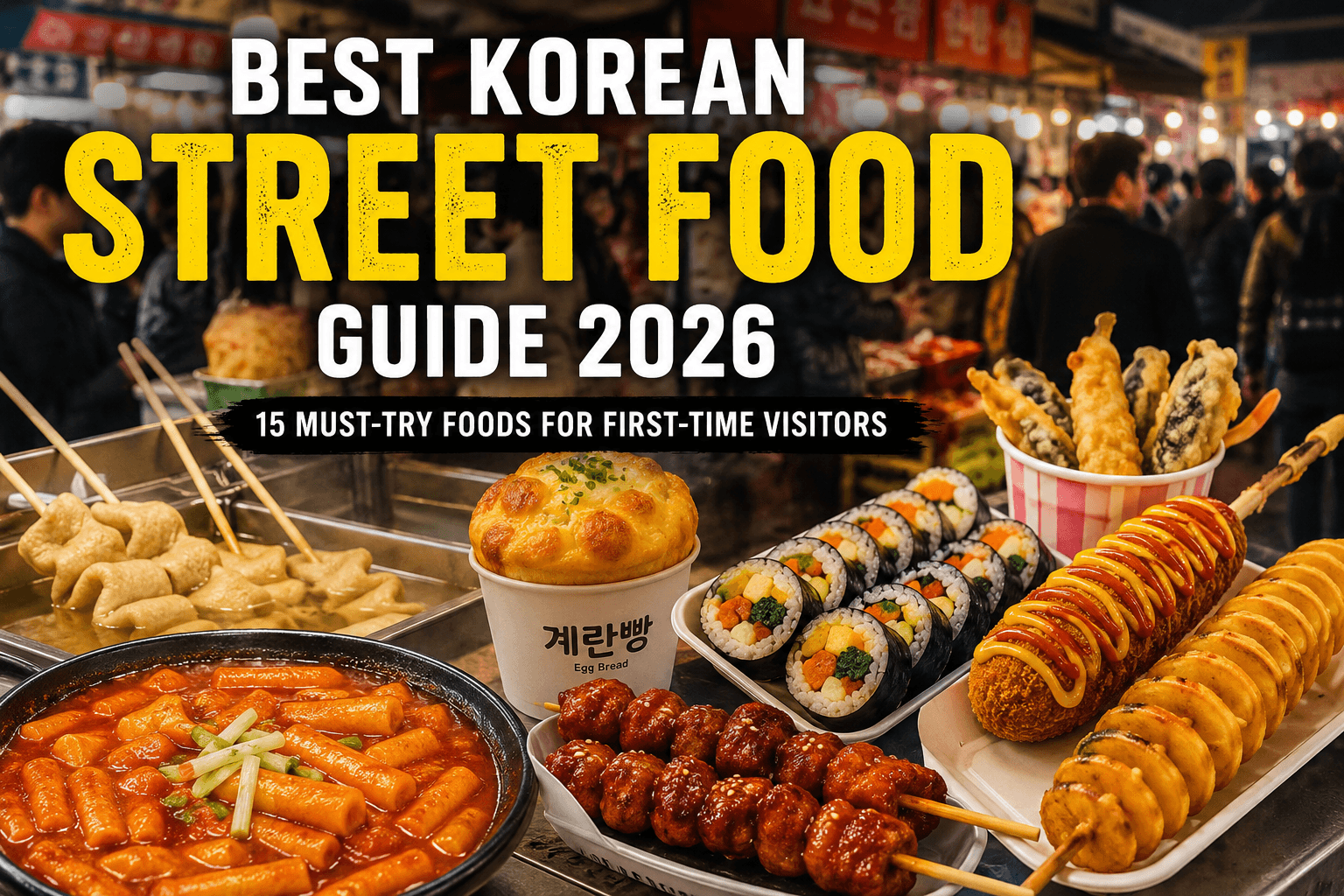
15 Must-Try Korean Street Foods
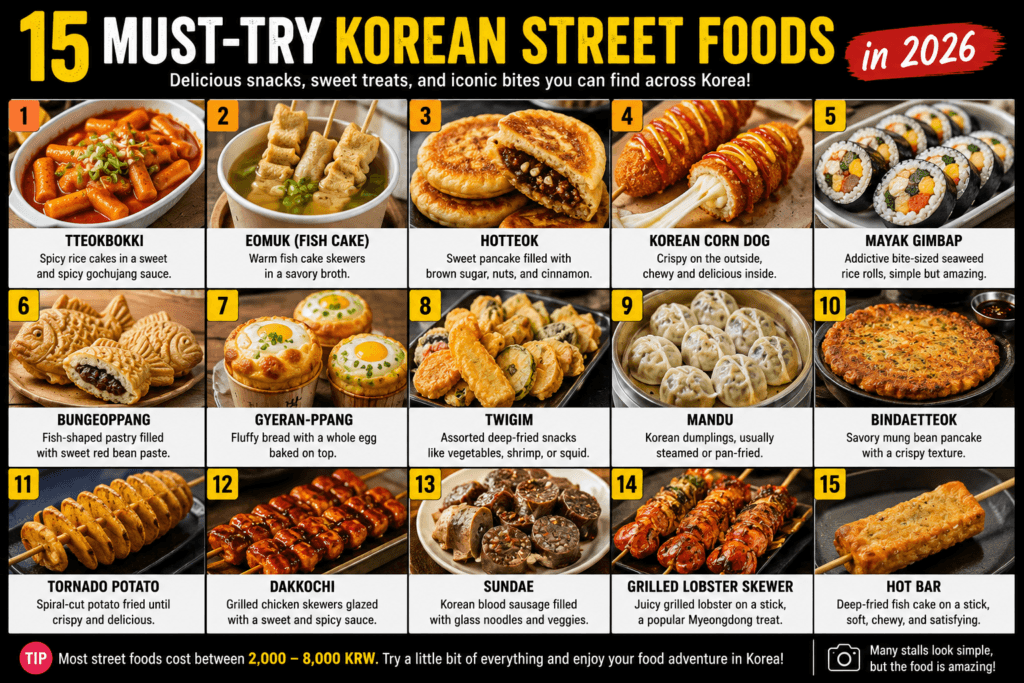
1. Tteokbokki
Tteokbokki is one of Korea’s most iconic street foods.
It is made with chewy rice cakes cooked in a spicy red sauce, usually based on gochujang. Some versions include fish cakes, boiled eggs, cabbage, scallions, or noodles.
For many visitors, tteokbokki is the first Korean street food they try. It is spicy, sweet, chewy, comforting, and slightly dangerous if you are wearing a white shirt.
If you are sensitive to spice, start slowly. Tteokbokki can look friendly, but that red sauce has opinions.
2. Eomuk
Eomuk, or Korean fish cake, is especially popular in colder months.
It is often served on skewers in a hot broth, making it one of the best winter street foods in Korea. You can eat the fish cake and sip the warm broth from a paper cup.
Eomuk is usually mild, affordable, and easy for first-time visitors. It is a good option if you want something warm but not too spicy.
3. Hotteok
Hotteok is a sweet Korean pancake usually filled with brown sugar, cinnamon, and nuts.
When freshly cooked, the outside is slightly crispy and the inside is hot, sweet, and syrupy. It is especially popular in winter, when holding a warm hotteok feels like a tiny seasonal blessing.
Be careful with the first bite. The filling can be very hot. Hotteok does not care that you are excited.
4. Korean Corn Dog
Korean corn dogs became internationally famous thanks to social media, but they are still fun to try in Korea.
They may be filled with sausage, mozzarella cheese, or both. Some are coated with diced potatoes, sugar, sauces, or other toppings. The result is crispy, cheesy, salty, sweet, and not remotely pretending to be health food.
Korean corn dogs are especially easy to find in Myeongdong, Hongdae, and popular shopping areas.
5. Mayak Gimbap
Mayak gimbap is a bite-sized version of gimbap, especially famous at Gwangjang Market.
These small seaweed rice rolls are usually filled with simple ingredients such as vegetables and served with a mustard dipping sauce. The name is dramatic, but the food itself is simple and addictive in the snack sense.
It is a great street food for travelers who want something less spicy and easy to share.
6. Bungeoppang
Bungeoppang is a fish-shaped pastry usually filled with sweet red bean paste.
Despite the shape, it does not taste like fish. This is important information for concerned visitors staring at it suspiciously.
Bungeoppang is a classic winter snack, often sold from small stalls. Some modern versions include custard, cream, or other fillings, but red bean remains the traditional choice.
7. Gyeran-ppang
Gyeran-ppang, or egg bread, is a soft, slightly sweet bread baked with a whole egg on top or inside.
It is warm, filling, and easy to eat while walking. The flavor is mild, making it a good option for travelers who want something simple and not spicy.
You can often find gyeran-ppang in busy shopping areas and winter street food stalls.
8. Twigim
Twigim refers to Korean-style fried foods.
Popular choices include sweet potato, shrimp, squid, vegetables, seaweed rolls, and dumplings. Twigim is often served with tteokbokki, and many locals dip fried items into the spicy sauce.
This is one of the great joys of Korean street food. Crispy fried snack meets spicy sauce. Nobody needs to overthink it.
9. Mandu
Mandu are Korean dumplings, and they can be steamed, boiled, or fried.
Fillings vary, but many include meat, vegetables, tofu, noodles, kimchi, or a combination of ingredients. Mandu are easy to find in markets, street stalls, and casual restaurants.
They are a good choice if you want something more filling than a small snack.
10. Bindaetteok
Bindaetteok is a savory mung bean pancake and one of the most famous foods at Gwangjang Market.
It is crispy outside, soft inside, and often served with a soy-based dipping sauce and onions. Compared with some trendy street foods, bindaetteok feels more traditional and satisfying.
If you visit Gwangjang Market, this is one of the foods worth trying.
11. Tornado Potato
A tornado potato is a spiral-cut potato on a stick, fried until crispy and usually seasoned with flavored powder.
It is simple, photogenic, and easy to eat while walking. This is not ancient culinary heritage. It is potato happiness on a stick, which is also valid.
You will often find it in tourist-friendly street food areas like Myeongdong.
12. Dakkochi
Dakkochi is a grilled chicken skewer often brushed with sweet, spicy, or savory sauce.
It is a good option for travelers who want something meaty but not a full restaurant meal. Some versions can be spicy, so ask or choose carefully if you prefer mild flavors.
Dakkochi is especially good as an evening snack.
13. Sundae
Sundae is Korean blood sausage, usually made with glass noodles and other ingredients stuffed into a casing.
It may sound intimidating to first-time visitors, but it is a popular local food and often served with salt, dipping sauces, liver, or tteokbokki sauce depending on the vendor.
If you are adventurous with food, sundae is worth trying. If not, no travel police will appear. You can begin with hotteok and work your way up.
14. Grilled Lobster Skewers
Grilled lobster skewers are one of Myeongdong’s famous tourist-friendly street foods.
They are more expensive than classic Korean market snacks, but they are popular because they look dramatic and feel like a small food event. They are better treated as a fun Myeongdong experience than an essential everyday Korean street food.
Try them if they fit your budget and curiosity.
15. Hot Bar
Hot bar is a deep-fried fish cake snack, often served on a stick.
It can include vegetables, seafood, cheese, or other fillings depending on the vendor. It is filling, savory, and easy to eat on the go.
Hot bar is a good choice if you like fish cake but want something crispier and more snack-like than eomuk in broth.
How Much Does Korean Street Food Cost?
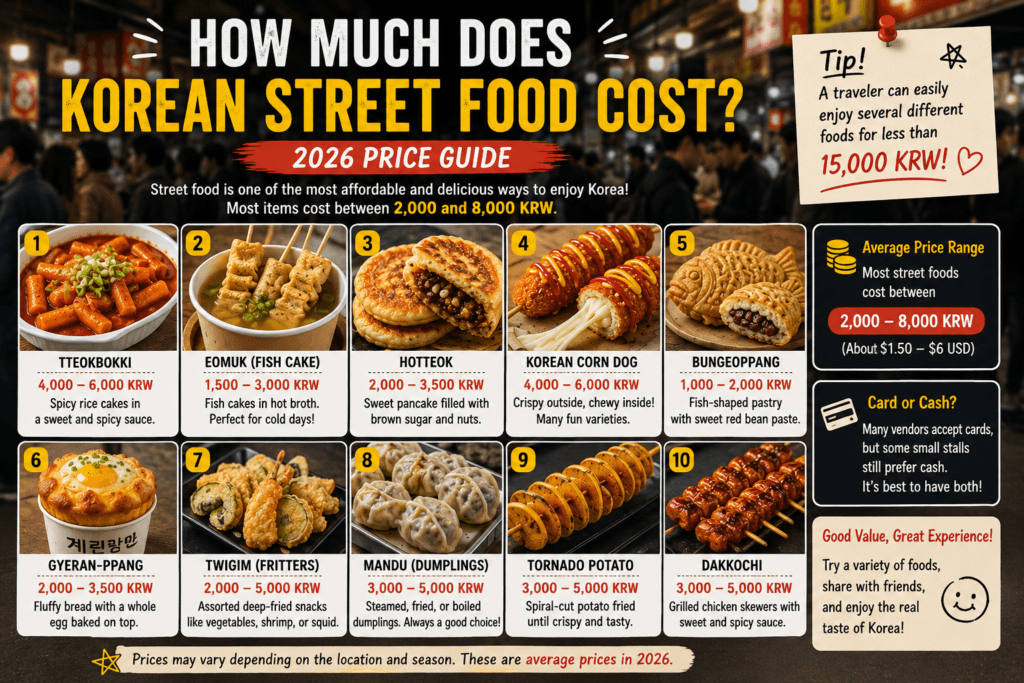
Korean street food is still one of the most affordable ways to eat while traveling.
Prices vary by location, popularity, ingredients, and whether you are in a traditional market or a tourist-heavy area. Myeongdong tends to be more expensive than local markets, while traditional snacks in markets can offer better value.
Typical prices may look like this:
- Tteokbokki: around 4,000 to 6,000 KRW
- Eomuk: around 1,500 to 3,000 KRW
- Hotteok: around 2,000 to 3,500 KRW
- Korean corn dog: around 4,000 to 6,000 KRW
- Bungeoppang: often around 1,000 to 2,000 KRW per piece or small bundle
- Bindaetteok: often higher than simple snacks, depending on size and market
A traveler can often enjoy several different street foods for less than the cost of a restaurant meal. If you are sharing with someone, it becomes even better because you can try more items without becoming personally responsible for every fried object in the market.
Tips for Enjoying Korean Street Food
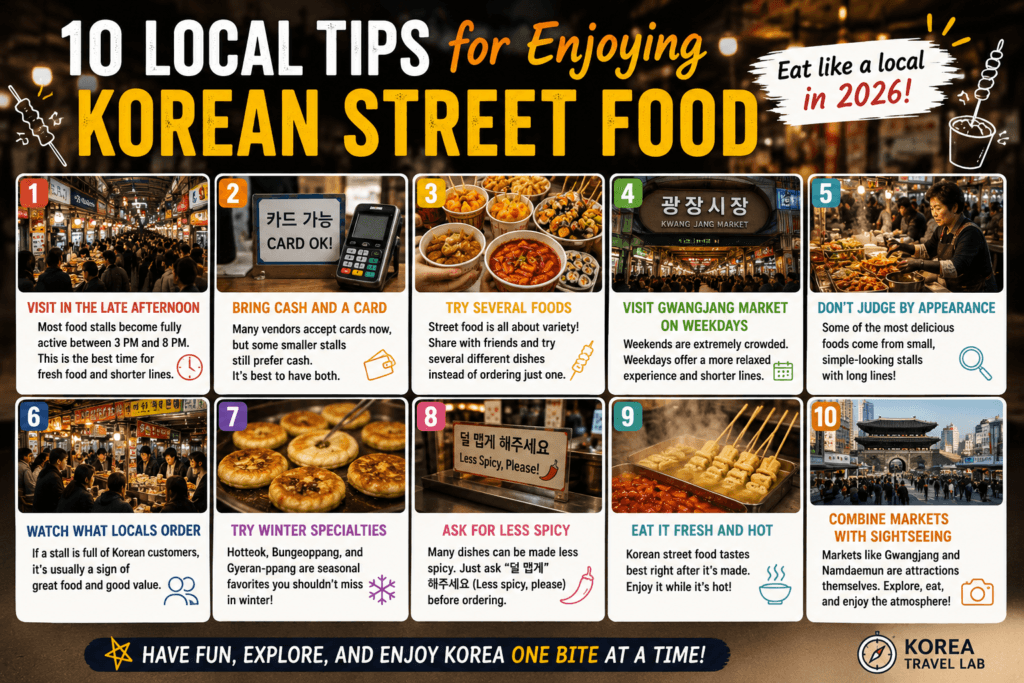
Visit markets in the late afternoon or early evening if you want the liveliest atmosphere. Many stalls become fully active between afternoon and dinner hours.
Bring both a card and some cash. Korea is very card-friendly, and many vendors accept cards, but smaller stalls may still prefer cash. Having a few bills makes things easier.
Try several small foods instead of ordering too much at one stall. Korean street food is best enjoyed as a tasting route. One snack here, one snack there, and suddenly you have built a meal without using a table.
Watch what locals are ordering. A simple stall with a steady line of Korean customers is often a good sign. Do not judge only by decoration or social media fame.
Eat hot foods shortly after they are prepared. Tteokbokki, hotteok, twigim, and fish cakes usually taste best fresh and warm.
If you cannot handle spice, start with mild options such as hotteok, bungeoppang, gyeran-ppang, eomuk, corn dogs, or mandu. Not every Korean street food is spicy, despite what the red sauces may suggest from across the street.
Consider joining a Seoul street food tour if you want help navigating markets, ordering, and understanding what you are eating.
Common Mistakes Travelers Make
One common mistake is only eating street food in Myeongdong.
Myeongdong is fun and convenient, but it is not the whole street food scene. Gwangjang Market, Namdaemun Market, local markets, and neighborhood food streets often provide a deeper and more traditional experience.
Another mistake is ordering too much at the first stall. Everything looks good when you are hungry, but street food works best when you save room to try different items.
Some travelers avoid foods because they look unfamiliar. That is understandable, but some of Korea’s best street foods do not look glamorous at first glance. Bindaetteok, sundae, and eomuk may not win a beauty contest, but they have loyal fans for a reason.
Many visitors also forget about seasonal foods. Hotteok, bungeoppang, and warm fish cake broth are especially enjoyable in winter. Summer street food can be fun, but winter snacks have a special kind of comfort.
Do not assume everything is spicy. Korea has plenty of mild, sweet, savory, and fried street foods. If you are worried about spice, choose carefully and start with beginner-friendly snacks.
Finally, do not skip traditional markets. Markets are not just places to eat. They are part of the travel experience, with sounds, smells, vendors, crowds, and small moments that make a city feel alive.
Best Korean Street Food for First-Time Visitors
For first-time visitors, start with foods that are easy to find and easy to enjoy.
Tteokbokki is the classic choice if you want something spicy and iconic. Eomuk is great if you want something warm and mild. Hotteok is perfect for a sweet winter snack. Korean corn dogs are fun, cheesy, and social-media friendly. Mandu is filling and familiar enough for most travelers. Bindaetteok is ideal if you are visiting Gwangjang Market and want something traditional.
A good first street food route in Seoul could include Gwangjang Market for mayak gimbap, bindaetteok, mandu, and tteokbokki, then Myeongdong in the evening for corn dogs, egg bread, and trendier snacks.
That gives you both sides of the street food scene: traditional market energy and modern tourist-friendly fun.
Is Korean Street Food Safe?
Korean street food is generally safe to eat, especially at busy stalls where food is cooked continuously and ingredients move quickly.
As with street food anywhere, use common sense. Choose busy stalls, look for freshly cooked food, avoid items that have been sitting too long, and be careful with raw seafood or unfamiliar ingredients if you have a sensitive stomach.
Hot, freshly prepared foods are usually the safest and tastiest choices. Fried snacks, grilled skewers, fish cakes in hot broth, and freshly made pancakes are good options for most travelers.
If you have allergies or dietary restrictions, street food can be tricky because ingredients may not always be clearly labeled. When in doubt, choose simpler foods or eat at restaurants where staff can explain ingredients more easily.
Can Vegetarians Eat Korean Street Food?
Vegetarians can find some options, but it requires caution.
Foods that look vegetarian may still contain seafood, fish cake, meat broth, anchovy stock, egg, or hidden animal products. Tteokbokki often includes fish cakes. Eomuk is fish cake. Many broths use seafood or anchovy base.
Possible vegetarian-friendly options may include some hotteok, bungeoppang, tornado potatoes, certain corn dogs without meat if available, or vegetable twigim, but ingredients can vary by vendor.
Vegetarian travelers should ask carefully, use translation apps, or stick to restaurants with clearer menus when needed. Street food is fun, but mystery broth is not everyone’s preferred travel adventure.
Frequently Asked Questions
Is Korean street food safe to eat?
Yes, Korean street food is generally safe, especially at busy stalls where food is cooked fresh throughout the day. Choose popular vendors and freshly prepared items.
What is the most popular Korean street food?
Tteokbokki is one of the most iconic Korean street foods. Eomuk, hotteok, Korean corn dogs, mandu, and bungeoppang are also very popular.
Do I need cash for Korean street food?
Not always. Many vendors accept cards, especially in busy areas, but carrying some cash is still useful for smaller stalls and traditional markets.
Is Korean street food expensive?
No. Most street foods are affordable, usually ranging from a few thousand won to under 10,000 KRW depending on the item and location.
Which market has the best street food in Seoul?
Gwangjang Market is one of the most famous places for traditional Korean street food. Myeongdong is better for tourist-friendly evening snacks, while Namdaemun offers a more local market atmosphere.
Is Korean street food very spicy?
Some dishes, such as tteokbokki, can be spicy, but many street foods are mild or sweet. Hotteok, bungeoppang, gyeran-ppang, corn dogs, and many mandu are good options for travelers who prefer less spice.
What is the best Korean street food for first-time visitors?
Tteokbokki, hotteok, Korean corn dogs, eomuk, mandu, and bindaetteok are excellent starting choices for first-time visitors.
Can vegetarians enjoy Korean street food?
Some options exist, but vegetarians should be careful because many foods contain seafood, fish cake, anchovy broth, egg, or hidden animal products. Always check ingredients when possible.
Related Guides
Planning more food adventures in Korea? Continue with these guides:
- What to Eat in Korea
- Gwangjang Market Guide 2026
- Myeongdong Travel Guide 2026
- Hongdae Travel Guide 2026
- Namdaemun Market Guide 2026
- Seoul Budget Travel Guide 2026
- How to Visit Seoul on $50 a Day
- Korean BBQ Guide 2026
Recommended Travel Services
These can help make your food trip smoother:
- Seoul street food tour
- Korea eSIM deals for travelers
- Airport transfer services in Korea
- Seoul hotel deals near major food markets
Final Thoughts
Korean street food is one of the easiest and most enjoyable ways to experience Korea.
You do not need a reservation, a large budget, or a perfect plan. You just need curiosity, a little cash, enough room in your stomach, and the willingness to point at something delicious-looking when words temporarily abandon you.
From spicy tteokbokki in a busy market to sweet hotteok on a cold evening, Korean street food captures small pieces of everyday life. It is casual, affordable, flavorful, and often more memorable than travelers expect.
Do not limit yourself to one market or one famous snack. Try a few different foods, visit both traditional and tourist-friendly areas, and let the markets surprise you.
For many travelers, the best food memory in Korea is not a fancy restaurant. It is a small stall, a hot snack, a crowded alley, and the happy realization that dinner just happened by accident.