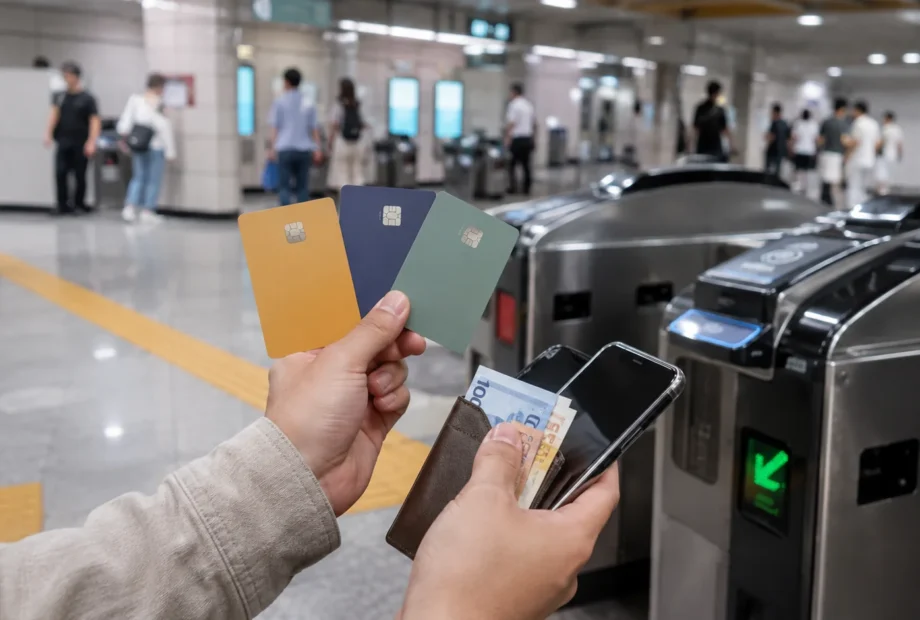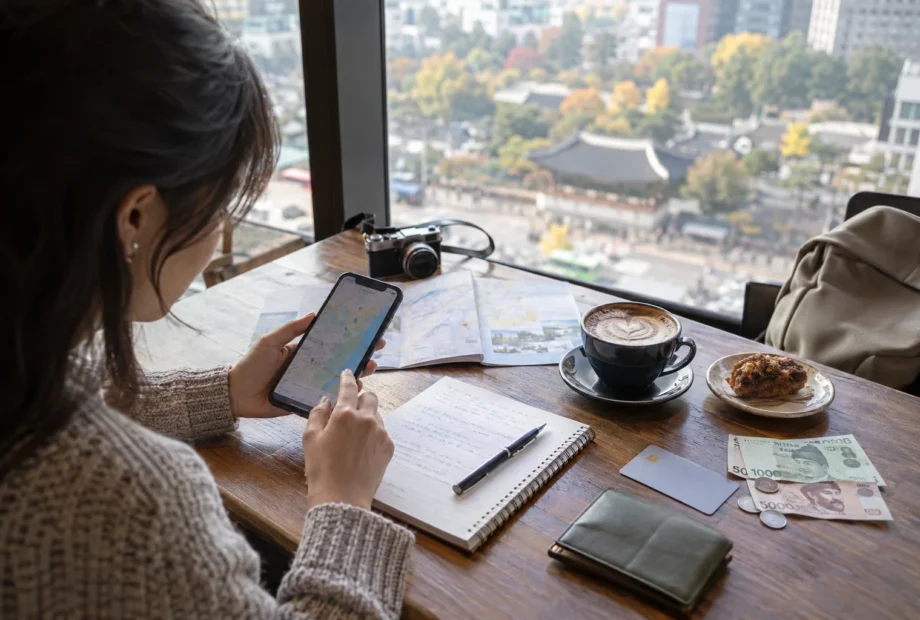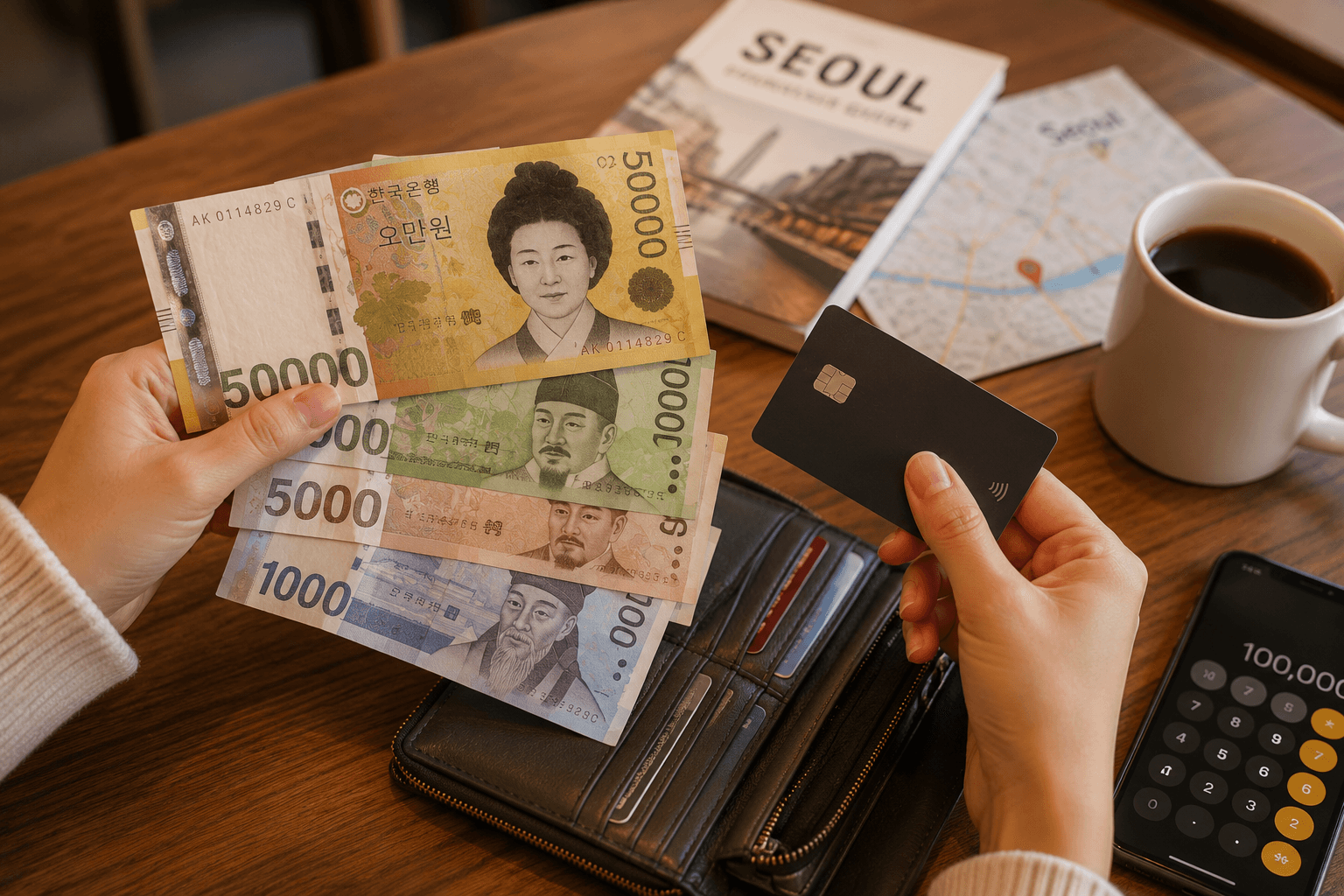
Many travelers spend several days in Seoul without using cash at all. Cards work well at hotels, cafes, restaurants, convenience stores, shopping malls, attractions, and major transportation facilities.
But cash has not completely disappeared.
Traditional markets, street food stalls, small local businesses, some transportation card top-ups, and occasional foreign card issues mean that most visitors should know how to withdraw Korean won during their trip.
The good news is that using ATMs in Korea is usually simple, safe, and convenient once you know what to look for.
The small catch is this: not every ATM works with foreign cards.
This Korea ATM guide explains which ATMs tourists should use, where to find them, how to avoid common fees, whether to choose KRW or your home currency, how much cash to withdraw, and what to do if your card does not work.
If you are planning your travel money setup, read Cash vs Card in Korea 2026, Korean Currency Guide 2026, and Korea Travel Costs Guide 2026 before departure.
This article may contain affiliate links, which means we may earn a small commission if you book through them, at no extra cost to you.
Table of contents
Quick Answer: Can Foreigners Use ATMs in Korea?
Yes, foreign visitors can use ATMs in Korea, but they should look for machines that support international cards.
Search for ATMs marked with:
- Global ATM
- International ATM
- Foreign Card
- Visa
- Mastercard
- Cirrus
- Plus
- UnionPay
If an ATM does not show any international card signs, it may be designed mainly for Korean bank cards.
For most tourists, the easiest places to find foreign-card-friendly ATMs are:
- Incheon Airport
- Major banks
- Convenience stores
- Shopping malls
- Tourist districts
- Large train stations
- Department stores
The safest strategy is simple:
Use cards for most spending, carry a small cash backup, and withdraw Korean won only when needed.
Do You Really Need Cash in Korea?
You do not need a lot of cash in Korea.
Cards work in most places tourists visit, especially in Seoul, Busan, Jeju, and other major destinations.
You can usually pay by card at:
- Hotels
- Restaurants
- Cafes
- Convenience stores
- Department stores
- Shopping malls
- KTX stations
- Tourist attractions
- Beauty stores
- Pharmacies
- Many taxis
However, cash is still useful in certain situations.
You may need cash for:
- Traditional markets
- Street food stalls
- Small local vendors
- Some older restaurants
- Local festivals
- Rural areas
- T-money recharge
- Emergency backup
- Occasional card payment failures
That is why travelers should not exchange or withdraw huge amounts of cash, but should still have access to Korean won.
Think of cash in Korea as a travel umbrella. You may not use it all day, but when you need it, you will be very glad it is there.
Which Cards Work at Korean ATMs?
Many foreign debit and credit cards can work at Korean ATMs if the machine supports international networks.
Common supported networks include:
- Visa
- Mastercard
- Cirrus
- Plus
- UnionPay
Debit cards are usually better for ATM cash withdrawals than credit cards because credit card cash advances can come with extra fees and interest.
Before traveling, check with your bank:
- Does your card allow overseas ATM withdrawals?
- What is your daily withdrawal limit?
- What is your foreign ATM fee?
- What is your foreign transaction fee?
- Do you need to enable international use?
- Does your card use a PIN that works overseas?
Bring at least two cards if possible. A backup card can save the day if your main card is blocked, declined, or eaten by the mood of the banking universe.
What Is a Global ATM in Korea?
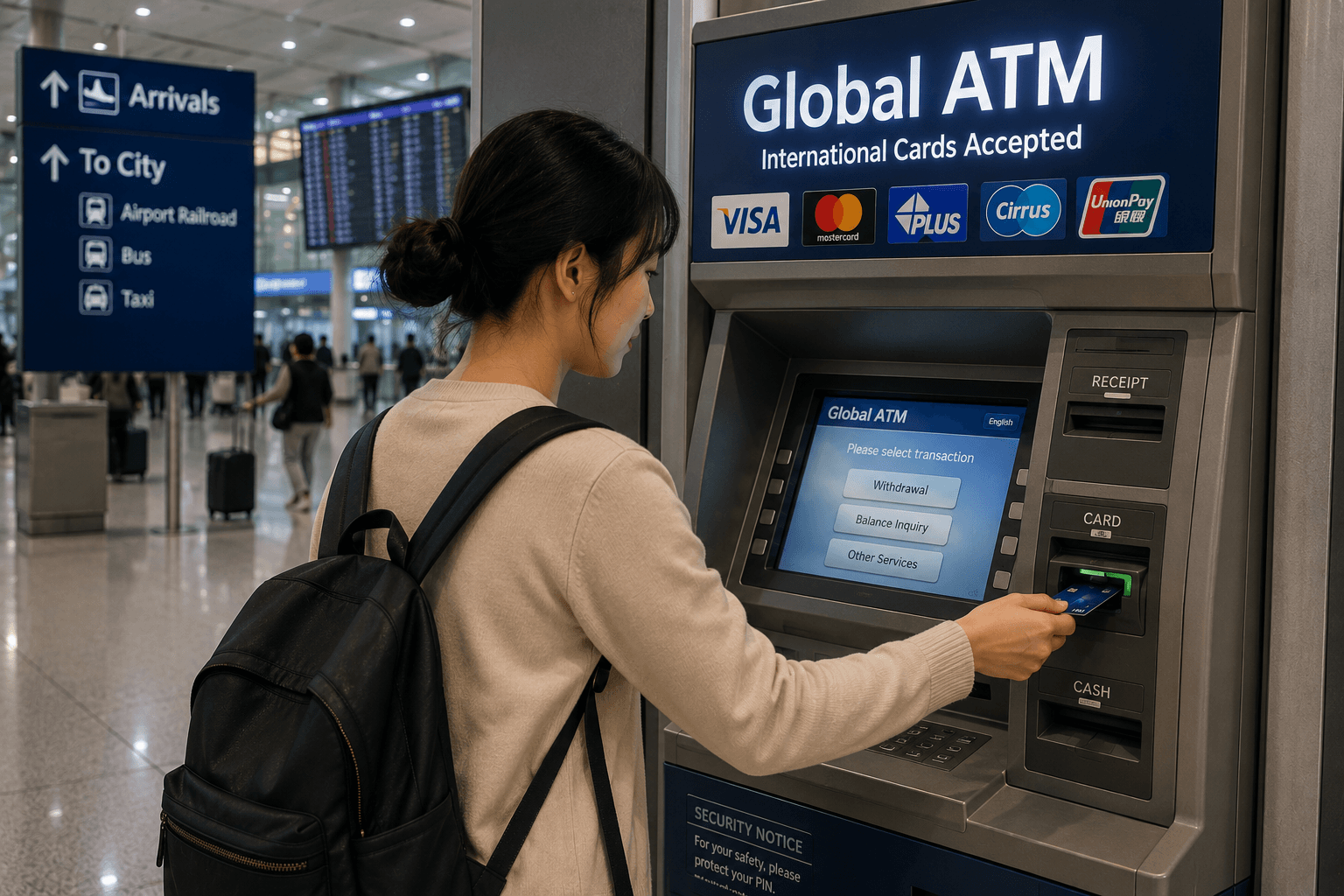
A Global ATM is an ATM that supports international cards.
In Korea, some ATMs are mainly designed for domestic cards, while others support foreign-issued cards. Tourists should look for Global ATM or international card signs before inserting a card.
A Global ATM may support:
- Cash withdrawals
- Balance checks
- English menus
- International card networks
- Foreign card transactions
Not every machine with English menus will accept every foreign card, and not every ATM fee will be the same.
If one ATM does not work, do not panic. Try another bank, another machine, or an airport or convenience store ATM.
Korean ATMs can be oddly selective. Sometimes the machine is not rejecting you personally. It is just having a very specific day.
Best Places to Find ATMs in Korea
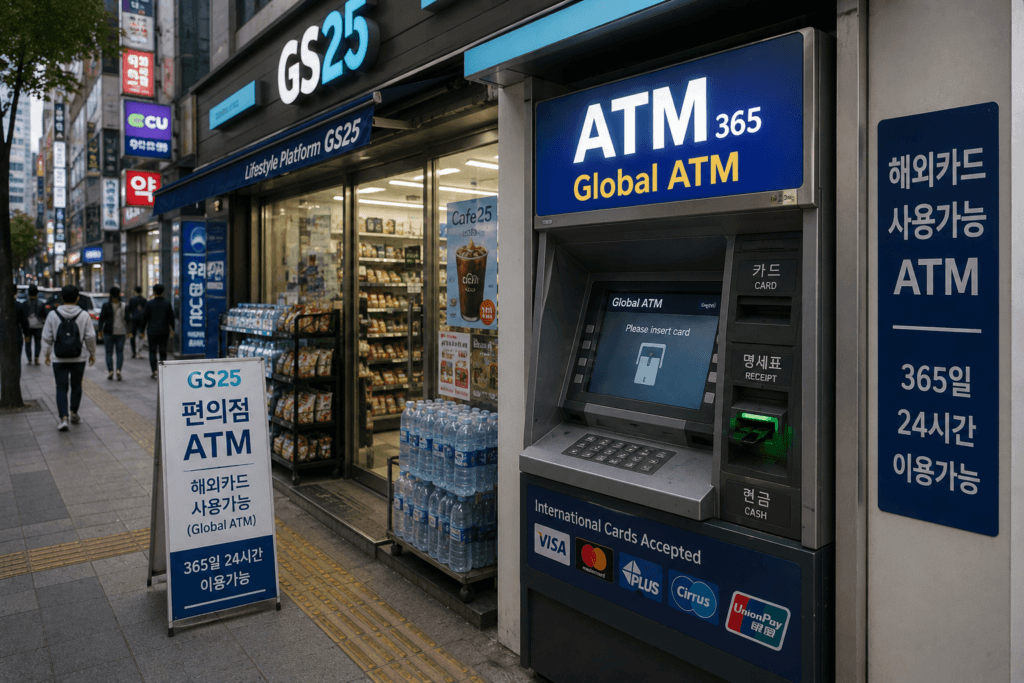
ATMs are easy to find in Korea, especially in cities.
The key is finding one that supports your card.
Incheon Airport
Incheon Airport is one of the easiest places to withdraw Korean won after arrival.
Both Terminal 1 and Terminal 2 have ATMs, bank branches, and exchange facilities. Some ATMs operate 24 hours, but exact locations and service times can vary.
Airport ATMs are useful for:
- First cash withdrawal after landing
- Emergency Korean won
- Transportation backup
- T-money recharge cash
- Small arrival expenses
If you arrive late at night, check airport ATM and exchange options before departure.
For arrival planning, read How to Get from Incheon Airport to Seoul and Korea Airport Bus Guide 2026.
Major Banks
Major Korean banks often have ATMs that support international cards.
Common banks include:
- KB Kookmin Bank
- Shinhan Bank
- Hana Bank
- Woori Bank
- NH NongHyup Bank
- IBK Industrial Bank of Korea
Bank ATMs are usually reliable and may offer English menus. They are a good option during daytime travel in major districts.
If you are nervous about using an ATM, a bank branch can feel more reassuring than a random machine hidden in a corner.
Convenience Stores
Convenience store ATMs are very useful for travelers.
You can often find ATMs inside or near:
- CU
- GS25
- 7-Eleven
- emart24
Convenience stores are everywhere in Korea and many are open 24 hours.
This makes them helpful when you need cash at night, near your hotel, or while moving around the city.
However, fees and foreign card support can vary by machine. Look for international card symbols before using one.
Subway Stations and Train Stations
Some subway stations, major train stations, and transport hubs have ATMs.
These can be convenient if you are traveling by subway, KTX, or airport rail.
Useful locations may include:
- Seoul Station
- Yongsan Station
- Busan Station
- Major subway hubs
- Shopping-connected stations
For train travel, read Korea KTX Guide 2026.
Shopping Districts and Malls
Shopping areas often have ATMs, especially near department stores, malls, and tourist zones.
You may find ATMs around:
- Myeongdong
- Hongdae
- Gangnam
- Dongdaemun
- COEX
- Jamsil
- Department stores
- Duty-free shops
- Major shopping malls
If you plan to shop, read Seoul Shopping Guide 2026, Olive Young Guide 2026, and Korea Tax Refund Guide 2026.
How to Use a Korean ATM
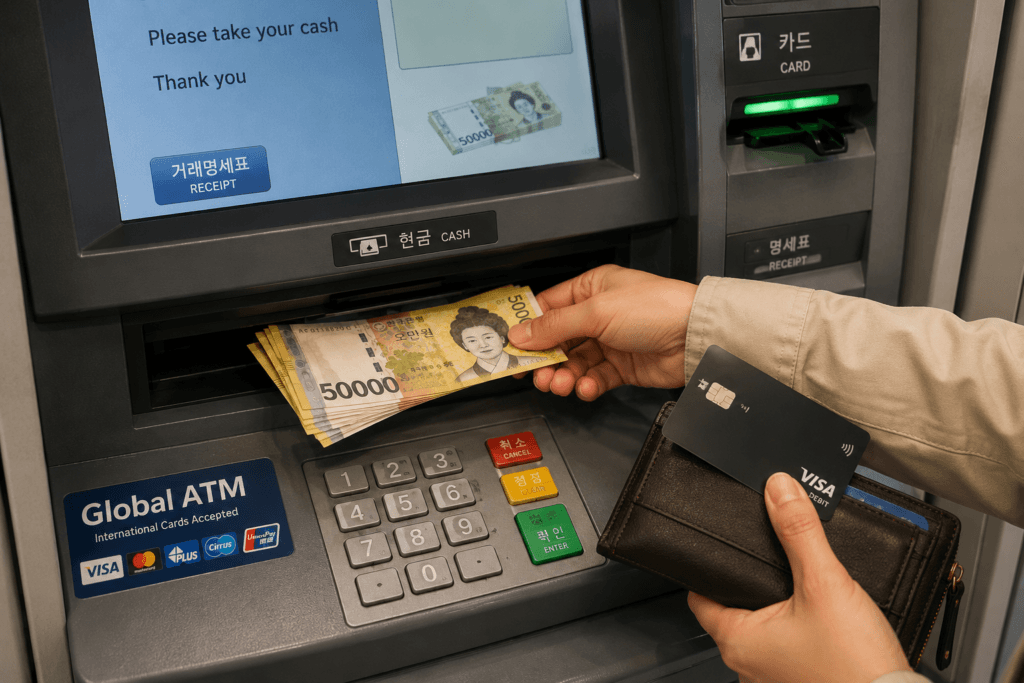
Most international ATMs in Korea follow a similar process.
The exact wording may vary, but the basic steps are usually:
- Insert your card.
- Choose English or another language.
- Select foreign card, global card, or international card if shown.
- Choose withdrawal.
- Select account type, usually checking, savings, debit, or credit.
- Enter your PIN.
- Enter the amount in Korean won.
- Review fees and conversion options.
- Choose KRW/local currency if offered a currency choice.
- Confirm the transaction.
- Take your cash, card, and receipt.
Always wait until your card is returned before walking away.
That sounds obvious, but travel fatigue has a talent for stealing common sense and hiding it behind the baggage carousel.
Understanding ATM Fees in Korea
ATM fees can vary.
You may pay:
- Korean ATM operator fee
- Your home bank’s overseas ATM fee
- Foreign transaction fee
- Currency conversion markup
- Dynamic currency conversion markup if you choose your home currency
The Korean ATM fee is usually shown before you confirm the withdrawal.
Your home bank fee may not appear on the ATM screen. It may show later in your bank account.
Before your trip, check your bank’s foreign ATM policy. Some travel-friendly cards refund ATM fees or charge lower international fees.
If your bank charges a fixed ATM fee per withdrawal, it may be better to withdraw a reasonable amount at once rather than making many tiny withdrawals.
But do not withdraw too much. Korea is card-friendly, and unused cash can become a small souvenir you did not want.
KRW or Home Currency: Which Should You Choose?
Some ATMs may ask whether you want to be charged in Korean won or your home currency.
This is called dynamic currency conversion.
In many travel situations, choosing the local currency, Korean won, is usually better because your card issuer handles the conversion instead of the ATM provider.
If the screen offers:
- Charge in KRW
- Charge in your home currency
Many experienced travelers choose KRW.
However, always review the screen carefully. Fees, exchange rates, and card terms can vary.
A useful rule:
If the ATM offers to “guarantee” a rate in your home currency, be cautious. That convenience may come with a worse exchange rate.
When in doubt, choose Korean won and let your bank or card provider handle the conversion.
How Much Cash Should Tourists Withdraw?
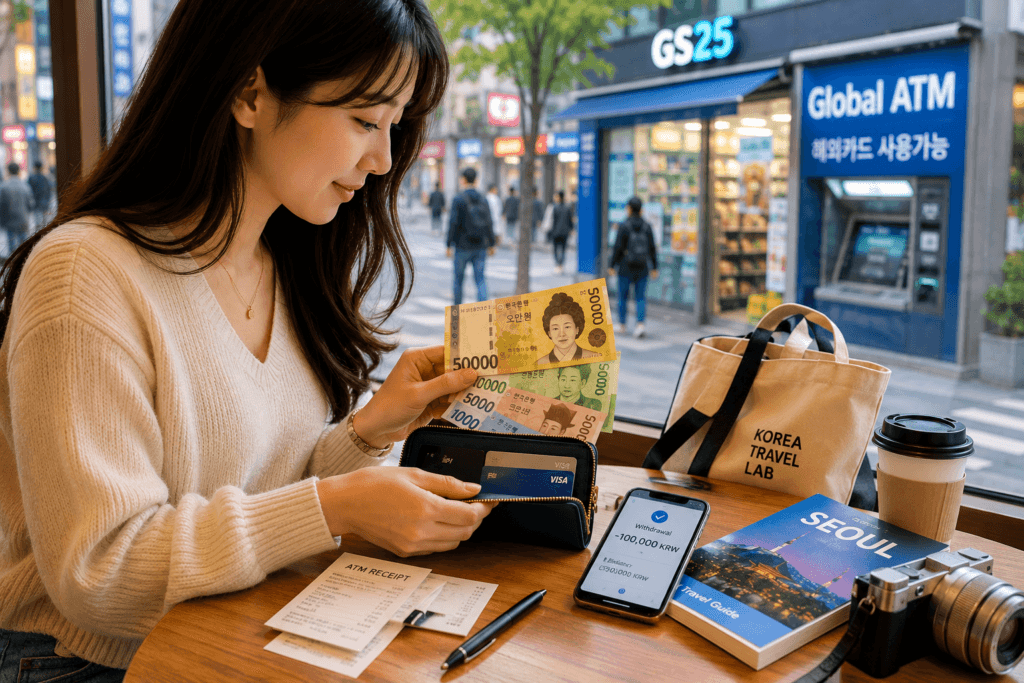
Most visitors do not need much cash.
For a short trip, withdrawing 50,000 to 100,000 KRW is usually enough to start.
This can cover:
- Street food
- Market purchases
- T-money recharge
- Small local vendors
- Emergency taxi backup
- Small cash-only situations
If you are staying mainly in Seoul and using cards, start small.
If you plan to visit markets, food stalls, rural areas, or smaller cities, you may want a little more cash.
Avoid withdrawing several hundred thousand won on your first day unless you know you will use it.
A wallet full of unused bills on departure day is not a crisis, but it does lead to one final convenience store spending spree that no one planned.
When Will You Actually Need Cash?
Cash is most useful in places where small, fast payments are common.
You may need cash at:
- Gwangjang Market
- Namdaemun Market
- Street food stalls
- Local markets
- Small family-run restaurants
- Small souvenir vendors
- Some festivals
- Some rural shops
- T-money recharge machines
- Emergency transportation situations
If you plan to eat your way through markets, bring small bills.
For market and food planning, read Gwangjang Market Travel Guide 2026, Namdaemun Market Travel Guide 2026, and Best Korean Street Food Guide 2026.
Airport ATM vs Exchange Counter
At the airport, you may wonder whether to exchange money or use an ATM.
Both can work.
Airport ATM
Airport ATMs are convenient if your foreign debit card works well and your bank fees are reasonable.
They are useful for withdrawing a small amount of Korean won after arrival.
Exchange Counter
Exchange counters can be useful if you already have foreign cash, want human assistance, or prefer not to use your card immediately after arrival.
However, exchange counter rates and hours can vary by bank and location.
For many travelers, the easiest approach is:
Bring a small backup amount, withdraw a little cash at the airport if needed, then use cards for most spending.
Read Korean Currency Guide 2026 for more cash and exchange basics.
ATM Withdrawal vs Money Exchange
ATMs and exchange counters serve different travel styles.
Use ATMs if:
- You prefer withdrawing cash as needed
- You have a low-fee debit card
- You do not want to carry foreign cash
- You want convenience in cities
- You are comfortable using machines
Use exchange counters if:
- You brought cash from home
- You want to exchange a set amount
- Your ATM card has high fees
- You prefer human assistance
- Your card is not working
There is no single best method for every traveler. The best option depends on your bank fees, exchange rates, card reliability, and comfort level.
What to Do If Your ATM Card Does Not Work
Sometimes a foreign card does not work at a Korean ATM.
This can happen because:
- The ATM does not support international cards
- The card is blocked for overseas use
- The PIN is incorrect or incompatible
- Your bank flagged the transaction
- You reached a withdrawal limit
- The ATM network is temporarily unavailable
- The machine does not support your card network
- The card is a credit card and cash advance is restricted
Try these steps:
- Use a different Global ATM.
- Try a major bank ATM.
- Try an airport or convenience store ATM.
- Check whether international use is enabled.
- Contact your bank through its app or hotline.
- Try your backup card.
- Reduce the withdrawal amount.
- Check whether you are choosing the correct account type.
Do not keep forcing the same card into the same failing machine. That is how small problems become dramatic little banking operas.
Safety Tips for Using ATMs in Korea
Korea is generally safe, but basic ATM precautions still matter.
Use ATMs in:
- Airports
- Banks
- Shopping malls
- Convenience stores
- Well-lit public areas
- Busy tourist districts
Avoid using isolated machines late at night if you feel uncomfortable.
Safety tips:
- Cover your PIN
- Check for unusual card readers
- Do not accept help from strangers
- Keep your cash secure
- Take your card and receipt
- Use mobile banking to check transactions
- Store your backup card separately
- Do not withdraw more than you need
Keep receipts until the transaction appears correctly in your account.
ATM Tips for T-money Users
Many travelers need cash for T-money recharge.
T-money can be purchased and recharged at convenience stores and subway stations, but cash is still useful in many common situations.
If you plan to use public transportation often, keep some small bills ready.
Useful cash amounts for transport backup:
- 10,000 KRW
- 20,000 KRW
- 50,000 KRW
Do not wait until your T-money balance is nearly empty and you are rushing for the last train. That is when machines develop personality.
Read T-money Card Guide for Tourists in Korea and Seoul Subway Guide 2026 before your first ride.
Common ATM Mistakes Tourists Make
The first mistake is using the wrong ATM.
Look for Global ATM, international card signs, or card network logos.
The second mistake is withdrawing too much cash.
Korea is card-friendly, so most visitors do not need a large cash stash.
The third mistake is accepting home-currency conversion without checking the rate.
Choosing KRW is often better, but always read the screen carefully.
The fourth mistake is using only one card.
Bring a backup Visa or Mastercard if possible.
The fifth mistake is ignoring home bank fees.
Your bank may charge fees even if the Korean ATM fee looks small.
The sixth mistake is waiting until you are completely out of cash.
Withdraw a small backup amount before you need it urgently.
Finally, do not forget to take your card. The ATM will not chase you through Seoul waving it in the air.
Frequently Asked Questions
Can foreigners use ATMs in Korea?
Yes. Foreigners can use ATMs in Korea, but they should look for Global ATMs or machines that show Visa, Mastercard, Cirrus, Plus, or UnionPay signs.
Do all Korean ATMs accept foreign cards?
No. Some ATMs are mainly for Korean bank cards. Foreign visitors should use Global ATMs or international card-supported machines.
Where can I find Global ATMs in Korea?
You can often find them at airports, major banks, convenience stores, shopping malls, train stations, and tourist districts.
Can I use ATMs at Incheon Airport?
Yes. Incheon Airport has ATMs and bank facilities in both terminals. Some airport ATMs operate 24 hours, but locations and hours can vary.
How much cash should I withdraw in Korea?
Most short-term travelers can start with 50,000 to 100,000 KRW and withdraw more only if needed.
Should I choose KRW or my home currency at Korean ATMs?
In many cases, choosing KRW is better because your card issuer handles the conversion. Always review the ATM screen and fees before confirming.
Are convenience store ATMs reliable in Korea?
Convenience store ATMs are useful and easy to find, but international card support and fees can vary by machine.
Is it better to exchange money or use an ATM?
Both can work. ATMs are convenient if your card has reasonable fees. Exchange counters are useful if you bring foreign cash or prefer human assistance.
What should I do if my card does not work?
Try another Global ATM, use a major bank ATM, lower the withdrawal amount, check international card settings, contact your bank, or use a backup card.
Do I need cash if Korea is card-friendly?
Yes, a small amount is still useful for markets, street food, small vendors, T-money recharge, and emergencies.
Recommended Travel Services
These can help with money, connectivity, and arrival planning:
- Korea eSIM plans for travelers
- Korea SIM card options
- Private Incheon Airport transfer to Seoul
- Korea travel activities and tickets
- Seoul hotel deals for first-time visitors
Related Guides
Continue planning your Korea money setup with these guides:
- Cash vs Card in Korea 2026
- Korean Currency Guide 2026
- Korea Tax Refund Guide 2026
- Korea Travel Costs Guide 2026
- T-money Card Guide for Tourists in Korea
- Seoul Subway Guide 2026
- How to Get from Incheon Airport to Seoul
- Korea Airport Bus Guide 2026
- Gwangjang Market Travel Guide 2026
- Namdaemun Market Travel Guide 2026
- Best Korean Street Food Guide 2026
- Seoul Shopping Guide 2026
Final Thoughts
Using ATMs in Korea is usually simple once you know what to look for.
The key is to find Global ATMs or machines that clearly support international card networks such as Visa, Mastercard, Cirrus, Plus, or UnionPay.
Most travelers do not need to withdraw a large amount of cash. Korea is highly card-friendly, so 50,000 to 100,000 KRW is often enough as a starting backup for markets, street food, T-money recharge, and emergencies.
Bring more than one card, check your bank fees before departure, choose KRW when the ATM offers a currency choice, and avoid withdrawing more than you need.
With a good card, a little Korean won, and a backup plan, your travel money setup in Korea becomes much easier.
Your wallet stays light, your plans stay flexible, and the ATM becomes just another small tool instead of a tiny machine of suspense.