If you only have time to visit one traditional food market in Seoul, Gwangjang Market should be near the top of your list.
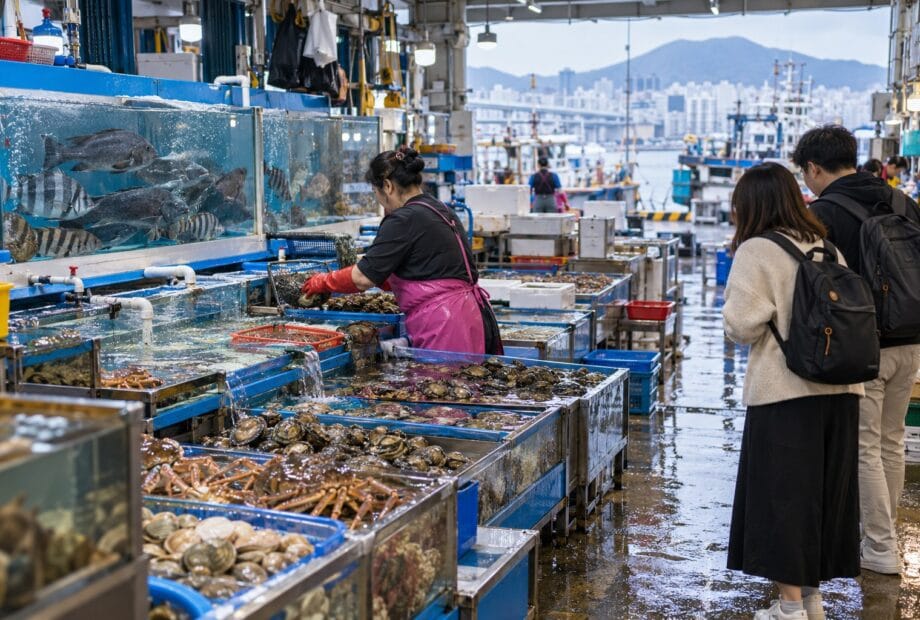
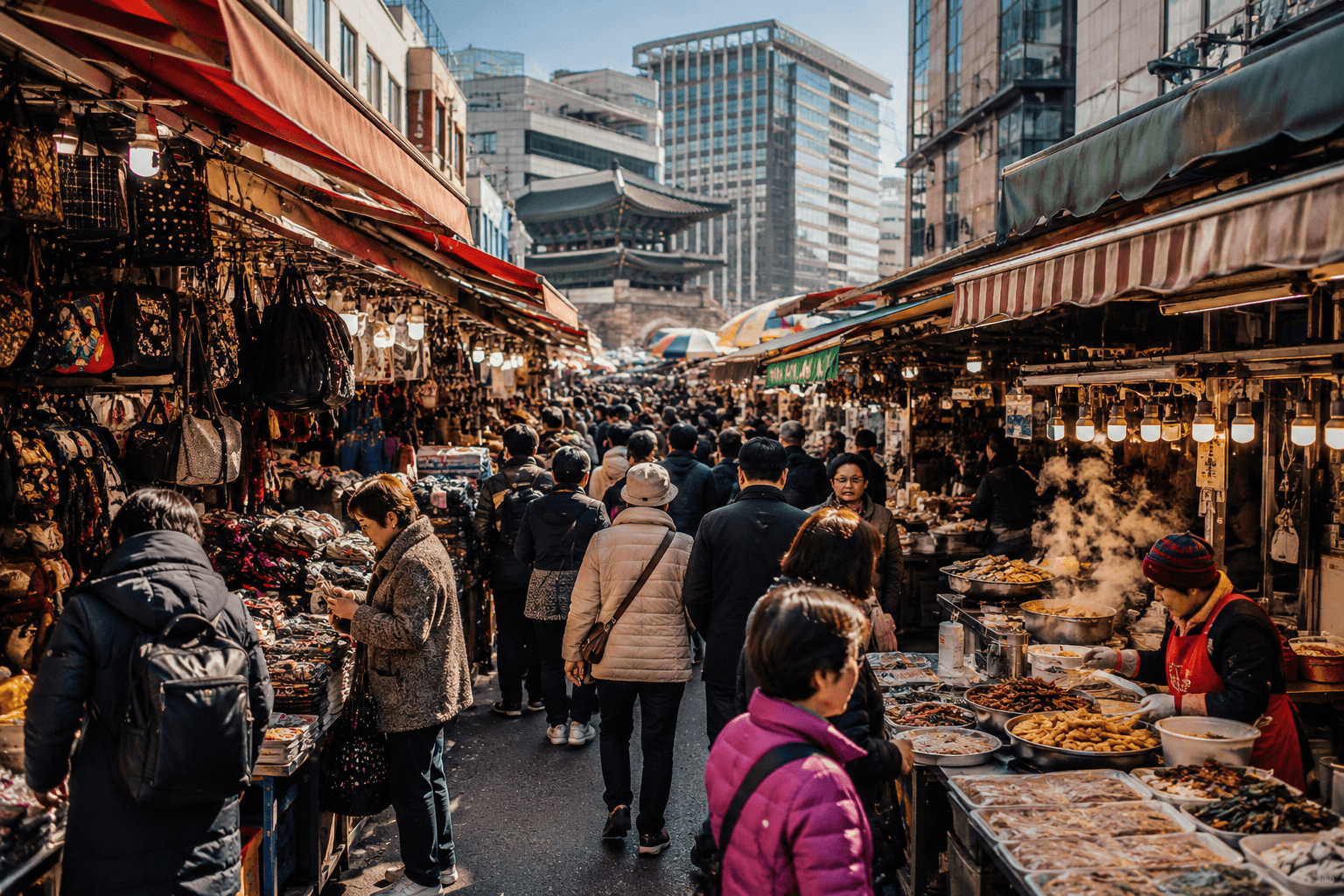
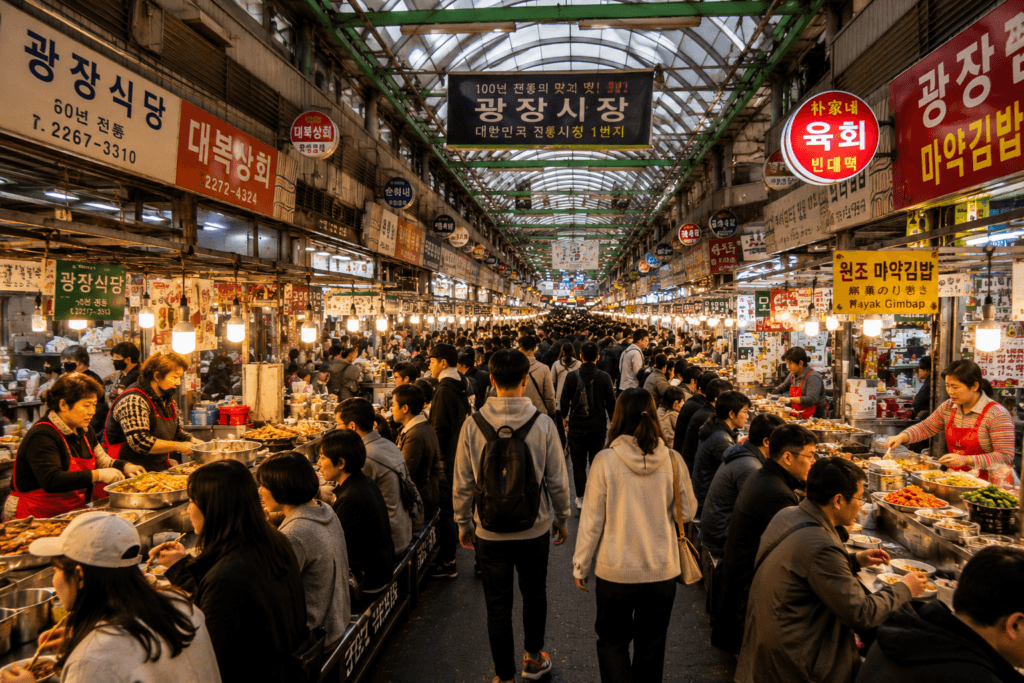
The market is loud, crowded, and full of energy. Long rows of food stalls sit side by side, each serving dishes that have made the market famous among both locals and international visitors.
What surprised me most was how difficult it was to choose what to eat. Every few steps I found another stall with a long line of customers, and each one seemed more tempting than the last.
I originally planned to stay for 30 minutes, but ended up spending almost two hours trying different foods and exploring the busy alleys.
Table of contents
What Is Gwangjang Market?
Opened in 1905, Gwangjang Market is recognized by Seoul and national tourism authorities as Korea’s first permanent market.
Located in Jongno, it is best known to travelers for its food alley, but it is not only a place to eat. The wider market also sells textiles, hanbok, bedding and household goods, while the second floor has vintage clothing shops.
For a first visit, food is still the easiest place to begin. It is also where a sensible plan to “just have one snack” usually becomes lunch.
My biggest piece of advice is simple: come hungry.
Why Visit Gwangjang Market?
Visitors come here to:
- Try authentic Korean street food
- Experience local market culture
- Eat famous dishes featured in travel shows
- Explore one of Seoul’s oldest markets
- Enjoy a lively atmosphere
- Sample multiple foods in one visit
Unlike many restaurants, the market allows visitors to try several different dishes from different stalls in a single visit.
Best Things to Eat at Gwangjang Market
Try Bindaetteok
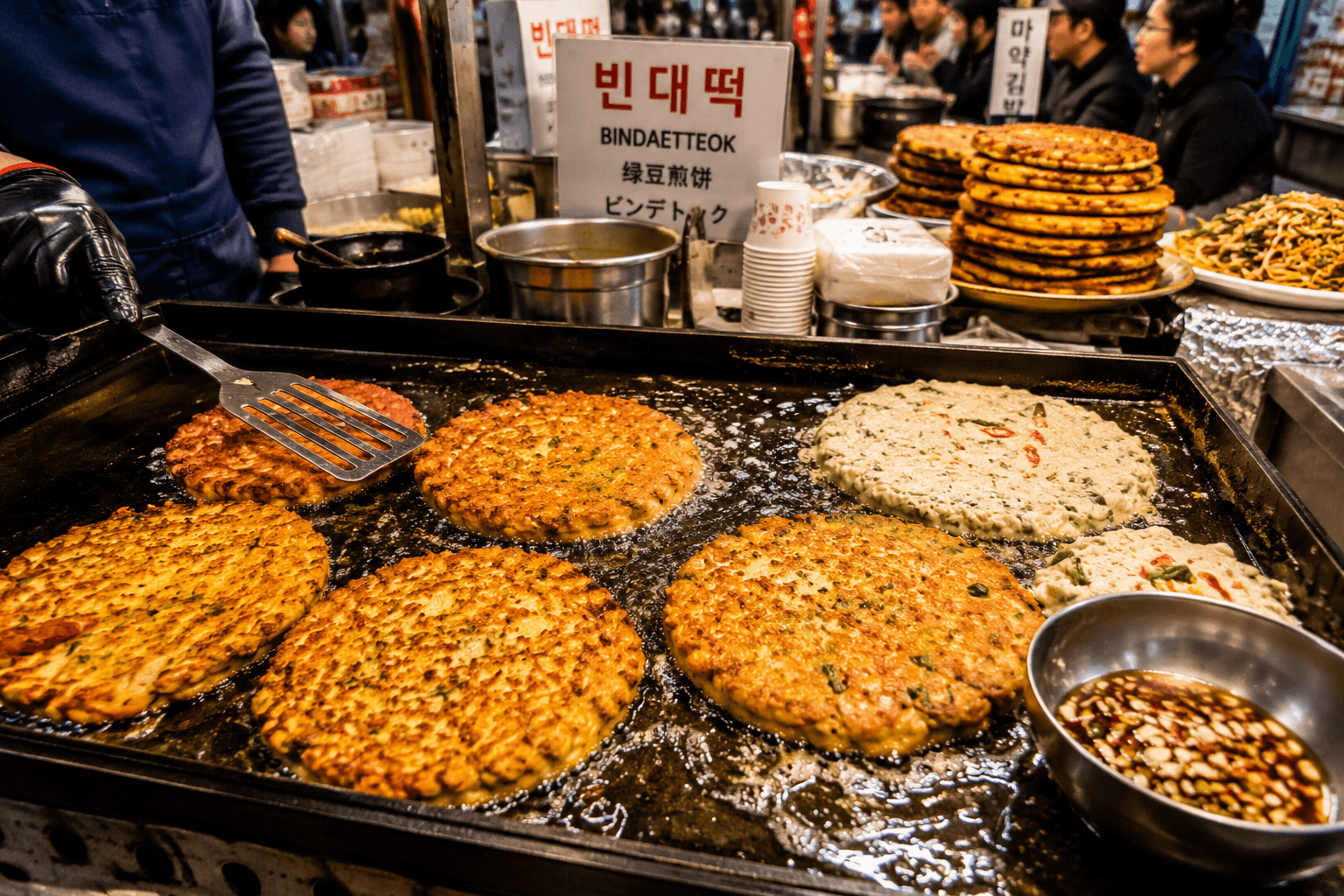
The crispy mung bean pancake, known as bindaetteok, remains one of the most famous foods at Gwangjang Market.
Freshly fried on large griddles, these savory pancakes are a must-try for first-time visitors.
Eat Mayak Gimbap
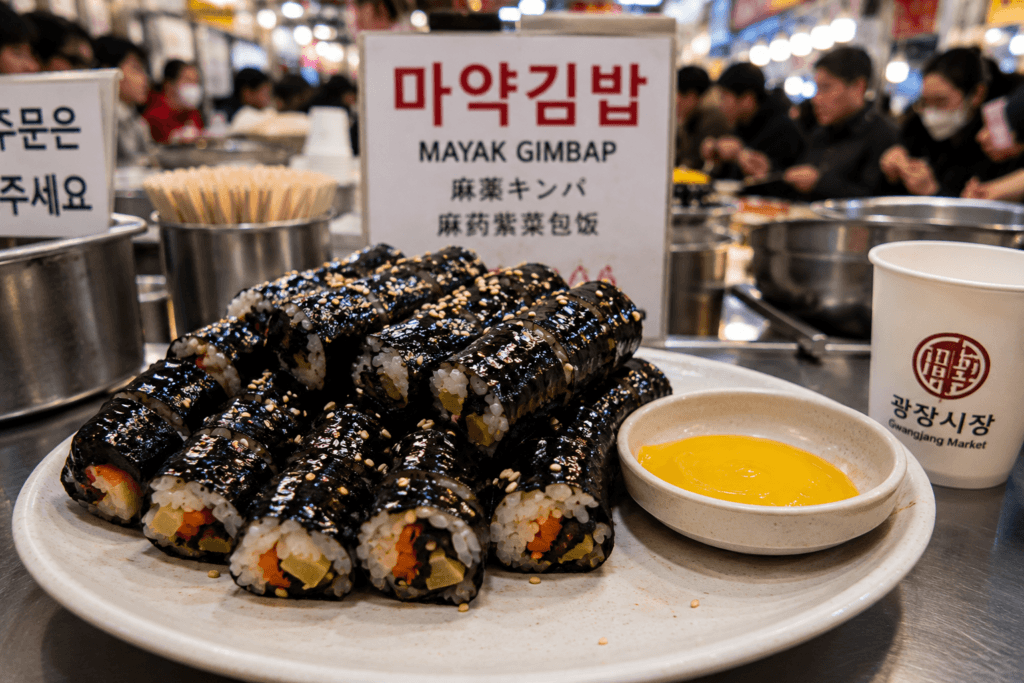
Mayak gimbap is a bite-size seaweed rice roll, usually served with a sharp mustard dipping sauce. Its Korean nickname refers to how moreish it is; English menus may translate it as “addictive gimbap.”
Order a small portion if you plan to taste several dishes. Portion strategy sounds overly serious until your third stall.
Experience Korean Beef Tartare
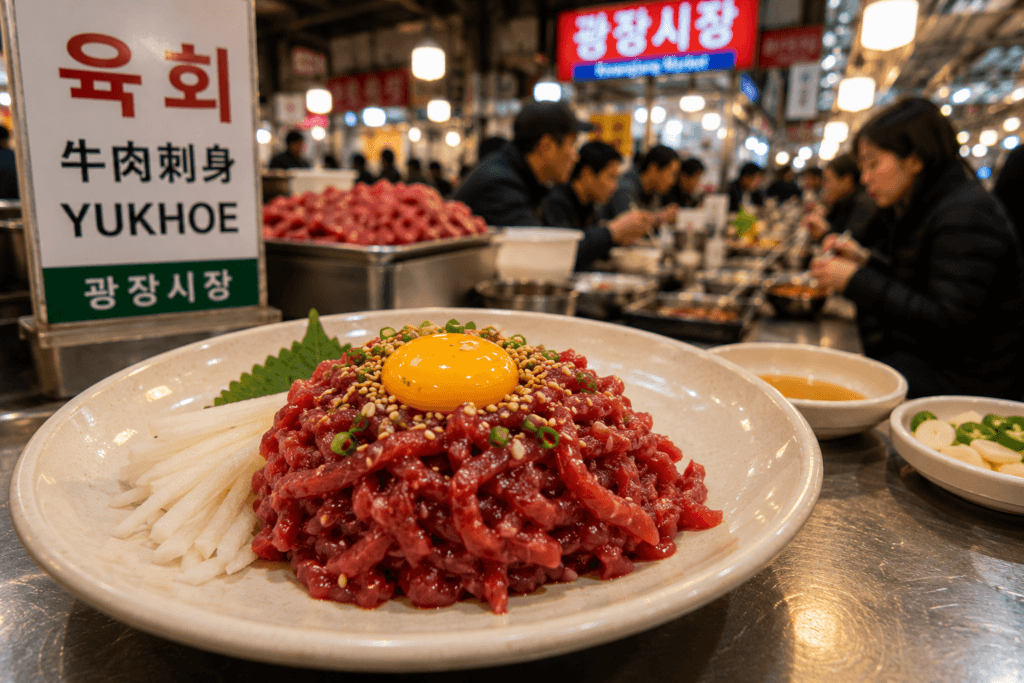
If you’ve never tried Korean beef tartare before, Gwangjang Market is one of the most popular places to experience it for the first time.
Known locally as yukhoe, this dish attracts both adventurous travelers and food enthusiasts.
Explore the Food Alleys
One of the best experiences is simply walking through the food sections and seeing what catches your attention.
The market feels alive with sizzling grills, busy vendors, and endless food options.
Why Gwangjang Market Feels Different
One thing I liked about Gwangjang Market was how easy it was to visit alone.
Many food stalls offer small portions, making it easy to try several different dishes in one visit.
Don’t be surprised if you’re asked to share a table with other customers during busy hours. It’s a normal part of the market experience and often adds to the atmosphere.
The market feels social, welcoming, and surprisingly easy to navigate, even for first-time visitors.
Opening Hours and Best Time to Visit
Market and Food Alley Hours
Official visitor information lists the general market at 9:00 AM–6:00 PM from Monday to Saturday, the vintage clothing section at 10:00 AM–7:00 PM from Monday to Saturday, and the food alley at 9:00 AM–11:00 PM daily. Individual stalls can keep different hours or take their own day off, so treat these as section hours rather than a promise that every counter will be open.
When the Food Alley Feels Best
Come around 11:00 AM for easier seating, or between noon and 2:00 PM for the full, noisy market atmosphere. Early evening works well for dinner, but famous counters can have queues. On Sundays, the food alley is listed as open year-round while the general and vintage sections are closed.
Spring and autumn are the easiest seasons for combining the market with a longer Jongno walk. In summer, the covered alleys can feel hot and close; in winter, a hot pancake becomes less of a snack and more of a survival plan.
How to Get to Gwangjang Market
The easiest route is Seoul Subway Line 1 to Jongno 5-ga Station, Exit 8; the market entrance is only a short walk away.
You can also use Euljiro 4-ga Station on Lines 2 and 5, Exit 4. This approach is convenient if you are walking along Cheonggyecheon.
Using a T-money card makes traveling around Seoul easy and convenient.
If you’re new to Seoul’s transportation system, check out our Seoul Subway Guide before your trip.
Most food stalls now accept card payments, although carrying a small amount of cash can still be helpful.
Nearby Attractions
Ikseon-dong
Many visitors explore Gwangjang Market for lunch before walking to Ikseon-dong for coffee and dessert.
The combination of street food, traditional alleys, and trendy cafes makes for an excellent day in Seoul.
Insadong
Known for traditional tea houses, art galleries, and Korean cultural experiences.
Gyeongbokgung Palace
One of Seoul’s most important historic landmarks and a must-visit destination for first-time travelers.
Many visitors combine all three destinations into a single itinerary.
Travel Tips for First-Time Visitors
- Come hungry, but order small portions if you want to try several stalls.
- Check the displayed menu and price before ordering; ask first if either is unclear.
- Cards are officially accepted, but carry a little cash for small stalls or a temperamental card terminal.
- Expect shared tables, close seating and quick turnover during busy periods.
- Ask before taking a close-up photo of a vendor or their customers.
- Yukhoe is raw beef. If raw food is not for you, choose a cooked dish without treating dinner like a bravery test.
- Explore beyond the viral stalls; the longest queue is not automatically the best lunch.
- Allow 90 minutes to two hours for eating and a short walk through the wider market.
Why Gwangjang Market Is Still Worth Visiting in 2026
Seoul continues to evolve, but Gwangjang Market remains one of the city’s most energetic food stops. It is popular with tourists and can feel very busy, yet the mix of working market stalls, regular customers and century-old market history gives it more depth than a themed food hall.
The combination of traditional recipes, local culture, and vibrant atmosphere continues to attract visitors from around the world.
Whether you’re trying bindaetteok, mayak gimbap, or yukhoe for the first time, the market offers a food experience that is difficult to find anywhere else.
Gwangjang Market or Namdaemun Market?
Choose Gwangjang when your priority is sitting at a food counter and sampling several classic dishes in one compact area. Choose Namdaemun Market for a broader shopping maze, household goods, children’s clothing and its own restaurant alleys. They are not duplicates: one is an easy food-focused stop in Jongno, while the other rewards shoppers who do not mind getting pleasantly lost.
Official Sources and Last Check
- Visit Seoul: Gwangjang Market — section hours, Sunday closures, address and subway access
- VISITKOREA: Gwangjang Market — operating hours, card acceptance and market facilities
- Jongno-gu: Gwangjang Market — market history and transportation
Last checked: September 13, 2026. Stall hours and holiday openings can change independently, especially around Seollal and Chuseok.
Final Thoughts
One of my favorite memories was sitting at a crowded food stall, watching plates of freshly cooked food pass by while listening to the constant buzz of conversation around me.
It wasn’t a polished tourist attraction or a carefully curated experience.
It felt real.
For travelers who want to experience Seoul through its food, Gwangjang Market remains one of the city’s most unforgettable destinations.