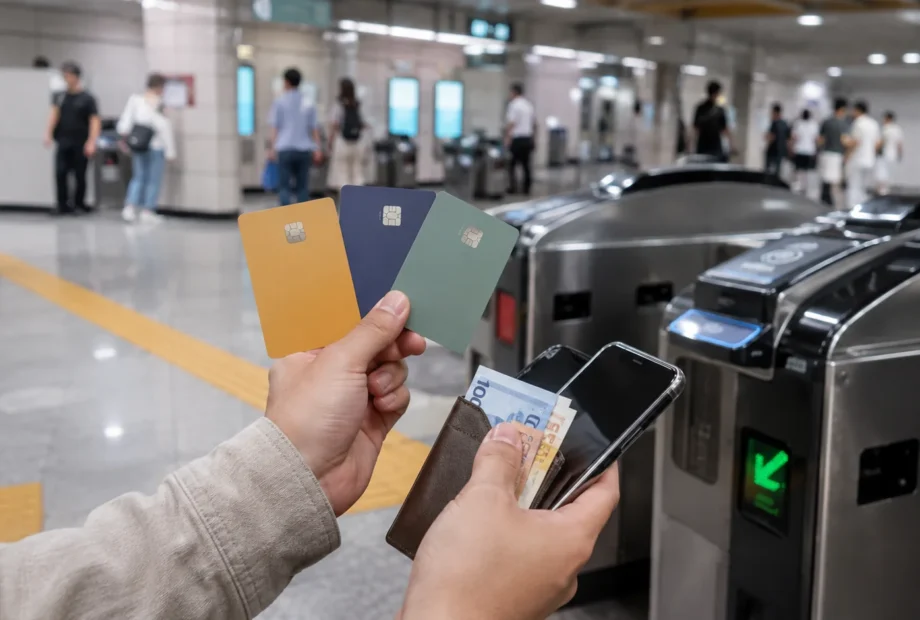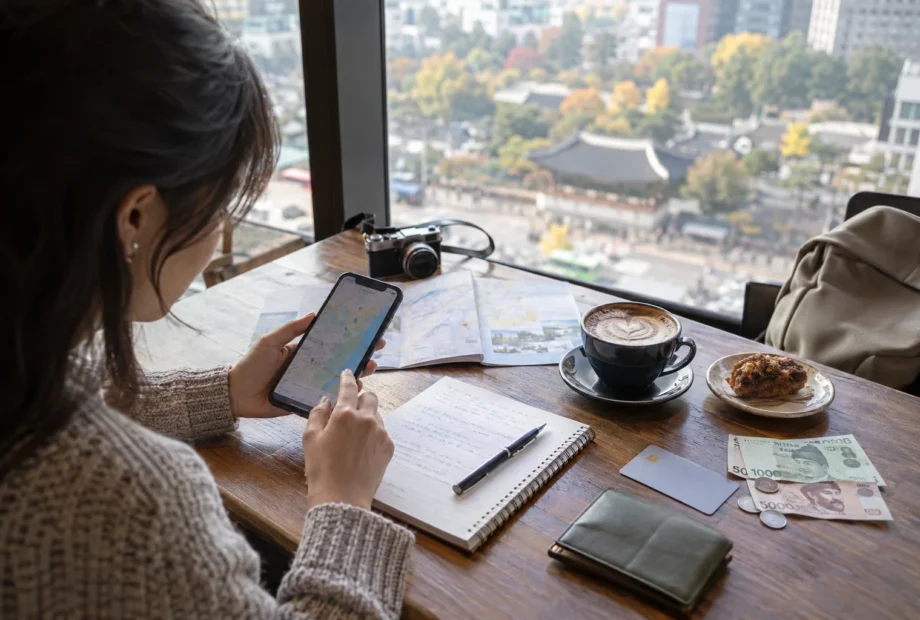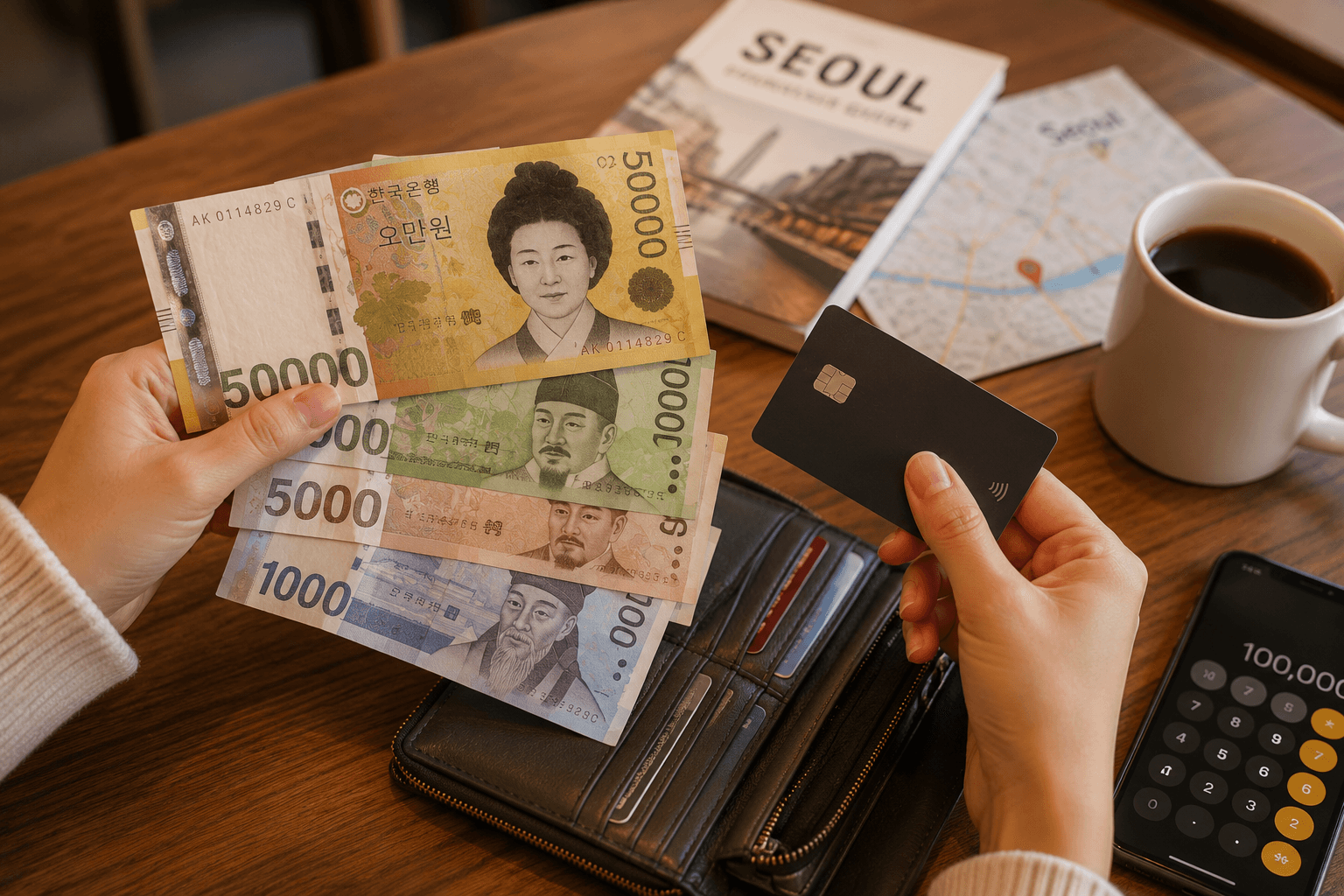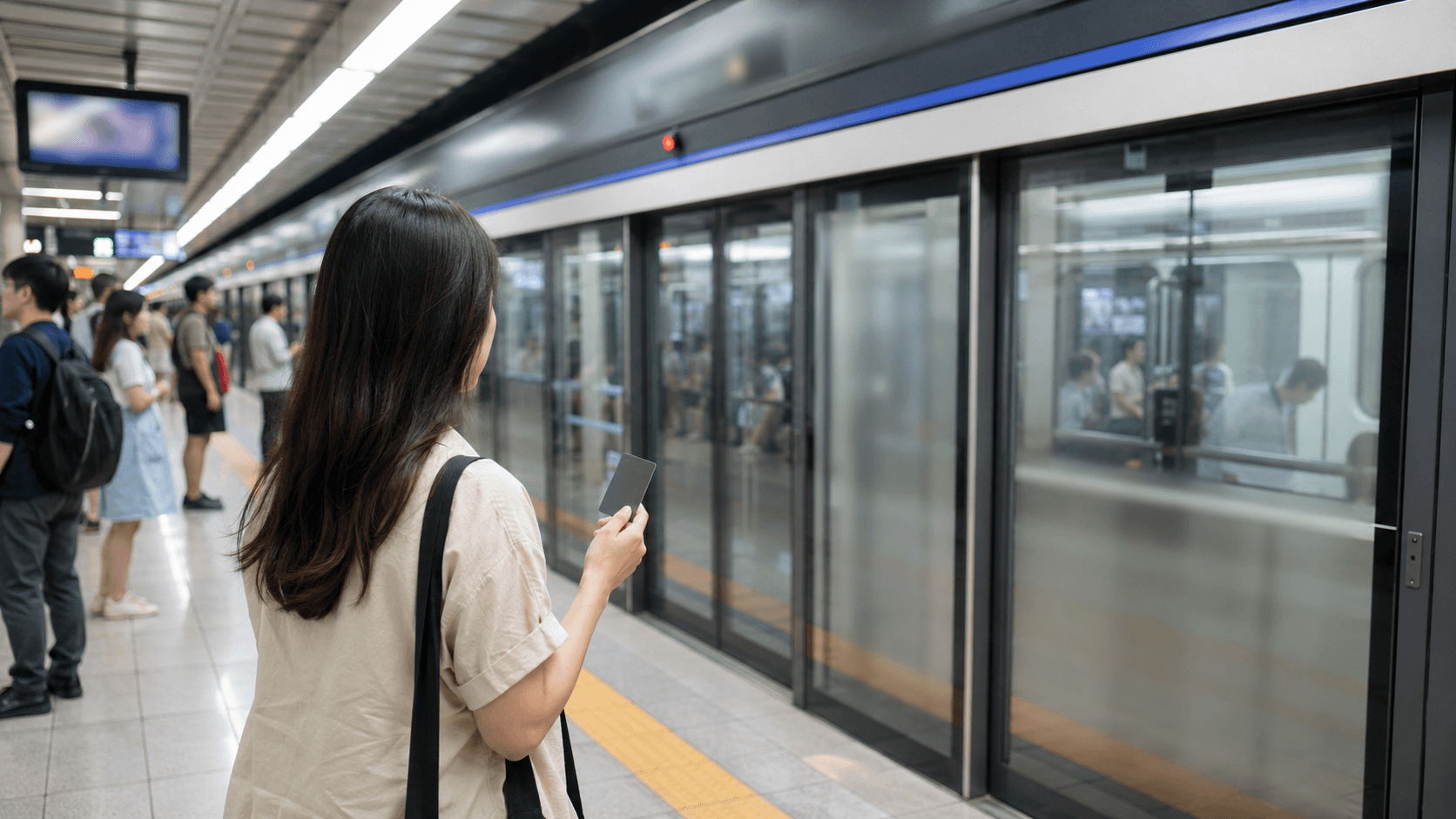
Seoul’s size can look intimidating on a map, but moving around the city is usually cheaper than first-time visitors expect.
The subway reaches most major sightseeing areas, buses fill the gaps between stations, and transfer discounts make it possible to cross the city without paying a new full fare every time. Unless your trip depends heavily on taxis, transportation is unlikely to become the largest part of your Seoul budget.
For a sightseeing day, ₩5,000–₩8,000 per adult is a useful planning allowance for ordinary local transit—not a measured tourist average or a guaranteed daily bill. A light sightseeing day may cost less, while a route that jumps between distant neighborhoods can push the total closer to ₩10,000 or more.
The real trick is not finding a secret discount. It is grouping nearby attractions together so that your itinerary does not zigzag across Seoul like a confused subway diagram.
Table of contents
How Much Should You Budget for Seoul Transportation?
Our planning allowances below exclude airport trips, card purchases and paid sightseeing transport such as a cable car. They are not official fare packages:
| Travel Style | Planning Allowance | Typical Schedule |
|---|---|---|
| Light sightseeing | ₩3,500–₩5,000 | Two or three short rides |
| Moderate sightseeing day | ₩5,000–₩8,000 | Several subway and bus rides |
| Busy exploration day | ₩8,000–₩12,000 | Longer distances and separate journeys |
| Taxi-heavy day | ₩20,000+ | Local transit plus taxis |
Use the middle allowance as a starting point, then adjust it to your actual route.
A day covering Gyeongbokgung Palace, Bukchon Hanok Village, Insadong, and Ikseon-dong may require only a few rides because the attractions are close together. A day connecting Hongdae, Seongsu-dong, Gangnam, and Dongdaemun will cost more and spend a noticeable amount of time underground.
For a complete daily spending plan, read How to Visit Seoul on $50 a Day.
Seoul Subway Fares
The Seoul subway is usually the easiest way to move between major neighborhoods.
The current adult base fare is:
| Payment Method | Adult Base Fare |
|---|---|
| Transportation card | ₩1,550 |
| Single-journey ticket | ₩1,650 |
The published Seoul subway fare guide was checked October 7, 2026. For arithmetic only, two / four / six independent adult journeys at ₩1,550 total ₩3,100 / ₩6,200 / ₩9,300. Distance supplements and special-service charges can increase that; an eligible transfer does not automatically count as another full fare.
The base fare covers the first 10 kilometers. Longer journeys cost more, with additional distance charges applied automatically. A 20% early-morning discount is available for the first card-paid ride before 6:30 AM.
A single-journey subway ticket also requires a refundable ₩500 card deposit. Keep that separate from the fare and return the ticket to the refund machine after exiting. Buying a new T-money card adds a separate purchase cost to your first day too.
The ₩100 difference between a transportation card and a single ticket may look small. Over several days, however, a card is faster, easier, and necessary for receiving integrated transfer discounts between eligible buses and subway services.
For station navigation, transfers, exits, and basic subway etiquette, read Seoul Subway Guide.
Seoul Bus Fares
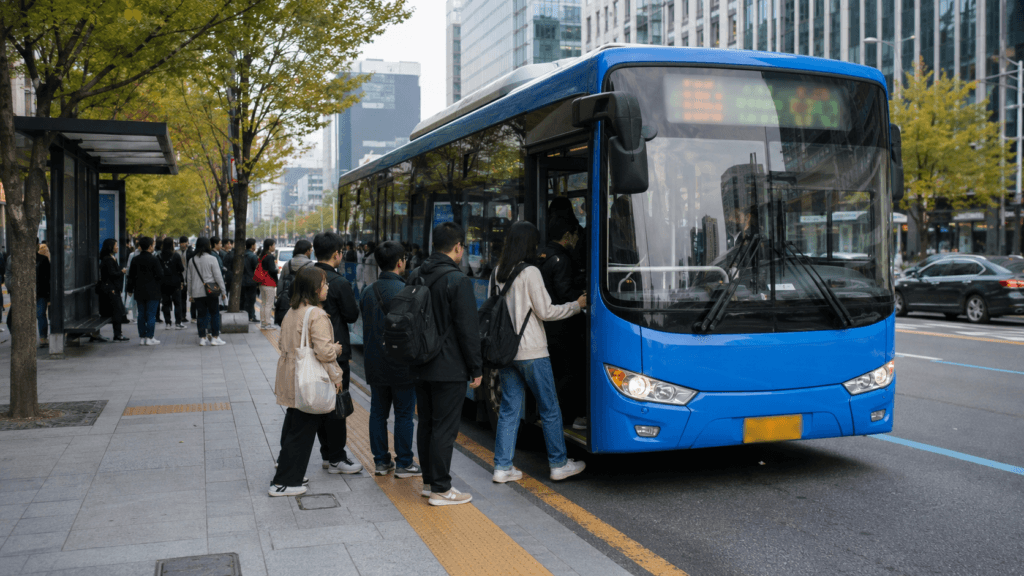
Seoul’s blue and green city buses are useful when a subway station is not close to your destination.
The standard adult fare for trunk and branch buses is ₩1,500 when using a transportation card. Local neighborhood buses generally cost ₩1,200, while late-night owl buses cost more. Red metropolitan buses connecting Seoul with surrounding cities have higher fares and should not be confused with ordinary Seoul city buses.
The official bus fare table distinguishes ordinary blue/green buses, local buses and owl buses. The ₩2,500 owl-bus fare is a Seoul city service price, not an Incheon Airport night-bus ticket.
Buses can be more difficult than the subway for a first visit because stop names and routes change quickly on the screen. They become much easier once you use a local map app and follow your location in real time.
Remember to tap your transportation card when getting off. This records the distance traveled and preserves any eligible transfer discount for your next ride.
T-Money Card: The Simplest Choice for Most Visitors
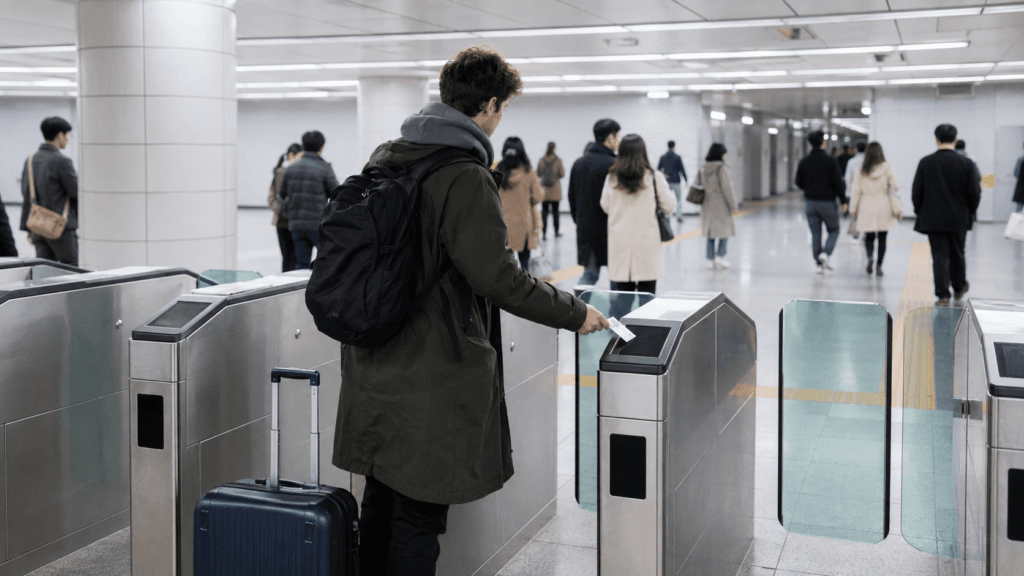
A T-money card remains the easiest option for travelers who want flexible transportation without calculating every journey in advance.
It can be used on Seoul subways, city buses, many regional transit services, and selected convenience-store purchases. The card must be loaded with Korean won before use.
Its biggest benefits are practical:
- No need to buy a separate ticket for every ride
- Lower subway fare than a single-journey ticket
- Bus and subway transfer discounts
- Faster entry through station gates
- Easy balance checks and recharging
Transfer discounts work only when you tap correctly when boarding and leaving. Eligible transfers generally need to happen within 30 minutes, extended to 60 minutes during the late evening and early morning period. The integrated system allows up to five connected boardings when the rules are followed.
A T-money card is especially suitable when:
- You expect to take three or four rides per day
- Your itinerary includes areas outside Climate Card coverage
- You are continuing to Busan, Gyeongju, Jeju, or other Korean destinations
- You want one reusable card rather than a fixed-duration pass
Read Korea T-Money Card Guide for buying, loading, and using the card.
Climate Card: Better for Transit-Heavy Days
Seoul’s Climate Card offers unlimited rides within its covered transportation network during the selected validity period.
Adult short-term prices in Seoul’s current tourist-pass guidance are:
| Pass | Price |
|---|---|
| 1 day | ₩5,000 |
| 2 days | ₩8,000 |
| 3 days | ₩10,000 |
| 5 days | ₩15,000 |
| 7 days | ₩20,000 |
A physical Climate Card costs an additional ₩3,000 and can be recharged for future use. The short-term passes cover eligible Seoul subway services and Seoul-licensed city and neighborhood buses, but exclude Sinbundang, GTX, intercity/airport buses and non-Seoul-licensed buses.
Coverage changed October 1, 2026. Check the current Seoul scope and both endpoints, not an older broad Gyeonggi map. Tourist short-term passes continue separately from the replaced monthly product. Validity starts on the charging date, not as a rolling 24-hour period; do not charge a one-day pass the night before sightseeing. See our Climate Card guide.
The Climate Card becomes attractive when your schedule includes many rides.
Four independent base-fare subway journeys total ₩6,200, so a ₩5,000 one-day pass can be cheaper if you already own the card. For a new buyer, the ₩8,000 card-plus-pass total exceeds that example. At ₩1,550 per journey, six independent journeys total ₩9,300; that clears the new-card cost before overseas-payment fees. Transfers, longer distances and other fare types change the comparison.
T-Money or Climate Card?
Choose T-money when:
- You take only a few rides each day
- You want the simplest flexible option
- Your journeys fall outside the Climate Card network
- You need a card for transportation elsewhere in Korea
Choose the Climate Card when:
- You expect to ride buses and subways frequently
- Your destinations fall within its service area
- You will use the card for several consecutive days
- You prefer a fixed transportation cost
Do not buy the Climate Card automatically just because it says “unlimited.” A carefully planned Seoul itinerary often involves more walking and fewer rides than expected.
A pass becomes less impressive when it spends the afternoon resting in your pocket.
A Useful 2026 Payment Update
According to Seoul’s March 17, 2026 announcement, international visitors can use eligible overseas credit and debit cards at hundreds of new Seoul subway vending machines to purchase and recharge short-term Climate Cards and buy single-journey tickets.
An average processing fee of about 3.7% applies to international card payments. T-money balance recharging should still be planned separately, since the international-card expansion specifically covers short-term Climate Cards and single-journey tickets through participating machines.
This makes arriving without Korean cash less stressful, but keeping a small amount of won remains useful for card purchases, recharging, older machines, and unexpected payment problems.
Typical Daily Transportation Costs
Light Sightseeing Day: ₩3,500 to ₩5,000
A light day might include:
- Myeongdong
- Namdaemun Market
- N Seoul Tower or Namsan
- Hotel return
Because these areas are relatively close, you may use the subway only two or three times and walk between several stops.
This is where accommodation location matters. Staying centrally can reduce both transportation costs and the number of times you have to climb out of a station the size of a small underground province.
Moderate Sightseeing Day: ₩5,000 to ₩8,000
A normal sightseeing day might connect:
- Gyeongbokgung Palace
- Bukchon Hanok Village
- Insadong
- Hongdae
- Han River
Most of the traditional Seoul stops can be explored on foot. The longer rides to Hongdae and the Han River increase the daily transportation total, but the cost remains manageable.
A T-money card is usually enough for this type of itinerary. A Climate Card can become worthwhile if you expect additional evening rides.
Busy Exploration Day: ₩8,000 to ₩12,000
A busy day might include:
- Hongdae
- Seongsu-dong
- Gangnam
- Dongdaemun
- Myeongdong
This route covers a large part of Seoul. Longer distances may trigger additional fare charges, and several independent journeys may make a covered pass worth comparing. Transfers alone do not prove a pass saves money.
The bigger problem is not only cost. It is travel time.
Spending an extra ₩2,000 on transportation is not disastrous. Spending three hours changing lines because every trending neighborhood was placed on the same day is harder to recover from.
Transfer Discounts Explained Simply
Seoul uses an integrated transportation fare system.
Instead of charging a completely separate base fare every time you change from subway to bus, the system calculates eligible connected trips together. Additional charges may still apply for distance or when changing to a more expensive form of transportation.
To receive the discount:
- Use the same transportation card throughout the journey.
- Tap when boarding.
- Tap when leaving, including when getting off a bus.
- Transfer within the permitted time.
- Do not attempt to transfer back onto the same bus route as though the card has forgotten you.
Transfers are generally allowed within 30 minutes, extended to 60 minutes between 9 PM and 7 AM. Up to four transfers, meaning five total boardings, may be included under the connected-fare rules.
The system sounds complicated on paper, but in practice the main rule is simple: tap every time and let the machine handle the calculation.
Incheon Airport Transportation Costs
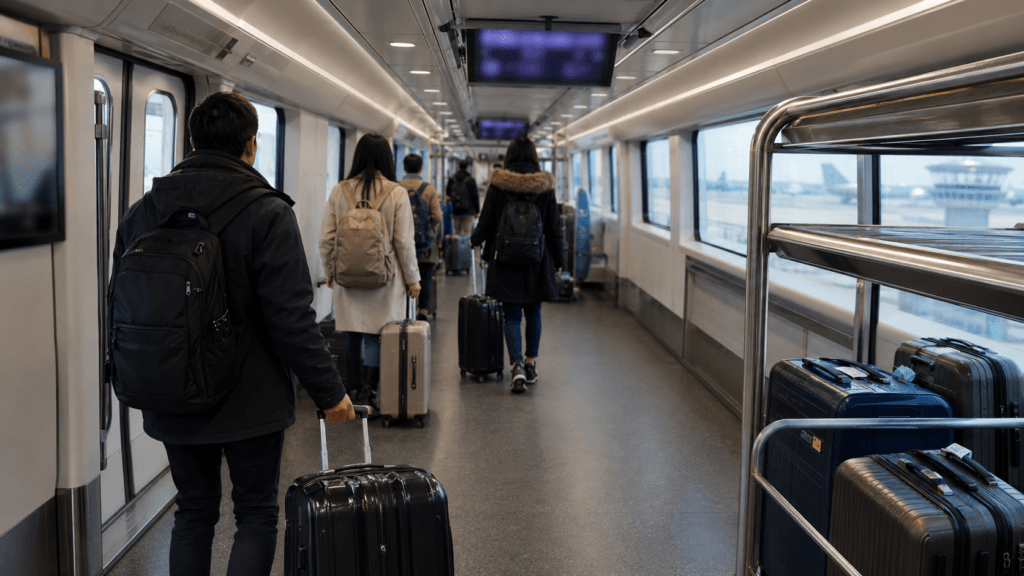
Your airport journey should be treated separately from your normal daily Seoul transportation budget.
The main choices are:
- AREX All-Stop Train
- AREX Express Train
- Airport limousine bus
- Regular or international taxi
- Private airport transfer
AREX All-Stop Train
The All-Stop Train connects Incheon Airport with stations including Gimpo Airport, Hongik University, Gongdeok, and Seoul Station.
It usually offers the strongest balance of affordability and access, especially if you are staying in Hongdae, Mapo, or near Seoul Station. The final fare depends on your terminal and destination, so check the current amount using the official AREX system before traveling.
This train feels similar to an ordinary subway. There are no reserved seats, and it can become busy, but it is difficult to beat for budget airport transportation.
AREX Express Train
The Express Train runs directly between Incheon Airport and Seoul Station with reserved seating and dedicated luggage space.
It costs more than the All-Stop Train and requires a separate ticket. T-money and ordinary Climate Card entry cannot be used for the Express service. It is most useful when speed, seating, and luggage comfort matter more than reaching Hongdae or another intermediate station.
Climate Card Airport Limitation
The Climate Card has an unusual airport rule.
It can be used to exit at Incheon Airport Terminal 1 or Terminal 2 after boarding within the covered network. However, it cannot be used to begin a journey at the airport terminals. This means it does not replace an arrival ticket from Incheon Airport into Seoul.
Airport Taxi
The designated International Taxi service publishes standard-vehicle Seoul airport zone fares of ₩70,000–₩95,000, checked October 7, 2026. This is a specific product, not the fare of every taxi at the airport. Confirm your address, vehicle, luggage capacity and final inclusions; do not automatically add a metered-taxi surcharge to a zone quote.
A taxi may make sense when:
- Several travelers can split the fare
- You arrive after public transportation has ended
- You have children or heavy luggage
- Your accommodation requires several difficult transfers
- Mobility or accessibility needs make rail travel inconvenient
For most solo budget travelers, the airport train is the more economical choice.
Read Incheon Airport to Seoul Guide for a full comparison.
Seoul Taxi Costs
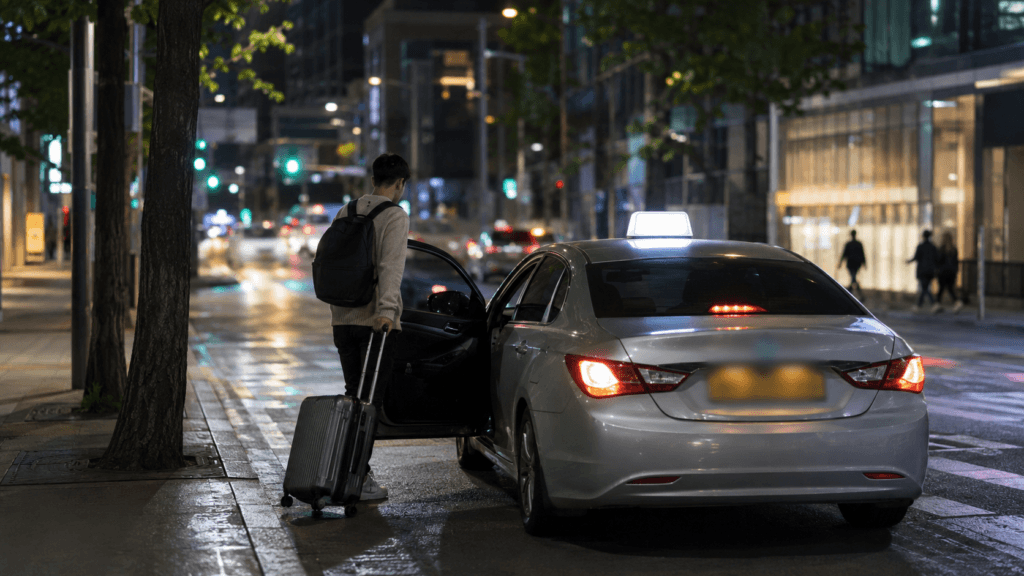
Regular Seoul taxis currently have a daytime base fare of ₩4,800 for the first 1.6 kilometers.
These are standard sedan meter rules from Seoul’s taxi fare guide. Deluxe, jumbo and app-branded products have different terms; a starting fare is not a hotel-to-hotel estimate.
Distance and time charges continue after the base portion. Late-night surcharges apply between 10 PM and 4 AM, with the highest surcharge period running from 11 PM to 2 AM. During that peak late-night window, the base fare rises to ₩6,700 and the meter increases more quickly.
This means a short daytime taxi ride may be affordable, but a longer journey through traffic or a late-night trip can cost much more than expected.
Rather than estimating every short ride as ₩8,000 to ₩15,000, it is more accurate to say:
- Very short daytime ride: often around the base fare or slightly higher
- Ordinary central Seoul ride: commonly around ₩8,000 to ₩20,000
- Long cross-city ride: potentially much higher
- Late-night journey: higher because of surcharges
- Airport journey: usually tens of thousands of won
These are planning ranges, not fixed prices. Traffic, distance, tolls, service type, and app pricing can all change the final amount.
When a Taxi Is Worth Using
A taxi can be a sensible choice when:
- The subway has stopped running
- You are carrying heavy luggage
- Several people can divide the cost
- The destination requires awkward bus transfers
- Weather makes walking difficult
- Saving an hour matters more than saving a few thousand won
The subway should usually be your default, not a rule you must obey under all circumstances.
Budget travel does not require dragging a suitcase up six flights of station stairs to prove a point.
Best Transportation Apps for Seoul
Google Maps can help with general location searches, but local apps usually provide more detailed public transportation routing in Korea.
Naver Map
Naver Map is useful for:
- Subway and bus routes
- Walking directions
- Live bus information
- Estimated travel times
- Station exits
- Nearby restaurants and attractions
KakaoMap
KakaoMap offers similar route planning and real-time transit information. Seoul’s official transportation guidance specifically recommends Naver Map and KakaoMap for shortest-route information, public transportation suggestions, and live bus tracking.
Taxi Apps
Foreign visitors can use several taxi-booking services. Check an app’s current language, payment and pickup support before relying on it. A fare estimate is not the same as a confirmed fixed price; keep the hotel’s Korean address and an official taxi-stand fallback.
Install at least one map app before arriving. Downloading it while standing outside a station with 4% battery is possible, but it gives the trip an unnecessary survival-game opening.
The Accommodation Mistake That Raises Transportation Costs
A cheap room is not always a cheap base.
A hotel that saves ₩10,000 per night may require:
- Additional bus rides
- Longer subway journeys
- Late-night taxi fares
- More transfers with luggage
- Less time for sightseeing
Location should be treated as part of your transportation budget.
For a first visit, areas such as Hongdae, Jongno, Myeongdong, Euljiro, Dongdaemun, and Seoul Station provide useful transport connections for different itineraries.
Hongdae is convenient for the airport railroad and western Seoul. Jongno is ideal for palace and traditional-neighborhood sightseeing. Myeongdong and Euljiro offer central access, while Dongdaemun connects several major subway lines.
Read Cheapest Areas to Stay in Seoul before choosing a hotel based only on the nightly price.
Compare the savings per room with transit fares per traveler—those are not interchangeable units.
Ways to Spend Less on Seoul Transportation
Group Attractions by Area
Visit Gyeongbokgung Palace, Bukchon, Insadong, and Ikseon-dong on the same day.
Combine Myeongdong, Namdaemun Market, Namsan, and N Seoul Tower.
Pair Hongdae with Yeonnam-dong, Mangwon Market, or the western Han River parks.
Combine Seongsu-dong with Seoul Forest and nearby eastern Seoul stops.
This reduces both fares and transit time.
Walk Between Nearby Neighborhoods
Central Seoul contains many walkable clusters.
You do not need to take the subway for every one-station journey. However, check the actual walking route first. Two locations may look close while a hill, river, highway, or enormous station complex quietly waits between them.
Use Taxis Strategically
A taxi shared by three or four people may be competitive with several individual transit fares, especially for a short late-night journey.
Check the Last Train
Missing the final subway can turn a ₩1,550 journey into a much more expensive taxi ride.
Train times vary by station, direction, and day, so check the route in a local map app before the system closes.
Choose the Right Card
T-money is best for flexibility.
A Climate Card is best for frequent covered rides.
Single tickets are best for travelers taking only one or two subway journeys and who do not need bus transfers.
Seoul Transportation Cost Comparison
| Transportation | Typical Starting Cost | Best Use |
|---|---|---|
| Subway with card | ₩1,550 | Most sightseeing routes |
| Subway single ticket | ₩1,650 | Occasional subway use |
| Standard Seoul bus | ₩1,500 | Areas between subway stations |
| Local neighborhood bus | ₩1,200 | Short local connections |
| Seoul city owl bus | ₩2,500 | Selected late-night routes |
| Climate Card, 1 day | ₩5,000 pass; ₩8,000 with new card | Multiple covered rides |
| Regular taxi | ₩4,800 base fare | Luggage, groups, late travel |
| Airport train | Varies by service and destination | Incheon Airport transfers |
| International airport taxi | ₩70,000–₩95,000 standard zone quote | Door-to-door airport transport |
Public transportation prices and coverage can change, so verify the latest information before your trip, especially for airport services and travel outside Seoul.
FAQ
Is public transportation expensive in Seoul?
Ordinary subway and bus travel can be inexpensive. We suggest ₩5,000–₩8,000 per adult as a planning allowance, not an official average. Calculate your own journeys, and add airport travel and new-card purchases separately.
Is a T-money card worth buying?
Yes. It lowers the subway base fare compared with single tickets, supports bus and subway transfers, and removes the need to purchase a separate ticket for every journey.
Is the Climate Card better than T-money?
It depends on how often you travel. The Climate Card can save money on days with many covered rides. T-money is more flexible and often better for lighter sightseeing days or trips extending outside the Climate Card network.
Can tourists use international credit cards at subway machines?
Since March 17, 2026, internationally issued cards have been accepted at participating new machines for short-term Climate Card purchases, recharging, and single-journey tickets. A processing fee may apply.
Can I explore Seoul without taking a taxi?
Yes. Most major attractions are connected by subway, bus, or a combination of public transportation and walking.
How much does a Seoul taxi cost?
Regular daytime taxis start at ₩4,800 for the first 1.6 kilometers. The final fare depends on distance, time, traffic, and late-night or out-of-city surcharges.
Can I use the Climate Card from Incheon Airport?
No. It cannot be used to board at Incheon Airport Terminal 1 or Terminal 2. It can only be used to exit there after boarding from within the eligible network.
Final Thoughts
Seoul’s transportation system makes the city surprisingly manageable for budget travelers.
The subway handles most long-distance sightseeing routes. Buses help with places located between stations. Transfer discounts keep connected journeys affordable, and a Climate Card can reduce costs further when your schedule involves frequent rides.
A ₩5,000–₩8,000 local-transit allowance per adult is a starting plan, not a ceiling. The total rises when you cross the city repeatedly, use premium transit services, or rely on taxis.
The easiest way to save money is also the easiest way to enjoy Seoul: plan by neighborhood.
Spend one day around the palaces and Jongno. Keep Myeongdong, Namdaemun, and Namsan together. Explore Hongdae with nearby western Seoul neighborhoods. Give Seongsu and eastern Seoul their own route.
A good Seoul itinerary does not need fewer places.
It needs fewer unnecessary train rides between them.
Sources and Budget Assumptions
Reviewed October 7, 2026 using official Seoul subway, bus, taxi and tourist-pass guidance linked above, plus International Taxi’s published zone guide. Day budgets are editorial planning allowances; journey totals are simple calculations, not measured visitor spending. This review did not test a payment, app, booking or trip. Verify airport rail fares with the operator before travel; no newly checked exact AREX fare is asserted here.