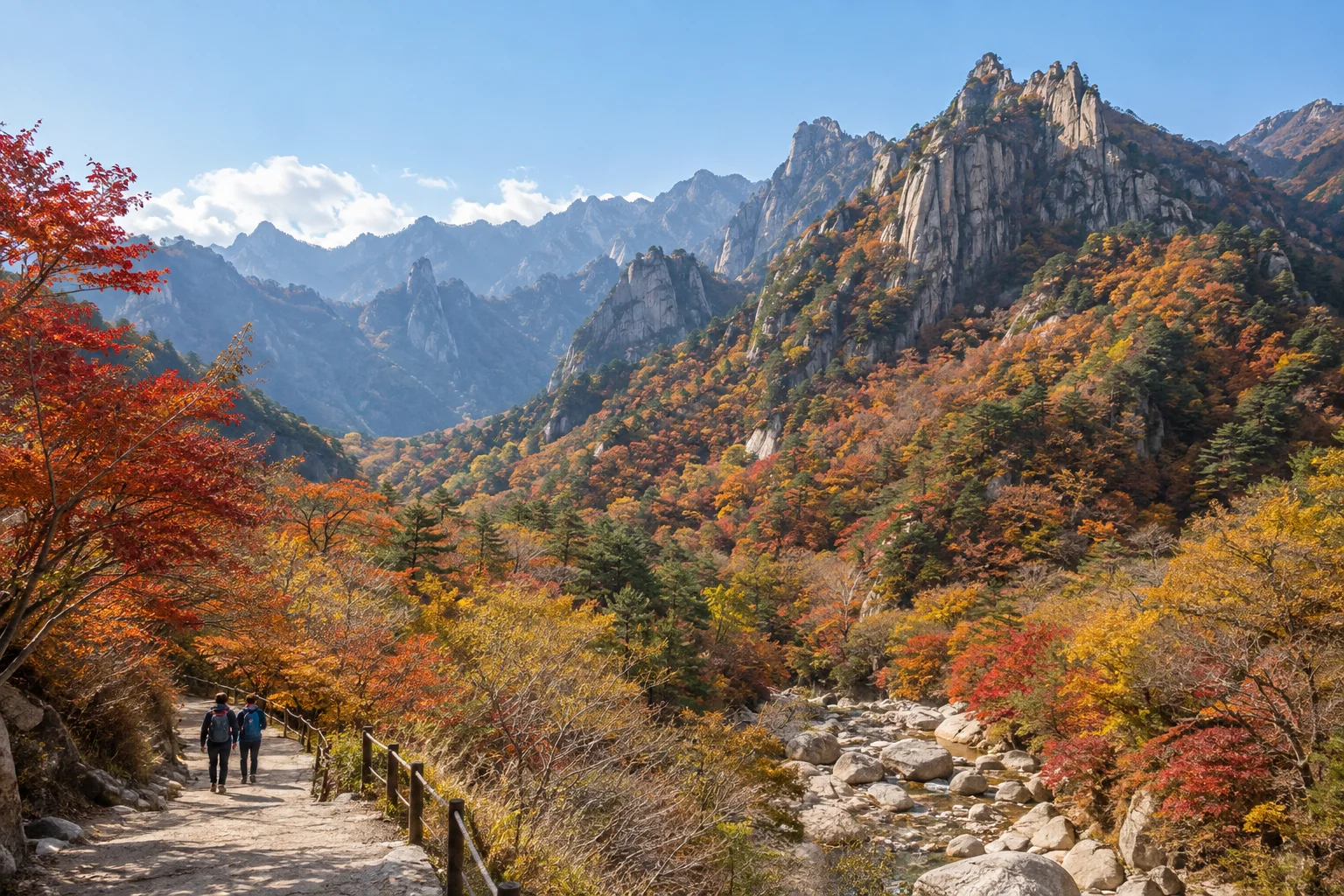
The hardest part of seeing autumn color at Seoraksan is not finding a red leaf. It is deciding how many hours to spend getting there, what to do when the cable car is unavailable, and whether a same-day return to Seoul leaves enough time for the mountain.
For 2026, the Korea Tourism Organization's forecast places first foliage at Seoraksan on October 3 and peak color around October 25. Those are planning markers, not reservations with nature. A cool week, warm spell, rain or strong wind can change the view. Color also moves downhill, so the upper slopes and the easy paths near Sogongwon may look different on the same afternoon.
This guide starts with the decision that matters most: a guided day trip from Seoul, an independent day trip by bus, or a night in Sokcho. Then it builds a park day that still works if the famous cable car has a long line—or does not run at all.
Table of contents
The 2026 Snapshot
| Question | Current answer |
|---|---|
| First Seoraksan foliage forecast | October 3, 2026 |
| Forecast peak | Around October 25, 2026 |
| Closest practical city | Sokcho |
| Seoul–Sokcho intercity journey | Roughly 2–3 hours in normal conditions, longer with traffic |
| Sokcho–Seoraksan local bus | Routes 7 and 7-1 serve the Sogongwon park entrance area |
| Cable-car ticket | On-site purchase only; no advance reservation |
| Cable-car adult round trip | KRW 16,000 as checked September 16, 2026 |
| Cable-car child round trip | KRW 12,000 for ages 37 months through elementary school |
| Best strategy near peak | Weekday morning or a Sokcho overnight |
The October 25 date comes from a September 8 forecast, not an observation of the mountain today. Check live color photos and weather again two or three days before traveling. Our broader Korea autumn foliage guide helps compare Seoraksan with later-peaking places if your Korea dates are fixed.
Choose the Trip Shape Before Booking Anything
Option A: Guided Day Trip from Seoul
Choose this if you have one free day, do not want to transfer at Sokcho, and are content with a fixed departure time. A bus takes you from Seoul to the park and back. You gain simplicity but lose control over how long you stay after a cable-car queue or a slow lunch.
Read a tour's actual time inside Seoraksan, not only its 12- or 13-hour total duration. Some products add Naksansa Temple, Sokcho Market or another stop. That may be a good combination, but every added stop subtracts park time. A product that gives you two hours at Sogongwon is not the right choice for the Ulsanbawi hike.
Affiliate disclosure: The booking links in this article are affiliate links. If you book through them, Korea Travel Lab may earn a commission at no extra cost to you. The route recommendations are based on what works for the trip.
For a no-transfer day, you can check the Seoraksan autumn day tour from Seoul on Klook. Verify 2026 date availability, meeting exit, cancellation terms and park time on the live listing. The linked product is seasonal; a visible product page does not guarantee a seat for every October date.
Option B: Independent Day Trip from Seoul
Choose this if you want to pick your own trail and are willing to manage two buses in each direction. It can work, but the first Seoul bus should be early and your return seat should already be booked.
The usual sequence is Seoul terminal → Sokcho terminal → local bus or taxi → Sogongwon. Sokcho has both an express bus terminal and an intercity bus terminal. They are not the same stop. Confirm which terminal your ticket names before searching for bus 7 or 7-1. Arriving at the wrong terminal is solvable; arriving with a 20-minute park plan is less so.
Allow at least 60–90 minutes between your planned return from Seoraksan and the intercity bus departure, more during peak foliage weekends. A full bus, road congestion or a queue at the park stop can consume the cushion. Public transport is the cheaper option, but it works best for travelers who treat the return bus as a fixed appointment.
Option C: One Night in Sokcho
This is the strongest choice if photography, an actual hike or flexible weather matters. Travel from Seoul on day one, eat in Sokcho and visit Seoraksan early the next morning. You get the quietest useful part of the day before the biggest tour-bus wave arrives.
It also creates a backup: if strong wind stops the cable car on your planned morning, you can walk a valley route or try again the next day before leaving. One night cannot control weather, but it stops a single weather update from controlling your entire trip.
Our Korea in October 2026 guide explains the wider holiday and festival calendar. Around forecast peak, reserve accommodation and Seoul–Sokcho bus seats sooner than you would for an ordinary weekday.
From Seoul to the Right Sokcho Terminal
There is no reason to route this trip through a distant rail station simply because “train” feels familiar. For most independent visitors, an intercity or express bus to Sokcho is the direct practical choice. Check the departure terminal in Seoul and the arrival terminal in Sokcho on the booking screen. Different services use different terminals.
Normal published journey estimates are roughly two to three hours. In autumn, the number that matters is the day-of travel time. Friday evening, a sunny Saturday morning or a holiday can stretch the road journey. Build the park day around a realistic arrival, not the best time shown on an empty-road map.
If you arrive in Sokcho the evening before, dinner near the beach, harbor or market is easy to fit in. Then set your morning alarm by the park bus schedule. Seoraksan is more compelling at 8:30 a.m. than your hotel breakfast buffet may want to admit.
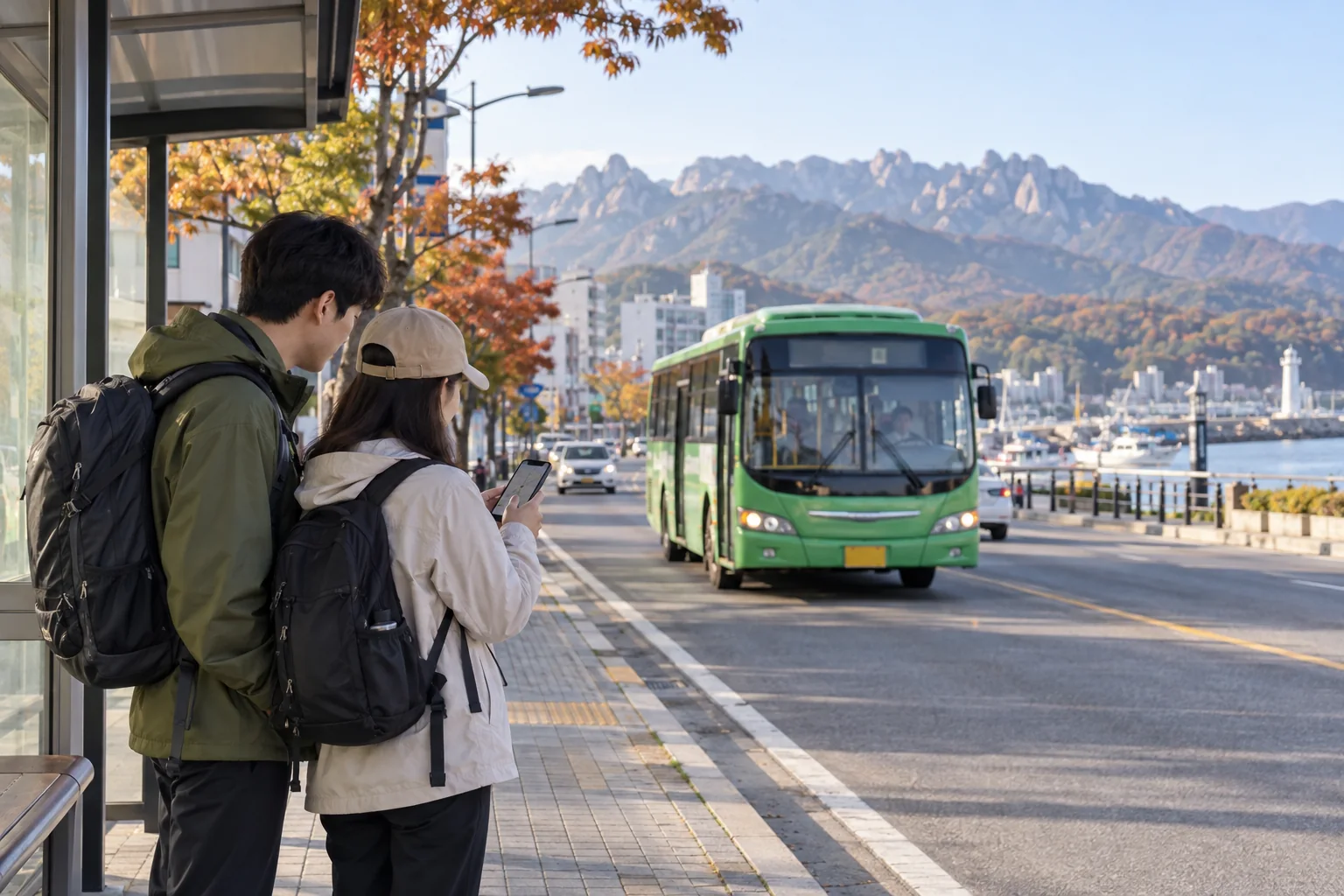
Sokcho to Sogongwon: Bus 7 or 7-1
The Seorak Cable Car operator's current directions identify Sokcho city buses 7 and 7-1. They pass the intercity terminal area, the express terminal area and several city stops before ending at the Seoraksan parking/entrance area near Sogongwon.
Use the Sokcho city bus information system or a Korean map app to check the stop and the live arrival time. The city's tourism transport page links to the 7/7-1 timetable. Printed schedules are useful for planning, but traffic through the valley can change real arrivals.
The practical sequence is:
- Save 설악산 소공원 or 설악산 주차장 in your map app.
- Check whether your accommodation is closer to the express or intercity terminal stop.
- Board bus 7 or 7-1 in the direction of Seoraksan, not the city return direction.
- Photograph or screenshot the return stop location before walking into the park.
- On a weekend, allow time for a bus that arrives full.
A taxi is a sensible alternative for a small group, especially for an early start or late return. Check the live fare in the app rather than relying on a fixed number in a blog post. With a taxi, ask for 설악산 소공원; “Seoraksan” alone names a very large national park.
The Cable-Car Decision: Make It at the Gate
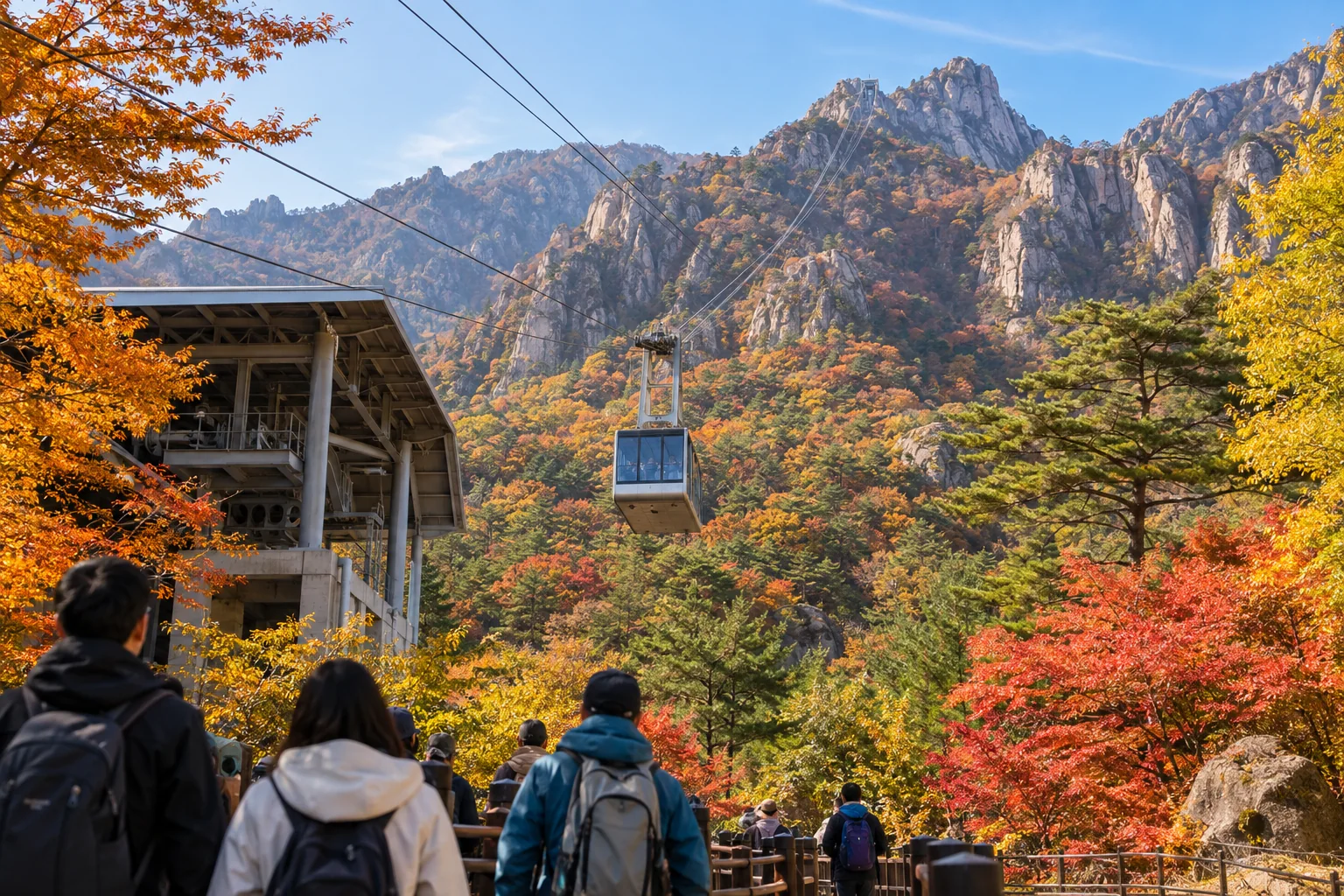
The Seorak Cable Car runs from Sogongwon to Gwongeumseong. The ride itself is about five minutes each way. That does not mean the experience takes ten minutes. You first walk from the park entrance to the lower station, buy a timed ticket on site, wait to board, and spend time at the upper viewpoint before riding down.
As of September 16, 2026, the operator lists KRW 16,000 for an adult round trip and KRW 12,000 for a child aged 37 months through elementary school. There are no one-way tickets. The operator says there is no walking descent route from the upper station, so keep your return cable-car ticket safe.
Most importantly, you cannot book the cable car in advance. The operator sells tickets on the day because wind and weather can change operations. Daily hours are posted on its own site and may change; do not print one generic “opening time” into your itinerary. Check the official Seorak Cable Car operations and fares page before leaving Sokcho and again when you reach the park.
At the lower station, ask two questions before paying: “What is the next boarding time?” and “Is the summit view clear?” If the wait is long and clouds cover Gwongeumseong, take a valley walk instead. The cable car is attractive, not compulsory. It should not quietly eat every usable hour of a Seoul day trip.
The operator notes that strong wind can suspend service, with an unused ticket refunded in that circumstance. It also warns that the final departure leaves little time at the top. Sunset hopes are not a substitute for the day's posted schedule.
Pick One Park Route, Not Three
Seoraksan rewards a simple choice. Sogongwon is a starting area for several routes, but their difficulty and time commitment differ enormously. Check the Korea National Park Service trail status on your visit day. Weather, maintenance and entry-time rules can close a trail even while the gate area remains busy.
Low-Effort Scenic Day: Sogongwon, Sinheungsa and a Valley Walk
This is the best fit for first-time visitors, families, cable-car hopefuls and guided-tour passengers with limited time. Walk from the entrance past the temple area and follow an open lower-valley trail as far as your schedule allows. You still get granite walls, stream crossings and changing leaves without turning a day trip into an endurance event.
Ask at the park information desk which easy trail is open and how far the return walk takes. Turn back when half your available time is gone, not when the scenery becomes less photogenic. The mountains are good at disguising the distance back to a bus.
Moderate-to-Longer Day: Biryong Falls or Biseondae Direction
Choose one of these only if the current trail is open and your footwear and time are appropriate. These routes give more time among valley scenery, but the extra distance competes directly with the cable car, lunch and a same-day Seoul return.
Use the park's course map for the exact route, distance and entry cutoff. Do not infer today's conditions from a trip report written in another season. Wet stone and leaf-covered steps deserve a slower pace than an app's optimistic walking estimate.
Serious Hike: Ulsanbawi
Ulsanbawi is the classic granite-view hike, but it is not a short photo detour. The climb includes sustained uphill sections and many steps. Start early, carry water and check the trail's current access and return time with the national park service. If you are taking a Seoul day tour with only a few free hours, this is usually the wrong itinerary.
The name “national park” does not mean every trail is interchangeable. A comfortable valley walk and an Ulsanbawi climb may begin near the same gate; they end in very different versions of your knees.
What the Forecast Date Actually Means
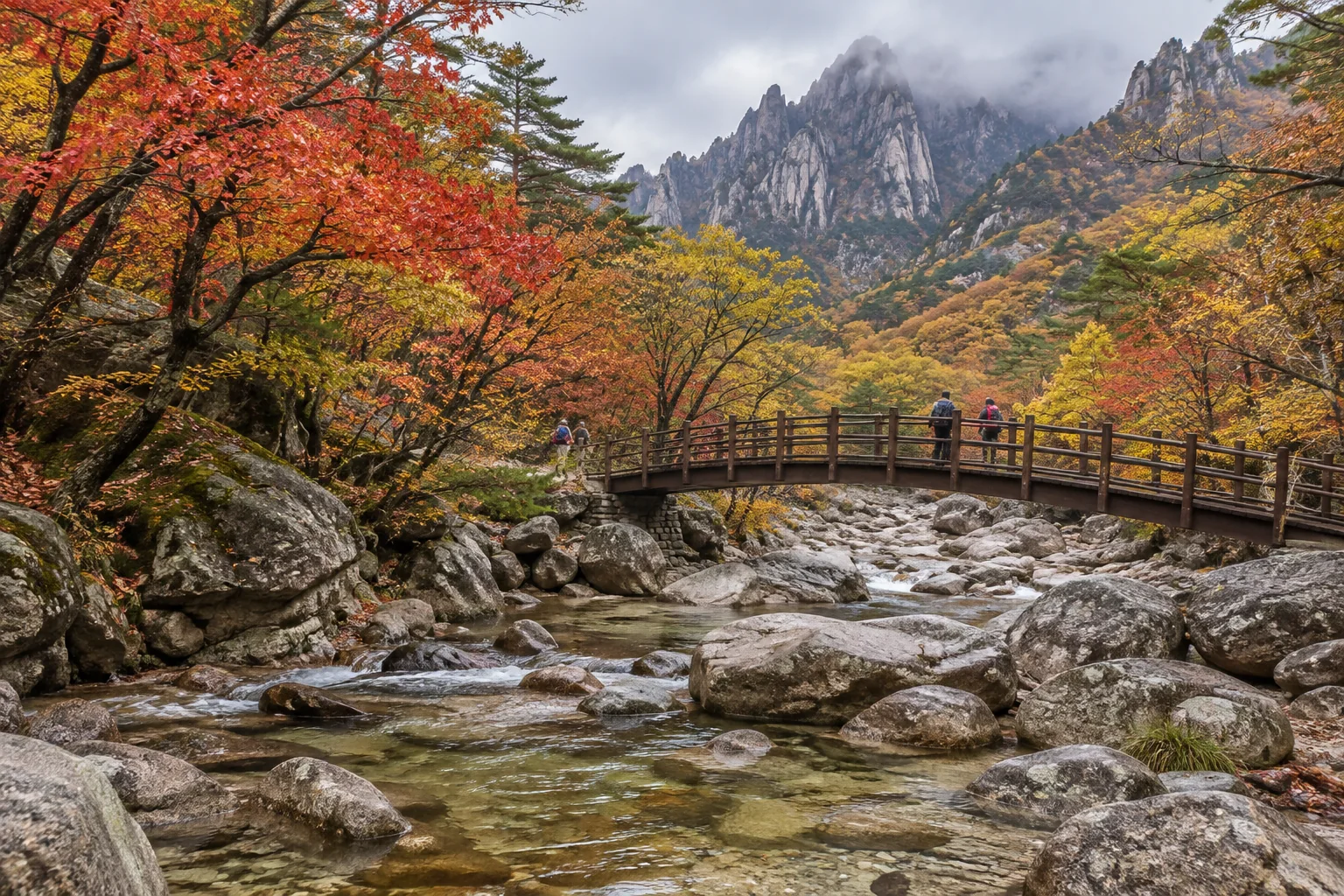
Seoraksan's forecast first foliage on October 3 does not mean the entire park turns red that morning. It describes the beginning of visible seasonal change. Higher parts of the mountain tend to change before the lower Sogongwon area. The forecast October 25 peak is a broad mountain-wide planning point; an individual tree, valley or ridge can be early or late.
If you travel in the first half of October, aim for mountain scenery rather than a guarantee of full color at the entrance. If you travel close to October 25, expect crowds in addition to leaves. A midweek visit a few days either side of the forecast can feel more rewarding than the exact peak Saturday.
Rain is not always a ruined day: wet stone and saturated leaves can be beautiful on safe lower paths. Strong wind is more serious for the cable car and exposed trails. After heavy rain, the park service's closure notice takes priority over any itinerary—including this one.
Where to Stay in Sokcho
The right Sokcho hotel depends on how you plan to reach the park the next morning.
- Near the intercity bus terminal or central Sokcho: useful if you arrive there and want market or harbor food in the evening.
- Near the express bus terminal or Sokcho Beach: convenient for a Seoul express-bus arrival and a relaxed coastal evening, though you still need a park transfer.
- Near Seorak-dong/Sogongwon: strongest for an early park start, but check restaurant availability and onward transport before booking.
For one night, choose a property with an easy route to a 7/7-1 stop or a reasonable taxi pickup point. Do not pay extra for a hotel whose marketing says “near Seoraksan” while its map pin sits far from the entrance you will actually use.
You can compare Sokcho accommodation on Agoda or check Sokcho hotel options on Trip.com. Compare the map pin, cancellation rules and final total; neither link implies a particular hotel is best. The forecast-peak weekend is a time to book early, not a time to collect ten tabs and hope prices become shy.
Two Plans That Work in Real Life
Plan 1: Seoul-Based Guided Day
Meet the tour at its stated Seoul exit at least 10–15 minutes early. Carry breakfast or buy it before boarding; many tours start too early for a leisurely café stop. Once the guide confirms the park time, make one choice: cable car if operating with a manageable wait, or a lower-valley trail if not. Eat a quick lunch near the entrance, leave 15 minutes for the bus meeting point, and do not start a longer hike just because the first 500 meters feel easy.
The trade-off is a long vehicle day. That is acceptable if you have only one free date and prefer a reliable round trip over negotiating two terminals and local buses.
Plan 2: Sokcho Overnight
Travel to Sokcho in the afternoon or evening. Eat in town and check the next morning's weather, park trail status and 7/7-1 route. Start toward Sogongwon early. At the entrance, decide whether the cable-car queue is worth it. Walk one valley route or tackle Ulsanbawi only if you deliberately budgeted most of the day for it. Return to Sokcho for dinner or a later bus to Seoul.
This plan leaves room for something beyond the park: a beach walk, market meal or the simple pleasure of not checking the last bus every nine minutes. If your wider trip continues south, the 7-day South Korea itinerary can help decide whether Sokcho fits without making the route zigzag across the country.
Mistakes That Cost the Most Time
- Treating the forecast peak as a guarantee. Check live color and weather close to departure.
- Booking a tour without checking park time. Total tour duration includes the road and any extra stops.
- Assuming the cable car can be reserved. It cannot; buy on site after checking operations and the queue.
- Confusing Sokcho's two intercity terminals. Read your bus ticket before choosing a hotel or local stop.
- Attempting cable car, Ulsanbawi and a waterfall route in one short visit. Pick one main activity.
- Leaving the return bus to chance. Peak weekends can make the final transfer the hardest part of the day.
- Dressing for Seoul, not the mountain. A cool ridge and warm city pavement can coexist.
FAQ
When is peak foliage at Seoraksan in 2026?
The September 8 Korea Tourism Organization forecast expects first foliage on October 3 and peak color around October 25. Actual timing can shift with weather and elevation.
Is a Seoraksan day trip from Seoul worth it?
Yes if you accept a long transport day and focus on one park experience. A guided bus is simplest; an independent bus day offers flexibility but requires careful terminal and return planning. Stay in Sokcho if hiking or weather flexibility is the priority.
Can I reserve the Seoraksan cable car online?
No. The operator says tickets are sold on site the same day because wind and weather affect service. Current adult round-trip fare is KRW 16,000; check the official site again before travel.
Which bus goes from Sokcho to Seoraksan?
City buses 7 and 7-1 serve the Sogongwon entrance area. Check the current stop, direction and arrival time in Sokcho's bus information system or a Korean map app.
Is the cable car necessary for autumn views?
No. The lower valley paths and views from around Sogongwon can be rewarding, particularly when the queue is long or the upper station is cloudy. Treat the cable car as an option, not the entire purpose of the trip.
Can I hike Ulsanbawi on a Seoul day tour?
Only if the tour explicitly gives enough park time and the trail is open. Most short free-time windows suit a lower trail or cable-car visit better. Ulsanbawi is a demanding climb, not an add-on after lunch.
Sources and Update Note
- VISITKOREA, 2026 Fall Foliage Forecast — October 3 first foliage and October 25 forecast peak
- Seorak Cable Car official guide — current fare, on-site-only tickets, daily-operation policy, routes and bus numbers
- Sokcho city tourism transport information — terminals and routes 7/7-1
- Sokcho bus information system — current city bus information
- Korea National Park Service, Seoraksan course status — trail and restriction checks
Information was checked on September 16, 2026. Forecast dates, bus times, tour availability, cable-car operations and trail access can change. Recheck the items that control your day before departure.