Choosing a ski resort in Korea is less about finding the single “best” mountain and more about deciding which inconvenience you can tolerate. A resort close to Seoul saves travel time but may be crowded. A larger mountain offers more terrain, but a same-day return can turn skiing into a bus tour with occasional snow.
For most first-time visitors, the useful shortlist is Elysian Gangchon, Vivaldi Park, Phoenix Snow Park, Mona Yongpyong, Alpensia and High1. They do not solve the same problem. Elysian is the easiest independent day trip. Vivaldi has convenient tour inventory and extensive resort facilities. Phoenix works well for mixed families and snowboarders. Yongpyong and High1 reward an overnight stay. Alpensia is compact and calmer, especially when the group includes people who do not intend to spend six hours falling with dignity.
The 2026–2027 opening dates and complete lift-price schedules had not been announced when this guide was checked on September 3, 2026. Do not treat last winter’s opening day as a promise. Snowmaking, temperature and staged slope openings can all change the useful ski area, even after a resort officially opens.
Table of contents
Pick by Constraint, Not by Reputation
| Your actual priority | Best starting choice | Why | Main compromise |
|---|---|---|---|
| Simplest independent day trip from Seoul | Elysian Gangchon | Rail access to Baegyangni Station plus a resort shuttle | Smaller terrain and busy beginner areas |
| Easy packaged day trip | Vivaldi Park | Many Seoul departures, rental infrastructure and non-ski activities | Weekend crowds and a long rental queue |
| Beginner family with non-ski companions | Phoenix Snow Park | Gentle Panorama run, Snow Village and indoor water park | Better as an overnight than a rushed day trip |
| Serious skiing and a full resort stay | Mona Yongpyong | Large, established terrain and reliable winter reputation | Farther from Seoul; transport needs planning |
| Quieter Pyeongchang resort experience | Alpensia | Compact layout and useful off-slope facilities | Less terrain for strong skiers |
| Longer runs and advanced terrain | High1 | High-elevation terrain and many FIS-certified slopes | Longest journey on this shortlist |
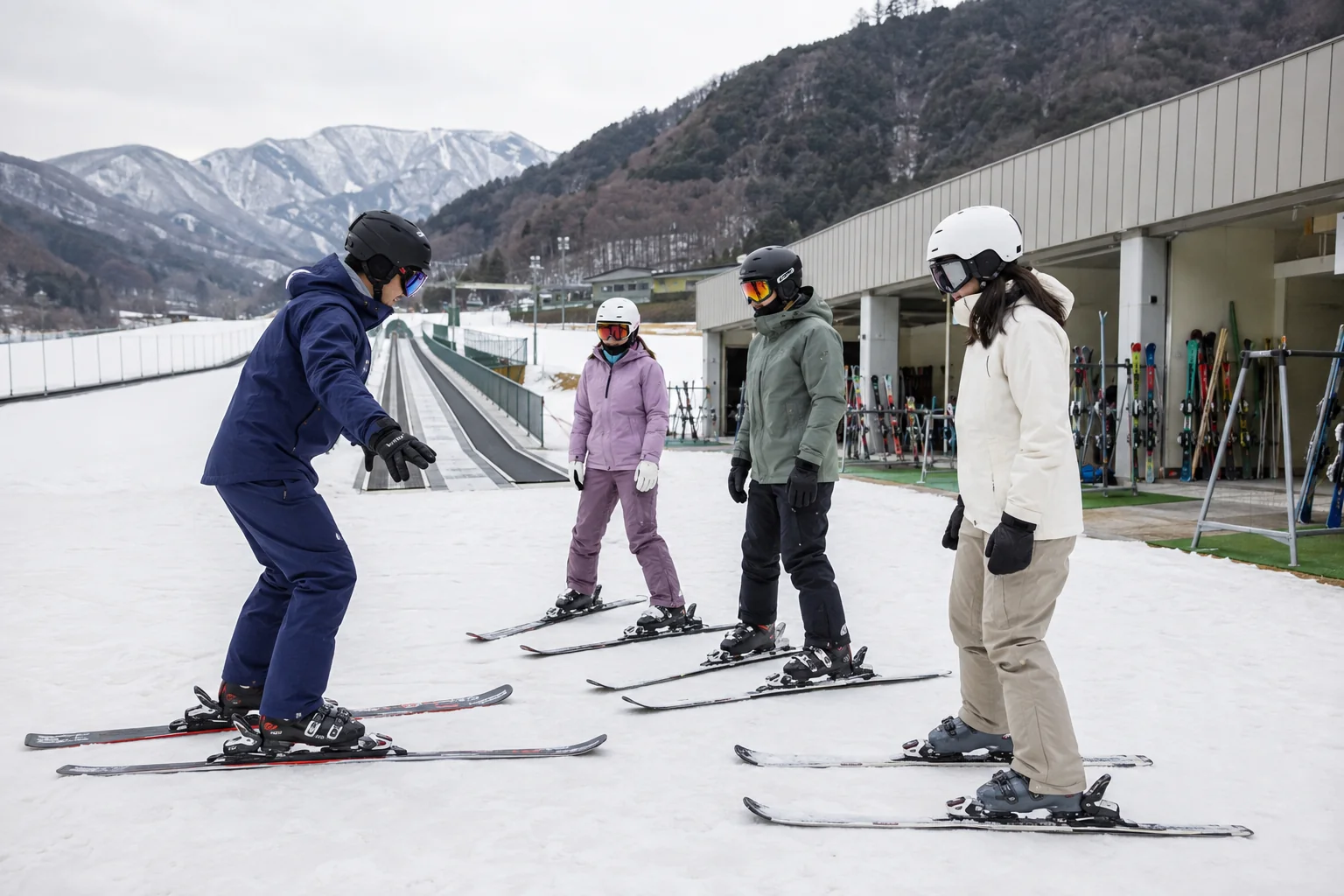
If you have never skied, the number of advanced slopes is nearly irrelevant. Your day will be shaped by the beginner conveyor, lesson language, boot fitting and how long it takes to collect equipment. A huge trail map is comforting right up until you spend the morning on the same 200 meters of snow.
The Six Resorts, With the Marketing Removed
Elysian Gangchon: Best for an Independent Seoul Day Trip
Elysian Gangchon is the practical answer for travelers who dislike organized-tour pickup times. Take the Gyeongchun Line or ITX-Cheongchun toward Baegyangni Station, then use the resort’s current shuttle connection. VISITKOREA specifically recommends it as a day-trip resort by train and lists a free shuttle from Baegyangni Station for the 2025–2026 season.
That access is its advantage. You are less exposed to Seoul road traffic, and the return plan is understandable even if the group separates. It is also a manageable choice for a first lesson.
The compromise is scale. Strong skiers may exhaust the useful terrain faster than at Yongpyong, Phoenix or High1. Beginner slopes can become crowded on weekends, and late-night operating hours do not help much if your train and shuttle connections have already stopped. Check the final return connection before buying an evening lift ticket.
Choose Elysian when transport confidence matters more than mountain size.
Vivaldi Park: Best for a Convenient Packaged Day
Vivaldi Park in Hongcheon is one of the easiest Korean resorts to find in Seoul-based day-tour listings. It combines skiing with Snowy Land, Ocean World and a large resort complex, so it works when one person wants a lesson, another wants sledding and someone else mainly wants a warm building and lunch.
Its popularity is also the warning label. Weekend buses can arrive together, creating queues at ticket counters, rental desks and beginner lifts. A package that includes transport, clothing, equipment and a lesson can simplify payment, but read the inclusions line by line. “Ski equipment” may mean skis, boots and poles while helmet, goggles, gloves and outerwear remain separate.
This article contains affiliate links. If you book through them, we may earn a small commission at no extra cost to you.
Travelers who want transport and equipment handled together can compare Korea ski resort day trips from Seoul on Klook. Confirm the exact resort, meeting point, lesson language, lift-ticket duration and return time before paying. A cheap “snow tour” is not always a ski package.
Choose Vivaldi for convenience, especially with mixed interests. Avoid a peak Saturday if you can.
Phoenix Snow Park: Best for Snowboarders and Mixed Families
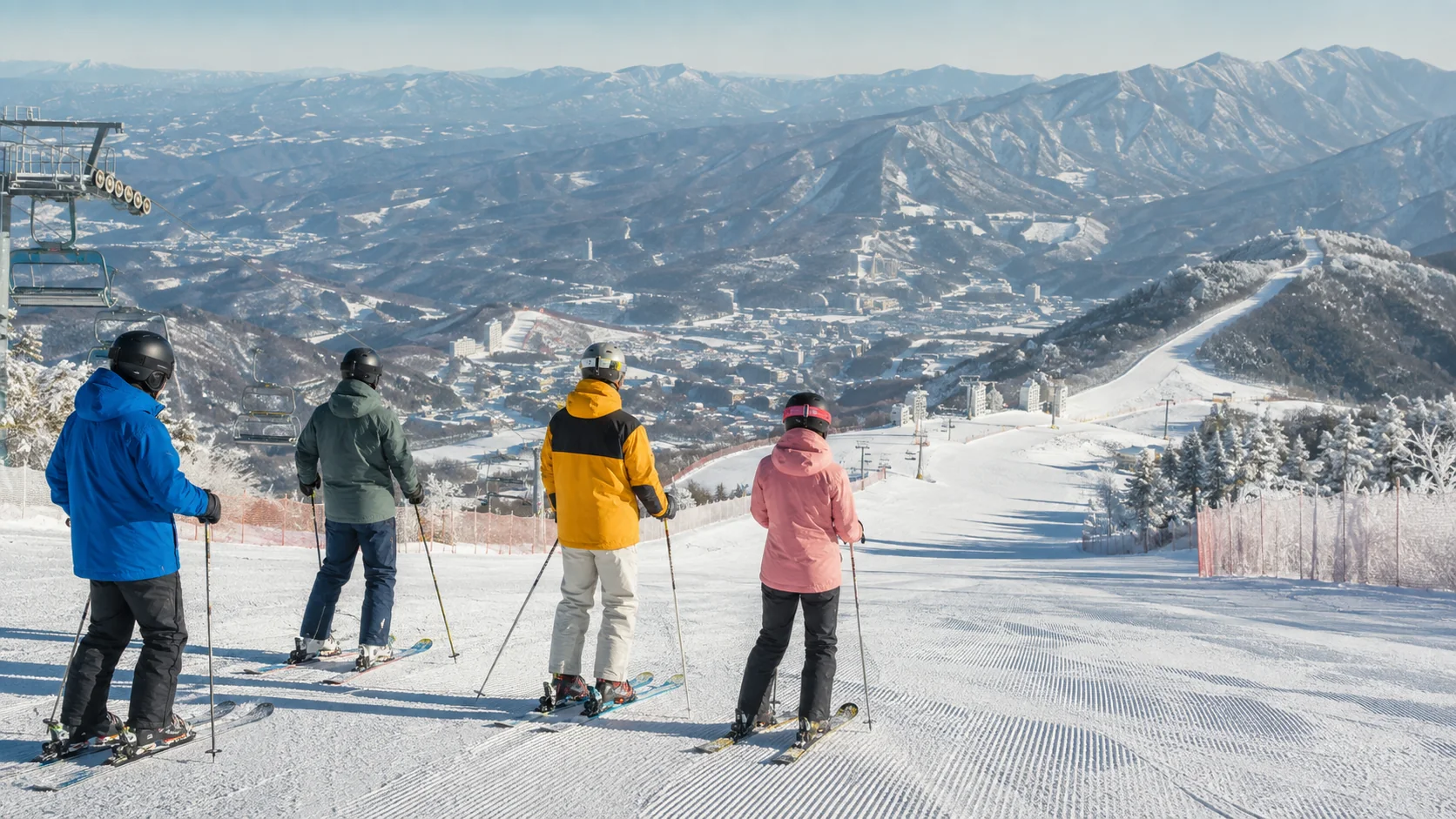
Phoenix Snow Park in Pyeongchang hosted winter-sports events and is known for snowboard and freestyle facilities. Its Panorama slope is long, wide and gentle enough to give progressing beginners a satisfying run rather than another short practice lap. Snow Village and the Blue Canyon indoor water park give non-skiers something more substantial than guarding everyone’s bags.
This is where one night begins to make sense. A day trip from Seoul is possible, but the transport, rental and changing process consumes a large part of the day. Staying overnight lets beginners stop before exhaustion turns every lift exit into experimental theater, then try again the next morning.
Families should verify which Snow Village attractions and water-park areas operate on their dates. Resort-complex facilities often keep different calendars from the ski slopes.
Choose Phoenix when the group wants more than skiing or snowboarding alone.
Mona Yongpyong: Best for a Proper Ski Holiday
Mona Yongpyong is Korea’s classic destination-resort choice. It sits in Pyeongchang’s high country, has a long winter-sports history and hosted events during the 2018 PyeongChang Winter Games. VISITKOREA notes that the area averages about 250 centimeters of snowfall in a season, though natural snowfall never eliminates the need to check live slope conditions.
Yongpyong makes sense for intermediate and advanced skiers who want more than a beginner lesson, but it is not only for experts. The resort has broad beginner terrain and sightseeing facilities, including the Balwangsan cable car area. That helps when companions want mountain views without skis.
The logistical route is usually KTX from Seoul to Jinbu Station followed by the current resort shuttle or a taxi. Last season’s shuttle times are not a 2026–2027 timetable. Confirm them after train tickets become available, and leave transfer margin: Jinbu Station is not the ski-house entrance.
For a first overnight ski trip in Korea, Yongpyong is the safest all-round choice if the budget and travel time work.
Alpensia: Best for a Compact Resort and Non-Ski Time
Alpensia is near Yongpyong, but the experience is smaller and easier to read. Its ski area offers beginner through advanced slopes without the same sense of geographic sprawl. The resort complex includes accommodation and Ocean 700, giving a family or couple a credible afternoon plan away from the lifts.
Advanced skiers may prefer to base in the Pyeongchang area and prioritize Yongpyong, while using Alpensia when the group values convenience and a calmer resort layout. Check whether cross-resort transfers fit your dates; “next door” in mountain-resort language can still mean a vehicle is necessary.
Alpensia is a good choice when skiing is one part of the trip, not the entire personality of the trip.
High1: Best for Terrain, Worst for a Casual Day Trip
High1 in Jeongseon is the strongest choice here for travelers who prioritize mountain time and longer terrain over proximity to Seoul. KTO describes 17 slopes descending from three peaks, with 15 FIS-certified courses and high-altitude conditions supported by substantial snowmaking.
That does not make it the best first lesson from Seoul. The journey is long, the resort is spread out and a same-day schedule creates too much pressure. Stay at least one night—preferably two if skiing is the main reason for traveling. Confirm which base area is closest to your accommodation, rental desk and morning lesson; a large resort can create an unexpected internal commute.
High1 also includes non-ski resort facilities, but groups should discuss expectations clearly. A casino in the complex does not magically make a ski holiday equally interesting to every non-skier.
Choose High1 when you want a destination ski trip, not a Seoul side quest.
Day Trip or Overnight? Use This Test
A day trip works when all four statements are true:
- you are a beginner or casual skier;
- one full day on snow is enough;
- you are comfortable with a fixed early departure;
- convenience matters more than maximum ski hours.
Stay overnight when any two of these are true:
- you want more than one lesson;
- you ski at intermediate or advanced level;
- children need a slower morning;
- your group includes non-skiers;
- you want night skiing without worrying about the final bus;
- the forecast may shift and you want a second chance.
For a packaged day trip, Elysian or Vivaldi is usually the sensible zone. Phoenix is borderline but can work. Yongpyong, Alpensia and especially High1 become better after you remove the same-day return.
If this is one excursion inside a longer city stay, compare it with other options in our best day trips from Seoul guide. Skiing consumes more energy and setup time than a normal sightseeing day, so do not schedule a 07:00 palace tour the next morning unless your knees have submitted written approval.
Book in This Order
1. Choose the Date by Snow Risk and Crowd Risk
Late December through February usually offers the broadest chance of winter operations, but there is no guaranteed perfect week. Early season can mean limited slopes. Holiday weekends and Lunar New Year can bring larger crowds. Late season can be warm, wet or operationally reduced.
Review the temperature pattern in our Korea weather by month guide, then check the resort’s live slope report immediately before the trip. Seoul weather is not mountain weather.
2. Decide Day Trip or Overnight
Do this before comparing lift tickets. It determines the resort shortlist, transportation and cancellation risk. A cheap lift pass at a remote resort is not cheap after a private taxi and two missed connections.
3. Reserve Transport or Accommodation
For a day tour, check the pickup neighborhood and exact departure time. Myeongdong, Hongdae and Dongdaemun pickups are not interchangeable at 05:50. Save the map pin, not only the English meeting-point name.
For Pyeongchang, KTX to Jinbu Station can be useful for Yongpyong and Alpensia. Read our Korea KTX guide before booking; seat availability, station names and train times matter more than the theoretical top speed.
4. Book the Lesson Before the Equipment
Ask whether English instruction is guaranteed or merely “available on request.” Confirm lesson length, group size, minimum age, meeting point and whether the lift ticket is included. A 60-minute beginner lesson may finish before you can safely use a chairlift alone.
5. Add Lift Access, Equipment and Clothing
The package layers are usually separate:
- lift pass;
- skis, boots and poles or snowboard and boots;
- jacket and pants;
- helmet;
- goggles and gloves;
- lesson;
- locker;
- transport.
Screenshots help. Booking pages can be translated inconsistently, and staff need to see the exact voucher when a counter is busy.
The Rental Counter Is Where Time Disappears
Arrive early and know your approximate height, weight and shoe size in centimeters. Wear one pair of thin ski socks. Two thick pairs can make boots tighter and colder by restricting circulation.
Check the boot fit before leaving the counter. Your heel should not lift dramatically, but numb toes are not a character-building exercise. Beginners should ask staff to confirm how the bindings release and where rented equipment must be returned.
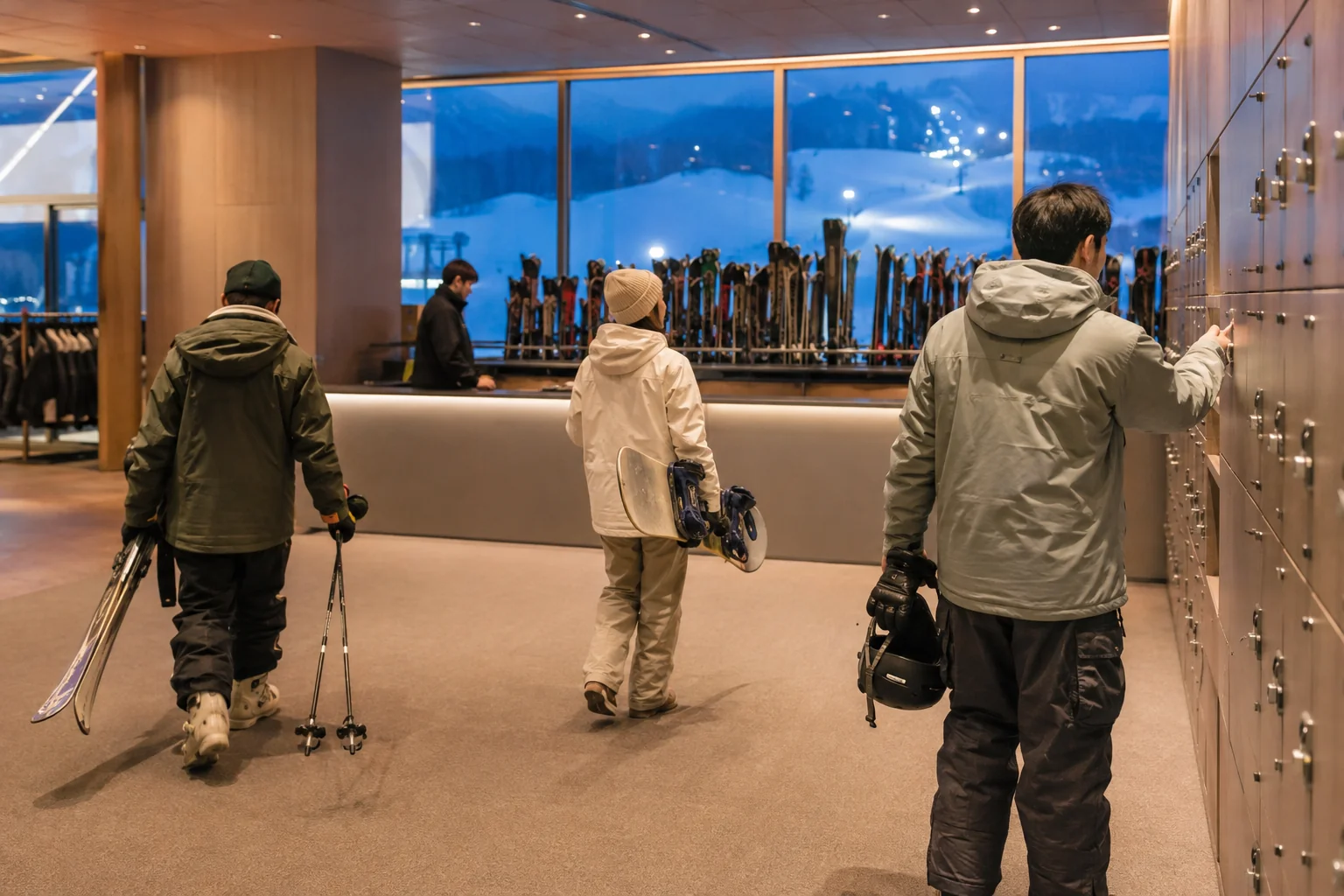
Use a locker for ordinary shoes and unnecessary valuables. Korean resort lockers may accept coins, a prepaid key or a digital payment method depending on the facility. Carry a physical payment card and some Korean won as backup. Foreign cards can fail at unattended kiosks even when they worked perfectly at a Seoul cafe.
Do not leave the rental building without photographing:
- the return counter;
- your locker number;
- the lesson meeting point;
- the final shuttle location and time.
The buildings look much less obvious after dark when everyone is wearing the same black rental pants.
A Realistic Seoul Day-Trip Timeline
This is a planning model, not a promise from any operator.
05:30–07:00 — Meet the bus. Eat before boarding or carry a simple breakfast. Confirm whether the bus has an assigned seat and restroom stop.
08:30–10:00 — Arrive, collect vouchers and rent gear. On a quiet weekday this can move quickly. On a busy Saturday, equipment fitting may consume an hour.
10:00–11:30 — Lesson. Stay with the instructor long enough to learn stopping, turning, falling and using the beginner lift. The mountain will remain available after you learn how not to negotiate with it face-first.
11:30–12:30 — Lunch. Eat slightly before or after the central rush. Keep the voucher and locker key secure when removing layers.
12:30–15:30 — Practice. Recheck the final lift time and begin equipment return before the bus deadline.
15:30–17:00 — Return gear and change. Wet gloves, crowded counters and distant lockers all add minutes.
17:00 onward — Return to Seoul. Road traffic can make arrival time flexible. Do not book a non-refundable evening performance immediately afterward.
What to Wear—and What Rental Packages Usually Do Not Solve
Wear a moisture-wicking base layer, flexible mid-layer, ski socks and waterproof outerwear. Many tour packages rent a jacket and pants, but gloves and goggles are often purchase items or excluded. A helmet should be treated as standard equipment, not an optional fashion disagreement.
Bring sunscreen and lip balm. Snow reflects sunlight even when the air feels aggressively cold. A neck warmer is easier to manage than a long scarf near lifts. Keep your phone in an inside pocket; cold drains batteries quickly, and a dead phone is inconvenient when the return bus instructions live inside it.
Our Korea packing list covers winter layers and everyday travel gear. Ski-specific clothing deserves a separate check because a Seoul puffer jacket is warm but may not be waterproof enough for repeated beginner falls.
The Conditions Page Matters More Than the Opening Banner
“Resort open” does not mean every slope, lift and night session is operating. Early and late in the season, resorts may open terrain in stages. Wind can stop gondolas. Rain can damage surface quality. A warm afternoon can turn beginner snow heavy and tiring.
Check these on the official resort website the night before and again in the morning:
- open slopes and difficulty levels;
- operating lifts and gondolas;
- day, evening and night-session hours;
- shuttle timetable;
- lesson availability;
- weather, wind and road notices;
- closure and refund rules.
Screenshots from last year are not current evidence. KTO’s 2025–2026 guide is useful for comparing resort character and access, but its dates and hours should not be copied into a 2026–2027 booking.
Common Booking Mistakes
Choosing by drive time alone. Seoul traffic can transform a short map distance into a long bus day.
Buying a lift pass before confirming the lesson. The lesson may include access, use a separate beginner zone or start at a different base.
Assuming clothing means complete winter gear. Gloves, goggles, helmets and socks may be excluded.
Booking night skiing without a return plan. Resort hours and public transport hours are two different stories.
Ignoring equipment-return time. The bus does not care that the rental queue became philosophical.
Using only Google Maps for rural transport. Verify Korean station names and routes with Naver Map or Kakao Map, plus the resort’s own notice.
Treating an opening date as full operation. The first week may have limited terrain.
FAQ
What is the best ski resort near Seoul for beginners?
Elysian Gangchon is the easiest independent option because of rail access and the Baegyangni Station shuttle connection. Vivaldi Park is convenient for packaged tours with transport and rentals. The better choice depends on whether you prefer independent travel or one booking.
Can I ski in Korea as a day trip from Seoul?
Yes. Elysian Gangchon and Vivaldi Park are the most practical choices on this shortlist. Phoenix can work with an organized transfer, but Yongpyong, Alpensia and High1 are generally better with an overnight stay.
When does the 2026–2027 ski season start in Korea?
Exact dates had not been announced as of September 3, 2026. Major Gangwon resorts often aim to open from late November into early December, depending on temperature and snowmaking. Check the official resort notice rather than booking around an estimated date.
Is skiing in Korea good for complete beginners?
Yes. Major resorts have beginner areas, rentals and lessons. The practical quality of the day depends on reserving an appropriate lesson, confirming the language and avoiding the most crowded periods.
Which Korean ski resort is best for snowboarders?
Phoenix Snow Park is a strong first choice because of its snowboard and freestyle reputation. Advanced riders should still check which park features and slopes are actually open on their dates.
Which resort is best for non-skiers?
Phoenix, Vivaldi, Yongpyong and Alpensia offer the strongest mix of sightseeing or resort facilities on this shortlist. Verify seasonal attraction hours separately from the ski schedule.
Do I need to reserve ski lessons in advance?
Yes during weekends, holidays and peak winter weeks, especially for English instruction or private lessons. Do not assume an English-speaking instructor will be available at the walk-in counter.
Should I rent ski clothes in Korea?
Renting a jacket and pants is practical for a one-day beginner trip. Confirm what is excluded and bring your own base layers, ski socks, gloves and neck warmer. Rent or obtain a helmet even if the basic package leaves it optional.
My Practical Choice
For a first ski day from Seoul, I would choose a weekday Elysian trip if I wanted to travel independently, or a clearly itemized Vivaldi package if I wanted every transfer handled. I would book a real beginner lesson, arrive in base layers, and avoid planning anything expensive that evening.
For two or more ski days, I would stop pretending this is a Seoul day trip. I would take the KTX toward Pyeongchang and stay near Yongpyong, Alpensia or Phoenix, choosing the resort by the group’s skill split. High1 would be the terrain-focused option when the longer journey is part of the plan.
The best Korean ski resort is the one that leaves enough time to ski after you finish traveling, queuing, changing and locating the correct bus. The mountain is only half the logistics. Fortunately, it is the more scenic half.
Information checked September 3, 2026. The 2026–2027 opening dates, lift prices, shuttle timetables and full slope schedules were not yet published. Confirm the official resort conditions and your booking inclusions before travel.