Desserts often come later.
Then something unexpected happens.
After a few days in Korea, many travelers find themselves planning entire afternoons around cafés, bakeries, and dessert shops.
Korea’s dessert culture has grown into one of the most interesting parts of the travel experience. Traditional sweets sit alongside modern café creations, and it’s not unusual to find travelers spending just as much time searching for the perfect dessert as they do searching for their next meal.
Whether you’re exploring the streets of Seoul, relaxing in Jeju, or taking a break between sightseeing stops, Korean desserts offer a delicious glimpse into another side of Korean culture.
Table of contents
Why Korean Desserts Are Worth Trying
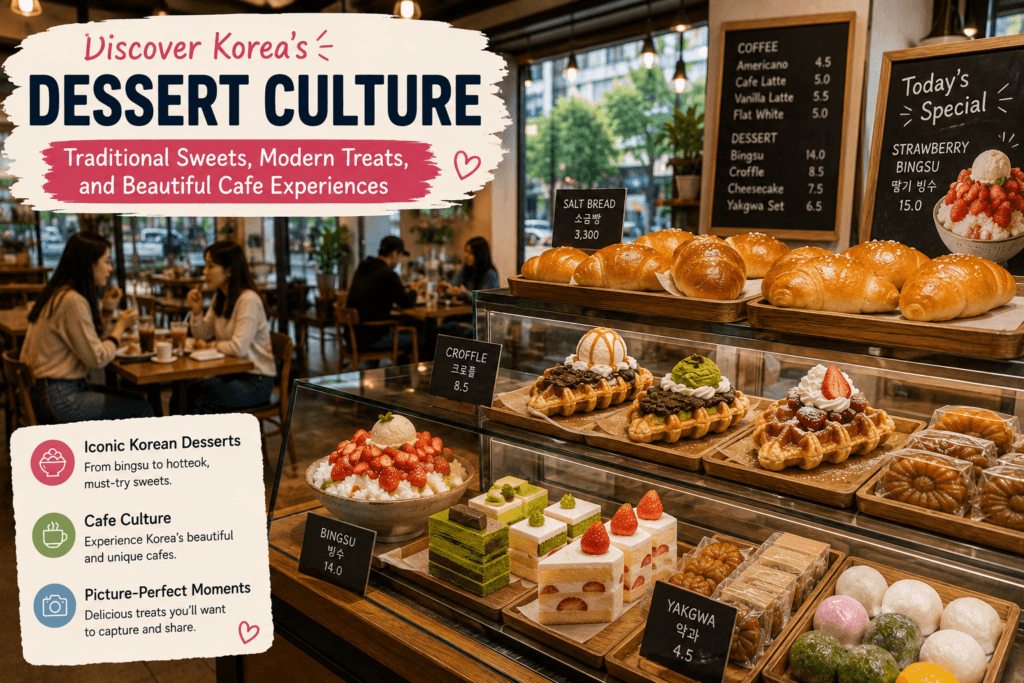
Many visitors arrive in Korea expecting great food.
What they don’t always expect is how seriously Korea takes desserts.
Cafés are everywhere.
Bakeries are constantly introducing new creations.
Traditional sweets that date back centuries continue to thrive alongside trendy modern desserts.
For travelers, dessert often becomes more than just something sweet after a meal.
It’s an excuse to rest, recharge, and experience Korea’s famous café culture.
Many visitors exploring Hongdae or Ikseon-dong quickly discover that some of their favorite travel memories happen inside small cafés rather than major tourist attractions.
Bingsu: Korea’s Most Famous Dessert
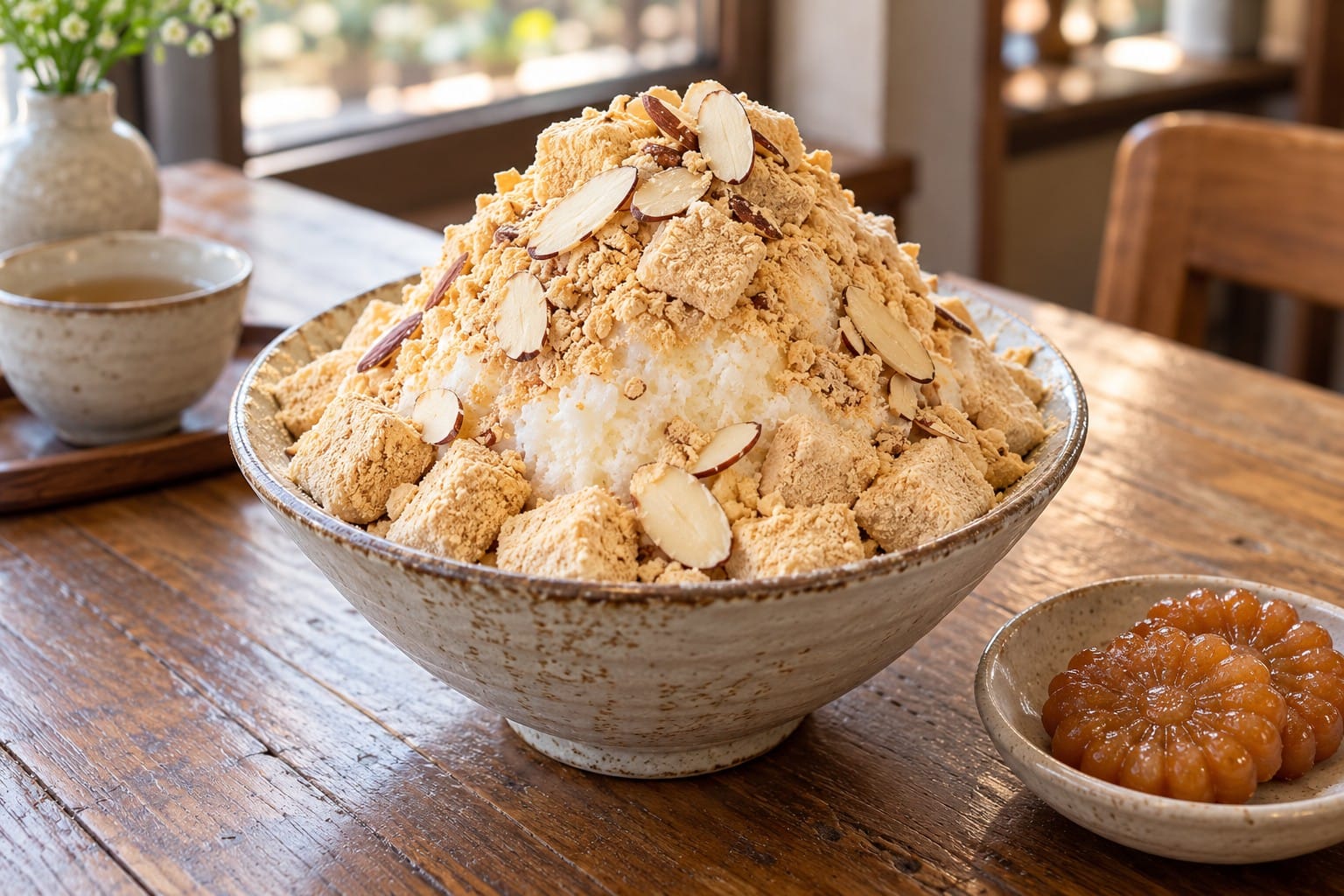
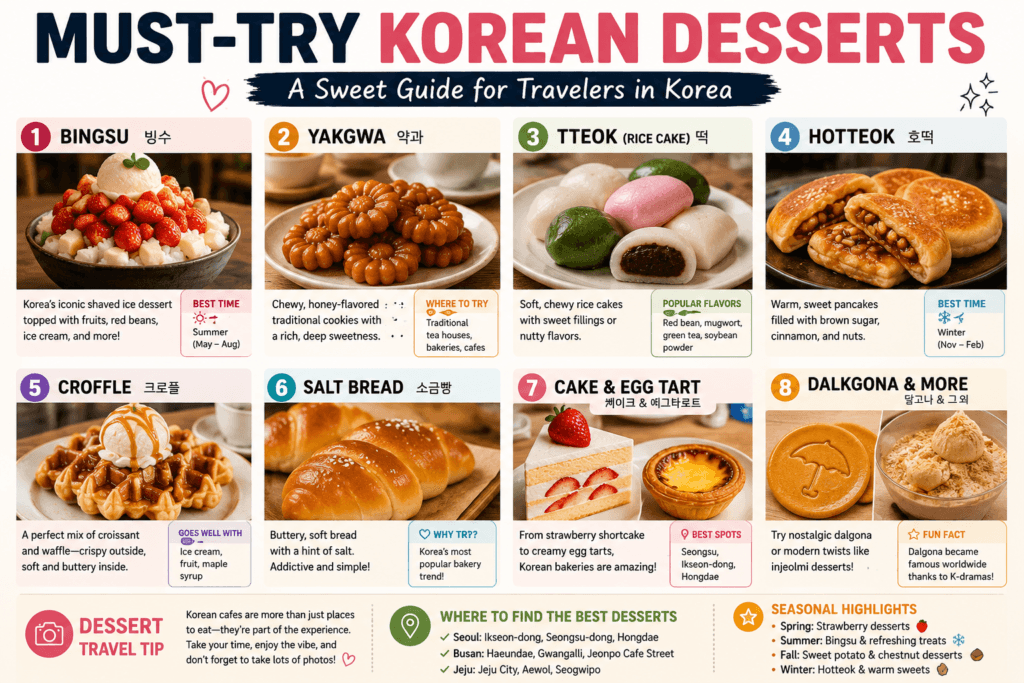
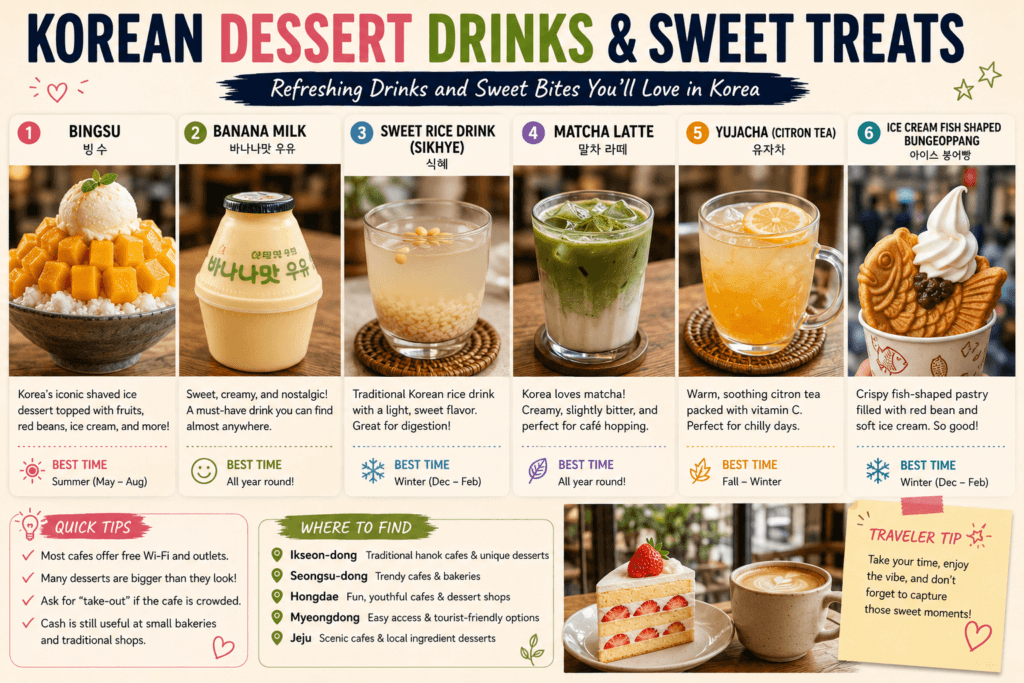
If there’s one dessert every traveler should try, it’s bingsu.
Bingsu is a Korean shaved ice dessert topped with ingredients such as:
- Sweet red beans
- Fresh fruit
- Condensed milk
- Cheesecake cubes
- Ice cream
- Matcha powder
The texture surprises many first-time visitors.
Unlike traditional shaved ice found in other countries, Korean bingsu is incredibly soft and fluffy.
During summer, a large bowl of bingsu can feel like the perfect reward after spending hours walking around Seoul.
Many travelers underestimate the size of Korean bingsu and end up sharing one bowl between two or three people.
Yakgwa: The Traditional Sweet Everyone Is Talking About
Yakgwa has experienced a major revival in recent years.
This traditional honey cookie has become popular among both locals and international visitors.
Its rich flavor and chewy texture make it very different from most Western desserts.
Many travelers first discover yakgwa in convenience stores before later finding artisanal versions in cafés and traditional bakeries.
For visitors interested in Korean culture, yakgwa offers a taste of Korea’s culinary history.
Tteok: Korean Rice Cakes
Rice cakes might not sound exciting at first.
However, Korean tteok comes in dozens of varieties, flavors, and textures.
Some are filled with sweet bean paste.
Others contain nuts, fruits, or sesame seeds.
Many travelers who try tteok expecting something similar to Japanese mochi are surprised by how different the experience feels.
Hotteok
Few street food desserts are as comforting as hotteok.
These sweet pancakes are typically filled with brown sugar, cinnamon, and nuts.
They’re especially popular during winter.
Walking through a market on a cold day while holding a freshly made hotteok is one of those small travel experiences that many visitors remember long after returning home.
Travelers exploring Busan often encounter regional variations that are slightly different from those found in Seoul.
Croffles
One of Korea’s most successful modern café creations is the croffle.
Part croissant and part waffle, croffles are crispy on the outside and buttery on the inside.
They’re commonly served with:
- Ice cream
- Fresh fruit
- Chocolate sauce
- Whipped cream
Croffles have become a staple of Korean café culture and are now found throughout the country.
Salt Bread
Salt bread continues to be one of Korea’s most popular bakery trends.
Simple in appearance but surprisingly addictive, it combines buttery bread with a light salty finish.
Many travelers discover salt bread accidentally while searching for coffee and end up returning for more.
Its popularity has spread from local bakeries to major café chains across Korea.
Korean Bakery Culture
One thing that surprises many visitors is the quality of Korean bakeries.
Even small neighborhood bakeries often offer a wide selection of fresh bread, pastries, cakes, and desserts.
For many travelers, bakery hopping becomes almost as enjoyable as café hopping.
Visitors spending time in Seongsu-dong frequently discover independent bakeries that rival some of the most popular cafés in the city.
Best Places to Enjoy Korean Desserts
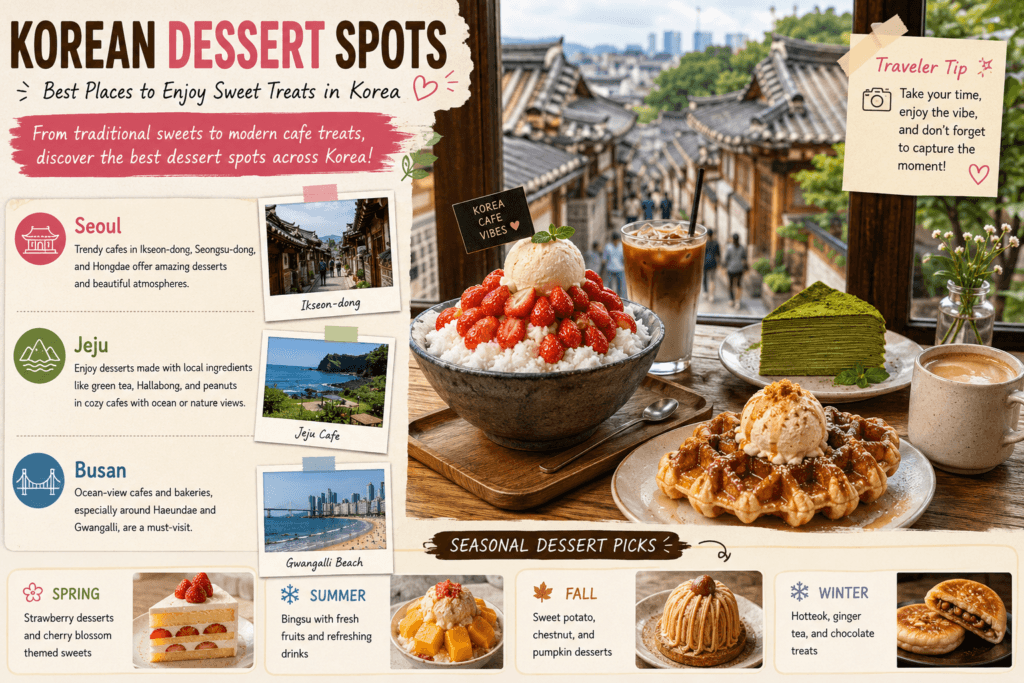
Seoul
Seoul offers the greatest variety of desserts in Korea.
Neighborhoods such as Hongdae, Ikseon-dong, and Seongsu-dong are especially popular among dessert lovers.
Jeju
Jeju’s dessert scene often focuses on local ingredients.
Many cafés incorporate:
- Jeju green tea
- Hallabong oranges
- Peanuts
- Local dairy products
Travelers interested in scenic cafés should also explore Best Cafes in Jeju 2026.
Busan
Busan combines ocean views with excellent cafés and bakeries.
Many visitors enjoy dessert while overlooking the beach, particularly around coastal areas and café districts.
Local Tips for Dessert Lovers
Café Stops Are Part of the Experience
Many travelers arrive in Korea planning to focus on Korean barbecue, fried chicken, and street food. A few days later, they often realize they’re spending just as much time searching for cafés and desserts. Don’t be surprised if a simple coffee break turns into one of your favorite travel memories.
Save Bingsu for an Afternoon Break
If you’re visiting during summer, try bingsu after a long day of sightseeing rather than immediately after a meal. Many visitors discover that bingsu feels more refreshing as an afternoon break than as a traditional dessert.
Look Inside Ikseon-dong’s Hanok Cafés
Travelers exploring Ikseon-dong often find that some of the most memorable desserts are hidden inside renovated hanok buildings. From the outside, many cafés appear small and simple, but inside you’ll often discover beautiful interiors and unique desserts.
Visit Popular Cafés Outside Peak Hours
Many popular dessert cafés become busiest between 2 PM and 5 PM. Visiting shortly after opening can often mean shorter waits and a more relaxed atmosphere.
Try Small Neighborhood Bakeries
Don’t judge Korean bakeries by their size. Some of the best pastries and desserts are found in small neighborhood bakeries that never appear on travel lists.
Leave Time for Seongsu Café Hopping
If you’re spending time in Seongsu-dong, leave extra time for café hopping. Many visitors plan to visit one café and end up spending half a day exploring several different dessert shops and bakeries.
Consider a Guided Food Tour
Travelers who enjoy discovering local food experiences often find that a Seoul food tour helps them discover cafés, bakeries, and dessert shops they might otherwise miss.
Common Mistakes Travelers Make
Share Large Bingsu Bowls
Many first-time visitors underestimate how large Korean bingsu portions can be. Sharing is often the better option.
Look Beyond Famous Café Chains
Popular chains are convenient, but many of Korea’s most memorable desserts come from independent cafés and bakeries.
Make Time for Traditional Desserts
Visitors sometimes focus entirely on trendy desserts and miss classics such as yakgwa and tteok that offer a deeper connection to Korean food culture.
Avoid Peak Café Hours
Long lines are common at popular dessert spots, especially on weekends.
Include Desserts in Your Food Plan
In Korea, cafés are often destinations themselves rather than simply places to end a meal.
Try Seasonal Specialties
Some of Korea’s best desserts only appear during certain times of the year, especially fruit-based desserts and limited seasonal menu items.
FAQ
What is the most popular dessert in Korea?
Bingsu remains one of the most popular Korean desserts, especially during summer.
Is Korean dessert culture different from Western dessert culture?
Yes. Korea places a strong emphasis on cafés, presentation, seasonal ingredients, and shared dessert experiences.
What dessert should first-time visitors try?
Bingsu, yakgwa, hotteok, and croffles are excellent starting points.
Are Korean desserts very sweet?
Many Korean desserts are less sweet than Western desserts, although this varies depending on the item.
Where can I find traditional Korean desserts?
Traditional markets, bakeries, tea houses, and specialty cafés often serve desserts such as yakgwa and tteok.
Is bingsu worth trying even outside summer?
Absolutely. Many cafés serve bingsu year-round.
Which Seoul neighborhoods are best for desserts?
Many travelers enjoy exploring dessert cafés in Hongdae, Ikseon-dong, and Seongsu-dong.
Useful Tools for a Food-Focused Trip
This section contains affiliate links. If you book through one, we may earn a small commission at no extra cost to you.
Travelers planning to explore Korea’s café culture often find it easier to navigate the city using an eSIM for Korea for maps, reviews, and transportation apps.
If you’re planning a food-focused trip, comparing Seoul hotel deals before booking can help you stay close to popular café districts and dessert hotspots.
Food lovers looking for local recommendations may also enjoy a Seoul food tour that includes cafés, bakeries, and traditional Korean snacks.
Related Guides
If you’re interested in discovering more Korean food experiences, these guides may also help:
Best Korean Street Food Guide 2026
Korean Fried Chicken Guide 2026
Korean Convenience Store Food Guide 2026
Final Thoughts
Korean desserts are easy to underestimate.
Many travelers arrive focused on barbecue, street food, and famous restaurants, only to discover that some of their favorite memories happen in quiet cafés and small bakeries.
It might be a bowl of bingsu on a hot summer afternoon.
A freshly baked salt bread found by accident while exploring a neighborhood.
Or a traditional yakgwa enjoyed with coffee in a hidden café tucked inside a historic alley.
Whatever dessert you choose, you’ll quickly discover that Korea’s dessert culture is about much more than satisfying a sweet tooth. It’s another way to experience everyday life, creativity, and the unique atmosphere that makes traveling in Korea so memorable.