Busan combines long beaches, working seafood markets, hillside neighborhoods, coastal temples, and a major city transport network. The experience is less about checking isolated landmarks and more about moving through several distinct waterfront districts.
Three days is a useful starting point for a first visit, not a minimum stay everyone needs. The city stretches along the coast, so a good plan groups nearby places instead of crossing Busan several times in one day.
This 2026 Busan travel guide explains how long to stay, which areas belong together, where to base yourself, and which details should be confirmed with official providers before departure.
Table of contents
Why Visit Busan?
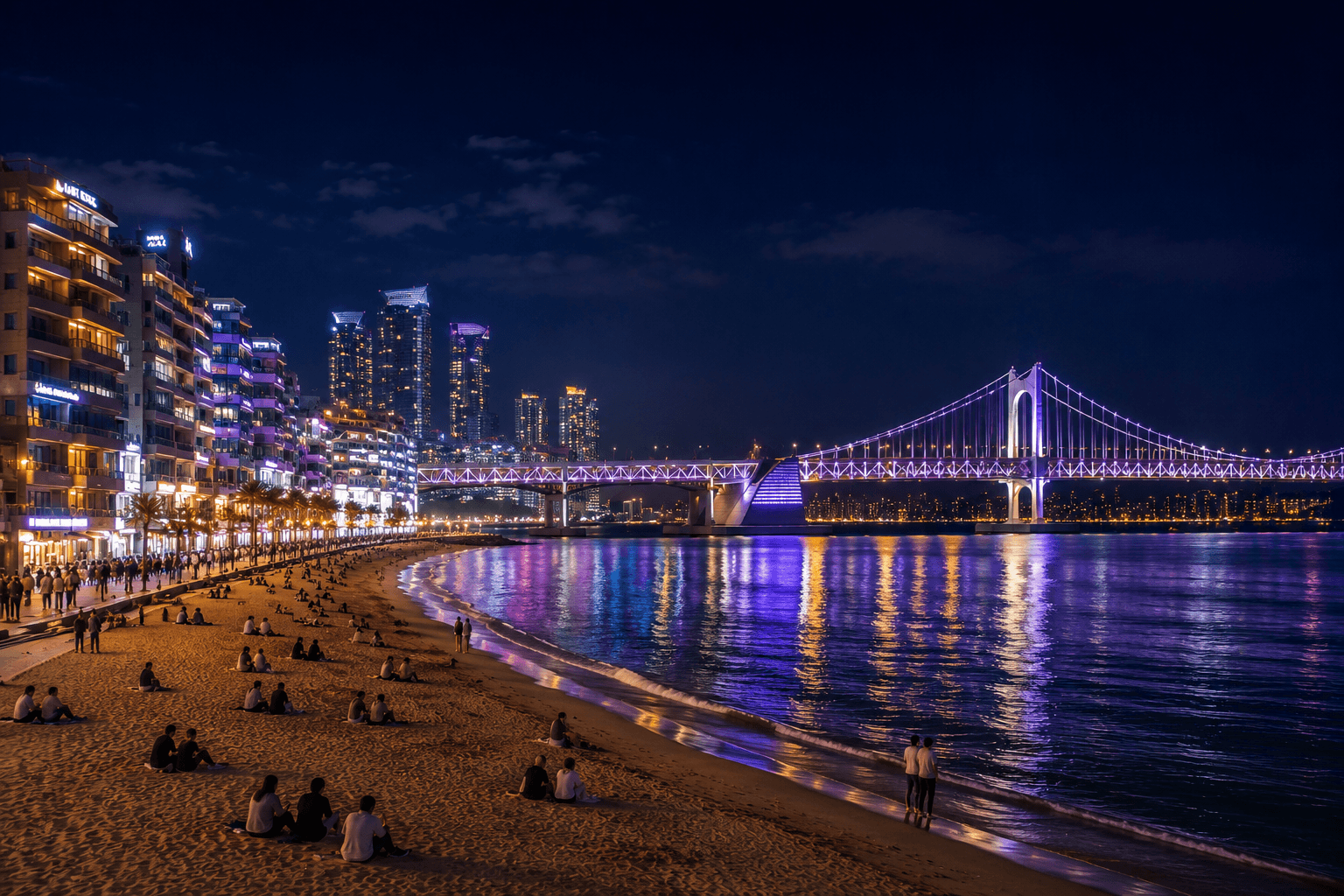
Busan feels different from Seoul without being difficult to navigate. You can start with a market breakfast, walk through a hillside village, ride beside the sea, and end the day looking across Gwangan Bridge.
- Urban beaches at Haeundae, Gwangalli, and Songjeong
- Seafood, pork soup, wheat noodles, fish cake, and market snacks
- Coastal walks, observatories, temples, and rail experiences
- Neighborhoods that change noticeably from west to east
- Useful rail connections for combining Busan with Seoul or Gyeongju
The trade-off is distance. Busan is large, and a route that looks short on a map can involve a subway transfer, a bus, and a final uphill walk.
How Many Days Do You Need in Busan?
Two days can cover one western route and one eastern coastal route, but the schedule will feel tight. Three days gives most first-time visitors enough time for Gamcheon and Nampo, Haeundae and Blue Line Park, plus Haedong Yonggungsa and Gwangalli. Four days allows slower meals, a spa visit, or a weather backup.
Use our Busan 3-day itinerary when you want a day-by-day route rather than a general overview. Fitting Busan into one week in Korea? Start with our seven-day Seoul, Gyeongju and Busan itinerary before choosing local stops. With only one full sightseeing day here, choose the eastern coast or the western markets; saving every pin on the map does not make the city smaller.
Plan Busan by Area
The easiest way to reduce travel time is to divide the city into four clusters.
West Busan and Nampo
Group Gamcheon Culture Village with Jagalchi Market, BIFF Square, Gukje Market, and Yongdusan Park. This is the most efficient first-day route if you arrive through Busan Station or stay near Nampo.
Haeundae Coast
Combine Haeundae Beach, Dongbaekseom, Mipo, and Blue Line Park. These stops share the same eastern coastline and work well as one long half-day or a full day.
Gwangalli and Central Busan
Seomyeon is the practical transport and nightlife base; Gwangalli is the waterfront evening base. Pair Gwangalli with nearby cafes, Millak waterfront, or a central-city stop rather than with Gamcheon and Haedong Yonggungsa on the same day.
Eastern Temple and Songjeong
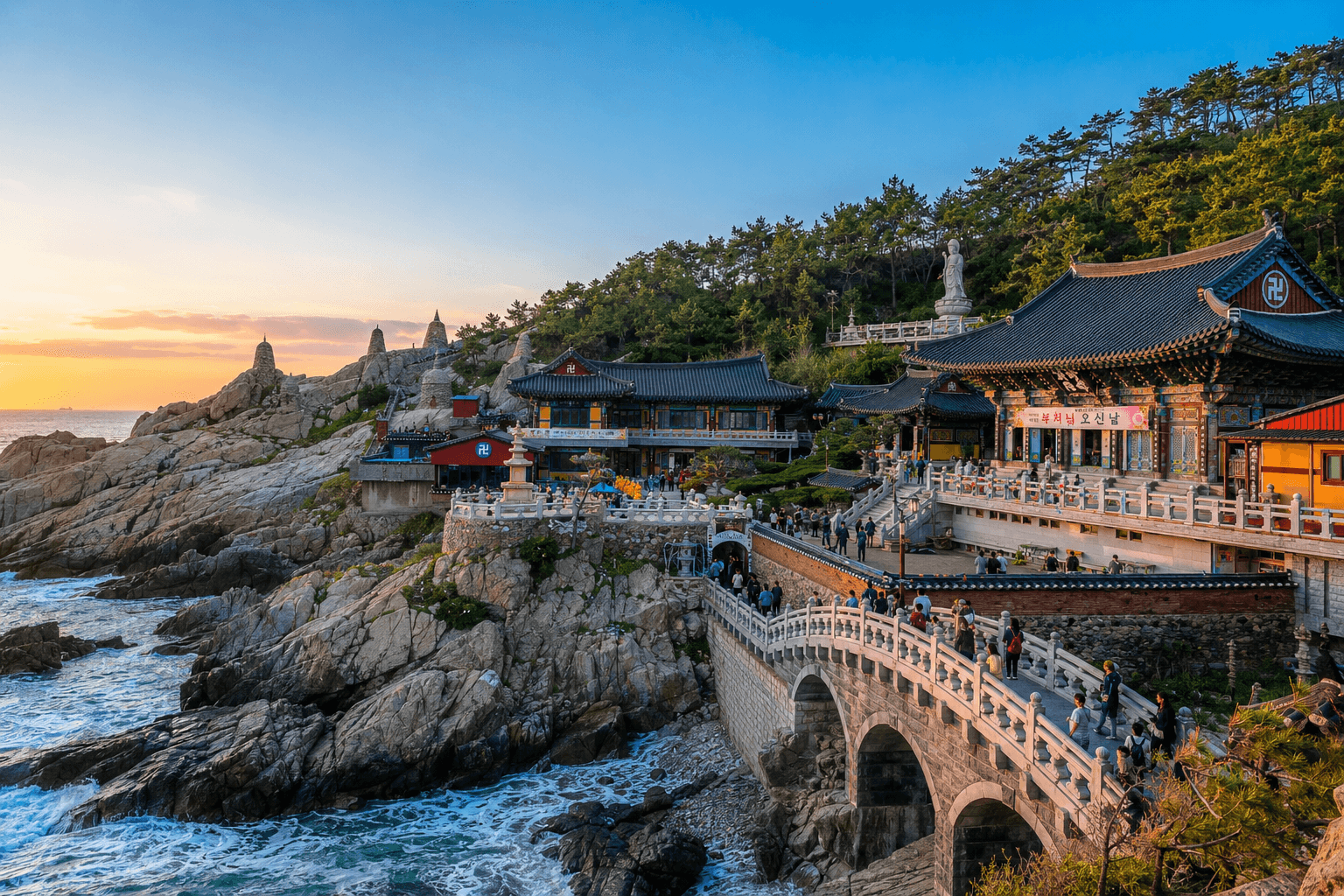
Haedong Yonggungsa, Songjeong Beach, and the eastern end of the Blue Line corridor belong together. The temple requires a bus or taxi connection, so allow more time than the distance alone suggests.
Best Things to Do in Busan
Walk Haeundae Beach and Dongbaekseom
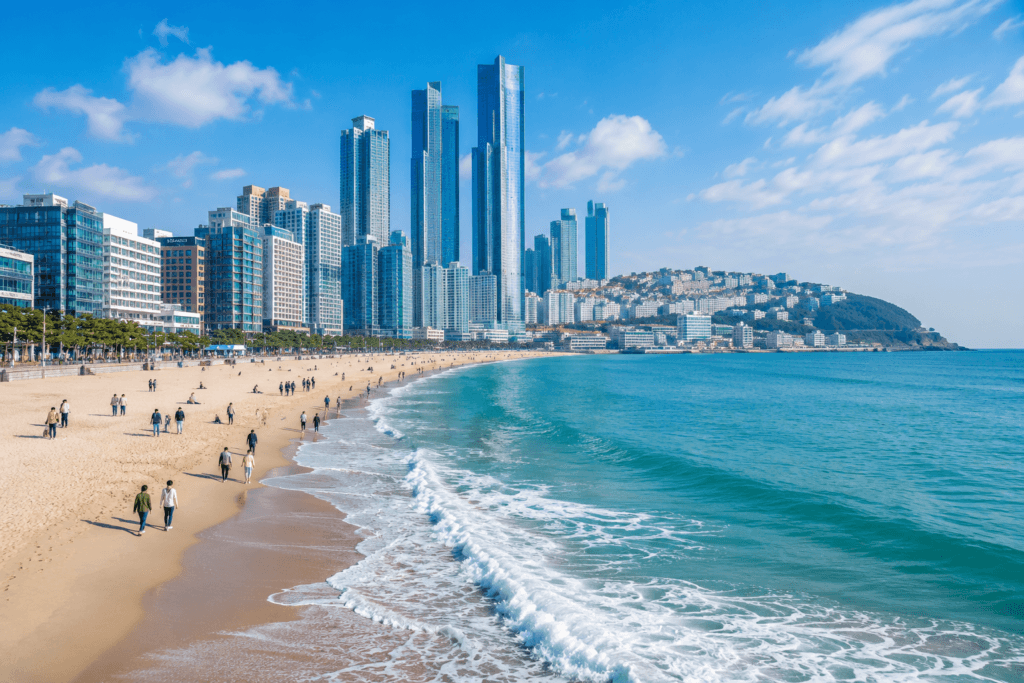
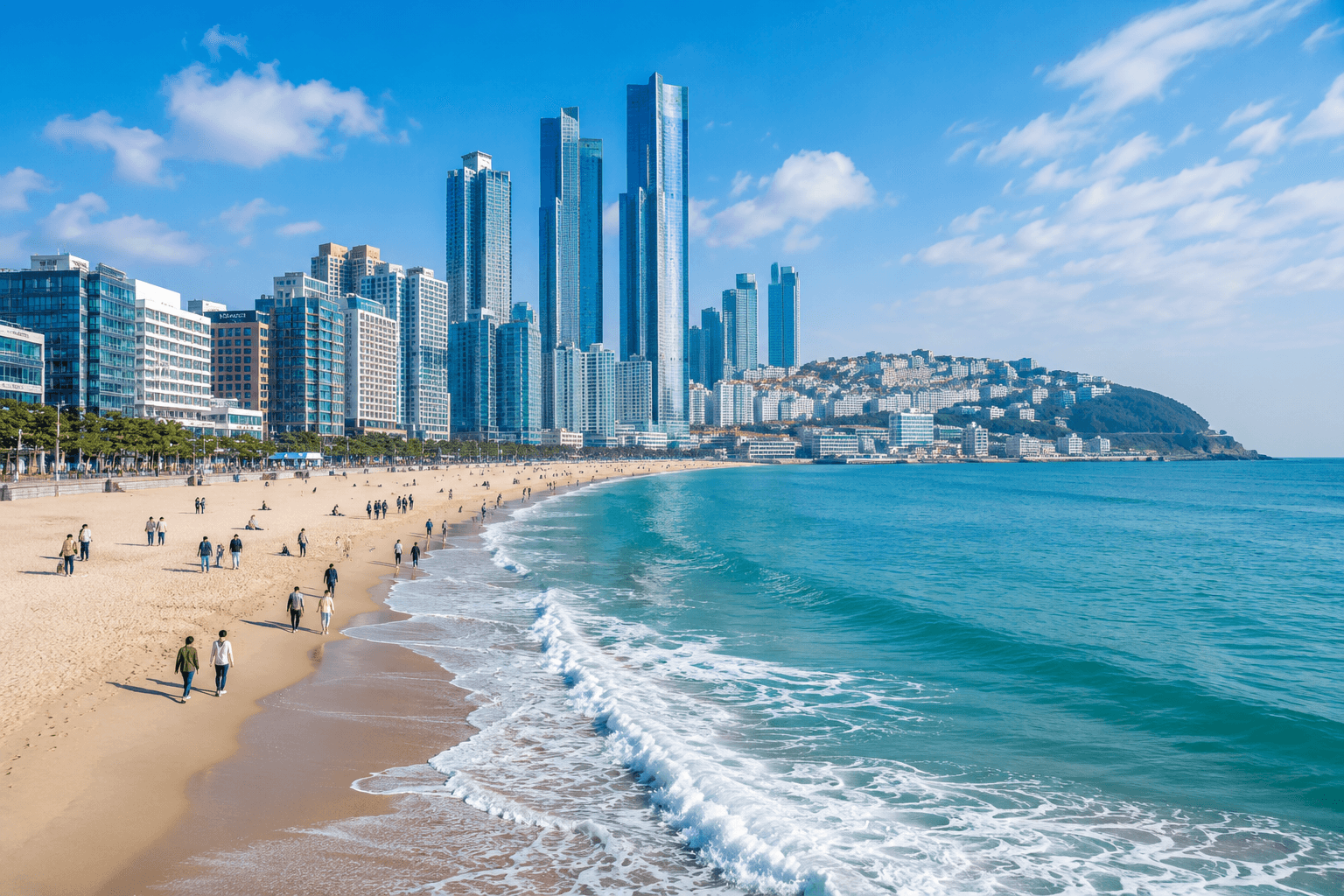
Haeundae is Busan’s best-known beach and a convenient introduction to the eastern side of the city. Walk the beach, continue toward Dongbaekseom for coastal views, then explore the market streets or continue to Mipo.
Haeundae is lively in summer but remains useful year-round because the surrounding district has hotels, restaurants, cafes, and transport connections. See the detailed Haeundae Beach guide before choosing where to spend your evening.
Choose the Right Blue Line Park Ride
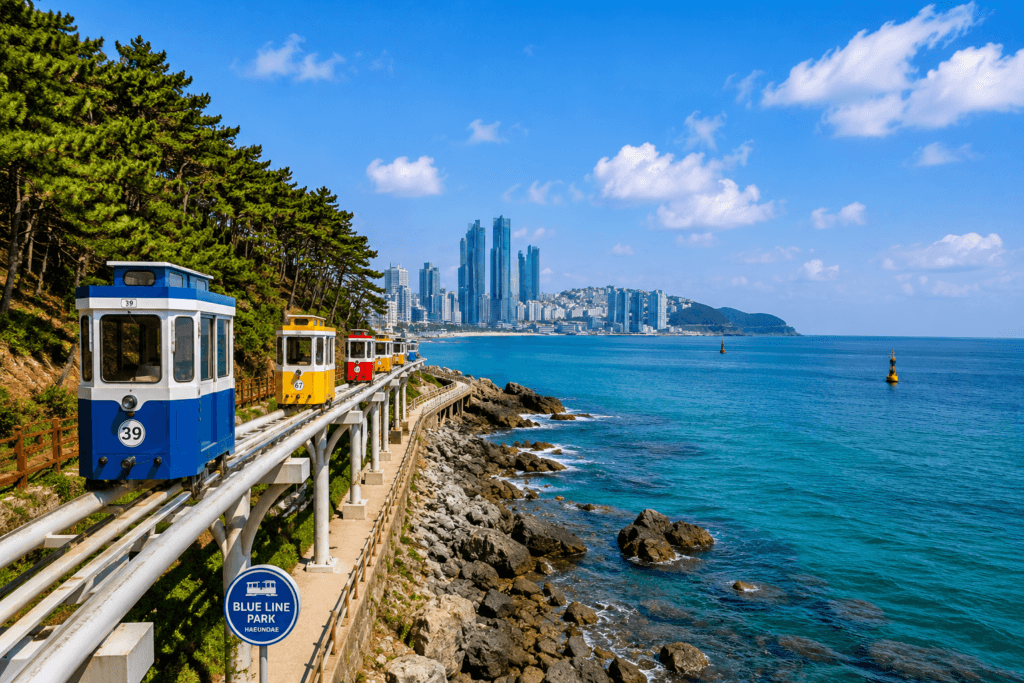
The Sky Capsule and Beach Train are different products. The Sky Capsule runs one way between Mipo and Cheongsapo and takes about 30 minutes. The Beach Train serves the longer coastal corridor, including Songjeong. Use our Sky Capsule booking guide to compare the rides, choose a starting point and plan the onward leg before reserving.
A Sky Capsule reservation time is an entry window, not an exact departure minute. Queues, weekends, and safety inspections can delay boarding, so leave at least 30 minutes of flexibility before your next fixed booking.
When this experience is a priority, reserve through the official Blue Line Park booking page. The operator currently opens tickets every Tuesday at 7:00 a.m. Korea Standard Time for the Monday–Sunday week four weeks later. This is a weekly release, not a rolling release exactly 28 days before each ride. A small on-site allocation may sell out early; check the booking calendar before building the rest of your day around an unreserved ride.
Explore Gamcheon Culture Village Early
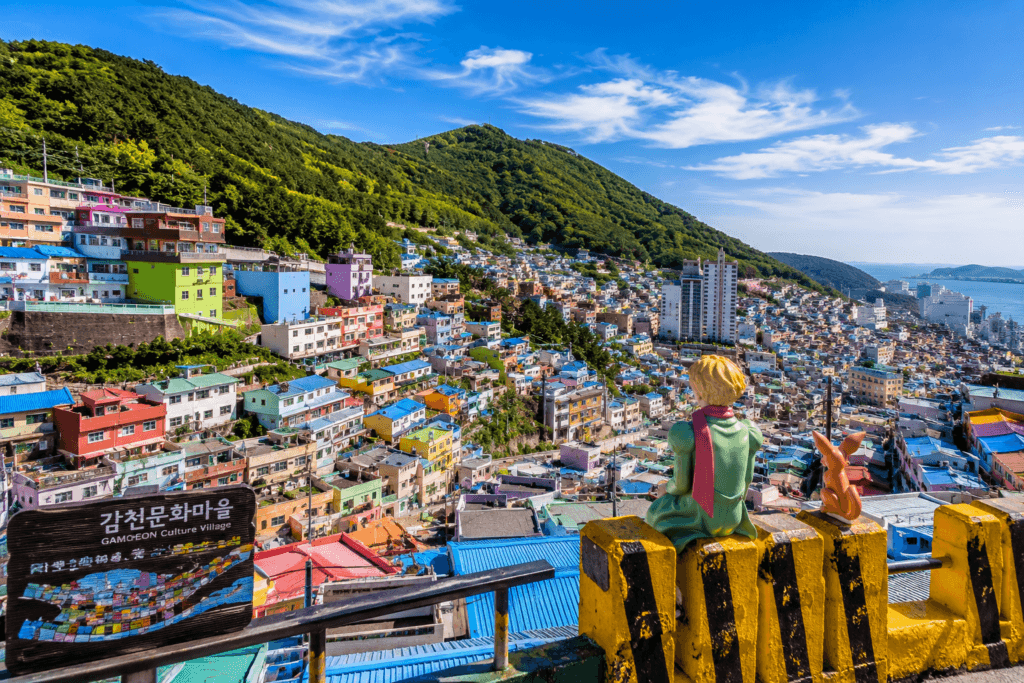
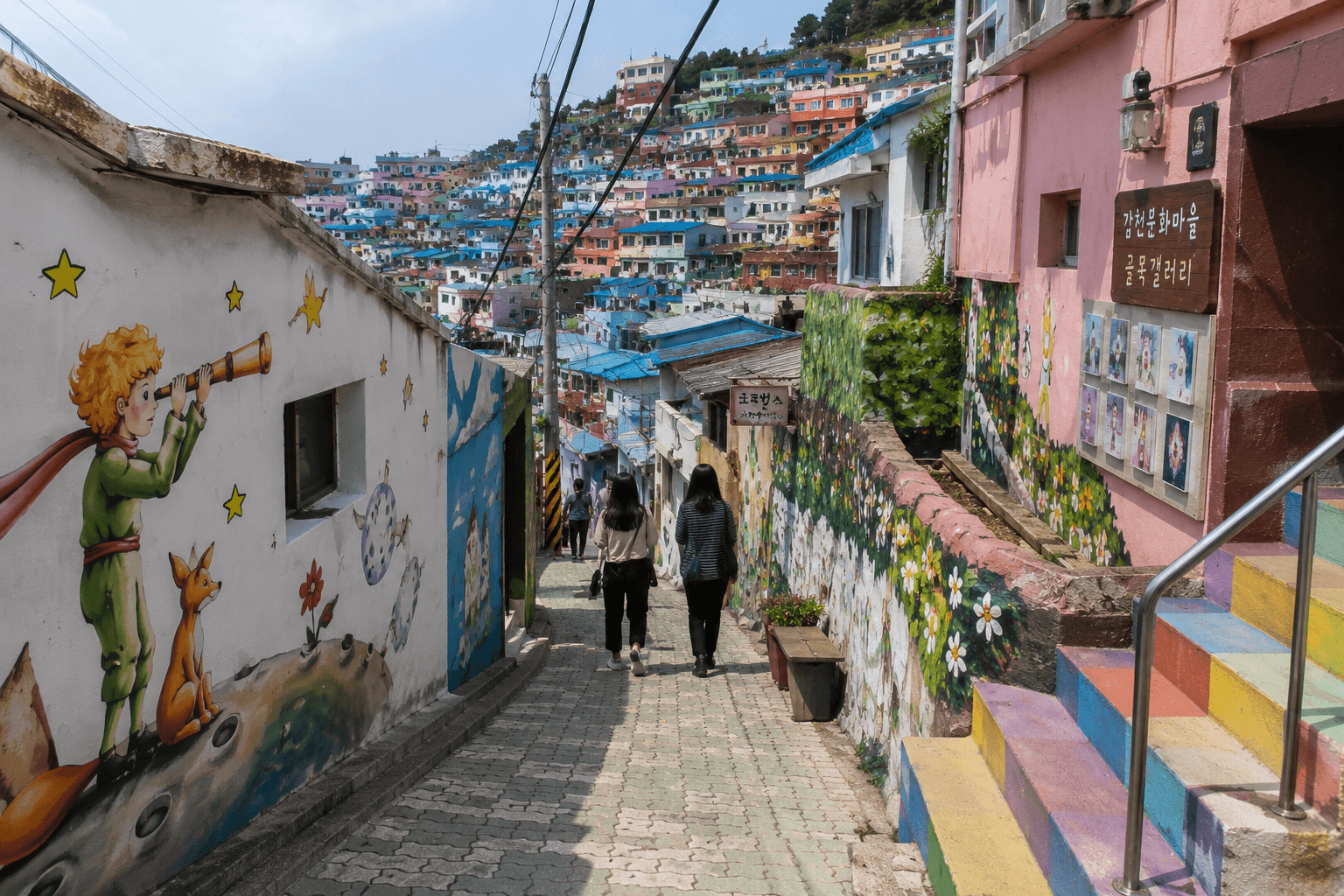
Gamcheon’s steep lanes, small galleries, and harbor viewpoints are best explored before the busiest part of the day. The neighborhood is residential, so keep voices low, avoid blocking doorways, and use marked public routes.
Comfortable shoes matter because the village includes stairs and slopes. Continue to Jagalchi and Nampo afterward rather than transferring across the city. Our Gamcheon Culture Village guide covers the visit in more detail.
Eat and Walk Around Jagalchi and Nampo
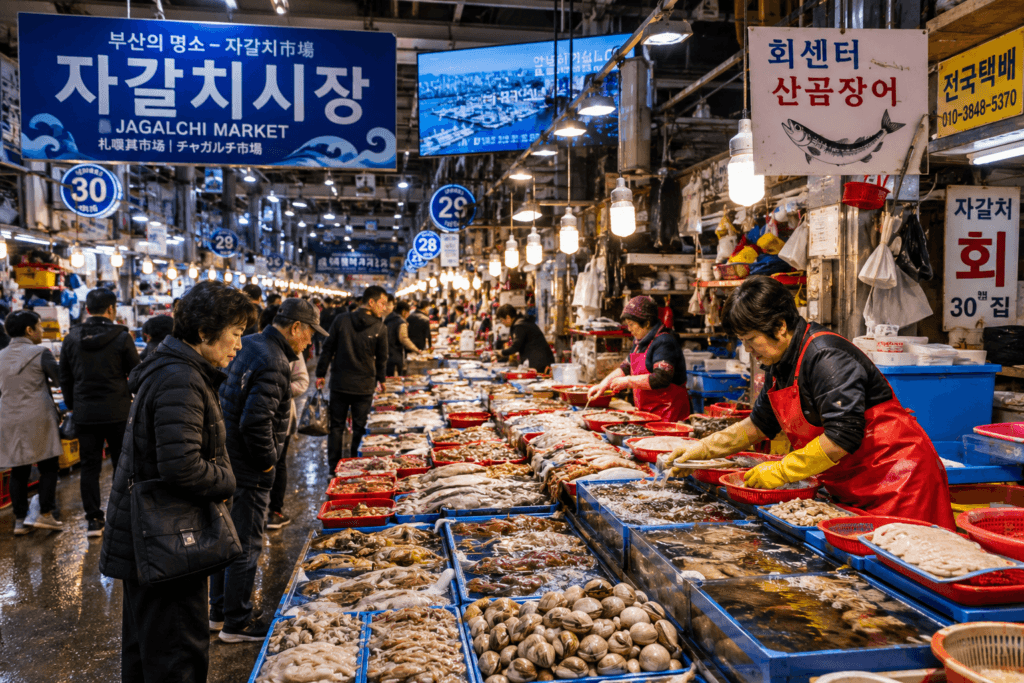
Jagalchi is more useful as part of a wider Nampo route than as a single photo stop. Walk through the market area, compare menus and displayed prices, then continue toward BIFF Square, Gukje Market, or Yongdusan Park.
If you order seafood, confirm the preparation method and full price before sitting down. Travelers who prefer a simpler meal can try fish cake, ssiat hotteok, or one of the surrounding restaurants. Read the Jagalchi Market guide for a closer look.
Visit Haedong Yonggungsa with Enough Time
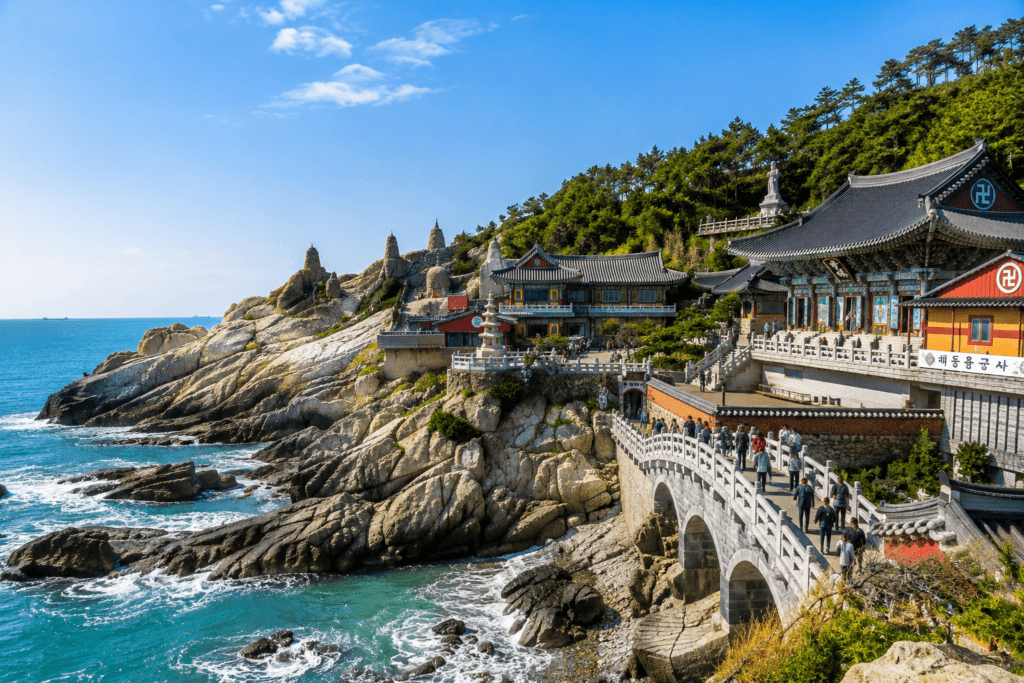
Haedong Yonggungsa is unusual because the temple complex sits on the rocky coast rather than deep in the mountains. The approach includes stairs, and the final bus or taxi transfer can take longer during busy periods.
Visit early for a calmer walk and treat Songjeong or Cheongsapo as the natural next stop. Check the Haedong Yonggungsa guide before setting your departure time.
End a Saturday at Gwangalli
Gwangalli Beach faces Gwangan Bridge and works especially well near sunset. The regular Gwangalli M Drone Light Show is a Saturday event, not a nightly attraction.
The regular seasonal start times are 8:00 p.m. and 10:00 p.m. from March through September, and 7:00 p.m. and 9:00 p.m. from October through February, all Korea Standard Time. Check the operator’s official notices for your date: rain, strong wind, typhoons or communication conditions can delay or cancel a show the day before or on the day itself.
There is one useful timing detail for the first and third Saturdays: the operator’s drone-and-laser timeline starts with six minutes of lasers before the drones take off. On other regular Saturdays, the drones launch at the advertised start time. Arrive for the start of the performance rather than treating the laser opening as a delay, and follow any special-event notice that overrides the regular plan.
The bridge view remains worthwhile even without the show. See our Gwangalli Beach guide for planning details.
What to Eat in Busan
Busan’s food is closely connected to its port, markets, and postwar history. A first trip does not need an elaborate restaurant checklist; choose dishes that fit the neighborhood you are already visiting.
- Dwaeji gukbap: pork-and-rice soup found throughout the city, especially around Seomyeon
- Milmyeon: chilled or spicy wheat noodles that work well in warmer weather
- Eomuk: Busan-style fish cake served at markets and casual shops
- Seafood: compare prices and preparation fees before ordering at market restaurants
- Ssiat hotteok: a seed-filled sweet pancake associated with Nampo and BIFF Square
Keep one meal flexible. Market queues, weather, and cross-city travel can easily shift a tightly timed restaurant plan.
Where to Stay in Busan
Choose a base according to the evenings you want, not simply the most famous beach.
- Haeundae: best for first-time beach access, eastern attractions, and a resort-like base
- Seomyeon: best for central transport, restaurants, shopping, and splitting time between east and west
- Nampo: best for markets, old downtown streets, and convenient access from Busan Station
- Gwangalli: best for bridge views, cafes, and relaxed waterfront evenings
There is no single best district for everyone. Compare travel times and atmosphere in our guide to the best areas to stay in Busan.
Getting to Busan
From Seoul, KTX is usually the simplest city-center connection. Journey times vary by service and stopping pattern, so compare the current timetable on KORAIL instead of building the day around an estimated arrival.
Our Korea KTX guide explains the booking process. Use the official KORAIL booking service for final schedules and reservations.
Gimhae International Airport connects to the city through the Busan–Gimhae Light Rail Transit and the metro network. A taxi can be more practical with heavy luggage or a late arrival, but road travel time depends on traffic and your hotel district.
Getting Around Busan
The subway covers many major districts, while buses complete the final connection to places such as Gamcheon and Haedong Yonggungsa. A rechargeable transportation card can be used across the network.
- Allow extra time for bus waits, transfers, stairs, and the final walk
- Use Naver Map or KakaoMap for local routing rather than relying only on a foreign map app
- Consider a taxi for one difficult cross-city transfer, especially with luggage
- Do not schedule fixed reservations back-to-back on opposite sides of the city
The Visit Busan Pass can be useful when its current included attractions match your plan. Start with the places you actually want to visit, then compare separate tickets with the pass—not the other way around. Our Visit Busan Pass comparison explains the pass choices, booking checks and a practical savings calculation. Budget local transport separately and check any required ride reservation. Do not assume it includes a specific Sky Capsule time.
Best Time to Visit Busan
Spring: March to May
Spring offers mild sightseeing weather, although coastal wind and temperature changes make a light outer layer useful. Festival and blossom timing varies each year.
Summer: June to August
Summer is the main beach season and also the hottest, most humid period. Reserve popular coastal stays early and keep an indoor alternative for heavy rain.
Autumn: September to November
Autumn usually suits long walks and coastal sightseeing. Major events can increase hotel prices, so check the city calendar before choosing dates.
Winter: December to February
Winter brings fewer beach crowds and clear coastal views, but wind can make the waterfront feel much colder than the air temperature suggests.
First-Time Busan Planning Tips
- Plan one geographic cluster per half-day instead of collecting attractions from opposite ends of the city
- Reserve priority experiences directly and keep screenshots or email confirmations available offline
- Check Saturday drone-show notices and weather before traveling to Gwangalli specifically for the performance
- Start Gamcheon and Haedong Yonggungsa early if you prefer quieter paths
- Keep at least one meal and one evening flexible for delays or poor weather
Official Sources and Last Check
- Visit Busan official travel portal
- Visit Busan Pass official site
- Haeundae Blue Line Park
- Busan Metropolitan City: Gwangalli drone show schedule
- KORAIL train schedules and reservations
Targeted recheck: October 21, 2026. The official Blue Line Park booking-release rule and the drone-show seasonal times, laser opening and cancellation guidance were reviewed. This was not a new check of all attraction hours, fares or transport services in this guide.
Earlier general source check: September 14, 2026. Recheck fixed-time reservations, seasonal beach operations and outdoor event notices shortly before travel.
Continue Planning Your Busan Trip
- Busan 3-Day Itinerary 2026
- Best Areas to Stay in Busan 2026
- Haeundae Beach Guide 2026
- Gwangalli Beach Guide 2026
- Gamcheon Culture Village Guide 2026
- Jagalchi Market Guide 2026
- Haedong Yonggungsa Guide 2026
Final Thoughts
Busan becomes easier to understand when you stop treating it as one compact beach city. Its strongest experiences are spread across several coastal and downtown districts, each with a different pace.
Three days is enough for a balanced first visit when the route is grouped geographically. Add a fourth day if beaches, food, spas, or slow evenings matter more than completing a checklist.
Confirm time-sensitive reservations and event notices, then leave room for an unplanned market meal or coastal walk. That balance usually produces a better Busan trip than a schedule built to the minute.