Affiliate disclosure: This guide may contain affiliate links. If you book through them, we may earn a small commission at no extra cost to you. Learn more.
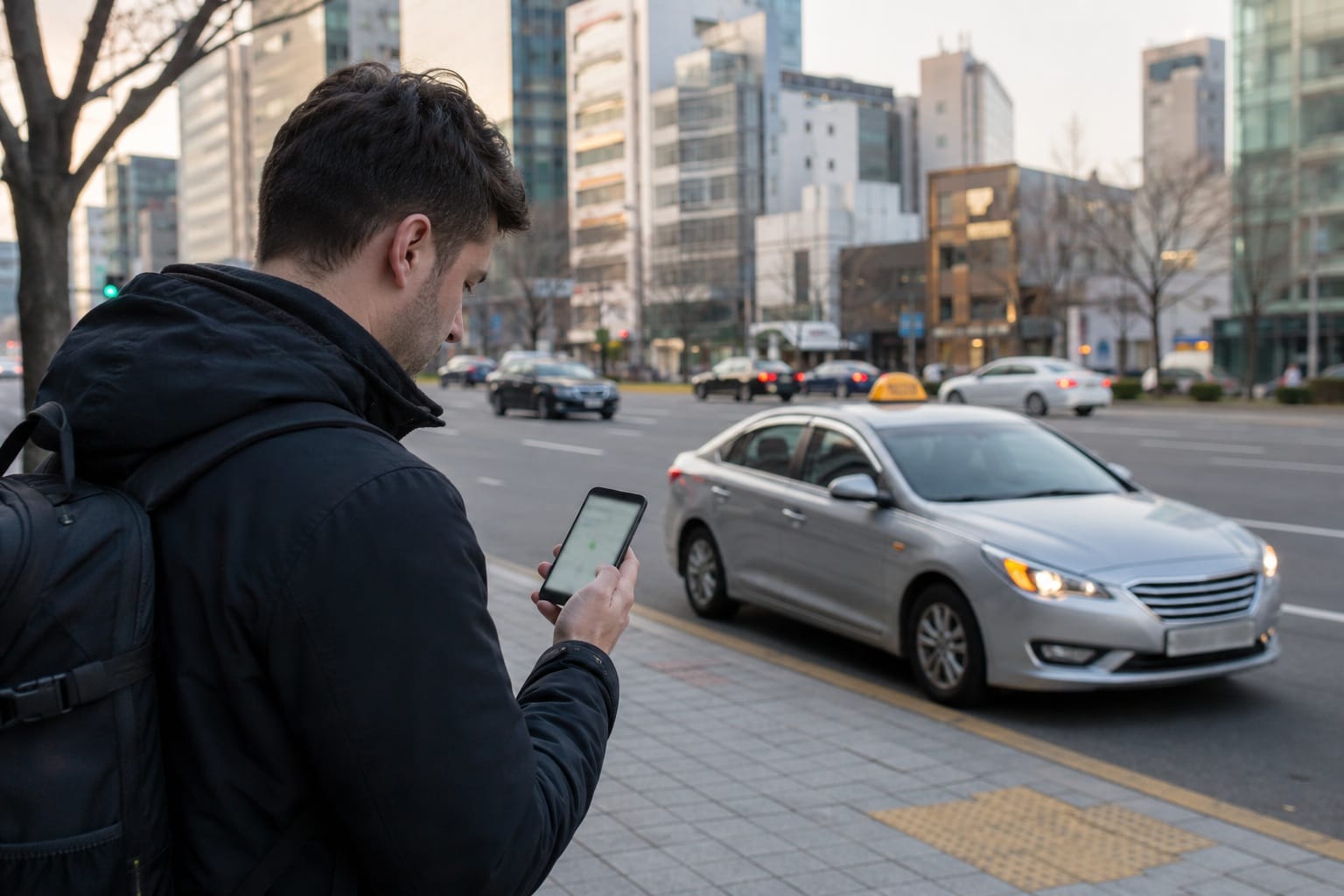
Calling a taxi in Korea is usually easy once the app is working.
The harder part comes before the ride: choosing the right app, registering with a foreign phone number, adding an overseas card, and figuring out whether payment happens inside the app or directly in the taxi.
For most visitors, three apps matter in 2026:
- k.ride
- Kakao T
- Uber
All three can help you call licensed taxis in Korea, but they suit different travelers.
For most short-term visitors, k.ride is the easiest first choice. Uber is a useful backup for travelers who already have an account. Kakao T makes more sense for longer stays, especially when you already use KakaoTalk or want access to a wider range of local vehicle options.
This guide explains the differences, how foreign cards work, what to do when no driver accepts, and how to handle airport and station pickups without turning Exit 7 into a small personal crisis.
App features, fares and payment options last checked: July 2026.
Table of contents
What Is the Best Taxi App in Korea for Tourists?
The fastest answer is:
| Best for | Recommended app |
|---|---|
| Most first-time visitors | k.ride |
| Existing Uber users | Uber |
| Longer stays in Korea | Kakao T |
| Foreign-card setup | k.ride |
| Familiar international interface | Uber |
| More local vehicle choices | Kakao T |
A practical setup for a short trip is simple:
- Install k.ride as your main app.
- Keep Uber as a backup.
- Use Kakao T only when you already have a Kakao account or need one of its local vehicle options.
You do not need all three apps open for every ride. Two is enough for most travelers.
k.ride vs Kakao T vs Uber
| Feature | k.ride | Kakao T | Uber |
|---|---|---|---|
| Best user | International visitor | Resident or longer-stay traveler | Existing Uber user |
| Login | Google or Apple account | Kakao account | Existing Uber account |
| Overseas number | Designed for international use | Possible through Kakao account | Usually uses existing account |
| Foreign cards | Officially supported for eligible cards | Success varies by card and account | Existing saved cards may work |
| Direct driver payment | Depends on ride option | Available on eligible calls | In-person payment may be available |
| Main languages | English, Japanese, Chinese | Korean, English, Japanese | Follows Uber account language |
| Translation support | Strong | More limited | Message translation may be available |
| Local mobility features | Basic taxi-focused experience | Widest selection | Taxi-focused |
| Main advantage | Simplest visitor setup | Most local options | Familiar account and interface |
| Main drawback | Fewer extra services | More setup for tourists | Supply varies by region |
No app guarantees an immediate taxi.
Rain, rush hour, late-night entertainment districts, concerts, baseball games, short-distance requests, and remote pickup locations can all affect matching.
Sometimes the app is fine. The city has simply produced more passengers than taxis.
k.ride: Best for Most International Visitors
k.ride is operated by Kakao Mobility and is designed around international travel.
It offers a simpler setup than Kakao T because travelers can sign in with a Google or Apple account instead of creating a KakaoTalk account first.
The app also supports multilingual destination search, eligible overseas-issued cards, and translated communication between passengers and drivers.
Why k.ride is easier
The main advantage is not one feature. It is the removal of several small obstacles.
A visitor can search for a hotel in English, register a foreign card, and use translated chat when the driver asks where they are waiting.
That matters at places with several entrances, such as:
- Large hotels
- Train stations
- Shopping malls
- Apartment complexes
- Airports
- Event venues
A driver may ask whether you are near a particular exit, lobby, gate, or main road. k.ride makes that exchange easier than relying on gestures and optimistic map pins.
Vehicle options
Available categories vary by location and demand, but the app may show:
- Standard
- Comfort
- Deluxe
- Luxury
Standard is enough for most city rides.
Comfort is more useful for groups, large luggage, strollers, or airport transfers.
Premium categories cost more and may have limited supply, so the most expensive option is not always the fastest one.
The limitation
k.ride focuses on making taxi calls easier for visitors. It does not offer the full local mobility ecosystem found inside Kakao T.
For ordinary sightseeing and hotel transfers, that is rarely a problem.
Kakao T: Best for Longer Stays
Kakao T is Korea’s main local mobility app.
It is widely used by residents and offers more than taxi calling. Depending on the account and region, the app may include reservations, larger vehicles, premium taxis, parking, bikes, public transport information, and other mobility services.
For someone staying in Korea for several weeks or months, Kakao T can be more useful than k.ride.
For a traveler visiting Seoul for four days, the setup may feel heavier than necessary.
Account setup
Kakao T generally requires a Kakao account.
A foreign phone number may work when creating the account, but verification and login can be less straightforward than using k.ride with Google or Apple.
Travelers who already use KakaoTalk may find the process simple.
Those who do not may prefer to avoid creating a messaging account only to reach a restaurant ten minutes away.
Language support
The app supports multiple languages, including English and Japanese, but some notices, destination names, or driver messages may still appear in Korean.
The interface is usable for foreign visitors, though k.ride provides a more travel-focused translation experience.
Local vehicle choices
Kakao T may show several categories, including:
- General Taxi
- Blue
- Venti
- Deluxe or Mobum
- Black
General Taxi is usually the most affordable.
Blue may provide partner-based dispatch with an additional fee or different matching system.
Venti is designed for groups and luggage, though vehicle capacity still depends on the number and size of bags.
Deluxe and Black are premium services with higher fares.
Reservations
Advance reservation options may appear for selected vehicles, cities, and times.
The reservation button is not guaranteed to appear everywhere.
A feature visible in central Seoul may not be available in a smaller city or at the same time the following day.
The useful backup: Pay to Driver
Foreign cards may work in Kakao T, but registration success varies.
When app payment fails, eligible taxi calls may offer a direct-payment option such as Pay to Driver.
After the ride, passengers can usually pay with:
- Cash
- A physical credit card
- T-money, where accepted
Check the payment setting before requesting the taxi.
Uber: Best for Existing Users
Uber is often the most comfortable backup for travelers who already use it at home.
The account, profile, and saved payment method may continue working in Korea without requiring a new local registration.
The interface feels familiar, but the service itself is different from UberX in many countries.
How Uber Works in Korea
Uber in Korea mainly connects passengers with licensed local taxi drivers.
The vehicle may look like a standard Korean taxi, and the final fare can still be affected by local taxi rules, including meter charges, tolls, and late-night surcharges.
Common options may include:
- Standard Taxi
- Speed Call
- Green
- Deluxe
Speed Call may add a priority fee, shown before booking.
Green may offer an electric taxi with a separate service charge.
Deluxe is a premium option with a higher fare.
Payment
Uber may allow:
- Automatic app payment
- In-person payment
In-person payment usually means paying the driver with cash or a physical card inside the taxi.
Check the selected payment method before confirming the ride, especially when your Uber account was originally created in another country.
Advance requests
Uber may offer advance booking for selected rides, including airport transfers and early departures.
Availability depends on location, vehicle supply, and the selected product.
Treat an advance request as a useful planning tool, not as a universal guarantee for every city.
Can You Use a Foreign Phone Number?
Yes, but setup differs by app.
k.ride
k.ride is the easiest because it supports Google or Apple login.
A Korean phone number is not the center of the setup process.
Kakao T
A foreign number may be used to create a Kakao account, but account verification can be more involved.
Complete registration before arriving in Korea whenever possible.
Uber
Existing users can normally continue with the same account.
Before traveling, check that:
- Your account is active
- Your saved card has not expired
- International transactions are enabled
- Your phone can receive verification messages if needed
Many travel eSIMs provide mobile data without a Korean voice number.
That is usually enough for app-based taxi calls. The Best Korea eSIM Guide explains the difference between data-only plans and plans that include a local number.
Which Apps Accept International Cards?
k.ride
k.ride officially supports eligible overseas-issued cards.
Card approval can still depend on:
- Card issuer
- International transaction settings
- Billing information
- Fraud protection
- Account verification
Kakao T
Some foreign cards register successfully, while others fail.
Direct payment to the driver is the most useful backup when the option appears.
Uber
A card already linked to your account may continue working.
Before leaving home, check the expiration date and add a second card if possible.
App Payment or Pay the Driver?
Both methods are normal.
Paying in the app
Advantages:
- No payment conversation
- Digital receipt
- Easier when carrying little cash
- Faster exit at the destination
Possible issues:
- Foreign-card rejection
- Temporary authorization holds
- Confusion between estimated and final fare
- Connection problems
Paying the driver
Advantages:
- Useful when app payment fails
- Physical cards and cash are widely accepted
- Familiar option in standard taxis
Possible issues:
- The correct payment method must be selected before booking
- Some premium services require app payment
- A foreign card may still fail at the taxi terminal
Carry one physical card and a small amount of Korean cash.
Korea is highly card-friendly, but payment backups tend to become important at inconvenient moments. The Cash vs Card in Korea Guide covers ATMs, T-money, card acceptance, and practical cash needs.
How to Call a Taxi Step by Step
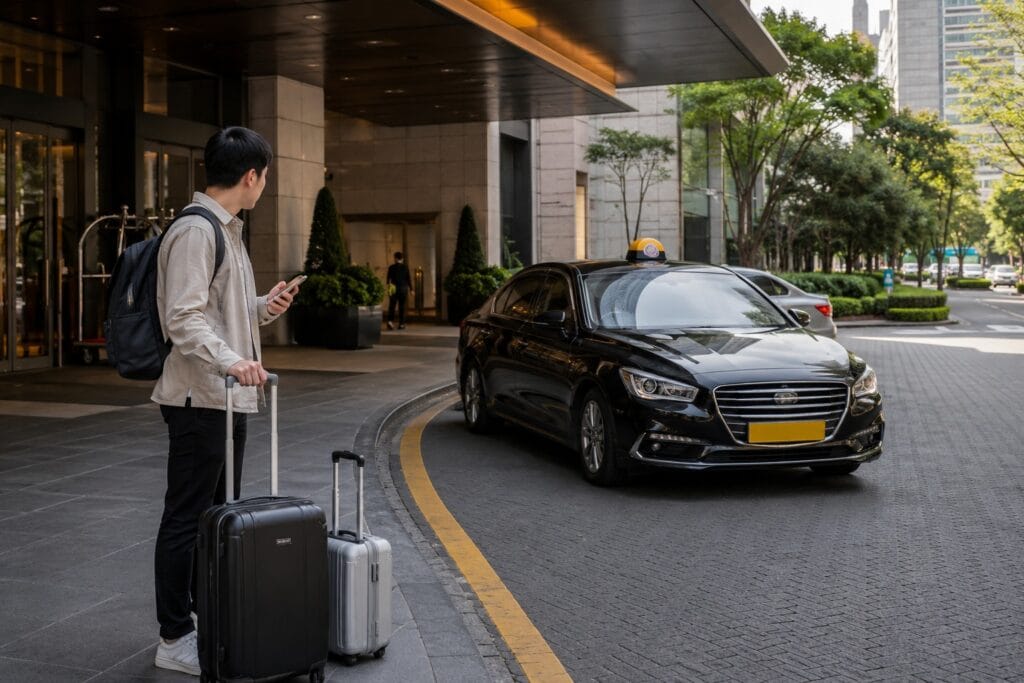
The buttons vary slightly, but the process is similar in all three apps.
1. Check the pickup pin
Do not rely on the automatic GPS location.
Move the pin to a place where a taxi can legally stop.
This matters most at:
- Hotels with several entrances
- Shopping centers
- Train stations
- Apartment complexes
- Narrow alleys
- Bus-only zones
2. Search for the destination
Use the exact hotel, attraction, or restaurant name.
Then confirm the location on the map.
Businesses with similar English names may appear in different districts.
When possible, compare the Korean address shown in your hotel booking or map app.
3. Choose the vehicle
Standard is usually enough for one to three passengers with moderate luggage.
Choose a larger category for:
- Four or more travelers
- Several large suitcases
- Strollers
- Wheelchairs
- Airport transfers
Four seats do not automatically mean four people plus four oversized suitcases.
4. Check the payment method
Look for:
- App payment
- Pay to Driver
- In-person payment
- Priority fee
- Estimated fare
Confirm the setting before requesting.
5. Request the ride
Once matched, the app should show:
- Driver name
- Vehicle type
- License plate
- Arrival estimate
- Pickup point
Compare the plate number before entering.
6. Meet the driver
Stand at the actual pickup pin.
Useful messages include:
- I am near Exit 4.
- I am waiting in front of the hotel lobby.
- I have two large suitcases.
7. Confirm the destination
Check the destination displayed in the app or on the driver’s navigation screen.
This prevents a long ride to the wrong branch of a hotel chain.
8. Keep the receipt
Trip records help with:
- Lost items
- Fare disputes
- Expense tracking
- Vehicle identification
Calling a Taxi at Incheon Airport
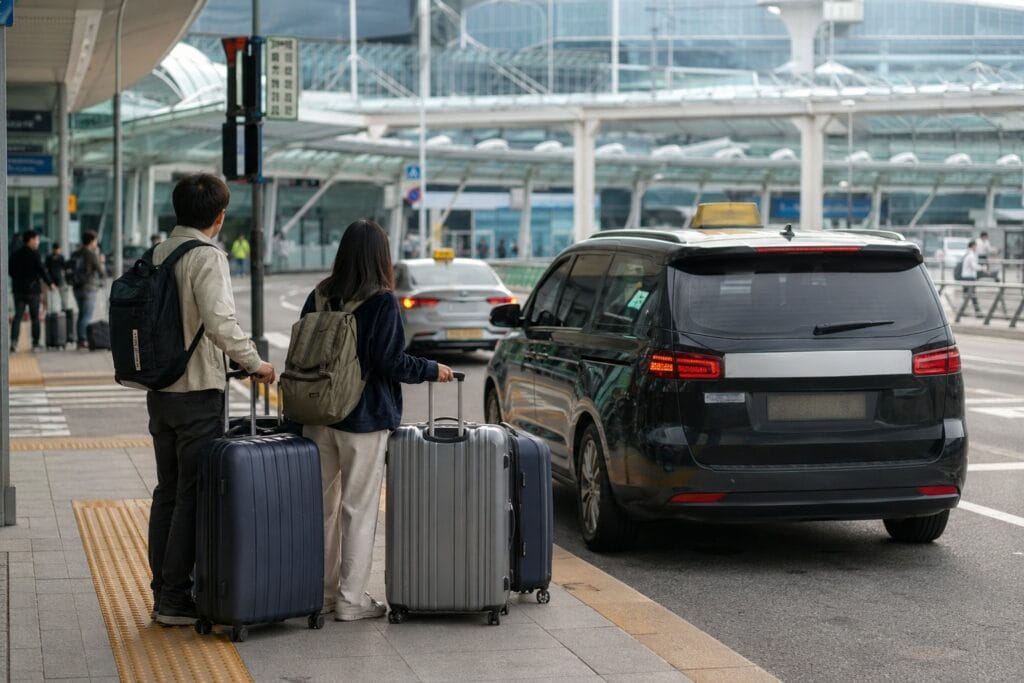
A taxi app can work at Incheon Airport, but the official taxi stand may still be easier after a long flight.
There are three main options.
Official taxi stand
This is often the simplest choice when:
- Mobile data is not working
- You have several bags
- You do not want to set up an app
- You prefer staff assistance
- The app pickup area looks confusing
Follow signs for the official taxi queue and choose the correct line for your destination and vehicle type.
Immediate app call
Wait until you have collected your luggage and reached the designated pickup area.
Confirm:
- Terminal 1 or Terminal 2
- Floor level
- Door number
- Pickup zone
Calling while still inside immigration or baggage claim can lead to cancellation before you reach the vehicle.
Reserved airport ride
k.ride, Kakao T, Uber, and private transfer services may offer advance airport products.
Some require:
- Flight number
- Arrival time
- Passenger count
- Luggage count
- Terminal information
These services may use different pricing and cancellation rules from a normal taxi call.
Travelers with several large bags may prefer a private airport van transfer rather than hoping everything fits into a standard sedan.
The Incheon Airport to Seoul Guide compares taxis, AREX, airport buses, and private transfers.
Calling a Taxi at Seoul Station

Seoul Station has several entrances, roads, taxi stands, and pickup areas.
Selecting only “Seoul Station” can create confusion.
Choose a specific side or entrance and follow the route shown in the app.
During busy periods, it may be easier to:
- Use the official taxi stand
- Walk away from the busiest entrance
- Set a nearby hotel as the pickup point
- Move to a road where stopping is legal
The driver cannot collect you from a bus-only lane or the other side of a road divider, regardless of how confidently the map pin says otherwise.
What to Do When No Driver Accepts
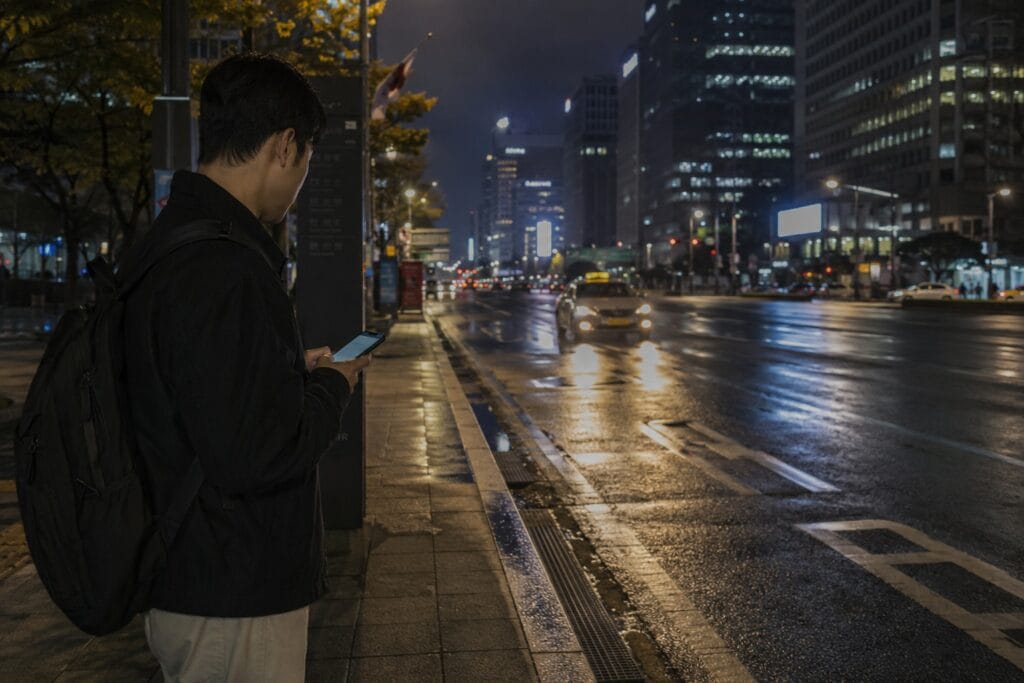
A failed request does not always mean the app is broken.
Try these steps in order.
Move to a larger road
Drivers are more likely to accept pickups that are easy to reach and easy to leave.
Walk away from narrow alleys, event entrances, underground shopping exits, or congested hotel driveways.
Check the destination pin
Make sure you have not selected:
- A hotel in another city
- A duplicate restaurant
- A back entrance
- A road closed to vehicles
Try another app
If k.ride cannot match a driver, check Uber.
Kakao T users can also try another visible vehicle category.
Keep only one confirmed ride active.
Change the vehicle category
Priority, partner, or larger vehicles may use different driver pools.
The added fee should appear before booking.
Wait a few minutes
Demand can change quickly after rain starts, offices close, or an event ends.
Repeatedly cancelling and requesting may not improve the result.
Walk away from the crowd
After a concert, game, or late-night event, walking two or three blocks can make pickup easier.
Use a taxi stand
Official taxi stands remain useful in busy districts, outside stations, and near major hotels.
Ask staff for help
Hotel, restaurant, or attraction staff may call a local taxi or write the destination in Korean.
This is particularly useful outside Seoul.
Can You Hail a Taxi on the Street?
Yes.
You can still stop an available taxi on the street or use an official taxi stand.
Look for a taxi displaying an available sign, usually shown in Korean as 빈차.
Apps are useful because they provide:
- Destination confirmation
- Driver identity
- License plate
- Fare estimate
- Trip history
They are convenient, but they are not the only way to get a taxi.
In busy areas, a taxi stand may be faster than refreshing three apps while every available car passes by.
Seoul Taxi Fares
The following standard Seoul taxi fares were last checked in July 2026.
The regular daytime base fare is:
4,800 won for the first 1.6 kilometers
After that, distance and low-speed time charges are added.
The final fare may also include:
- Traffic delays
- Toll roads
- Late-night surcharge
- Travel outside the operating area
- Vehicle category
- App or priority fees
The fare shown before booking is an estimate.
The final metered fare may change because of traffic, tolls, late-night surcharges, destination area, and vehicle type.
Late-Night Surcharges
For standard Seoul taxis, late-night surcharges vary by time.
| Time | Typical surcharge |
|---|---|
| 10:00 p.m. to 11:00 p.m. | 20% |
| 11:00 p.m. to 2:00 a.m. | 40% |
| 2:00 a.m. to 4:00 a.m. | 20% |
Travel outside the taxi’s normal operating area may add another surcharge.
Night and out-of-area charges can overlap.
Premium taxis and app-specific products may use different pricing.
What the Vehicle Types Mean
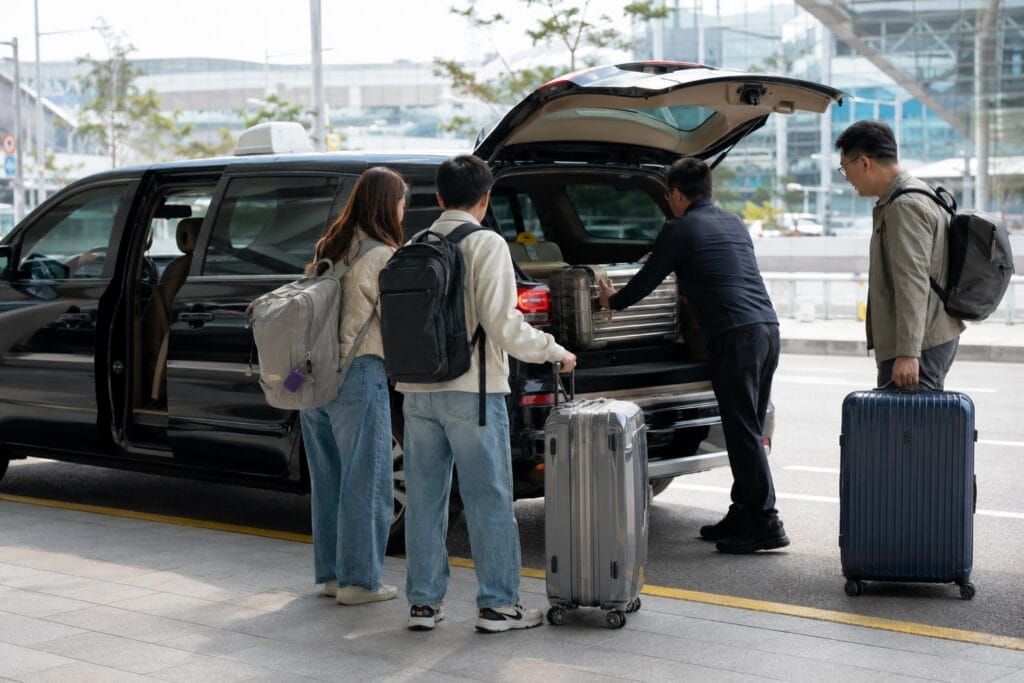
Names vary between apps, but most options fit into five groups.
Standard or General
A regular metered taxi.
Best for normal city rides and usually the lowest-cost option.
Blue or Priority
A partner or priority-dispatch option.
It may cost more but can improve matching during busy periods.
Venti or Comfort
A larger vehicle for groups, luggage, strollers, or airport transfers.
Deluxe or Mobum
A premium licensed taxi with a higher fare and more spacious vehicle.
Black or Luxury
A high-end chauffeur-style service with premium pricing.
The most expensive vehicle is not always the fastest to arrive.
Taxi Safety in Korea
Licensed taxis in Korea are generally safe and widely used.
App-based rides add useful protections, including:
- Driver identity
- License plate
- Digital trip history
- Route tracking
- Fare estimate
- Receipt
- Customer support
Compare the plate number before entering.
After leaving the taxi, check:
- Phone
- Passport
- Wallet
- Shopping bags
- Camera
- Portable battery
Receipts and Fare Problems
Keep the receipt when:
- The fare seems unusually high
- A surcharge is unclear
- You left something behind
- You need to identify the vehicle
- The route appears incorrect
Take screenshots of:
- Ride summary
- Pickup point
- Destination
- Final fare
- Vehicle plate
- Driver messages
For app-booked rides, contact the app’s support service first.
Lost Items
Open the trip history and look for help, support, or lost-item options.
Useful information includes:
- Ride date
- Pickup time
- Pickup location
- Destination
- Vehicle number
- Driver name
- Item description
For a street-hailed taxi, the paper receipt is extremely valuable.
Without a receipt or vehicle number, recovery becomes much harder.
Common Taxi App Mistakes
Installing the app after landing
Download and register before the trip.
Assuming every eSIM includes a phone number
Many travel eSIMs provide data only.
Trusting the GPS pin
Check the actual road and entrance.
Choosing the wrong hotel branch
Confirm the district and Korean address.
Forgetting the payment setting
Check whether the ride uses app payment or direct payment.
Booking a standard taxi for too much luggage
Choose a larger vehicle before the driver arrives.
Calling multiple apps at once
Keep only one confirmed ride.
Assuming reservations are guaranteed everywhere
Check the exact ride status and product terms.
The Best Travel Apps for Korea guide includes navigation, translation, payment, transport, and emergency apps worth installing before arrival.
Frequently Asked Questions
What is the best taxi app for tourists in Korea?
k.ride is the easiest default choice for most international visitors.
Uber is a useful backup for existing users, while Kakao T is better suited to longer stays and travelers who already have a Kakao account.
Is Kakao T available without a Korean phone number?
A foreign number may be used when creating a Kakao account, but the setup can be more complicated than k.ride.
Complete registration before arriving in Korea.
Can I use a foreign credit card in Kakao T?
Some overseas cards work, while others fail during registration.
Select Pay to Driver when available and use cash or a physical card inside the taxi.
Does Uber work in Seoul?
Yes.
Uber in Seoul mainly connects passengers with licensed local taxis.
Is k.ride the same as Kakao T?
No.
Both are connected to Kakao Mobility, but k.ride is designed for international visitors while Kakao T offers a broader local mobility platform.
Can you hail a taxi on the street in Korea?
Yes.
You can stop an available taxi or use an official taxi stand without an app.
Why is no driver accepting my ride?
Common reasons include rain, high demand, short distance, difficult pickup access, event traffic, or a remote location.
Move to a larger road, check the address, try another app, or use a taxi stand.
Final Thoughts
For most short-term visitors, the best taxi app strategy in Korea is simple.
Use k.ride as the main app.
Keep Uber as a backup.
Use Kakao T when you already have a Kakao account or need its wider range of local vehicle options.
The apps differ, but the most common problems are surprisingly ordinary: the wrong pickup pin, the wrong hotel branch, a card error, or luggage that does not fit.
Check those details before requesting the ride and most taxi trips in Korea become straightforward.
The ride itself is usually the easy part. The real challenge is making sure the driver is waiting at the same Exit 7 that you are.