Jeonju is easy to enjoy badly: arrive hungry, buy three snacks, queue for lunch anyway, then discover that your return train leaves just as the evening starts getting interesting. The village is walkable. The day needs a little more thought.
For a first visit, build the trip around one proper meal, Gyeonggijeon Shrine and a loose walking loop. Add a hanbok rental or a hillside viewpoint if it genuinely interests you. Staying overnight makes sense if you want a hanok room, an unhurried dinner and another morning in town; it is not a requirement for seeing the main village.
This Jeonju Hanok Village guide compares those choices, then lays out a route you can shorten without turning the afternoon into an obstacle course.
Information checked October 9, 2026. Suggested walking allowances and buffers below are planning recommendations, not official timetables. Some links are affiliate links: Korea Travel Lab may earn a commission if you book through them, at no extra cost to you.
Table of contents
Decide how much Jeonju you actually want
A Seoul day trip is a sensible choice when you want a concentrated introduction: traditional streets, a heritage stop, lunch and a few hours to wander. An overnight is better when the accommodation and evening are part of the attraction rather than simply somewhere to recover from sightseeing.
| Your priority | Better starting plan | The trade-off |
|---|---|---|
| See the village without arranging separate transfers | Seoul group tour | Fixed meeting point and return schedule |
| Choose your own lunch, pace and departure | Independent train day trip | You handle the station-to-village journey |
| Sleep in a hanok and keep dinner flexible | One night near the village | Another check-in and luggage move |
| Photograph roofs and autumn trees | Flexible independent visit | Weather and leaf color remain uncertain |
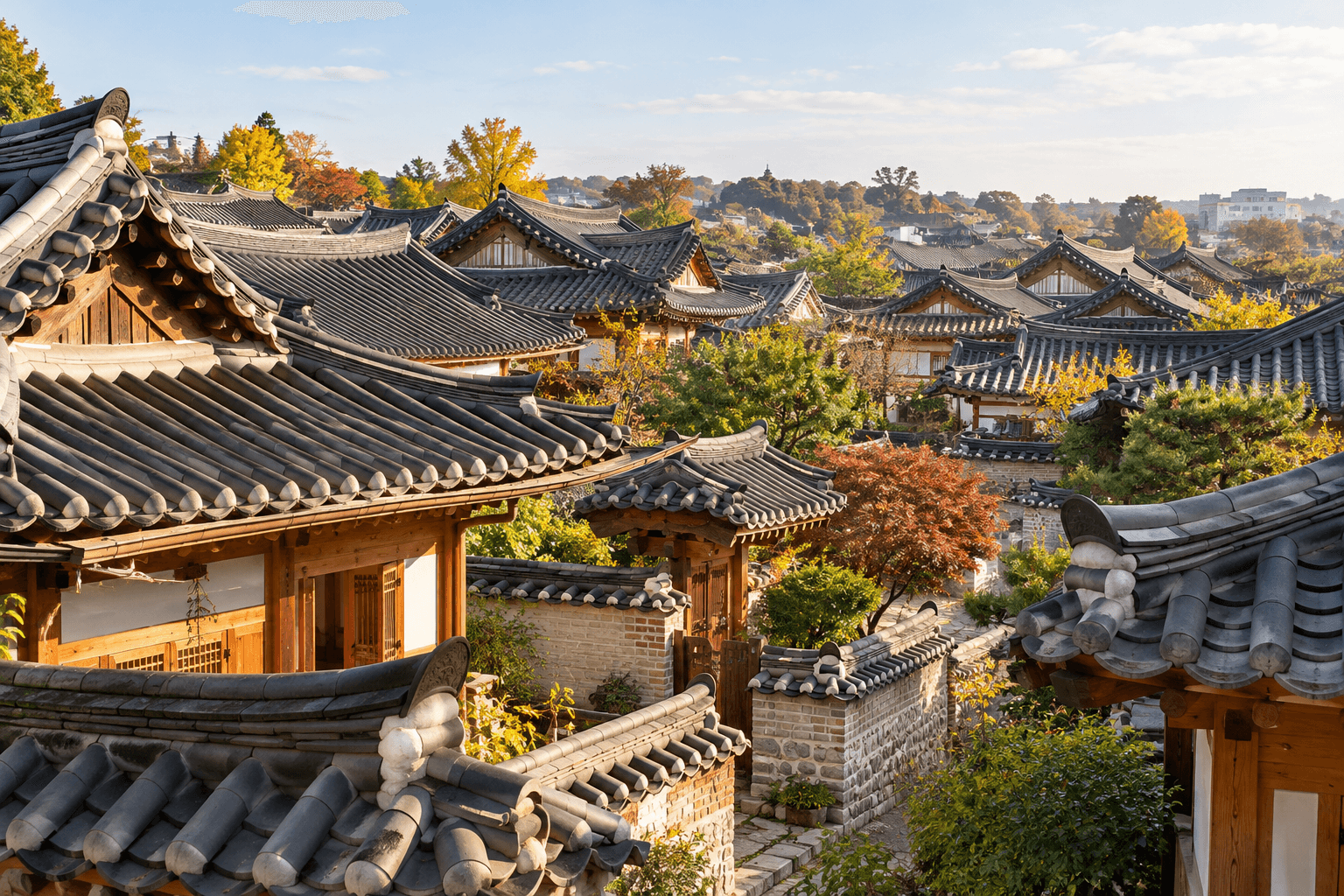
The village is an urban neighborhood, not a secluded historical film set. Allow for cafes, rental shops, food stalls and other visitors alongside the architecture. Someone selling a snack does not invalidate a handsome roof. It does, however, explain why the busiest streets can feel more energetic than contemplative.
If you only have a short stay in Seoul, compare the travel commitment with our day trips from Seoul guide before assigning a whole day to Jeonju. Choose it because you want the place, not because your itinerary has developed a fear of blank space.
Seoul to Jeonju: book the journey, not just a train
Independent rail travel
Start by searching Yongsan → Jeonju, then choose the actual service that suits your date. The city's official directions identify Yongsan–Jeonju rail travel and refer travelers to KORAIL for reservations. Departure stations, journey length and fares must be read from the selected train; this guide deliberately does not advertise one duration or price as universal. Jeonju's official transport directions
The important distinction is Jeonju Station versus Jeonju Hanok Village. Arriving by train does not put you at the shrine gate. Budget separately for finding the onward stop or taxi, reaching the village and repeating the process on the way back.
For a first independent visit, a taxi is a reasonable simplicity-first choice, particularly with luggage or several passengers sharing the trip. Save the destination in Korean: 전주한옥마을. For the western heritage cluster, also save 경기전, Gyeonggijeon. Use the current fare rather than an old flat estimate from a tourism page.
For a local bus, check the live route and direction in your map app at the station. Older official lists contain multiple route numbers; do not board merely because a number appears in an article. Confirm that the proposed stop serves the village and check how much walking remains. A bus heading in the opposite direction is an unexpectedly comprehensive city tour.
You can check Yongsan–Jeonju train options on Trip.com, or compare with KORAIL directly. Set your travel date yourself, review the final fare and cancellation terms, and arrange the return before filling the afternoon with activities. The linked search is not a reserved seat or a guaranteed departure.
If Korean rail booking is new to you, our Korea KTX guide explains the wider booking process. Keep the ticket's departure station, train number and seat details accessible offline.
A Seoul tour removes transfers, not all decisions
The Klook product checked for this guide departs from Seoul and offers both a village-focused hanbok/local-food option and an autumn Jeonju–Jangtaesan combination. These are different days. A forest addition reduces the freedom to spend all your sightseeing time in Jeonju.
The displayed village-focused option describes five hours of self-guided time including lunch, with meal expenses excluded. The page also lists a minimum participation requirement and warns that traffic can delay the return. Confirm the exact package, rental inclusions, meeting point, accessibility and cancellation conditions for your date rather than treating the headline as the whole contract. Current Klook tour listing
If transport logistics are the reason you would otherwise skip the city, compare the Jeonju day-tour packages from Seoul on Klook. Do not put a flight, prepaid show or tightly timed dinner immediately after the advertised return.
Intercity bus is another option
Jeonju's transport page also identifies Seoul's Central City and Nambu terminal connections. Search the exact terminal and date in the relevant booking service, not simply “Seoul bus.” Your departure terminal and arrival terminal matter just as much as the city names. Allow for road traffic, then plan the local journey from the Jeonju terminal to the village. Official directions and bus-booking references
A walking loop that leaves room for lunch
Use Gyeonggijeon and Jeondong Cathedral → village lanes and lunch → Omokdae if wanted → Hyanggyo and the river side → Pungnammun and Nambu Market if time allows as a flexible sequence. It is a suggested sightseeing loop, not a promise that every building is open or every section is step-free.
For a day trip, reserve roughly four to six hours in the village area, apart from your intercity journey and local transfers. You can use less, but then choose the stops rather than trying to compress them all.
Begin with the western heritage cluster
Gyeonggijeon gives the trip a historical anchor before the food decisions take over. The shrine was established to enshrine the portrait of Taejo, founder of the Joseon dynasty. The official village page lists standard admission of ₩3,000 for adults, ₩2,000 for youth/military and ₩1,000 for children; discounted resident categories are separate. Official Gyeonggijeon information
Hours need caution. The village's Korean page lists 09:00–19:00 for September–October and 09:00–18:00 for November–February, while another city tourism listing gives earlier seasonal closing times and the English village page gives a different year-round schedule. Plan a morning or early-afternoon visit, not a last-minute arrival based on the latest closing time you can find. Confirm that day's admission cutoff locally; the listed inquiry number is 063-281-2788. City tourism listing, English village listing
Allow about 45–60 minutes as a personal planning estimate. Move slowly enough to notice the courtyards, rather than treating the entrance fee as permission to sprint through a checklist.
Nearby Jeondong Cathedral works as the next stop. Approach it as a functioning religious site: obey current access signs, stay quiet around worship and accept that interior tourist access may not be available. The exterior alone can be a worthwhile pause.
Eat before the route becomes a negotiation
Choose a lunch place before you are exhausted. Check its current menu, opening status and any break period; keep a second option within the same walking area. If the queue would consume your remaining sightseeing time, change restaurants rather than defending a decision made three days earlier on your phone.
Do not stack several filling snacks immediately before a proper bibimbap meal. A snack is enjoyable. A snack that secretly became lunch can make the restaurant reservation feel like a competitive event.
Afterward, spend time in the smaller lanes. Leave room to sit for tea or coffee instead of counting the number of businesses you entered. Respect closed doors and private courtyards; a pretty entrance is not automatically a public attraction.
Make the uphill section optional
Omokdae is the natural candidate for a roofscape-oriented detour. Treat the climb as optional and check the ground before committing in rain. Jaman Mural Village is another hillside addition, not a necessary part of every first visit. The official village site identifies Jaman as a hillside neighborhood. Official neighborhood information
For tired knees, a stroller or a group already arguing with its footwear, keep to a lower-level route. You do not need to earn your lunch through elevation gain. Allow extra time for steps and slopes if you do include the hill; a short line on a map is not always a short effort.
Finish toward Hyanggyo and the river, or shorten the day
Use Jeonju Hyanggyo and the river-side area as the calmer final part of the walking plan. Hyanggyo is a Confucian heritage site, and the city's imagery highlights its autumn setting. That is a reason to include it, not evidence that the trees will be yellow on your particular date. Official heritage page, official seasonal photographs
For a short visit, stop here and make your return transfer. With more time, continue toward Pungnammun and Nambu Market. Save the places in your map before leaving the central lanes so you can adjust the order without repeatedly retracing your steps.
Food: one signature bowl, then small extras
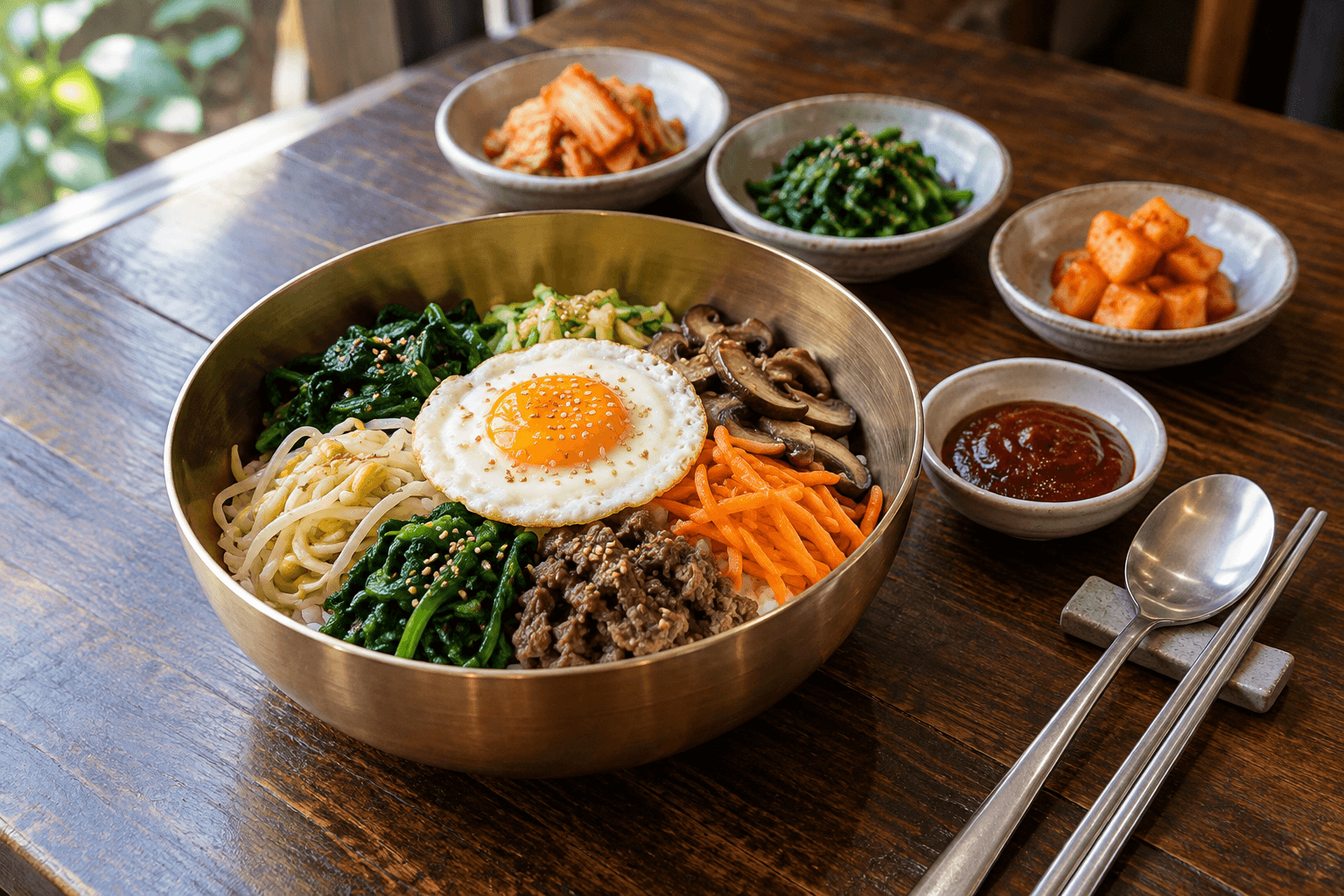
Save appetite for a proper meal. AI-generated editorial illustration inspired by Jeonju bibimbap; not a photograph of a specific restaurant's dish.
Bibimbap is the obvious first meal, but read the version you are ordering. Jeonju's official food guide includes restaurants serving raw-beef bibimbap as well as other preparations, and describes beef-broth rice among the city's traditional recipe features. A bowl full of vegetables is therefore not proof of a vegetarian meal. Visit Jeonju's bibimbap guide
Ask about meat, broth, egg and sauces if those affect your choice. For allergies or strict dietary requirements, use a clear translated note and confirm with staff; removing a visible topping does not establish that the remaining dish meets your needs. If a place cannot confidently answer, move on.
Kongnamul gukbap, rice soup with bean sprouts, is the other useful dish to know. The city's 2026 food feature presents it as a warming local staple and notes egg and possible squid accompaniments. It suits a second meal or overnight breakfast, but ingredients vary. Jeonju's February 2026 food feature
For snacks, buy one thing to share before committing to another queue. Check the displayed price and portion, and carry a little cash alongside your card rather than assuming every stall accepts your preferred payment method. This is a practical backup, not a claim that the entire neighborhood is cash-only.
Our Korean street food guide helps you recognize common snacks without ordering entirely by photograph. In Jeonju, let the meal remain the main event and let the extras fill the gaps.
Hanbok rental: check the return clock first
Rent a hanbok if dressing up is genuinely part of the day you want. Otherwise, skip it comfortably. There is no uniform requirement for appreciating a wooden gate.
Before paying, confirm the rental duration, exact return time, late charges, fitting arrangements, accessory costs, hair-styling inclusions and bag storage. Ask about the rules for rain or damage. A low advertised base price may not include the version of the outfit shown in the photograph.
Keep comfortable shoes underneath the plan. Long hems, stairs and wet paving are not a great combination, so consider doing the heritage-and-lane portion in the outfit and leaving the hill for afterward. Also ask before assuming admission discounts: rental clothing is not a universal free-entry pass.
If your tour includes rental, find out where you collect and return it before booking a second one yourself. Duplicate rentals are a remarkably inefficient way to acquire sleeves.
The strongest reason to stay overnight is the evening
One night lets you eat dinner without constantly calculating a station transfer, then take a short morning walk before departure. It also makes the accommodation an experience rather than just a logistical box.
Choose a place inside or close to the village if walking back after dinner matters. Search by its exact address, not only “Jeonju.” A room elsewhere in the city may be perfectly good, but it does not offer the same walk-home convenience.
For a hanok stay, check the actual room setup. Confirm floor bedding versus a bed, private bathroom, heating or air-conditioning, quiet hours, check-in procedure and luggage arrangements. Look at recent room photographs and reviews. Traditional appearance tells you very little about mattress thickness or how many bags fit beside it.
If mobility is a concern, ask directly about steps, door thresholds and bathroom layout. For early departure, agree the checkout process in advance instead of discovering in the morning that you need to locate a host.
You can compare Jeonju stays on Agoda, then use the map to narrow the results around the village. This is a city-wide search, not a recommendation that every result is a hanok or within walking distance. Review the room type, cancellation policy and final total before booking.
Nambu Night Market is date-dependent
The village's official English page currently lists Nambu Night Market for Friday and Saturday evenings, 18:30–23:00. A separate city notice describes extended 17:00–23:00 operation. Because those published hours differ, use Friday/Saturday as the initial planning cue and confirm the current session locally before building your return journey around it. Official night-market listing, city extension notice
Do not arrive on a random weekday expecting the evening stalls described in weekend photographs. A daytime market visit and the night-market session are different plans. On a non-market night, a relaxed restaurant dinner still justifies staying if that is the pace you want.
Autumn, rain and the return trip
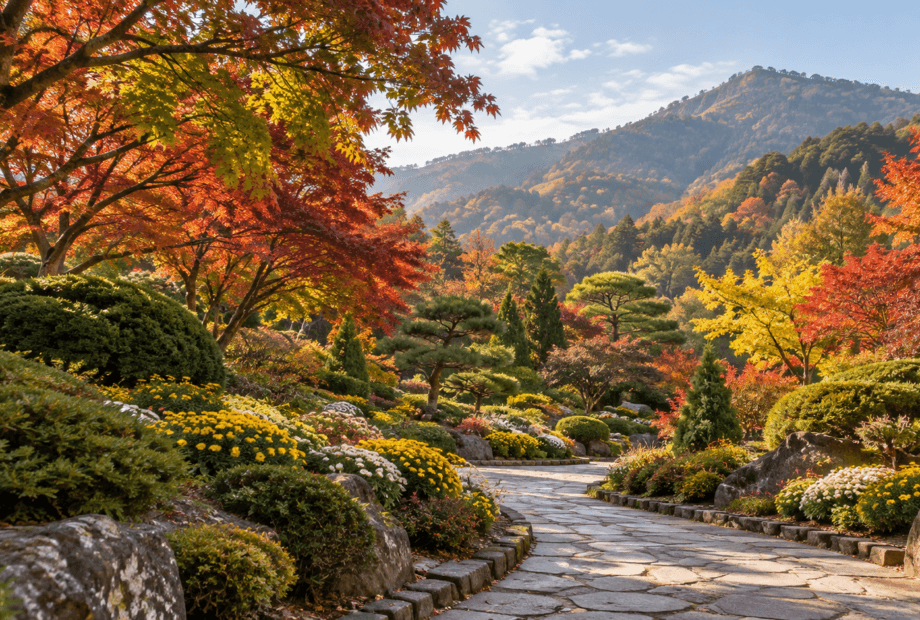
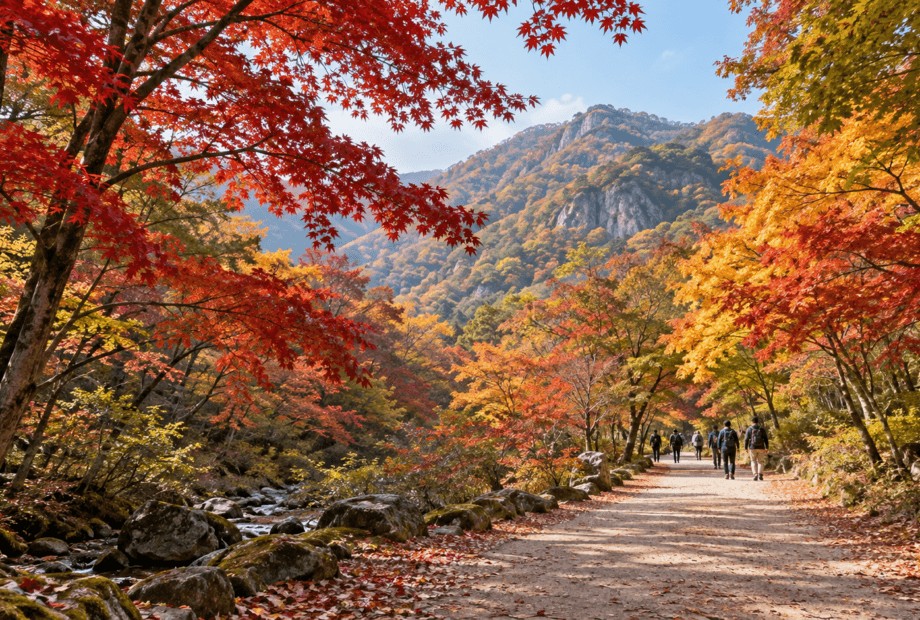
October and November make this a timely walking-and-food choice, but Jeonju is not a guaranteed foliage display on a fixed date. Decide whether your priority is the village or peak-colored trees. If it is the village, variable leaves do not ruin the visit. If it is foliage, keep your date flexible and check current photographs and weather close to departure.
Pack a layer for sitting outside or walking after dinner. On wet days, shorten the hillside portion and spend longer over a meal or in an indoor venue whose opening you have checked. Wet paving can slow your pace; allow that extra time rather than leaving the return margin unchanged.
The useful final calculation is not “How many more attractions can we fit?” It is “When do we need to begin leaving?” For an independent train day trip, a conservative starting plan is to leave the village area 60–90 minutes before departure, then adjust using the live transfer estimate and your group's needs. This is a recommended buffer, not a measured taxi duration. Busy traffic, a queue and a slow walk through the station can all consume it.
Do not make the last available train your only workable escape route. Keep the station name saved, a charged phone, the ticket accessible and enough time to buy water without turning it into a relay race.
For most first-time visitors, the winning plan is simple: one heritage stop, one proper Jeonju meal, several good lanes and a return journey you have already arranged. Stay overnight when the dinner and hanok room excite you. Take the day trip when you want a good introduction. Both can work; the mistake is trying to give a day trip an overnight itinerary.