Affiliate disclosure: This guide may contain affiliate links. If you book through them, we may earn a small commission at no extra cost to you. Learn more.
Korean pharmacies are no longer just places travelers visit when they need cold medicine, bandages, or emergency stomach relief after an ambitious street food evening.
In 2026, pharmacies in Korea are becoming part of the K-beauty travel route. Many foreign visitors now stop by pharmacies after skin treatments, while others go looking for soothing creams, barrier repair products, acne patches, sunscreen, or skincare items that feel more targeted than a regular beauty store shelf.
This guide is for general travel and shopping information, not medical advice. If you have a skin condition, allergies, or recently had a procedure, ask a qualified professional before using new products.
Korean pharmacies are not magic skincare caves where every cream turns your face into glass by breakfast. That would be convenient, but suspicious. What they can offer is guidance, targeted products, and a more practical shopping experience, especially if your skin is sensitive, irritated, dry, or recovering from travel stress.
For tourists, the real question is not only “What should I buy at a Korean pharmacy?” It is also “How do I ask for the right thing without accidentally buying something I do not understand?”
This guide explains how Korean pharmacy skincare works, what foreign visitors usually look for, how pharmacies are different from Olive Young, what ingredients are trending in 2026, and what to be careful about before buying.
For a broader shopping route, you may also want to read our Best K-Beauty Shopping in Seoul 2026 and Olive Young Guide 2026.
Table of contents
Quick Answer: What Should Tourists Look for at Korean Pharmacies?
If you are visiting a Korean pharmacy for skincare, the safest categories to ask about are:
- Soothing creams
- Barrier repair creams
- Moisturizers for dry or sensitive skin
- Sunscreen
- After-sun care
- Acne patches
- Spot care products
- Products recommended by a pharmacist after you explain your skin concern
If you recently had a skin treatment in Korea, follow your clinic’s aftercare instructions first. A pharmacy product should support your routine, not replace professional advice.
If you are not sure what to buy, do not choose only by viral photos. Show the pharmacist what you need, explain your skin condition in simple words, or use a translation app.
A good pharmacy visit is less about grabbing the trendiest product and more about asking the right question.
Why Korean Pharmacies Are Becoming Popular with Foreign Tourists
Korean pharmacies have become more interesting to foreign visitors for a few reasons.
First, K-beauty tourism is growing. Many travelers come to Seoul for skin clinics, facials, laser treatments, personal color analysis, head spas, and beauty shopping. After a clinic visit, some tourists want products that feel more targeted than regular cosmetics.
Second, skincare trends are shifting. In 2026, many K-beauty conversations are less about complicated 10-step routines and more about skin barrier health, recovery, hydration, and “regenerative” ingredients. Travelers are hearing words like cica, panthenol, ceramide, PDRN, exosomes, and peptides before they even land in Korea.
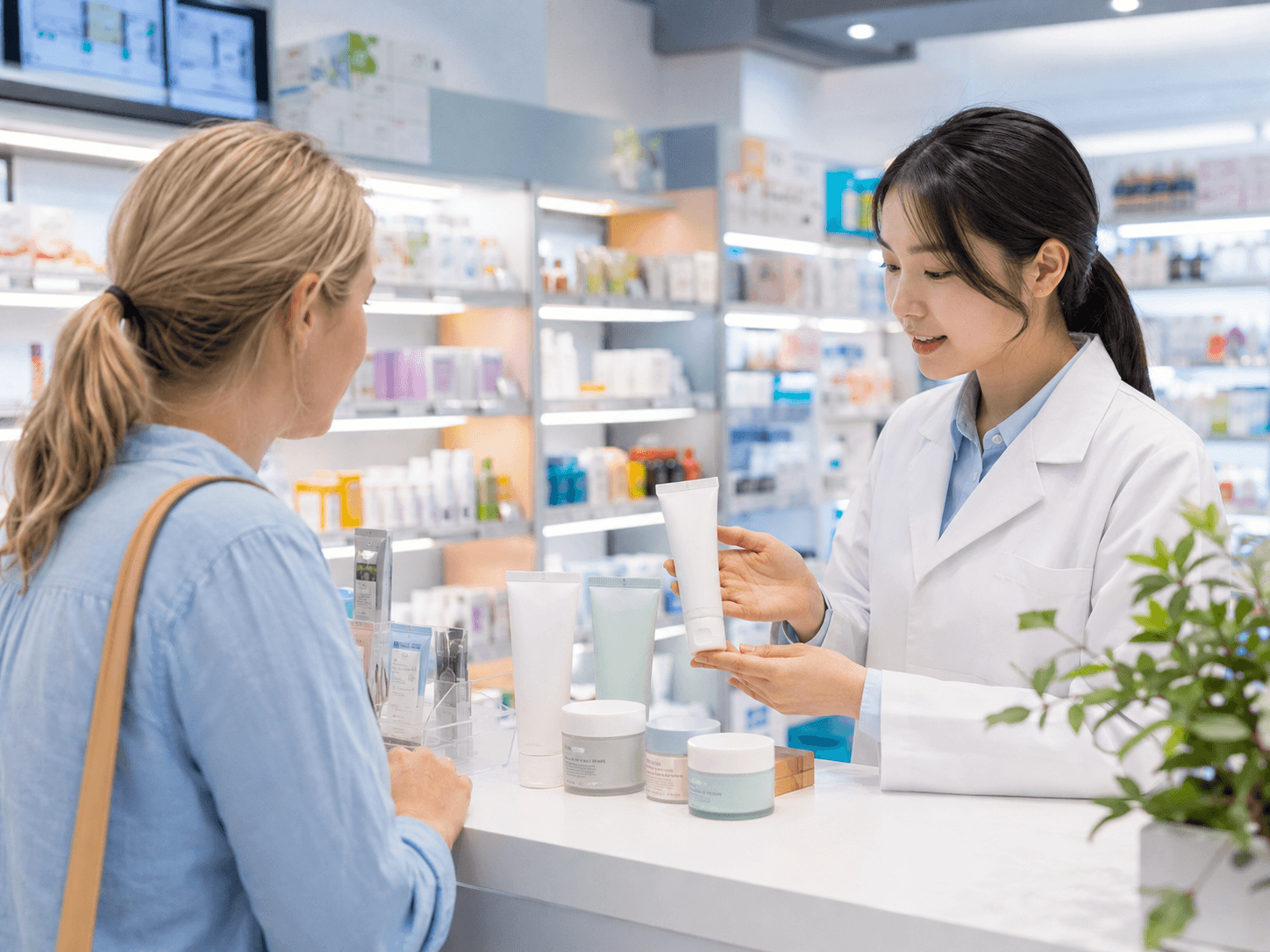
Third, Korean pharmacies can feel more practical. Instead of browsing endless shelves alone, you may be able to ask a pharmacist for help. That matters when your skin is red, dry, breaking out, or confused by jet lag, hotel air conditioning, spicy food, and Seoul’s weather changing its personality between breakfast and dinner.
Pharmacies are not better than beauty stores in every situation. They are simply different.
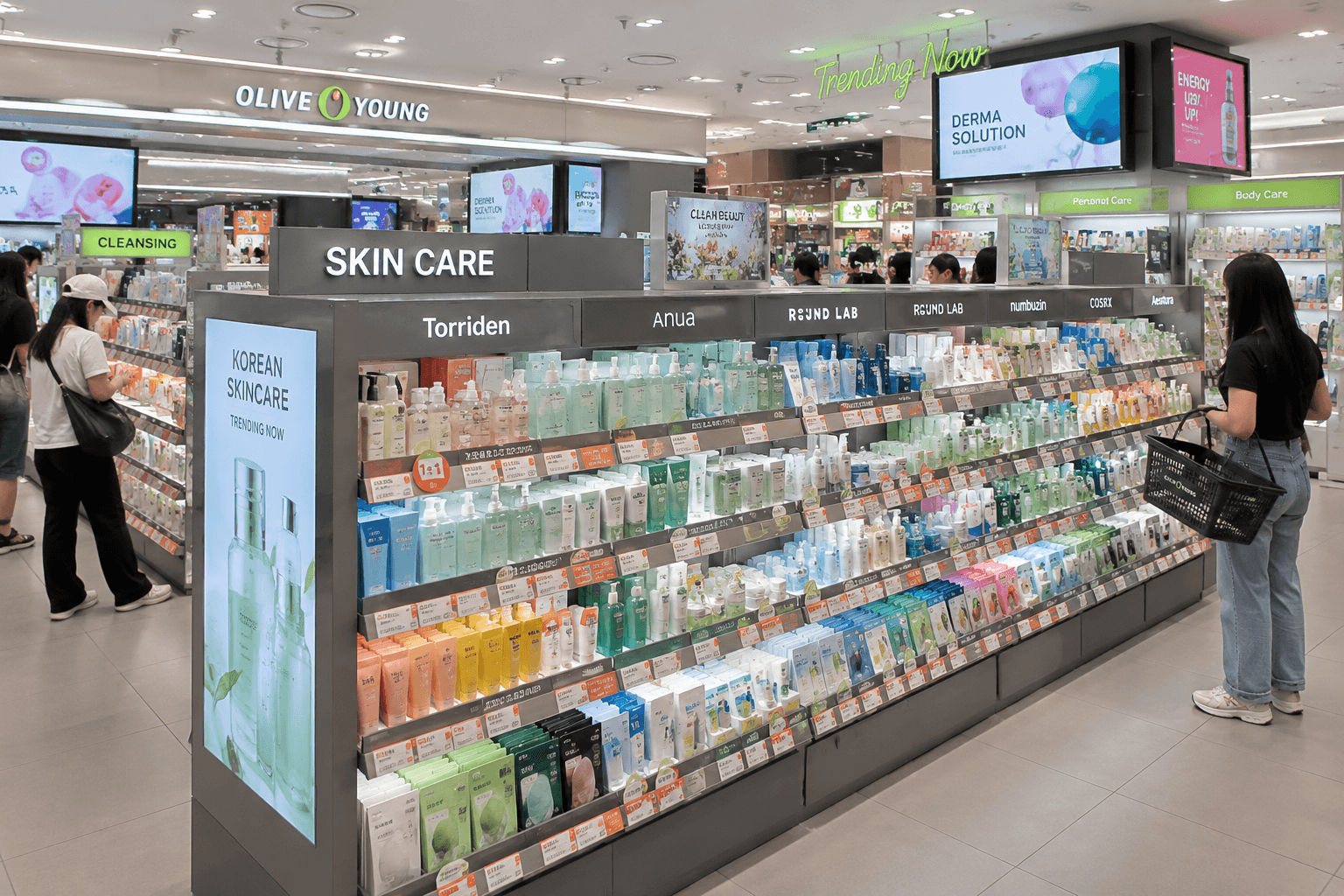
Olive Young is great for browsing. Pharmacies are useful when you want guidance.
Olive Young vs Korean Pharmacies: What Is the Difference?
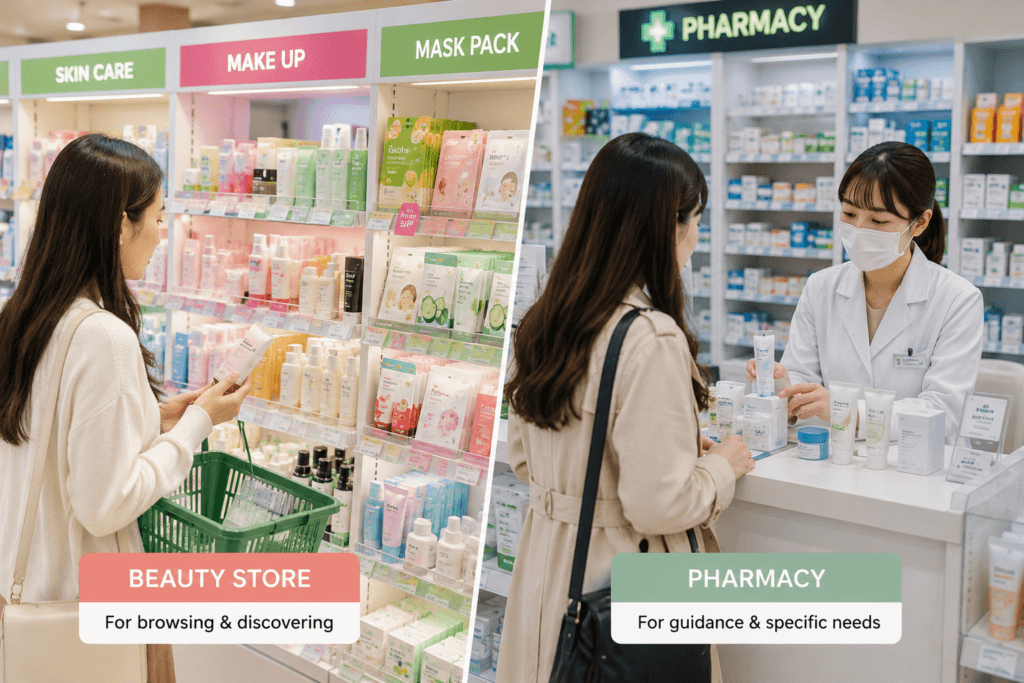
Many foreign visitors already know Olive Young. It is one of the easiest places to shop for Korean skincare, makeup, sheet masks, sunscreen, hair care, and beauty tools.
Korean pharmacies are different.
At Olive Young, you usually browse by yourself. You can compare popular brands, check rankings, find trending items, and pick up fun souvenirs. It is great for discovery, especially if you enjoy walking through aisles until your basket becomes mysteriously heavier.
At a pharmacy, the experience can be more focused. Some products may be behind the counter or not displayed like a Western drugstore aisle. Instead of browsing everything freely, you may need to ask the pharmacist for what you want.
This can feel intimidating at first, but it can also be helpful.
Choose Olive Young if you want:
- Popular K-beauty brands
- Makeup and skincare browsing
- Sheet masks
- Sunscreen choices
- Hair and body products
- Beauty tools
- Easy souvenir shopping
- Trend discovery
Choose a pharmacy if you want:
- Pharmacist guidance
- Soothing or barrier-focused products
- Acne patches or spot care
- Products for dryness, irritation, or sensitivity
- Travel medicine or basic health items
- Advice after explaining your skin concern
- A more targeted shopping experience
The best strategy is not Olive Young or pharmacy. It is both, for different reasons.
You can use our Olive Young Guide 2026 for fun beauty shopping, then visit a pharmacy when you need something more specific.
2026 K-Beauty Travel Update
K-beauty travel is becoming more organized and more experience-driven.
Visitors are not only buying products anymore. They are booking skin clinics, trying head spas, doing personal color analysis, visiting wellness spaces, and adding beauty experiences to their Seoul itinerary.
This is why pharmacy skincare makes sense as a travel topic. It sits between shopping and treatment. It is less casual than buying cute lip tint, but less intense than booking a clinic procedure.
If your Seoul trip includes skin treatments, beauty shopping, or wellness experiences, plan your pharmacy visit as part of the same route.
A simple K-beauty day could look like this:
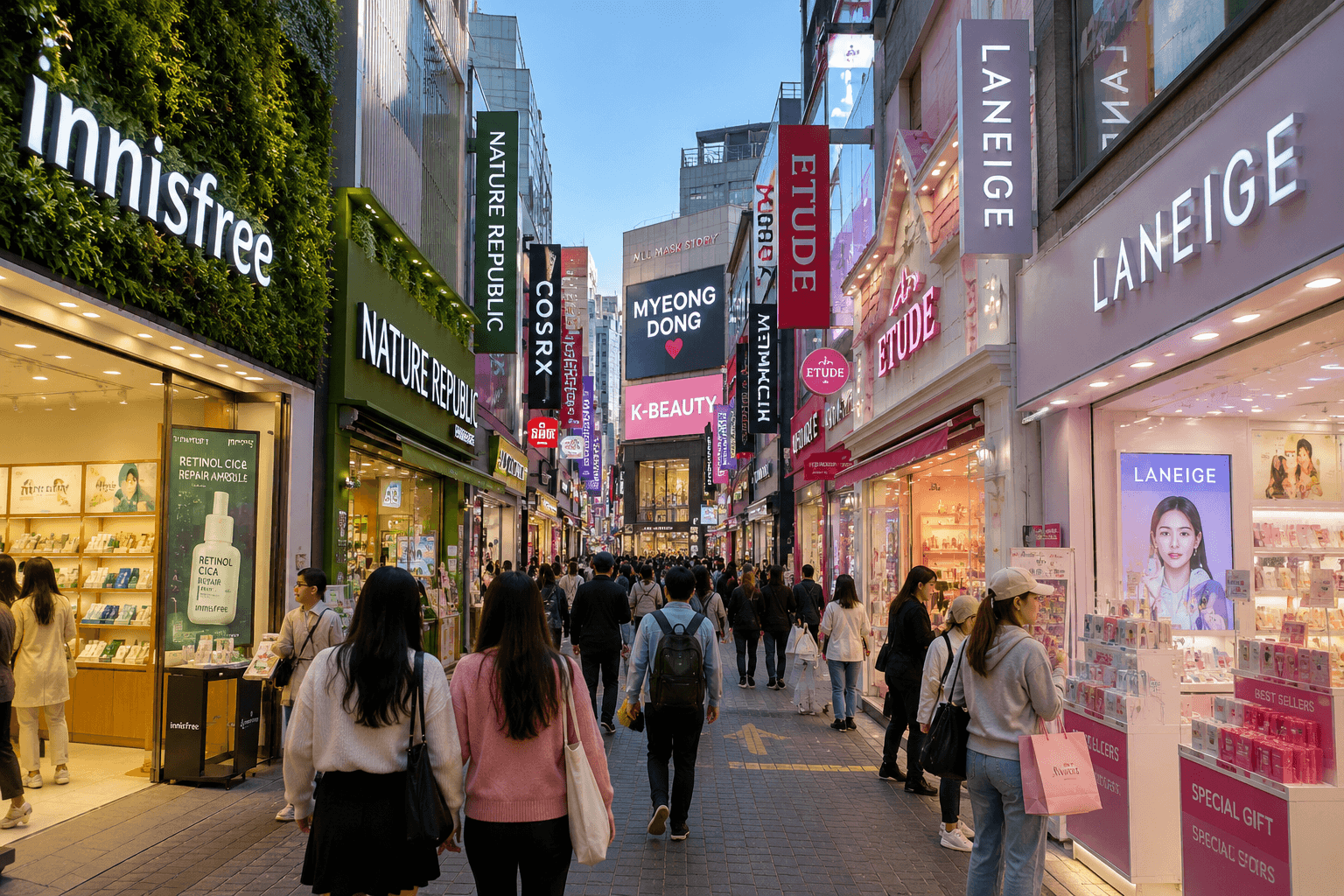
Myeongdong or Gangnam skincare shopping
→ Clinic consultation or beauty experience
→ Pharmacy stop for soothing or barrier care
→ Cafe break because your feet have filed a formal complaint
For more planning, connect this with our K-Beauty Treatments in Seoul, Korean Head Spa Guide in Seoul, and Personal Color Analysis in Seoul Guide 2026.
A natural affiliate placement can fit here: Seoul beauty experience or K-beauty tour.
What to Look for at Korean Pharmacies
You do not need to walk into a Korean pharmacy with a perfect product list. In fact, it is often better to walk in with a clear skin concern.
Instead of asking, “What is the most popular cream?” try asking:
- “I have dry skin.”
- “My skin is sensitive.”
- “My skin is red.”
- “I need acne patches.”
- “I need sunscreen for sensitive skin.”
- “I had laser treatment.”
- “I need a soothing cream.”
- “I need something for skin barrier.”
This helps the pharmacist point you toward a product type instead of guessing based on a trend.
The most useful pharmacy skincare categories for tourists are soothing creams, barrier repair products, sunscreen, acne patches, and simple moisturizers. These are practical, travel-friendly, and easier to understand than stronger actives.
If you are buying after a clinic treatment, be extra careful. Use the clinic’s instructions first, then ask the pharmacist for a product that fits those instructions.
Soothing, Recovery and Barrier Creams
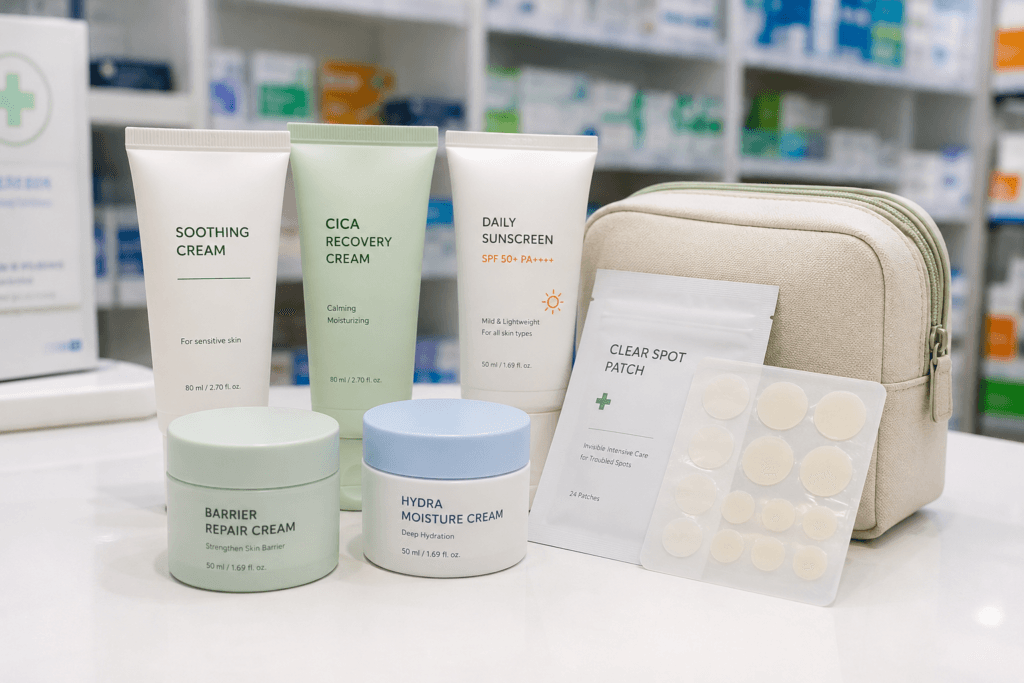
One category foreign visitors often ask about is soothing cream, recovery cream, or barrier cream.
In Korea, some products are marketed with words like recovery, repair, regeneration, or barrier support. Travelers may look for them after dryness, irritation, laser treatments, peeling, or other beauty procedures.
However, you should not treat these creams like medical treatment unless your clinic or doctor recommends them. Product names can sound powerful, but skincare marketing sometimes likes wearing a tiny lab coat.
A safer way to think about this category is:
These creams may help support a gentle routine, especially when your skin feels dry, sensitive, or irritated.
When asking at a pharmacy, say:
“I need a soothing cream for sensitive skin.”
Or:
“I had a skin treatment. My clinic said I need a gentle moisturizer. What do you recommend?”
If you recently had laser, peeling, injections, or another cosmetic procedure, do not mix products randomly. Your skin barrier may be more sensitive than usual, and travel is already enough chaos for one face.
If your trip includes a clinic visit, you can compare options carefully through K-beauty skin clinic booking, but always follow the clinic’s aftercare instructions after treatment.
Barrier Repair Creams
Barrier repair is one of the most useful skincare ideas for travelers.
Your skin barrier can feel stressed after long flights, dry cabin air, weather changes, hotel heating or air conditioning, sunscreen, makeup, and walking around all day. Seoul may be kind to your itinerary, but your skin may have other opinions.
Barrier-focused products usually aim to support moisture and reduce dryness or discomfort. Common ingredients you may see in Korean skincare include ceramides, panthenol, cica, beta-glucan, and other soothing or moisturizing ingredients.
You do not need to memorize every ingredient. Just know the basic request:
“I need a barrier cream.”
Or:
“My skin is dry and sensitive.”
This category is often easier to ask about safely than strong exfoliants or active serums. If your skin is upset during travel, simple and gentle usually beats dramatic and experimental.
A good rule for tourists: do not introduce five new products in one night. Your skin is not a science fair booth.
PDRN and Trending Ingredients
PDRN has become one of the buzziest K-beauty ingredients.
You may see it in creams, serums, masks, and products that use words like repair, regeneration, recovery, or skin booster. Some travelers hear about PDRN through Korean skin clinics, where related ingredients may be used in professional treatments.
But topical PDRN skincare is not the same as an in-clinic treatment.
That does not mean you need to avoid every PDRN product. It means you should buy carefully. Ask whether the product suits your skin type, how often to use it, and whether it is okay with your current routine.
Useful questions include:
- “Is this suitable for sensitive skin?”
- “Can I use this after laser?”
- “Is this a cream or a treatment product?”
- “How often should I use it?”
- “Should I avoid using it with retinol or exfoliating acids?”
If you are curious, PDRN can be an interesting K-beauty purchase. Just do not buy it expecting clinic-level results from a regular cream or serum. Skincare trends love dramatic promises. Your skin prefers patience, consistency, and not being ambushed.
Sunscreen and After-Sun Care
Sunscreen is one of the easiest and most practical pharmacy skincare purchases in Korea.
If you are traveling in spring, summer, or autumn, you may spend long days outside visiting palaces, markets, cafes, beaches, and viewpoints. Even in winter, sunscreen can still matter, especially if you are outdoors all day.
Korean sunscreen is popular because many formulas feel lighter than older Western sunscreens. You can find sunscreens at Olive Young, supermarkets, convenience stores, and pharmacies.
At a pharmacy, sunscreen can be useful if you have sensitive skin or need something more specific.
Ask:
“Sunscreen for sensitive skin?”
Or:
“Do you have sunscreen for dry skin?”
After-sun care can also be useful if you spend time in Jeju, Busan, or during Korea’s warmer months. You may ask for a soothing gel, moisturizing cream, or product for sun-exposed skin.
Avoid using strong exfoliating products after too much sun. Your skin does not need a plot twist.
Acne Patches and Spot Care
Acne patches are one of the easiest things to buy in Korea.
They are small, practical, lightweight, and useful during travel. Long flights, masks, humidity, stress, new food, and changes in sleep can all cause breakouts. A pack of acne patches takes up almost no luggage space and can save you from emergency mirror negotiations.
You can find acne patches at both Olive Young and pharmacies. At a pharmacy, you can ask for:
“Acne patch?”
Or:
“Pimple patch?”
If your breakout is severe, painful, or spreading, ask a pharmacist whether you should see a doctor. Do not keep layering random products and hoping your skin signs a peace treaty.
For mild spots, acne patches are usually one of the simplest travel-friendly skincare purchases.
How to Ask a Korean Pharmacist
Asking at a Korean pharmacy can feel awkward if you do not speak Korean, but you do not need perfect language.
The easiest method is to use short, clear words and show what you mean. A photo of your product, a translation app, or a simple phrase can help.
Try to explain:
- Your skin type
- Your problem
- Whether you had a treatment
- Whether your skin is sensitive
- Whether you have allergies
- Whether you are already using strong products
For example:
“I have sensitive skin. I need a gentle moisturizer.”
Or:
“I had laser treatment yesterday. My clinic said to use a soothing cream.”
If the pharmacist seems unsure, keep the request simple. Do not ask for a complicated routine. Ask for one product.
One good product used correctly is better than five products bought in a panic.
Useful Korean Phrases for Pharmacy Skincare
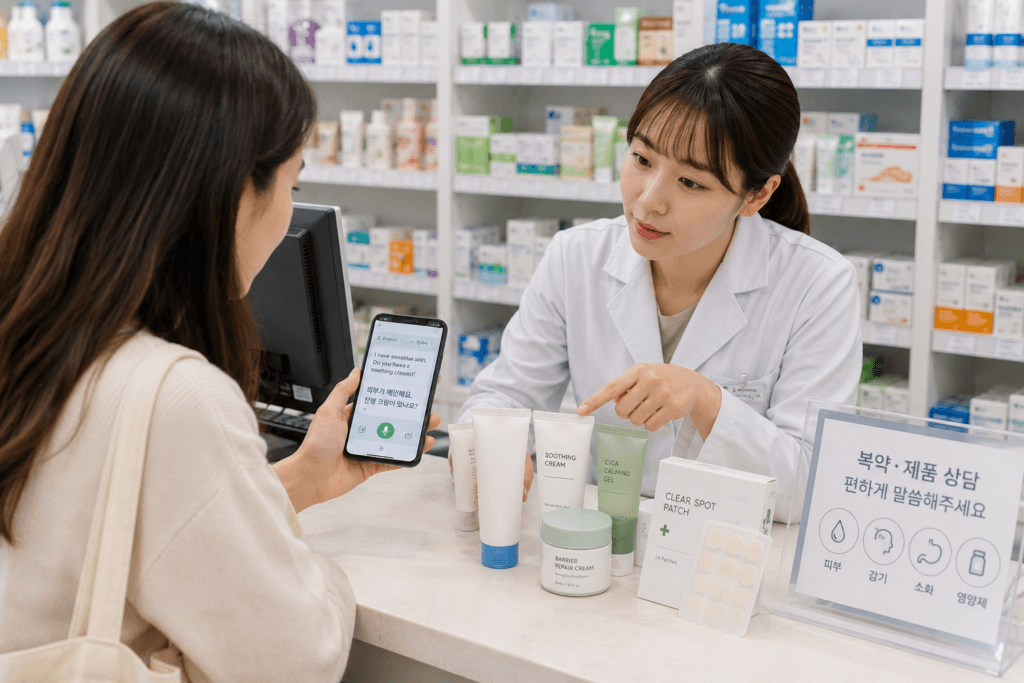
You can show these phrases on your phone.
| English | Korean |
|---|---|
| I have sensitive skin. | 피부가 예민해요. |
| My skin is dry. | 피부가 건조해요. |
| My skin is red. | 피부가 빨개졌어요. |
| I need a soothing cream. | 진정 크림이 필요해요. |
| I need a barrier cream. | 장벽 크림이 필요해요. |
| I need sunscreen. | 선크림이 필요해요. |
| Do you have acne patches? | 여드름 패치 있어요? |
| I had laser treatment. | 레이저 시술을 받았어요. |
| Can I use this after treatment? | 시술 후에 사용해도 되나요? |
| Is this okay for sensitive skin? | 예민한 피부에 괜찮나요? |
| How often should I use it? | 얼마나 자주 사용해야 하나요? |
| Should I avoid anything? | 피해야 할 것이 있나요? |
You do not need to pronounce everything perfectly. Showing the phrase is enough.
Pharmacists are used to quick, practical questions. Your phone becomes a tiny pocket interpreter here.
Where to Find Tourist-Friendly Pharmacies in Seoul
You can find pharmacies all over Seoul, but some areas are easier for tourists.
Myeongdong is convenient because it is already a major shopping area. If you are visiting for skincare, cosmetics, currency exchange, street food, and souvenirs, it is easy to add a pharmacy stop. Our Myeongdong Travel Guide 2026 can help you plan that area.
Hongdae is useful for younger travelers, beauty shopping, cafes, and budget-friendly routes. You may not find every specialized product there, but it is a comfortable area for casual shopping. Connect this with our Hongdae Travel Guide 2026.
Gangnam and Apgujeong are especially relevant if your trip includes skin clinics, dermatology, plastic surgery consultations, or high-end beauty experiences. Pharmacies in these areas may be more familiar with beauty-related questions from clinic visitors.
Jongno, Gwanghwamun, and central Seoul can also be useful if you are visiting palaces, Insadong, Bukchon, or office-area wellness stores. Some pharmacy-style wellness spaces in central Seoul may offer more structured product information or consultation options.
If you need basic medicine or travel essentials at the airport, Incheon Airport has pharmacies too. Airport pharmacies can be useful for last-minute medicine, bandages, motion sickness products, or travel basics, but they may not be the best place for a relaxed skincare shopping session.
For skincare browsing, city pharmacies are usually more comfortable.
Can You Get a Tax Refund at Korean Pharmacies?
Some pharmacies in Korea may participate in tax refund programs, but not all of them do.
If tax refund matters to you, check before buying. Look for a tax refund sign, ask the staff, or choose a pharmacy listed as a tax refund shop on official tourism information platforms.
A simple phrase is:
“Tax refund possible?”
In Korean:
“택스 리펀드 가능해요?”
For most small purchases, tax refund should not be the main reason to choose a product. It is a nice bonus, not the skincare compass.
If you are doing a larger beauty shopping day, combine this with our Korea Tax Refund Guide 2026 so you know what documents and minimum spending rules to check.
What Not to Buy Without Advice
Some pharmacy items are simple. Others need caution.
Be careful with products that contain strong actives, medicated ingredients, prescription-only items, or anything you do not understand. Do not buy a product just because someone online called it a “Korean pharmacy holy grail” without explaining who it is suitable for.
Be especially careful if:
- You recently had a skin treatment
- Your skin is currently irritated
- You have eczema, rosacea, or allergies
- You are pregnant or breastfeeding
- You are already using retinoids, exfoliating acids, or prescription creams
- You are buying medicine, not skincare
This guide is about pharmacy skincare and general shopping tips, not prescription medicine. If you need prescription medication or plan to bring medication into Korea, check official guidance before traveling.
For skincare after a treatment, your clinic’s instructions come first. If the clinic says not to use certain products, listen to the clinic, not a viral shopping reel.
Your skin barrier deserves care, not chaos.
Common Mistakes Tourists Make
A common mistake is treating pharmacy skincare like souvenir shopping. A cute package is not enough, especially if your skin is sensitive, irritated, or recently treated.
Another mistake is trying too many new products at once. Travelers often buy cleanser, toner, serum, cream, mask, sunscreen, and spot treatment in one afternoon, then test everything at night. This is how your skin becomes a tiny protest movement.
Some visitors also assume pharmacy products are automatically stronger or better. Pharmacies can be helpful, but not every product is right for every person. Olive Young, clinics, pharmacies, and dermatologists all serve different needs.
If you had laser, peeling, injections, or any skin clinic procedure, do not forget to mention it. Better yet, ask your clinic what ingredients to avoid before you go shopping.
Allergies matter too. If you have allergies, show them clearly in Korean or English. This is especially important with trendy ingredients, botanical extracts, fragrance, or animal-derived ingredients.
Finally, do not expect instant results. Good skincare is usually boring before it is impressive. Hydrate, protect, repair, repeat. The real glow-up usually works quietly.
Best Korean Pharmacy Skincare Shopping Route for Tourists
If you want to add pharmacy skincare to your Seoul trip, keep it simple.
Here is an easy route idea:
Start with Olive Young for browsing and trending products.
Then visit a pharmacy for specific skin concerns.
If you plan a clinic treatment, follow the clinic’s aftercare advice.
Finish with sunscreen, moisturizer, or acne patches for travel basics.
For a beauty-focused Seoul day, you could plan:
Myeongdong shopping
→ Olive Young browsing
→ Pharmacy stop for soothing or barrier cream
→ Skin clinic or beauty experience
→ Cafe break
→ Tax refund check if eligible
For a more wellness-focused route:
Personal color analysis
→ Head spa
→ Pharmacy skincare stop
→ Olive Young or wellness store
→ Light dinner because your scalp and wallet both need calm
If you want to connect beauty experiences naturally, check Korean Head Spa Guide in Seoul, Personal Color Analysis in Seoul Guide 2026, and K-Beauty Treatments in Seoul.
FAQ: Korean Pharmacy Skincare
Can foreigners buy skincare at Korean pharmacies?
Yes. Foreign tourists can buy many skincare and general over-the-counter products at Korean pharmacies. For prescription medicine, rules are different, and you may need to see a doctor.
Are Korean pharmacies different from Olive Young?
Yes. Olive Young is better for browsing popular beauty products, makeup, masks, and trends. Pharmacies are better when you want pharmacist guidance or have a specific concern like dryness, sensitivity, acne patches, or after-treatment care.
What should I ask for at a Korean pharmacy?
Start with your concern. Say “sensitive skin,” “dry skin,” “soothing cream,” “barrier cream,” “sunscreen,” or “acne patch.” If you had a skin treatment, mention it before buying anything.
Can I buy Korean pharmacy skincare without speaking Korean?
Yes, but use simple words, product photos, or a translation app. In tourist areas, some pharmacists may understand basic English, but it is safer to show your concern clearly on your phone.
Can I buy regeneration cream in Korea?
Yes, many pharmacies carry creams marketed for soothing, recovery, or barrier support. However, do not treat them as medical treatment unless your clinic or doctor recommends them.
Is PDRN skincare worth buying in Korea?
PDRN is trendy in K-beauty, but topical products should be viewed carefully. Ask whether the product suits your skin type, and do not expect clinic-level results from a regular cream or serum.
Can I use pharmacy skincare after a skin clinic treatment?
Maybe, but follow your clinic’s aftercare instructions first. If you are unsure, ask your clinic or show the pharmacist what treatment you had and what your clinic recommended.
Do Korean pharmacists speak English?
Some pharmacists in tourist areas may speak basic English, but not always. Use simple words, photos, or translation apps. Showing Korean phrases on your phone can help.
Can I get a tax refund at Korean pharmacies?
Some pharmacies offer tax refund, but not all. Check for tax refund signs or ask before paying.
Where are the best areas to find pharmacies in Seoul?
Myeongdong, Hongdae, Gangnam, Apgujeong, Jongno, and central Seoul are convenient for tourists. Gangnam and Apgujeong are especially useful if your trip includes skin clinics.
Final Thoughts: Should You Visit a Korean Pharmacy for Skincare?
Yes, Korean pharmacies can be worth visiting if you know what you are looking for.
They are especially useful for soothing creams, barrier repair products, sunscreen, acne patches, sensitive skin questions, and after-treatment support. They can also be helpful when you want guidance instead of wandering through beauty aisles alone with a basket and a dream.
But pharmacy skincare should be approached carefully. Do not buy strong or unfamiliar products without asking questions. Do not ignore clinic aftercare instructions. Do not assume every trending ingredient is right for your skin.
The best Korean pharmacy skincare purchase is not always the most viral one. It is the one that fits your skin, your trip, and your actual problem.
Use Olive Young for fun browsing. Use pharmacies for targeted help. Use your clinic’s instructions when treatment is involved. And use sunscreen because that tiny tube is still doing more heroic work than most beauty trends admit.
Korean pharmacies can be a smart stop on your K-beauty trip, as long as you shop with curiosity, caution, and a little room in your suitcase.